
At its peak last summer, Pop Mart was worth more in the public markets than Hasbro, Sanrio, and Mattel combined. Pop Mart, a Beijing-based toy company, had spent five years quietly turning a shaggy elf-monster named Labubu into the accessory that Rihanna, Lisa of BLACKPINK, and David Beckham were photographed dangling from their handbags.
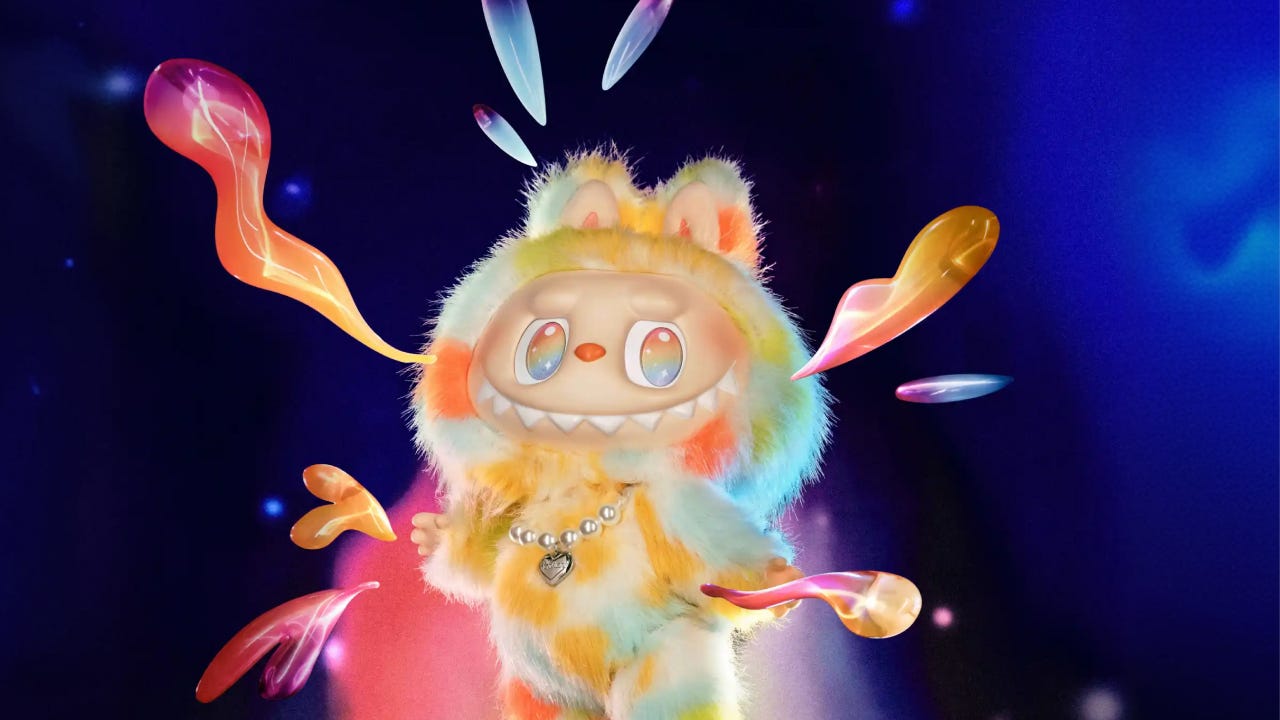
The demand was so intense that secondary market prices ran 2,000 percent above retail, robbers in California staged a $30,000 heist to steal inventory, and in-store fights in the UK got severe enough that Pop Mart pulled all in-person plush sales and moved distribution exclusively online. Every signal in the market was pointing in the same direction, and it was almost impossible to imagine how a company sitting on this level of cultural velocity could fail to convert it into a Disney-scale IP franchise.
But then it did. Nine months later, Pop Mart has lost $33 billion in market value, and the collapse was entirely self-inflicted.
Pop Mart licensed Labubu from Hong Kong-Dutch artist Kasing Lung in 2019, spent five years quietly building the character through blind box collectibles, and hit escape velocity in 2024 when Lisa of BLACKPINK posted a Labubu keychain on her Instagram in April of that year, triggering a 30 percent jump in Pop Mart’s Southeast Asia sales inside a single week. Revenue for the character grew more than 700 percent year over year in 2024 to roughly $430 million, and the following year turned the company into the most valuable consumer IP story of 2025.

Full-year 2025 revenue grew 185 percent year over year to $5.4 billion. Net income quadrupled to $1.9 billion. US sales alone jumped 1,200 percent year over year. Labubu accounted for 38% of total revenue, up from 23% the year before, and the company hit its $44.43 billion peak valuation in June, more than the combined market caps of the three largest legacy toy brands in the world. A life-size mint-green Labubu sold at the Yongle International Auction in Beijing for over $170,000. Secret blind box editions traded at 2,000 percent above retail on Chinese resale platforms.
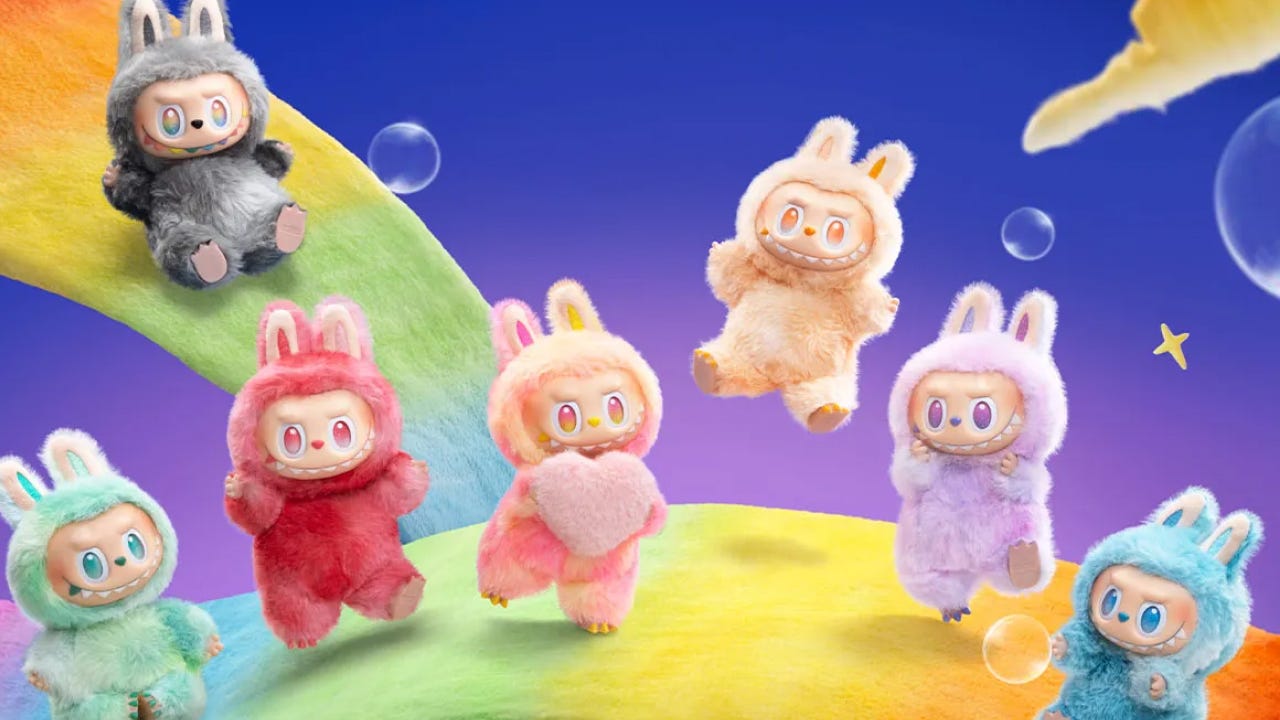
The most important thing to understand about the LaBubu business model is that the physical product was almost irrelevant to the commercial mechanism. Pop Mart was not selling plush toys. They were selling access to something engineered to be hard to get.
The blind box format meant customers did not know which figure they were getting until they opened the box. Limited editions meant they might not get one at all. Queuing culture meant they had to show up in person, and the resale market served as public proof that others wanted what they had. Every element of the go-to-market strategy compounded the difficulty rather than reducing it, and that difficulty created the cultural momentum. Customers were paying for the chase, and the chase was the product.
This is the operating principle that every scarcity-driven brand runs on, whether it is Hermès, Ferrari, Rolex, or Pop Mart. The friction is not a bug to be optimized away, it is the commercial mechanism. The moment you remove the friction, you have not made the product more accessible; you have removed the reason anyone wanted it.
By late 2025, the pressure to scale had become impossible to ignore. Waiting lists compounded across every major market, and resale prices went vertical on the secondary market. Counterfeits, known as Lafufus, flooded distribution channels. Scalpers dominated the resale infrastructure, priced everyday customers out of the ecosystem, and generated a cycle of negative brand stories about heists, in-store fights, and safety recalls that were becoming reputational liabilities.
Pop Mart’s response was to scale production dramatically to chase the demand. Monthly production moved from approximately 300,000 units in early 2024 to 30 million units by late 2025, a 100x increase in under two years. The strategic bet was that meeting demand would extend the cultural moment, lock in market share before competitors and counterfeits could catch up, and restore access to real fans who had been priced out by the resale market. The financial math and market-share math supported the move. Even the brand reputation math arguably supported the move.
The logic held together on paper. If Labubu was a $5 billion revenue engine and demand was still growing, scaling production was the responsible decision. This is the same call almost any CFO in any consumer category would have made, and it would have been correct for almost any consumer category.
It was not correct for Pop Mart.
The scarcity engine collapsed in weeks. Resale prices fell by more than 50% almost immediately, and some SKUs dropped below their original retail prices as scalpers panicked and sold their inventory into a falling market. Google search interest for Labubu dropped roughly 90% between August 2025 and March 2026, one of the steepest declines in cultural interest for any consumer product in recent memory. Pop Mart stock fell 44% from its August peak, wiping out $33 billion in market value in nine months.
The reason this happened, and the reason it happened this fast, is that scaling production against a scarcity-driven demand curve is functionally equivalent to destroying demand. Pop Mart did not oversupply the market in the traditional sense, meaning they did not make more product than customers wanted. They made more products than the brand’s psychology could support. The moment the object stopped being difficult to obtain, it stopped being culturally valuable, because the difficulty was the culture.

Analysts drew immediate parallels to the Beanie Babies collapse of the 1990s, the last time an engineered-scarcity category ended as supply caught up with demand. The comparison mattered because it signalled to institutional investors that Pop Mart was not building a Disney-style IP franchise; they were riding a collectibles bubble, and the bubble had just been popped by the company itself.
This is the strategic misread every founder should sit with, because it is the actual business lesson underneath the case study.
The real question in a hype cycle is not how to capture more of the current demand. It is about extending the product’s cultural life, so that the demand curve stretches over a longer monetization period rather than compressing into a shorter one at higher volume. Pop Mart optimized for the first question and lost the second. Every unit added to monthly production shortened the brand’s runway instead of lengthening it, and the two- to three-year cultural window most hype brands get was compressed into eighteen months.
The CFO’s math showed the company was leaving revenue on the table by failing to meet demand. The correct math was that leaving demand unmet was the mechanism keeping the cultural moment alive. Scaling production converted what should have been a multi-year revenue arc into an eighteen-month revenue spike, at a valuation priced by the market on the assumption that Pop Mart understood the difference. The $33 billion in lost market value is the price of that assumption being wrong.
The most valuable brands in the world protect scarcity as a permanent operating principle rather than a launch phase. Hermès prints Birkin bags at a fraction of demonstrated demand and forces customers to build a purchase history before they qualify for one. Ferrari caps annual production at approximately 13,000 to 15,000 units despite demand that would support ten times that, and Rolex lets retail waiting lists compound for years on specific references and refuses to scale allocations.
All of these companies leave enormous revenue on the table every year because their leadership understands something that Pop Mart’s leadership either did not understand or did not have the discipline to protect. The friction to access the product is the brand. The moment you remove it, you are no longer operating in the same category, and every commercial metric that used to work for you will collapse within weeks.
This is not a marketing observation but a category law. Scarcity brands cannot be run on volume math, and the moment they are, they stop being scarcity brands. The valuation multiples that made them extraordinary evaporate along with the psychology that generated the multiples in the first place.
If you are building anything right now that has a resale market, a waiting list, a drop culture, or engineered difficulty inside the customer experience, the Pop Mart case is an important cautionary tale.
The first move is to decide what business you are in before you scale. Scarcity brands and volume brands are two different companies with two different commercial physics, and you cannot switch from one to the other in real time without dismantling the mechanism that made you valuable in the first place. If you are Hermès, you commit to the model permanently and hold the line every year that the finance team argues for more allocations. If you are Nike, you scale into demand aggressively and optimize for volume. There is no middle ground that works, and the brands that try to occupy the middle usually end up with neither the pricing power of scarcity nor the market share of volume.
The second move is to plan the second wave while the first is still peaking. If your model is drop-driven, treat drops as capsule cycles rather than sustained production runs, and plan the next character, collection, or universe before the current one collapses. Pop Mart is attempting this pivot now with Crybaby, Skullpanda, and Hacipupu, but they are doing it in the middle of a cultural collapse rather than ahead of one. The founders who execute this well plan the second wave while the first wave is still at its cultural peak, because the pivot lands cleanly when the customer is still emotionally invested rather than actively watching the brand fade.
The third move is to protect the brand’s psychology from the finance team. Every scarcity brand will hit a moment where the CFO math argues for scaling into demand, and that is the exact moment the founder has to hold the line. The math is not wrong in a mechanical sense; it is describing the correct decision for a different category than the one you are actually operating in. This is why Hermès and Ferrari have stayed at the top of their categories for decades. Their leadership understands that leaving revenue on the table is the moat, not a bug in the business model, and they have the discipline to protect it in every board meeting where someone will argue otherwise.
The fourth move is to remember that the customer is not paying for the product; they are paying for the story around it. The story only holds if the product is scarce. The moment the product is available, the story dies, and the customer is left with what the object always physically was, which in Labubu’s case was a plush toy on a keychain.
Pop Mart is not going out of business. They generated $5.4 billion in revenue and $1.9 billion in net income in 2025; they operate over 1,000 stores across 18 countries, and they have a portfolio of emerging IPs that give them a second act. This is not a going-concern story, and CEO Wang Ning has been clear in his last three months of earnings calls that the company sees itself as a multi-franchise operator rather than a single-character brand. Sony Pictures acquired Labubu feature film rights in March with filmmaker Paul King attached, aiming for a theatrical release in three to five years, and COO Si De has talked openly about applying the Disney playbook of continuous investment to extend the character’s cultural life the way Mickey Mouse has been extended for nearly a century.
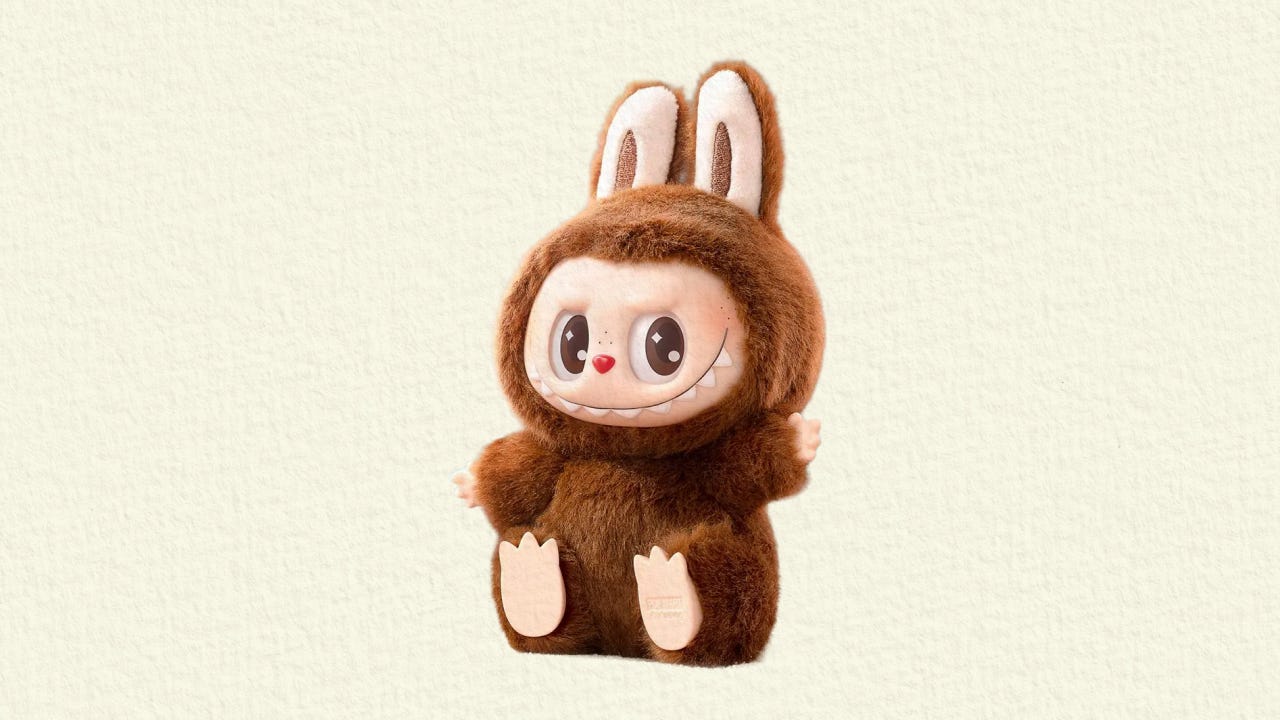
The strategic pivot is directionally correct, but the pivot is being executed while the market watches the original cultural moment fade in real time, and a feature film release three to five years from now cannot replace the cultural momentum that Pop Mart is currently losing every quarter. The company will be smaller than the $100 billion peak valuation the market briefly assigned it, and that is because of a decision by leadership rather than anything the market did to them.
Pop Mart built the most valuable consumer IP moment of the year on scarcity, then broke the scarcity because the finance math argued for it. The math never saw the psychology. Every founder currently sitting on a hot product with a resale market or a waiting list should be studying this decision, because the same decision will arrive at your company, and you need a clear vision for the brand’s future you are aiming to build.
Till next time,
Xx Camille
P.S. If you are a creator, the Clio Creator Awards are open for entries through August 22nd, and you can submit your work here: https://clios.com/creators/
—
Want my team on your brand? Book a call here with Third Eye Insights, my international brand strategy and creative agency.
Apply my frameworks and teachings to your own brand with my Masterclass and Social Media & Brand Planners
Get the Friday debrief: Join my newsletter here for weekly inner circle content that keeps you winning.
Comments
Nothing yet. Say the first thing.
Sign in to join the conversation.