
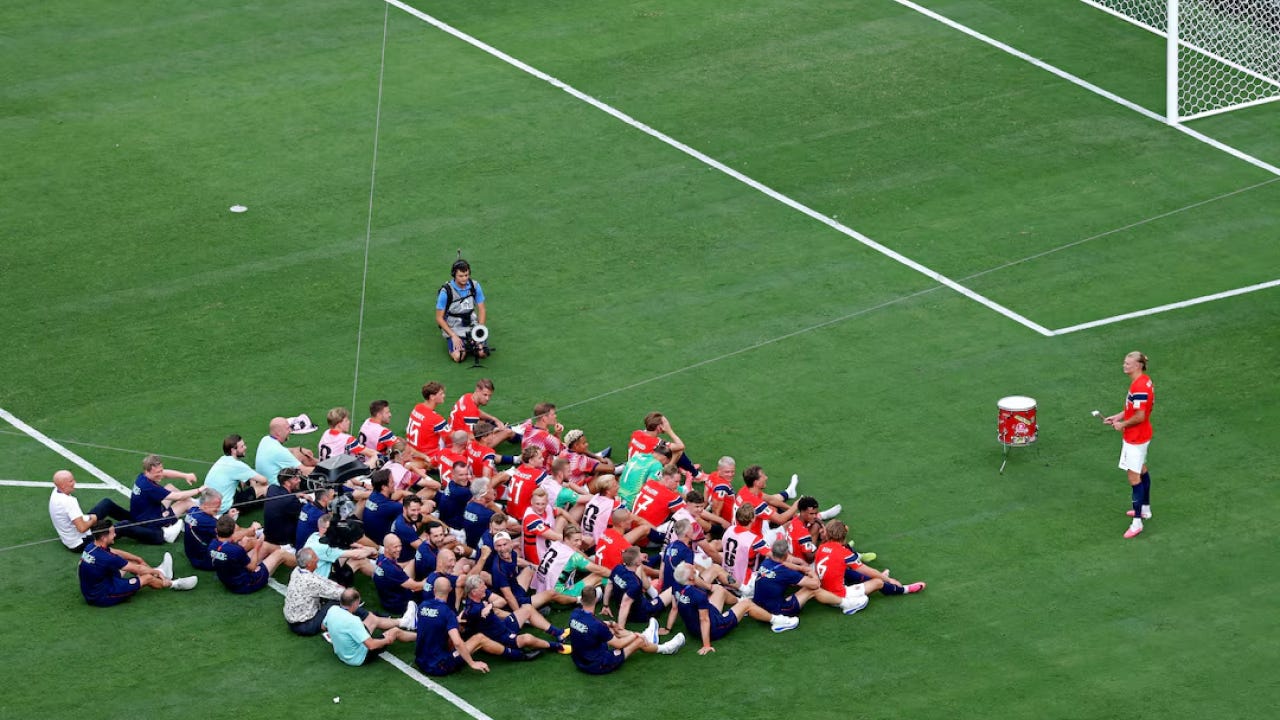
The defining image of this World Cup starts with a horn. A traditional Norse blowing horn called the gjallarhorn sounds somewhere in the stands, a drumbeat sets a pace, and an entire stadium sits down and begins rowing an invisible longship in unison, chanting “ro,” the Norwegian word for row. By the knockout rounds, the people rowing were not only Norwegians. Mexico fans adopted the Row like a second team after their own side went home. Police at Dallas-Fort Worth airport performed it on the tarmac when the team landed. Fans rowed in Times Square and on the New York City subway, and when England ended Norway’s run in the quarterfinal in Miami, the internet responded the way it usually responds to a champion, i.e., “won the game, won our hearts.” A team that never made the semifinal produced the tournament’s defining ritual, and by the time the squad landed in Oslo, Crown Prince Haakon was leading the Row outside the Royal Palace with roughly 100,000 people.
What makes this a case study rather than a feel-good sports story is why it worked. Football fandom is one of the most closed cultures in the world. You inherit your club, you earn your credibility over decades, and the whole ecosystem runs on gatekeeping, i.e., the badge, the chants, the unwritten rules about who is a real fan. Norway did the opposite. They took a thousand years of cultural heritage, played it straight, and built an entry point anyone could walk through. You did not need to know football to follow Haaland’s Snapchat, and you did not need to be Norwegian to learn the Row. Norway gave people who had never felt welcomed into football a way in, and millions of them took it.
That is world-building in its truest form. A brand sells a product. A good brand sells a story. A great brand builds a world, i.e., a complete point of view people can enter, and the entering is the part most brands forget to design.
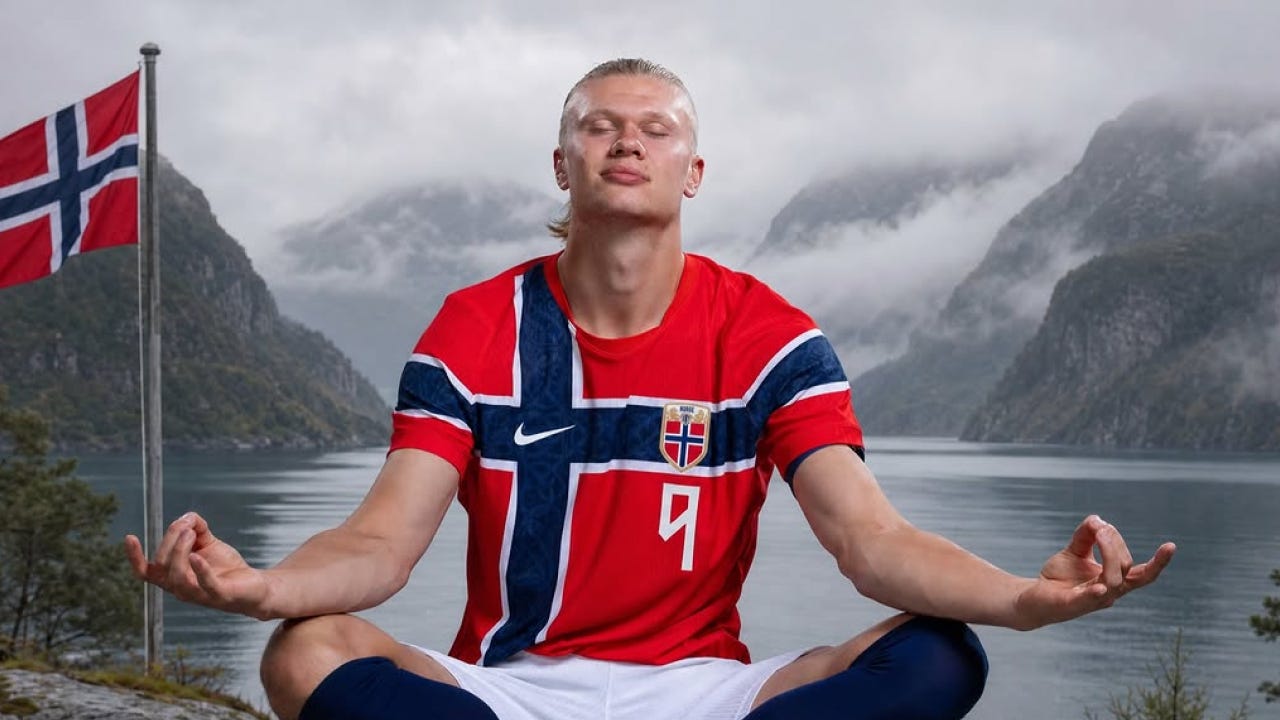
World-building is the question I get asked about most, and the examples people reach for are usually brands like Rhode or Summer Fridays, i.e., brands with real budgets, full creative teams, and the resources to art-direct every surface a customer touches. That is what makes Norway the more useful case study. Nobody would call a national football federation a sophisticated brand operation, and yet they out-built nearly every consumer brand this year, because world-building was never about the budget. It is about creating isolated touchpoints, i.e., a photoshoot, a chant, a Snapchat account, a haircut, a raccoon, that all draw from the same point of view, so that each one compounds the others instead of standing alone. One touchpoint is a piece of content. Five touchpoints from five different directions is a marketing calendar. Five touchpoints from one source is a world, and the difference between those last two is the discipline.
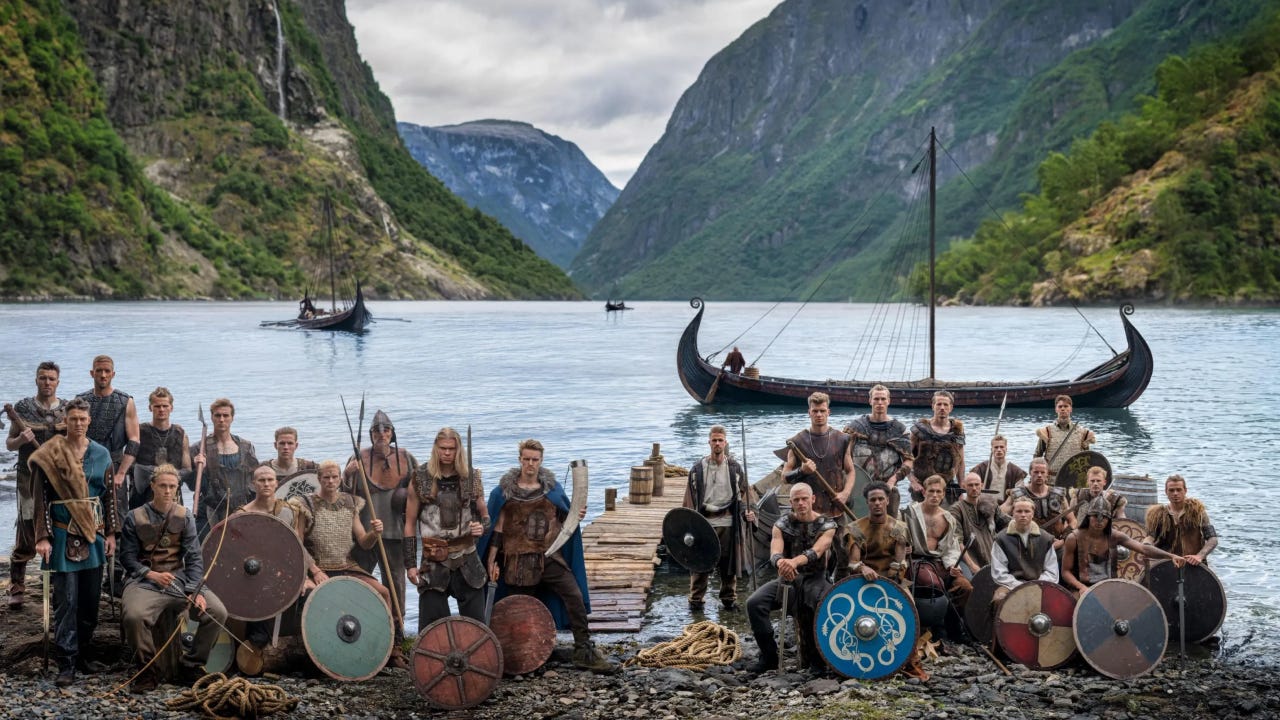
The world was established before a ball was kicked. The Norwegian Football Federation marked the team’s departure with a photograph of the squad in Viking battle gear, standing in front of a wooden longship in a fjord, which told everyone exactly what world they were about to be invited into. The Row extended it into the stadium. The chant was created by a supporter named Ole Frøystad, who wanted something that felt unmistakably Norwegian and simple enough for an entire stadium to perform together, and the simplicity was the strategy, because a ritual only spreads if anyone can do it.
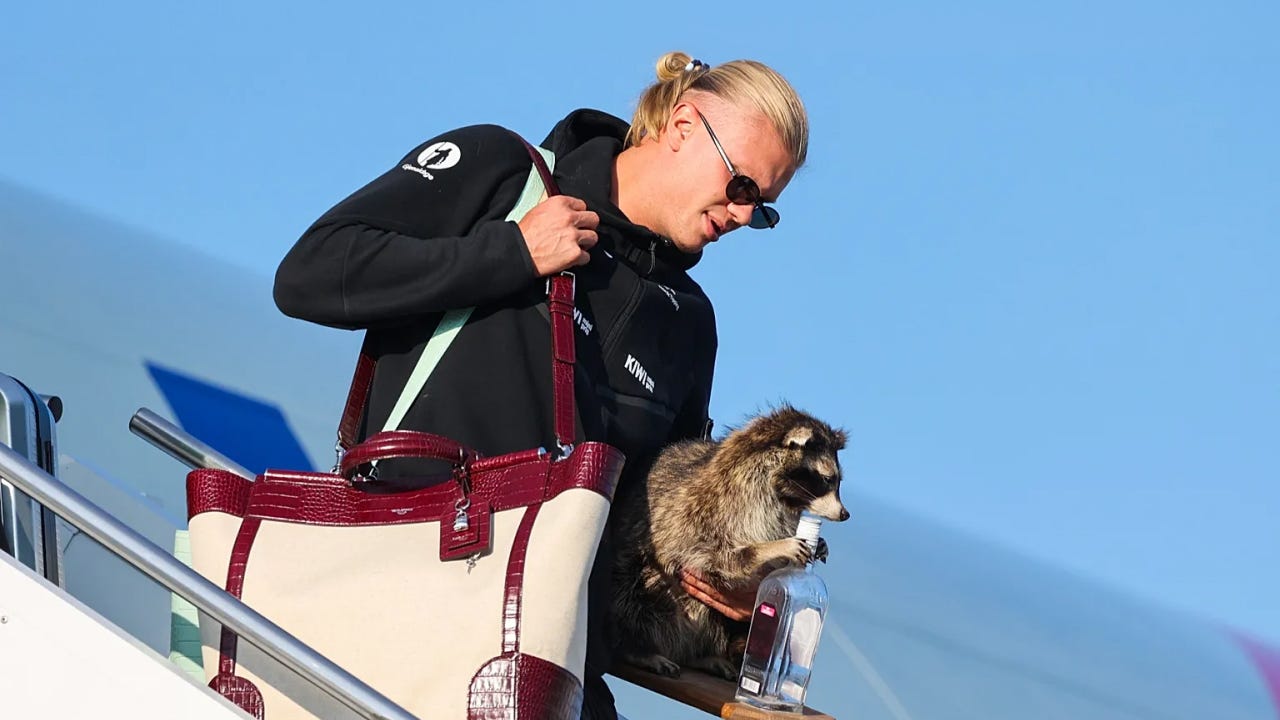
Haaland ran his own channels on the same frequency. His Snapchat, where he is most active, is a stream of deadpan selfies with captions like “well well well,” and during the tournament his Instagram grew from 40 million followers to 60 million, more than ten times the population of the country he plays for. He ended all seven of his goals with the same meditation pose, documented the run on YouTube, let a remix of a rap song he recorded as a teenager go to number one on Spotify Norway, and flew home carrying a taxidermied raccoon captioned “It followed me home.” The ponytail became something fans wore to matches.
Nothing was borrowed from another culture or invented for the algorithm. Everything was already theirs, and that is why every touchpoint compounded instead of competing. This is the part most brands get wrong about world-building. They treat it as a production exercise, i.e., more content, more campaigns, more surfaces, whereas the discipline is editorial. Norway created one point of view and expressed it everywhere, and that is the compounding effect at work, i.e., every new touchpoint made the previous ones more valuable, which is the signature of a world rather than a campaign.
The clearest evidence that Norway had built something with gravity is that other brands started marketing themselves by entering it. Before the England quarterfinal, Norwegian Air challenged British Airways to a public bet, i.e., the losing airline would replace its Instagram logo with the rival’s for 24 hours. British Airways’ lawyers approved it, a Norwegian Air intern flew to London to hand over the logo files on a USB stick, and the exchange was filmed at BA headquarters under a screen reading “Miami is a long way to row home.” American Airlines jumped into the comments, SAS promoted remaining seats on an aircraft named after a Norse figure, and Norse Atlantic added a Dreamliner to the Oslo-Miami route after the Brazil win. When England won, Norwegian followed through, swapped its logo, congratulated British Airways, and ran a flash sale captioned “Well played, England. Fancy a trip to Norway?”
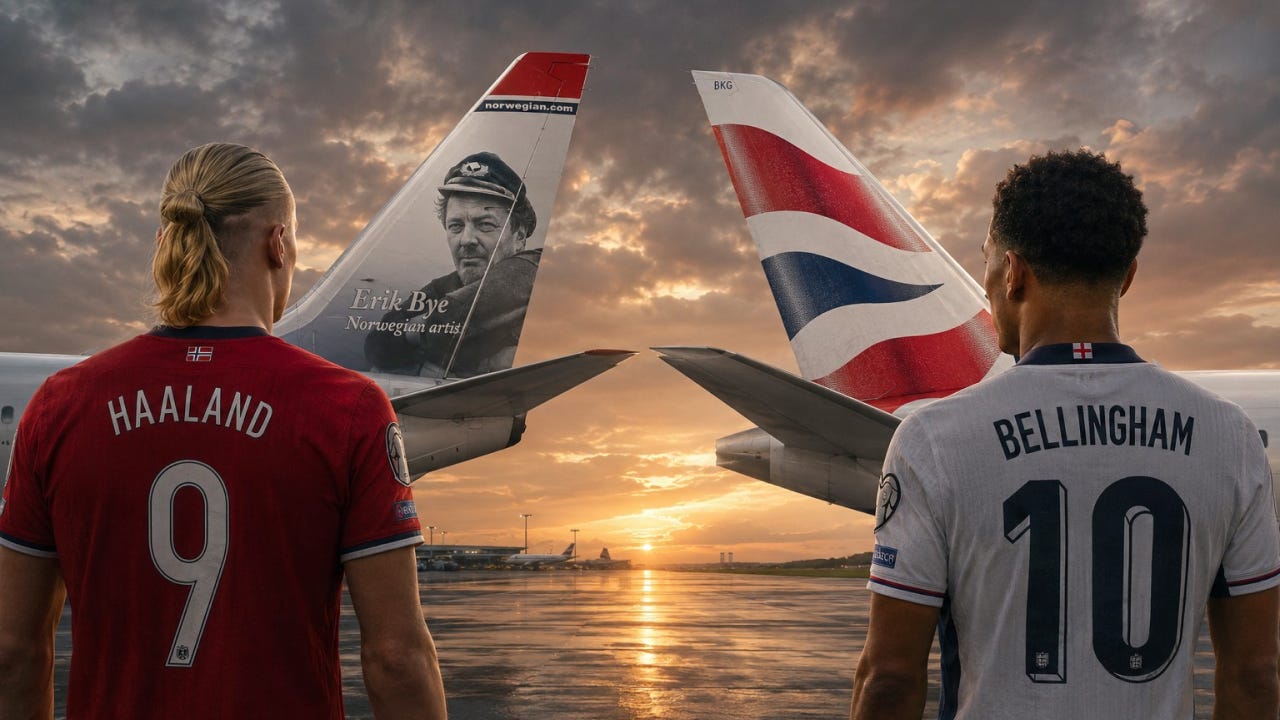
None of this was Norway’s spend. The airlines wrote themselves into the story because the story had gravity, which is what a functioning world produces, i.e., other parties investing their own budgets to be part of it. Most brands pay to borrow attention. Norway built something other companies paid to associate with, and the difference between those two positions is the entire economics of brand building.
A photoshoot, a chant, a drum, a Snapchat account, a haircut. Haaland’s commercial machine existed around the edges, i.e., the Nike tournament spot with LeBron James and Kim Kardashian, but the world itself was built from creative decisions rather than production spend. What made it work was a point of view held consistently across every touchpoint, which is the thing most brands with a hundred times the budget never achieve, because consistency requires saying no to everything that is not from the world, and most marketing teams are structurally incapable of that refusal.
The returns did not stay inside football either. Norway’s Viking museums reported a surge in visitor interest during the tournament, and Innovation Norway’s tourism director publicly credited the Row with bringing attention to the country. A world built for a football team started selling the nation itself, which is what happens when the world is real, i.e., it generates value in places the original strategy never planned for.
Define the world first, i.e., the point of view and the codes only your brand can claim. Norways were sitting in plain sight in a thousand years of cultural heritage, and most brands have an equivalent they have never mined because they are too busy watching what competitors are doing.
Pull every touchpoint from that world, so the whole brand compounds toward one idea. The longship photoshoot, the gjallarhorn, the Row, and the Snapchat reinforced each other because they came from one source, and this is what separates a world from a content calendar, i.e., a brand whose touchpoints come from one source gets stronger with every piece of content, whereas a brand chasing trends starts over every week.
Make it participatory, because people do not share what they watch; they share what they belong to. The Row traveled because anyone could do it, and the moment your customer can perform the brand rather than just purchase it, the distribution problem solves itself.
Norway went home in the quarterfinal, and the Row did not. That is what a world does, i.e., it outlasts the campaign, the season, and even the result, because the people inside it have a reason to stay. Most brands are still buying reach. The ones worth studying are handing out passports.
Xx Camille
—
Want my team on your brand? Book a call here with Third Eye Insights, my international brand strategy and creative agency.
Apply my frameworks and teachings to your own brand with my Masterclass and Social Media & Brand Planners
Get the Friday debrief: Join my newsletter here for weekly inner circle content that keeps you winning.
Comments
Nothing yet. Say the first thing.
Sign in to join the conversation.