
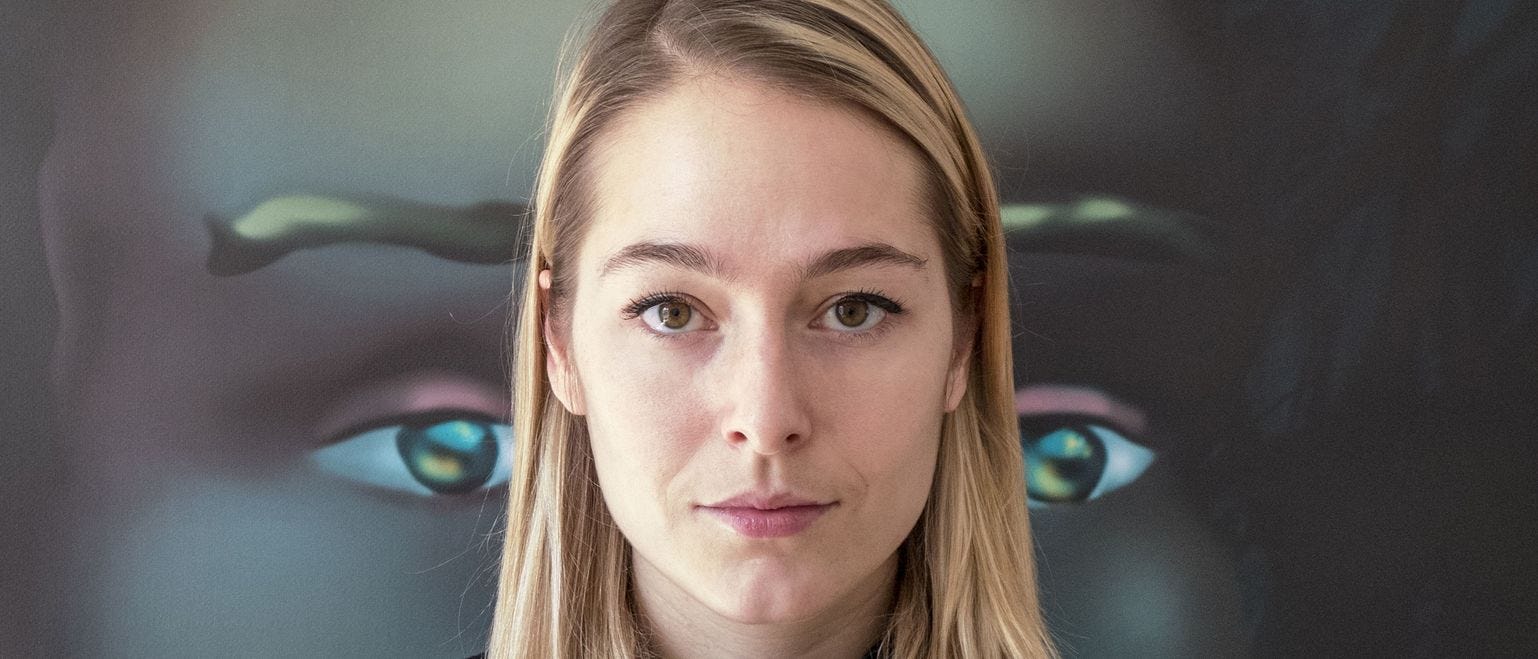
Born in Sion, Switzerland, in 1989, Louisa Gagliardi belongs to a generation of artists who grew up simultaneously between the physical and the digital world. Her work emerged powerfully on the international art circuit over the last decade precisely because it seemed to answer a question many artists were still avoiding: how do you paint after the internet? Rather than rejecting digital tools or retreating into a nostalgic idea of painting, Gagliardi developed a visual language of her own in which technology functions not as a decorative theme, but as a psychological condition. Her works — constructed through hand drawing, digital editing, PVC printing, and later physical interventions using nail polish, gels, varnishes, and layered textures — produce an immediate sense of contemporary estrangement. They are elegant, silent, slightly unsettling images, as if they had been dreamed from inside a screen.
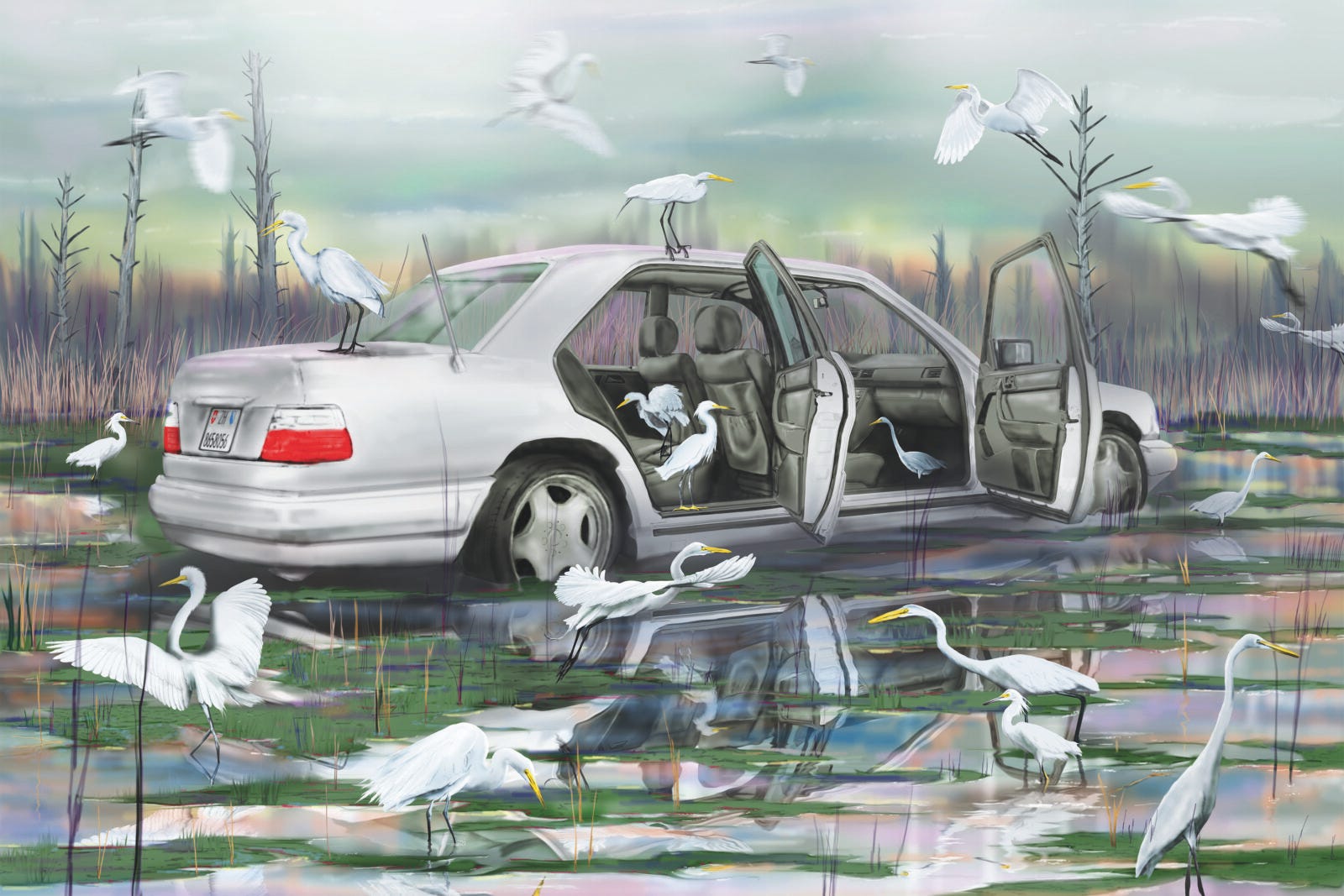
From her earliest exhibitions, her work drew attention for its ability to capture the emotional atmosphere of an era saturated with images. Unlike many artists associated with so-called post-internet art, Gagliardi has never worked from pure technological fascination or irony. Her practice feels closer to an emotional exploration of how screens have transformed our perception of the body, intimacy, and solitude. Her characters appear isolated even when they occupy the same space; interiors resemble immaculate artificial stages; nature erupts as something strange inside excessively controlled environments. Everything in her work conveys the feeling that contemporary reality has somehow lost a degree of stability.
There are artists who represent their time, and others who seem to anticipate it. The work of Louisa Gagliardi belongs firmly to the latter category: a form of painting that does not deny the digital world, but absorbs it, distorts it, and transforms it into an emotional experience.
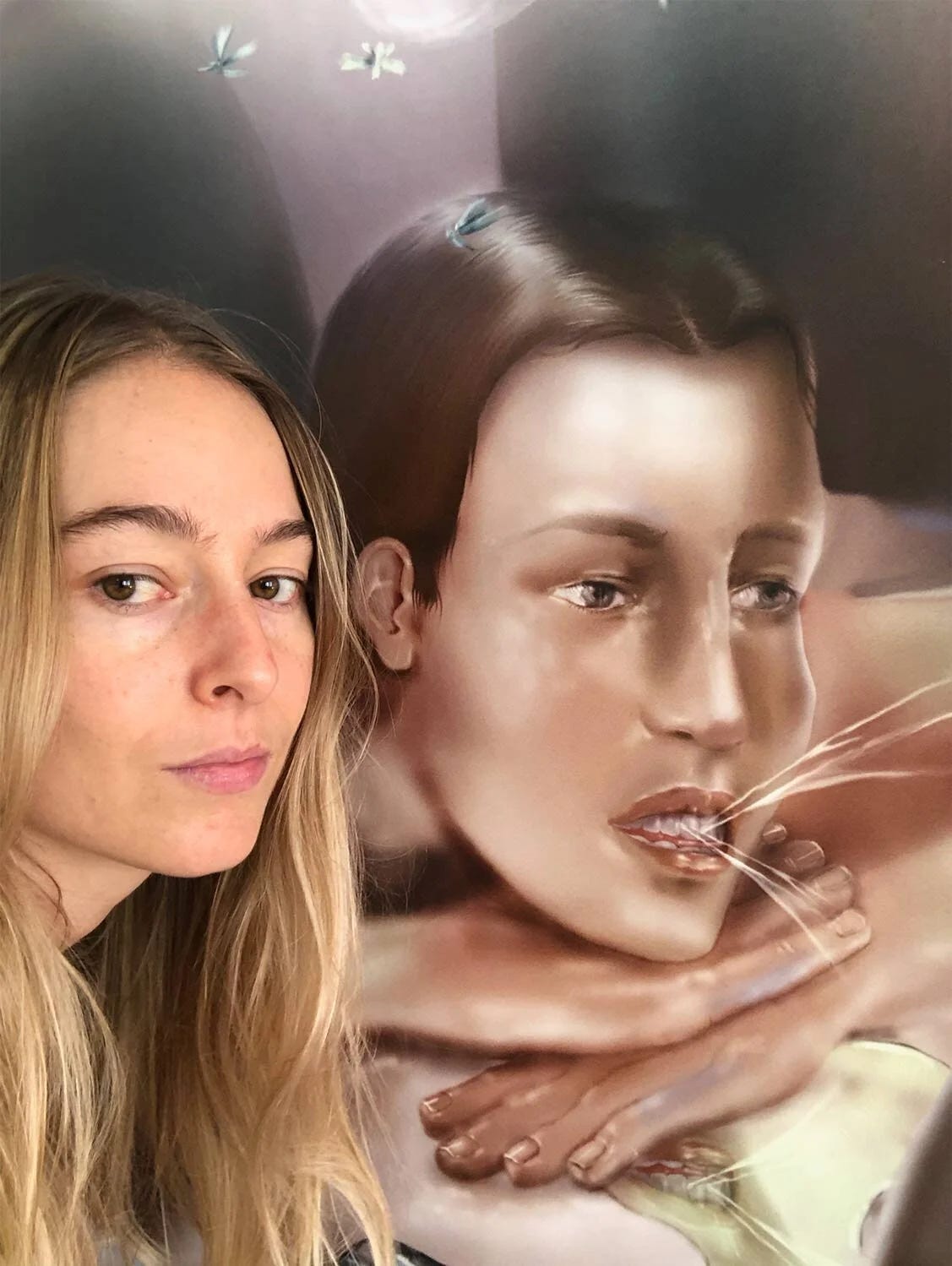
At a historical moment in which images circulate at an impossible speed, Gagliardi works directly through that visual saturation. Her scenes seem to emerge from the blue glow of a screen at three in the morning: silent figures, ambiguous interiors, animals appearing like symbols, rooms suspended somewhere between dreams and digital rendering. Everything in her paintings carries a sense of contemporary unease.
What is fascinating is that, although her work is often described as “digital painting,” it actually exists within a hybrid territory. In one interview, she even joked that she uses “everything except paint.” And yet the final result possesses a surprisingly physical presence. Gagliardi draws and composes her images on a computer, prints the works onto PVC, and then physically manipulates the surfaces using gel, nail polish, varnish, and hand-built textures. The result is a body of work that challenges traditional categories of painting without abandoning materiality. For Gagliardi, the tactile dimension remains essential: she has compared the surfaces of her works to the sensation of skin, something simultaneously alive and ambiguous.
In recent interviews, Gagliardi has explained that one of the central ideas behind her work is how “we feel disconnected in this hyperconnected digital world.” The phrase could easily sound like another generational observation, but in her work it acquires a far more specific emotional density. Her scenes do not illustrate the internet; they illustrate the psychological sensation of living inside it.
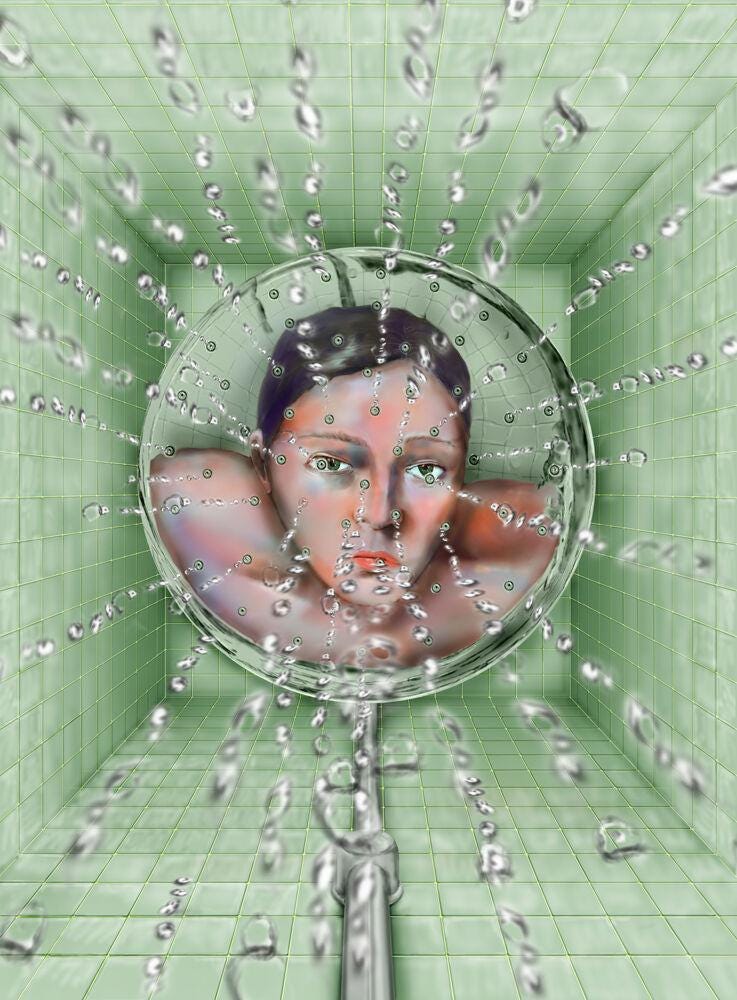
Gagliardi’s work speaks about the present without explicitly depicting current events. There are no direct political statements or obvious slogans. Instead, there are atmospheres. Mental states. A silent anxiety that feels deeply recognizable.
Her characters seem to exist in a kind of psychological limbo. Often, we cannot tell whether they are waiting for something, hiding, or simply detached from the world around them. There is a strange theatricality in her compositions: bodies that appear to pose for an invisible camera, rooms that feel too perfect, unreal lighting, suspiciously clean reflections.
Looking at a work by Louisa Gagliardi feels like opening a social media app after too little sleep: everything appears familiar, yet slightly disturbing.
And perhaps that is where the strength of her work truly lies. Rather than representing the internet literally, she captures the way it has altered our emotional perception of the world. Intimacy no longer feels private; identity no longer appears stable; physical spaces begin to resemble digital stages.
No posts
Comments
Nothing yet. Say the first thing.
Sign in to join the conversation.