
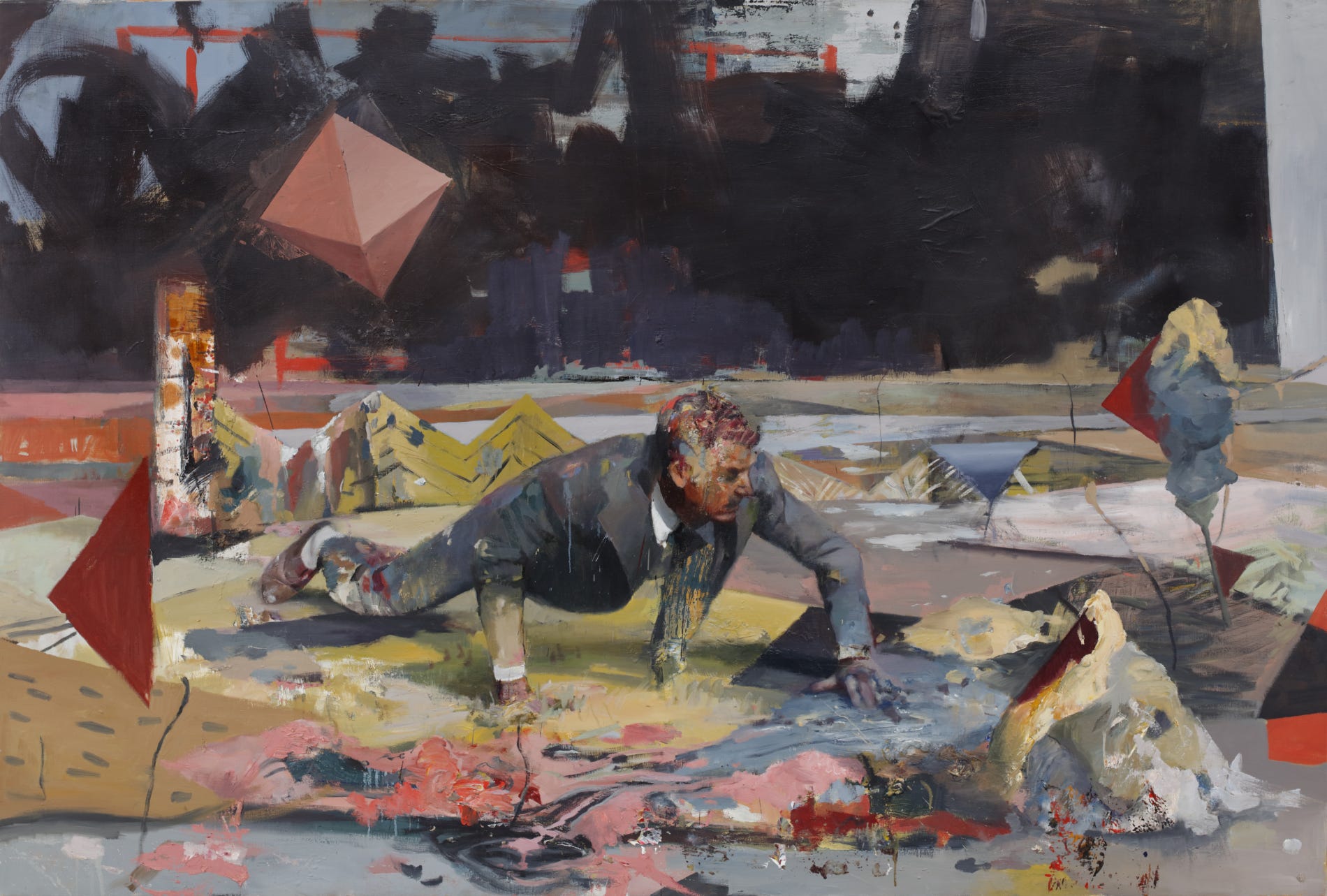
Daniel Pitín creates paintings that feel like fragments of unfinished films. Drawing from cinema, photography, archives, and found imagery, he constructs complex interiors and architectural spaces where multiple narratives seem to overlap simultaneously.
His paintings are often populated by rooms, corridors, staircases, domestic settings, and modernist structures that appear partially assembled or in the process of collapse. Perspective shifts unexpectedly, spaces merge into one another, and architectural elements become unstable. The viewer is never entirely certain where one environment ends and another begins.
What makes Pitín’s work particularly compelling is the way architecture functions as a carrier of memory. Buildings are not presented as static objects but as containers of accumulated histories. Different temporalities coexist within the same image, creating a sense that past and present are unfolding simultaneously.
His compositions frequently resemble theatrical sets or cinematic constructions. This ambiguity encourages viewers to question whether they are looking at real places, remembered spaces, or entirely fictional environments. Architecture becomes a mechanism through which memory, imagination, and narrative intersect.
At a deeper level, Pitín explores how contemporary life is increasingly mediated through images. Many of his architectural spaces feel familiar precisely because they echo visual experiences drawn from films, television, photography, and digital culture. His paintings reveal that our understanding of space is often shaped as much by representation as by direct experience.
Within the context of this chapter, Pitín offers a particularly contemporary understanding of architecture: not merely as physical structure, but as a psychological and cultural construct where memory, fiction, and perception continuously overlap.
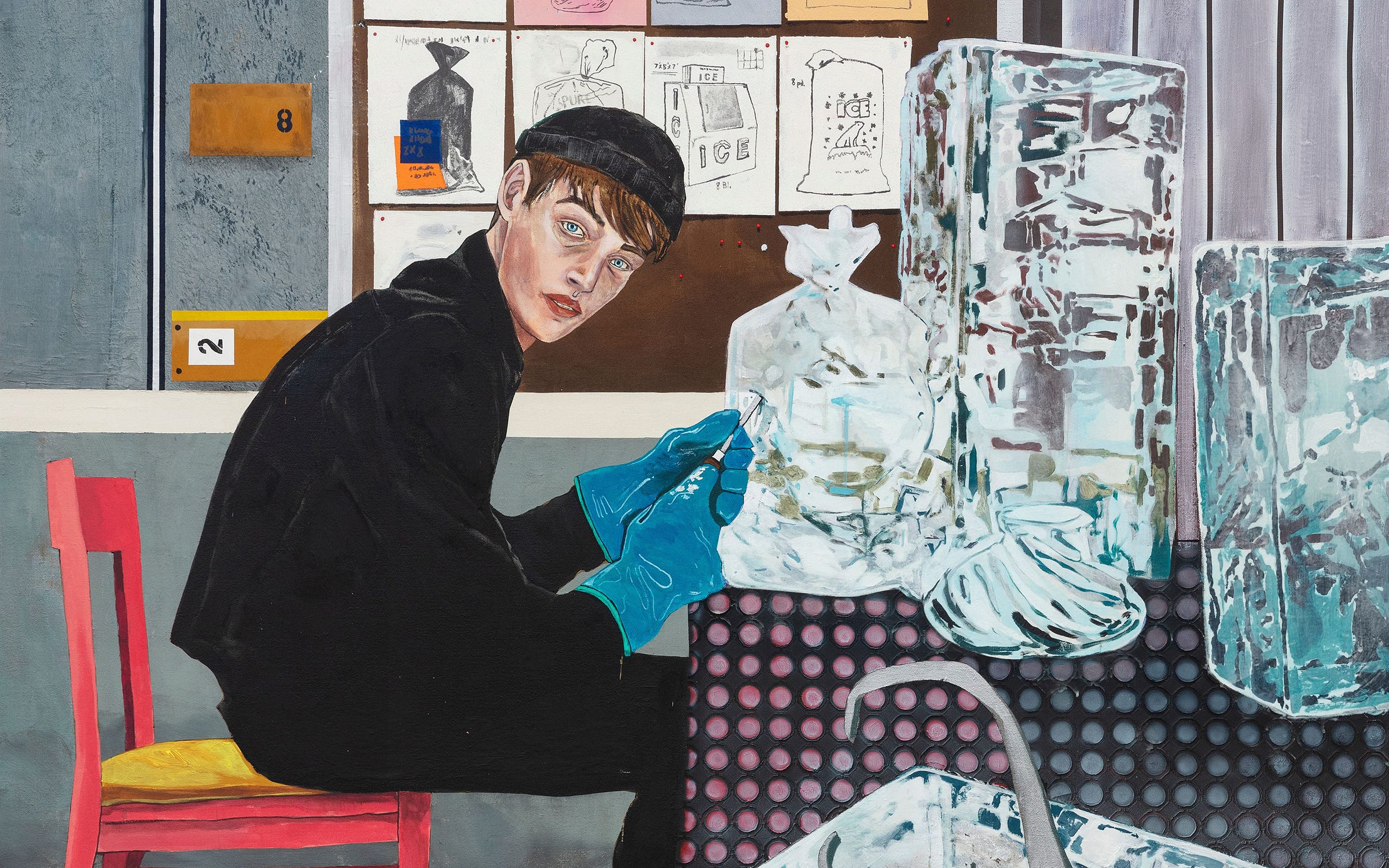
In Hernan Bas’s paintings, architecture often appears as an extension of psychological and literary space. Mansions, libraries, gardens, abandoned rooms, and fictional interiors become stages upon which identity and fantasy unfold.
Bas draws from literature, queer history, symbolism, and Romantic painting traditions to create environments that feel suspended between reality and invention. His spaces rarely function as realistic depictions. Instead, they operate as emotional landscapes shaped by desire, solitude, and introspection.
What makes these architectural settings compelling is their narrative ambiguity. They seem to contain stories that remain unresolved, inviting viewers to project their own interpretations into the work.
Through architecture, Bas explores how spaces become repositories for dreams, fantasies, and personal mythologies.
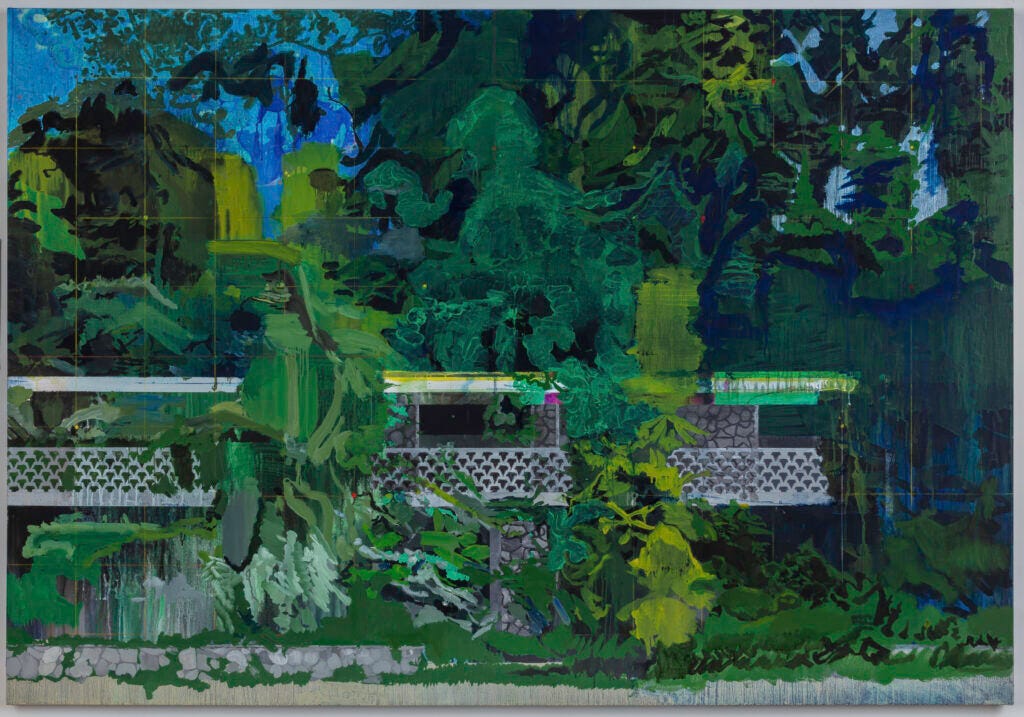
Few contemporary painters have explored the relationship between architecture and identity as sensitively as Hurvin Anderson.
His paintings frequently depict barbershops, gardens, community spaces, and urban environments connected to Caribbean and diasporic experiences. Yet these locations are never presented as fixed or stable realities.
Instead, Anderson constructs spaces that exist between observation and memory. Architectural structures become fragmented through layers, screens, grids, and interruptions that complicate perception. The viewer is simultaneously invited into the image and held at a distance.
This strategy reflects broader questions surrounding migration, belonging, and cultural memory. Architecture becomes a carrier of personal and collective histories, preserving traces of movement across generations.
Anderson’s work reveals how buildings and interiors can embody emotional experiences of displacement and connection.
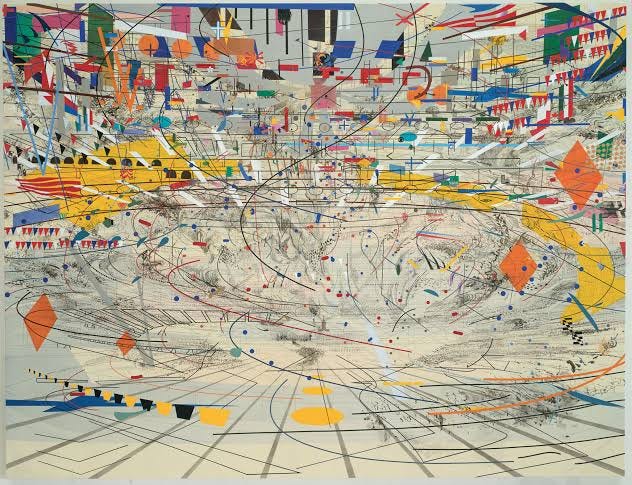
Julie Mehretu has fundamentally expanded how painting can engage with architecture.
Drawing upon architectural plans, city maps, engineering diagrams, satellite imagery, and historical documents, she creates monumental compositions that visualize the complexity of contemporary urban life.
Rather than depicting individual buildings, Mehretu paints systems. Her layered surfaces suggest networks of movement, migration, infrastructure, finance, conflict, and globalization. Architectural forms emerge briefly before dissolving into dense fields of marks and gestures.
This instability reflects the reality of contemporary cities, which are constantly shaped by economic forces, political transformations, technological developments, and human mobility.
Her paintings function almost as living cartographies of the twenty-first century, capturing the dynamic forces that structure urban existence.
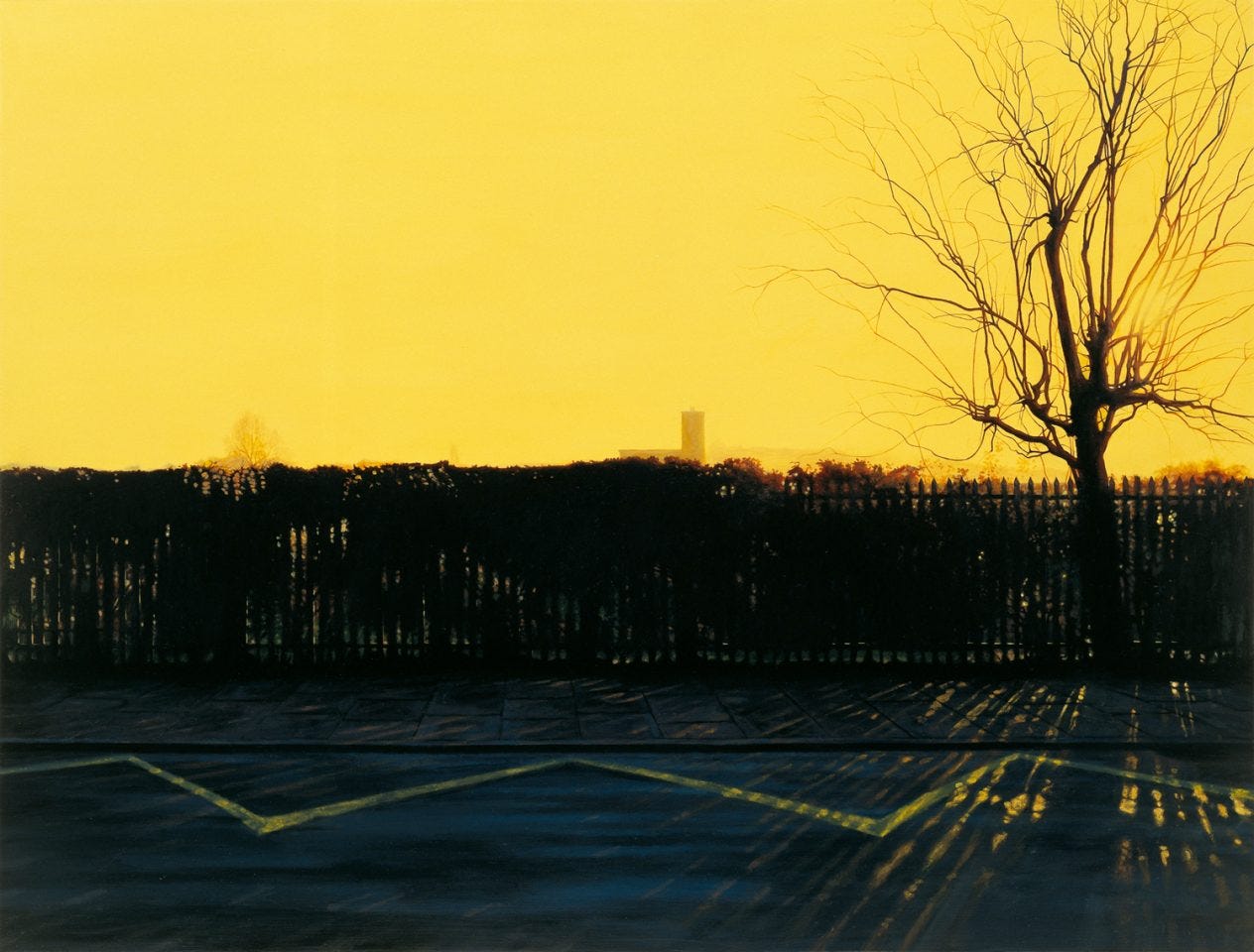
George Shaw has devoted much of his career to painting the suburban neighborhoods of contemporary Britain. Garages, playgrounds, pathways, housing estates, and empty streets become the primary subjects of his work.
What makes Shaw remarkable is his ability to reveal the emotional complexity hidden within ordinary environments. His paintings transform familiar suburban spaces into meditations on memory, social change, class, and belonging.
Human figures are often absent, yet their presence is constantly implied. The architecture itself becomes a witness to lived experience, carrying traces of generations who have passed through these spaces.
Shaw’s work challenges conventional hierarchies of subject matter. Rather than focusing on iconic landmarks or spectacular urban scenes, he directs attention toward the overlooked environments where much of everyday life unfolds.
His paintings remind us that architecture is never merely functional. It shapes memory, identity, and the stories communities tell about themselves.
No posts
Comments
Nothing yet. Say the first thing.
Sign in to join the conversation.