
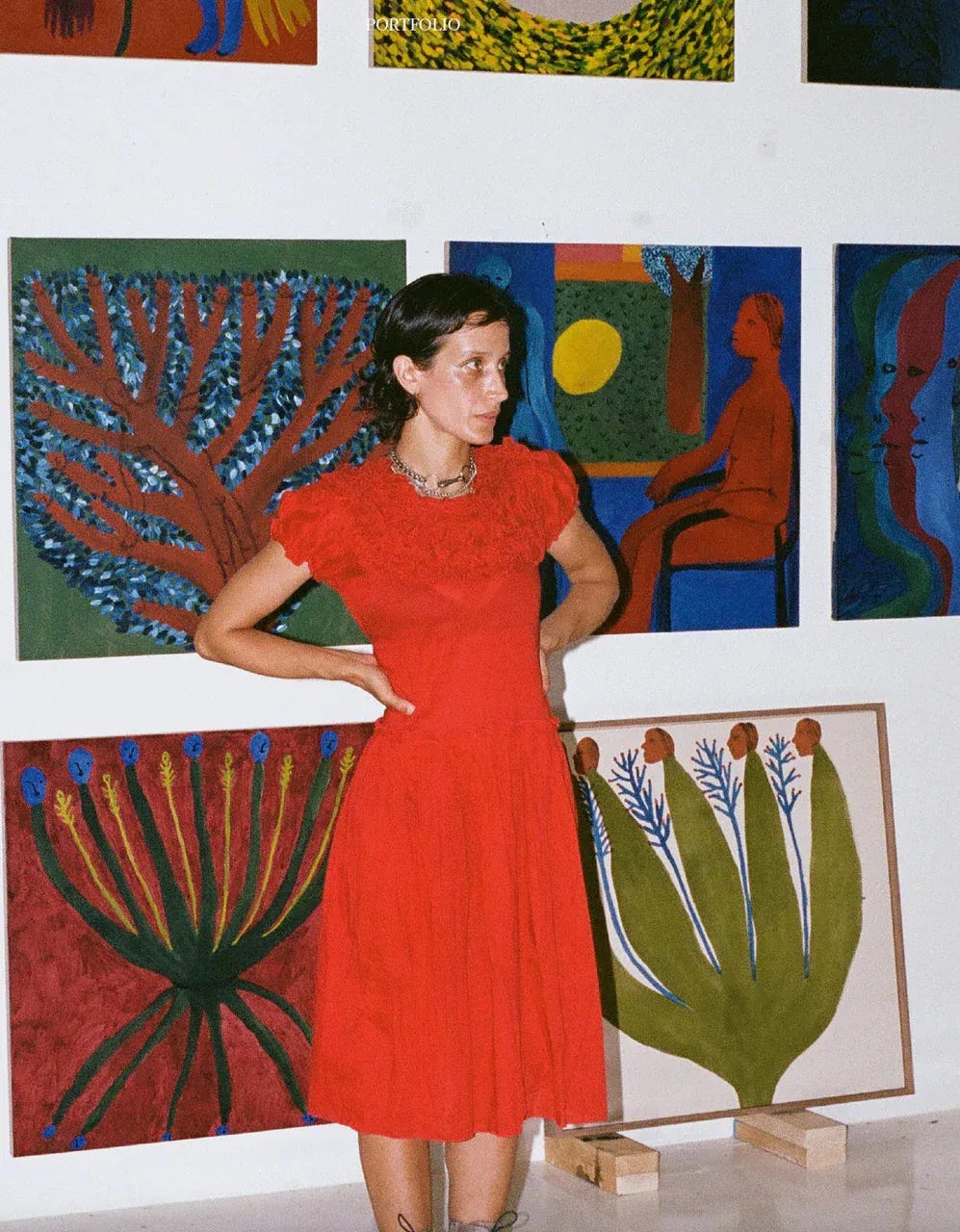
Emma Kohlmann (b. 1989, The Bronx, New York) belongs to a generation of artists who have found in figurative painting a way to explore questions that extend far beyond representation. Although her work is often associated with nature, symbolism, or feminine imagery, none of these labels fully captures the richness of her visual language. Drawing from sources as diverse as folk art, medieval manuscripts, poetry, feminist philosophy, and zine culture, Kohlmann has created a world that feels at once ancient and unmistakably contemporary. Over the past decade, her paintings have gained increasing international attention for the way they dissolve the boundaries between humans, plants, and animals, imagining them not as separate entities but as participants in the same living ecosystem. Without relying on grand statements or overt political messaging, her work speaks directly to some of the defining concerns of our time: our relationship with the natural world, the search for new forms of community, and the possibility of imagining different ways of inhabiting the planet.
What makes Kohlmann’s practice particularly compelling is that she has never viewed art as something detached from intellectual inquiry. In several interviews, she has explained that during college she deliberately chose to study political philosophy, feminist theory, and postcolonial thought because she believed understanding the world was just as important as learning how to paint. That decision still echoes throughout her work. Her paintings never illustrate theory, nor do they function as visual manifestos. Instead, they quietly embody a way of thinking about bodies, nature, and interconnectedness that resists rigid categories. Rather than directing the viewer toward a single interpretation, they create a space where multiple meanings can coexist.
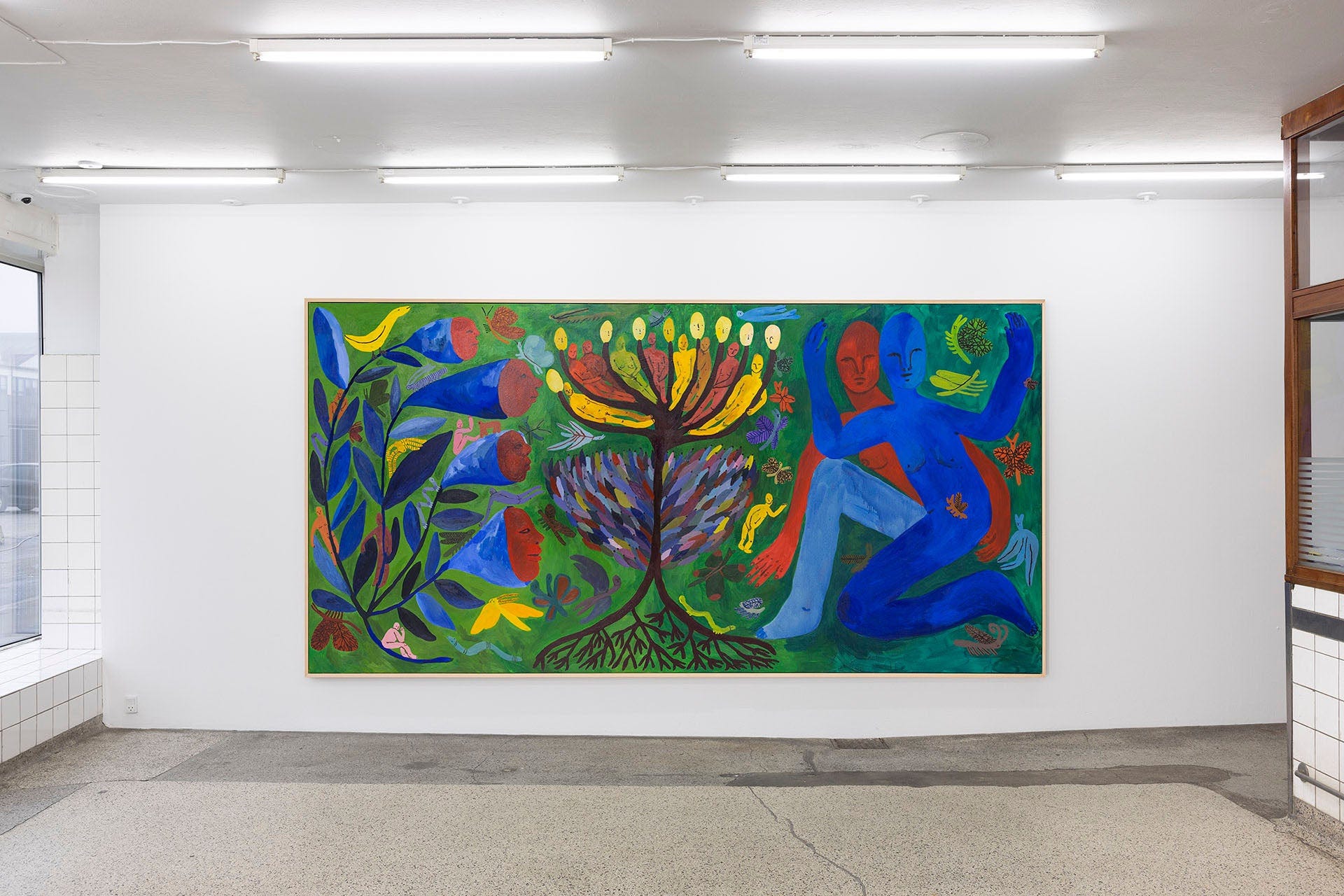
At first glance, Kohlmann’s paintings appear remarkably simple. Their fluid lines retain the immediacy of drawing, flat fields of color create an almost childlike clarity, and figures emerge surrounded by flowers, birds, fruits, and fantastical creatures that seem to belong naturally to the same environment. Yet beneath this apparent simplicity lies a sophisticated symbolic language. Kohlmann has often said that she does not think of her figures as individual characters but as emotions, moods, or fragments of a larger narrative. Once that idea is understood, the paintings begin to unfold differently. The figures stop functioning as portraits and become emotional states, while flowers and plants cease to be decorative motifs and instead acquire the same presence and agency as the human body itself. Everything appears to breathe together.
This vision also grows from a deeply personal relationship with landscape. Speaking about a period she spent in Copenhagen, Kohlmann recalled how profoundly she was affected by the arrival of spring—not simply by the changing scenery, but by the almost universal feeling of witnessing the natural world awaken after winter. That observation offers an important key to understanding her work. Nature is never treated as a backdrop against which human stories unfold. It becomes a shared condition of existence, a living network in which trees, flowers, animals, and people occupy the same plane. Nothing dominates. Nothing exists merely to support something else.
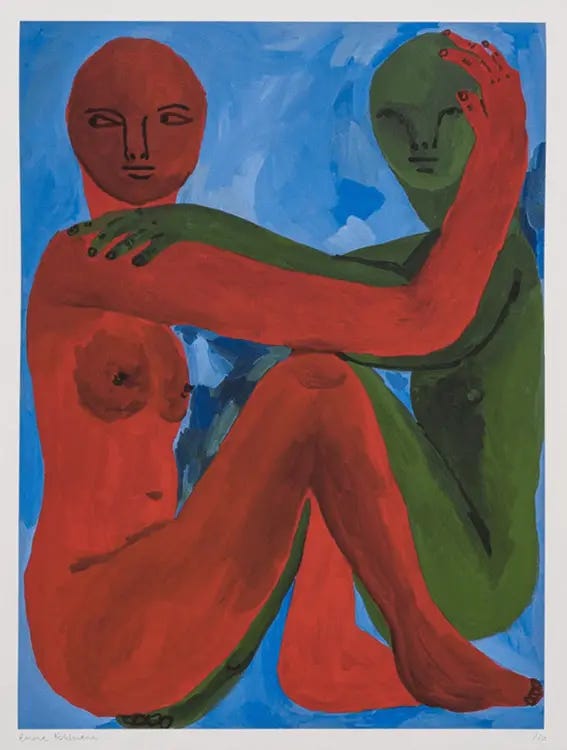
Her creative process is equally revealing. Rather than beginning with a fully formed concept, Kohlmann has often described painting as an act of intuition. She rarely knows exactly what she is looking for when she starts a new piece. Instead, she works until an image gradually reveals itself—until something simply feels right. It is a remarkably honest description of what painting can be: not the execution of a predetermined idea, but a process of discovery.
That reliance on intuition explains much of the freedom that defines her visual language. Her lines preserve the movement of the hand, her watercolors embrace accident rather than resist it, and traces of imperfection remain visible as an essential part of the work. Kohlmann has spoken about her love of working on paper precisely because it allows her to move quickly, experiment freely, make mistakes, and begin again without hesitation. In an era increasingly dominated by polished digital imagery and algorithmic aesthetics, this embrace of vulnerability and imperfection feels quietly radical. The paintings never strive for flawless execution. Instead, they preserve the energy of making, reminding us that the creative process is inseparable from uncertainty.
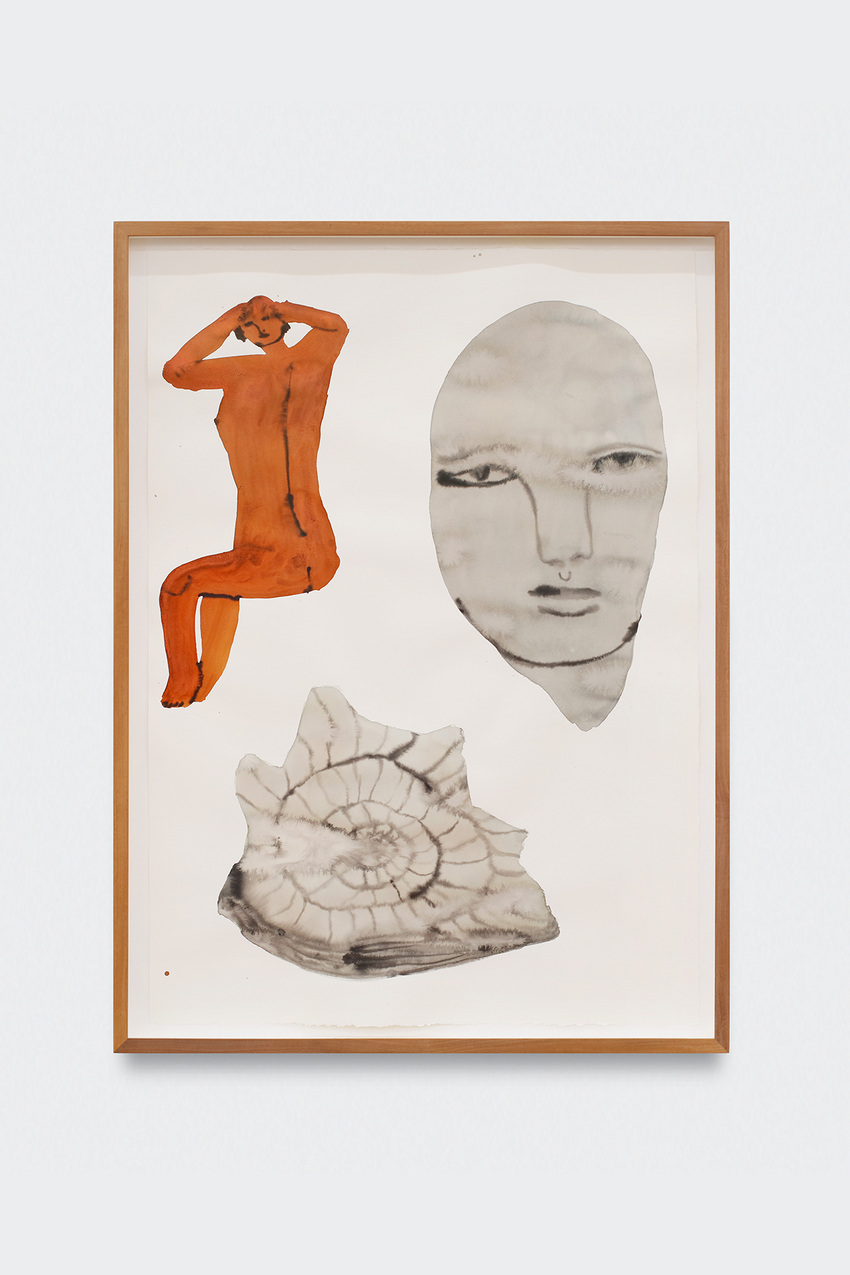
Another striking aspect of Kohlmann’s work is the openness of her figures. Although many viewers instinctively read them as female, the artist herself has resisted assigning them fixed identities. She has said that she wants her work to feel welcoming to everyone, creating images that invite identification rather than exclusion. Her figures are less portraits than shared emotional spaces, places where viewers can project their own experiences without being constrained by categories of gender or identity. That generosity contributes to the atmosphere of calm that permeates her paintings. No figure claims dominance, no narrative insists on a single meaning. Everything exists in quiet coexistence.
Literature also plays a fundamental role in Kohlmann’s artistic practice. Before exhibiting regularly in galleries, she produced handmade zines that combined drawing and writing, and she frequently cites poets and novelists alongside painters as key influences on her work. That literary sensibility is unmistakable in her paintings. They function less like illustrations than like visual poems, relying on rhythm, suggestion, and association rather than explanation. Meaning unfolds gradually, through atmosphere instead of narrative, allowing each viewer to complete the work through their own imagination.
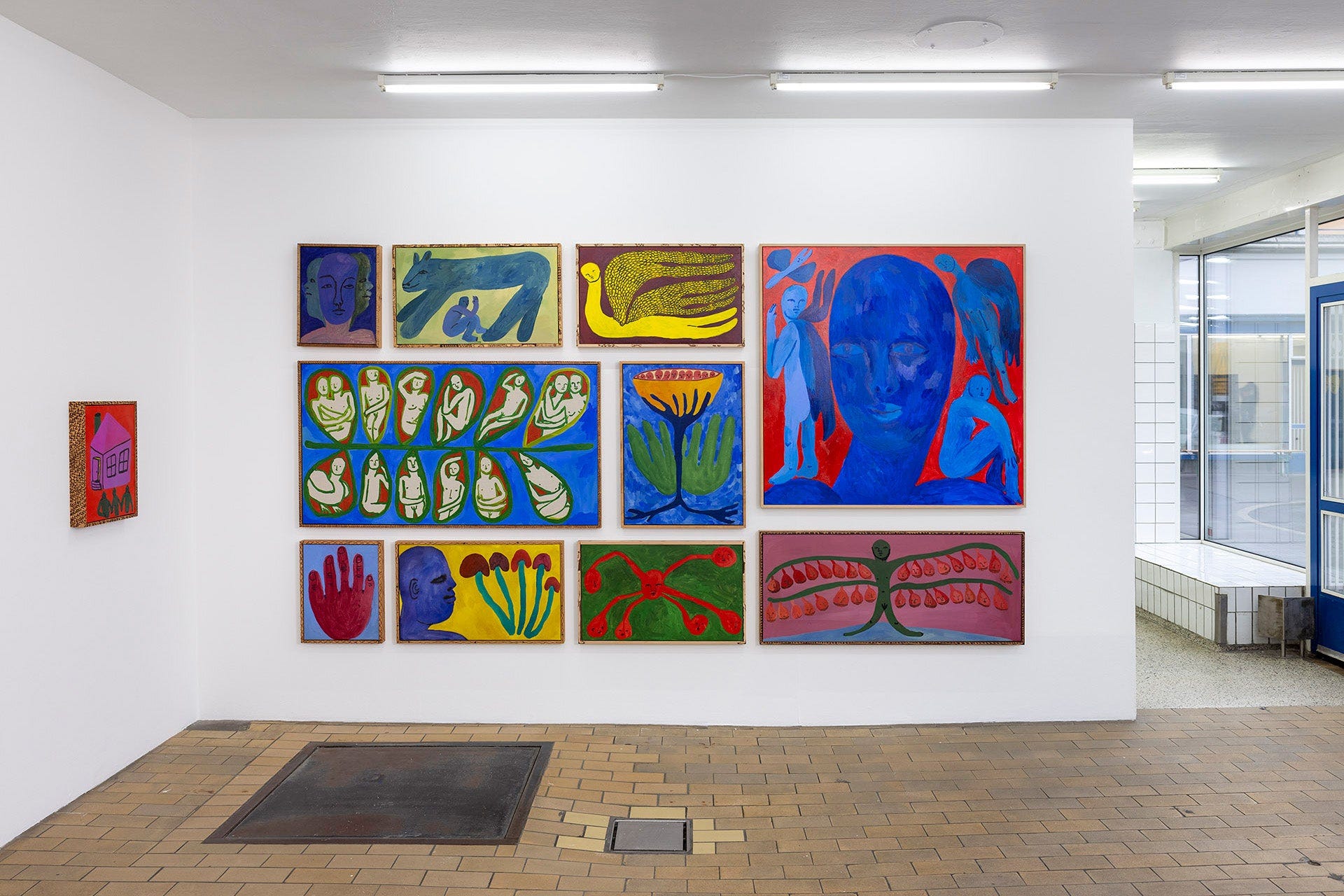
Perhaps this is what ultimately distinguishes Emma Kohlmann within contemporary painting. At a moment when so much art seeks to respond directly to current events or communicate explicit political positions, her work operates through a quieter register. It does not attempt to solve the ecological crisis, nor does it romanticize nature as an idyllic refuge from modern life. Instead, it subtly transforms the way we perceive our place within the living world.
To spend time with one of Kohlmann’s paintings is to experience a gentle shift in perspective. Nature is no longer something outside ourselves, a landscape to be observed from a distance, but a web of relationships in which humans, animals, plants, and emotions are inseparable. In an age defined by ecological anxiety, digital acceleration, and an increasing sense of disconnection, this vision feels unexpectedly hopeful. Kohlmann reminds us that imagining different ways of living together does not necessarily begin with grand gestures or ideological certainty. Sometimes it begins with something much simpler—and far more difficult: learning to look again.
No posts
Comments
Nothing yet. Say the first thing.
Sign in to join the conversation.