
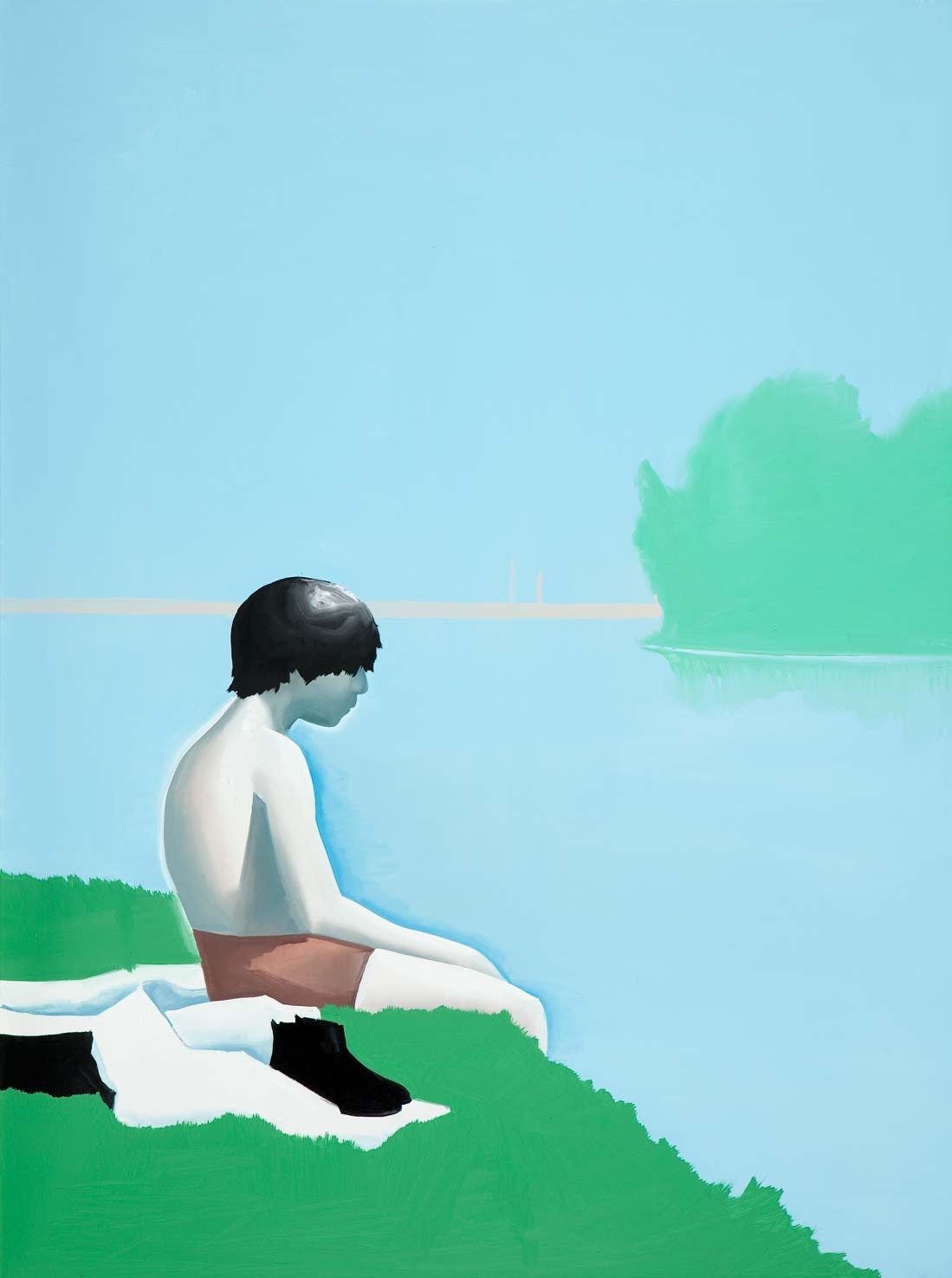
Few contemporary painters have explored the instability of memory as consistently as Wilhelm Sasnal. Working from photographs, newspaper clippings, family archives, film stills, and images gathered from everyday visual culture, Sasnal treats painting as a space where history becomes uncertain rather than clarified.
What makes his work particularly compelling is his refusal of narrative certainty. Many of his paintings originate from identifiable sources, yet during the process of translation into paint they lose their documentary authority. Images become fragmented, simplified, obscured, or partially erased. What remains is often a visual trace rather than a complete representation.
Sasnal is deeply interested in the relationship between personal memory and collective history. His paintings frequently touch upon themes such as the legacy of the Second World War, political violence, cultural memory, and the lingering presence of historical trauma in contemporary life. Yet he approaches these subjects indirectly. Rather than illustrating historical events, he investigates how images of those events survive, circulate, and gradually lose clarity over time.
A striking aspect of his practice is the tension between visibility and disappearance. Certain works appear almost unfinished, as if the image were fading before our eyes. Others reduce complex scenes to a handful of marks or tonal relationships. This economy of means reflects a broader philosophical concern: the recognition that memory is never complete, never fully accessible.
In Sasnal’s paintings, forgetting becomes as important as remembering. The canvas functions as a site where images persist, decay, and re-emerge in altered forms. His work reminds us that history does not exist as a stable archive but as a constantly shifting field of fragments, impressions, and unresolved traces.
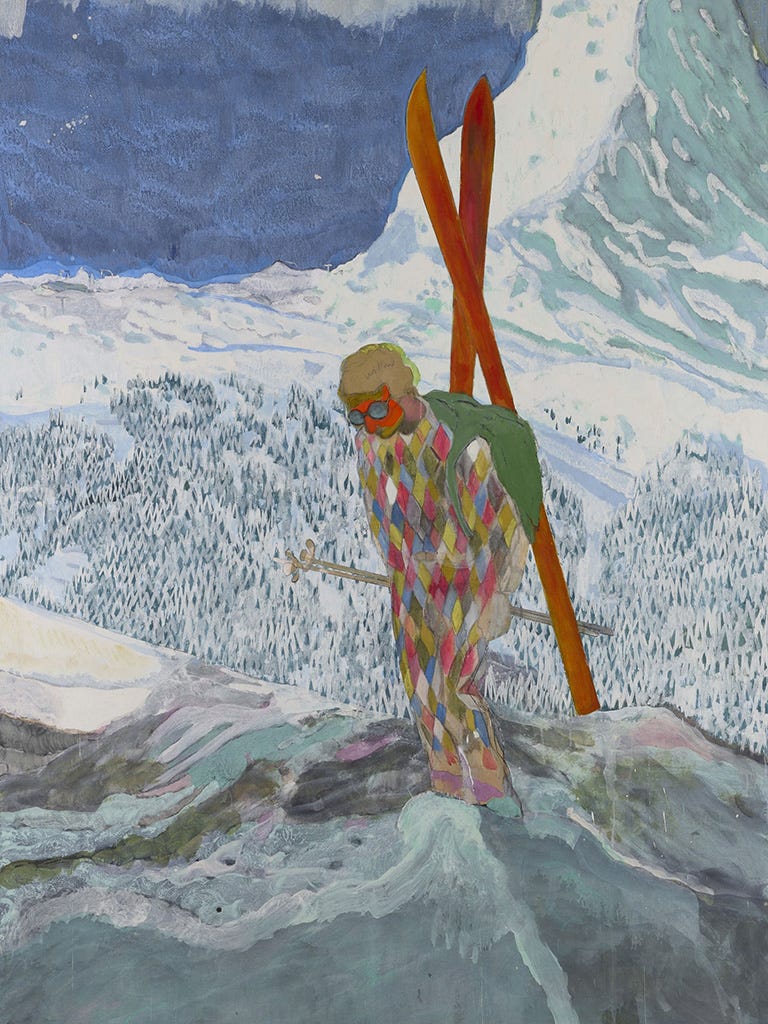
Peter Doig’s paintings are often described as landscapes, but they are perhaps more accurately understood as visual memories.
Rather than painting directly from observation, Doig frequently works from photographs, personal recollections, film stills, and fragments of visual culture accumulated over many years. These sources become transformed through the slow process of painting until their origins are almost impossible to identify.
The resulting images feel familiar yet elusive. Snow-covered fields, lakes, cabins, forests, and isolated figures appear suspended between reality and dream. Perspective loosens, colors become emotionally charged, and space itself begins to feel unstable.
What distinguishes Doig’s work is the way memory operates within it. His paintings never attempt to reconstruct a specific moment accurately. Instead, they capture the sensation of remembering—the way images return fragmented, altered, and emotionally intensified. The viewer is not presented with a location so much as a psychological landscape shaped by time.
The surfaces of his paintings reinforce this experience. Layers accumulate gradually, creating a sense of duration embedded within the work itself. Looking at a Doig painting often feels like entering a memory whose details remain just beyond reach.
His work demonstrates that memory is not an archive of fixed images, but a dynamic process through which recollection and imagination continually reshape one another.
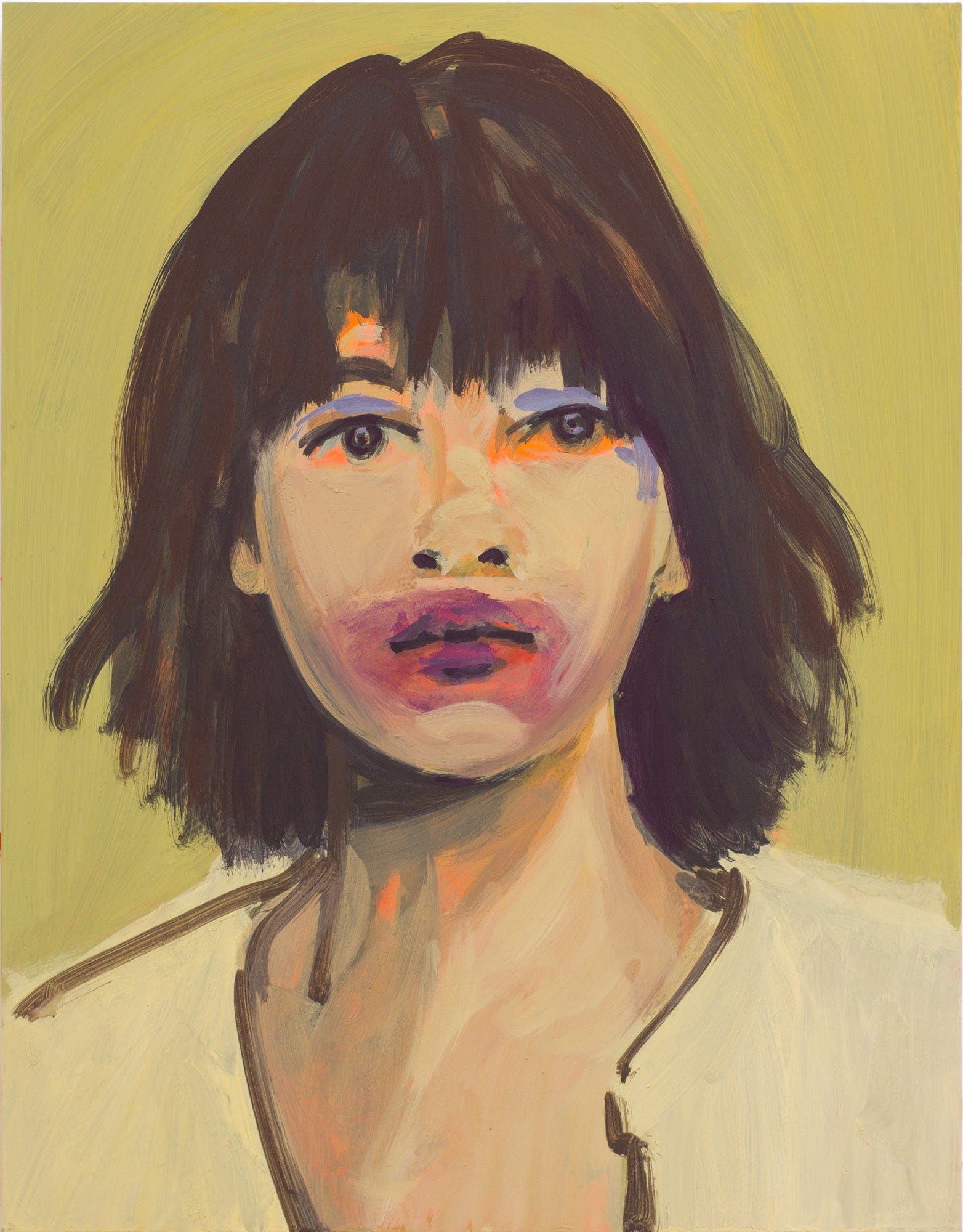
Claire Tabouret has built a remarkable body of work around the instability of memory and the fragile nature of personal identity. Her paintings often depict groups of children, adolescents, families, or anonymous figures drawn from found photographs, historical images, and personal archives. Yet these are never straightforward representations of the past. Instead, they function as meditations on how memory transforms and distorts what it attempts to preserve.
At the heart of Tabouret’s practice is an awareness that recollection is never neutral. The figures that populate her paintings appear suspended between presence and disappearance, emerging from richly layered surfaces that oscillate between revelation and concealment. Faces are often partially obscured, expressions remain ambiguous, and identities resist certainty. The viewer senses that these subjects belong to a specific moment, yet that moment remains inaccessible.
Color plays a crucial role in this process. Tabouret frequently employs luminous pinks, blues, violets, and spectral tones that detach her figures from conventional realism. These chromatic choices create an atmosphere that feels simultaneously intimate and dreamlike, as though the paintings were visual manifestations of memory itself rather than depictions of actual events.
Many of her works engage with childhood, a recurring theme that allows her to explore the relationship between innocence, vulnerability, and the passage of time. Yet her paintings avoid nostalgia. Rather than reconstructing an idealized past, they emphasize the uncertainty that accompanies remembrance. Childhood becomes less a historical reality than a psychological territory continually reshaped by experience.
What makes Tabouret particularly compelling is her ability to balance emotional immediacy with conceptual depth. Her paintings are undeniably evocative, yet they also raise fundamental questions about identity and representation. How much of ourselves survives in memory? How do photographs shape the stories we tell about our past? And what remains when those images begin to fade?
Her work suggests that the past does not remain preserved intact within us. Instead, it is constantly rewritten, recolored, and reconstructed, becoming a living image that changes each time it is recalled.
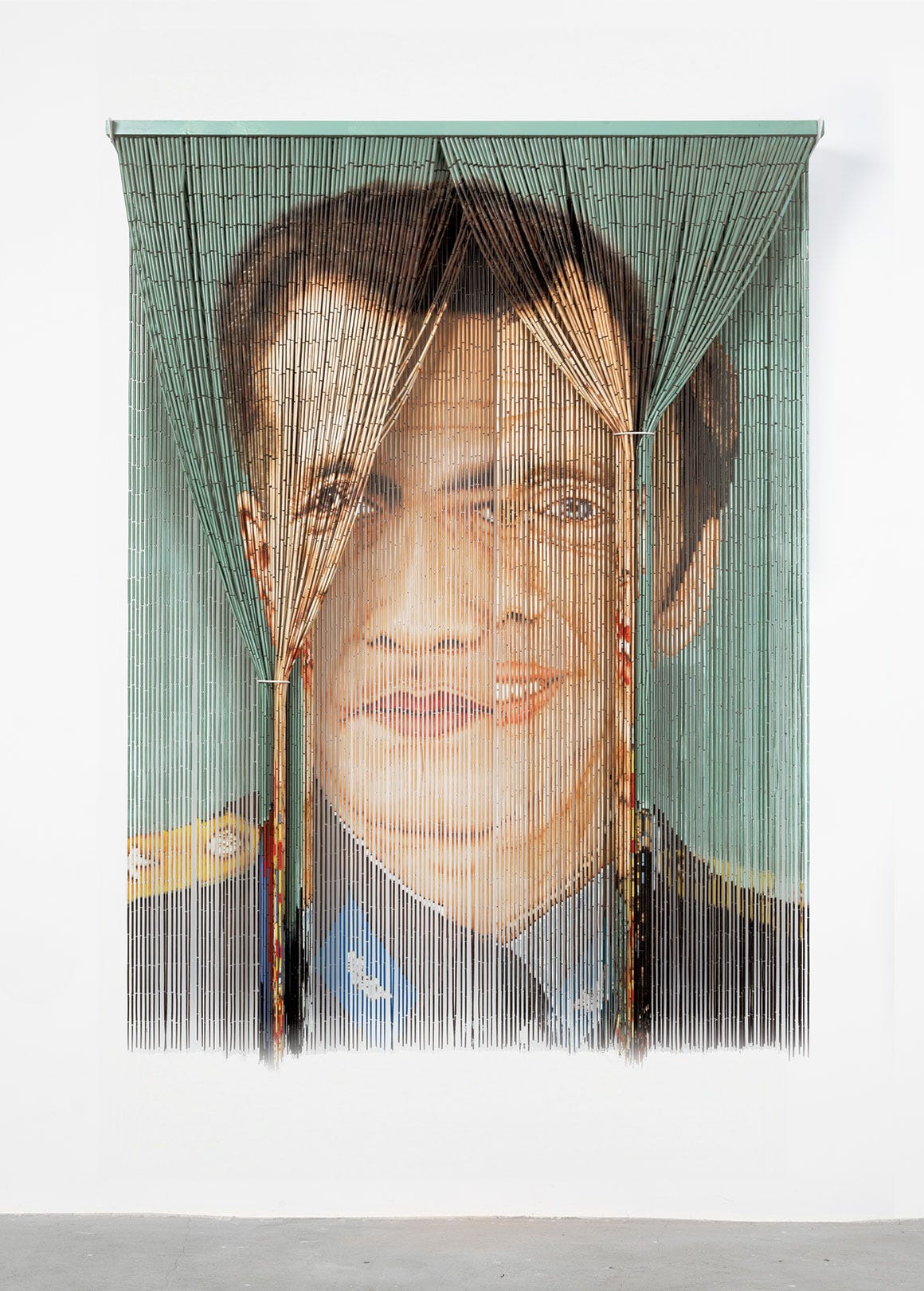
Although widely known for his multidisciplinary practice, Tuấn Andrew Nguyễn’s painterly works and image-based investigations offer a compelling reflection on how memory survives through fragments.
Much of his work engages with histories that have been marginalized, erased, or insufficiently recorded. Rather than reconstructing these histories as complete narratives, he focuses on remnants: partial testimonies, damaged images, overlooked objects, and cultural traces.
His approach reflects a broader understanding of memory as something inherently incomplete. Historical knowledge arrives in fragments, and painting becomes a way of inhabiting those gaps rather than filling them.
This strategy produces works that feel both archaeological and speculative. The image often appears suspended between revelation and disappearance, inviting viewers to consider what remains visible and what has been lost.
What makes Nguyễn particularly relevant today is his sensitivity to the politics of remembrance. His work asks who gets remembered, who disappears from official histories, and how visual culture participates in both processes.
Nguyễn reminds us that memory is not a stable archive. It is an ongoing process of reconstruction shaped by absence as much as presence.
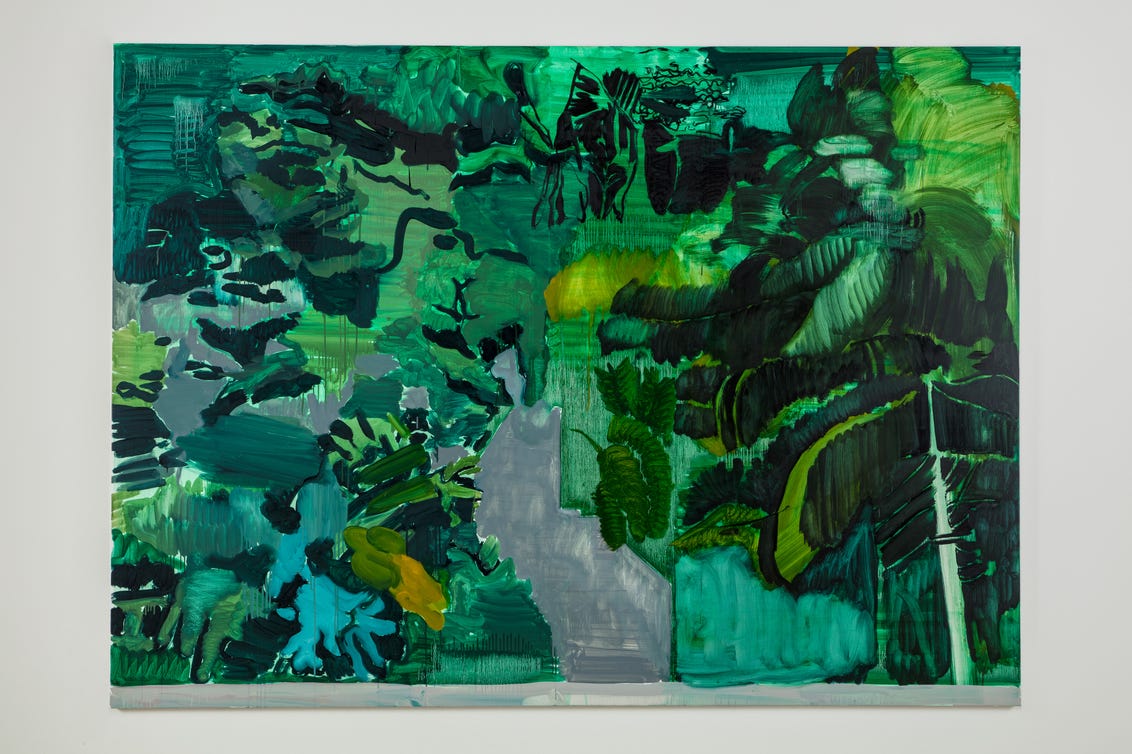
Hurvin Anderson’s paintings frequently depict landscapes, barbershops, gardens, and architectural spaces associated with Caribbean and diasporic experience. Yet these locations are rarely represented as fixed places. Instead, they occupy an intermediate zone between observation and recollection.
Anderson often revisits the same motifs repeatedly over years, allowing them to evolve through variation and repetition. As a result, the paintings become less about specific locations and more about the instability of memory itself.
His use of layered structures is particularly significant. Grids, screens, fences, and architectural frameworks often interrupt the image, creating visual barriers that complicate access to space. These interruptions function metaphorically as well. Memory is never transparent. It is filtered, mediated, and reconstructed through time.
The emotional power of Anderson’s work emerges from this tension. His paintings are filled with longing, but they resist nostalgia. They acknowledge the impossibility of fully recovering the past while continuing to search for it.
Through repetition, layering, and spatial fragmentation, Anderson transforms painting into a meditation on displacement, belonging, and the elusive nature of remembrance.
No posts
Comments
Nothing yet. Say the first thing.
Sign in to join the conversation.