
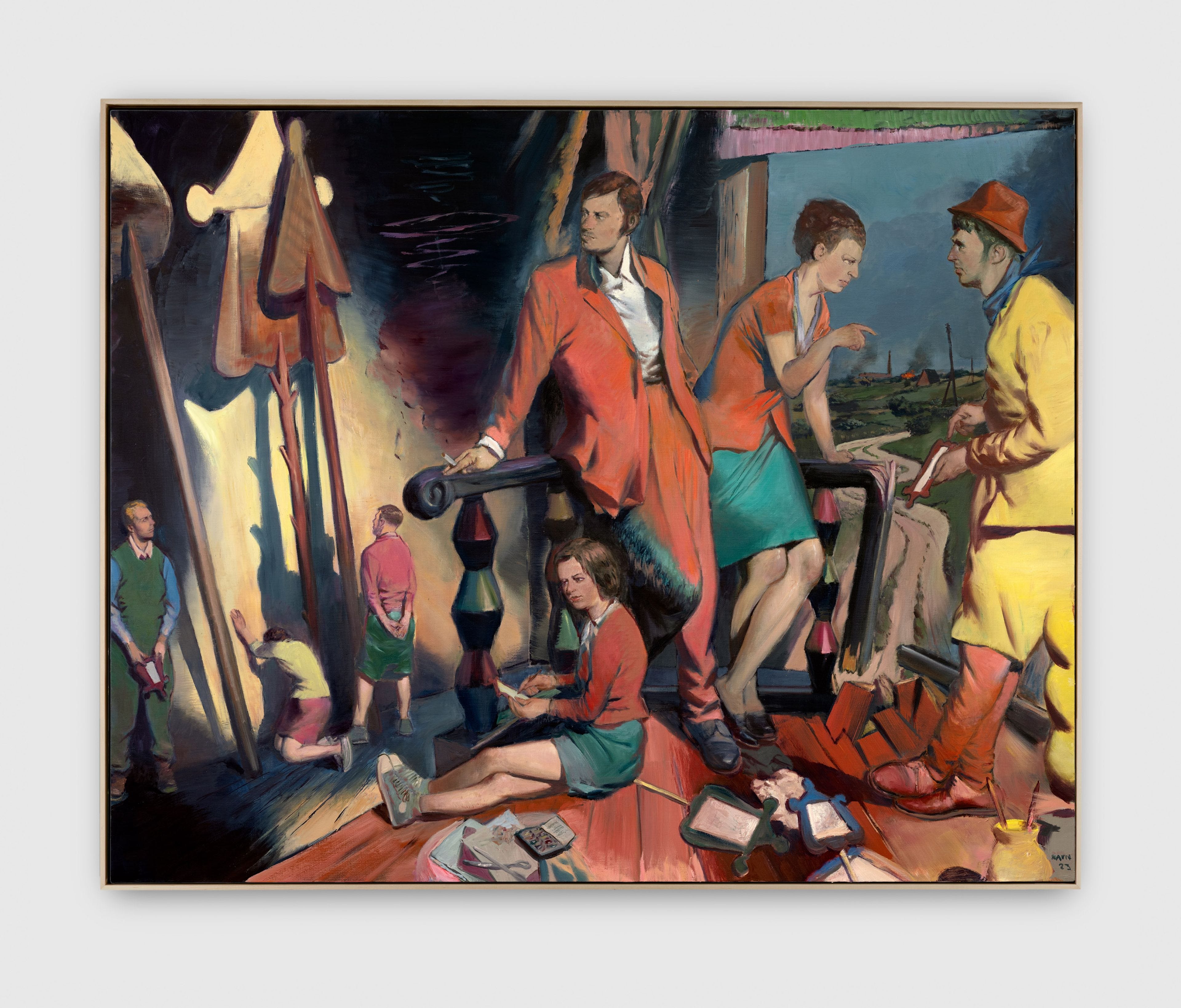
Few contemporary painters have created a visual universe as distinctive as Neo Rauch. His paintings occupy a strange territory where socialist realism, comic books, nineteenth-century history painting, industrial imagery, and personal memory coexist without ever fully resolving into a coherent narrative.
At first glance, his compositions appear to tell stories. Figures perform mysterious tasks, landscapes unfold across impossible perspectives, and objects seem loaded with symbolic significance. Yet the longer one looks, the less stable these narratives become. Events unfold according to a dream logic rather than a rational sequence.
This ambiguity is central to Rauch’s practice. Growing up in East Germany, he inherited visual languages shaped by political ideology, collective memory, and historical rupture. Rather than illustrating these experiences directly, he transforms them into psychological landscapes where different temporalities collide.
His paintings feel as though they emerge from a collective unconscious—part historical archive, part personal dream. The result is a body of work that resists interpretation while remaining endlessly compelling, inviting viewers into a space where meaning is constantly produced and withdrawn.
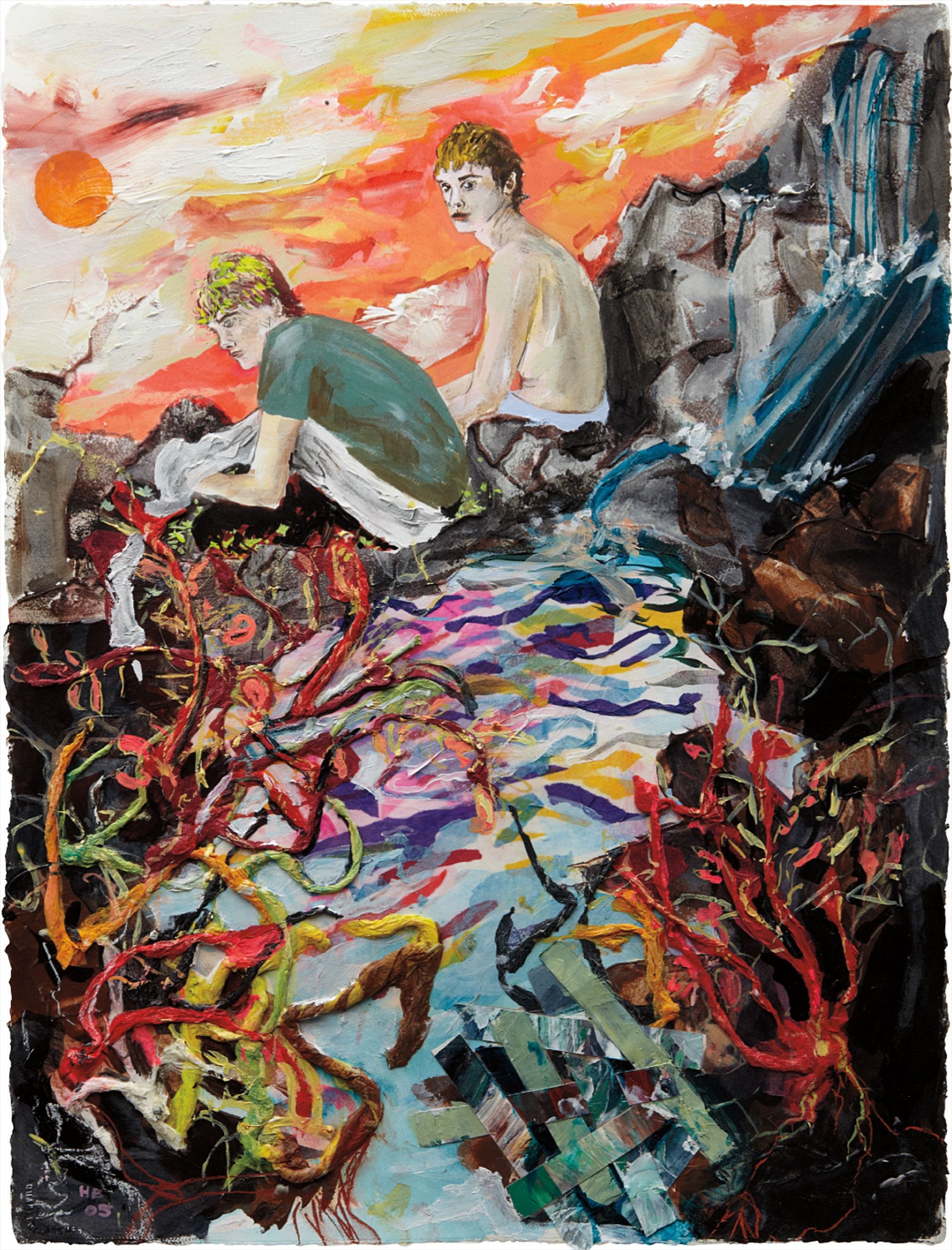
Hernan Bas creates paintings that feel suspended between literature and reverie. His protagonists are often solitary young men inhabiting lush landscapes, theatrical interiors, or symbolic environments that appear detached from ordinary reality.
Bas draws extensively from literary traditions, folklore, queer history, and romantic painting. Yet his references never function as straightforward quotations. Instead, they are absorbed into highly personal narratives where identity remains fluid and unstable.
What makes his work particularly compelling is its refusal of certainty. His figures often appear caught in moments of introspection or transformation, as though they are becoming something else entirely. The viewer enters these scenes without access to a clear storyline, navigating a world governed by atmosphere rather than explanation.
The paintings frequently explore desire—not as a fixed identity, but as a condition of longing, projection, and imagination. Through elaborate surfaces and carefully constructed imagery, Bas demonstrates how painting can function as a space for psychological and emotional invention.
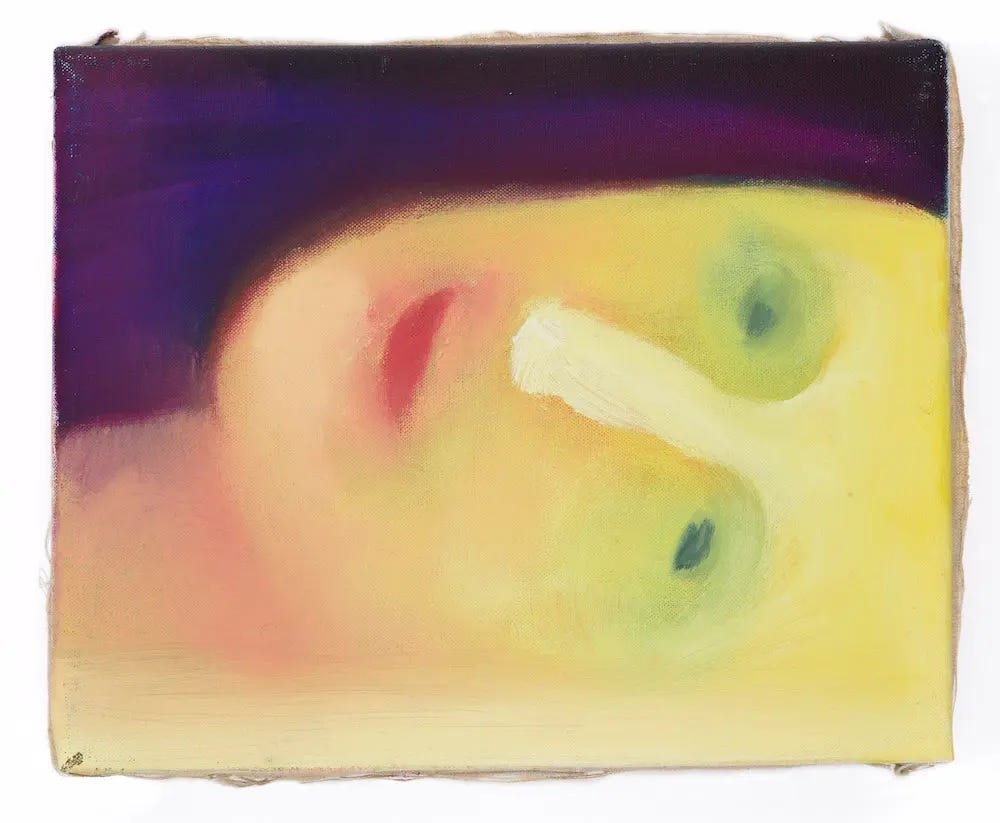
Miriam Cahn’s paintings occupy a radically different relationship to myth and symbolism. Where some artists create dream worlds, Cahn constructs visions that feel urgent, unsettling, and deeply connected to contemporary violence.
Her figures often appear spectral, distorted, or suspended within ambiguous spaces. They seem simultaneously human and archetypal, embodying states of vulnerability, fear, desire, and survival.
Cahn’s imagery frequently addresses war, migration, sexuality, and bodily autonomy. Yet these themes are never approached through direct documentation. Instead, they emerge through symbolic forms that operate on an emotional and psychological level.
The intensity of her work comes partly from its raw painterly language. Colors bleed, figures dissolve, and boundaries remain unstable. This instability mirrors the precarious conditions her paintings evoke.
In Cahn’s hands, symbolism is not decorative or literary. It becomes a means of confronting realities that exceed ordinary representation. Her paintings feel less like images than like warnings, dreams, or collective anxieties made visible.
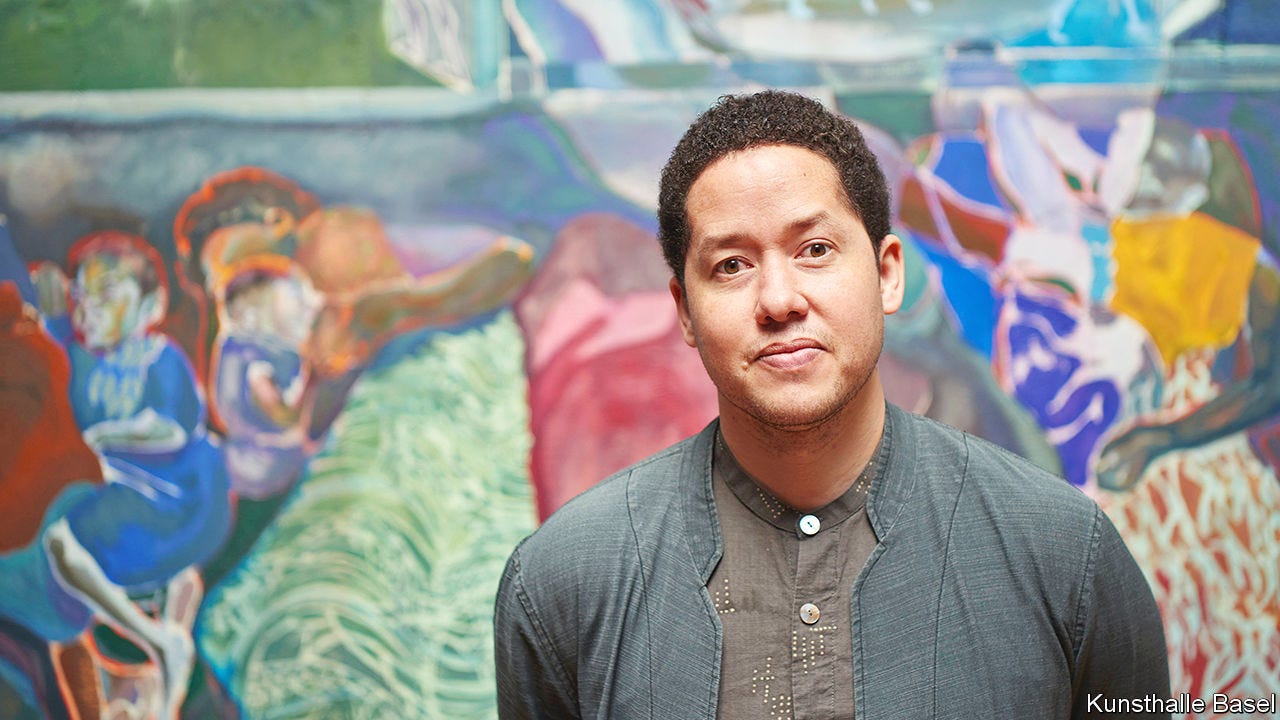
Michael Armitage occupies a unique position within contemporary painting, combining references to East African history, folklore, political events, and European painting traditions.
His compositions often appear deceptively beautiful. Rich color, fluid brushwork, and lyrical landscapes initially draw the viewer into the work. Yet beneath this visual seduction lies a complex engagement with power, violence, memory, and social transformation.
One of the most distinctive aspects of Armitage’s practice is his use of Lubugo, a traditional bark cloth from Uganda, as a support. The material introduces seams, tears, and irregularities that become active elements within the image itself.
Myth plays an important role in his paintings, but never as nostalgia. Instead, mythological structures coexist with contemporary events, creating narratives where past and present continually intersect.
The result is a form of painting that feels both timeless and urgently current. Armitage demonstrates how mythology remains a living framework through which contemporary societies understand conflict, identity, and change.
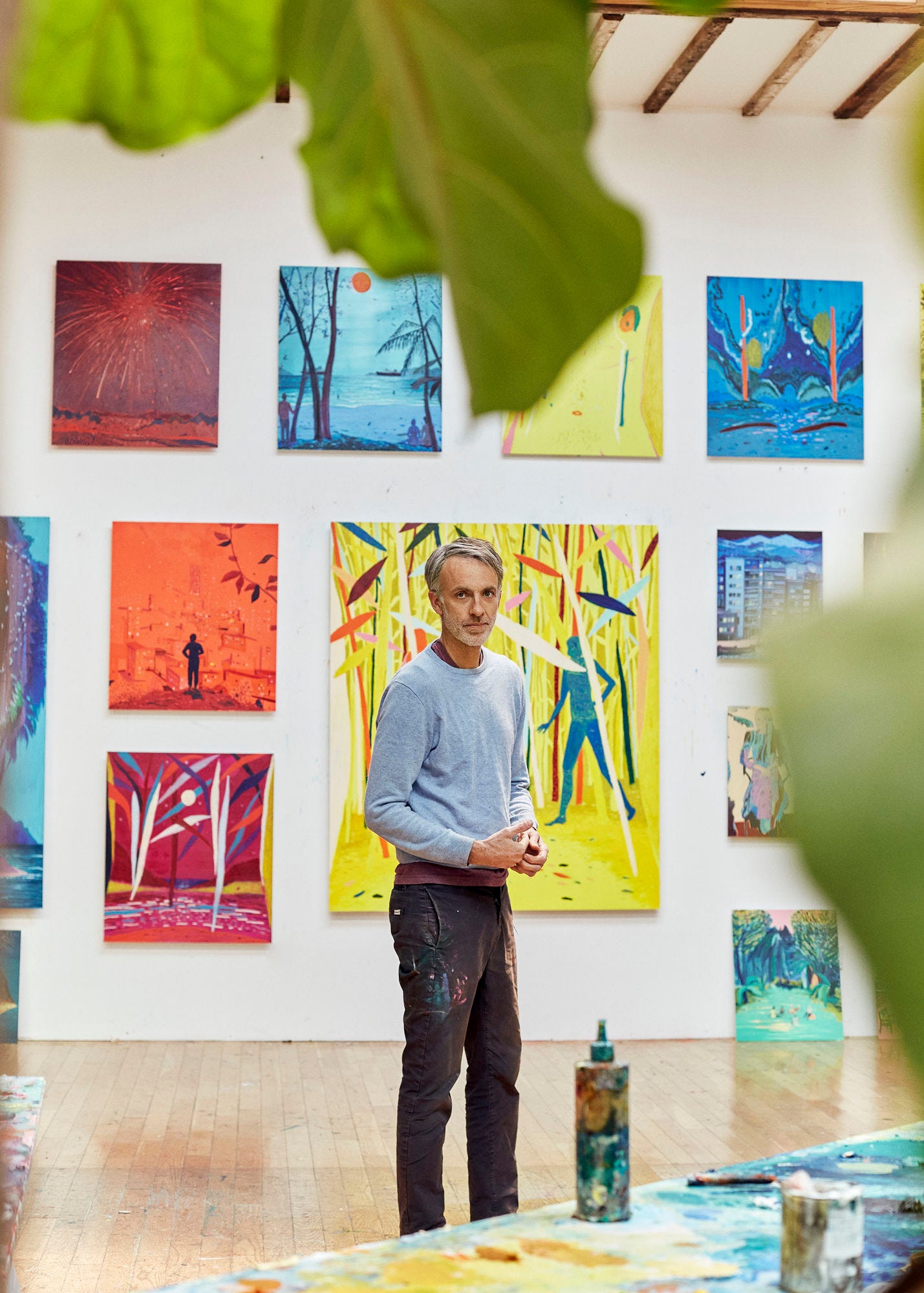
Jules de Balincourt’s paintings often resemble maps of psychological or political states. His landscapes are populated by floating forms, isolated figures, fragmented geographies, and symbolic structures that seem to belong to an alternative reality.
While many of his works engage indirectly with contemporary social and political issues, they rarely do so through direct representation. Instead, they construct fictional environments where emotional, ecological, and cultural tensions become spatial relationships.
His use of color contributes significantly to this effect. Bright, almost hallucinatory palettes create a sense of heightened perception, making familiar elements appear strange and unstable.
What makes Balincourt’s work particularly interesting is the way it balances accessibility and ambiguity. The viewer can enter the painting through recognizable forms, yet those forms continually shift into metaphor and dream.
These paintings function as speculative spaces—places where contemporary anxieties are transformed into visual narratives that remain open, unresolved, and deeply imaginative.
No posts
Comments
Nothing yet. Say the first thing.
Sign in to join the conversation.