
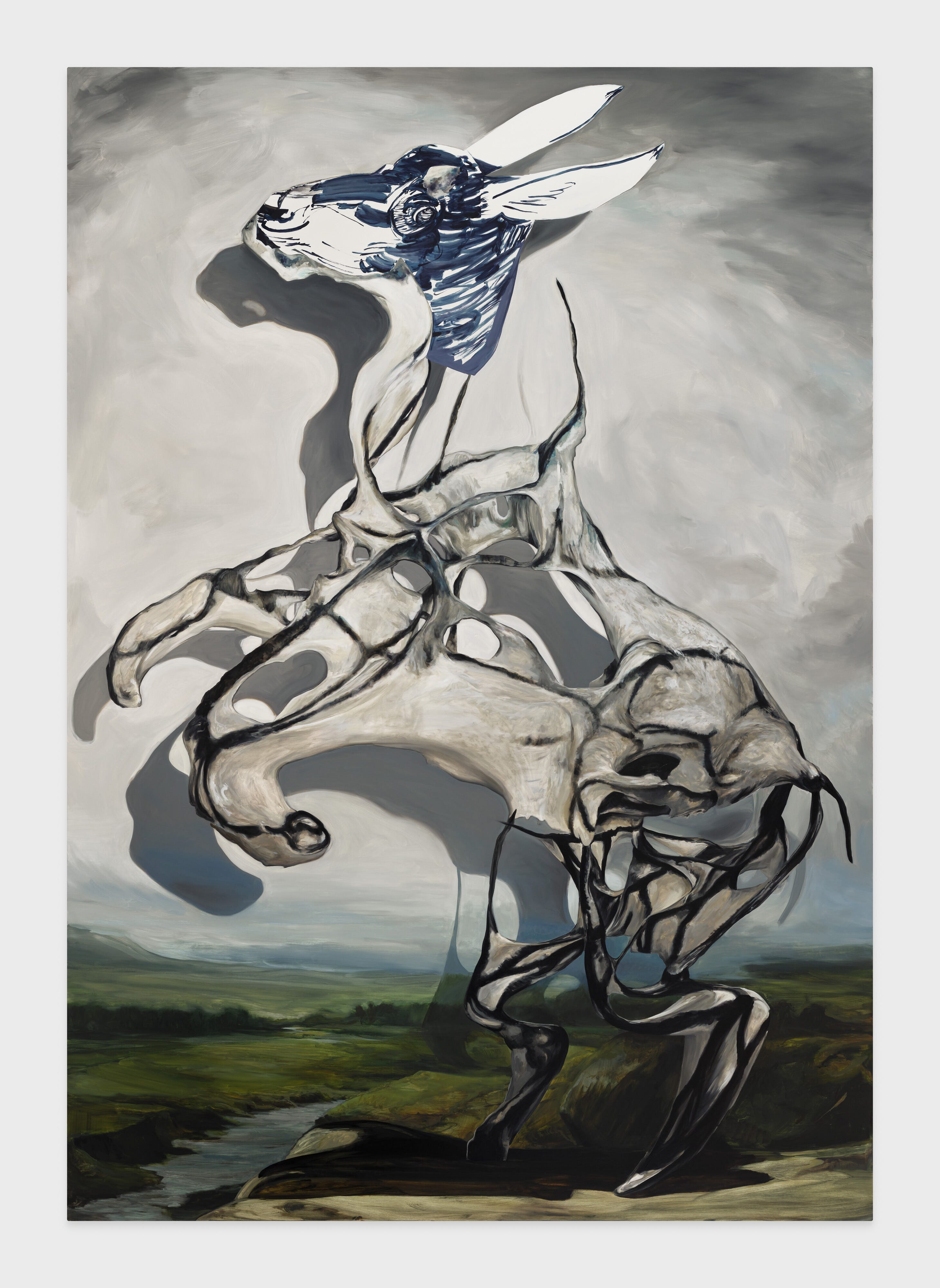
Emma Webster creates paintings of forests, mountains, caves, and gardens that appear strikingly believable at first glance. Yet these environments are not painted directly from nature. Instead, she constructs them inside 3D software before translating them into oil paintings.
This process fundamentally alters the relationship between painting and landscape. Webster’s forests are neither entirely real nor entirely imagined. They occupy a liminal space where digital simulation and traditional painting converge.
Her work reflects an important shift in contemporary perception. Increasingly, our understanding of nature is mediated through screens, virtual environments, satellite imagery, and digital visualization. Rather than rejecting these technologies, Webster embraces them, asking whether a digitally constructed landscape can still evoke wonder, contemplation, or emotional connection.
Despite their artificial origins, her paintings retain an extraordinary sensitivity to light, atmosphere, and spatial depth. They invite viewers to reconsider what authenticity means in an age when both natural and virtual environments coexist in everyday experience.
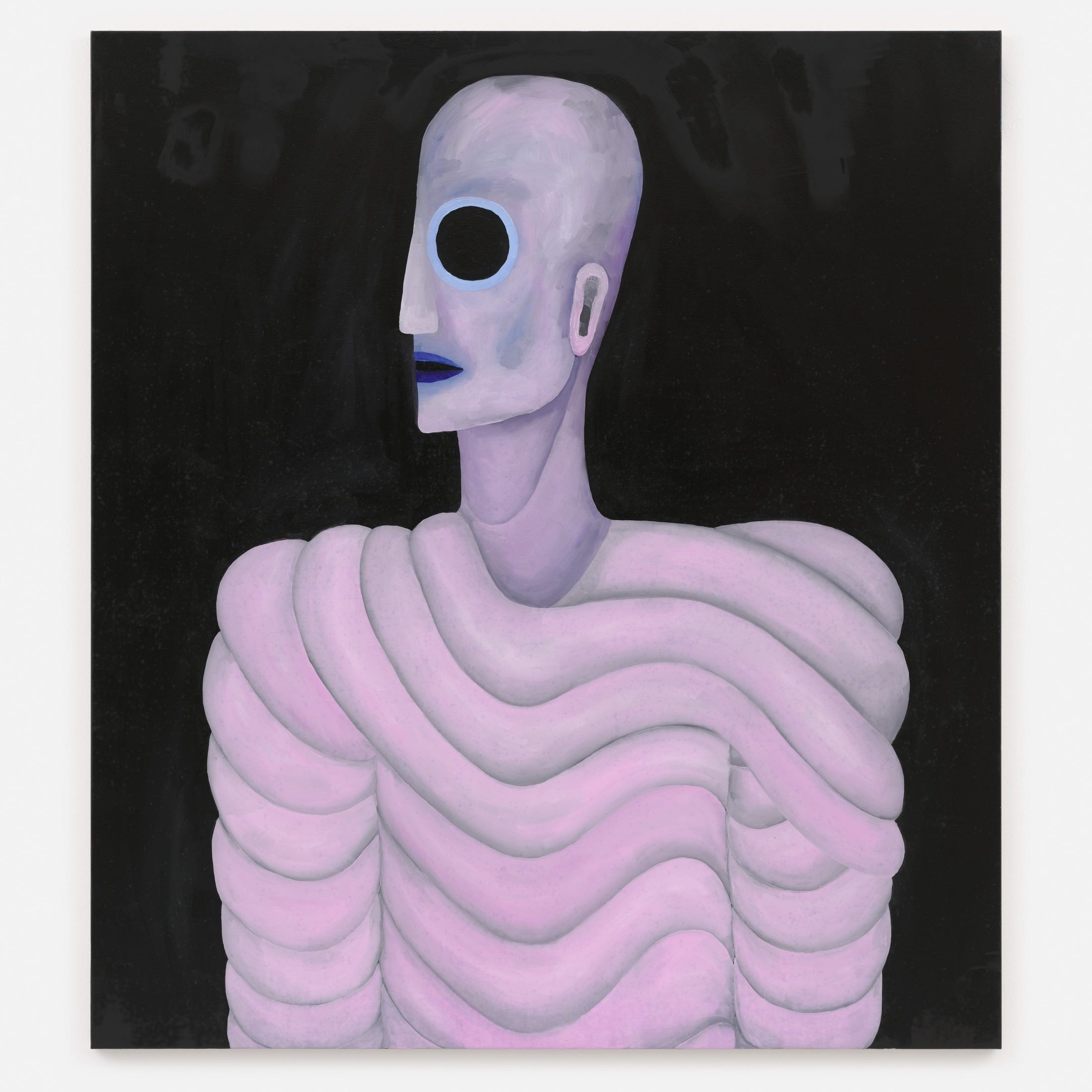
Raphaela Simon paints dreamlike landscapes populated by animals, figures, plants, and mysterious architectural fragments. Her compositions resist conventional narrative, unfolding instead through symbolism, mythology, and emotional association.
Nature in Simon’s work is never merely descriptive. Forests become spaces of transformation, where human identity dissolves into broader ecological relationships. Animals appear not as decorative motifs but as equal participants within complex visual ecosystems.
Her use of color contributes significantly to this atmosphere. Deep greens, muted earth tones, and luminous passages of light create environments that feel suspended somewhere between memory and imagination.
Rather than depicting nature as something external, Simon suggests that landscapes also exist internally. They become psychological territories where personal experience, mythology, and environmental awareness intersect.
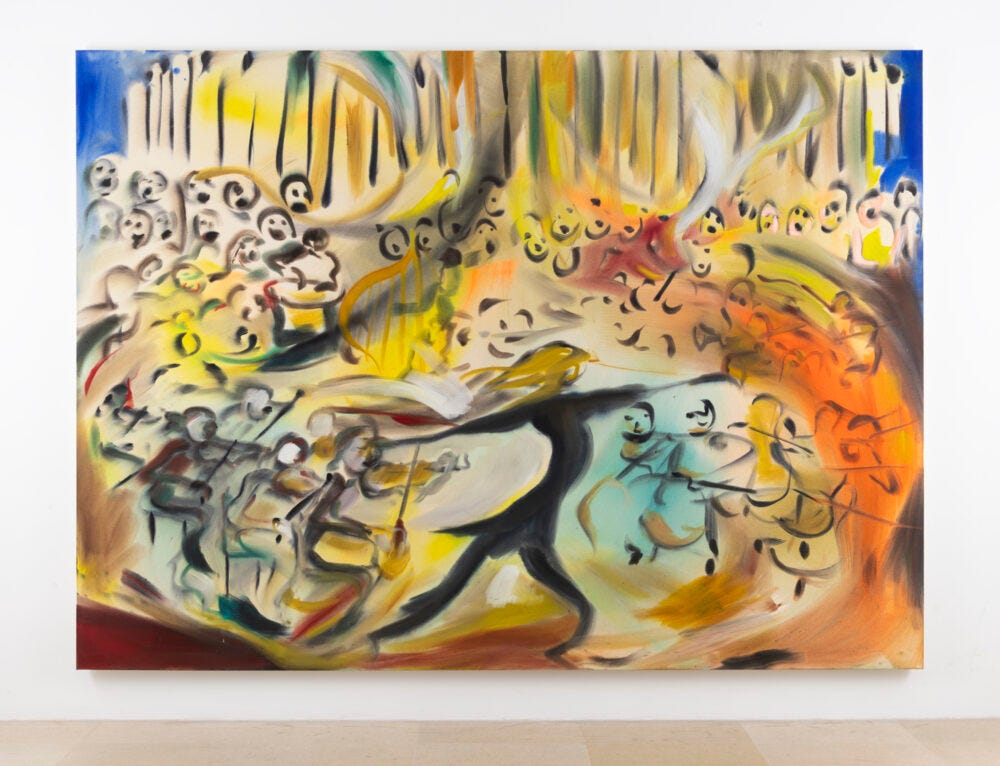
Sophie von Hellermann approaches landscape as a stage upon which history unfolds. Working with fluid washes of paint and remarkably loose brushwork, she constructs scenes where mythology, historical events, literature, and ecology merge into lyrical compositions.
Her paintings reject the illusion of objective observation. Instead, they embrace storytelling, allowing landscapes to function as living archives shaped by centuries of cultural memory.
What makes von Hellermann particularly compelling is the way she dissolves distinctions between figures and their environments. Trees, rivers, skies, and human bodies flow into one another, emphasizing the interconnectedness of all living systems.
Her work reminds us that every landscape carries invisible histories—political, ecological, and cultural—that continue to shape contemporary experience.
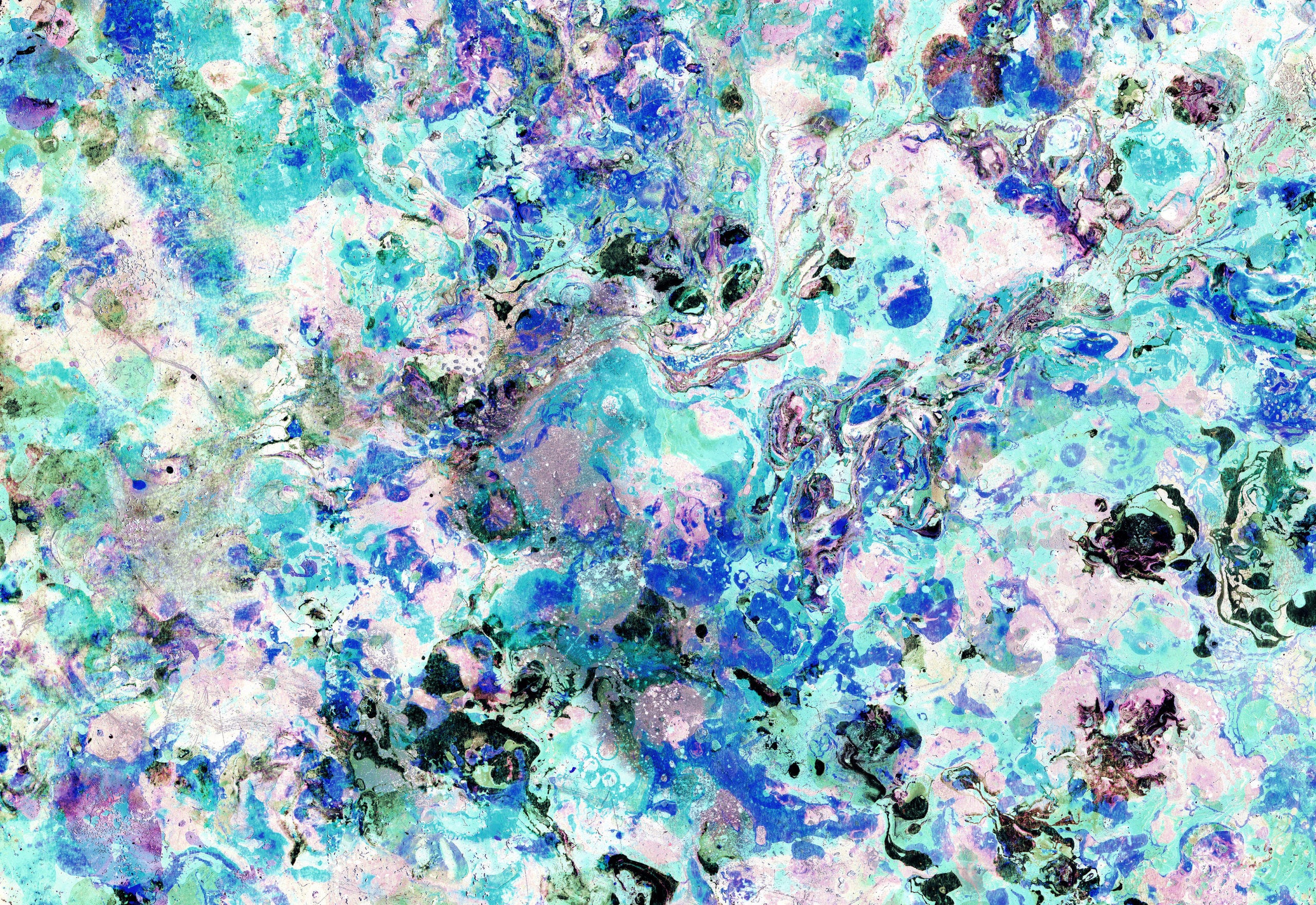
Maya Rochat’s practice investigates the unstable relationship between natural forms and contemporary image-making. Combining painting, photography, chemical processes, and experimental techniques, she creates works that feel simultaneously botanical, microscopic, and cosmic.
Flowers, leaves, minerals, and organic textures frequently appear throughout her work, yet they resist scientific classification. Instead, they become fluid visual experiences in which color and material seem to evolve continuously.
Rochat is particularly interested in transformation. Her paintings suggest that nature is never static but constantly changing through growth, decay, erosion, and regeneration.
This emphasis on process makes her work especially relevant today. Rather than presenting nature as a fixed object, she reveals it as a dynamic network of ongoing relationships.
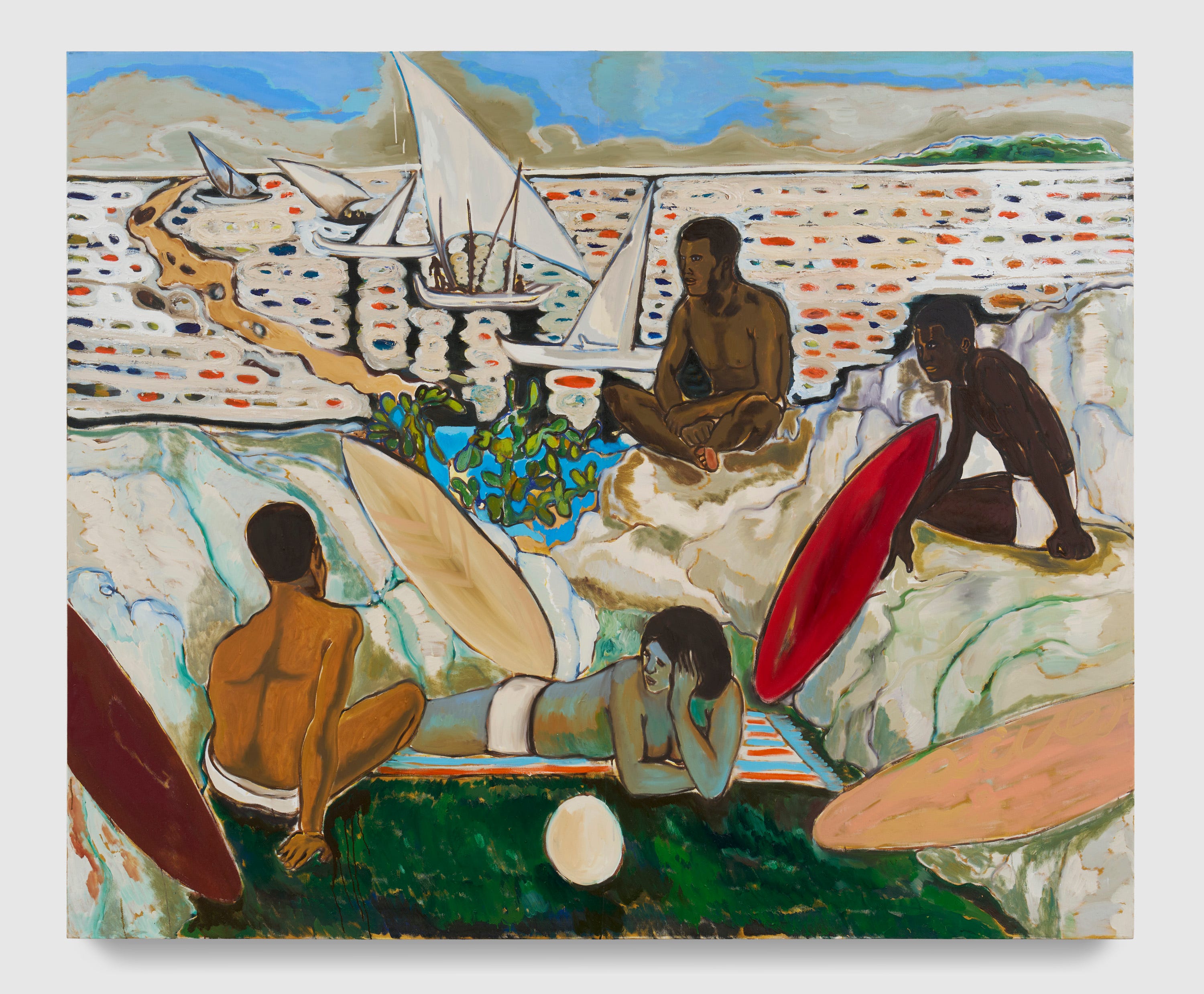
Gideon Appah constructs luminous paintings in which figures inhabit expansive gardens, forests, rivers, and open landscapes that feel suspended between memory and dream.
His compositions often explore relationships between humanity and the natural environment through highly symbolic imagery. Trees become monuments, water suggests continuity and renewal, while open skies evoke both freedom and uncertainty.
Although deeply rooted in personal and West African cultural references, Appah’s paintings speak to broader contemporary concerns surrounding environmental change, belonging, and the preservation of cultural memory.
His use of rich color and carefully balanced compositions creates spaces that feel simultaneously intimate and monumental. Nature is never presented as scenery alone. It becomes a repository of memory, identity, and collective imagination.
In Appah’s work, landscape is ultimately understood as a living archive—one that preserves stories, histories, and emotional experiences that might otherwise disappear.
No posts
Comments
Nothing yet. Say the first thing.
Sign in to join the conversation.