
Today’s essay is a story of an unexpected moment of clarity—a single, personal question that revealed a truth I'd been unknowingly hiding. This journey, informed by the Enneagram and its precise-yet-gentle reckoning, leads to a powerful prompt for you to explore your own resistance. Read to the end, join the conversation, and let me know what you discover in the comments.
A Mountaintop Moment
11 He said, “Go out and stand on the mountain before the Lord, for the Lord is about to pass by.” Now there was a great wind, so strong that it was splitting mountains and breaking rocks in pieces before the Lord, but the Lord was not in the wind, and after the wind an earthquake, but the Lord was not in the earthquake,
12 and after the earthquake a fire, but the Lord was not in the fire, and after the fire a sound of sheer silence.
13 When Elijah heard it, he wrapped his face in his mantle and went out and stood at the entrance of the cave. Then there came a voice to him that said, “What are you doing here, Elijah?” -1 Kings 19: 11–13 (NRSVUE)
I can recall exactly two times in my life when I’ve heard a (seemingly1) direct message from my Creator.
The first one was in graduate school. I lay on the parquet floor of my studio apartment in New Haven, CT. I asked, to the silence: What am I supposed to do with my life? Through my tears, I heard2 God say, “Get up. Go practice.”3
The second time I heard such a voice was a couple of weeks ago. In church, of all places.
It had been a particularly busy week, and Edwin (my pastor-husband) and I had not made time for him to read to me what he was working on, like he usually does. This ritual has actually become one of my favorite parts of our life. Late in the week, we curl up on the couch or sit across the table, and he practice preaches his sermon for that Sunday. He gets my comments and suggestions, I get a preview; It’s a win-win. (Haha, at least for me!) But what I love most about this weekly sermon dress rehearsal is how it inspires me— to write, to seek, to read, to think more deeply.4
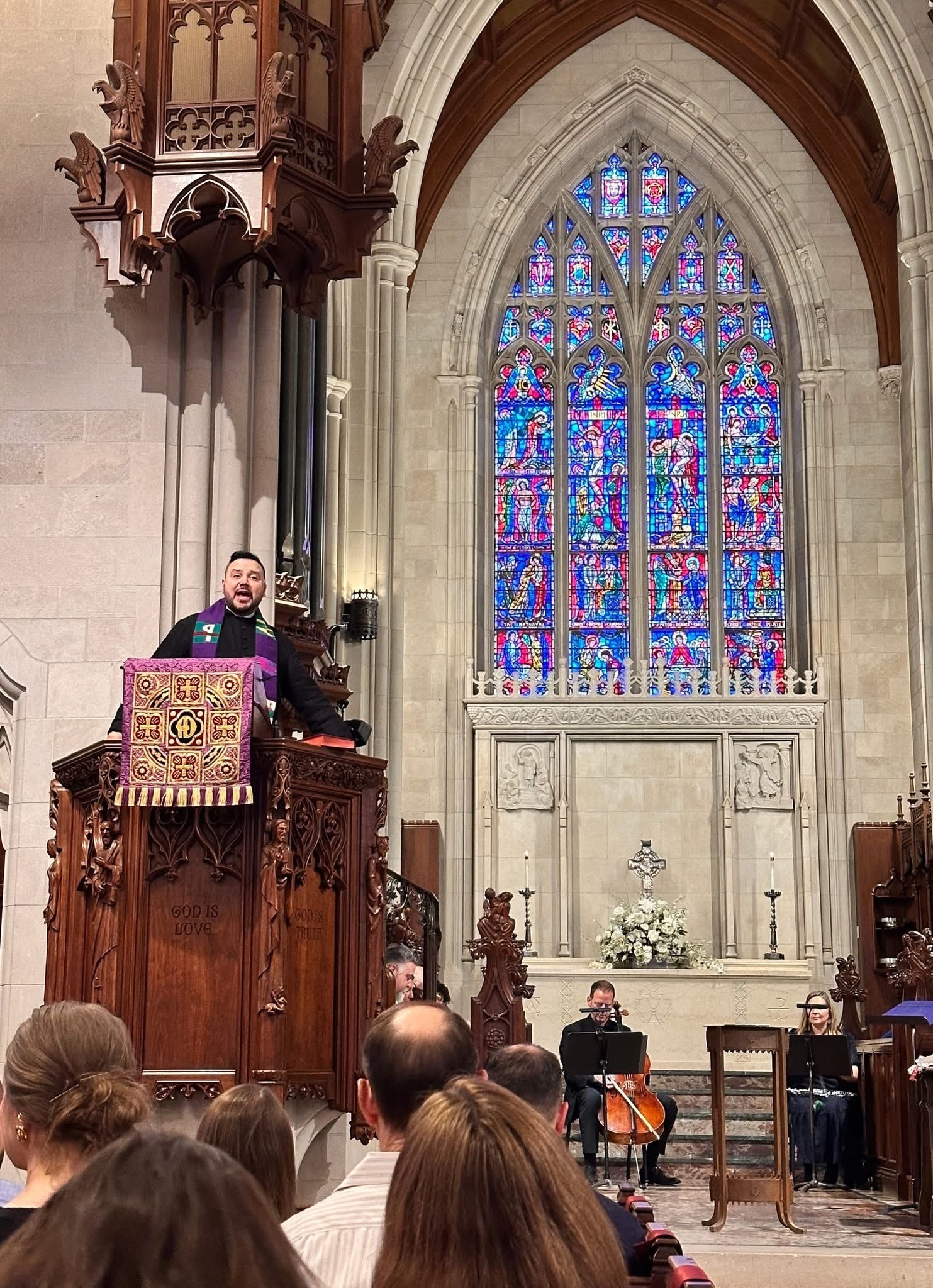
Now, none of that had happened this particular week. We were in the heart of winter in Michigan. The children were sick, or I had been traveling—I can’t exactly remember— but that Sunday morning, I sat in our truly stunning sanctuary, looking up at my husband in the pulpit, ready for a word. I listened intently to my love preach on Elijah in the cave. I realized how distracted, how busy, I’d been up until that moment. I took a deep breath for the first time in many days.
The sermon was part of a series titled Mountaintops, in which we reflected on mountaintop moments of faith by examining Bible stories set there. You can listen to the full sermon from that Sunday or read the transcript here.
In the story, Elijah heard God in the still, small voice—not in the wind, not in an earthquake, not in the fire, but in a whisper. In the sermon, Edwin kept repeating a part of the dialogue I’d never noticed before. God’s question to the prophet, “What are you doing here, Elijah?” is asked more than once.
Edwin’s litany became:
What are you doing here, Elijah?
What are you doing here, Edwin?
What are you doing here, Kirk in the Hills?
Turns out, when you look at the scriptures, an all-knowing, omnipotent God is constantly asking questions. And this one for Elijah, Edwin named, was an invitation to consider our purpose, our mission. It was a beautiful reminder of how, to God, the questions and the process of answering them are often more important than the answers themselves. Jesus asked over 300 questions in the Gospels and answered only five.
As a coach, a professional question-asker perhaps, I have seen the power of a well-placed, “effective5” question and how it opens the artist I am coaching to a whole world of answers within them. I’ve seen God work in my life through questions—that I read in scripture, that I ask my clients —but that moment in worship, I realized my life, my mind, were too loud. The “still small voice” or “sheer silence” had been drowned out by the noise of my busyness.
At the end of the sermon, Edwin asked the whole congregation to pause, to listen for what question God may be asking of them, right then and there, and so we did.
And that was when, as clear as day, I heard in my heart,
What are you waiting for, Merideth?

As I mentioned in “What’s bringing me joy this winter” on the podcast last month, I am participating this year in Life in the Trinity Ministry’s Enneagram Cohort with none other than Suzanne Stabile. I’ve read every word she’s ever published and listened to likely hundreds of hours of her podcast and online workshops, too.
Suzanne’s was a gentle voice of invitation when I began learning about my personality, the innate blessings within it, and the (often more obvious) ways it holds me back. Honestly, this has been the true gift of the Enneagram for me; this is what makes it different from a basic personality test or StrengthsFinder. It is not just the recognition, nor the sense of being understood or known, but the clear labeling of my failure, or even my sin, that has profoundly changed my life and relationship to faith. If that sounds a bit intense, it is, but in a good way.6
Here’s an example: At the cohort’s first meeting, we sat around Suzanne as she taught, long tables in the shape of a U. We each had been given a nameplate with our first name and Enneagram number on it. (Think United Nations, but with our personality identifier instead of our nationality!) As Suzanne began discussing the withdrawn stance (that includes 4s, 5s, and 9s), I knew what was coming.
When she got to the 4s, I started to squirm a little. “You’re in the feeling center, and thinking supports feeling. You are doing repressed.”
There it was, this phrase I had been dreading and had come prepared to ask about.
At the end of the first day, I did have a chance:
“I’m one of the most doing people I know. I am so busy. I don’t see how I could be doing repressed.”
She smiled and said something like, “I know you are busy. We all are, and 4s have big dreams and often lots of plans. You have no problem doing the things you enjoy or even going after the things you dream of doing, but what about the dishes? What about the taxes? What about the less glamorous work of bookkeeping, the routines, the often-boring, integral tasks of life? How are you at doing those?”7
My heart beat hard. The other 4s looked knowingly across the room at me.
She added, “Developing the repressed center is one’s life work.”
I sighed. Gulped. Blinked hard and long. Later, I asked a follow-up:
“Ok. So…I do have a doing problem. But how sad! I don’t want to dread those basic life tasks. Especially the motherhood stuff. These routines—the housekeeping and childrearing and book balancing and bedtime and dinner and scales and editing and laundry— I’ve lived long enough now to know that this stuff is life. The rest is just the mountaintop moments (there’s that word again). So, how do I change my relationship to doing?”
In the Kirk sanctuary, on the mountaintop with Elijah, just a couple of weeks after that day in Dallas, the answer came.
Sheer silence, a still small voice.
What are you waiting for, Merideth?

What I am waiting for
I’ll tell you what I’m waiting for.
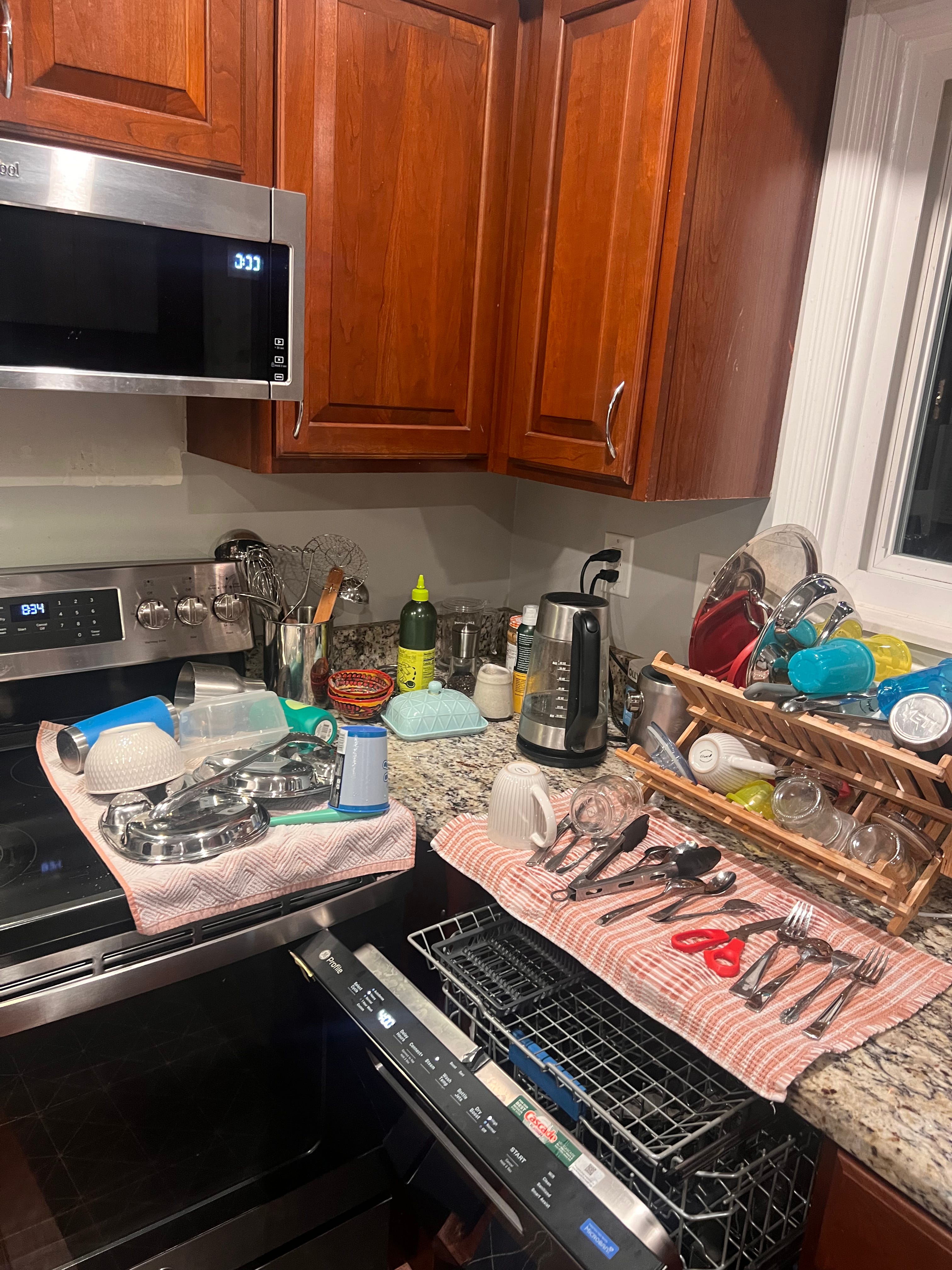
I’m waiting to finish my work before I unload the dishwasher.
I’m waiting for the sun to come out and the snow to melt and the mud to dry before I take a walk.
I’ve waited for us to have zero debt before I feel secure.
I’ve waited for the kids to sleep through the night before I feel like a good mother.
I’ve waited to get a “real job” to feel good enough.
I’ve waited for a book deal before I feel like a “real writer.”
I’ve waited for another book deal to feel like a “REALLY REAL writer.”
In that room in Dallas at the feet of a longtime mentor, in that church sitting below the pulpit listening to my husband preach a sermon I’d never heard, I realized the depths of my doing repression, the ways I only feel and think my way forward, the ways I do not trust God, the ways I hold myself back out of fear and scarcity. The ways I dread huge parts of my actual life.
What are you waiting for?
What a gift this question has been in this season of my life.
It is a gentle mirror, a firm nudge. For a 4, or anyone prone to “doing repression,” it cuts through the fog of preparation and dread, getting straight to the heart of resistance.
Here’s what I am learning:
1. There are no “ideal conditions.”
We tell ourselves we’ll start when we feel more inspired, when we feel like it, or when our internal or external “weather” is more stable. The question made me see that “the right time” is a moving target. God meets us in the messy reality of now, not the curated perfection of later.
2. There is a difference between resting and avoidance.
There is a holy kind of waiting (Sabbath, patience, gestation), and then there is a fearful kind of waiting (procrastination, hiding, stagnation). Developing my repressed center means knowing the difference.
If the answer is “I’m waiting for God to move,” that might mean peace. If the answer is “I’m waiting to want to,” that’s a signal to move in the midst of resistance. (By the way, sometimes the act of moving and doing makes me want to move and do! Inertia. Go figure.)
3. Confirmation is not required for contentment.
We often wait for an external sign—a “green light” from God or a sense of perfect internal alignment—before we allow ourselves to experience joy and goodness. We want confirmation that we are on the right track before we let ourselves be okay or even grateful.
We can’t hold our gratitude or joy hostage until things are “perfect.” We must practice contentment right here in the mess, realizing that God’s presence isn’t waiting at the finish line. God is here in the room while the paint dries and the trash starts to smell. Contentment says, “I have enough to be grateful for now,” or “I have what I need to get started now,” even if the big answers haven’t arrived yet.
4. I seek validation, but what I really need is courage.
Sometimes, when we ask “What am I waiting for?”, the honest answer is: I’m waiting for someone to validate me, to tell me I’m good enough, or to promise me I won’t fail.
By identifying what you are waiting for (validation, safety, certainty, proof of concept), we can take those specific things to God, inviting God to give us the courage we need to try anyway, to let go of the outcome and the power it has to paralyze us.
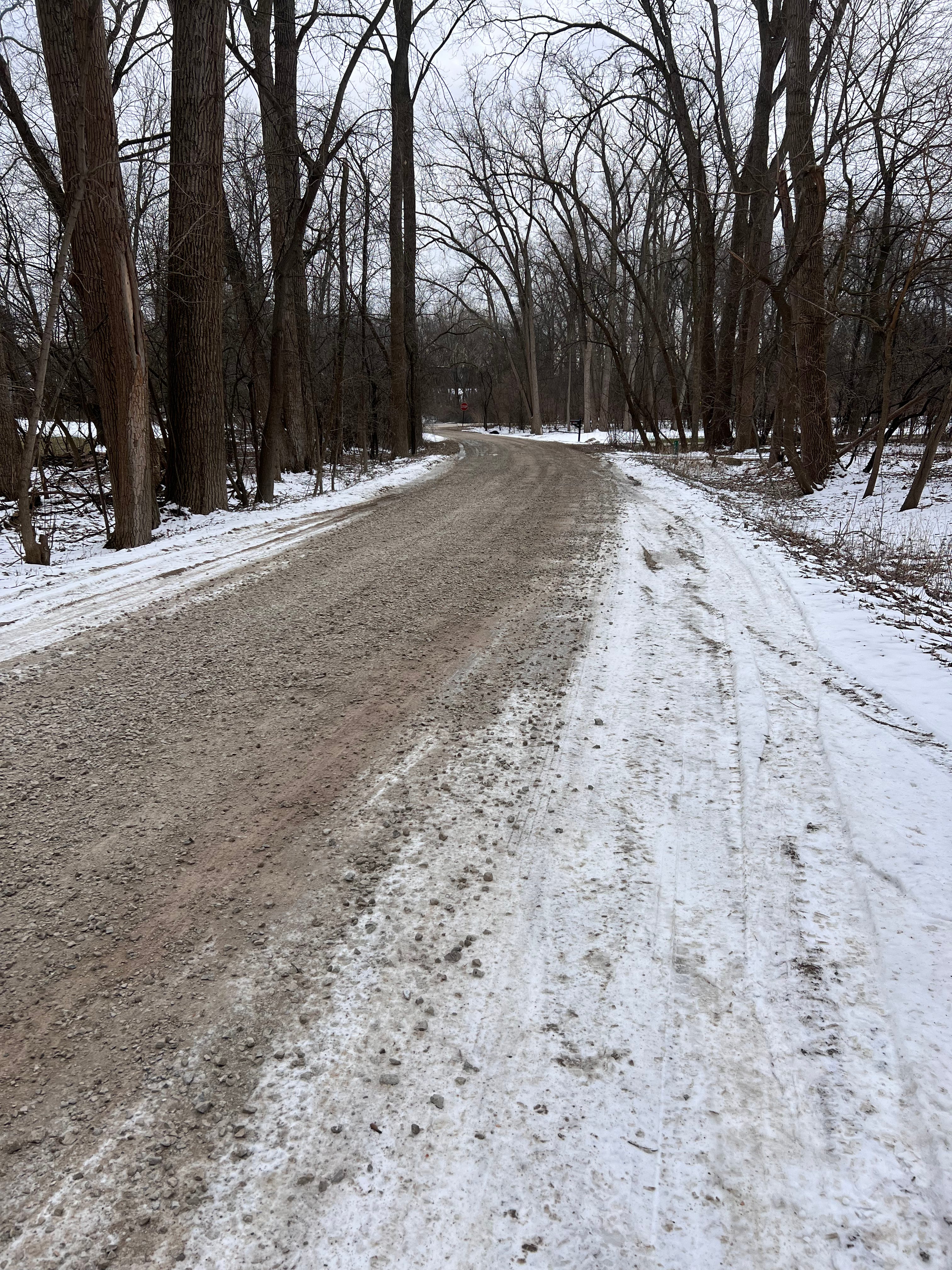
On the very morning I will finish writing this, a dreary, cold March daybreak waits outside my window. I consider my walk. The forecast says there is a 70% chance of rain. What are you waiting for whispered again in my heart. I put on some boots and the coat with the hood. As I rounded the corner at the top of the driveway, a heavy raindrop, waiting for me on the tip of a tree limb, washed the crown of my head like a baptism.
So join me as I get busy doing.
Don’t wait for circumstances to improve before you decide to feel joy. Name the joy that’s here now.
Don’t wait until you know what to say before you start writing. Start writing and listen for what is yours to say.
Don’t wait for the war to end before celebrating the birthday.
Don’t wait until you feel like it.
As C.S. Lewis said, “The present is the only time in which any duty can be done or any grace received.”8
If you’re waiting for God to act, whether you're at peace or not, look around in the meantime, and ask Suzanne’s favorite question to everyone, regardless of their number:
What is yours to do?
Elijah fled to his mountain cave in despondency. Even after all the miracles he’d seen, he felt alone and abandoned by God. The angel fed him, and he slept and rested.
Sometimes what is ours to do is rest.
Sometimes what is ours to do is the dramatic step of starting a new project; other times, it is the humble, repeatable work of a life well-tended. It is the dishes, the taxes, the patient tending of small children—the very tasks I once dismissed as a distraction from my “real” work. Now, I see that these are not the waiting room of life; they are the sanctuary where the still, small voice, with its gentle yet firm questions, calls me out of my personality and into something deeper and more whole.
Suzanne’s question, “What is yours to do?” is no longer a search for a spectacular calling on a mountaintop, but a radical acceptance of the “yours” that is right here, right now.
The rain will fall, the sink will fill, and the future will remain uncertain. But the question has shifted from if I will move to how I will move. The answer is: now. The answer is: trusting God, even when, especially when, I don’t feel like it.
I know when I do, I’ll move with my full, flawed, imperfect self, finding the sacred not in the achievement, but in the trying, finding the joy not in the action, but in the doing itself.
Now, if you’ll excuse me, I have sufficiently dried off from my walk in the rain. I have a date with a sink full of dishes that I can no longer dramatically wait to feel “inspired” to wash.
Prompt: The Question You Carry
We can approach our spiritual lives with a list of requests. But today, I’d like to invite you to listen for a question.
A good Guiding Question acts like a compass. It’s a quiet refrain that follows you through the grocery store, into your studio, and through the rhythm of your week. It isn’t meant to be solved or answered, but to be lived.
Set aside your internal to-do list and listen for a Guiding Question God might be whispering to you.
Is it a question of permission? (“What if you have everything you need?”)
Is it a question of presence? (“Where are your feet right now?” or another favorite from scripture, Exodus 4:2, God to Moses: “What is that in your hand?”)
Is it a question of release? (“What is yours to carry?”)
In the comments, I’d love to hear: What is the question following you lately?
Here’s to living the questions, to washing the dishes,
Merideth
If you’re new here: Hello and welcome! 👋🏻 If we haven’t met, I’m a classical oboist, creative coach, and author dedicated to the belief that the creative struggle is actually a sacred one.
I’ve written two books: The Artist’s Joy and my newest one, Art Is How God Loves Us, which comes out in July 2026. It is available for preorder now.
I publish my Substack essays every other Friday, and you can catch a new episode of my podcast, Artists for Joy, on the alternate weeks via my website, Apple Podcasts, Spotify, or your preferred podcast app.
I say “seemingly,” because I humbly acknowledge that I could be hearing things wrong. And I’m sure that God has attempted to speak to me many times when I wasn’t listening!
When I say “heard,” what I mean is an internal knowing— not an out-loud voice in the room.
This is a story for another essay, which maybe I’ll tell one day!
If I didn’t love him so much, I might find his near photographic memory and capacity to retain knowledge irritating. :)
Effective questions, according to Graydin (my favorite coaching folks), begin with "what" or "how," shift the coachee’s perspective, and connect them to their internal values.
I won’t go deep into the Enneagram here. But I did a whole podcast series about it, and if you want to learn more, I have a list of resources on my website.
Paraphrasing, but hopefully her gentle, yet fiery spirit comes through.
Weight of Glory, 52.
Comments
Nothing yet. Say the first thing.
Sign in to join the conversation.