
“REPRESENTATIVE!”
I whisper-screamed into the bottom end of my cell phone loud enough for the computer to hear me and soft enough not to wake my children in the next room.
Then came the silence of the transfer. During the next few seconds of clicking, I imagined my call as a blue light traveling through the wires underground like a high-speed internet commercial.
“Please hold for a human,” the bot said.
Five minutes and two beeps later, a living, breathing, flesh-and-blood human woman with an accent I couldn’t place or totally understand gave me the refund I was seeking. The whole call took me about seven minutes; six of those were getting through the automated AI assistant to a human person.
Please hold for a human.
I’d never heard it put like that before.
My husband, Edwin, has no fewer than 405 tabs open at any one moment on his laptop. I’m not even exaggerating, the little windows are so small it is hard to individually click one. Does this give anyone else anxiety? Just me?
Anyone who knows him well knows he’s an evangelist at heart, interested in cultural anthropology because he wants to understand our moment, to be an informed Presbyterian Minister of the Word and Sacrament,1 but also be the real hands and feet of Jesus in these specific days. It is admirable, if a bit intense. I wonder sometimes, reading that much, how he can stay positive. I don’t need to tell you how dark the articles and news stories on those 405 browser tabs read.
He recently guest-preached a powerful sermon about the wilderness of the information age, how being inundated by knowledge and noise affects us spiritually. As I watched the livestream, I felt the magnitude of this message. The verdict is in: We have access to more information in our pockets than any other civilization had in its libraries. And yet, we are named the Anxious Generation, the Lonely Generation; we seem to be sadder and more lost than ever. More information is not better.
The other day, we were in one of our late-night discussions about something he’d read, and he said something to me like: “In every period of time, when faced with a major technological advancement, we must name what it means to be human.”
I knew how, with the invention of the printing press, the humans of the Reformation had to recalibrate when reading was on the table. Suddenly, to be human was to hold a Bible translated into your own language. It meant no longer outsourcing the spiritual and doctrinal work to the literate church leaders, holding the word of God in your very own hands. It meant believing that, if you had a question, you could theoretically search for the answer in the volumes of your ancestors' words. It meant sitting still long enough to know the difference between “b” and “d.” (My son, who’s learning to read and write, really struggles with these letters right now!)
After that conversation at bedtime, I lie awake staring at the ceiling.
What is so unsettling to me about this moment in time is that, with each technological advancement, I feel like I am being asked to name what it means to be human over and over again, sometimes daily.
We enter a building, walk across a bridge, and into a machine that thrusts us into the sky. I drink a ginger ale, eat Cheez-its, and check our seatbelts again. I wait for the sun to appear above the gray and consider how much the seatbelts will help if the engine fails mid-flight.
After her bus leaves, I watch the blue dot of my daughter’s backpack make its way to school.
On Facebook, I read about a man brutally murdered just a few miles away from my home.
At pick up, a parent tells me she checks the registry regularly and keeps tabs on the sex offenders near our neighborhood.
All of these advancements, from a childhood without the internet to an evening where robots answer phones, explain why, in my lowest moments, I am so scared and sad. So anxious. So “connected” and yet so isolated.
It does feel like a wilderness: drowning in a bin of old cell phones, scared for what world we are leaving for our children, terrified of the evil and danger that seems to lurk around every corner, whisper-screaming into Apple’s latest gadget, and breathing a little easier when finally you hear the breath of another person, even if her first langauge isn’t your own.
Please hold for a human.
Here is the thing about the dot on the map or the data on the registry: they give us information, but they cannot give us meaning. They tell us where we are, but not who we are or why we are here.
Any writing craft book will tell you this paradox: specific details are what make writing relatable. Don’t just generally describe the street you grew up on, tell me its name. Share that your mother’s minivan smelled like Estée Lauder and stale Diet Pepsi, that your husband has 405 tabs open.
Neuroscience would probably tell us that specific details light up the parts of our brains that activate the five senses, like we’re experiencing the details ourselves—but in my limited (non-neuroscientist) basic-human words, I know this to be true: great art lights up whatever parts of my brain make me feel alive, make me feel human.
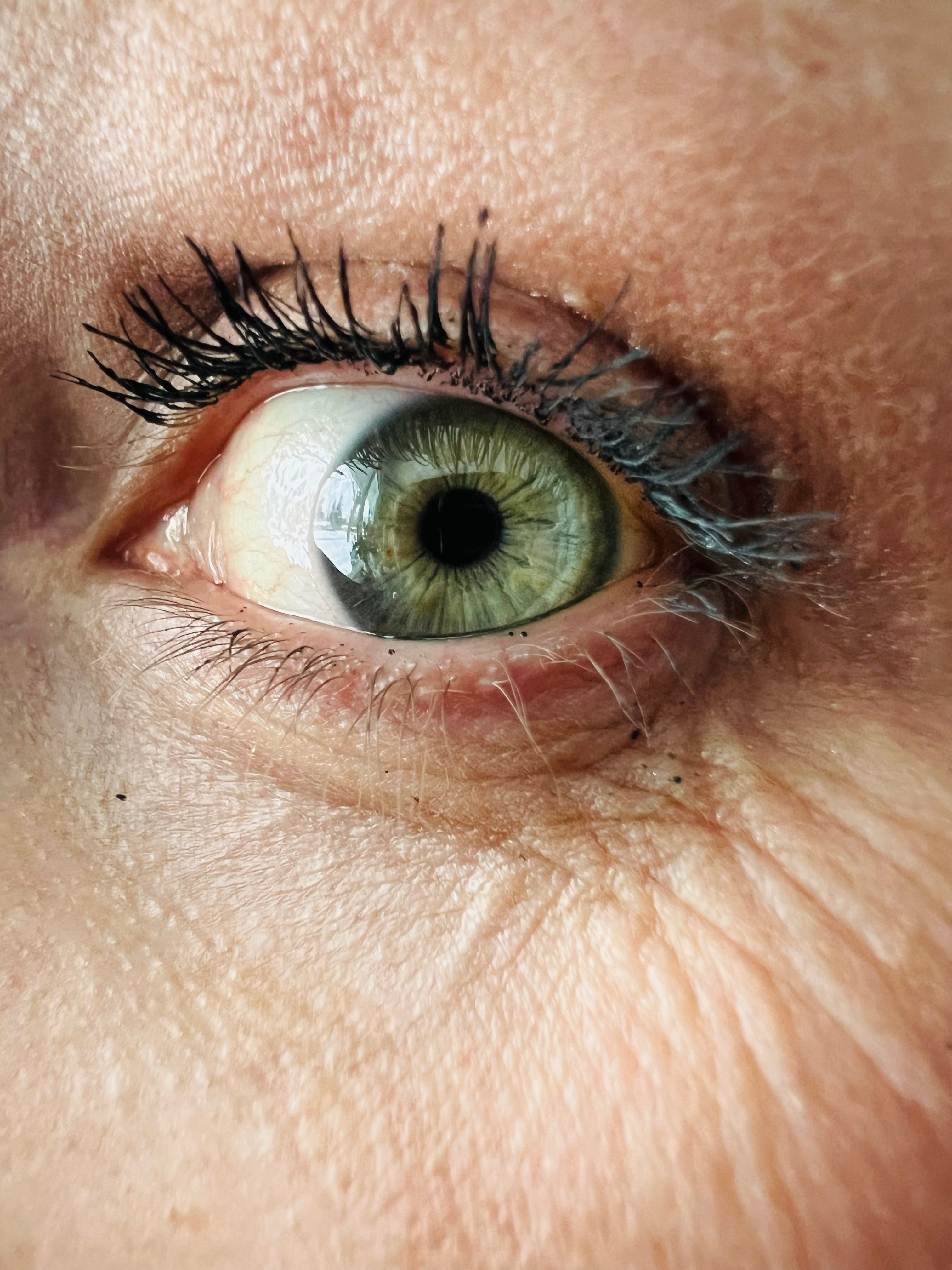
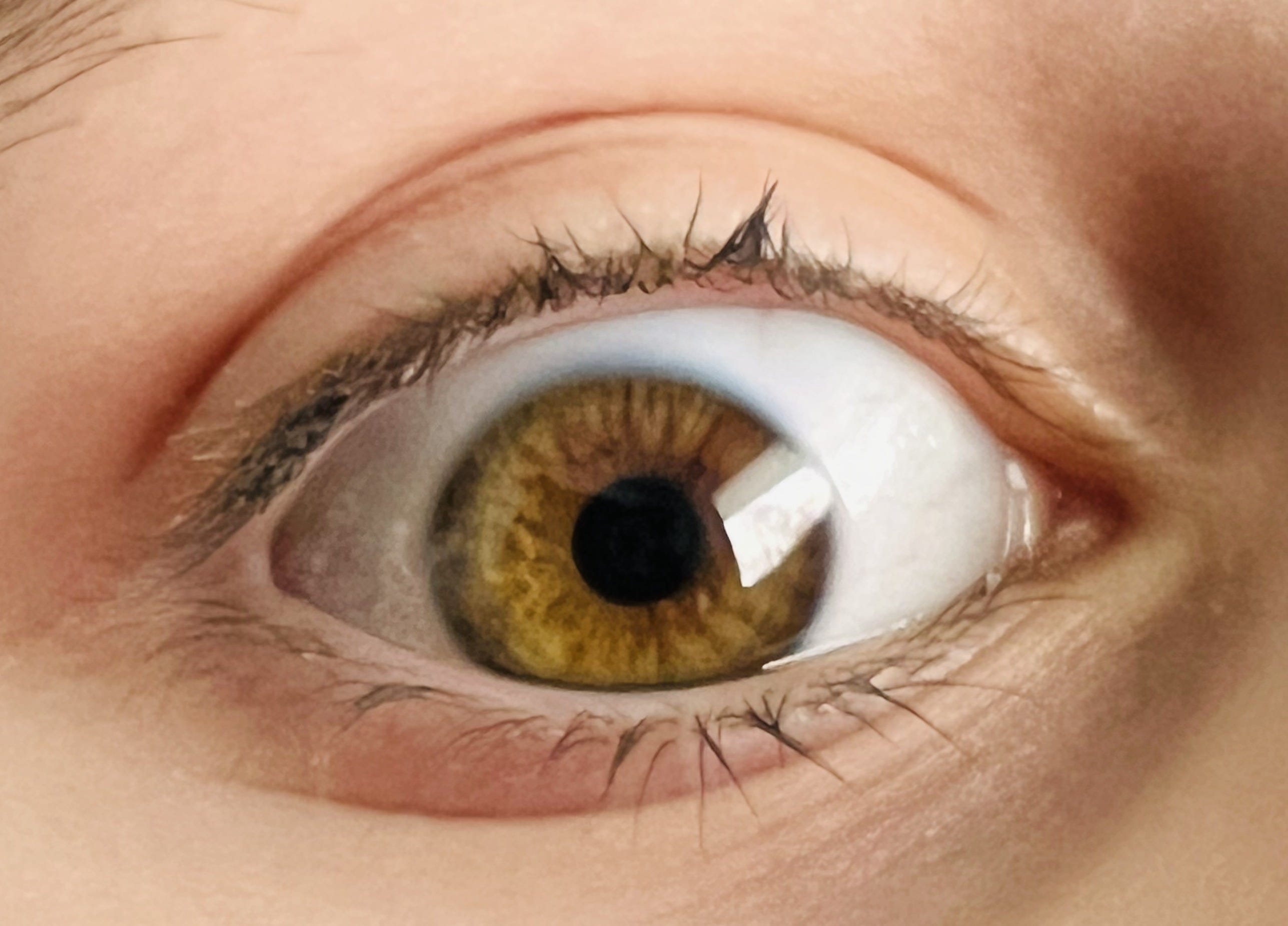
Sometimes, my children and I take my phone—the same device that seems to tether me to the wilderness—and use its macro lens to photograph our own eyeballs. We sit on the edge of the couch and zoom in until the screen is filled with the intricate, mossy forests or amber bark of our irises. We look at the tiny, unique filaments of color with hushed awe. At the pediatrician's, a handheld computer can scan my daughter’s pupils and tell us instantly if she needs glasses, but it cannot sit in wonder at her unique hazel.
It takes a human to look at a human and see a masterpiece.
This is the quiet, persistent heartbeat of the arts, of all the humanities. While the sciences seek to measure the world, the humanities seek to find our place within it. It is the study of the “Ok, but, so what?”—the refusal to let the facts stand alone without a heart to interpret them.
Artists have been singing of our humanity for all time and eternity. I believe we have the truest words to describe the intricacies of the human experience, consciousness, a sense of self, memory, and meaning-making. Perhaps science can explain it now, perhaps the computer AI models are smarter and faster, but are they wise? Do they feel?
And so, to artists who feel the shadow of the algorithm lengthening over their desks or their instruments: we must keep going, even in the face of anxiety, fear, and loneliness. We must not confuse our creativity, our truest, most human testimony of this life, with content, as much as the social media voices would like us to.
In an age of artificial intelligence, your human intelligence—limited, griefy, curious, persistent, scrappy, willing to be wrong—is the most radical thing you have to offer.
What if we valued incarnation more than information?
When I read the gospels, I love to read them through the lens of Jesus’ humanity, our Creator’s embodiment. Jesus rested. He retreated on his own to pray. He ate and drank and slept and wept. I like to imagine him having acid reflux or a migraine.
It’s easy to miss Jesus’ humanity, but it is there. And he didn’t just save humanity in a general, algorithmic sense; He saved people. He put specific mud on a specific blind man’s eyes, and he made a humble breakfast for his human friends. I like to imagine them smelling the fish cooking atop the fire on the beach.
In a world of open tabs and blue dots, we are tempted to live in the general and impersonal. But Jesus’s life reminds me that God lives in the specific, the personal. When I write about the smell of my mother’s perfume or the shaky way my son draws a “b,” I am participating in the very thing God did when Jesus took on flesh. I am saying: This specific, personal, human thing, this life, matters.
We have seen, more than any generation of humans so far, perhaps, the limits of humanity. The weakness. The end of our knowledge. And instead of it making me afraid, instead of living in fear, and outsourcing my sanity to yet another computer, I want to trust God, the Creator, the storyteller, the handiwork maker, the Artist. I want to value human life as God did, because God became human and redeemed our existence once and for all on the cross.
And so what does it mean to be human now? I have been keeping a list in my Notes app—again, using the very machine that distracts and threatens to dehumanize me— to ground and strengthen me in these wilderness days.
Here’s my list so far:
Being human means…
I am not a machine to be optimized; I am an unfinished poem that God is still writing.
I am not a data point to be tracked; I am the person my children look for at pick up.
I am not my productivity, my speed, or the sum of potential knowledge hidden in the open tabs.
I am the first timid steps on the driveway when the ice seems like it is finally melting.
I am not the statistics or prognosis or treatment options. I am the heavy heart and the anxious mind when I see those I love aging.
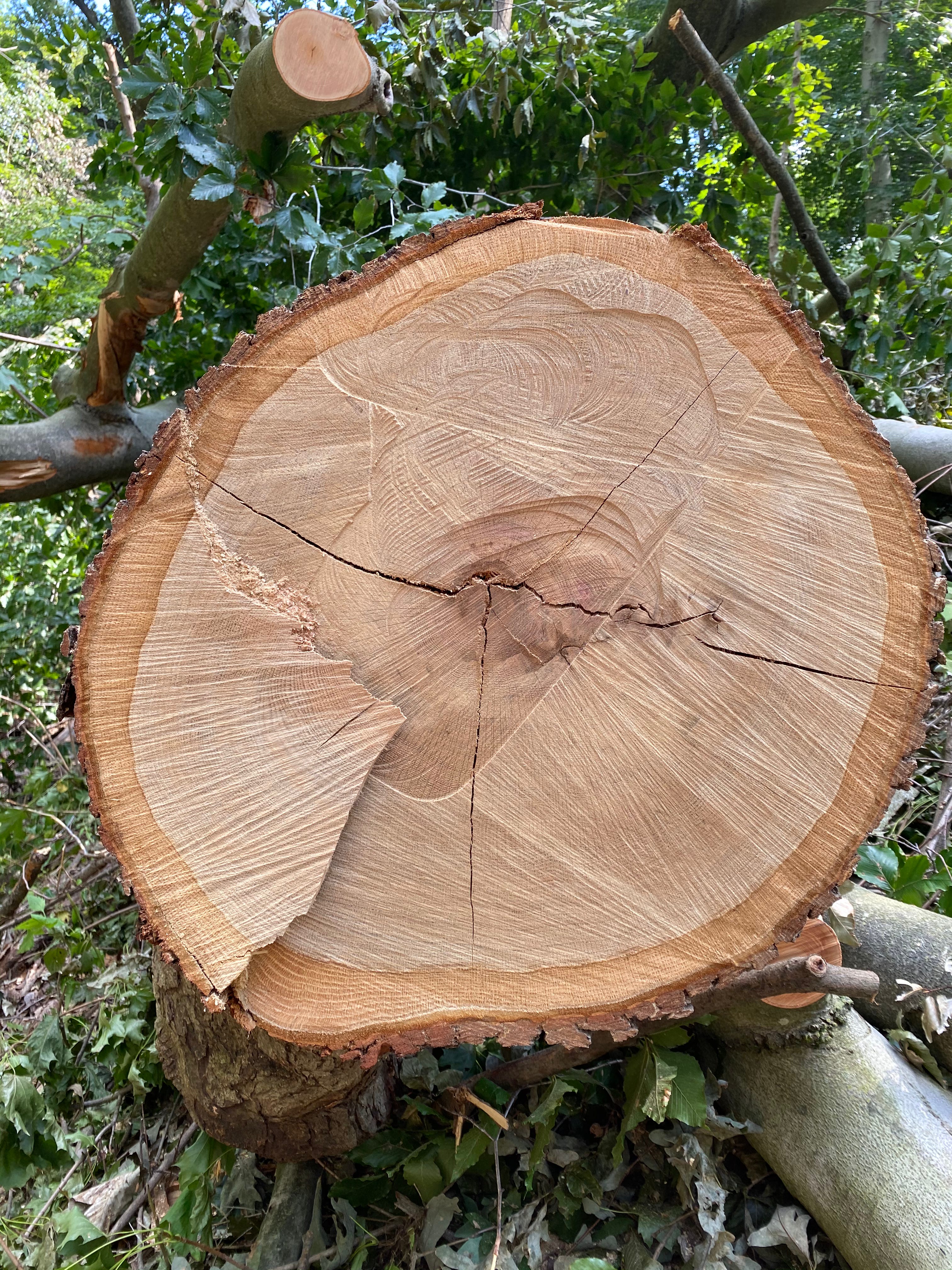
I am not a smart watch for tracking rings on my walk; I am the grief of counting rings of the tree that didn’t survive the ice storm.
I am the catch in the throat during Barber’s Adagio.
I am not the unchecked arrogance of computer-automated response; I am the humble and curious inaccuracy. I am the freedom of “I don’t know.”
I am the “b” and the “d” my son practices with a shaky crayon, the aggressively exuberant birdsong this time of year, the way sourdough starter smells like life and decay at the same time, the way the pressure behind my temples rises before the first note of the Bach concerto.
Maybe the wilderness of this age isn’t something to be solved by a faster processor, but something to be walked through like Jesus did— preaching to himself the truths his heart knew, leaning into his humanity and his need for God, rejecting the shortcuts of an easy life, not giving in to fear, anxiety, and isolation, as tempting as it is.
Art holds the door open to another kind of information.
It invites us to stop screaming “REPRESENTATIVE” into the void and instead, to hold.
To hold the knowing and the not knowing, to hold each other, and to hold space for the messy, inefficient, joyful reality of a flesh-and-blood life.
We are in the wilderness, yes. But the wilderness is where the artists have always lived, making paths where there were none, reminding us to stay on the line. Don’t hang up.
Please hold for a human.
The wait may be long, but the person on the other end is always worth it.
What does it mean to be human in these days to you? What is beautiful about it? What is difficult? Would love to hear your thoughts in the comments! ⬇️
No posts
Comments
Nothing yet. Say the first thing.
Sign in to join the conversation.