
Hello! We’ve had a lovely influx of new readers lately—I’m so glad you’re here. If you’re new to my world, I’m a classical oboist, creative coach, and author who believes that the creative struggle is actually a sacred one.
I publish on Substack every other Friday, and on the alternate weeks, a new episode of my podcast, Artists for Joy, goes live on our website, Apple Podcasts, Spotify, or wherever you get your podcasts. The comments on this week’s post are open to everyone, so please say hello if you’re new around here. 👋🏻
Art's Open Door is a reader-supported publication. To receive new posts and support my work, consider becoming a free or paid subscriber.
Today, I’m sharing a story about my 15-year-old self (bangs and all) and a lesson on resistance that I'm still relearning twenty-five years later.

I do not understand what I do. For what I want to do, I do not do, but what I hate, I do. Romans 7:15
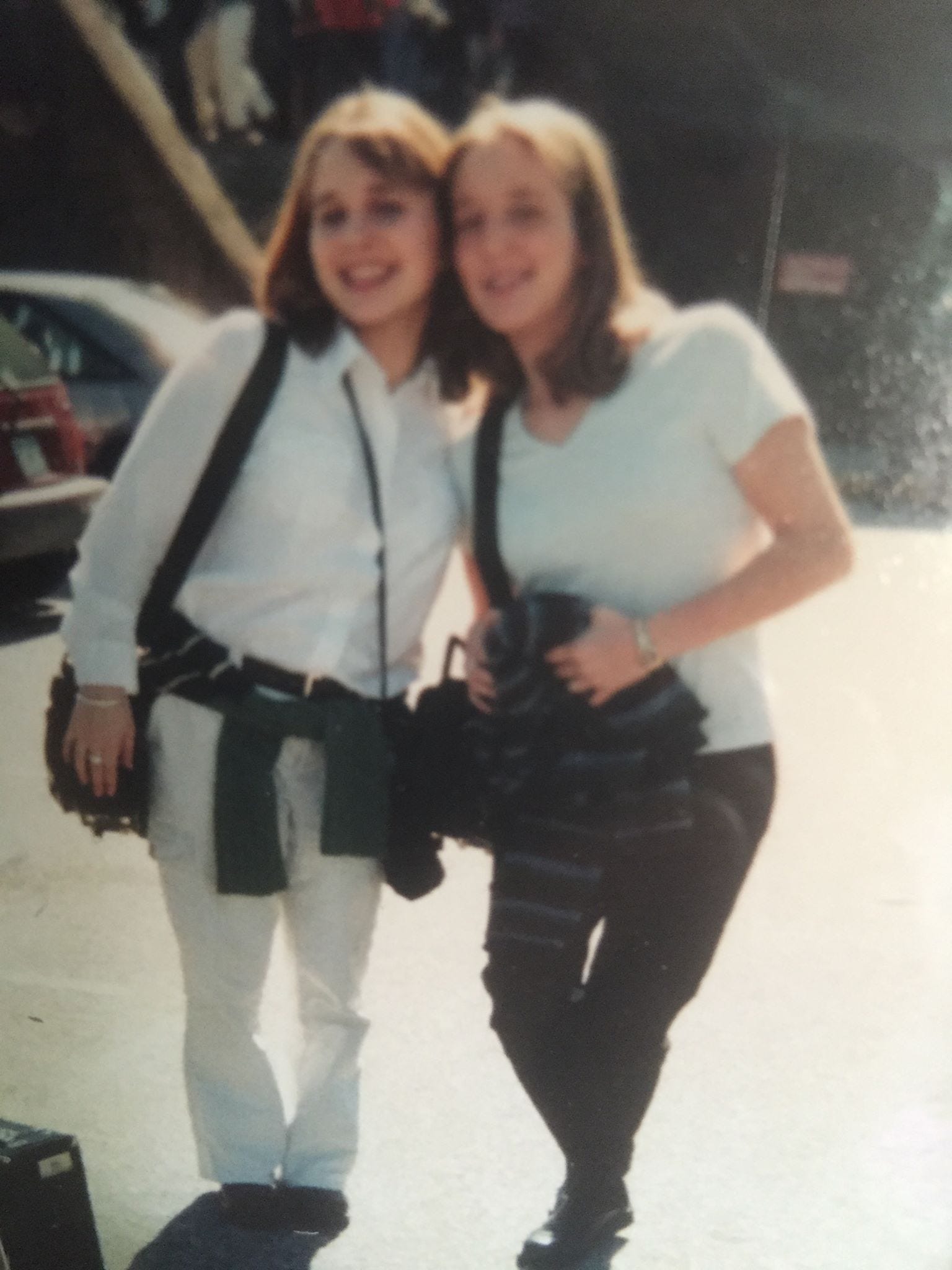
I was fifteen years old when I first walked the campus. Picture me: wispy bangs, hair half-up, half-down, a white tank top from NY & Co. underneath a polyester button-down in some bright green or blue, with low-rise, black boot-cut pants and the classic bow-clad Sam and Libby’s.
I’d kept the brochure for the South Carolina Governor’s School for the Arts and Humanities inside my oboe case since beginner band. I memorized the map of the small campus from the by-then-crumpled paper. When I arrived that day for my audition and interview, I at least seemed to belong. It was my entire adolescent personality, getting into that school for my junior and senior years of high school, leaving my small town, “making it” as an oboist.
After my audition, the map led me to one of the theater buildings. Once I’d found the room, there sat two instructors behind a table, waiting for me. They introduced themselves: one from music and one from academics. The English teacher was cheerful and kind. I had memorized some vocabulary words to sprinkle throughout the interview (I wish I were kidding), and early on, managed to say “pejorative” in a real sentence like an actual human person. It seemed to be going well. The English instructor was warm, but the music professor, with his thick mustache and impossibly tall and slim frame, was gruff and standoffish. As a resident of Middle-of-Nowhere, South Carolina, I knew I needed to convince these Big City professionals that, while I lacked polish or experience, I made up for it with dedication and teachability.
We were getting to the end of the interview when the mustache leaned forward and asked, “But… do you love to practice?”
I laughed nervously. “Of course! Who doesn’t?”
Dr. David Hamilton, the towering trombone teacher and wind ensemble conductor in that interview, became one of my most beloved Governor’s School mentors; we’re in touch to this day. I remember him asking me that question so vividly. Now, twenty-five years later, if you asked me if I love to practice, I might be tempted to evade the question with a laugh and sarcastic comment all over again.
Just the other day, my 8-year-old daughter and I were talking, and I was attempting to explain (aka put a positive spin on) the fact that practicing a musical instrument can feel like a bottomless pit of effort.
She asked why we needed to practice if there were no cello lessons this week. (Her teacher had had to reschedule.)
“We don’t just practice for lessons, we practice for life. There’s always more to learn, even when you’re a pro.”
I tried to sound cheerful.
Although I was tempted to, I didn’t go so far as to tell her she should love it.
Even so, she was not impressed by my answer, and honestly, on some days (i.e. lately), neither am I.
As a professional classical oboist who also calls herself a writer (and creative coach), I’ve been thinking a lot about my historical relationship to practice and motivation and what sustainability looks like now.
What is your relationship with practicing your art form like?
I won’t ask you if you love it. Maybe sometimes you do, maybe you did once.
I already know (because many readers and podcast listeners tell me) that you let yourself fall back asleep when the alarm goes off. I know you scroll your phone when you want to be creating.
Like the Apostle Paul says (not about creativity, mind you, but capturing something true about the human experience nonetheless): “For what I want to do I do not do, but what I hate I do.” (Romans 7:15)
Me too, Paul, me too.
We have vision, but we lack momentum. We have dreams, but we lack energy. We long to be proficient or prolific, but, hey, we’d settle for productive or… passable. We’d rather clean the kitchen than write. We’d rather doom-scroll than play scales.
Looking back at the young girl in her first professional interview/audition, I realize that most of her musical life up to that point, she had been practicing for a specific purpose—to get ahead, or at the very least, not get behind. I was so eager to make my dreams come true as a musician, and practicing was the only way I knew how. I didn’t love practicing per se, but I did love where the work would take me.
Even today, to borrow (and rewrite) a common quote about writing: “I hate to practice; I love having practiced.1” In some ways, I have been using shame and fear to motivate me all these years, and, as a creative coach, I know that isn’t sustainable.
This mindset still works for me today, if I’m being honest. I have so much music to learn, and many words to write and edit, so it is (in some ways) the fear of not being prepared or not feeling ready that gets my backside into the chair.
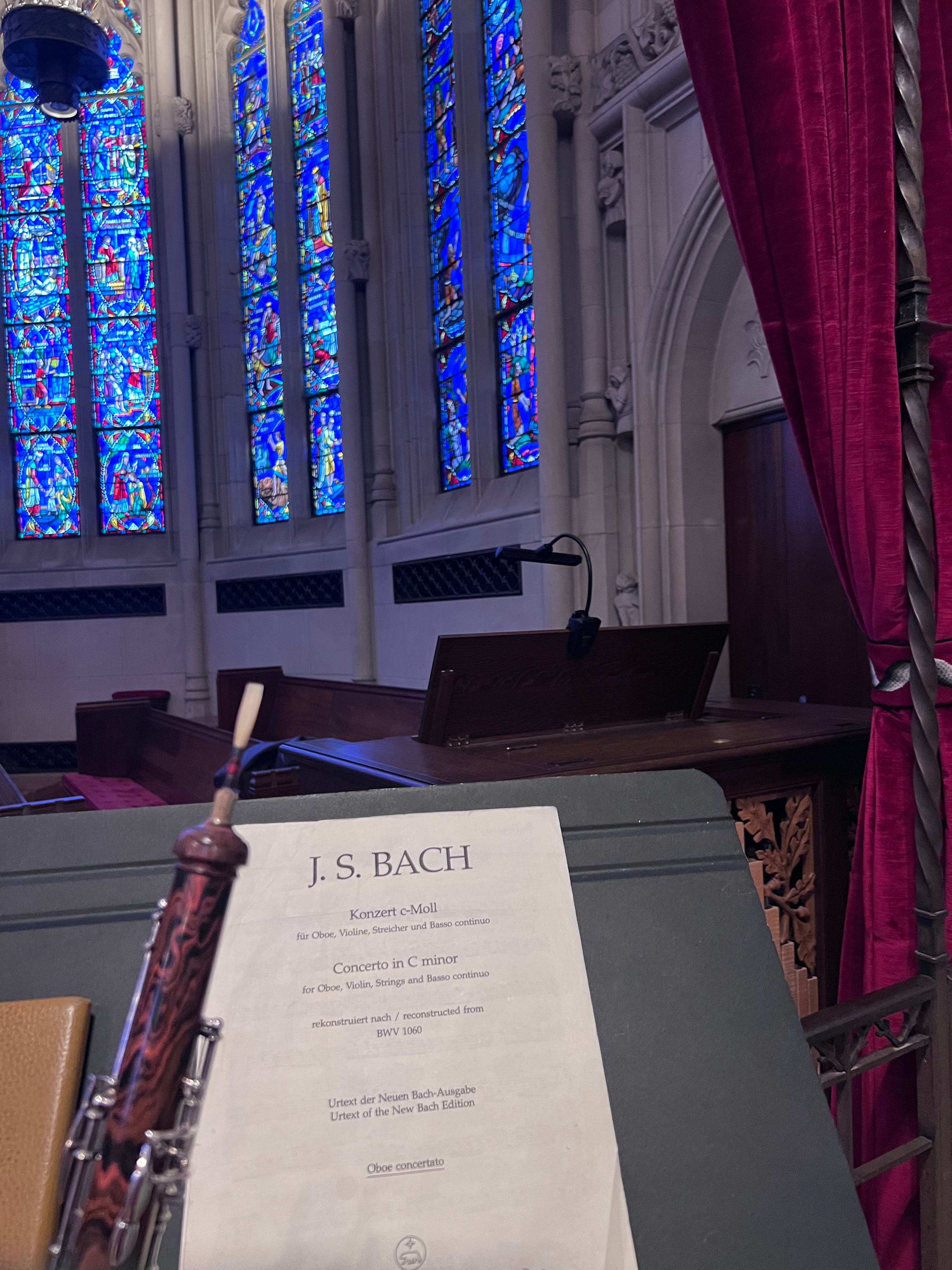
Sure, there have been times when I’ve been so in love with the art form that I couldn’t wait to soak my reeds and learn a new Bach aria—Bach always makes me love practicing—when I could see the book coming into focus and woke up early, joyfully, to get to work on it.
But, to be completely honest, even though I wrote a whole book about finding joy in creative practice, there are still days when it is ridiculously hard to sit down and do the things I most want to do, and shockingly easy to do the things I hate.
Some days, there are not enough Bach arias in the world to make me feel like practicing.
But…do you love to practice?
This question bounced around in my brain again this week. In a month of especially low motivation and lack of consistency, I felt judged and sad.
Then, in my fifth creative coaching call in two days, a new kind of answer came.
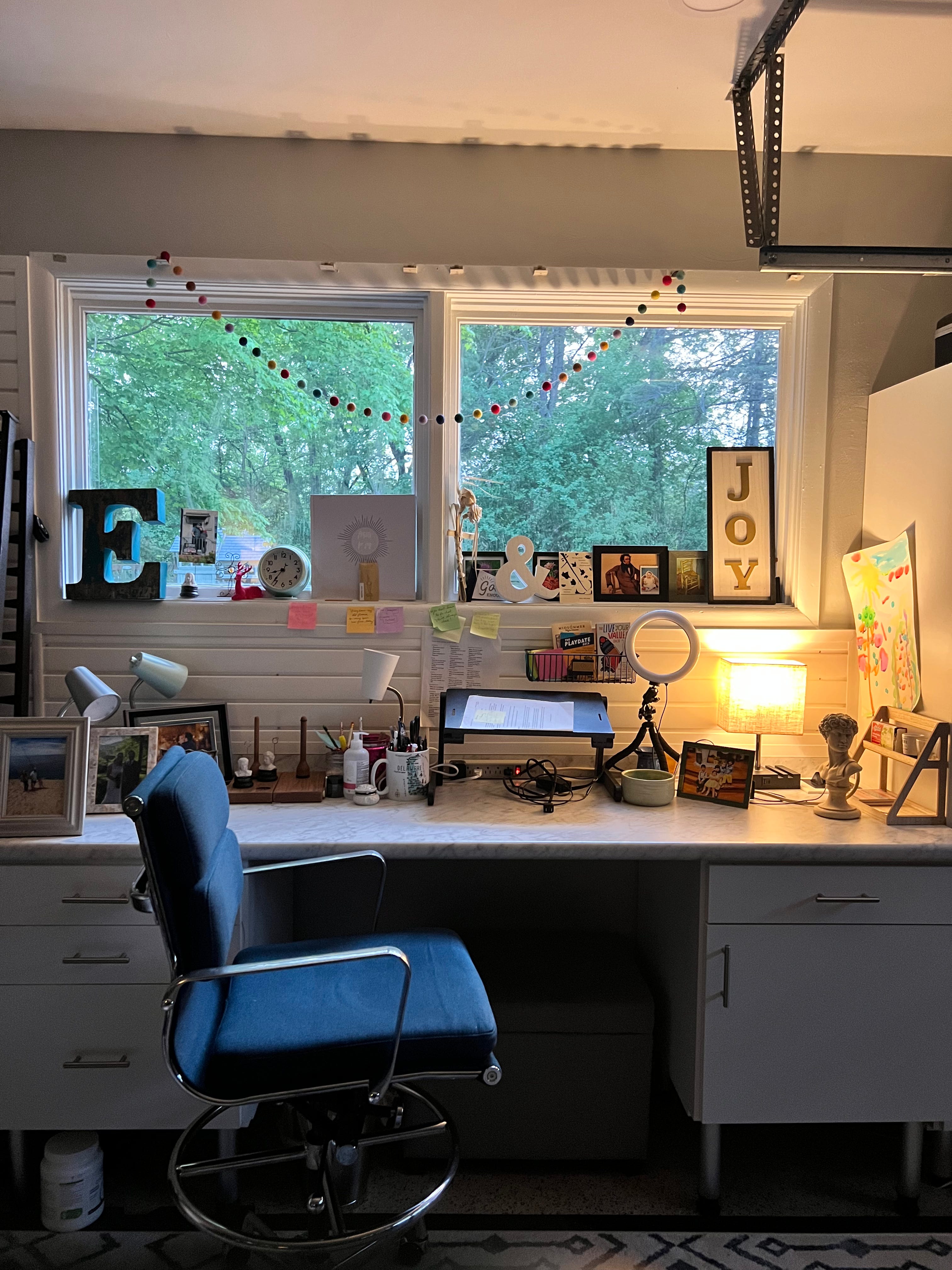
Coaching artists is such a gift. Just by listening and asking simple, potent questions, I learn so much about myself and the creative calling. I have been working with many of my clients for months, some years.
For context: I coach artists across the creative map—from professional musicians with high-pressure performance jobs, to writers just beginning to pour energy into the book project(s) they’ve dreamt of finishing, to actors and arts educators recovering from burnout, to creatively wounded makers who are working to get back out there after painful rejection.2
And amazingly, last week, with almost all my coaching clients, from all these walks of life, genres, and experience levels, across age groups and life stages, five of them came to the same conclusion: Practicing consistently makes them feel better.
Perhaps you’re thinking: Duh! But stay with me.
In our calls, we work with creative block, we solved problems inside the work that are holding them back, we troubleshoot schedules and other creative conundrums, each one as different as the artist themselves, and yet, this truth emerged for five clients (almost in a row): what improved their mood, quality of life, outlook, inspiration, and motivation was the simple act of showing up consistently. It didn’t even matter how much they made, the quality of their work, or their progress; it was the consistent showing up that made things better.
Practicing with joy doesn’t mean that you always want to, that you will always love it. What I learned this week again was that even when practicing doesn’t sound fun or even when it sounds and feels quite dreadful, the feelings on the front end of the process are, well, irrelevant.
Now, before you think I’m telling you not listen to or trust yourself, what I mean is that resistance before sitting down to practice is to be expected. Join me in not feeling surprised when that happens. In fact, the more we learn to expect and push past the resistance that will inevitably show up, the faster we will get to the good part.
One client said (and gave me permission to share):
“The resistance is like the airport security line. I know I want to fly to Hawaii, but to do that, I have to stand in that annoying line. Trusting the process means believing that being annoyed or unmotivated is just part of it, it’s just my inner critic trying to keep me safe. But it doesn’t have to stop me. The only way out is through. The line is a lot more tolerable when you know what’s on the other side.”
Another gem from another client I scribbled in my coaching notes:
“I may not want to practice, write, stretch, or do morning pages— but, here’s what I do know, I have never once regretted doing those things.”
So this week, if I’m honest, for the first time in the new year, I was able to find some consistency. I waved at the resistance—every day—as I walked on by. I got started anyway.
I reassured myself, repeating the truth the coaching clients had taught me: the joy in consistency vibrates way beyond the creative work and right into life itself.
It worked. The more consistent I became, the better I felt about almost everything. Hope started to thaw something deep within me.
We don’t practice for lessons, we practice for life.
It was more true than even I knew.

Perhaps the secret to sustainable creative practice isn't about conjuring a love for the process (fake laugh and all), but accepting the resistance as an expected part of the trip—the “airport security line” we must get through to start our journey to where we most long to go.
We will continue to struggle with the “want to do, do not do” impulse, and the temptation to let shame and fear be our motivator. But as the collective experience of my creative coaching clients3 proves, the feelings on the front end are just part of a much longer, transformational process.
Here’s the quieter truth of creative effort: our dedication to showing up, even in the face of resistance, is a profound act of faith. Like the Apostle Paul, we are not alone in the struggle between the desire to create and the difficulty of the task. Yet, like him, we know we are called and led.
In the end, let your creative consistency be anchored not in fleeting emotion or even in the fear of falling behind, but in a profound spiritual identity. Your art, your practice, and even the struggle to show up are all part of a greater design.
As Paul writes later in his letter to the Ephesians, "For we are God’s handiwork4, created in Christ Jesus to do good works, which God prepared in advance for us to do.5"
This work, then, is not merely a task to be checked off, but the very purpose for which we are made. Every time we push past the resistance—that “airport security line” of the soul—we are not manufacturing discipline; we are stepping into the good work already prepared for us.
May you trust that consistency, the quiet and repeated echo of your deepest purpose, is joy’s on-ramp, making each creative effort a holy and courageous act of faith.
So sit down. Let’s get to work.
Trust me, you won’t regret it.
What does your "airport security line" look like today? Is it a messy desk, a loud inner critic, or a scrolling habit? How can you "wave at the resistance" and walk on by this week? Tell me in the comments!6
The original: “I hate to write; I love having written,” is attributed to Dorothy Parker and others.
As always, these details are changed to protect clients' identities, since our coaching work is confidential!
I may be their coach, but I am learning just as much, if not more, than they are!
That word is translated as “masterpiece” or “craftsmanship” in other translations. I wrote a whole essay about it for my book, too!
Ephesians 2:10, NIV
Comments
Nothing yet. Say the first thing.
Sign in to join the conversation.