
Hello, there, and Happy 2026 to all who celebrate 🫠 There are new faces here, and so I wanted to take a moment before today’s post to welcome you. Art’s Open Door is a place to consider art and art-making through a spiritual lens, and I’m so glad you found me.
My creative rhythm in this season of life is alternating between the page and podcast. One week I’ll write to you here; the next, on the podcast. I’d love for you to subscribe and follow along on both. I’m honored to show up in your inbox on Fridays.
Today’s post is my annual word-of-the-year reflection. I hope it meets you wherever you are— in the joy and anxiety that mark these days.
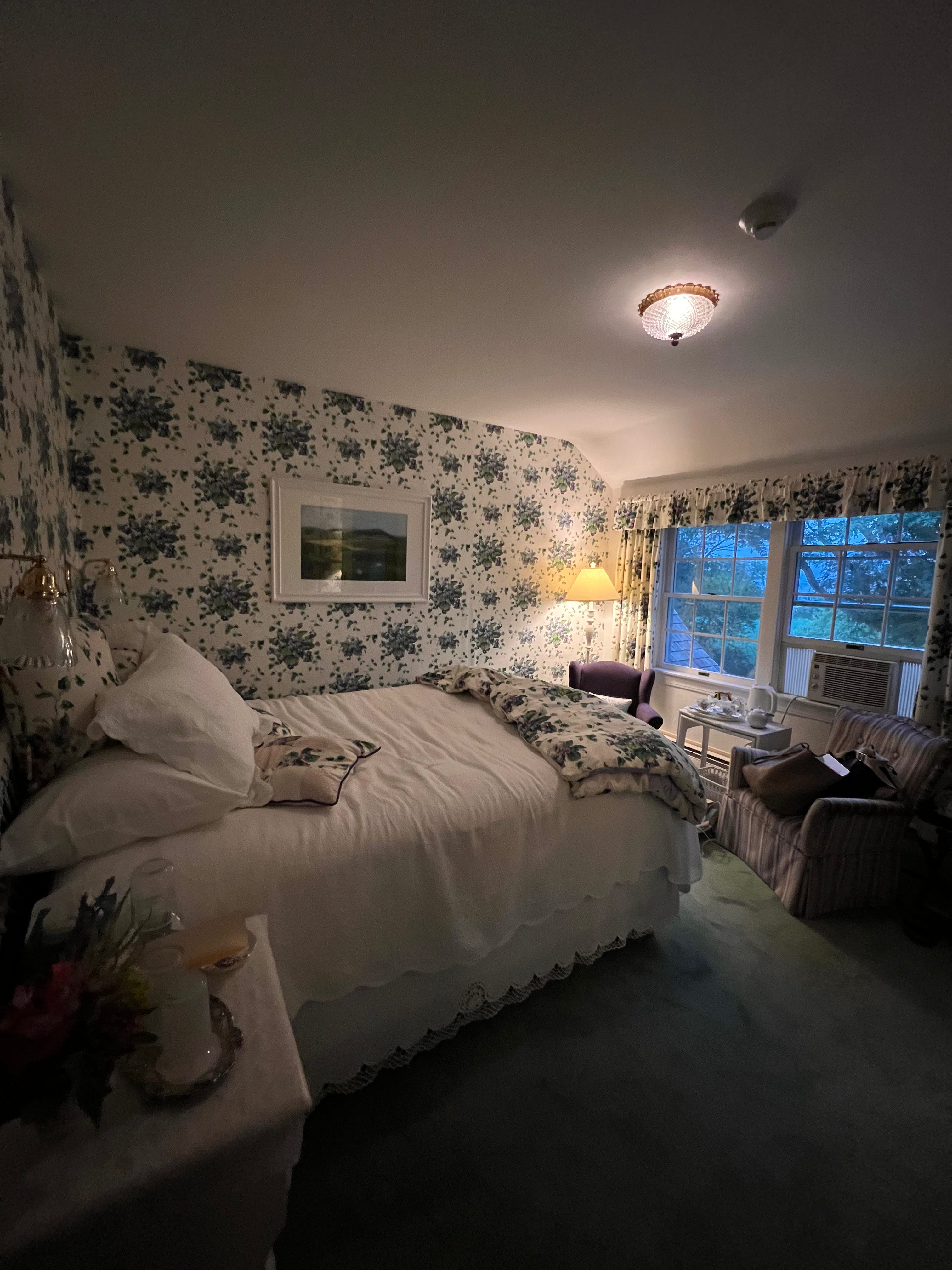
As I climbed into the impossibly soft bed in that temporary dwelling place, I thought about what Sister Ruth1 had said when she wished me goodnight.
“We prayed for you—as we do for each person who stays here—when we prepared your room.”
I surrendered to the large, white bed in the room covered in floor-to-ceiling floral wallpaper. I squeezed my dry eyes shut. After two very long days of driving, I’d arrived at the Community of Jesus, an idyllic ecumenical monastery in Orleans, MA, situated along Cape Cod Bay. In a day and a half, I would be presenting an oboe recital as part of their Art Speaks series, a program I was calling “Music, Memory, and Meaning: How Creativity Helps Us Belong.” That first night, as the impossibly soft comforter and the cold air of the window unit enveloped me like the Sisters’ prayers, I had the best night’s sleep of my life.
When I received the invitation to perform and as my husband and I planned our summer, it felt like a no-brainer to bring the whole family and enjoy an extended weekend on the Cape, a place neither of us had ever visited. But, one by one, each of us fell ill the week before our departure. Luckily, I was the first to get the bad summer cold. When it was time to leave, I was fine, but my husband and one of the children were still running a fever. I felt OK to travel, so he sent me out the door alone. (I told the Sisters: “He’s the one who needs your prayers!”)
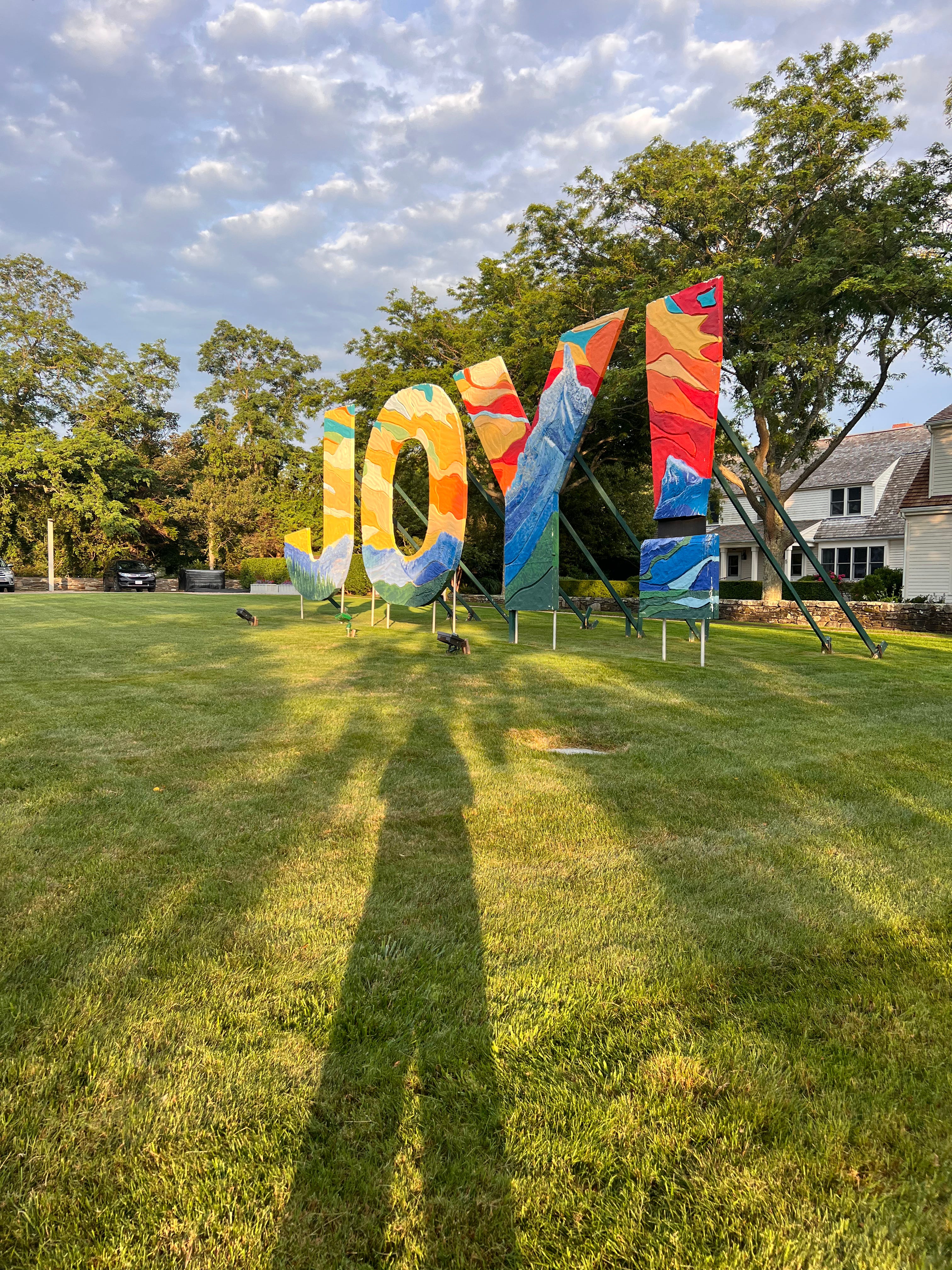
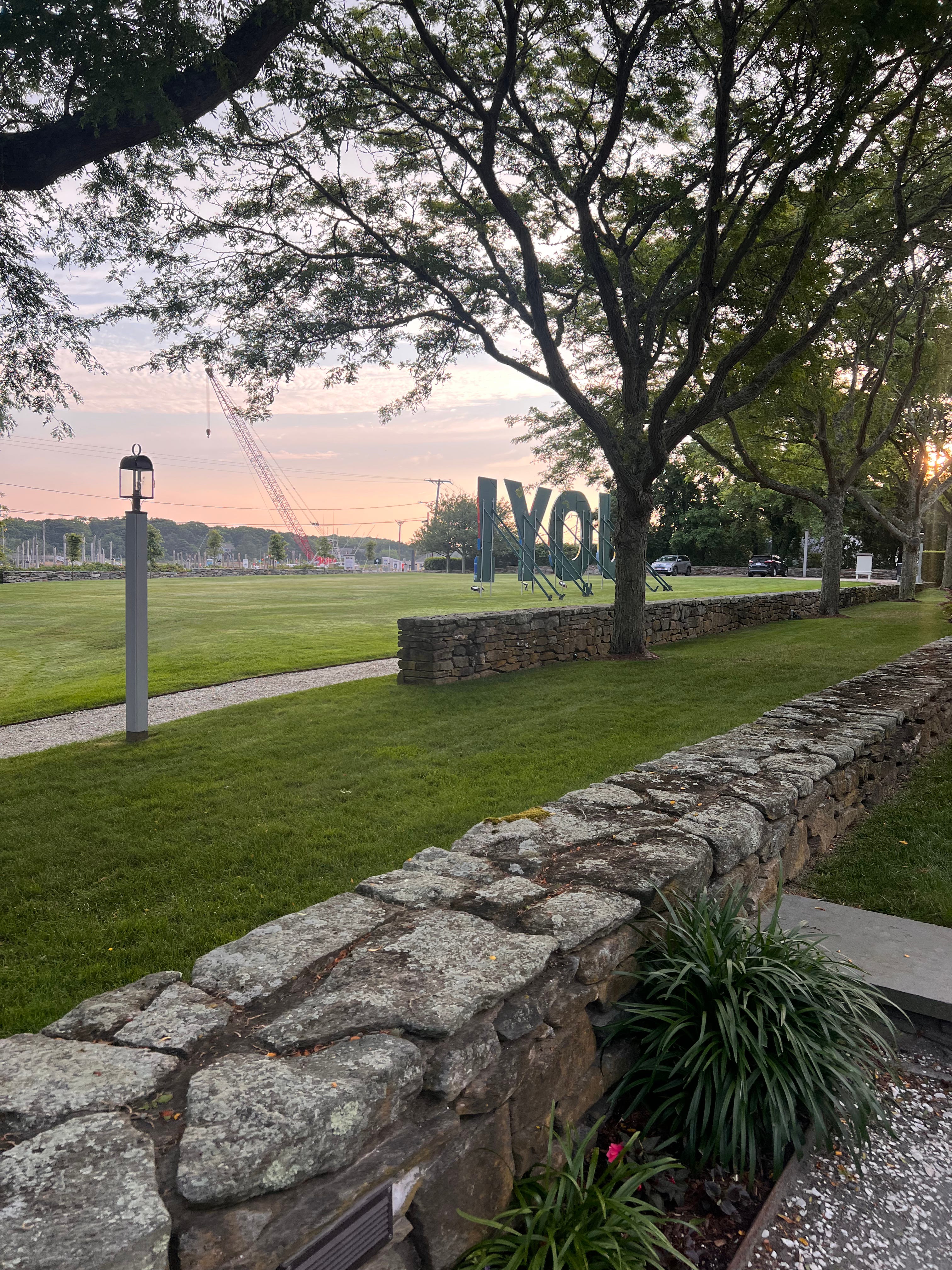
When I pulled up to the Community that bright July day, after sixteen hours on the road, I found a message for me on the lawn. To my astonishment, a (what looked to be) 200-foot-high, brightly colored sign read: J-O-Y-! I later learned that the lawn art installations were done by the Brothers who lived in the Community. They created and installed large-scale Peace, Hope, Love, etc., and stationed them on the main lawn for a few months each year. Pulling up in this, the lawn’s J-O-Y-! “era,” let me know I was in the right place.
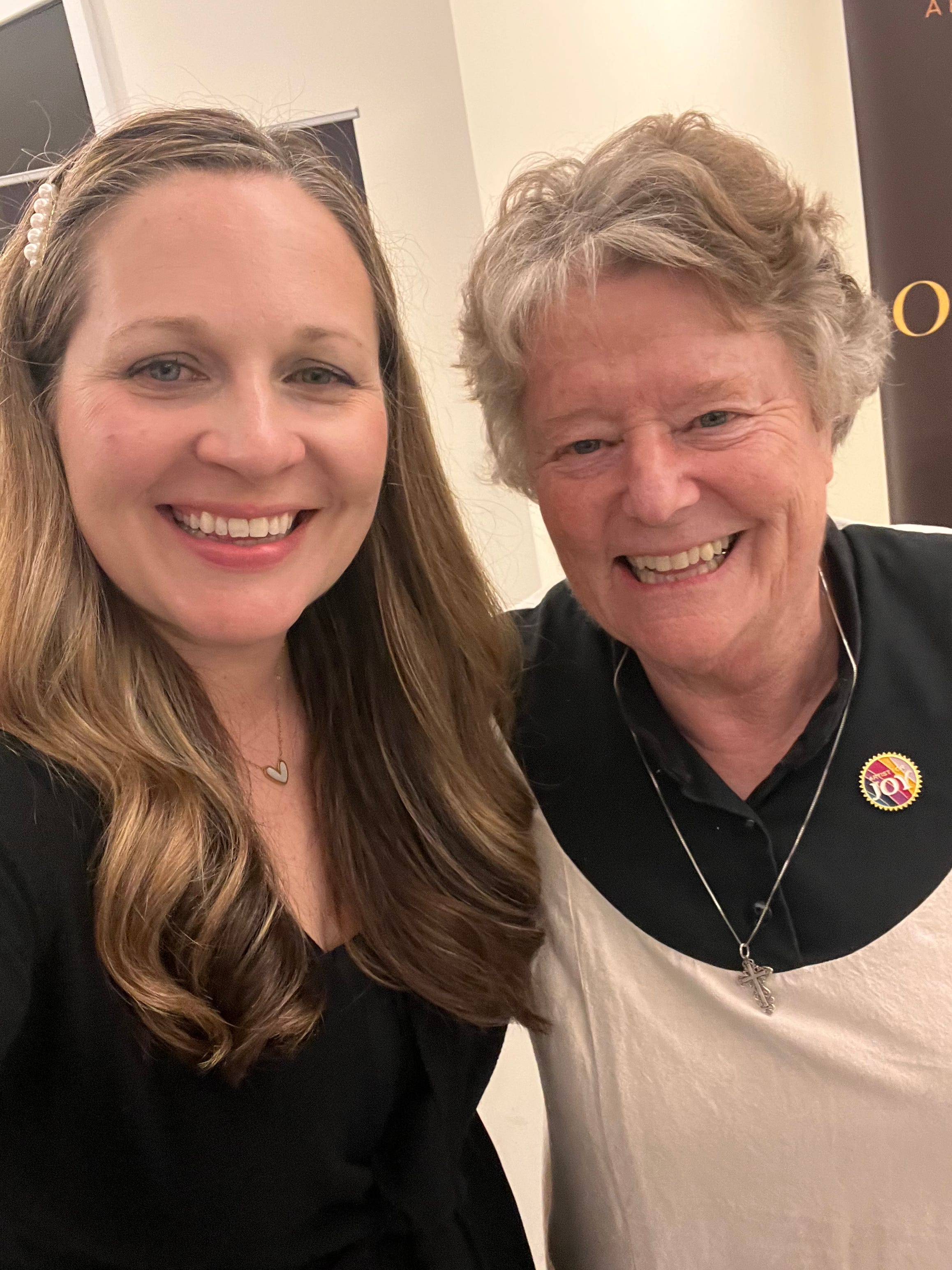
Being a curious (ahem, nosy) person who loves hearing people’s life stories, the best part of my time at the Community was getting to know the Sisters. They not only prepared my cozy room but also made homemade meals with ripe vegetables from the garden, fresh bread, and any type of tea you could ever dream of. As much as I enjoyed solitude (hello, mom of two small kids), I looked forward to each meal to see which Sister would be waiting in the dining room and kitchen for me.
There was Sister Ana, who had been there when the Community started in 1961, who knew the two Episcopal lay women who dreamt the intentional community into being. Ana told me she went to Bible College to become a pastor’s wife, but quickly realized that that was not God’s plan for her. “And thank GOD!” She looked at me and raised her eyebrows. (She knew my husband was a clergyman.) Her eyes sparkled. She turned her head back and cackled.
Sister Claire had grown up in the Community (there are families, too, that live on the monastery grounds). She had never planned to be a Sister, either; in fact, she swore up and down that she’d never join the Order. She returned after college in Chicago as a seeker and never left. I asked them so many questions—some probably too personal—about their calling and their daily lives. I was genuinely curious, but also, I was astonished at their lightness, the ease and peace in their personhood, their matching tunics, a brightness behind the eyes that was hard to forget.
Here, six months later, home in Michigan, living through another record-breaking arctic blast, I’m reliving that warm weekend in the Cape. What struck me most about the experience was not the playing or speaking, not the scenery or the music (although those were lovely, too), but the soul care I received as a guest. The Sisters (and Brothers) in the Community in Cape Cod live by the Rule of St. Benedict, a way of life and order that requires sacred vows of obedience, conversion, and stability. What I noticed most in them was writ large: J-O-Y-!
As for me, I have washed up on the shore of 2026 wearier than usual.
Highlights of 2025 included: writing my second book, traveling a ton, playing a lot of oboe, my youngest starting all-day school, numerous other highlights I can’t think of right now (more on why in a minute)— plus, all the usual joys and sorrows that come along with being a human in this moment in time.
The words I chose last year were: “hang on to the thread”; with all the movement (literally and productively) that was about to occur, I knew I needed an anchor. The essay I wrote about it actually ended up in my new book. The word felt like a companion in the ups and downs of life last year, and I’m so grateful. That’s what these practices are for, right?
Well, at the end of 2025, as November and December came along, as the year barreled forward— like a freight train— to its close, while I didn’t let go of the thread, I did feel a growing resistance and soul-deep weariness. I recorded the podcast episodes for the “Give me a word” series before the holidays. I prepped for the word-of-the-year art party on January 9th, a word or two in mind, but little clarity as to what direction I was moving as the new year began.
Even now, twenty-some days in, it is still so noisy inside my head and heart. Just this week, I saw moms in a Facebook group asking about reservations for Easter brunch. I was flummoxed. Easter? I’m just trying to make it to Wednesday!
If I had to look back on the last twenty-ish days of 2026 and base my word of the year on my actual state of mind, it would have to be something like “pre-occupied.” My attention and energy are always split between work and home, between the first book and the second, between what could happen and what actually is happening in the world (both are equally unsettling, by the way). Something tells me you might feel the same.
But here’s the thing, we must remember the purpose of the word-of-the-year practice is to name how we want to show up to life. It is an intention we set.
And so, when I forced myself2 to make time to reflect this week, the first thing that came to mind was the Sisters of the Community of Jesus on Cape Cod.
Instead of pre-occupied, could I be monastic? Can one do that in my world? In a marriage? As a mother? I long to feel J-O-Y! (or even lower case with zero punctuation) in my work and my life, especially in serving others.
So, I tried it this week.
As I folded a pile of laundry that had been on the living room couch for longer than I’m ready to admit, I prayed for my family. As I matched the 856,562 rogue socks and moved to the kitchen to clean the disgusting gray debris out of the dishwasher filter, I thanked God for clothing and for food.
When I was required to make not one, not two, but three different dinners for one child, I tried cackling instead of groaning. I prayed for this little one’s developing palate.
I channeled Sister Beth as I chopped vegetables, thinking of the seasons of sunshine and rain that each one had seen. I gave thanks for the twisted, gnarly carrot as I imagined it pulled from the black earth somewhere much warmer than Michigan.
I walked. I listened to the wind and rain. I clicked the Pray As You Go devotional podcast before scrolling social media. I even read about how to do centering prayer.3
I fasted a few mornings to see if it brought more clarity. It did, but turns out reading music is much harder without my oatmilk latte.
Overall, I did feel more focused, a little lighter.
All this to say: I committed to “monastic” being my word of the year, and it has been a blessing.
But there was just one problem. A big one.
I couldn’t seem to get any writing done.
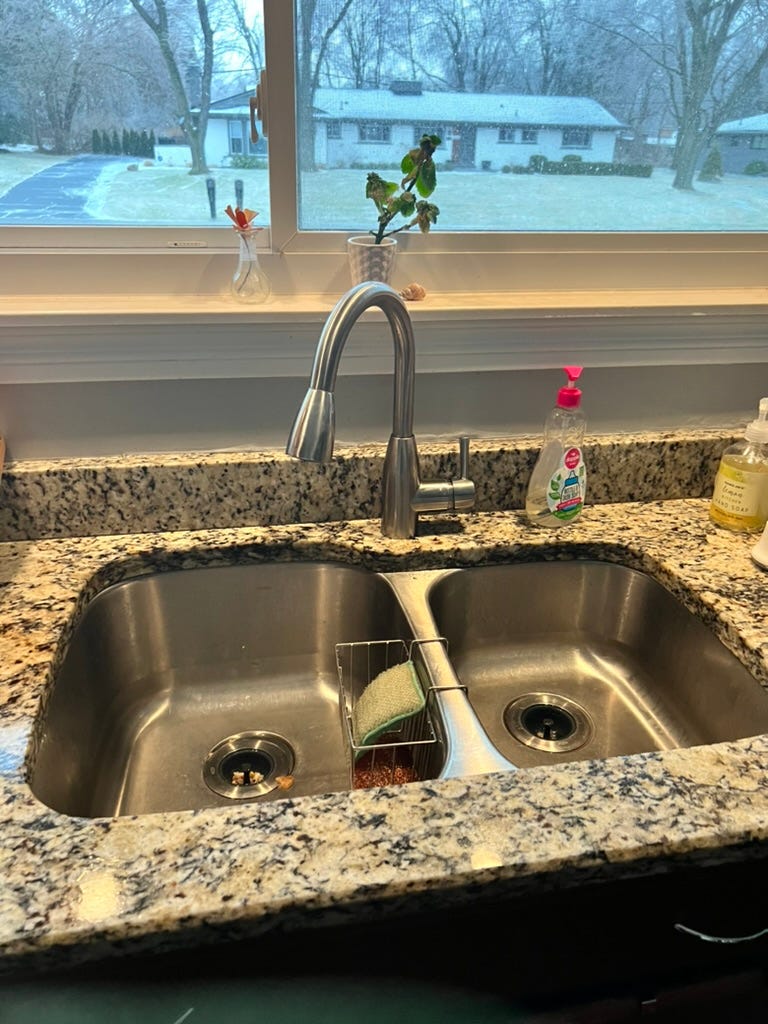
Every time I went to sit down, I passed the kitchen sink. I couldn’t help but consider what prayers and productivity were needed there. Then, everyone got sick again, a slew of snow days and other routine busters, and my monk-self got overloaded. Ora et Labora, the Rule of St. Benedict says, pray and work.
These people have the audacity to keep needing their dinner(s)—and their prayers!
The vegetables need someone to listen to their origin stories, for goodness sake!
Feel free to chuckle; I am laughing at myself, too.
With the best of intentions, I had somehow “monked” myself into a (very tidy) corner. While it was good for my home and my culinary chops, something integral was missing.
You’ve probably seen them on the news by now, the group of Buddhist monks (and a very famous rescue dog, Aloka) who are currently walking 2,300 miles across the United States, from Texas to Washington, D.C. They aren’t walking to protest or to shout; they are walking as a “moving meditation” to plant seeds of compassion and inner peace. I pray for their safety now, as I imagine the weather and the fever-pitch news cycle feel scary.
In my own “monastic” journey, when I saw these monks taking action, I decided I better do some more research.
It might be easy to look at someone entering a religious order and see their separateness from society, from everyday life, as an effort to escape reality. I realize some part of me thought that before I met the Sisters in Cape Cod. I’m sure for some it might be an effort to run from life, but it turns out this prayer-and-work thing extends beyond what I ever realized.
It was two Irish monks, Columba and Columbanus, who helped me find my way back to the page this week.
I learned that when the Roman Empire fell, literacy in mainland Europe plummeted. The Irish were tucked away on their island, and so in the Early Middle Ages (aka “The Dark Ages”), the Irish monks became obsessed with the Latin language and classical texts. They made it their work to preserve them. They didn’t just save the Bible. They loved the “Pagan” classics—Virgil, Horace, and Greek philosophy. While some Roman Christians wanted to burn these books as “ungodly,” the Irish monks thought they were beautiful and worth keeping.
Here’s what made me want to write: Brothers like Columba and Columbanus developed a unique, beautiful style of writing; they turned book-making into a high art form.
Some call this work—the behind-the-scenes translating and passing down, not just the Bible but books of great thinkers across the culture—“preserving the seed.” In the darkest days, they went about their work and prayer, fulfilling their duties within the community and beyond its walls. They created beauty, preserved it, actively believing that God was redeeming it. The Renaissance wouldn’t have been possible without these monks.4
They believed that the books not only should be expertly copied, but copied beautifully. They painted elaborate scenes and even used gold leaf to decorate the large first letters of the editions. They called this process, of making the books works of art, “Illumination.” You can see one example here.
When I read that, my own creative floodgates opened. The article I read about the Irish monks quoted Dostoevsky’s novel The Idiot, “Beauty will save the world.”
It wasn’t enough to copy a text verbatim; it needed to be lovely.
As if they were saying, “For the world to really be saved, it has to be beautiful.”
As much as the monastic mindset shift has changed my outlook on housekeeping and mothering, as grateful as I am for that, I know I am also called to more. I’m still learning what creating “monastically” looks like for me.
Some call these days dark. Reading the news, I would have to agree. But I know, like the monks in the Dark Ages, like the Sisters at the Community of Jesus in Cape Cod, that if we are going to save the world, we must do it beautifully.
This is my work as an artist this year:
To be about the work of preserving the seeds, championing and encouraging creatives who bring light, because beauty will save the world.
To devote myself to the quieter, less Instagrammable work of spiritual growth, which looks for me like prayer walks and lectio and visio divina, and other spiritual practices I haven’t yet dared to try.
To meet Jesus again, maybe for the first time. After “hanging on to the thread” for a year, I’m letting go and realizing that it was Jesus who has held me all along.
To fast in ways that don’t trigger my disorder eating, to look at the hold earthly pleasures and conveniences have on me, not out of restriction or virtue, but in pursuit of a deeper, sober clarity.
To create from a place of prayer and preservation of the seeds God has gifted me, not waiting for the noise to stop or the beds to be made, but creating in service to and in tandem with Christ himself. Believing the words will come, that they matter, that the song is not my own but comes through (and in spite) of me.
To pray and to work. To let work be prayer. To let art be prayer. To let life be prayer.
To labor creatively like the monks who built great cathedrals, carving stone so high that no human would ever see. They believed it was worth doing because God sees. To believe God sees.
To let my work be less proof of my skill or talent and more an offering, a set of two-hundred-foot letters on the lawn, a signpost for weary travelers in these dark days.
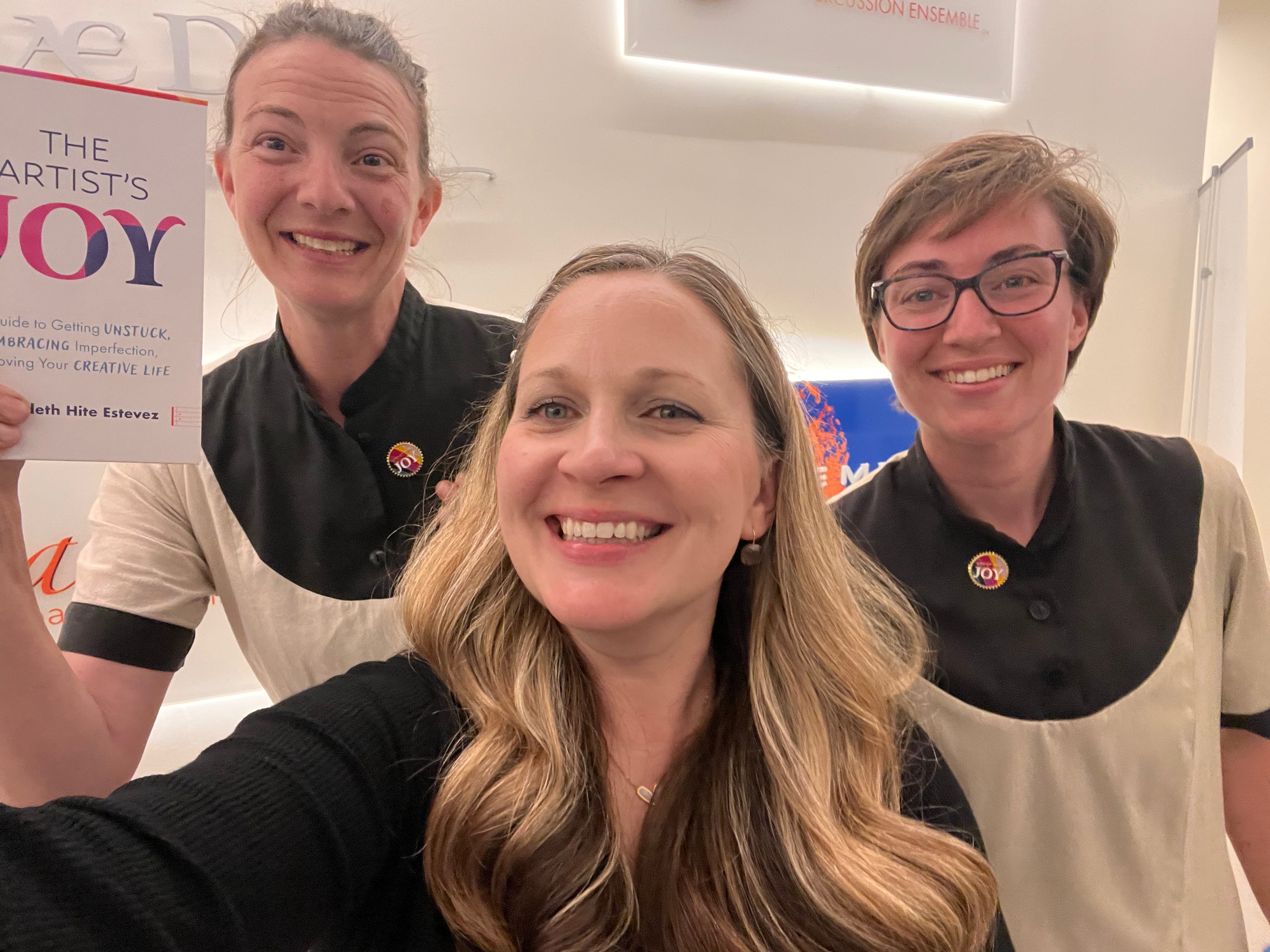
Thank you for reading. What’s your word of the year? How is it going so far? Tell me in the comments!
All names and identifying details have been changed in this one
I’m nothing if not honest—I did have to force myself, keeping it real.
I’m going to try it, I promise! Will report back.
I have a lot more to learn, and How the Irish Saved Civilization by Thomas Cahill is on my TBR list!
No posts
Comments
Nothing yet. Say the first thing.
Sign in to join the conversation.