
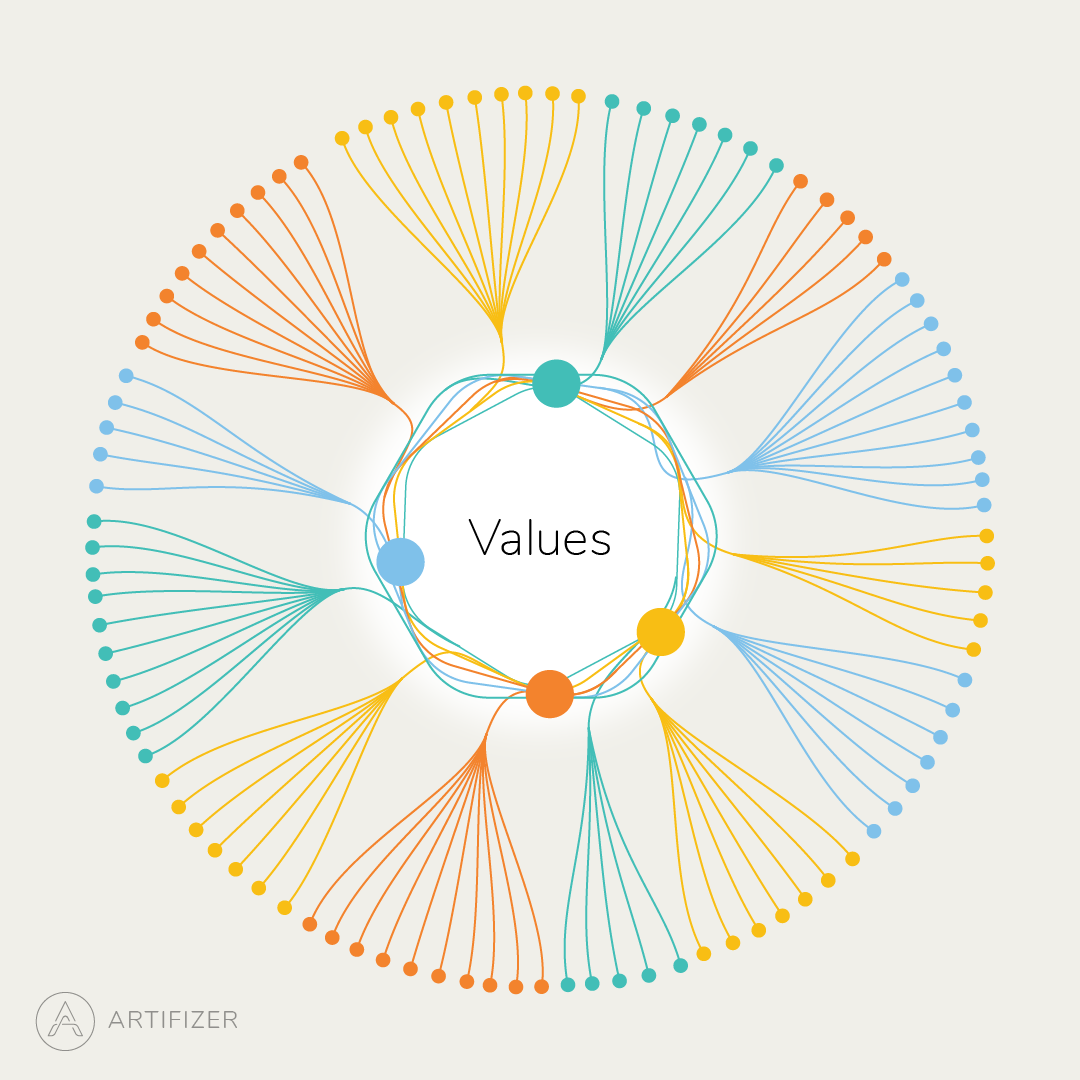
Company values are often highly visible, printed on walls, featured on websites, shared during onboarding. But inside the day-to-day of most organizations, those values are hard to find. Not just during moments of pressure, but in everyday decisions, behaviors, and systems. Not because people don’t care, but because the values were never truly embedded.
This isn’t just a communications gap. It’s a structural issue.
When values exist only as statements, they remain abstract. They don’t guide trade-offs. They don’t shape culture. And over time, they become something worse than absent, they become meaningless.
So what gets in the way? And what does it take to make values something people can actually live by? Let’s start with the most common challenges.
Most values fail for a few fundamental reasons. These are patterns I see again and again in organizations I work with.
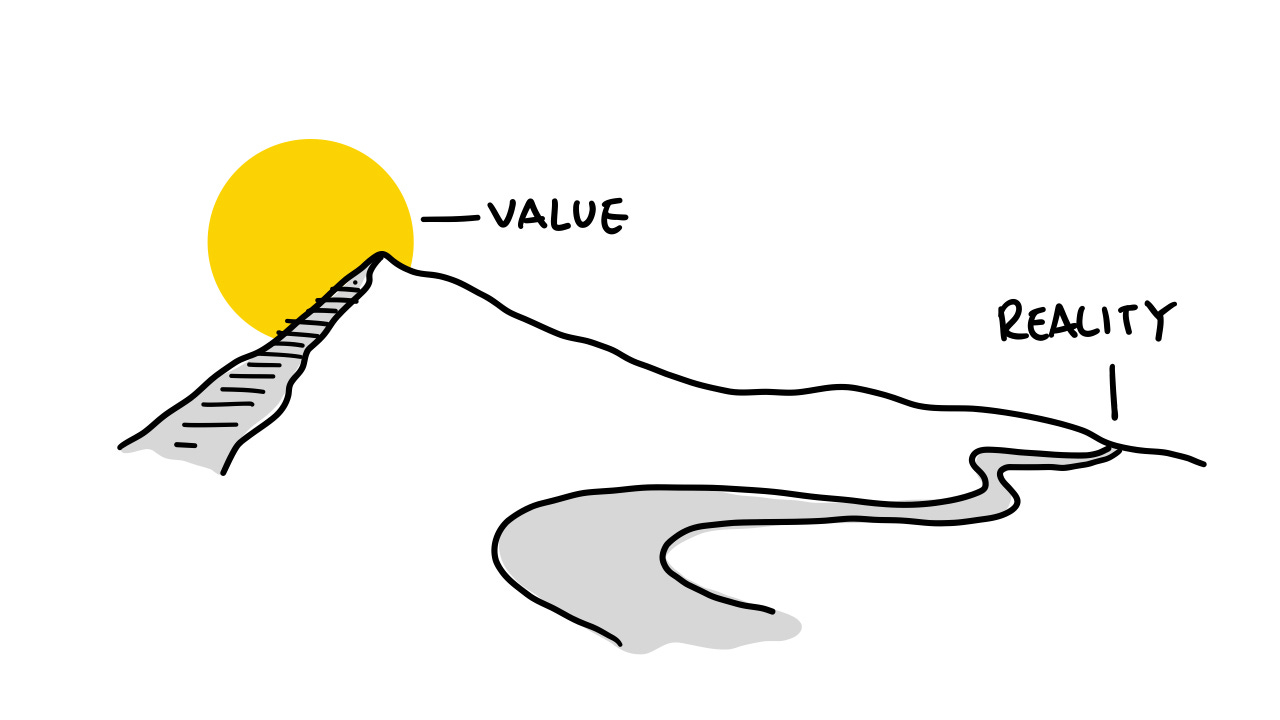
Often, values are created from the outside. They sound good, but they don’t reflect the reality of how people behave or work. They are loosely defined, full of familiar words like integrity or collaboration, and no one really agrees on what they mean in practice.
At best, these values feel disconnected. At worst, they feel fake.
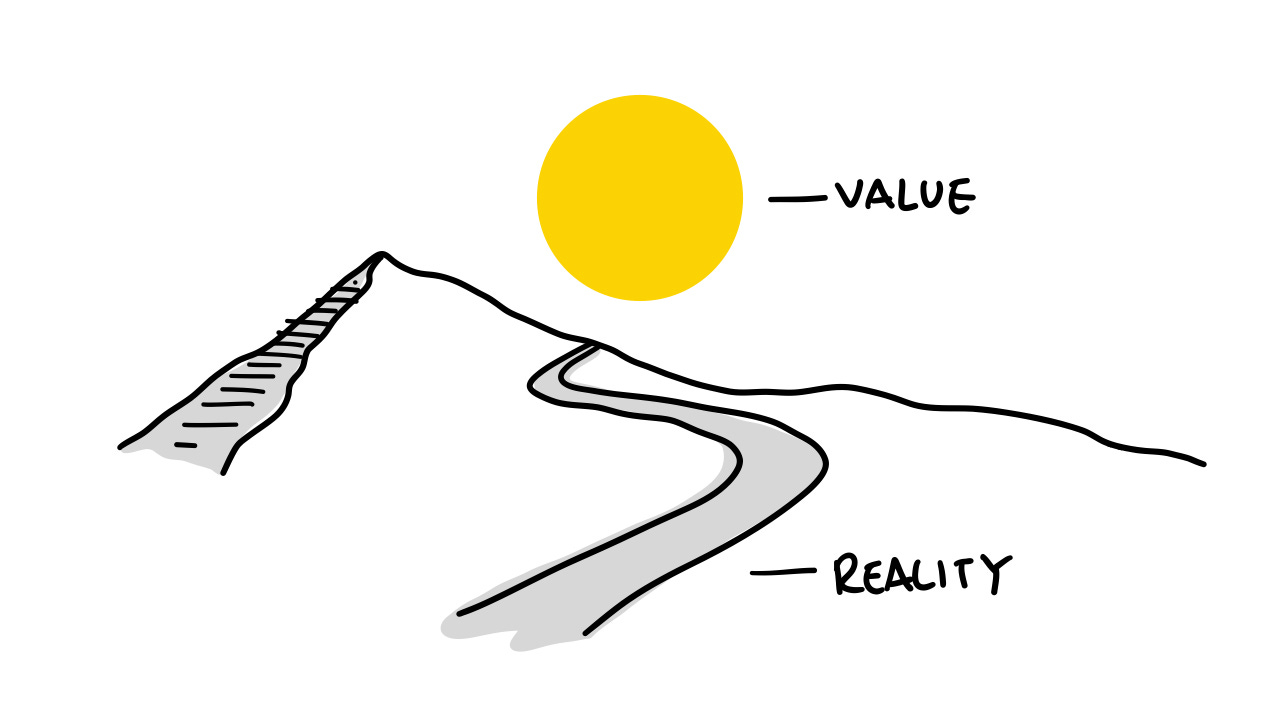
Values should not just describe an ideal. They should start from what is already there. The culture that exists, the positive behaviors people already show. At the same time, values should be a way to address what is not working. That is what gives them direction. They are not just a mirror, they are a compass.
A well-formed value reflects something real and also points to something better. It connects directly to vision and must be designed into the strategy. You should be able to see it in the way decisions are made, in processes, in hiring, in feedback, in team routines. Values are the DNA of an organization, but like DNA, they only matter if they are expressed. That expression needs to be intentional.

This is where most values quietly break down. Not in what people say, but in what leaders do.
I once worked with a leadership team who made the deliberate choice not to drink alcohol during the hours their field teams were working. There was no written rule, no policy, just a simple gesture of solidarity. That behavior carried more weight than any value statement could.
People pay attention to what leaders model. And when there’s a gap between what is said and what is done, trust fades quickly.
We’ve seen this play out in much larger and more public ways. The New York Times recently published an article about how many companies have reversed their DEI commitments behind the scenes. These were once bold public statements. But when pressure increased, many of these values quietly disappeared. No explanation, no conversation. Just silence. The gap was visible to everyone.
That’s when values stop being believable. Because if they don’t hold up when it matters, what are they really for?

Values often come from the top. They are crafted by a small group and rolled out with slides and speeches. But they don’t connect. People on the ground don’t see themselves in the words. They don’t see how the values relate to their work or their decisions. And when values are used mainly to manage behavior or correct mistakes, they start to feel like control, not support.
Ownership means people feel the values belong to them. That they help shape them, and have space to live them.
Organizations are systems. And to live values in a meaningful way, the whole system has to be aligned. The values should sit inside the vision, the strategy, the processes, the way people work and learn. They should be supported by the right tools, the right language, the right kind of leadership.
Embedding values is the starting point. Ownership is where the real change begins.
Values seem simple. But the words we use for them are often vague and open to interpretation. One person’s idea of ownership or excellence might look very different from another’s. We think we’re aligned, but we are not, and we don’t realise it until tension or conflict reveals the gap.
That’s why values often feel flat or frustrating. It’s not that people disagree with them, it’s that they don’t know what they mean in practice. They remain unspoken assumptions.
The only way to fix this is to bring those assumptions out into the open, and design the values as something people can actually use.
The first step is to stop writing values in isolation. Instead, involve people from across the organization. Not just to give feedback, but to help shape what the values are and how they are experienced.
In my work, I use visual methods to help make this possible. We map how values are already lived, where tensions show up, and where different perspectives need to be aligned. Visuals help uncover nuance. They allow people to see where they agree, where they don’t, and what is missing.
This isn’t just a creative step. It’s essential. Especially when dealing with words that are abstract and emotionally loaded. Co-creating and visualizing values builds clarity and trust, before anything is written down.
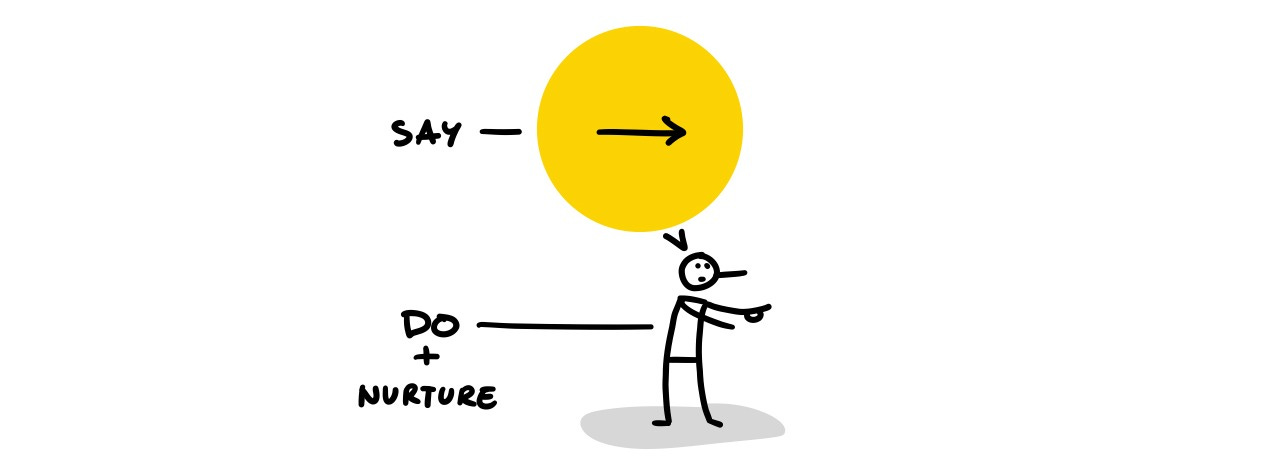
Once the shared foundation is in place, it’s time to be specific. What does each value look like in real behavior? What do we want more of, and what needs to change?
This starts with leadership. Not just because they set the example, but because their behavior often shapes the boundaries of what is safe, acceptable, or rewarded. This is not about enforcing rules. It is about creating the conditions for growth. Leadership behavior should show what is possible. It should create space, not pressure.
You cannot demand values from people. You have to show what it looks like to live them.
This is the step that’s most often missed.
Values are not lived through posters. They are lived through the system. That means values need to show up in how strategy is built, how goals are set, how feedback is given, how people are rewarded, and how processes are designed.
When values are embedded in the system, they become part of how things work. They don’t have to be reminded all the time, because they are already present in how things are done.
Embedding values makes them real. It gives them staying power. And it shows people that the organization is serious about what it says it believes in.
Values are not what you say. They are what you do, what you support, what you reward, and what you protect.
In my work, I help organizations:
Co-create values that start from the inside and build shared meaning
Define and model the behaviors that bring them to life
Embed them into the way the organization actually works
Because values don’t fail from lack of meaning.
They fail from lack of practice.
If your values aren’t visible in your decisions, they’re not real.
And if people can’t live them, they’ll never take root.
No posts
Comments
Nothing yet. Say the first thing.
Sign in to join the conversation.