
Welcome to The So What, a newsletter decoding cultural moments, why they matter, and what brands should do next. By day, we work at Artemis Ward, an independent creative agency in DC and NYC. I’m Chris, Head of Creative and Story. Read on for the “so what” of New Balance’s approach to culture.
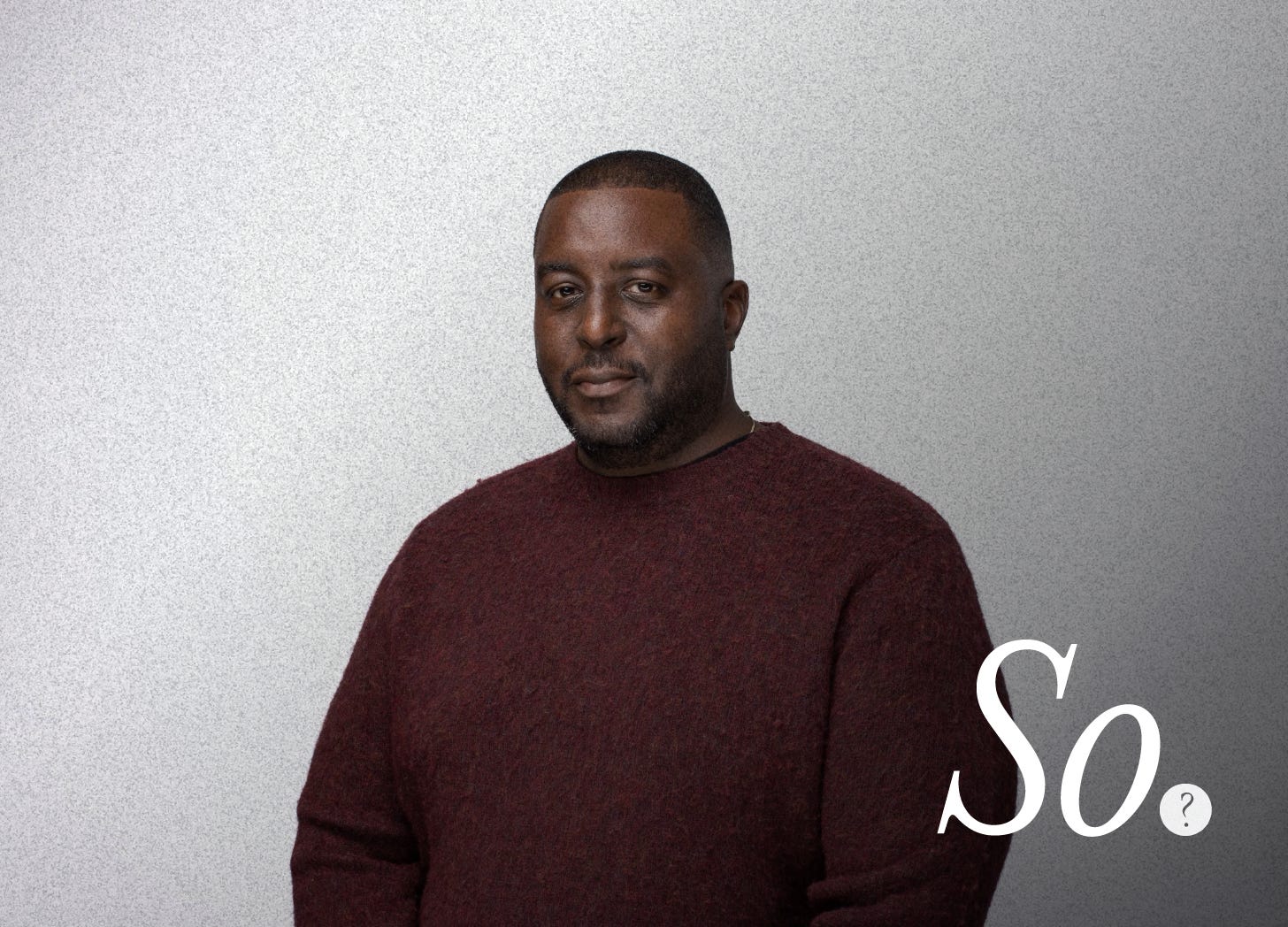
At some point in the mid-2000s, Kirk Taylor and New Balance first crossed paths. Kirk, still early in his career, was a senior account manager at a Boston-based agency whose roster of clients included New Balance, Heineken, Timberland, and other industry leaders. At first, Kirk and his team focused on consumer insights for the sneaker brand. Then came product launches, activations, influencer marketing, and product seeding. “From there, our work kind of morphed into the entertainment landscape work, where we were partnering with New Balance to sponsor big tentpole events aimed at celebrities,” he says. “Think the MTV VMAs.”
A decade earlier, New Balance’s slogan had been Endorsed by No One, which in practice meant that they did not pay athletes or celebrities to wear their gear. So, when Kirk and his team helped lead the company into the world of entertainment marketing, it wasn’t just a growth tactic — it was the beginning of a new era. “We had taken New Balance to places that they had not been before,” he tells me.
At some point, Kirk’s agency and New Balance parted ways. In the decade-plus that followed, he hopped onto the Heineken account, moved to New York, resigned, spent years consulting, joined the team at a shop near Baltimore, ran out of steam there, and then spent some time trying to figure out what would come next. At that point, in 2020, his stretch with New Balance was still a high water mark for him. He heard New Balance CMO Chris Davis speaking on a podcast and decided to shoot him a LinkedIn DM. To his surprise, Chris quickly responded and they had a nice exchange. Months later, Kirk heard Chris on another podcast and dropped him a line again. This time, he took his shot: he’d love to come back to New Balance. Chris, who’s known for being passionate and personable, lined up an interview for Kirk. A few weeks later, his full-circle return to the company was complete.
Kirk and I recently sat down to chat about the current landscape of entertainment marketing and his role helping to build the partnerships, stories, and experiences that ensure New Balance is always tapped into the cultural conversations that matter to its consumers.
You help lead global entertainment marketing at New Balance. A decade ago, that term often meant celebrity partnerships and big campaign moments. Today, brands are expected to operate more like cultural participants, showing up across niche communities, internet fandoms, local scenes, sports, fashion, music, and creators all at once. From your vantage point as a brand leader, how has entertainment marketing evolved over the years, and how is it continuing to evolve right now?
I’d say that entertainment marketing — and I’m not just talking about New Balance here, but entertainment marketing as a discipline — has probably gone the way that entertainment itself has gone. Which is to say that it’s become very fragmented. Not that long ago, maybe 20 or 25 years ago, when you thought about entertainment, you thought about a handful of verticals. Television, film, music — those were the pillars that we thought of as entertainment. But now you have the creator world, the influencer world, all of these things that comprise entertainment.
However you approach it, entertainment marketing has become extremely commercial. I mean, think about how many musicians have had sneaker deals just in the last ten, 15 years, right? When you look across the [footwear and fashion] landscape, it is a tactic that so many brands are investing in. I mean, Gap just hired a chief entertainment officer — and when you see this huge investment that a company like Gap is putting into entertainment marketing, it really shows you that companies are thinking about it from a big hire all the way down to niche opportunities to promote and build their brands.
When you talk about niche opportunities, you make me think of the different subcultures that you’re able to tap into along the way. At New Balance, you all first put yourselves on the map as a performance-focused brand for runners and for walkers. But these days, you’re just as likely to find New Balance on the courts of Roland Garros, in the pages of Thrasher, on the shelves of streetwear stores as you are at a marathon kiosk or a running store. So, at a moment when identity feels increasingly fluid and audiences move among subcultures more freely than ever, how do you think about building a brand that can travel across those worlds?
The foundation of everything that we do at New Balance is craft. And I think craftsmanship is a universal language that transcends geography, transcends industry.
So, New Balance is this athletic shoe brand, which means our focus is sport and athletes. And all of our athletes are perfectionists in their craft. Think about Coco Gauff in tennis or Kawhi Leonard and now Cooper Flagg and Tyrese Maxey, our lead guys in basketball. All these people are practitioners of craft — and that is something that we really, really lean into in our partnerships: craft and performance. And we craft shoes to match.
We’re also a lifestyle brand, and that means we’re hyper-concerned about delivering shoes with premium materials that have comfort as a hallmark. And delivering shoes that are on trend, but not trendy, you know what I mean? So that we’re part of that conversation, but we’re part of it as a leader and not a follower.
And through all of this, craftsmanship is the red thread that transcends all geographies and all of the verticals that we participate in.
New Balance finds a lot of ways to bring that craft thread to life, not only in your products, but also in your storytelling. On that note, I love the recent campaign you did for ABZORB 2010s. For those who haven’t seen it, it features Latin Grammy Award-winning artist Eladio Carrion, and it’s set at the Caribbean Social Club in Brooklyn, and it spotlights the legendary owner of that club, Toñita — a woman who’s kind of the matriarch of the Puerto Rican community in Brooklyn. The campaign lets the shoes live in this larger story about what it means to gather in the place where you belong, with the people that you belong to. And yet, the campaign feels hyper-local, it feels like it’s interacting with a real community, it has an emotional texture. Why do you think audiences are responding so strongly to that approach right now? That is, campaigns that feel culturally specific and emotionally lived in, rather than just kind of broadly aspirational the way former campaigns may have been?
The best marketing is the marketing that pulls on the emotional strings of a consumer. I think truly that’s what marketing is supposed to do: create an emotional connection. And right now, I think people are longing for a sense of community and connection to each other and the ability to see themselves in the products and the brands that they like. When brands get it right, they’re able to connect to consumers in a very visceral, emotional way that doesn’t feel over the top. It feels inclusive. And I think that campaign that you’re referencing — with Eladio in Tonita’s Place — it hits on all those notes. It’s a very New York story, it’s a very Brooklyn story, it’s a very Puerto Rican story.
Also important: That campaign was co-authored with Eladio. So, we didn’t just go to him and say, Hey, we have this idea for this campaign, about this shoe, and this is the tone and these are all the things we want you to hit. Instead, we work with our partners. We say, Hey, what are some of the things that are important to you in this story? And then we lean in. So, we worked with Eladio to tell a story that was authentic to him. He loves that place, he loves Toñita. And I should note that this was shot in October [2025] and it debuted in March or April [2026]. In between that time, Tonita and a version of her social club were part of Bad Bunny’s Super Bowl performance. It shows how important she is to that community, to Puerto Ricans, to New York — and that Eladio was given the space to connect to the dots.
How does that kind of authenticity translate into business success for New Balance?
We really want to be culturally connected, culturally adept, culturally resonant. We want to get to the heart of who our partners are and the heart of who our consumers are. And never to pander as we’re doing this. We want to find joy and connection in all of the things that we do. In that sense, it’s not necessarily about commercial success. I mean, we would have told a different story if we wanted to reach a big commercial scale. But when you’re co-authoring with a partner, telling stories that are authentic to them and to their community is most important. That’s what lets you connect with communities in visceral but meaningful ways.
That makes sense. One of the challenges of reaching across so many different cultures and categories is that audiences can immediately sense when you are overextending or chasing relevance, but maybe don’t belong there. New Balance has managed to show up in fashion, in sport, in music, in streetwear, in local community spaces, like Brooklyn — and you’ve done this without feeling fragmented. So, how do you maintain a coherent brand identity while still giving those different communities room to see themselves in the brand?
Through discipline. We try to keep our discipline in terms of our tone of voice, in terms of our storytelling and how we like to show up, down the people we partner with. Staying disciplined means not compromising our messaging just to chase something — whether it be commercial success, whether it be trends, et cetera. We know who we are as a company, as a brand, and we try to stay rooted in that. We are not trying to be our competitors. We kind of operate with a level of blinders on. And that’s true across the whole New Balance creative ecosystem. A wide swath of people, from our athletes to our entertainment ambassadors to our collaborators, I think all of these folks that we work with embody that discipline and those values that I’m talking about.
The So What
It sounds like the success of brands like New Balance are tied less to pure sales and more to cultural participation and establishing a sense of both recognition and belonging across the different communities that you’re touching. What do you think that says about what people are missing or searching for right now — New Balance’s audiences but also in culture in general?
I think I said it earlier: It’s just joy and connection that they’re missing. I mean, people are longing for connection. People are longing to see themselves in the brands that they support. We’re living in a very divisive time, and I think that people just want to feel made whole by the brands that they stand behind. Brands have the power to let people feel a deeper sense of community. And that’s been a big part of our success — that we’re able to connect with a lot of different communities through a lot of different partners, creators, and collaborators to tell stories that are very authentic to those particular communities and subsets of people.
So, I’d say joy, connection, and community are the words that come to mind when I think about what people are looking for right now. And I’m excited that we’re giving that to them.
👟 Keep up with Kirk on LinkedIn, and follow New Balance on Instagram and TikTok.
✉️ And, if you haven’t yet subscribed, click the button below so you don’t miss the next one with Olivia DuCharme.
Comments
Nothing yet. Say the first thing.
Sign in to join the conversation.