
Welcome to The So What, a newsletter decoding cultural moments, why they matter, and what brands should do next. By day, we work at Artemis Ward, an independent creative agency in DC and NYC. I’m Colin, co-founder and CEO. Read on for the “so what” of why it’s harder than ever to gain your audience’s trust.
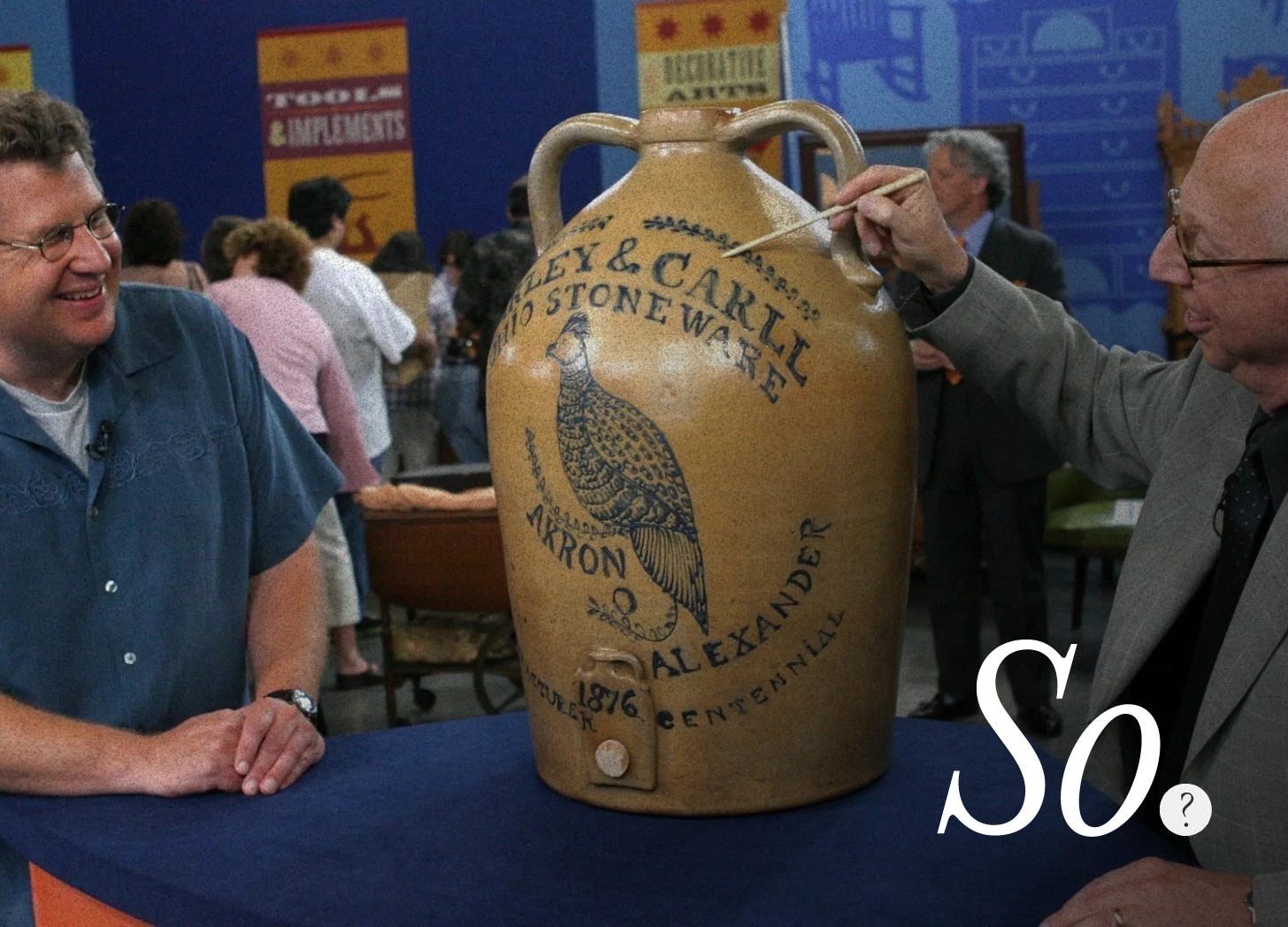
Everyone loves the moment on Antiques Roadshow when the nerdy expert rambles on about an object’s provenance — its origins, history, and chronological journey to the present — while its owner is just dying to hear the damn price. But you can’t get the price without the provenance! They go hand in hand.
If you squint, you can see these “Roadshow moments” playing out all around us. Now that AI content is ubiquitous, it’s harder than ever to piece together where content, written or otherwise, has actually come from — and that makes earning trust with audiences harder than ever, too. And as trust comes harder to come by, the question people are increasingly asking is not just what is this? but where did this come from, and why should I believe it? And that’s why I think provenance will become the most important way we can preserve human touch in the AI era, giving people the history, context, and accountability that make information worth trusting in the first place.
The scale of the problem in front of us is immense. Over half of new web content now shows hallmarks of AI generation, while a growing share of social interaction is driven by bots. It lends new weight to the “dead internet theory,” the idea that synthetic content and automated engagement are gradually crowding out genuine human activity online. Whether or not you buy the theory outright, the underlying concern is real. We can no longer assume that the platforms where information is shared, commerce takes place, and civic life unfolds are driven primarily by people. Information has never been more abundant, but trust in what we’re consuming is becoming increasingly scarce.
In a recent report, Gartner argued that trust is the new global currency in the age of generative AI. And that’s a big deal. For years, marketers competed for attention because attention was scarce. And, while it still is, creating things that can attract attention is easier than ever. AI can generate headlines, videos, images, and opinions at a scale that would have been unimaginable just a few years ago. Now, the hard part is getting people to believe what they’re seeing.
Enter the Coalition for Content Provenance and Authenticity, or C2PA for (sort-of) short, which is creating a common way for creators to attach a digital paper trail to the content they publish. Through C2PA’s product Content Credentials, creators and companies can attach a secure record to photos, videos, and other media that shows where the content came from, who created it, and how it has been edited over time. Camera companies like Leica, Sony, and Nikon have already adopted it, as have organizations including OpenAI, Adobe, and Reuters. Think of it as a digital passport for content, documenting where it originated and the journey it took before reaching you.
This isn’t just a content challenge, either. The same question of provenance is emerging in the physical world, too. As supply chains have become more complex and product claims have multiplied, consumers have less visibility into where the things they buy actually come from: how they’re made, what they’re made of, and whether the promises on the package are true. And while it currently only applies to Europe, the larger point is that the DPP and C2PA — two completely unrelated efforts — have arrived at the same solution to the same underlying problem: giving people a way to verify the story behind what they consume. Coincidence? You already know the answer to that.
Back in 1999, the seminal book The Cluetrain Manifesto argued that one-way broadcast communication would eventually erode trust. Even then, its authors warned that brands adopting a lifeless, corporate voice would slowly lose credibility because “markets are conversations.” They couldn’t have predicted generative AI, but they correctly guessed where things were going. Today, AI has made synthetic communication effectively free. Brands can produce endless content, simulate authenticity, and manufacture sincerity at unprecedented scale. Which is precisely why sincerity alone is no longer enough. In a world where anyone can tell a convincing story, the story itself matters less than the evidence behind it.
The reality is that brands need to stop saying they are trustworthy and need to start showing it. How long you’ve been around, claims about your performance, or general platitudes like “4X more effective” fall on deaf ears. In fact, the more claims you pile up, the more trust you end up eroding, as they just add to the noise. Instead, brands should start building their manifest, an inspectable record of where your product came from, where it is going, and the specific ways it improves the human experience of the people that use it.
Showing provenance is now a must-have, not a nice-to-have. As we learn to navigate a world overflowing with information, we will move from being the anxious consumer waiting for an expert to tell us what something is worth to being able to see the history behind it ourselves: where it came from, how it was made, and why it matters. The brands that build these manifests — creating a verifiable record of their products rather than simply making claims about them — will be the ones best positioned to earn trust in an increasingly synthetic world.
✉️ If you haven’t yet subscribed, hit that button below so you don’t miss the next one with Chris Maier.
Comments
Nothing yet. Say the first thing.
Sign in to join the conversation.