
Before we jump into the topic of today’s essay: I’ve been featured on several places in the last two weeks and wanted to share it. First, I got the honour to do my very first podcast interview with Arielle Thomas from Process the Podcast, here I cover everything from my career trajectory to my methods and vision for the future. I also got to research the beauty industry for Notes by Merit and wrote a piece about getting ready for real life. And I’m also very excited to be writing for models.com on image-making for their pro-section, in the first piece I explore AI and image-making.
Image-making in fashion ran on a simple method for about 30 years. Basically, find a subculture, lift its visual language, restage it with higher production values and eventually hand it out to an audience that had never seen the original. Repackage it as something fresh. So the audience felt the shock of the new and the image-maker was credited with the insight. That was the whole trade, and I’d say this pretty much worked every single time for nearly 3 decades.
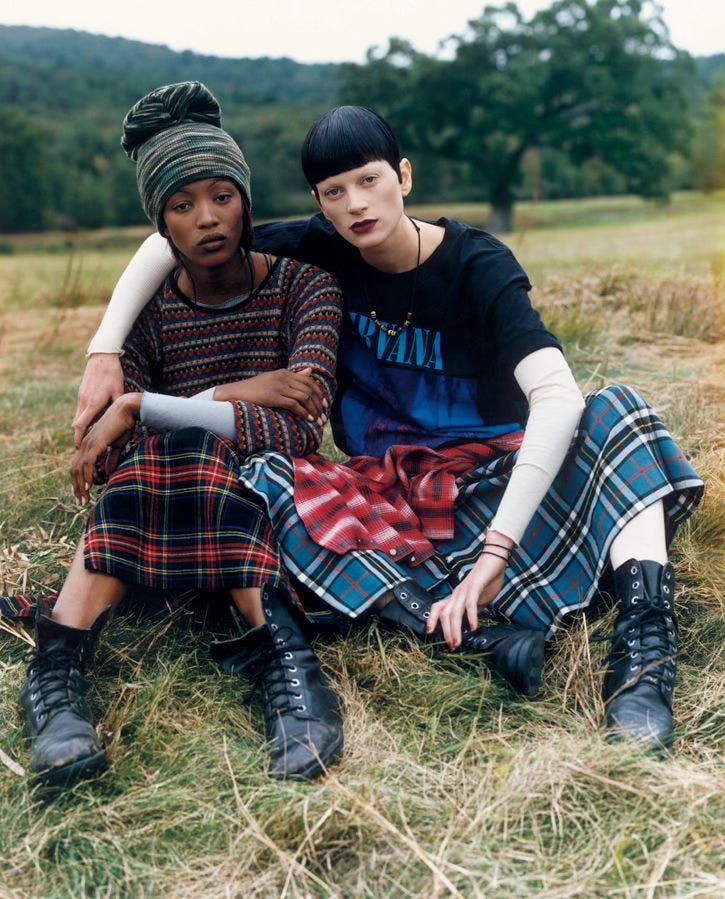
I think the best example in the industry that most of you know happened on November 3rd, 1992. Marc Jacobs presented his SS93 collection at Perry Ellis on the New York runway. His inspiration was the Seattle grunge scene, think: thrift-store flannels, slip dresses paired with combat boots and then he transformed these elements into luxurious silk with cashmere and chiffon. Worn by high-fashion models like Christy Turlington, Naomi Campbell, and queen of the 90’s Kate Moss. Critic and journalist Cathy Horyn remarked that ‘grunge is anathema to fashion’, which reflected some of the initial reactions to the show. Soon after, Marc Jacobs parted ways with Perry Ellis. Rumour had it that Marc was fired, which he actually debunked in the recent documentary ‘Marc by Sofia’, although he did love the story. The brand was already shifting gears towards licensing and away from women’s RTW around that time. Anyways, as a heartfelt gesture, Marc Jacobs even sent samples to Kurt Cobain and Courtney Love, who unfortunately burned them. Some people felt like the look was fresh and others argued it was a form of theft. The translation mainly worked because there had been an unobserved source that inspired it and it was translated to high fashion.
But today, that mechanism is over. Image-making has run out of subcultures to mine.
The argument about what happened goes like this: the mainstream found the ‘underground’ then mined it and sold it back to itself, and basically flattened the culture. It’s the explanation nearly every essay on subcultures currently covers, and it does feel like a true description of what fashion has done.
But this is not what is happening now. Subcultures have always been absorbed, borrowed from, and reinterpreted, yet creatives have kept this exact method running for more than 30+ years. What has changed is possibly something deeper. The conditions under which the subcultures and their style could have developed away from the public view have disappeared. Across the world, these kinds of ‘private spaces’ and culture, that once allowed the scenes to evolve completely on their own terms, have become very rare.
We all know why. Yes, the phone. The phone changed the environment because subcultures depended on the existence of their own private culture that now has gone online as well. There is very little that remains unseen anymore these days. Almost everything is visible, documented and traceable online from the moment it happens. And that shift is built into the structure of how culture now moves; that means it is far bigger than any individual brand, publication or creative deciding to be more careful.
I want to write about this from the perspective of the working image-maker today. Much of the writing around subcultures has come from cultural studies, identity politics, or broader cultural criticism. It has helped us understand how subcultures have changed, how meaning has shifted, and why many scenes feel so different today. The question I keep asking myself is different. Have you ever wondered how art direction evolves when the usual methods no longer bring fresh ideas? What does it look like for the creative team when they sit down with a new brief on Monday morning? And how do you create compelling images when one of the industry’s most dependable ways of generating visual language starts to shift? These are fascinating questions that invite us to think about the future of creativity.
To me, it feels like one of the biggest structural shifts our industry has experienced without really naming it. It feels like an image-making question we have to think about.
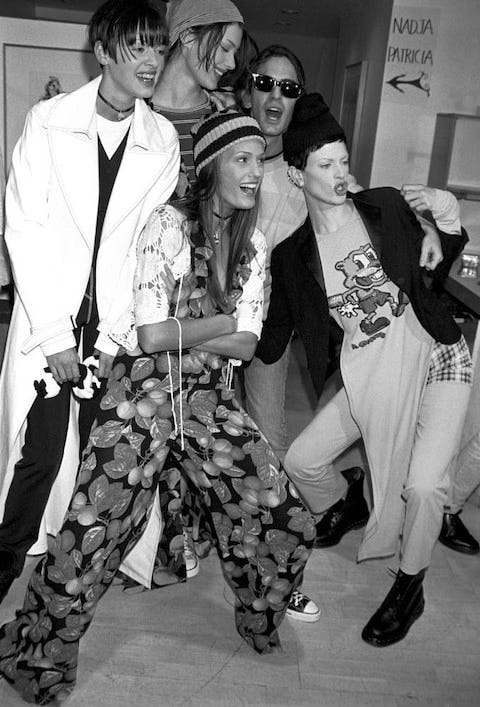
In 1979, the British cultural theorist Dick Hebdige published Subculture: The Meaning of Style, a book that is still heavily referenced in art schools and whose ideas shaped the creative industry’s engine for more than 30 years. I recently referenced it in the post below. At its core, the topic is remarkably simple. Subcultures develop their own visual languages in private. Fashion, posture, grooming, photography, graphic design, even the way bodies occupy a frame in images. These visual languages carry meaning within the community long before anyone analysed or noticed it.
Examples are: The teddy boys, the mods, the rockers, the skinheads, the punks. Each of the post-war British subcultures Hebdige documented was a vibrant community shaping visual stories about itself. They did this well before their ideas were noticed, borrowed, and reinterpreted by others, highlighting their unique, self-expressive spirit.
The fashion industry has happily relied on that method as the core of its creative energy. Art directors and designers with access to a subculture got ‘inspired’ by their visuals, translated it through the language of fashion, and introduced it to a much wider audience. For that audience, it often felt like something entirely new because they were encountering it for the first time. It felt fresh, cool and new. For the community it actually came from, it was often something deeply familiar. That tension was part of how the system functioned.
You can trace this through much of modern fashion’s visual history. Marc Jacobs and Seattle grunge in 1992 as mentioned before. John Galliano’s deeply uncomfortable Clochards couture collection for Dior in 2000, inspired by people sleeping rough along the Seine and met with lots of public criticism. Helmut Lang drawing from 1990s techno club culture between Vienna and New York. Raf Simons looking to late-1990s European post-punk and rave youth culture, specifically around Antwerp. Hood By Air, founded in 2006 by Shayne Oliver and Raul Lopez, grew directly out of downtown New York’s queer and ballroom nightlife. And Demna at Vetements and Balenciaga bringing post-Soviet street aesthetics into luxury fashion.
These moments all have their own significance, but they all relied on the same underlying condition. Which is that somewhere, a visual language had been allowed to develop before the wider culture noticed it. The industry assumed there would always be another scene, community and place where style could evolve before it was documented and shared to ‘their outsiders’. The subculture method was fully dependent on that assumption.
In Subculture: The Meaning of Style, Hebdige’s framework explains why the method worked for so long. Unfortunately, the book is too old to fully explain why it doesn’t work anymore in today’s industry, since so many conditions have changed.
In The Presentation of Self in Everyday Life (1956), sociologist Erving Goffman beautifully described this concept by highlighting the difference between front regions and back regions of social life. The front region is where the performance happens, where we present ourselves to the world. The back region is where that performance is prepared, where people can experiment, rehearse, and be unselfconscious together. Goffman’s argument was that one depends on the other. Public performance, also called the front region, requires a private space in which it can first take shape.
Seen through that specific lens, Hebdige’s subcultures were back regions exposed. The teddy boys, the mods, the New Romantics, the ravers, the early ballroom houses, each developed its own visual language within a community before that language entered the rest of the world. People shared clothes, trying them on for fun and getting a feel for each other’s style. Gestures and poses naturally became smoother as they practised, and over time, their unique ways of dressing and expressing themselves developed naturally, becoming familiar ways of sharing and understanding each other.
What has changed is mainly the conditions surrounding them; the communities are still as present as ever. Perhaps, there are even more micro-communities than ever before. Phones and social platforms have dramatically reduced the distance between the inside of a scene and the outside looking in. Moments that might once have stayed within the community are now often documented and shared in real time. The participants in this culture are the ones documenting themselves for their community and point of view (as subcultures are often reactions on) to be shared online and picked up by trend reports before they are fully shaped.
A small electronic music night in Amsterdam, a queer house party in Lagos, a fit-pic-heavy crew in Mexico City, a deep-cut record shop in Tbilisi, a small label launch in Seoul, each may still develop its own culture, but much of that development now unfolds in the public view, online and worldwide. Internal language and external image are increasingly produced at the same time instead of one preceding the other with time.
This is absolutely not a criticism of the people involved, but purely an analysis of my thoughts on this topic. It’s simply a consequence of the media environment we now live in. If Hebdige identified private cultural development as the condition that made subcultural style possible, then Goffman helps explain why that condition has become much harder to sustain. The shift is structural. and yt changes not only how culture circulates, but how visual languages are able to form in the first place.
You can already see the evidence of this in the work that is being made today. A luxury house releases a campaign that is inspired by a contemporary scene. To the people who are inside that scene, it can feel like an elevated or overly polished retelling of their very own experiences. The photography looks well put together, the casting actually feels good and the styling is carefully considered through detailed observation. Yet something often feels strangely familiar, the work is translating a visual language that has already circulated widely through the people who created it themselves. That is because the subcultures are as much, if not more, online than some art directors. Subcultures connect online through micro-communities all over the world. By the time the ‘elevated’ campaign appears, much of its audience has already encountered those references themselves directly on their own screens.
The result is quite subtle while at the same time significant. Years earlier, the campaign would have felt fresh and surprising but now it simply feels recognisable. That sense of discovery that earlier fashion image-making could generate becomes so much harder to achieve since the audiences has often already seen the references before and are often quick to point it out or see it as ‘exploitation’ when it’s manufactured and didn’t include the people they got inspired by.
For much of the industry’s recent history, art directors benefited from a form of what I call ‘informational asymmetry’. Their job was partly to bring visual worlds into broader circulation, translated before most people had encountered them. That asymmetry has narrowed dramatically. since social media The communities producing new visual languages now publish them continuously themselves and at a speed that traditional image-making doesn’t match. When they share something online, it’s authentic and immediate. Then it takes a while for an ‘outsider’ that happens to be a creative to discover it, propose it to a client, get the concept signed off, go into production and release the images.
This isn’t simply a creative challenge we have to get around with as image makers. I think this actually represents a shift in the economics of visual culture, a lot changes.. The subcultural method once created value because there was a meaningful gap between what image-makers had access to and what audiences had yet to see. They could trick the audience into creating something fresh and cool. As that gap has closed, the method that underpinned decades of editorial work and brand campaigns has changed with it as well. The creative is operating under very different conditions, even if many of its methods remain the same over time.
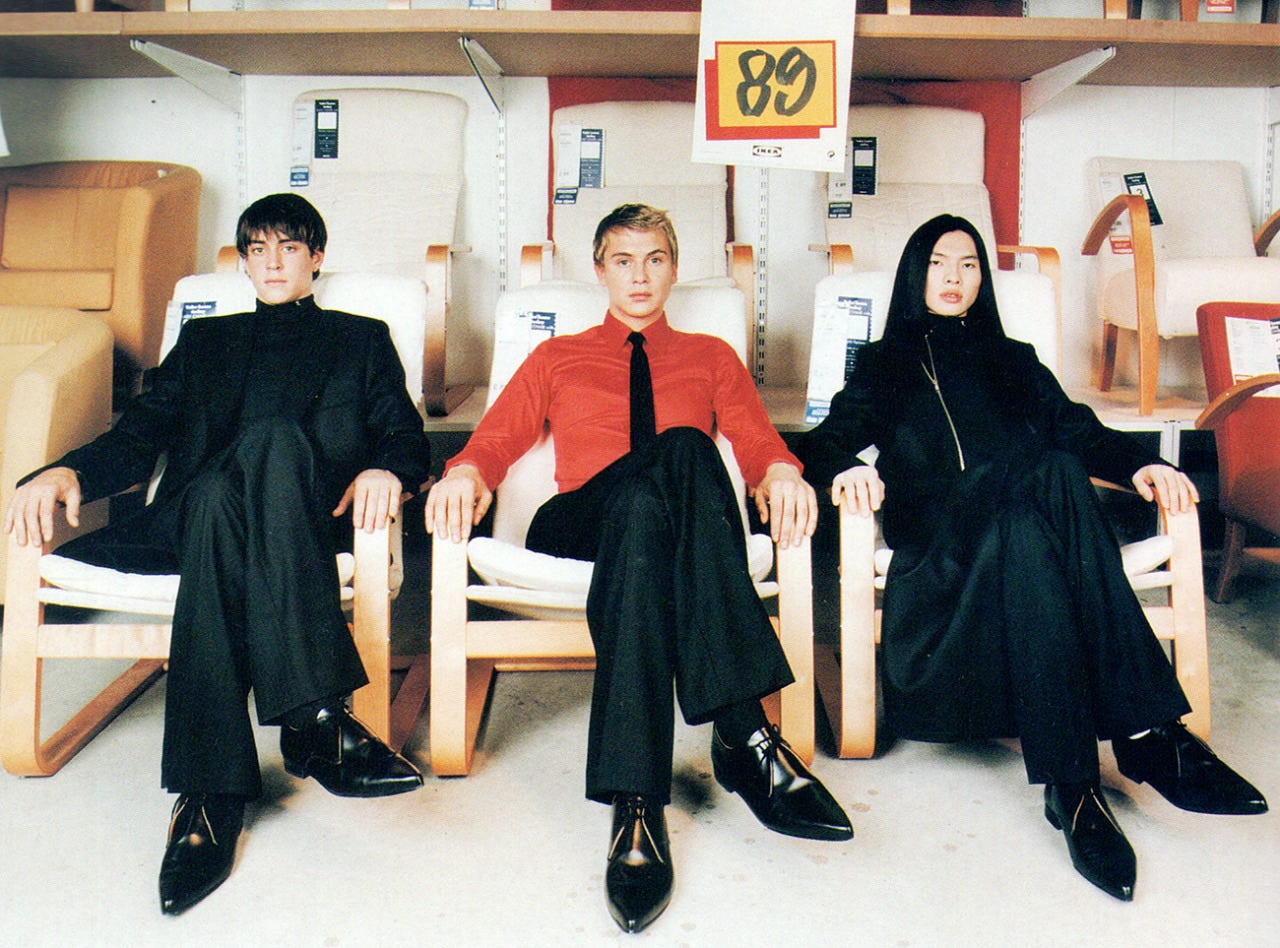
There are some image-makers that I find myself returning to over and over again, because they are making a different move. If you read many of my articles on Substack, you’ve likely seen me mention the very same ones before (but from a different topic ofcourse!). Instead of looking for a scene to translate, they are actually building visual languages from sources that were never subcultures to begin with but are still niche. Like: archives, sustained research, geography, materials, history, long-held intellectual positions and actually including the people into their work.
Grace Wales Bonner is probably the clearest example I can give. Since founding her label in 2014, she has built an ongoing dialogue with the Afro-Atlantic diaspora through literature, music, photography, tailoring, and cultural history. Her work really does not rely on borrowing the visual culture of a contemporary scene at all. Instead, the brand grows from a position that has been developed over many years, with the visual world emerging from that foundation.
Others approach this differently. Another example is Telfar Clemens who has built a visual identity around accessibility, ubiquity, and ownership. These values were prioritised over the codes of a particular scene to ‘exploit’.
Martine Rose, at her best, offers a truly unique perspective by thoughtfully engaging with British culture and masculinity. Another example is Bianca Saunders who builds through research into identity and Black diasporic experience. And Bode approaches American craft traditions as an ongoing body of research.
What these image-makers have in common definitely isn’t their aesthetic, but a way of working, which is the core to everything you do as a creative. They originate which is much stronger and unique than translate. The visual language doesn’t depend on finding a place the audience has not yet looked at. It emerges from a position that has been built, tested, and refined over time. The believability of the work, and I use that word deliberately because it has become the thread running through these essays, comes from the depth of that position and NOT the novelty of its references. I see a lot of creatives getting carried away because they try to find a reference no one has seen before, but it’s the thinking, analysis and combination of things that create unique work.
This is a more demanding way of making image-making. The subcultural method offered a relatively reliable path to novelty: discover a visual language, translate it, and present it to an audience encountering it for the first time. Building from a position doesn’t offer a guarantee like that, but the subcultural method doesn’t work today anymore like it used to. Instead, image-makers are asked to develop a way of seeing over many years, to generate a visual world from that way of seeing, and to trust that the work will carry its own authority.
Much of the industry is still organised around the assumptions of the subcultural method. Increasingly, though, the work that feels most enduring is being made by people who have learned to work without it. And I’d say don’t forget to make work for yourself, you don’t need to share everything you create. Every piece of work helps you develop your way of seeing and build your own authority.
Open the last moodboard you built and try to trace each reference back to its source community. Then ask yourself how visible that community was before you found it. The answer could be that the algorithm served it to you (through Tiktok’s FYP, Pinterest, IG discover, Substack notes etc), then it’s not so interesting. You didn’t look hard enough.
Then pick one art director, designer or photographer whose work inspires you and you feel like it is truly fresh, try to articulate what their body of work reminds you off through a word web. It shoudn’t be their aesthetic only, but also the arguments they make specifically. The clearr the position is, the harder it is to imitate which then leads to more interesting work.
Try to challenge your next project with a rule that not a single reference can come from any scene younger than ten years old. Then notice what you sources you reach for instead. This would likely lead to abandoning the algorithm and lead to your own research, your own archives, the geographies you know, the materials you have studied, and the curiosity you’ve been pushing away.
Art direction is increasingly being asked to do a different job while the industry keeps changing. The work that feels most compelling always begins with a clear position. It grows from sustained research, a point of view, or a deep-felt curiosity, and develops into a visual world with its own internal logic. As I’ve mentioned before: your research practice is your creative identity.
Building that kind of visual language takes time, and you need to allow yourself that. It asks the image-maker to develop a way of seeing, to stay with the inspiration long enough for it to become a body of work translated to something new, and to trust that the work can carry its own authority.
The image-makers who shape the next decade will be the ones who can build visual languages that could only have come from them.
Love,
Zoë
Comments
Nothing yet. Say the first thing.
Sign in to join the conversation.