
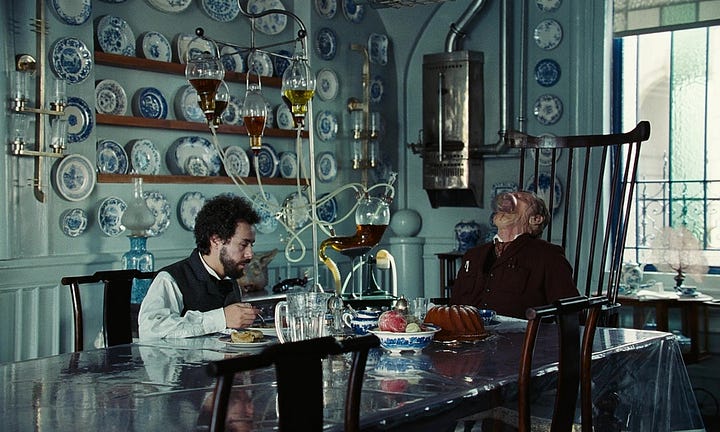
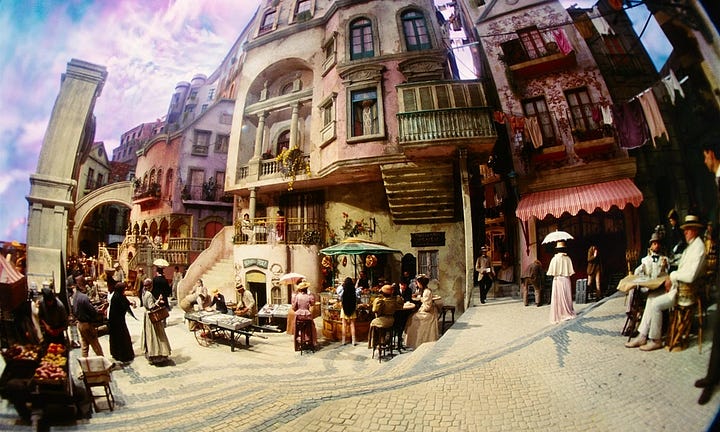
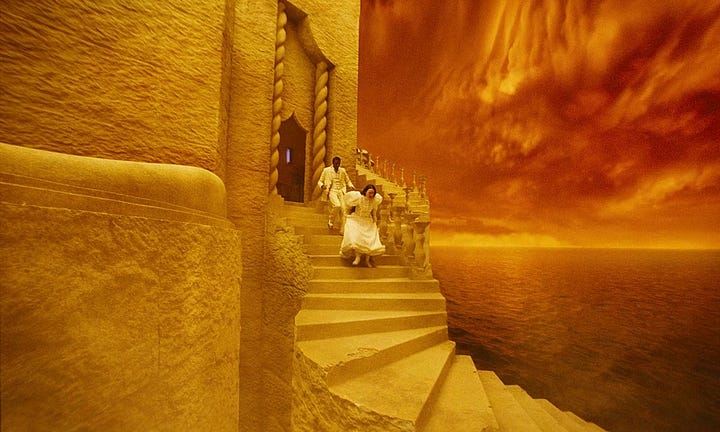
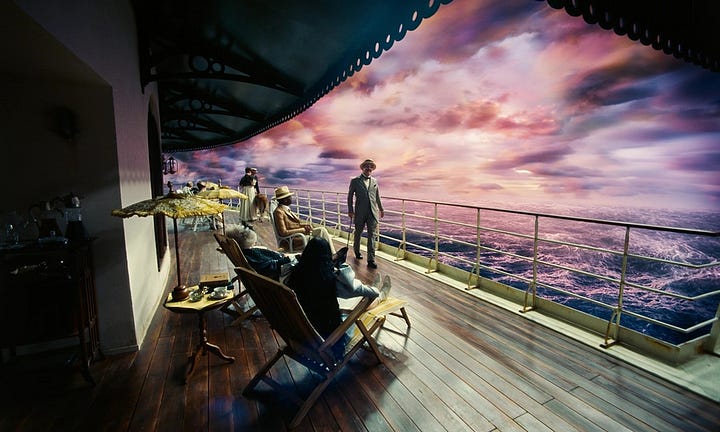
I was listening to an interview with the set designer Shona Heath on the podcast ‘What’s Contemporary Now’ (really recommend this!), who has built some of the strangest and most beautiful worlds in fashion, first across twenty years alongside Tim Walker and more somewhat recently as one of the two designers behind the film Poor Things, which won her an Oscar. What I found most interesting about the episode wasn’t necessarily her talking about the work itself, but the way projects come in these days. What has changed over the years, she said, is that the materials she gets handed now often comes so finalised and organised that it can leave you feeling that there is nothing left to do really. She comes to prefer starting a project from words, because a word, as she put it is a fantastic blank canvas with a diving board.
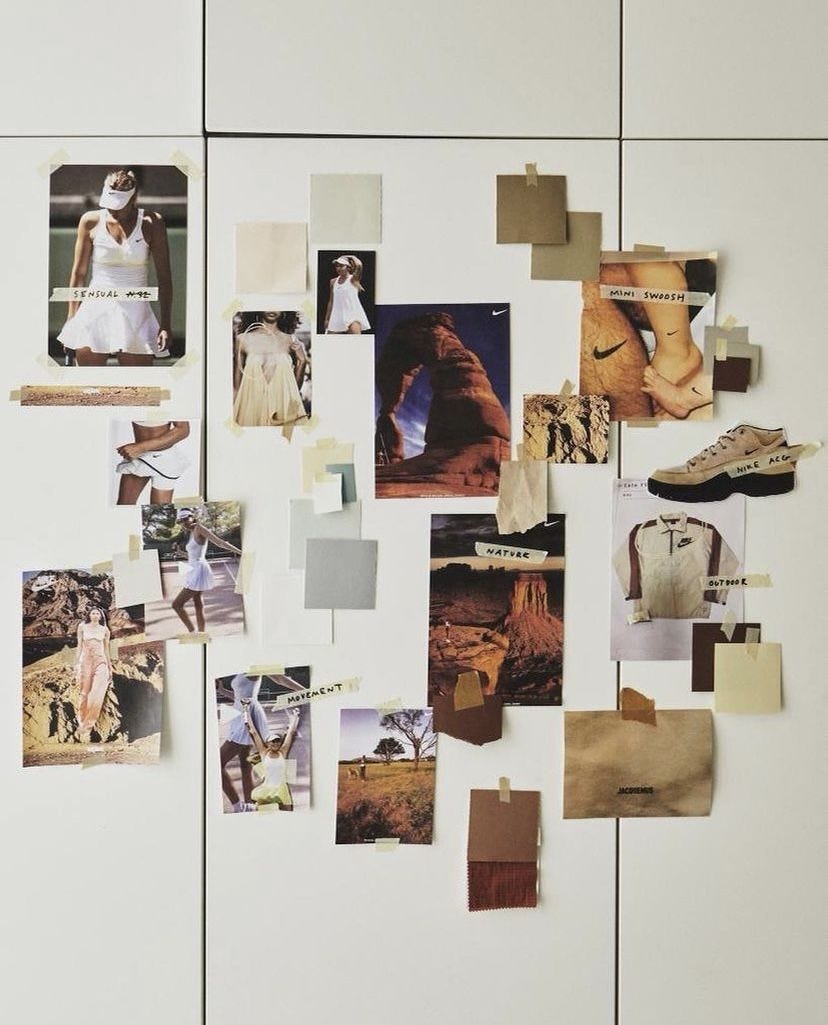
This might seem like a simple observation, but it’s actually a rather big one and it goes well past the discipline set design. It describes a shift in the role of the ‘moodboard’ across the entire creative industry in the last couple of years. A moodboard used to be a place to begin, the starting point of the idea that communicates. Now it has slowly hardened into a finished expecation, and the closer it gets to a finished picture, less room there is for anyone making anything at all. I’ve noticed clients coming with a very specific single reference that needs to be the starting point of an idea that they can’t let go of.
Now, don’t get me wrong. I can be a perfectionist when it comes to pre-production especially on a shoot with a very tight timeframe and lots to shoot, I create a deck as tight as possible but my intention with this is to cross off the ‘must shoots’ and leave room for interpretation and experimentation to go beyond the expecations of what needs to be delivered. But if something like this happens before the idea is signed off or if it’s handed to the expert e.g. stylist, set designer, then we are simply dictating and not letting the creative process come to fruition. There is a lot of beauty in letting the expert (in this case one of the greatest set designers) have some say in the interpretation of concept and let collaboration be at the forefront.
When you upgrade to paid, you get access to archive of 250+ posts written on the creative industry, image-making, inspiration, practical tips and a lot more. You also get access to multiple programs like the Art Director’s DNA program, the Visual Curriculum and from Idea to Issue. Paid subscribers also get first access to Art Direction School launches and many more perks. <3
The purpose of a moodboard is always to point in a specific direction, or maybe a feeling and give something to what’s in your mind so the people you are working with understand. You reference the moodboard when ideas are thrown on the table, you push against it when new references are introduced and use it as a talking point. It’s like a Google Maps road where we are roughly walk towards the same direction, but some take a different route to the same destination. When we all come together, we talk about the things we found on the way.
Oftentimes, the looser it is, the more useful it can be, because the looseness is an invitation to create while still setting boundaries of working within a specific vibe. It leaves space for creatives like the photographer, the stylist, the set designer and the casting to bring things you can never come up with yourself and bring something fresh to the concept, which is the whole reason you invite collaborators in. All great minds are chipping in on the same starting point while interpreting differently and working on the same endresult.
The true value of a moodboard lives in the gap between when the task is given and the final product. That gap is where the actual work happens (the shaping of the idea and the pre-production), and also where a moodboard becomes something more than the sum of its references, it becomes a concept, where the picture ends up somewhere you couldn’t have drawn in advance, because you let the creative process simmer. When the mood board is basically already is the picture itself, then the shoot is only a reproduction of that, and reproduction is the one thing in this work that carries no soul in it. Because that is a replica.
There are a couple of things a sleek deck forgets in the process: the main role of the art director. A confusing title most people don’t seem to understand still, but a big responsbility of the art director is to bring in creatives are better than you at their part. You oversee the entire vision and idea, then you find the right creatives and let them lift the concept somewhere where you couldn’t have taken it alone. The art director’s role is to research the best people (and let the producer makes sure they are within the budget) to bring the vision to life, guide them and oversee the overall result. The art director gets to hand pick the set designer, because she sees space in a way you didn’t yet. Then she chooses a specific stylist, because she will read the brief through a body of taste and archival fashion references you don’t posesses. You cast a photographer whose eye will find the exact frame you might have walked past and adds a magic touch of her style through grading and composition.
The reason an art director assembles those specific people is because each of them has their own expertise and will elevate the concept and add something to the moodboard you didn’t know how to ask for. They elevate the idea with their expertise, and your expertise (in the case you’re a working art director) is to be this visionary who thinks of the big idea and concept and brings are the elements together into one coherent vision and a great team. But… somehow along the way the art director was suddenly expected to chew out every tiny decision along the process to hold the client’s hands and make their money’s worth?
A finished answer super sleek deck removes the reason for the creative collaborators to chime in. When every single detail is already decided and signed off, the people you brought in can only execute it specifically like that otherwise they might risk being seen as incompetent of following a brief. But a set designer or stylist who has honed their craft their entire career can elevate the decisions of an art director and client in much better ways, only they get way less room to do so. The resulted is capped at exactly what an art director could imagine on their own with some client compromises, which always always smaller than what the entire team would have found together. The best art directors in my opinion are the ones who set a strong, and clear direction and then build the conditions for a brilliant team to let them surprise you inside it, then you take this to create a clear pre-production deck and leave some room for interpretation after the must’s are shot.
You can literally feel that difference in the work itself. When a stylist is trusted to interpret the idea instead of sourcing specific pieces, she comes with an interesting reference you had not thought of and it shifts the entire quality of the shoot. When a set designer is handed a feeling instead of a floor plan, she solves it with a material you would never have named and actually makes it better. Those are the moments that carry a shoot above its own moodboard, beyond expectations and every one of them depends on something having been left undecided for the collaborator to decide. You have to leave room for the magic. A locked deck never leaves any!
I personally don’t think it came out of nowhere. The fully-formed reference deck became the norm in recent years, because it does real work that can’t be dismissed. It looks incredbily impressive in a pitch (where there is lots of competition!) and it mainly reassures a nervous client that their money is safe, very important in this economy. It removes the discomfort of not being able to see the thing before it is made, and not every client is an imaginary client themselves. Across a lot of agencies, each with its own house style, the deck has become the deliverable itself, polished to the point and well designed with a team of graphic designers where the concept looks resolved before a single person has been brought in to resolve it. Don’t forget the role of AI in creating mock-ups either.
There is some trouble in what this polish costs us though. When every presentation is a collection of super specific references nearly presented as a finished image, the shoot has nowhere to go except towards those exact images and the output ends up replicating the references so closely that it might as well be that image. But what can you do? The client signed off the concept and gave money for what they saw and bought into.
The collaborators (who often come in after the concept sign- off and before pre-production), were already handed something almost complete, and have nothing to add, so they stop adding. The more convincing the deck, the more it strangles the process that would have made the work worth doing. You end up with something that matches the board and moves no one.
The most worrying version of this shows up on the client side, in an expectation that is becoming so normalised these days that I’ve grown increasingly frustrated. I worked with a model agency recently that didn’t want the images of one of their models published, because the pictures were not, in their words, one to one with the moodboard presented. I had sent the EXACT photo backdrop (the exact one being rented that were different from ofcourse the inspiration images) and I had sent the moodboard, and the shoot was faithful to the direction of both. It was never going to be an exact copy of the board, because an image is an interpretation of a direction, and interpretation always moves. The moodboard was there to point the way. The picture was the thing that happened once we collaborated with the team using the moodboard as a framework.
That expectation, that the final image should match the moodboard exactly, misunderstands what a moodboard is and, underneath that, what making something even means. A moodboard gives direction. The work is an interpretation of it! It made me upset that people who can’t see beyond this are final decision-makers in a creative industry. The space between the two is not a margin of error to be eliminated immediately. It is the entire place where the image gets made, we are creatives for a reason. When a client grades the result against the board and marks it down for any distance between them, they are asking, without realising it, for nothing new to be created at all. All I could do was read the email (after my explanation) and roll my eyes because it wasn’t worth fighting with people who simply can’t think beyond a set of references; it’s crazy to say the least.
I do have my worries sometimes and feel a type of frustration that I’m trying to articulate, but I’m nowhere near a ‘power position’. A lot of people working in the creative industries can’t sit with the gap. They simply can’t tolerate not knowing exactly what the final thing will look like and micro-managing is becoming very normalised. So they try to remove every trace of uncertainty in advance, and in removing the uncertainty they remove the room where anything could’ve appeared. Everything that has ever felt new was made by taking something that already existed and interpreting it into something else, and interpretation only works if you are willing to let the outcome move away from the source. That movement is the creative act; a demand for one-to-one is a demand to skip it.
Sitting with that uncertainty is what I believe a creative skill and understanding a vision, and it is one the industry is losing exactly when it needs it most. The people who can hold a concept loosely, who trust that the right team in the right rooms will land it even when nobody can yet see specifically where. Those are the ones who make work worth remembering. It takes nerve to leave the ending open, but it’s also about being a great director in the pre-production phase and on set to ensure the best result. It is also the only way an ending you didn’t expect can arrive.
To be fair, plenty of clients are wonderfully collaborative, and working with them is the best part of this job. But many are, understandably, business-minded, and a business mind wants certainty, wants to be shown exactly what it is buying before it buys it. Certainty and newness can’t both be promised ever, because the new thing by definition is the one you haven’t seen yet. The more an industry insists on seeing it first, the less new it is going to get.
The moodboard isn’t where I try to prove the idea and its end result, but instead I try to create the conditions for a better one, to elevate my vision and invite people in in the first phase.
Instead of building a polished visual pitch from the beginning, I try to keep the first phase deliberately unfinished. My goal is to give collaborators something to respond to and evolve. It doesn’t matter who it is, whether it’s the account manager, producer, strategist. I enjoy having an open conversations and see people’s reactions to my idea sparks.
Here are a few principles I come back to:
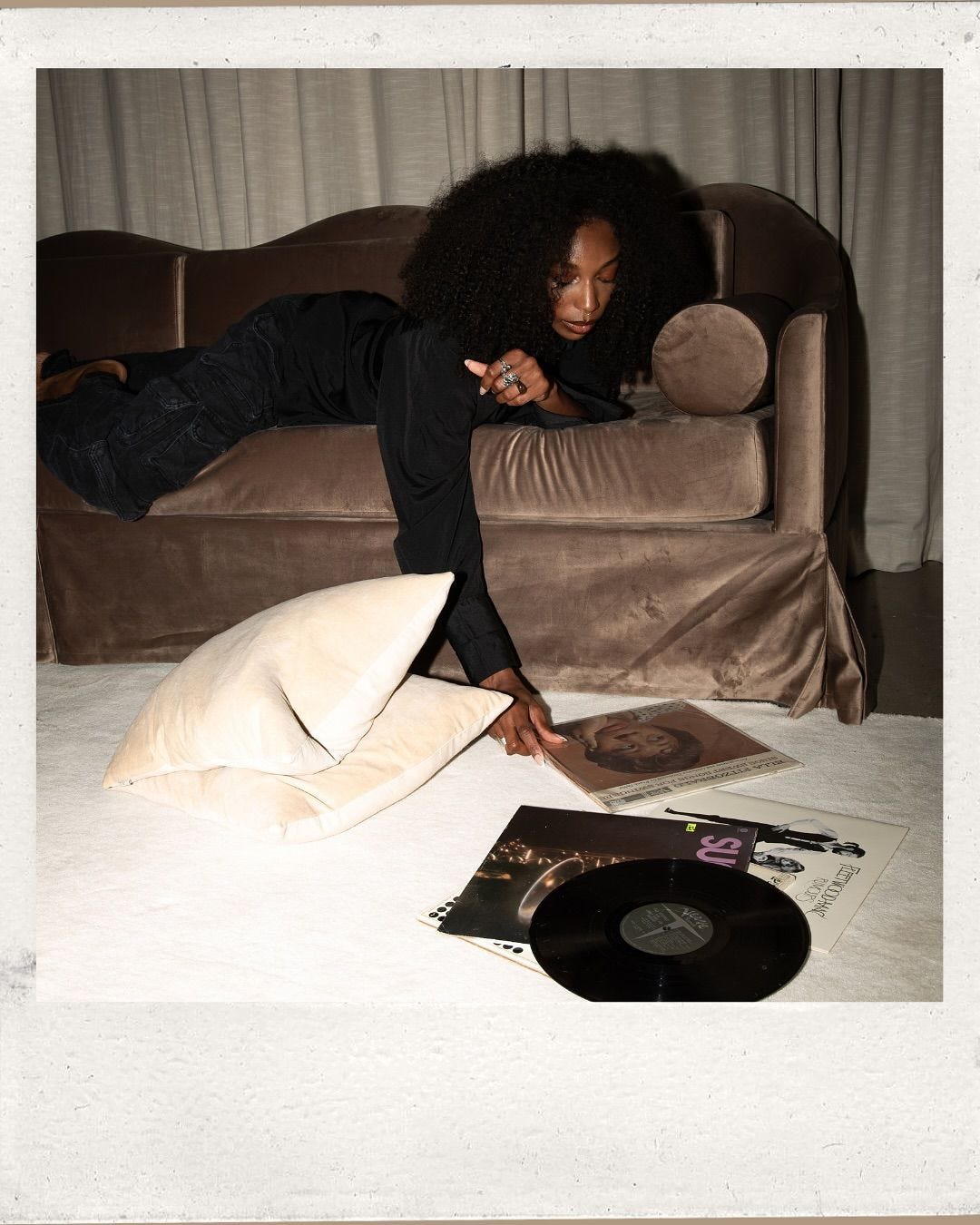
I start with a feeling, usually in words without images. I like to open with something that establishes atmosphere before aesthetics: a song, a sentence from a novel, a poem, a memory, a conversation, a piece of music. A word web with random sentences that popped in my mind. I try to listen closely to what comes into my mind and immediately write it down, I’m not trying to make sense of it yet.
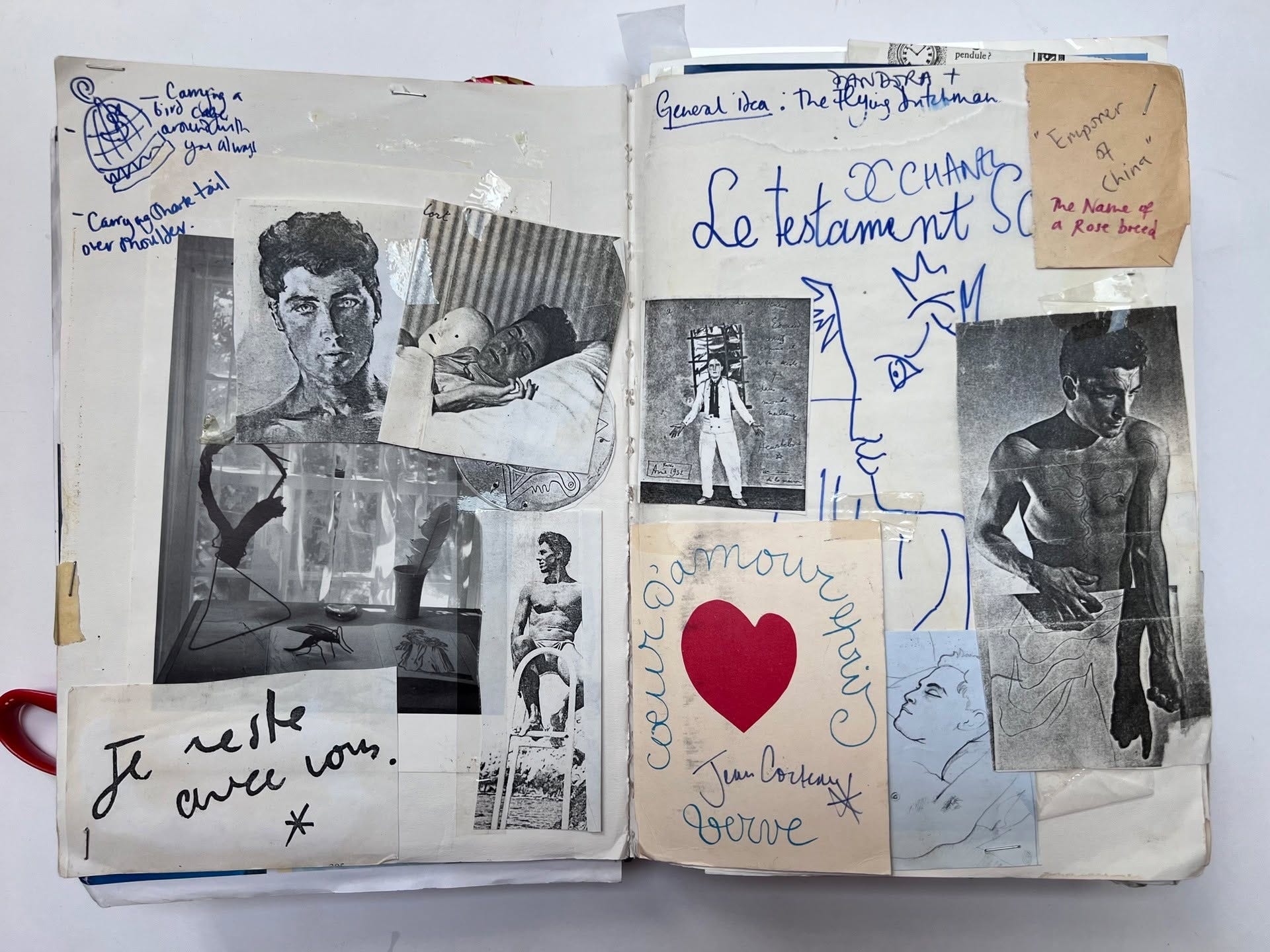
I like to bring raw material instead of references. Old catalogues, archive books, films, objects, magazine clippings, textures, research or cultural references. Because they help everyone read the brief from the same emotional place. Just things that the brief reminded me of and elements that could be interesting.
Maybe you should leave visual questions unanswered. Resist solving every composition, pose or colour palette. If everything is already decided, there is nothing left for the team to discover. See what your rough concept sparks in people, note it down and then use that information to bring it further. Disregard the elements you feel like aren’t right, but hone in on the ones that make it strong. Do kill your darlings!
Invite collaborators before the concept hardens. Ask the stylist, photographer, set designer and others to contribute while the board is still changing. Their instincts are strongest when they are shaping the work. When the concept is in the process of being shaped and I know it’s styling heavy, I often propose to a producer to bring a stylist on board earlier on.
Build shared ownership. A moodboard assembled by several people naturally carries more perspectives than one built alone. People care differently about ideas they helped create. But make sure you own the overall vision as an art director!
Use the moodboard as a conversation, and not for a final approval. The board should generate questions, debate and possibilities. If it already looks like the final campaign, the creative work has already stopped.
Protect room for surprise. Every great shoot needs space for accidents, discoveries and ideas that only emerge once talented people are in the same room. When you think your moodboard isn’t going anywhere, duplicate it multiple times and create a version where you add something ‘quite random’ to it. What if this concept has an underlying sci-fi theme? What if this concept is set in the 50’s? What if this concept is captured in Lagos? What if it’s a documentary photographer instead of a fashion photographer? Notice how each idea stays the same but adds a completely different spin by just changing one single element.
Experiment with formats. Show how the idea could form if it becomes romantic, or horror, or a musical, or invites dancers, think outside the box to bring in different elements and see how it starts to shape. Sometimes the format doesn’t have to be an image, be bold and surprise.
The point of staying raw is simple: leave enough unfinished that the work can become larger than your own imagination.
When was the last time a project became better than your original moodboard because you deliberately left room for other people to shape it?
Love,
Zoë
Comments
Nothing yet. Say the first thing.
Sign in to join the conversation.