
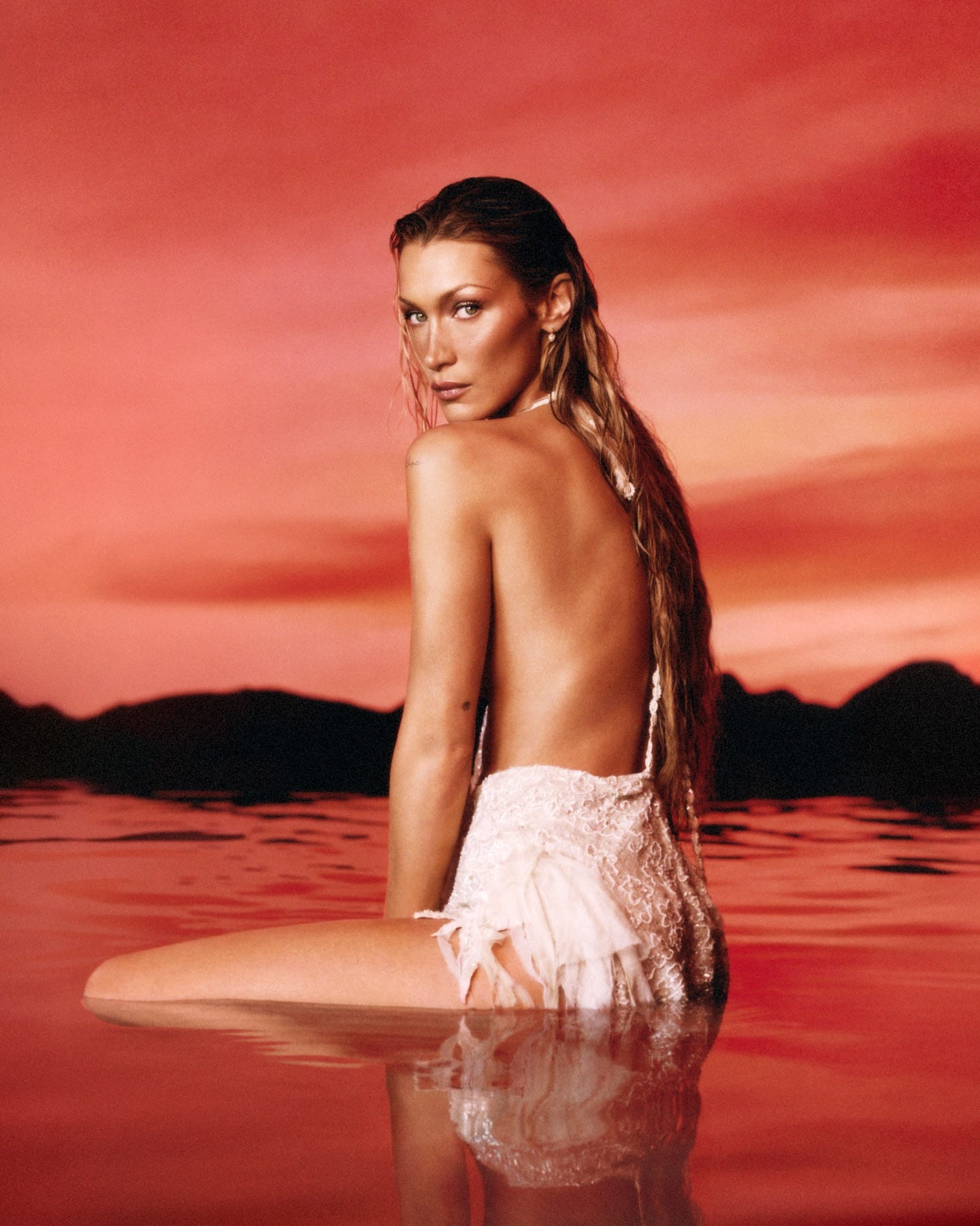
Perfume is likely the hardest product to market, because it’s the one produce an image truly cannot see. You can’t photograph a smell, you can’t put the essence of the product in a carousel, billboard or 30-second hero film. And yet, fragrance is one of the biggest and most image-led business in all of fashion. It’s sold almost entirely through pictures of things (or in modern age through social content) that have nothing to do with how the bottle actually smells. A woman running through a palace, barefoot, feeling free. A field of gold with a face in soft golden light. None of this is the actual product, but all of it is showing you a feeling.
That gap, between a thing you can’t see and an image that has to sell it anyways is probably one of the purest versions of what we do as art directors. So this edition of ‘The Art Director’s Guide’ series which is part of the Multidisciplinary Eye, goes all in depth about perfumery. The previous guides touched upon anthropology, architecture and choreography. This one is all about the people who compose invisible things for a living, because they have solved a problem the rest of us only occassionally face. Which is how to make someone feel something you can never put actually in front of them directly.
A perfumer starts with nothing you can see. They are the ones that build an impression out of raw materials, layer on layer, so it changes over time, and send it into the world to leave a trail behind a person who has already walked past. That is an incredibly close description of what a strong campaign does. It hits you, it develops as it sticks in your mind, and it leaves something behind after you have scrolled on. You keep thinking about it, and if the job is done well, it makes you desire it.
Perfume also happens to be where brands do their most concentrated worldbuilding. A fashion house can say more about who it thinks you are through one fragrance and its bottle than through a whole ready-to-wear collection, because scent reaches for memory and emotion directly when applied to real life. And the advertising around it is the most honest lesson in image-making there is, because there is no product to fall back on. You can’t actually show the main thing (besides the bottle design). You can only build the world it belongs to and once you learn to think like that, every brief gets easier, because most of what we sell is intangible anyway. Status, belonging, safety, desire, everything around the actually product is made up. Perfume just makes the challenge impossible to avoid because you’re faced with the facts.
Perfumers and art directors are doing the same job in different mediums. Both start with an empty space and a pile of raw materials, and both are trying to compose a feeling that lands in a particular order and stays with the audience.
A few of their principles map straight across:
Perfumery has notes, and art direction has references and elements.
Perfumery has the pyramid, top, heart and base, and art direction has structure over time and attention.
Perfumery has the accord, and art direction has the unified concept.
Perfumery has sillage, the trail, and art direction has the impression a campaign leaves behind.
Perfumery has the flacon, the bottle, and art direction has the object and the packaging.
Perfumery has the nose, , and art direction has the eye.
Both build something you experience in a sequence. Both live or die on restraint. And both are trying to turn raw material into a feeling a person will remember and when you start thinking like a perfumer, you stop asking only what an image looks like and start asking what it does, in what order, and what it leaves behind.
Every perfume is built as a pyramid. The top notes are the first hit, bright and fleeting, the citrus that greets you and vanishes in minutes. The heart notes are the character that emerges once the top fades, the florals and spices that carry the personality. The base notes are what remains hours later, the woods and musks that settle into the skin and become the memory of the scent. A perfumer designs all three at once, knowing they come in a sequence.
An image works the same way. There is the top note, the first thing the eye lands on, the colour or the face or the light. There is the heart, the concept and the mood that surfaces once you actually look. And there is the base, the thing that stays with you long after, the brand’s real identity underneath the surface. Weak work only has a top note. It looks good for a second and evaporates. Strong work is built in all three layers.
Example: Le Labo’s Santal 33 is a masterclass in a base note doing all the work. The top is almost beside the point. What people fell for is the warm, smoky, cedar-and-leather base that lingers, and that lingering became the whole brand. It settled into hotels, cafés and subway carriages until it was the smell of a certain kind of New York. That is a base note becoming a cultural identity.
Try this: Break your next concept into three. What does the viewer notice in the first second, what emerges when they sit with it, and what remains in their memory a day later. If you can only answer the first one, keep building.
In perfumery, an accord is several notes blended so completely that they read as one new smell, the way separate notes become a single chord. You don’t actually smell the individual parts, but the smell they became together.
This is the difference between a concept and a moodboard. A moodboard is a pile of references sitting next to each other. A concept is an accord, where the references have dissolved into something new and is seen as a whole that nobody can pull back apart. When your work still reads as its ingredients, the blend hasn’t happened yet. Something might be missing.
Example: Comme des Garçons Parfums has built its whole identity on strange, conceptual accords, scents composed to evoke things like tar, hot metal or the air after rain. The imagery around them refuses the usual soft-focus beauty entirely and reads as one uncompromising idea, art directed for years by Ezra Petronio. Nothing about it is a list of pretty parts. It is one strange, complete thing.
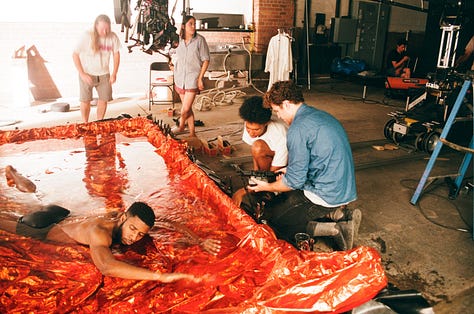
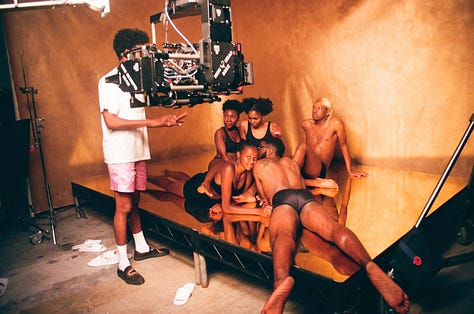
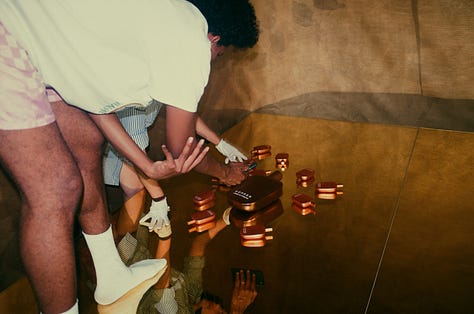
Tyler Mitchell for COMME des GARÇONS
Try this: Look at your current references. Are they still sitting side by side as separate looks, or have they melted into one new world. If you can name the individual sources at a glance, keep blending until you cannot.
Sillage is the trail a scent leaves in the air behind someone after they have passed by. It’s the part of a perfume other people experience, the impression left in a room once the wearer has gone. Perfumers obsess over it, because a scent that leaves no trail is quickly forgotten.
Images have sillage too. It is the afterimage, the thing still hanging in your mind once the campaign is out of sight. Most work has none, it’s seen and gone in the very same second.
Example: Maison Margiela’s Replica line is built entirely on sillage as a concept. Each scent is designed to drop you into a specific memory, a beach walk, a fireplace, a jazz club, and the packaging and imagery hold that same lingering, half-remembered quality. You are being handed a memory instead of a description of a smell, which is sillage turned into a whole brand.
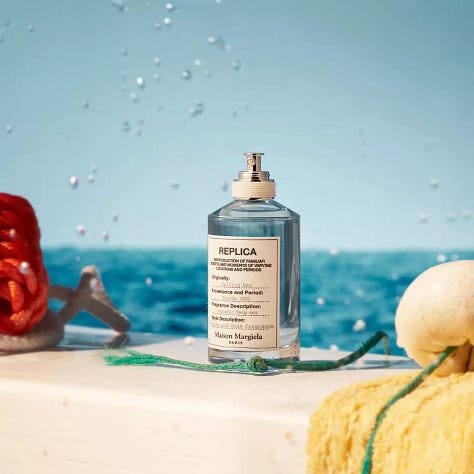
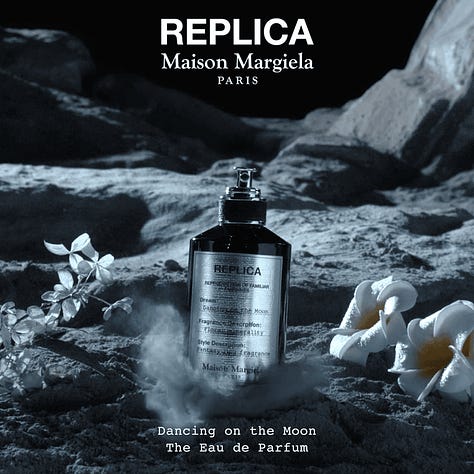

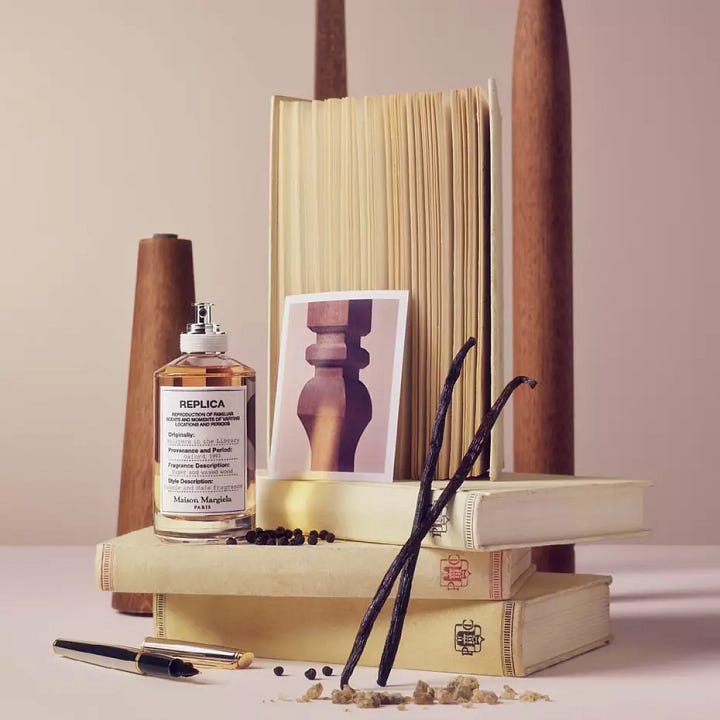
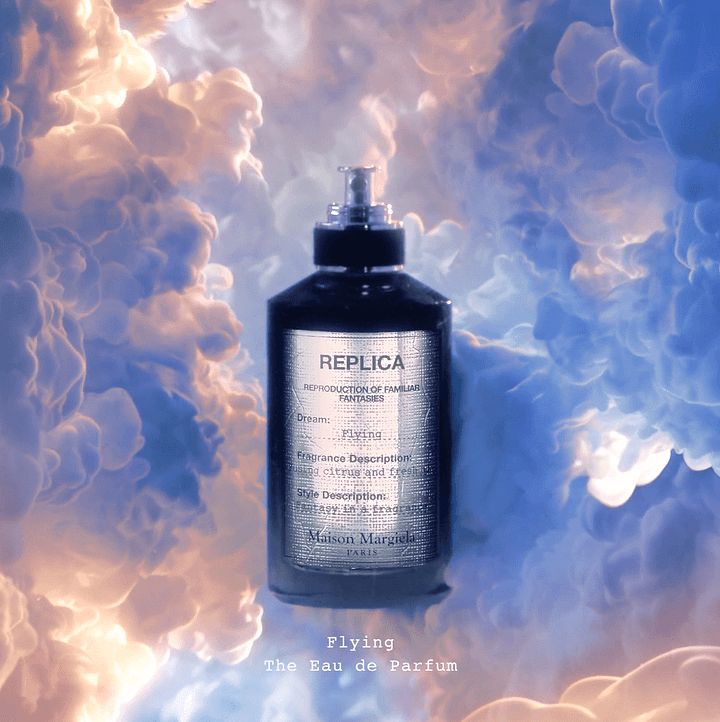
Try this: After you finish a concept, close it and wait an hour. What image or feeling is still with you. That afterimage is your real sillage. If nothing lingers, the work is all top note.
Perfumers describe smells in the language of other senses. A scent is bright or dark, warm or cold, sharp or round, loud or quiet. They translate constantly between the nose and the eye and the ear, because it is the only way to talk about something invisible.
This cross-sensory habit is one of the most useful things you can steal. When you can ask what a colour sounds like, what a fabric smells like, what a piece of music looks like, your work gains a dimension that pure visual reference never reaches. It is how you get an image to feel warm or cold before anyone can explain why.
Example: Sarah Moon’s campaigns for Cacharel’s Anaïs Anaïs sold a scent through pure atmosphere, all haze, soft grain and pale romance. There is nothing to smell and almost nothing to describe, yet the images feel powdery and tender, like the scent itself. She translated an idea of soft femininity into light and blur, and you feel the fragrance through your eyes.
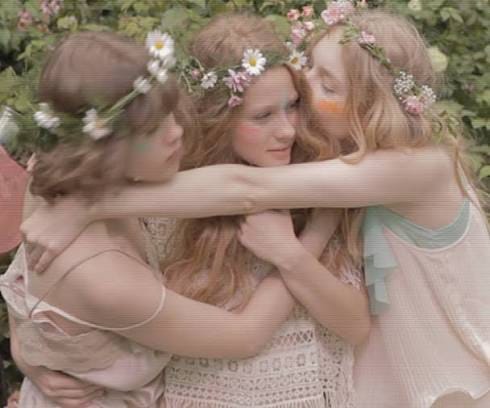
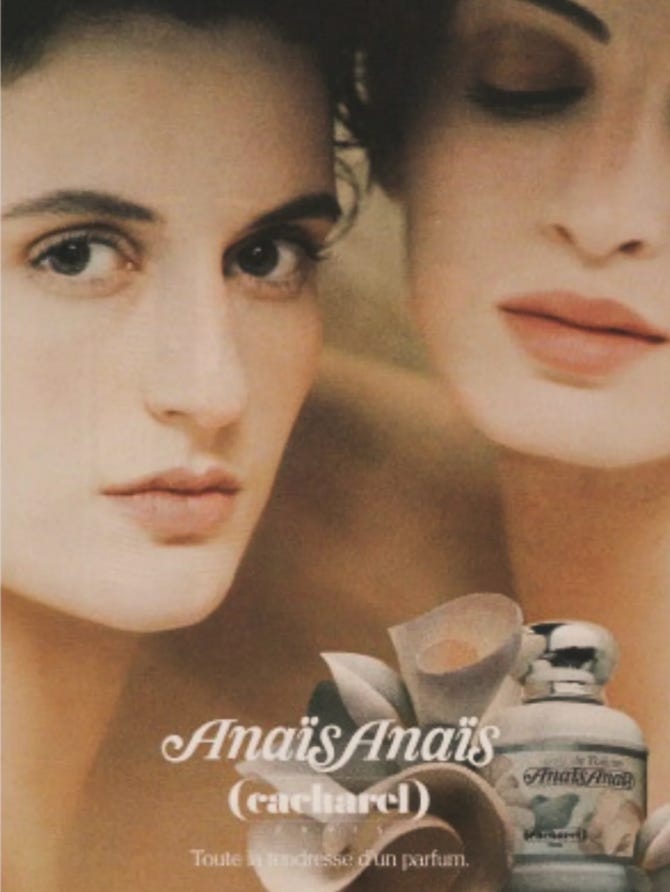
Try this: Take your concept and run it through the other senses on purpose. If this world were a sound, what is it. A temperature. A texture. A smell. Let those answers change your palette and your light before you shoot.
Here is where perfume becomes essential for anyone thinking about brand worlds, because scent is the most efficient worldbuilding tool a brand owns, and the most overlooked one as well. You don’t need your own perfume as a brand in order to make scent part of your world.
A fragrance lets a house say who its person is with total precision and zero explanation. It reaches memory and emotion directly, which is why a signature scent can define a brand faster than a campaign can. Think about how a fresh cinnamonrolls makes you think of your first apartment in Amsterdam, because of the little bakery underneath your house. Or how the smell of your plushie reminds you of the laundry scent your mom always used, or coming back to your favourite hotel immediately smells trustworthy. Le Labo understood this completely. The whole brand is a world built on scent, the apothecary shelves, the hand-written labels, the lab-coat ritual of blending your bottle in store. Santal 33 then escaped the bottle and became an ambient identity, diffused through hotels and shops until you could stand inside the brand’s world without owning anything.
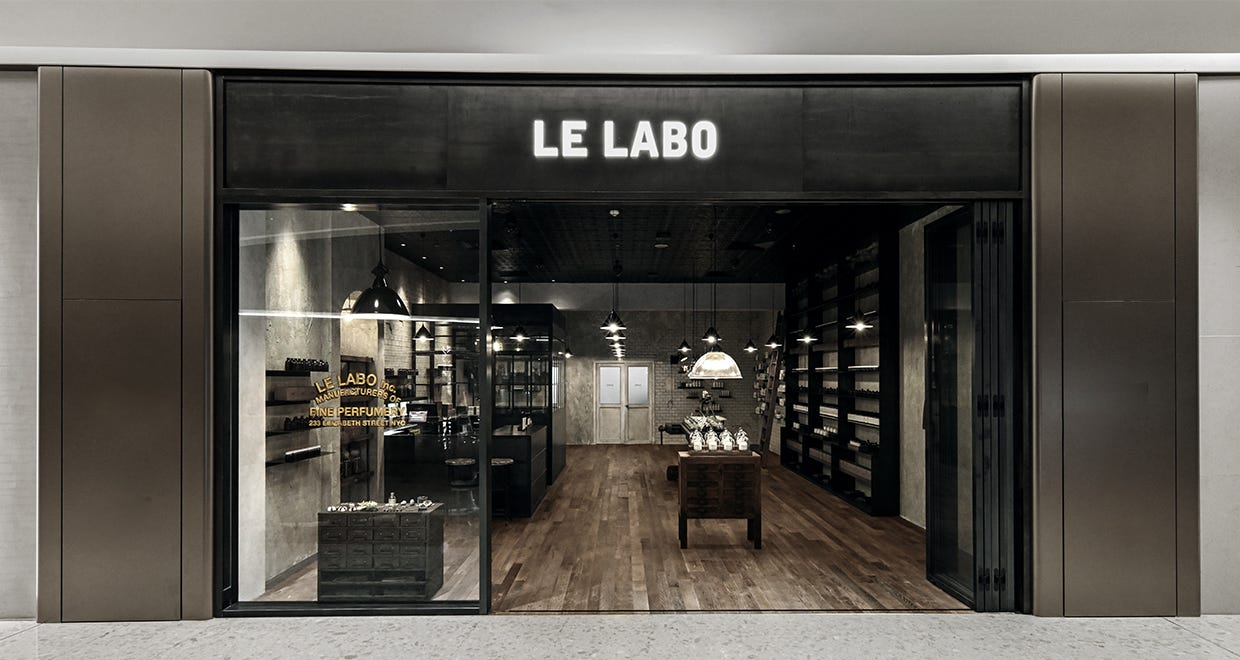
Aesop does the same with retail. Each store is a different designed world, and the constant across all of them is that unmistakable scent the moment you walk in. You remember the smell of an Aesop store as clearly as the shelving, because they built the brand to be experienced through the nose as much as the eye.
And a fragrance is often how a fashion house extends its world to people who will never buy the clothes. The dupe boom happening right now proves how powerful this is. Half the internet is hunting for a cheaper version of Santal 33 or Baccarat Rouge, which tells you the scent has become a piece of cultural identity people want to belong to, whatever the price. When a smell becomes something people copy to feel part of a world, that is worldbuilding working at full strength.
For your own work: treat scent as a real layer of any brand world you build, even when you cannot literally produce it. Ask what your brand would smell like. The answer will sharpen everything visible, because a brand that knows its own scent knows exactly who it is.
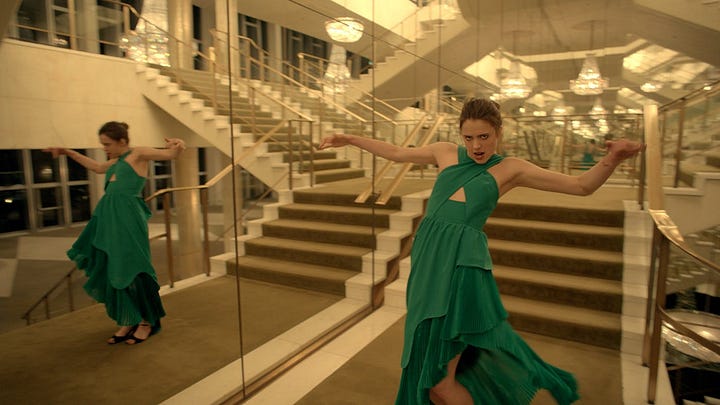
Now let’s actually dive into the part that feels the most impossible, but that’s exactly what makes it so interesting to dive deeper into it. Perfume advertising has to sell a product the audience can never experience through the actual ad itself. There is NO way to show the thing they are talking about, because it’s invisible. So what do they do instead? The great fragrance campaigns give up on the product entirely and sell the world it belongs to instead.
Most of the time this meant a fantasy of desire. Chanel No. 5 has never once tried to describe how it smells in the 15-second ad you see on TV or with elaborate copy in a busstop. It sells icon and dream, from Marilyn Monroe saying she wore nothing else to bed, to Andy Warhol’s silkscreens of the bottle, to Nicole Kidman running through a glittering city in a Baz Luhrmann film. You are buying a fantasy of being that woman. The liquid is almost incidental, because the image is the product.
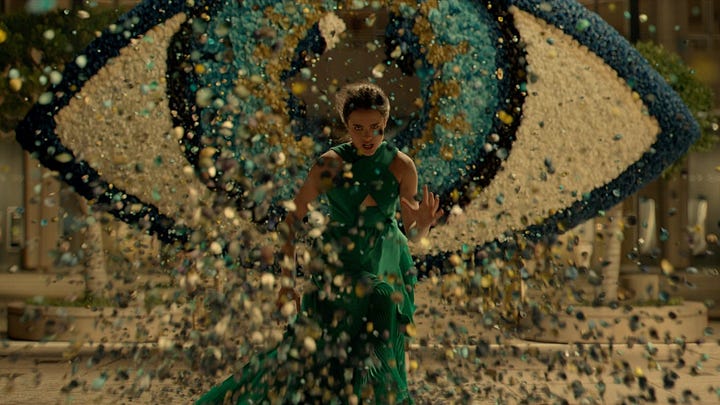
My favourite ad, that is almost like a mini short film was made in 2016 titled Kenzo World. I feel like they somewhat tore the whole genre up. Instead of the usual beautiful lighting and breathy motivational voice-over, Kenzo hired film director Spike Jonze. They also casted Margaret Qualley as actress and dancer, and had Ryan Heffinton choreagraph her.
The story goes as follows: Margaret Qualley escapes a boring gala and goes completely feral through an empty building, pulling insane faces, throwing her whole body around, smashing through an enormous flower made in the shape of an eye. It sells nothing about the smell, but focuses on energy, rebellion and the joy of losing control, and it made the fragrance impossible to ignore. The movement and attitude did all the selling.
The learning from all this is quite simple, when it’s impossible to show the product, you sell the world, the feeling, and the person the viewer wants to become. And that is true of far more than perfume. Every time you are handed something intangible to sell, a mood, a status, a sense of belonging, you are making a perfume ad. Stop trying to show the thing, but instead build the world it lives in and let the audience imagine the rest.
Define the base note. Before anything else, name the one feeling that has to remain after everything else fades. That should serve as your brand’s or your story’s true identity.
Design the top note. Decide the first hit, the single thing the eye lands on in the opening second. That is your hook.
Blend the accord. Melt your references together until they read as one new world instead of a list of random resources.
Build the sillage. Decide what should linger after the image is gone, the afterimage you want to leave. That’s what you want to imprint in people’s brain when they move away from your work.
Sell the world around the product. Especially when the thing itself can’t be shown, build the atmosphere around it and let the audience fill in the middle, have an emotional impact.
Perfumery teaches the hardest and most useful lesson in image-making, which is that you are almost never really selling the object. You are selling the feeling the object promises. Fragrance just strips away the crutch of the product and forces you to work with feeling alone, in layers, as a world, with a trail left behind.
Learn to think like a perfumer and your work gains dimension it isn’t to get from visual reference on its own. You start building images that arrive in a sequence, that hold together as one accord, that linger after they are seen. And you get much better at the thing clients actually pay for, which is making people want a feeling they cant yet touch.
Go and stand in a fragrance hall for twenty minutes and read the campaigns as pure image. Notice how few of them tell you anything about the smell, and what they sell instead.
Pick a scent you love and try to art direct it. What is its top note as an image, its heart, its base. Where would it live and who would wear it.
Walk into an Aesop or a Le Labo or any other store of your choice and pay attention to how the space, the objects and the smell build one single world. Then try to name the base note of a brand you are working on.
Watch three perfume films back to back with the sound off. See how much is carried by movement, light and world rather than by anything specific you could describe with words.
On scent and how it works
The Emperor of Scent by Chandler Burr. - about how smell is composed
The Secret of Scent by Luca Turin. - on the science and the poetry of how perfume actually works.
Perfumes: The Guide by Luca Turin and Tania Sanchez. - learn the language of describing a smell, which sharpens how you describe anything.
Campaigns and films to study
Kenzo World, directed by Spike Jonze, 2016.
Chanel No. 5, the Baz Luhrmann film with Nicole Kidman
Cacharel Anaïs Anaïs by Sarah Moon.
Any Maison Margiela Replica imagery.
Perfumery reminds us that the most powerful thing an image can do is make you feel something that was never in the frame at all. When you can build a world for a thing nobody can see, everything else you make gets easier.
If there is a discipline you would love me to cover next in this series, leave it in the comments.
Love,
Zoë
Comments
Nothing yet. Say the first thing.
Sign in to join the conversation.