



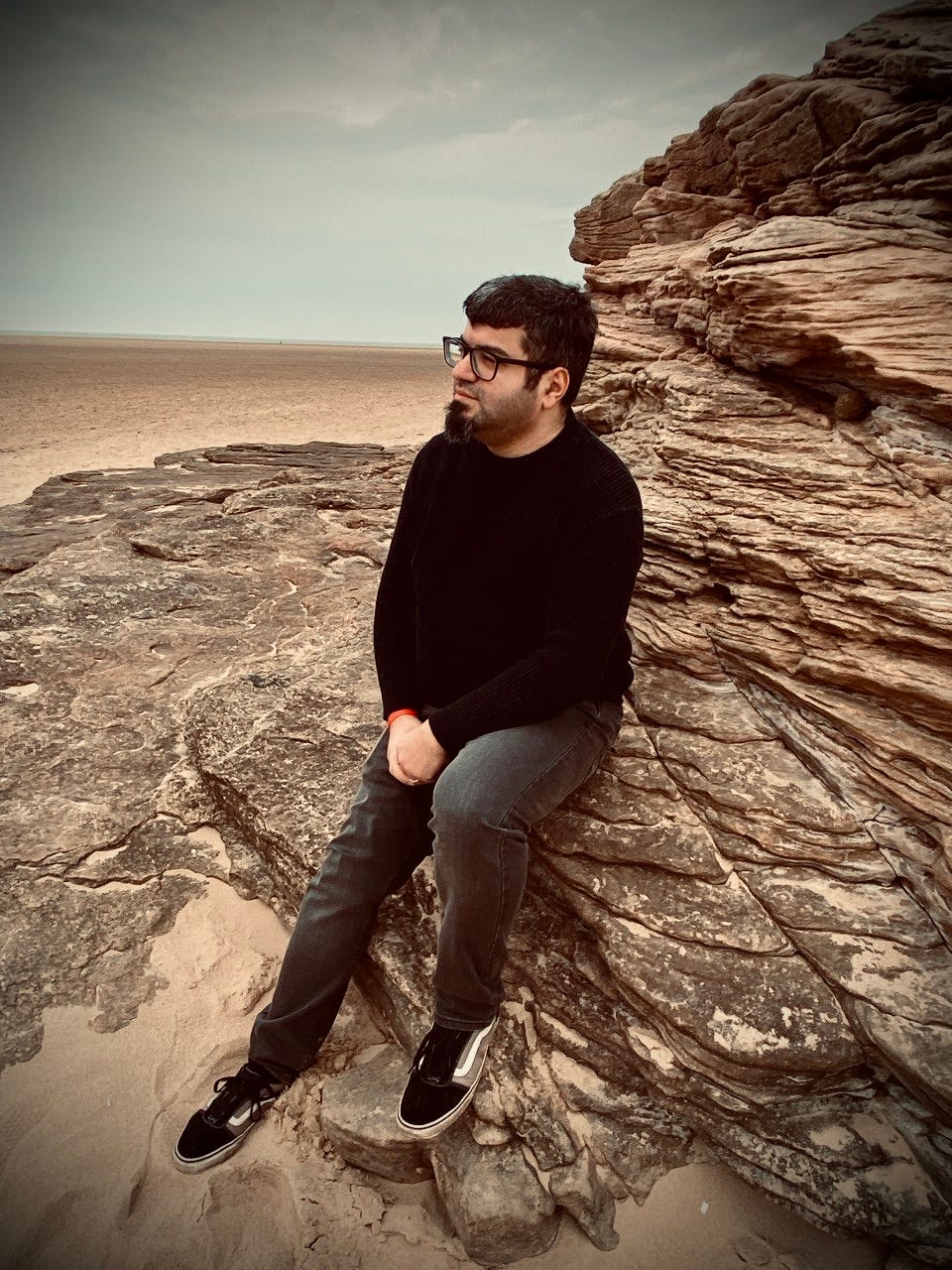
In his Report to Greco, Nikos Kazantzakis wrote that he wanted God to grant him just a few more years to live, so he could express everything he still desires to express and could die with empty heart and empty mind.
Unfortunately, God did not grant him that desired time, and Nikos rose to paradise with many masterpieces still brewing in his soul.
Since June 2024, I have been publishing at least one piece a week on Substack. During our Dante Read-Along I have been writing two pieces a week for the entire year as we descended to Inferno and climbed slowly, and yet consistently, to Purgatory and then Paradise.
Every writer knows that there are thoughts and feelings that mature in oneself, like an apple matures on an apple tree and time comes for it to fall, so there is a time for an ink to fall on the white canvas.
I assume it’s the time for me to take a pause and reflect upon these two years of writing consistently and share what I have learned.
You will never be as young as you are today, and the piece you want to write today will be written differently tomorrow.
Let me illustrate what I mean using the very article you are reading now, my dear reader. It sounds the way it does because I am writing it today. It would have sounded different had I written it two years ago, and it will sound different if I explore the same topic in three years.
When you write you leave a trace of yourself that will never exist ever again. It is less like a documentation of who you were and more like immortalisation of different layers of yourself.
Many journal entries of mine written ten years ago sound simple to me because I have evolved, but I am glad that I kept a record of who I was to see who I have become.
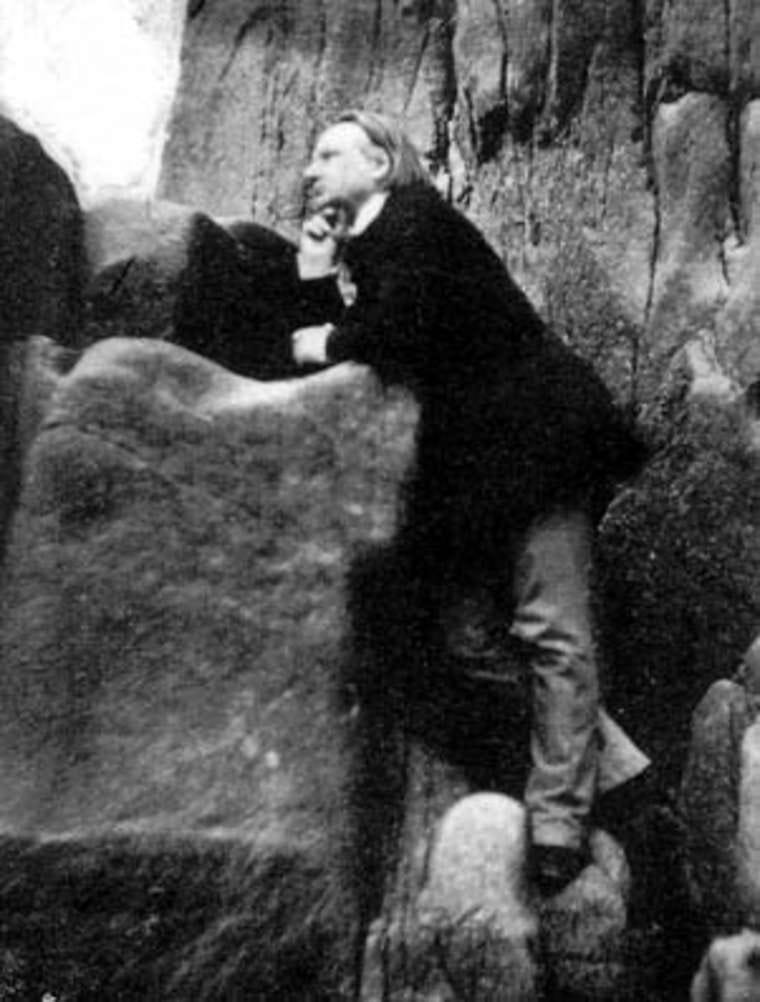
The Odyssey begins by telling a tale of a man of ‘twists and turns’, but little did I know that the reading experience of The Odyssey would itself have many twists and turns.
I felt like a hunter who tries to shoot a bird which refuses to fly straight across the sky.
I sketched in my Leuchtturm notebook some ideas and angles that I wanted to approach a particular book with, but the moment I sat down to write, my paragraphs would twist and turn like Odysseus’ exceptional mind.
I realised that hosting a slow-read means I have to read the book faster, so that I have time to think, to know what to write, and to illustrate the scenes with paintings that convey the soul of the characters.
And yet, here is my advice to you, my dear reader: despite many sleepless nights, when I had to write all these posts in the dark room while my eight-month-old daughter was asleep, I realised that either I write despite any obstacles, or I do not write at all.
It was hard, a slow-read turned to be a fast read for me, many wisdoms were sacrificed on the altar of schedulle.
I spent decades thinking, planning carefully what I would write, every thought seemed to me a genius thought, but I’ve never sat down and actually written what I wanted. I thought so much that in the end I wrote little, if anything.
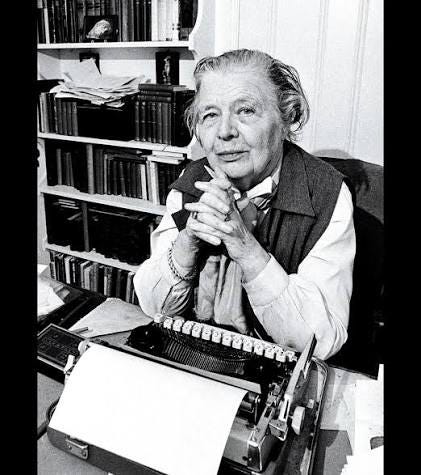
“The lapse of a despair of a writer who does not write” as Marguerite Yourcenar described this state of mind in her Reflections on Writing Memoirs of Hadrian.
It felt like this with The Odyssey Read-Along sometimes, because I felt like a painter who knows the scene they want to depict but haven’t chosen the landscapes they want the scene to be set into.
To avoid despair that Yourcenar describes I believe a writer needs to capture the idea immediately, as raw as it is possible, before it vanishes and turns into despair.
Goethe warned us of attempting to write a great work. In his conversation with Eckermann he tells us that greatness is assembled by small elements, like our body is assembled by small atoms.
The beauty of life unfolds in the process of writing. Every writer, in my view, knows that they cannot capture everything in a single piece, so one should choose the angle from which they write carefully.
In fact, over the past two years, I have learned that the easiest part of the writing process is knowing what you’re going to write about, but the hardest part is determining the angle from which to approach it.
The twisting and turning nature of The Odyssey was precisely what made it so difficult for me to write about. Each time I felt I had caught an angle through which I could explore everything—like a skilled fisherman hooking a large fish—the angle would twist and turn, freeing itself from my grasp.
Throughout The Odyssey Read-Along, I felt like a disheartened fisherman who saw a promising catch, grew excited at the prospect of a grand dinner, and then watched it free itself and slip back into the water.
Each book of The Odyssey felt like being trapped between Scylla and Charybdis. If you try to write about everything that happens in a particular chapter, then you are doomed to explore nothing. If you choose the Scylla’s way, however, you will have to sacrifice some important parts that you’d love to explore, in order to dive deeper into scenes that mattered to you more.
I guess the lesson over the past two years here is this: consistent writing trains you to see angles more clearly. Everyone has grand ideas, but not everyone finds the way to express them.
Only the truly great writers can take a trivial subject and make it truly great. Baudelaire was one. I believe, however, that immersing yourself in writers like Tolstoy, Nabokov, Dante, and Shakespeare acts as a mirror that reshapes your own mind. When measured against such genius, even your most mediocre writing carries a depth that easily surpasses the triviality of lets say, pop culture.
After writing over 150 articles across the past two years, the ones I consider my favourites are those that reflected on Dante, Hugo, Homer, or Weil. You cannot reflect on Dante’s Paradiso and not be transformed by the depth of his wisdom, you cannot write about Hugo and not feel like Jean Valjean, it’s hard not to feel yourself cursed by Poseidon when you read about Odysseus’s travels.
I touched their genius and tried to express it in my writing, and that small element of genius hid the shortcomings of my own thought.
I cannot fully recall the discourse about the LLMs (also known as A.I.) back in 2024 when I began publishing on Substack. I try not to write or film about that topic. I feel the discourse to be like a bee that disturbs your attention by flying around you while you’re trying to focus on what is important.
All my heroes are dead and yet they are immortal. You know their names well, it is Hugo, Kazantzakis, Brodsky, Hesse and Weil, some more ancient ones are Seneca, Sappho, Virgil and Homer.
They’ve been dead for a long time and yet they are alive more than some people I see every day.
What is the point of outsourcing your writing to a machine if it won’t grant you a chance at immortality?
I don’t claim that you or I are going to be Homers in two millennia, but every piece that reflects who you were today will make you immortal even if a single person reads it after you’re no longer here.
My reader can see that I follow Marguerite Yourcenar’s words: I am a sane melancholy mind, although I might sometimes come across as morbid.
On this positive note I want to say that I am a pretty cheerful person but I come from an ancient nation that carries a gene of melancholy in itself.
I am not yet too sure what is good for a writer: to know that time is limited and yet you’ve a lot yet to say, like Kazantzakis did, or to know that you are mortal, that you have already said everything you wanted to say, and that you can pass with a clear heart, your hand no longer willing to paint the shapes of the letters.
What I know for certain is that these two years were profoundly beautiful.
No posts
Comments
Nothing yet. Say the first thing.
Sign in to join the conversation.