


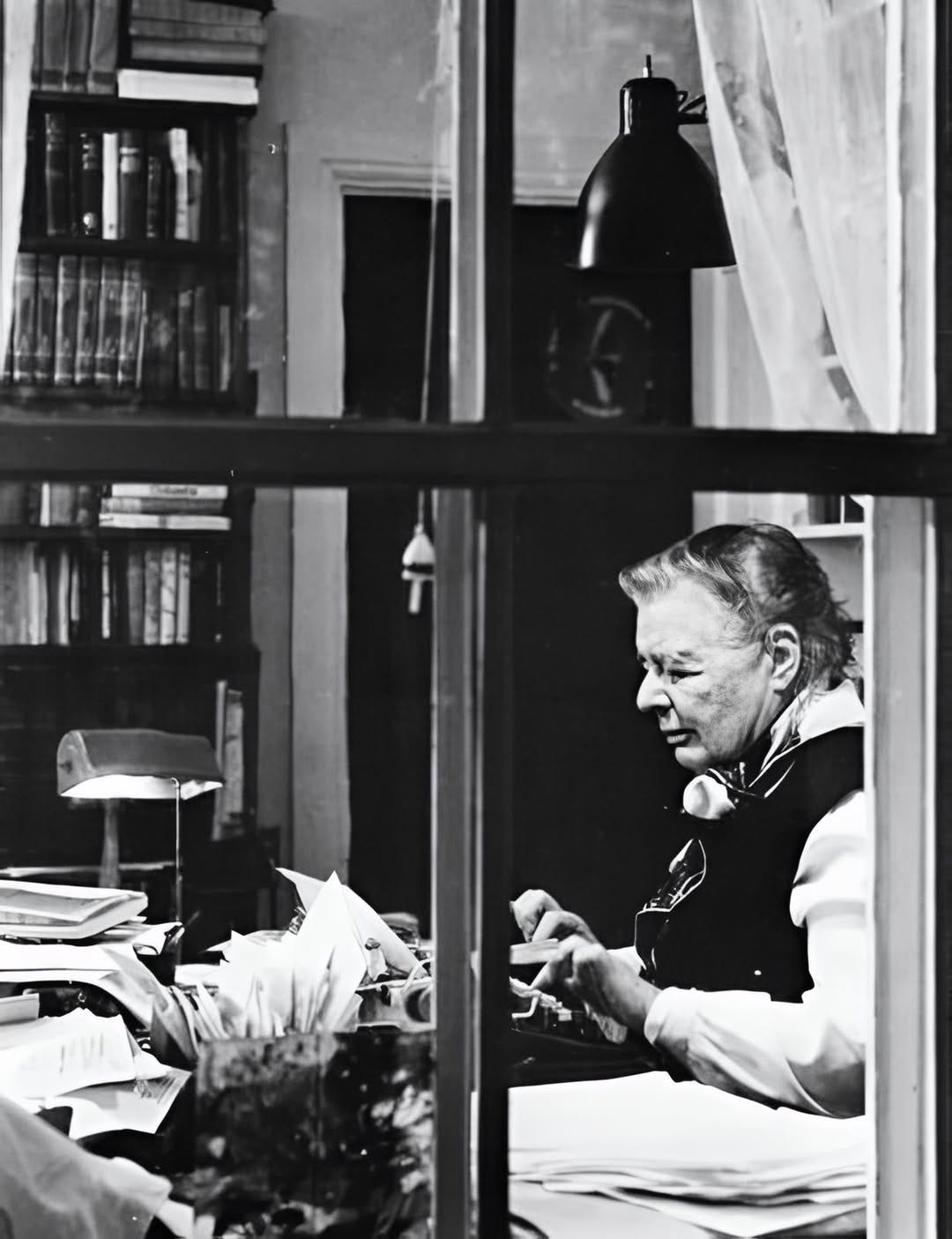
“Nothing is slower than the true birth of a man.”
~ Marguerite Yourcenar, Memoirs of Hadrian
There is nothing slower than the true birth of a great novel.
In 1948, three years after the end of brutal war, Marguerite Yourcenar received a trunk she had stored in Switzerland during the darkest years of Europe.
The trunk was full of relics of the present that no longer existed, it was full of correspondence with people she had forgotten, some still living, others already dead, taken either by war or by an ache of their soul witnessing Europe degrading itself by war.
Many of these letters Marguerite burned in her fireplace, turning memories into physical warmth during that cold winter, but partway through she pulled out four or five typewritten sheets of paper. These sheets of paper had gone yellow, reminding her how much time had passed.
The first sheet read: ‘My dear Mark…’
Mark? Another acquaintance from the past whom her memory considered unworthy of preserving?
It probably took her a moment to remember that 'Mark' meant Marcus Aurelius, and that the man addressing him was another emperor: Hadrian.
These yellow fragments of paper contained what would later become one of the greatest novels of the 20th century: the book that we know today as Memoirs of Hadrian.
Memoirs of Hadrian is the best book I’ve read in decades and I strongly believe that in centuries to come, unless civilisation collapses completely, this book will stand alongside with Hugo’s Les Miserables, with Seneca’s Letters, and with Cervantes’ Don Quixote. (It takes me a lot of courage to make such a bold claim and yet I am certain of this book’s greatness.)
What is remarkable however is that the way the book was written is as remarkable and profound as the novel itself.
What you see below are my notes from the essay ‘Reflections on the Composition of Memoirs of Hadrian’ in which Yourcenar explores her struggle to write what can possibly be one of the greatest books of the 20th century.
The idea to write Memoirs of Hadrian came to Yourcenar between 1924-1929, when she was twenty-five. She would abandon the idea believing that certain books one can write only after the age of forty.
What is remarkable however is that she burned everything she wrote in those years, calling the destruction 'deserved.
There are many stories of how great writers burned their works, but this story has a different wisdom. The wisdom is that we should judge our early drafts by whether they are good and not by how much time they cost us.
The drafts vanished but it’s the ideas that stayed. In this essay, I’ve encountered one of the most thought-provoking lines of my life. It comes from Flaubert’s Letters, where he says:
"Just when the gods had ceased to be, and the Christ had not yet come, there was a unique moment in history, between Cicero and Marcus Aurelius, when man stood alone."
I can write thousands of words on this sentence and have written dozens of pages of my journal, but what Marguerite says in her essay is that this sentence stood as an anchor for the whole of the book.
Three hundreds pages of wisdom, of brilliant writing woven around one profound wisdom: what is it like when you stand alone facing the entire existence when you have only months, or even weeks, left to live?
If one finds wisdom such as this, their work will be grand.
Ten years after the initial spark Marguerite Yourcenar began thinking about the story again. It was between 1934-1937 that she played with an idea of writing this novel as a chorus of dialogues, in which every voice of that era would be heard. Hadrian’s wife would tell one part of the story, then Hadrian would reply with another piece of the story, maybe Antinous would talk about love.
And yet “Hadrian’s voice was drowned out by all the others”. A writer might not know where the story will end, but they must know where it begins. What is the intention of the piece you are writing? A novel takes years to write, and in order not to drift one needs to choose a guiding star.
Everything written between 1934 and 1937 was deservedly (as she says herself) destroyed, except one line:
I begin to discern the profile of my death.
It is as if this novel was assembling itself atom by atom, idea by idea. During her 1937 research trip to Yale, Yourcenar wrote some of the most powerful scenes: the visit to the physician, the passage on giving up exercise.
It is remarkable to see that writer is not only a grand architect who must measure seven times to cut once, but also a magician who intuitively feels what is dull and what is a spell worth keeping.
One shouldn’t attempt [writing certain books] before the age of forty.
She knew she had an excellent idea, but she had the humility to admit she wasn't yet ready to see how the novel should be written. This is perhaps the reason why we witness so many promising novels that prove to be poor after few pages. They were conceived at the right moment, but written at the wrong time.
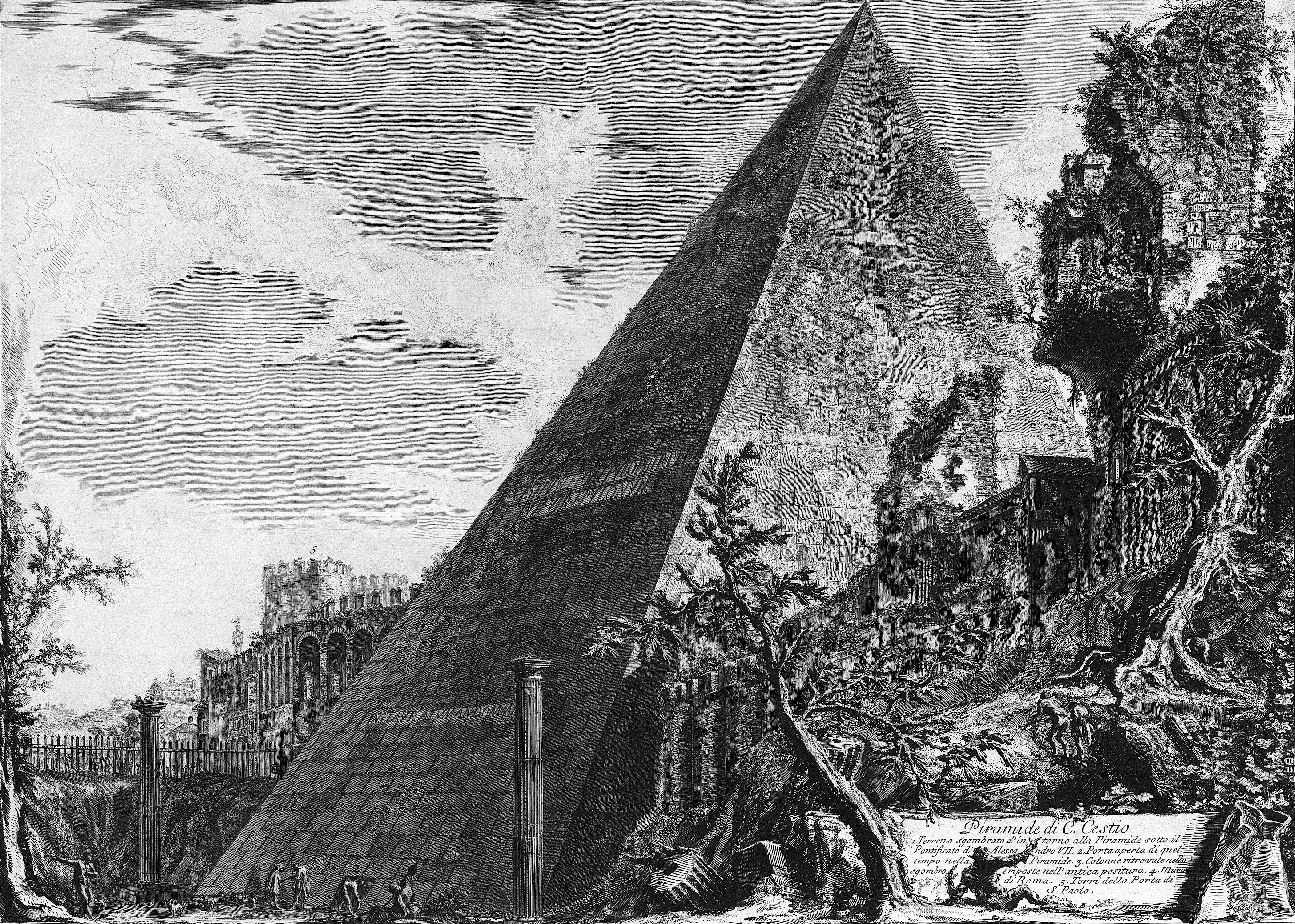
By 1941, she was busy with other writing endeavours and one of them was studying an engraving of Hadrian’s Villa almost daily, what lasted for years. She was fascinating by Piranesi’s ability to depict human mind, but what she did not realise was that, in the background, what she was really doing was researching for a project that she had given up. What seemed like forgetting was the material working on you sideways. So, watching what you put in your mind is exceptionally important.
What surprised me the most is when I discovered that we could have had Memoirs of Omar Khayaam instead of that of the Roman Emperor.
The Persian poet-astronomer tempted Yourcenar nearly as strongly as the Roman emperor did and what a fascinating project it could have been!
Khayaam was a man who watched the stars and doubted everything, who wrote in riddles about wine and mortality, so surely he could have been as rich a subject as any emperor who built walls and buried a lover. But Yourcenar turned him down, and she did it for two reasons that every writer should sit with before choosing what to spend a decade of their life on.
The first reason was that Khayaam’s life was contemplation only. He was, in her words, a somber skeptic for whom the world of action meant little. Hadrian, in contrast, was the opposite kind of man entirely: soldier, builder, administrator, lover, philosopher-king who touched nearly every corner of the known world.
The second reason is more important to the writing craft. Yourcenar believed that while the wisdom of Khayaam knows no boundaries, cultural, linguistic, and civilisational walls are harder to cross. She did not know Farsi, and has not been to Persia. These are essential to understand your subject.
Needless to say, I wish she would have still written it.
Thank you for reading! I decided to share these notes of mine on the art of writing of Marguerite Yourcenar. Looking at my sketches right now I counted 30+ small pieces of advice like this. If you found this piece interesting let me know in the comments and we could dive deeper into her writing advice.

No posts
Comments
Nothing yet. Say the first thing.
Sign in to join the conversation.