
Quick warning that this story mentions: loneliness, social isolation, depression, and anxiety.
Summary: Sharing accomplishments; Personal story about loneliness; Research from U.S. General Surgeon on Loneliness & Teia Jelisia D. Clements on Overcoming Strong Black Woman Schema; Rebuilding a relationship with self; Community Gathering input; Affirmations
shrinking violets do bloom is a reader-supported publication. To receive new posts and support my work, consider becoming a free or paid subscriber.
Before we get into this juicy subject, I wanted to share a few updates that have been happening in my little world.
The weekend of April 4-6th I traveled to West Virginia to join 100+ Black people from across the U.S. to be trained as an Outdoor Afro leader, meaning, I’ll start hosting monthly outdoor meet-ups for Black folks in Arkansas. I’ve been seeking a group like this since forever! I’ve never talked to this many Black folks about nature hikes, plant identification, kayaking, and loving the great outdoors all in one place. It was black joy in verb form. Stay tuned about upcoming outdoorsy events starting in June.
I graduated my Therapeutic Horticulture program with the North Carolina Botanical Garden 🎉. Thanks to all my supporters who helped me afford this program and supported me emotionally along the way. Y’all are amazing!
Lastly, I’m moving back to Little Rock in late May and can’t wait to touch the soil of Arkansas and hug my people again. I missed home more than I thought I would.
As grateful as I am to the accomplishments above, along the journey I was accompanied by a deep feeling of loneliness and social isolation. No matter how many programs or events I participated in, no matter how big the crowd of people I found myself surrounded by, no matter how many friends I called/texted, those two feelings persisted and lingered.
I’ll be honest, this is really hard for me to admit and as I’m writing these words I feel exposed and vulnerable. But, I think vulnerability is my strength and these are real feelings that deserve their space to exist, even if it is uncomfortable. With that said, I want to state that I’m okay and I’m also managing very hard feelings. For anyone not okay and you feel you need more support I’ve found this organization Nami to be supportive. They have affinity support groups and a crisis hotline. ❤️
Let’s continue to the story. I moved to North Carolina in August 2024 to pursue a therapeutic horticulture certificate at the North Carolina Botanical Gardens. Before my move, I was living in Arkansas offering urban garden workshops, backyard chicken workshops, and offering art community events. The certificate was a 9 month hybrid program with us have virtual content to watch in between our once a month in person classes. This certificate felt like the perfect compliment to my gardening and community arts events because it could tie everything together bringing intentional healing methods to my offerings. I was excited for the move because I was going to get the chance to explore Durham, visit Black-owned farms in North Carolina, and maybe even get to the beach. I mean heck, maybe I might relocate to North Carolina permanently because living in a landlocked state is a challenge at times.
All those things happened. My time spent in North Carolina had a lot of fun moments. I was able to connect and learn from Black agriculturalist as well as understand various methods of implementing therapeutic horticulture with schools, nonprofits, retirement centers, and more. I’m extremely grateful for the opportunity, yet, swirled in that gratitude I also felt super isolated. Living alone, in a foreign city, with one friend who lived 30+ minutes away, finding my “community” or even finding a yoga studio that fit my needs was difficult.
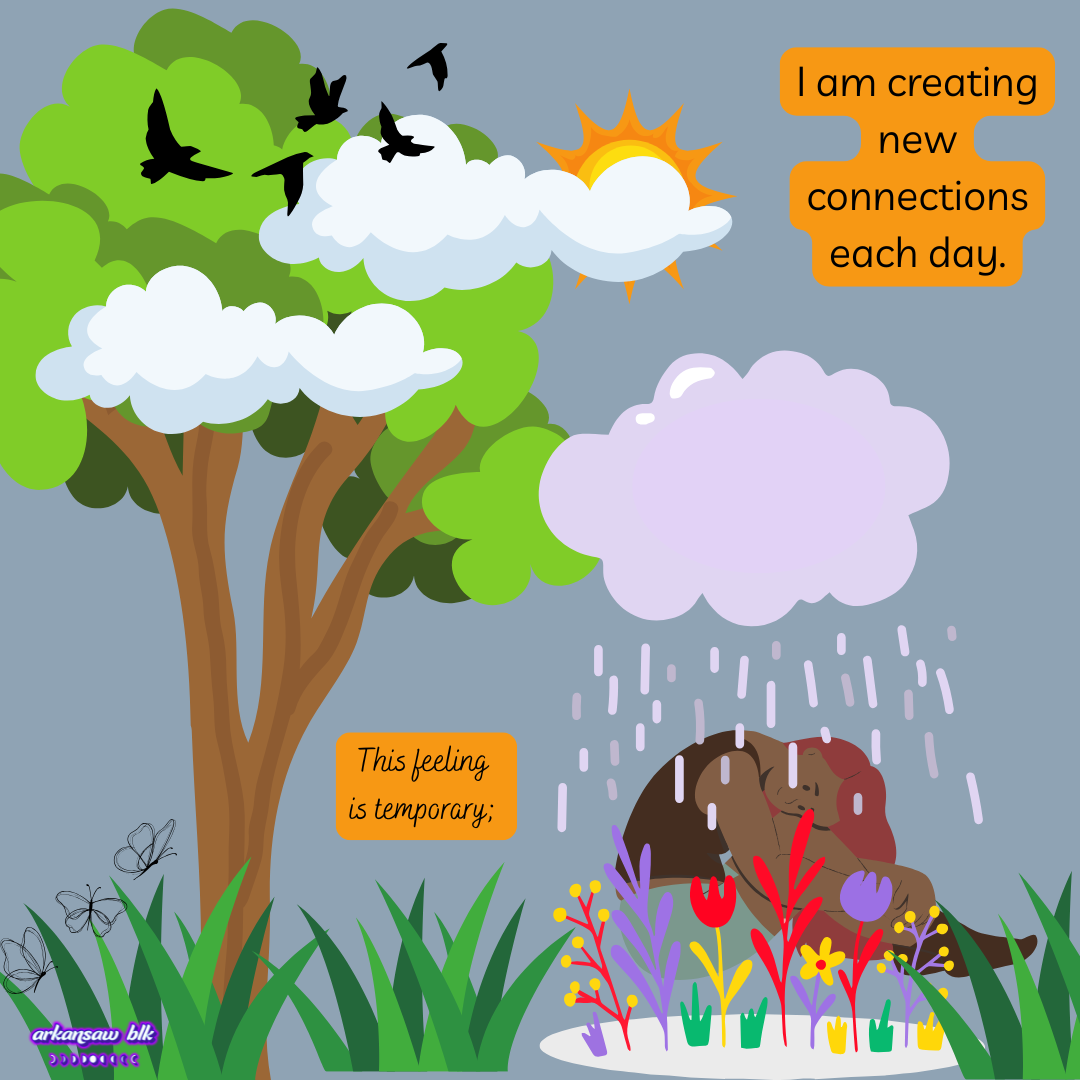
That’s the thing about life. The good and the bad are intertwined, existing at the same time. The happiness with the depression. The joy with the anxiety. I think the movie Inside Out really displayed the complexity that comes with being human and experiencing emotions. The feeling of not knowing where I “belonged”, who my “community” was, or where I could call home while in a foreign place was painful at times. This is part of the dark-side of extended traveling that I don’t think people talk about enough, but that’s another Substack for another time.
Making lemonade with lemons, I felt I had no choice but to face the social isolation and convert it to solitude. What do I mean by that? I tried my absolute best to use the time alone to reflect and be introspective, which was refreshing and kind of intimidating. There were days where I could practice gratitude and manage and there were days when I cried from the stinging feelings of being unwitnessed and deeply disconnected from any meaningful physical touch or meaningful connections. Yet, I also had time to honor the many things that had changed in my personal life that I suppose I never really sat with.
At the tender age of 33, my hobbies, religion, spiritual practices, interests, desires, and thoughts about the world had drastically changed since my youth. In between those years, I had moved to different cities, different countries, and had dated a variety of people who changed the very essence of who I am today. Kendra at the age of 33 is very different than Kendra when she first left home at the age of 18 (I know referring to yourself in 3rd person is icky sometimes, but this felt appropriate).
All those changes also meant I made and lost friends and companions along the way. That’s what tends to happen as we grow, but managing that loss was extremely hard for me. As I write these words, I can feel the tears swell in my eyes for the amount of unprocessed grief I had been holding. I was no longer the Christian girl who played soccer, an identity that was true for me for almost 20 years (I started playing soccer at 4 years old). I was now the queer womyn in a cis-hetero presenting relationship who enjoyed studying root magic, plant medicine, and talking about how ghetto the world is while also dreaming about the possibilities of the future. These shifts in my life created major break-ups and to this day I still haven’t found where I feel that I belong in our society. It feels so high-school to write that out, but that is my reality.
I often feel out of place, like a lost puzzle piece seeking to fit into the larger picture.
How many of us share this similar experience? Interests change, identifies shift, friends get left behind, and we are so caught up in the capitalistic system we don’t have time to sit, think, process, and feel; then one day we wake up with the heaviness of loneliness sitting on our chest, combined with anxiety and maybe some depression and it feels like we have no one to talk to about it, therefore, social isolation enters the chat. Loneliness looks so different for all us. It could be that you live with your partner and kids and still feel lonely. It could be that you have tons of friends and y’all hangout often and you still feel lonely. However, if we don’t have a place were we feel that we belong or feel that our story matters or if we don’t feel that people will miss us if we don’t show up to the next whatever, it can lead to very negative feelings.
Let’s pause. Take a deep breath in, hold for 1…2…3…exhale.1..2…3… This is a heavy topic and I don’t want us to forget to breath, be present in our bodies, and release the heaviness.
Let’s continue…As a natural researcher, I had to understand my feelings. Just knowing that I was lonely didn’t feel like enough, so I began to research and read. Although, I had heard news articles speak about the loneliness epidemic currently ravishing our society, I didn’t really understand the depth of it until I thought about how many of us live alone, how many of us have busy friends and need to schedule calls, how many of use don’t feel we have friends we can be vulnerable with, how many of us have families but had to pause our hobbies to care for the greater unit? The loneliness epidemic that we find ourselves living in, isn’t just science studied in a lab, it is science based in our modern day reality. Epidemic, defined by Merriam-Webster, is “a widespread occurrence of an infectious disease in a community at a particular time.” Loneliness is so prevalent, that the U.S. Surgeon General published an 82-page Advisory in 2023 describing how loneliness is a public health concern across the country. A public health concern y’all, it’s serious.
Let’s get into some definitions as defined in the U.S. Surgeon General’s Advisory to be on the same page.
Loneliness: A subjective distressing experience that results from perceived isolation or inadequate meaningful connections, where inadequate refers to the discrepancy or unmet need between an individual’s preferred and actual experience.
Social Isolation: Objectively having few social relationships, social roles, group memberships, and infrequent social interaction
Social Connection: A continuum of the size and diversity of one’s social network and roles, the functions these relationships serve, and their positive or negative qualities.
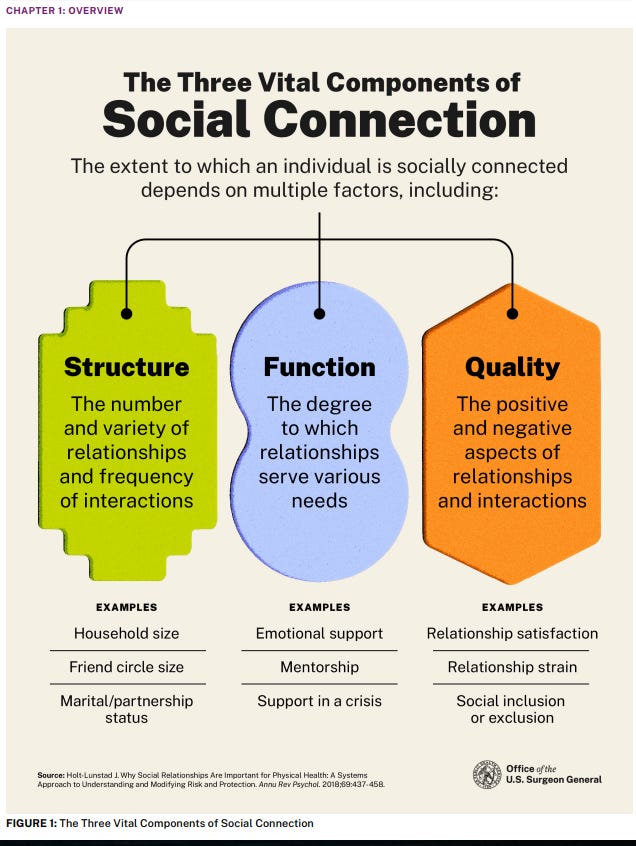
This is real and unfortunately, it’s a new normal. I share this study because I can tend to lean on intellectualizing when my feelings don’t make sense or said another way, I tend to research “why am I feeling this way” because my brain tries to tell me that I’m alone and that something’s wrong with me...which I know is not true. The dynamics and very fabric of our society has changed post-COVID, especially with more reliance on social media and virtual niche-communities. This is not to say social media and virtual communities are “bad”, but they may not be providing the depth and level of meaning that we humans need to thrive and to feel a sense of belonging.
Let’s pause. Take a deep breath in, hold for 1…2…3…exhale.1..2…3… This is a heavy topic and I told you I tend to intellectualize, but I’m working on being present in my body.
Back to story: This epidemic is impacting all communities differently. Since I identify as a Black woman, I’m going to talk about our community specifically. In the dissertation paper African American Women and Social Support Networks to Overcome the Strong Black Woman Schema and Depression by Teia Jelisia D. Clements, discusses how the Strong Black Woman (SBW) schema contributes to us suppressing our “inner thoughts and emotions due to a fear of ruining [our] careers, family, and economic status (Bogar et al., 2017; Watson & Grotewiel, 2016)…Carter and Rossi (2019) found that resistance against the SBW schema is perceived as being weak or selfish in relationships and the African American community.” Can anyone relate?
After reading her paper, I felt seen...and not in a good way. There have been many times when I was suffering alone because I didn’t want to be a burden to others or I felt that people were too busy to listen to my problems. Teia Jelisia D. Clement’s findings were multi-layered—I won’t go into all the details, I mean it was 100+ page paper—but in her conclusion she wrote “the findings of this study have shown that social support networks have a significant effect on African American women and their mental health.” I’m almost certain this doesn’t only apply to Black women, but her findings about social support networks makes sense right, and how do we get there?

For me, I’m starting with re-defining and re-building a relationship with myself. It is a slow journey that I am braving. I desire to feel whole and I know that work starts internally. I know that I must do the personal development and healing to even be able to open myself up to new social networks. These things I understand and I am actively working to be a better support system to myself. I am learning to lean on friends when in crisis and sharing when things are going well and not so well. Quick share, I recently tried out Taekwondo and I can report back that I enjoy it, but the class I joined wasn’t for me.
I’ve been leaning on a wellbeing wheel (pictured below) and really digging into what areas of my life need some love, polishing, and support. I am also allowing myself to grieve who I once was. If I can build self-satisfaction, self-appreciation, and self-autonomy, then maybe I will be able to find a sense of belonging within myself AND THEN find a sense of belonging socially. It also takes a heck of a lot of positive self-talk to even allow myself to reach out to friends, companions, associates, coworkers, or to have the small talk that could lead to something more because my social anxiety gets in the way. But, if I don’t choose to lean on the relationships I have now, what good is it to build new relations that I won’t lean on in the future?
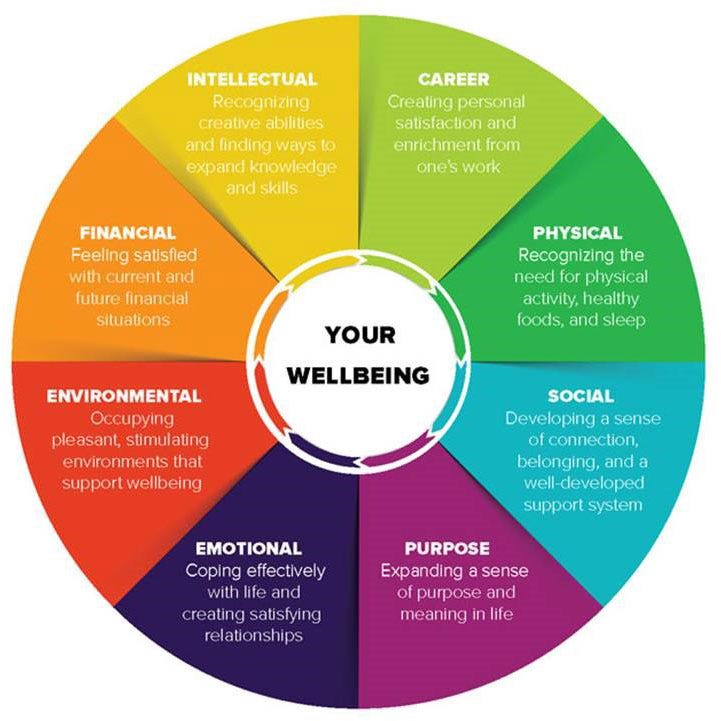
Finding where I belong has been a challenge since I was a kid. My mom has told me how in my younger days I used to come home often telling her “No one wants to play with me” or “I’m having a hard time making friends”. Her advice was “find people who are like you.” I believe that is why I put so much emphasis on creating secure, fun gathering spaces primarily for Black womyn and my LGBTQAI2+ family because my younger-self still feels that way. I want to find my people, but also support others in finding theirs.
As a natural problem solver and lover of education, I decided that I want to see how could I provide an antidote to this epidemic we find ourselves in. How can I take the personal journey to rebuild a relationship with myself as an antidote to my own social isolation and loneliness? And how can I create spaces that break down these barriers of social isolation to help others find a sense of belonging and connection? I started to take a “Social Entrepreneurship” course on Coursera and in the course they challenge us to:
(1) Research the problem we are interested in addressing to understand the root causes
(2) Talk to people about their experience with the problem and their needs
My research has mainly focused on the benefits of interacting with nature, understanding the superwoman schema, the impacts of Sister Circles, and the impacts of social networks on public health. In an effort to be more community-solution oriented, I’d love your input of how we can build out a gathering space, together.
Here are a few guiding questions:
Does this feel relevant to you? If so, what has been a barrier to engaging or accessing meaningful connections in social networks/interactions?
What type of gathering space do you need to feel supported? For example, in-person, virtual, hybrid, retreats, etc?
Also, would cost be a barrier? I’ve been trying to find balance between offering things for free and when to get paid for my work…it’s not easy.
Please feel encouraged to reply to this email, text me or we can set up a call at 501-500-4616—asking for patience upfront if it takes me minute to respond. For those who may not be familiar with my past work, I have experience creating spaces like this that have discussed astrology, intention setting, book clubs, art clubs, nature walks, and talk spaces (5 years of experience). I’ve also been trained as a restorative justice circles facilitator and know how to host community-led meetings from my time spent as a community organizer.
For real y’all, let’s build the things we need, together. I don’t mind initiating (we can thank my Aries-rising), but I can’t do it all, I’m retiring from being a strong black woman.
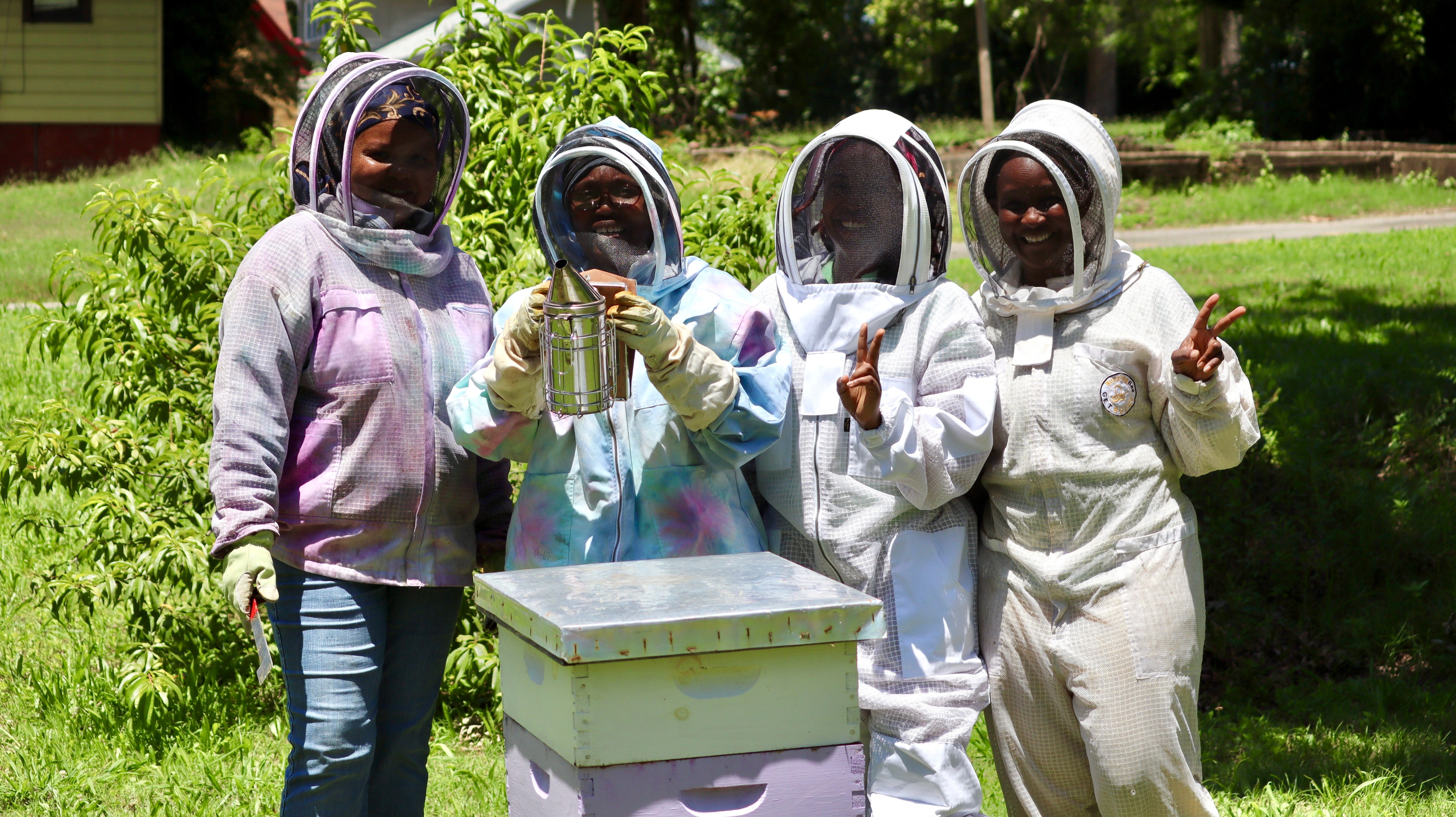
If a group space isn’t what you need but are still seeking ways to deepen your connections with others I’ve copied a couple examples below of recommendations for individuals the Advisory by the U.S. Surgeon General.
On page 66, What Can Individuals Do includes
Minimize distraction during conversation to increase the quality of the time you spend with others. For instance, don’t check your phone during meals with friends, important conversations, and family time.
Invest time in nurturing your relationships through consistent, frequent, and high-quality engagement with others. Take time each day to reach out to a friend or family member
In a time when things might feel heavy, I want to remind you that you are important, you matter, and you are cared for even if that negative voice in your head says differently. We are connected even if it only through this email thread. I look forward to hearing from you and I can’t wait to continue sharing about my own personal journey of rebuilding a relationship with myself to work through these feelings of loneliness. If I’ve learned anything, it’s that it’s going to take a heck of a lot of courage and self-believe to put yourself out there, work past the anxiety, and express in order to connect. Trust me, I know it’s hard, but let’s try it together.
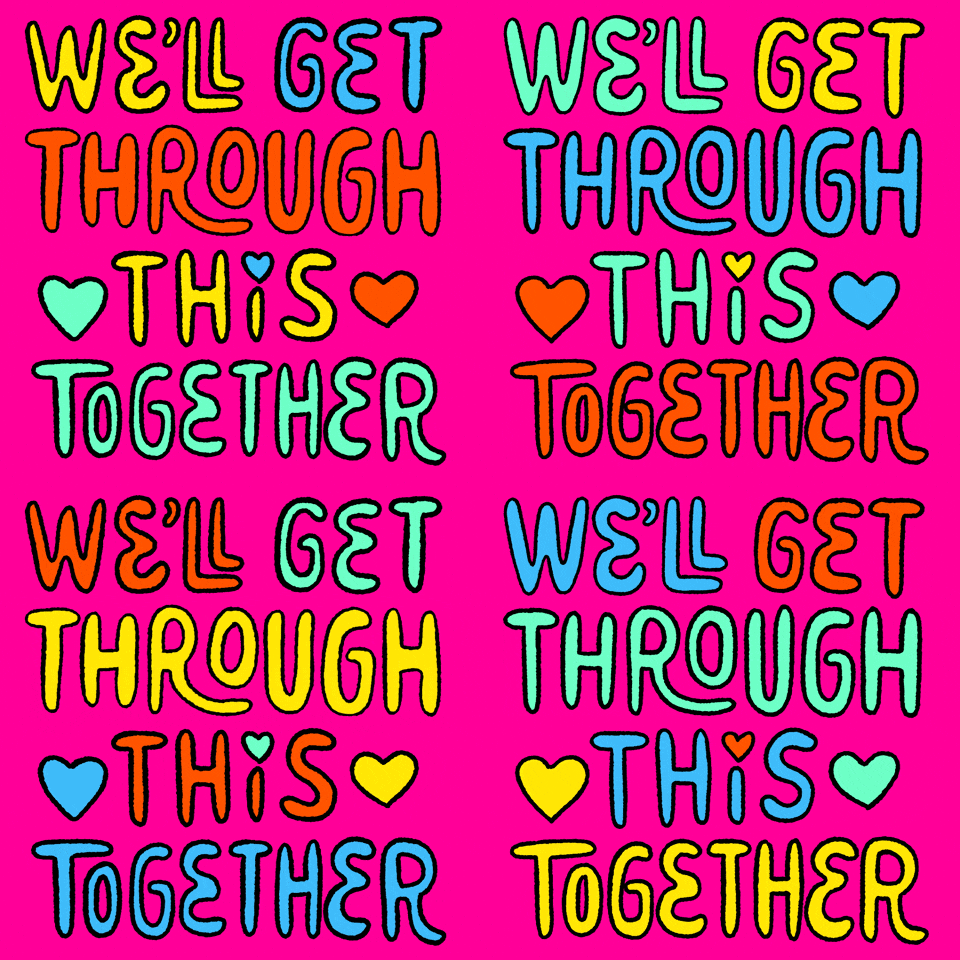
I leave you with these affirmations
🌿 Affirmations to Manage Loneliness 🌿
This feeling is temporary; I am creating new connections each day.
I am worthy of love, friendship, and deep connection.
I enjoy my own company and am learning to feel at peace within.
The right people are finding their way into my life.
My presence matters, and I am valued more than I know.
Take care my dear friends and talk soon,
Lavender the Herbal Fairy 🧚🏾🌟
P.S. I really enjoyed the "Blinded by My End" episode on the show Midnight Gospel where Clancy talks with Trudy Goodman about finding support and the importance of social connections. Trudy emphasizes that everyone needs support and that connecting with others can lead to a new outlook on life. The show is far-out if you haven’t seen it before, just a heads up.
P.P.S. Earthgang has this song called Strong Friends and it also speaks to how we need to do a better job checking-in with each other.
shrinking violets do bloom is a reader-supported publication. To receive new posts and support my work, consider becoming a free or paid subscriber.
Comments
Nothing yet. Say the first thing.
Sign in to join the conversation.