
FIVE PHILHISTORY NUGGETS
I am very excited about the arrival of artist J. Meejin Yoon’s FloatLab, a semi-submersible art installation and observation station floating off of Bartram’s Garden in the Schuykill River. FloatLab made me reflect on my relative dearth of knowledge about Philadelphia’s water history—crafts, streams, treatment, dams. I took to the good old Internet, and was thrilled to find WaterHistoryPHL, a collaboration between the Philadelphia Water Department and local historian Adam Levine that explores the Department’s copious historical records. I perused Levine’s historical essays, checked out PDFs of the Water Department’s newsletters and annual reports, and am beginning to develop an appreciation for just how complicated the management of the Schuykill, Delaware, and their many tributaries has been over the last three-odd centuries!
I’m a big fan of director Alan Parker’s 1982, Northern California-set Shoot the Moon, which I watched last year on the elliptical following the passing of Diane Keaton (she’s unreal in the movie). So I decided to throw on Parker’s Birdy (1984) this week—an early-1960s-Philadelphia-set story about an unconventional friendship between a jock (Nicolas Cage) and a loner who becomes increasingly obsessed with birds (Matthew Modine). The movie is both devastating and funny and has one of the best endings I’ve seen in a long time (I will say no more!). Here’s a rental link on YouTube Movies. There are mesmerizing shots of West and North Philly, and Parker penned a fantastic essay on his personal site about his work scouting locations, even recounting a visit to the set by recently-inauguarated Mayor Wilson Goode. I am also planning to read the source text, a 1978 book by Philly-born William Wharton, a prolific author, painter, and art collector—Main Line Today’s writer J.F. Pirro wrote an epic profile of the late Wharton’s rich life (and the subsequent struggle to save his art collection) in 2024…
You’ve got to love the colorful characters of Philadelphia’s legal firmament—mob lawyer Bobby Simone’s memoir, which I Nuggeted back in Archiveadelphia’s infancy, is one of my all-time favorites. I was happy this week to discover another local lawyerly biography, the 1960 The Worlds of Chippy Patterson, by former Inquirer reporter and Philachronicler Arthur H. Lewis. Patterson (1871-1933), from an elite Main Line family, opted to defend Philly’s most downtrodden citizens, often operating out of lodging at the Bellevue (!). I’ve only just started to dig into Lewis’s account of Patterson’s astonishing career (125,000 cases, by one account), but I’m feeling inspired by his passionate embrace of public defense. The book is available to borrow on Archive.org
I have continued to search for new Philly soundtracks and struck gold this week with Duke Williams and the Extremes, a group formed at the legendary Sigma Sound Studios on North 12th Street in 1973. Williams, a guitarist from Trenton, NJ, formed the Extremes with Philly session musicians at Sigma. As a lover of the torch song, I’m partial to the group’s balladic “Clouds,” which offers a searing lead guitar and a unique mix of Southern rock instrumentation, funky reverb, and beautiful harmonies. Take a listen!
As the Bellevue Hotel’s Historian-in-Residence, I am thrilled by the opening this week of Mr. Edison, the new supper club in the former Polo/Ralph Lauren space at the Bellevue. Much of my Bellevue research has focused on the hotel’s rich culinary history, from the old-world Stratford Gardens, to the Nouvelle French Versailles, to the jazz club Zanzibar Blue—and now a new player in a 120-year legacy enters the fold! The opening also offers an opportunity to reflect on Center City’s broader Restaurant Renaissance over the last half-century, a miraculous development covered in local food historian Stephen Nepa’s wonderful 2012 Temple University dissertation “There Used to Be Nowhere to Eat in This Town: Restaurant-Led Development in Postindustrial Philadelphia.” I’ve learned a ton about Philly Phood from Dr. Nepa’s scholarship—you can read the full dissertation here!
PHUILDING OF THE WEEK: THE BLACK SHEEP PUB, PART II
Bars are central to the cultural lifeblood of any American city—places to congregate, to imbibe responsibly and recklessly, and to celebrate milestones like America’s impending 250th birthday (sometimes, if only temporarily in the Quaker City, until 4AM).
Since our move from Brooklyn, Zara and I have been astonished, however, by:
Just how much chattier and civically-minded Philadelphia bars are, on the whole, than their Gotham counterparts. We have learned a whole lot about City Council, trash collection, long-forgotten mafia figures, and little-known museums from raconteurs at watering holes than we ever expected.
Just how academically Philadelphians analyze the bar as an institution. Back in November, we attended a sold-out Tavern Night at the Museum of the American Revolution, where we heard from Dr. Brooke Barbier about Thomas Jefferson’s drinking habits while he wrote the Declaration of Independence and listened to Dan Wheeler discuss his incredible restoration of the Man Full of Trouble bar, a Spruce Street landmark that first opened its doors in 1759. And near the top of my reading list is Irene Levy Baker’s recently-released Cheers to McGillin’s, a history of the Center City tavern that has been rocking and raving since 1860.
Even with all of these legendary saloons, I have yet to encounter a bar with a more rollicking, idiosyncratic, and Phlamboyantly Philadelphian history than 247 South 17th Street—the current site of the Black Sheep Pub & Tavern, which is currently battling back from two debilitating overnight fires.
In last week’s Archiveadelphia, which you can read here, I examined architect Frank Miles Day’s design for 247 (and its entwined next door neighbor 245) and the surreal political and personal odysseys of its early inhabitants, Edward Randolph Wood and J. Edward Addicks. This week, I dive into how 247 became a flashpoint for debates over alcohol, Frank Sinatra, and gay rights.
When we left off, Addicks, the gas magnate, perennial political candidate, and incurable romantic, was struggling to hold onto 247, even as his net worth and reputation continued a decades-long free fall following a very public divorce and his never-ending, expensive quest for a U.S. Senate seat.
The house ultimately ended up in the control of Addicks’ adopted daughter Rosalie Wilson, who leased the space in mid-1907 to the mining engineer and socialite Edmund J.D. Coxe and his wife Eliza. Almost immediately, the Coxes began opening up 247 to parties, hosting a Halloween 1907 bash for 30 friends, complete with a vaudeville show.
The burgeoning party spirit of 247 waned somewhat over the next two decades. In 1910, the Coxes vacated and Rosalie Wilson sold the house to a seemingly less socially-minded local doctor, J. Cardeen Cooper. Eight years later, Cooper passed it on to another doctor, the ENT (and a particular tonsil expert) Curtis Eves.
At the end of the 1920s, after its staid doctor days, 247 fully launched into its new era as a bar.
The newspaper-bound property records are scant, and I tragically don’t have time for a trip down to the Department of Records, but I can see that a woman named Reba Fixter came into control of 247 in 1929. Fixter served as the manager of the 15th and Chestnut branch of Ewart’s Cafeteria, a popular Southern chain. From her perch in the city’s dining establishment, it’s totally plausible that Fixter orchestrated the arrival, in October 1932, of the Latimer Club, a members-only establishment in 247 that catered to the city’s upper crust.
The proprietor, another somewhat mysterious character named Max Schulberg, dressed up 247 with Oriental rugs and oil paintings, and opened up the stately home to the city’s upper crust.
This was the tail end of Prohibition, and Philadelphia’s Director of Public Safety, a patrician engineer named Kern Dodge, was on the prowl for speakeasys. Dodge was the son of another engineer, James Mapes Dodge, whose Link-Belt Construction Company had a phamed, phuturistic Philly phactory. The Dodges lived in a dramatic hilltop Germantown mansion, and local painter-king Thomas Eakins even made a unifinished portrait of a teenaged Kern, in 1898, entitled “The Young Man” (now housed at the Philadelphia Museum of Art!).
Dodge was a perfect personification of the Philadelphia establishment cracking down on illicit alcohol and patrolling the city for roguish characters:
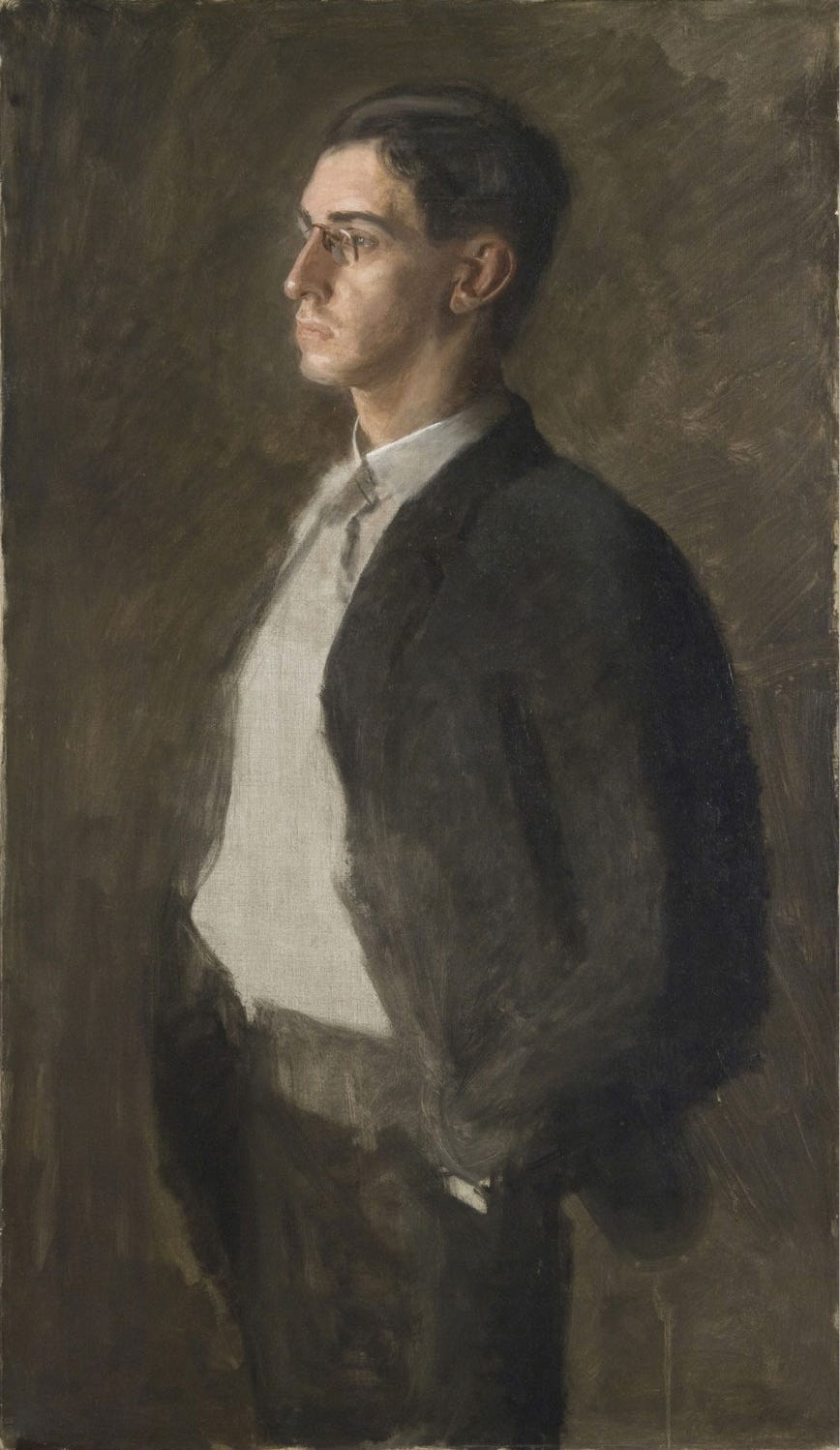
Upon taking office in January 1932, Dodge unleashed a flurry of busts, raiding 165 separate speakeasies in his first weekend in office. Still, critics argued that he wasn’t doing enough, and that he was in the role only because he was close personal friends with Philadelphia’s Mayor, J. Hampton Moore.
Perchance that is why, only two days after the Latimer Club opened, police officers smashed the windows of 247, barged in, and headed straight to the bar, where they found four half barrels of beer, ten quarts of whiskey, and a slot machine.
Three weeks later, Dodge personally directed a raid, wearing a pistol belt on his full dress suit. The officers arrested some 25 patrons and Schulberg, the mysterious proprietor, who was held on $2,000 bail. On this return visit, the raiders also found an index card catalog of clients, which one policeman forebodingly said included names that “would surprise you.”
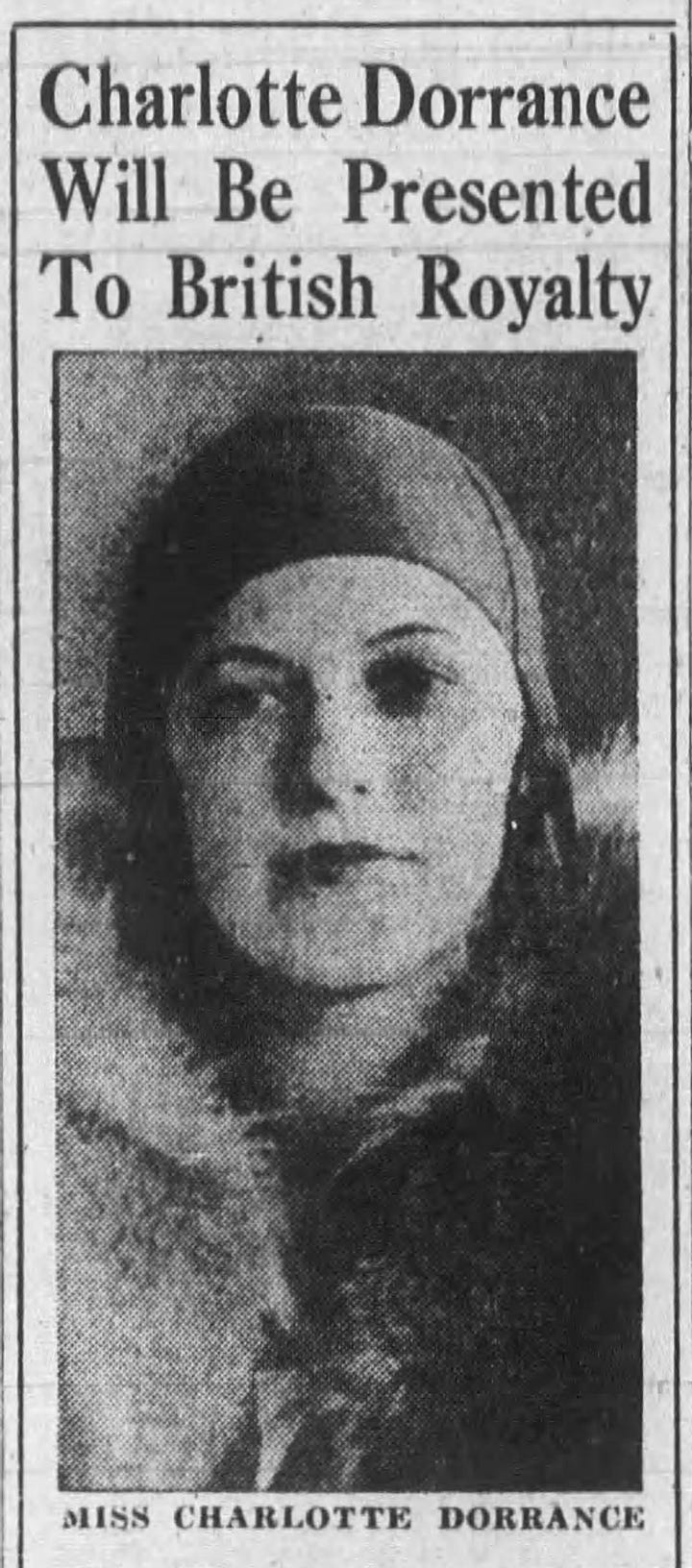
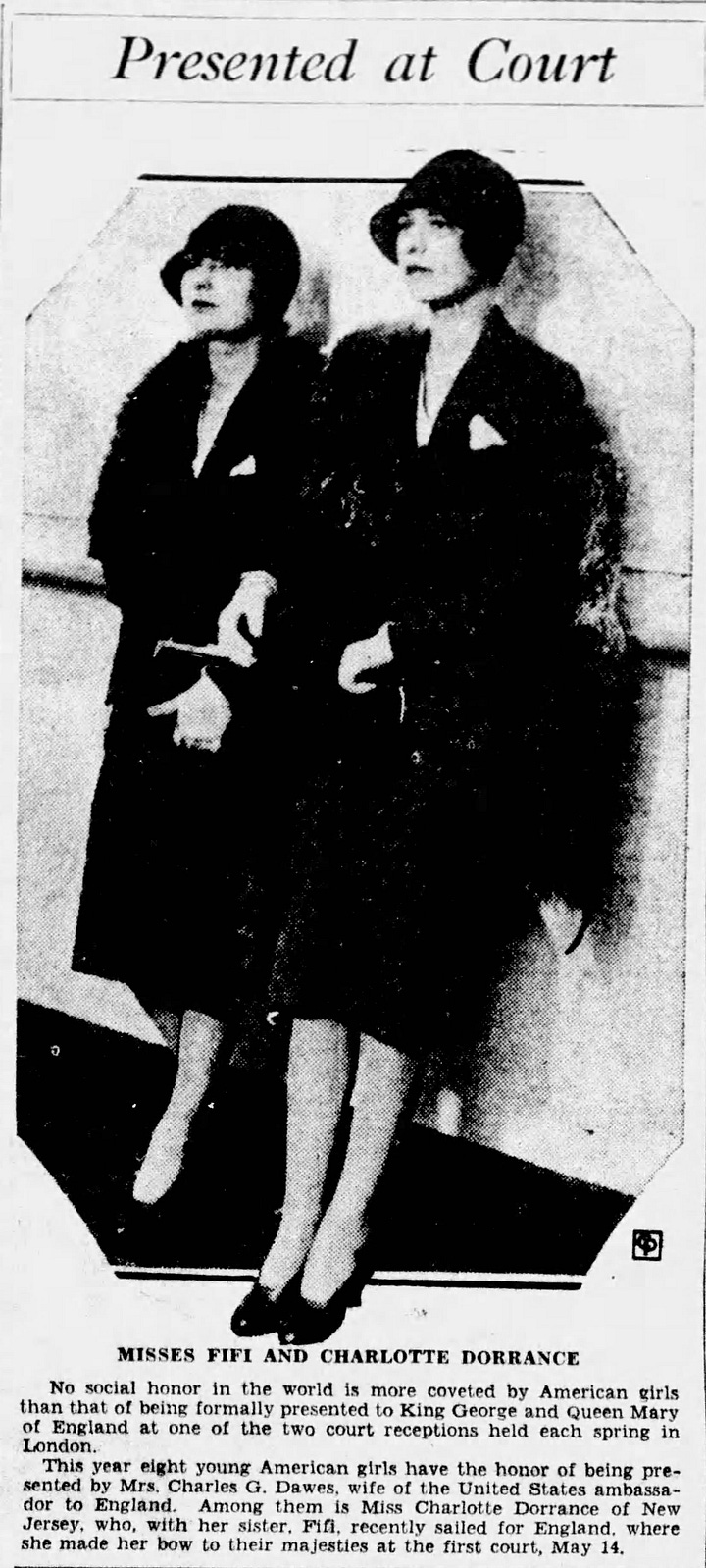
In October 1933, the raiders returned, and this time they turned up a surprising denizen indeed: Charlotte Dorrance, the 20-year-old daughter of the late John T. Dorrance, the hundred-millionaire founder of the Campbell Soup company. Ms. Dorrance was arrested and sent across town to 24th and Wolf—the nearest police station with a “matron” in residence.
Dorrance was among the wealthiest heiresses in the United States. She lived at her family’s sprawling Tudor Revival mansion in the leafy Main Line suburb of Radnor—a gem of a house designed by local architect Horace Trumbauer. In 1930, she had even been one of eight American debutantes presented to King George V and Queen Mary at one of the British royals’ bi-yearly official court receptions. No matter…you booze, you lose:
Yet just as quickly as the Latimer Club became an infamous site of elite Prohibition-flouting, it also became a much-vaunted, totally above-board nightclub as soon as repeal came through in December 1933…if only Charlotte had waited two months!
The Latimer Club redecorated, dropping the carpeted mansion pretense for an “English tavern style,” complete with a second-story dance floor. The new Club leader, Wes O’Neill, came from the Club Stratford, the in-hotel dance club at where else but the Bellevue Hotel!
The legal Latimer Club cycled through different owners and MCs over the rest of the 1930s and 1940s, hosting some of Philly’s most talented singers. One 1937 bill advertised Jean Sargent, with a whole swank motif of a martini glass groggily wearing a nightcap:
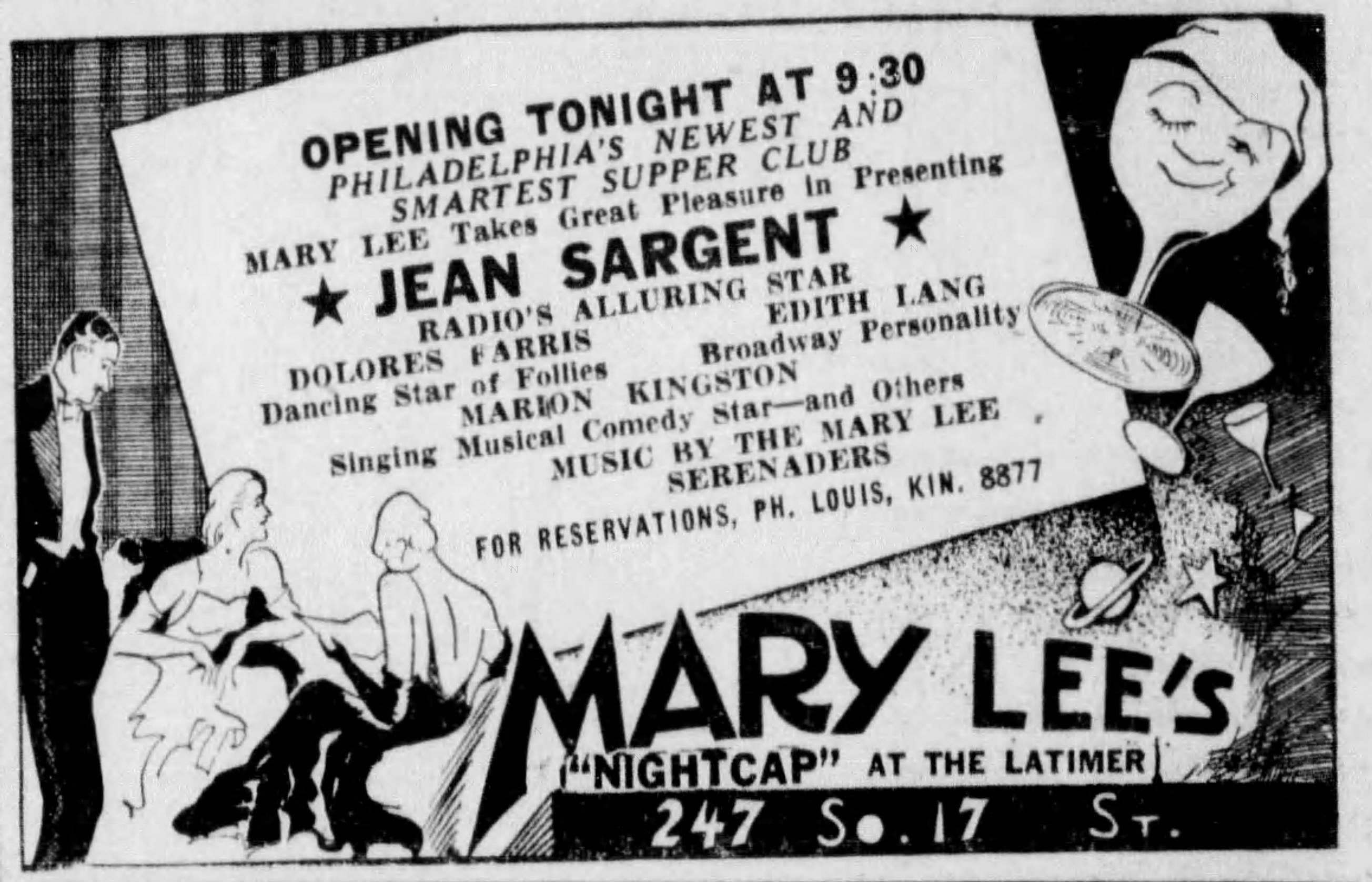
Sargent, born Jean Scull, was a Philly local who had made waves as a local radio-centric columnist for the Philadelphia Record before getting behind the microphone herself and getting some serious New York radio airplay. Here’s her rendition of the popular “Lyin’ in the Hay”:
And in 1938, songstress Toni Lane graced the Club. By this point, 247 was sporting a fresh “Blue Room” theme, courtesy of another new leader named Max Behman:
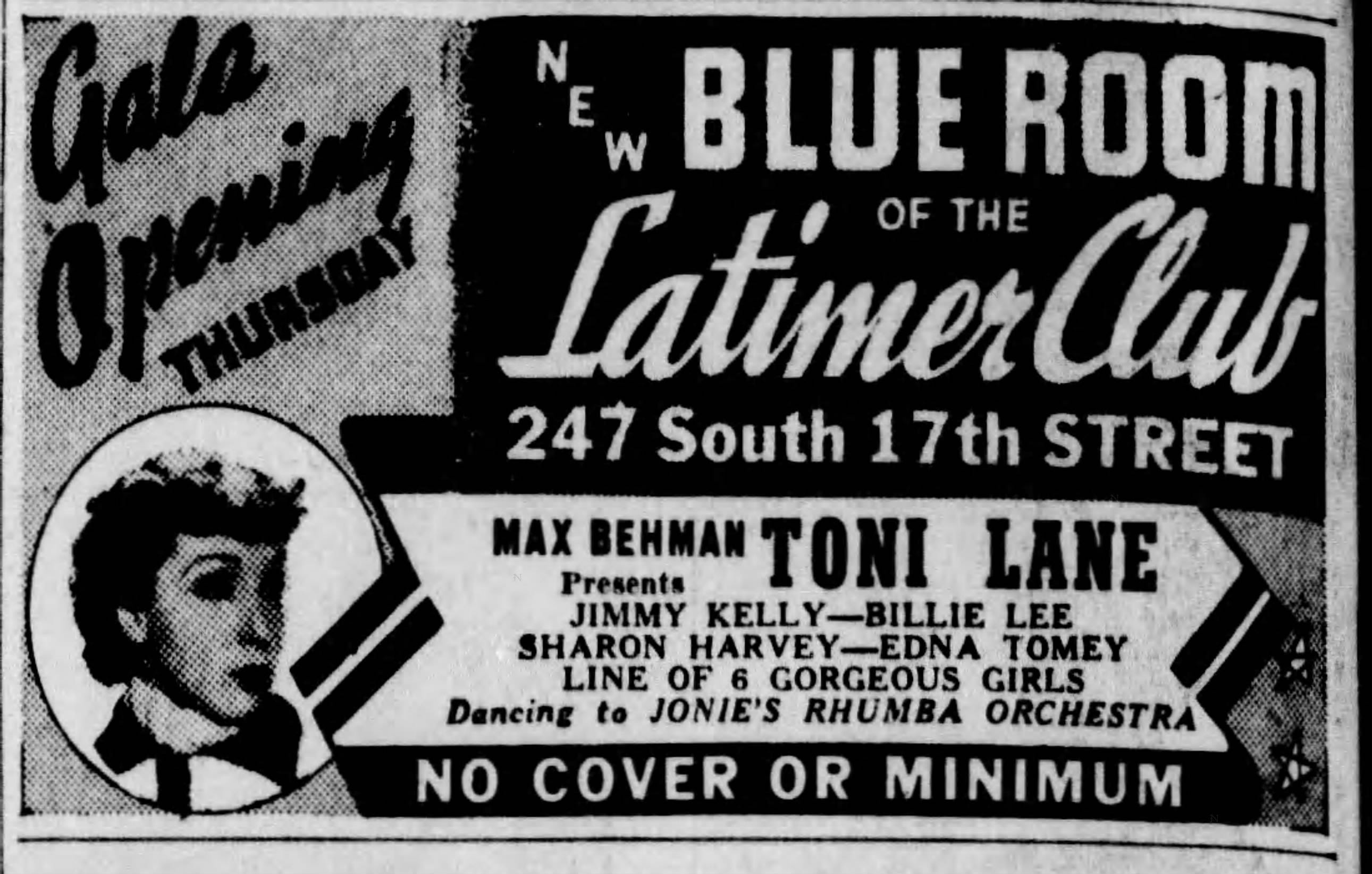
A search for Lane’s career led me to a 1943 patriotic-but-tonally-bizarre WWII track called “When Hitler Kicks the Bucket.” The final line: “Life will be so hotsy-totsy/ On the day that nasty Nazi / Is dead and gone.” Here’s the corresponding “Soundie,” an early form of music video offered on rear-projection jukeboxes:
Yet even in the booze-positive age, the Latimer Club struggled to stay out of trouble. Behman seemed to have a predilection for illegal horse race betting. In 1939, police arrested six of his associates, who were operating a remote horse betting center with direct lines to several tracks (very The Sting). The raiders returned over the next few years, finding evidence of horse-betting each time.
Behman, perhaps due to his horse obsession, was gone by the early 1950s. In his stead came “Big Bill” Rodstein, who had risen to nightclub ownership from parking cars for Center City clubbers by getting in on the jukebox and coin-operated arcade game field. Before he bought the Latimer Club, he operated another spot called, appropriately, “Big Bill’s,” a few blocks from 247 at Juniper and Locust. Upon the Latimer acquisition, he sold the OG “Big Bill’s” and five years of name rights to Benjamin Cossrow, who also operated a jazz club called The Showboat on Lombard near Broad.
Rodstein initially refused to stop using the “Big Bill” name despite the sale, putting up a big neon sign out front rechristening the Latimer Club as “Brother Bill’s Latimer Cafe”:
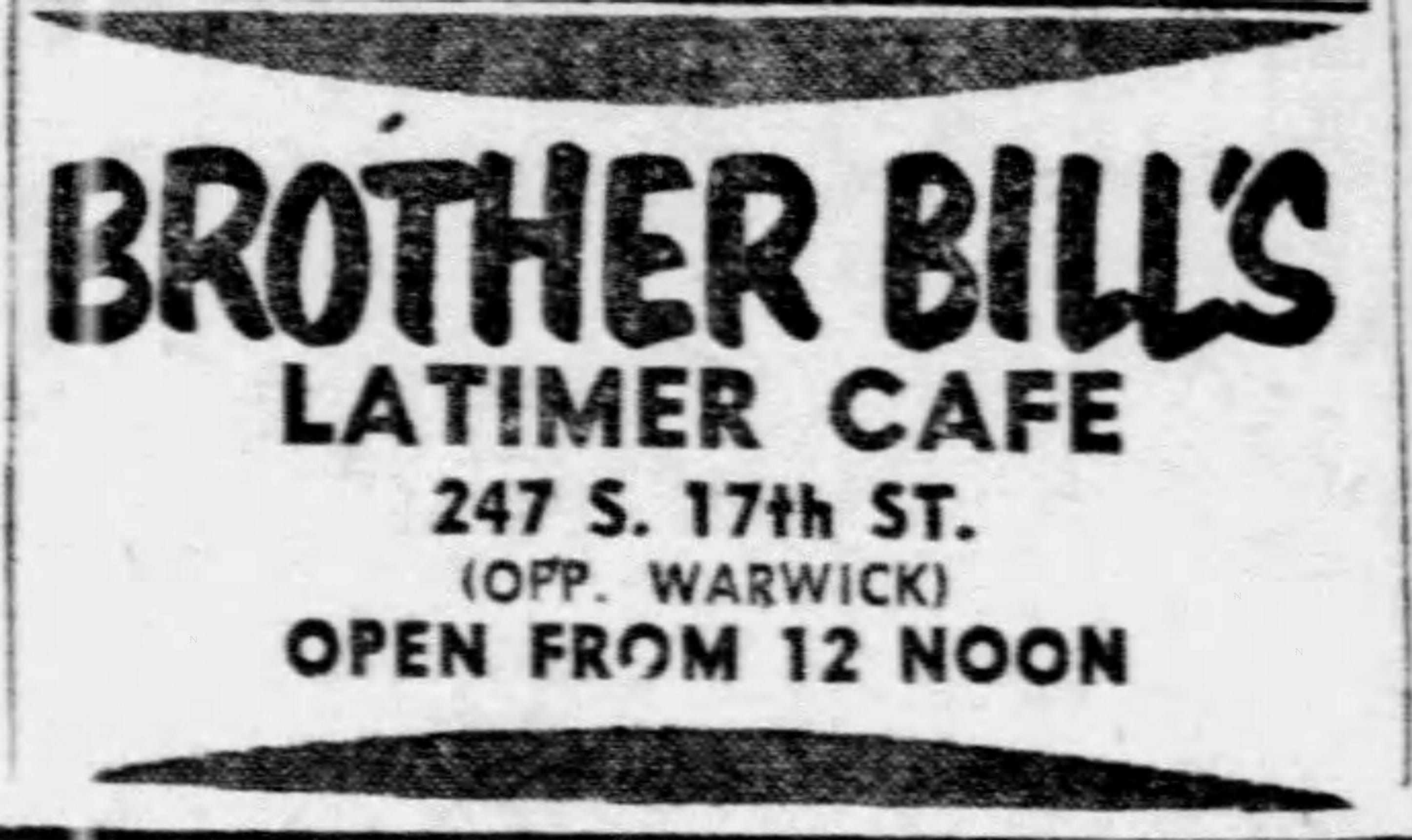
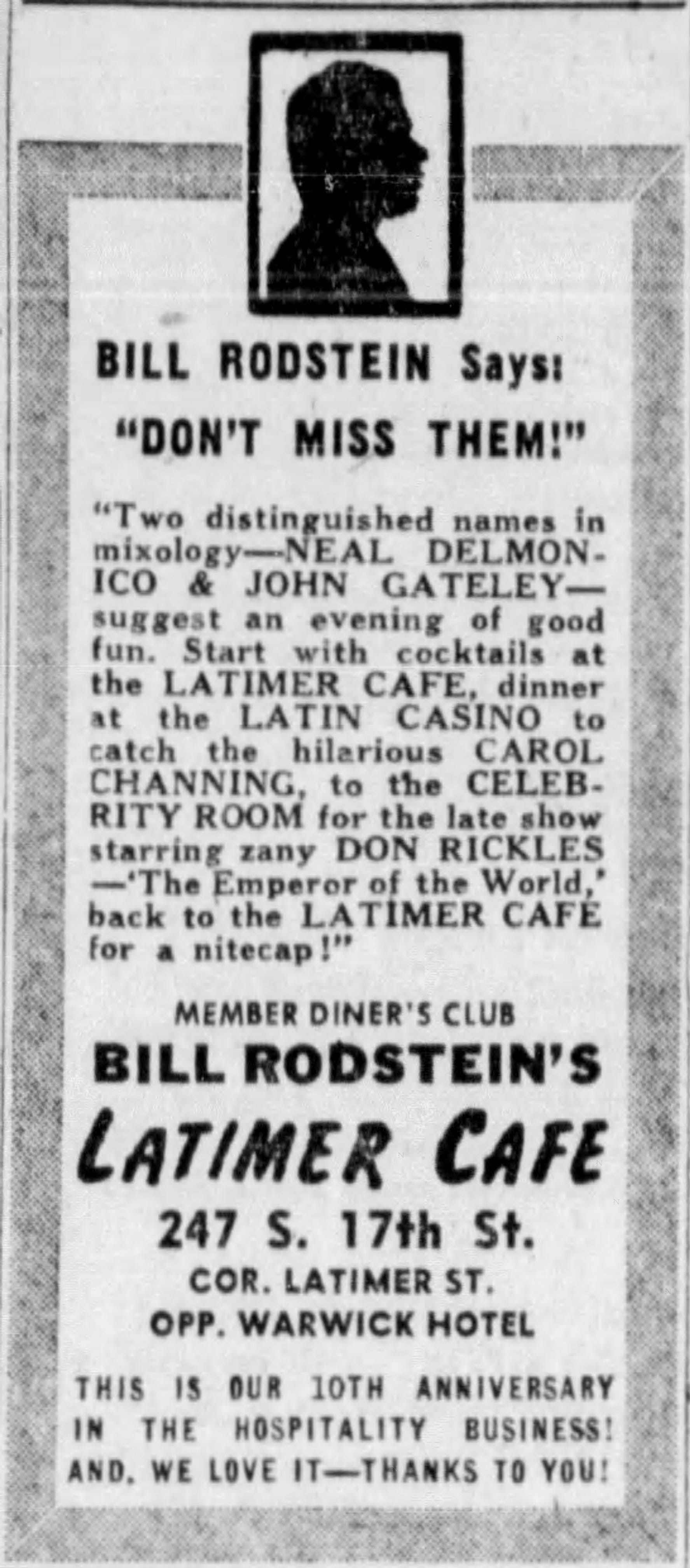
Cossrow was unamused and sued Rodstein for violating their sales agreement. Rodstein reverted to the tried and true Latimer Club name, and spent much of the 1950s running the establishment without much fanfare. In 1957, “Big Bill” regained his naming rights and promptly dropped ads in the local papers reclaiming his moniker. One of these promos also captured the celebrity-heavy buzziness of postwar Philadelphia, with Big Bill’s bartenders suggesting that Latimer Club drinkers also head over to the pre-Cherry Hill, famed Latin Casino at 1319 Walnut to hear songstress Carol Channing’s dulcet tones and to Juniper Street’s Celebrity Room to hear comedian/roastmaster Don Rickles’ set (shout out to my father-in-law Harvey Sternberg, who often sends me clips of hilarious Rickles barbs):
In July 1958, Big Bill decided to shake things up dramatically—and straight toward Old Blue Eyes. Big Bill recognized that Frank Sinatra was on the comeback trail, recovered from a career downswing after his Oscar-winning turn in the Pearl Harbor drama From Here to Eternity, churning out classic albums with Nelson Riddle’s famed orchestra, and causing pandemonium with his ever-growing Rat Pack.
Big Bill transformed the Latimer Club into a Sinatra shrine called Sinatrama, complete with three 100-record jukeboxes that played exclusively the Chairman of the Board (more than 800 disks worth) and wall-to-wall posters and memorabilia. The barman asked the singer’s permission for the whole concept, with Sinatra responding via telegram, “Thanks! Sounds like a gasser!”*
*Years later, Philadelphia press agent Sam Bushman, a close friend of Big Bill, claimed he convinced a Los Angeles bra and girdle salesman to fake the approving Sinatra telegram—seemingly without Big Bill’s knowledge.
Big Bill credited Frank Sinatra with much of his own early jukebox industry success, even though he hadn’t yet crossed paths with the singer. “I never met him,” he told Billboard in 1965. “I didn’t even know who he was. But I knew that I liked his singing better than any other singer. I loaded all my music machines with records that featured Sinatra’s vocals with the big bands. And my confidence paid off because the Sinatra singing paid off in the play at all of my juke box locations.”
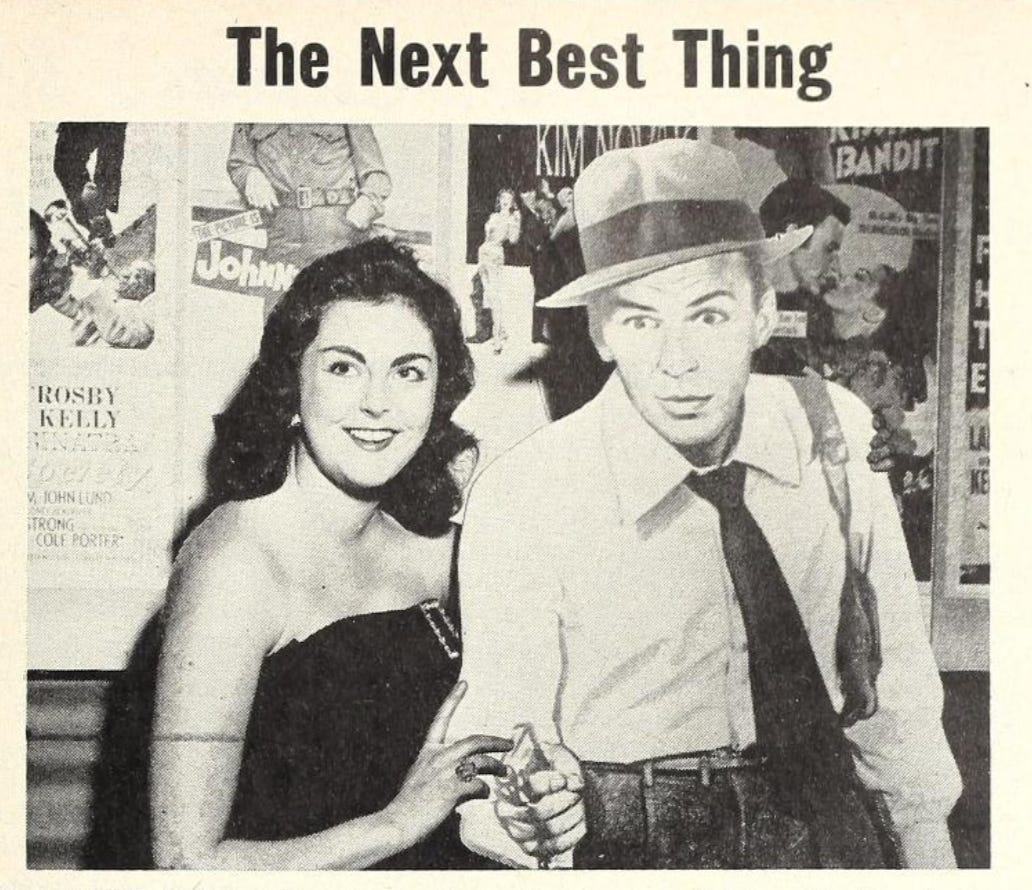
Sinatrama was a smash, with Frank fans from across the country stopping in to pay tribute to their idol. Soon, there was a Miss Sinatrama, Toni Williams, who posed with a life-sized Sinatra cutout for a September 1958 Cash Box issue:
Big Bill spread the Sinatrama Spirit far and wide, with ads featuring cartoonish renderings of Sinatra that bordered on the horrifyingly vampiric:
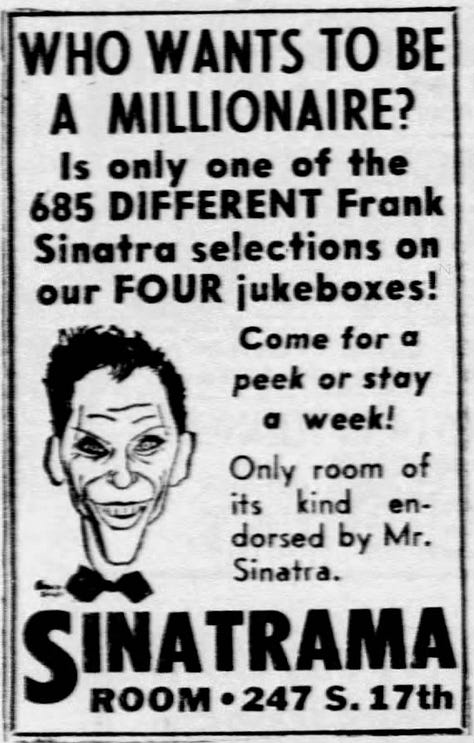
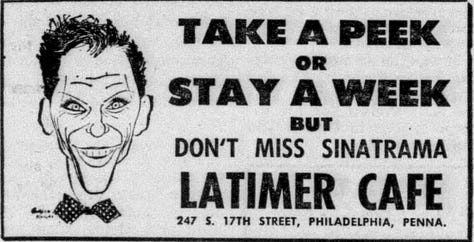
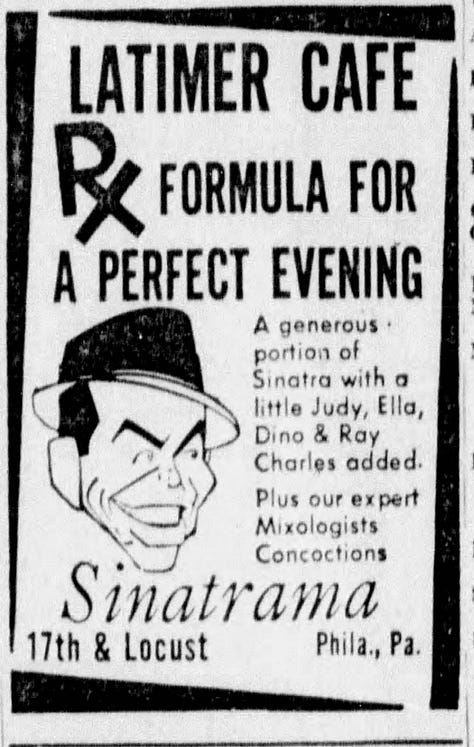
Sinatra kept abreast of the developments back in Philadelphia. When Big Bill visited Los Angeles in December 1958, local sportswriters orchestrated a brief meeting between the bar-man and the singer at MGM Studios. Big Bill and Sinatra had an interview, which Rodstein turned into a 45…actively in search of a copy!
Frank himself did not make a pilgrimage to his temple, but many of his affiliates and fellow super-celebrities soon showed up at Sinatrama:
Big Bill allowed Eddie Hodges, Sinatra’s 12-year-old co-star in the 1959, Miami-set Frank Capra film A Hole in the Head, to take local press interviews from inside the bar.
The aforementioned Don Rickles was a mainstay, often heading to Sinatrama before sets alongside Jerry Blavat, the late, great Philly DJ known as the Geator.
In Philly to promote his safari-centric film Hatari!, John Wayne, staying at the Warwick Hotel across the street, visited Sinatrama alongside co-stars Red Buttons and Bruce Cabot and actress Stella Stevens.
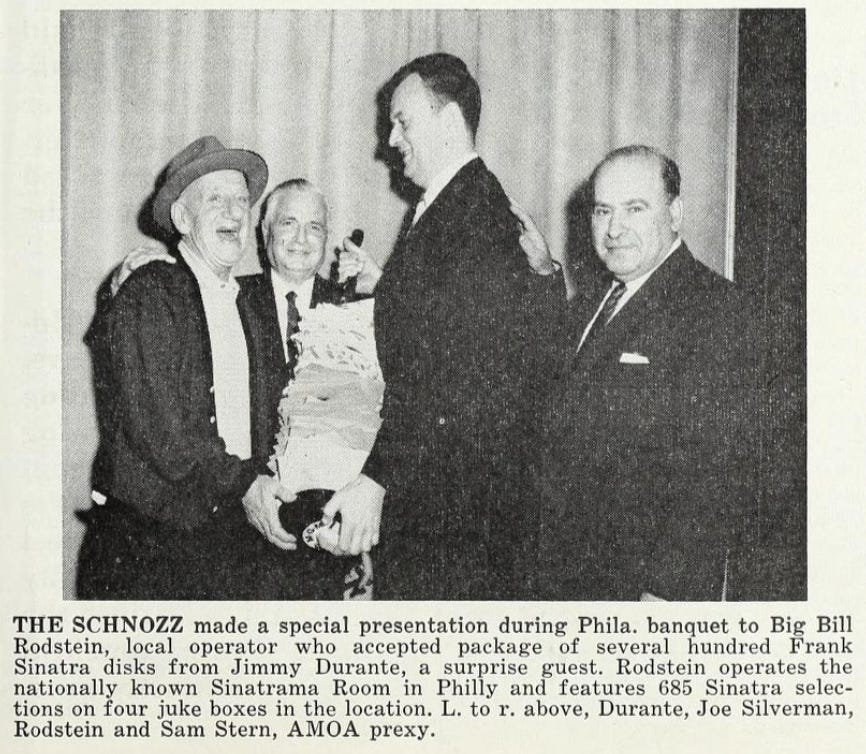
Actor Jimmy “The Schnoz” Durante presented Big Bill with a slew of additional Sinatra records during a Latin Casino conference of the Amusement Machine Operators of Philadelphia, which Rodstein had once headed:
Big Bill parlayed Sinatrama’s success into all manner of civic initiatives. After Philadelphian Manie Sacks, the Columbia Records executive who signed Sinatra in 1942, died of leukemia, Big Bill even orchestrated a fundraiser for a medical philanthropy established in Sacks’s memory, hosting a listening party of rare, unreleased recordings of Sinatra and Tommy Dorsey’s orchestra from early in the crooner’s career.
In August 1959, Big Bill presented the first “Sinatrama Award for Alertness and Initiative” to two guards who stopped a holdup at a nearby hotel.
And by 1961, Big Bill was sending out a weekly Sinatrama newsletter covering Frank’s movements (Please send me these if you happen to have been in Philly in the early 1960s and received one).
When the Rat Pack played an early morning show at the famed 500 Club in Atlantic City in August 1962, Big Bill got his hands on a bootleg, which he played twice daily at Sinatrama.
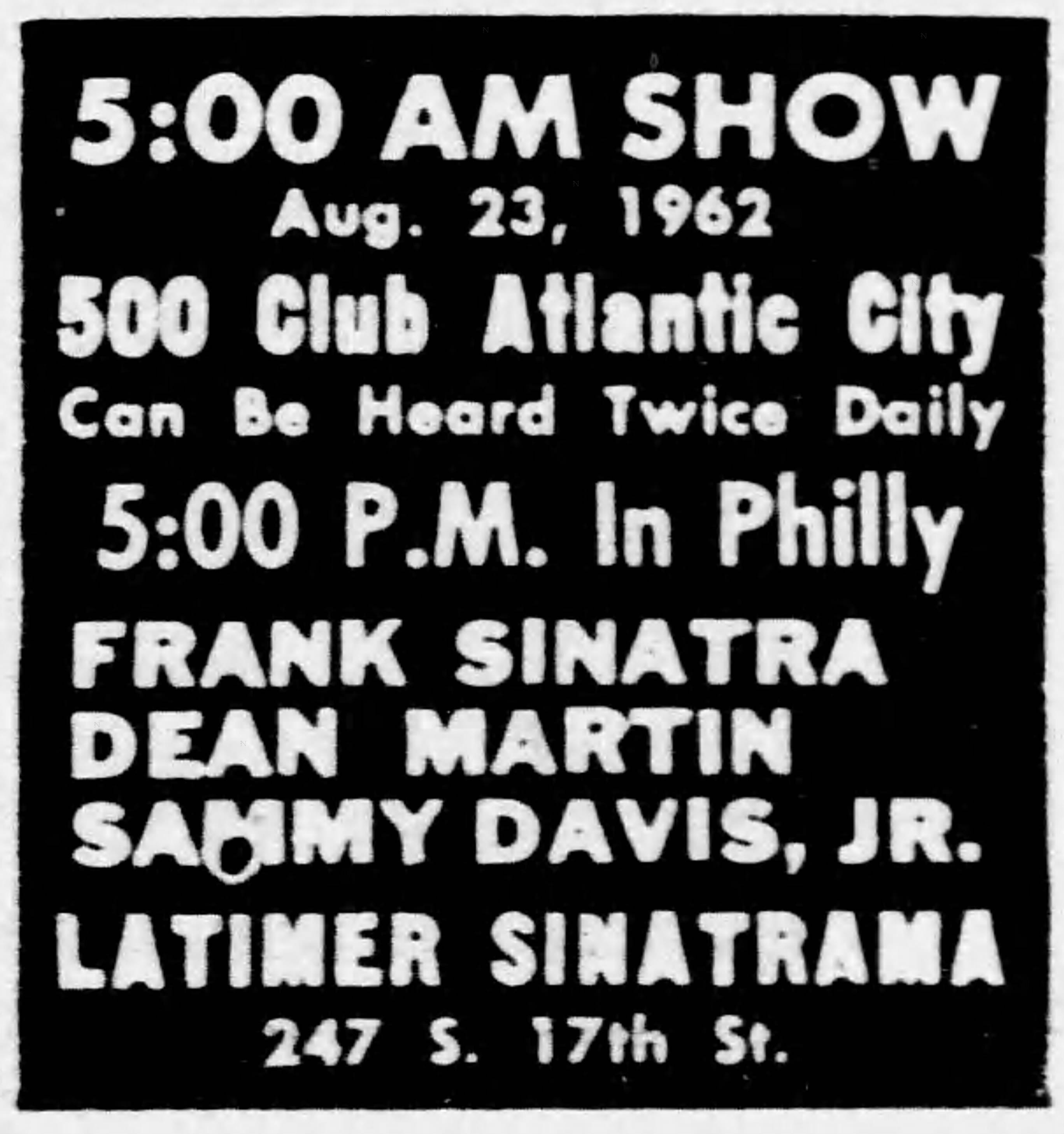
As with his Sinatra interview, Big Bill even pressed a record of the show, available today at the Dean and Frank’s collectibles website for a cool $150 (I would not necessarily trust this site)…or you can hear it in its entirety here, complete with Big Bill’s introductory remarks. To be real, it sounds like Frank may have had some cocktails before this one…he slurs a bit on “A Kick Out of You.” He still turns a helluva phrase, though:
Big Bill even served on the committee for an October 1963 civil rights concert benefit at Carnegie Hall featuring Sinatra and fellow singer Lena Horne. The money went to the Student Non-Violent Coordinating Committee, and Dr. Martin Luther King, Jr. introduced the performers.
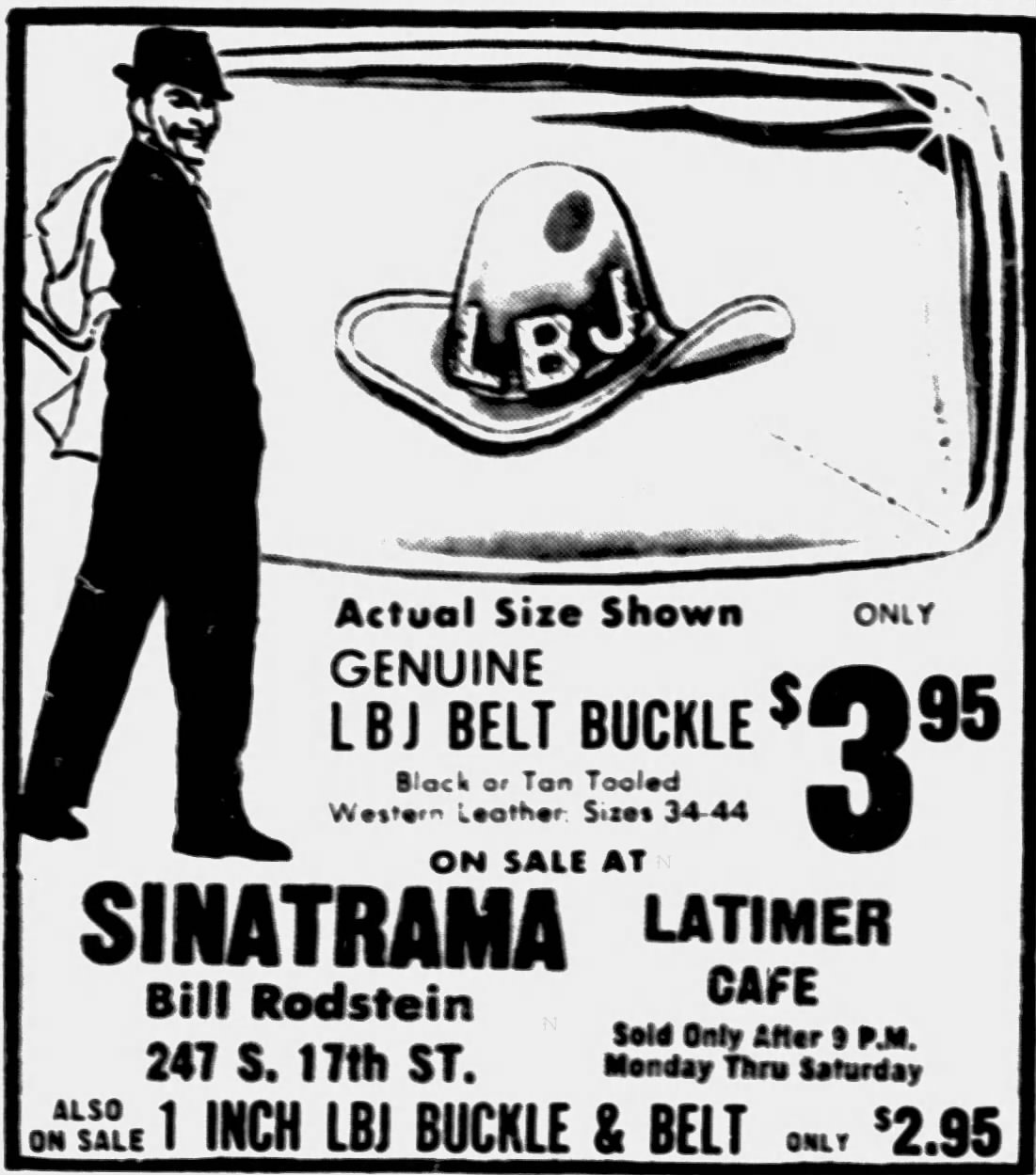
Despite Sinatra’s famously icy relationship with President Lyndon Baines Johnson, Big Bill, always one to capitalize on kitsch, began in 1964 offering Sinatrama lovers LBJ belt buckles featuring a Stetson Hat design:
Sinatrama took a hit in 1969, when Big Bill died at age 57. Big Bill’s widow Michel, a former Broadway dancer, kept the magic alive for a couple more years, but closed up shop in 1971…a metaphor of sorts for the rise of rock and roll and the hippie movement supplanting Old Blue Eyes’ 1950s sleekness.
Michel Rodstein put 247/Latimer Club/Sinatrama on the market, and a former Philadelphia police officer named Eugene Inforzato snatched up the Phuilding.
This sale was not without controversy. Three years before the purchase, in 1968, Inforzato, still a cop at this juncture, had orchestrated a $700 bribe in a men’s room from a Northeast Philadelphia gambling kingpin named George Illgas—allegedly to “go easy” on the numbers trade. Another officer was ostensibly in on the deal with Inforzato, but quickly reported the corrupt bargain to his superiors. Inforzato and Illgas were convicted of corrupt solicitation and bribery, though Inforzato ultimately got off pretty easy—with a suspended sentence and a $200 fine—because of his good reputation on the force.
Still, this was a decided problem for Inforzato, who quit the force. The Liquor Control Board granted Inforzato a license for 247 anyway, only to get a bunch of post-facto heat for the approval, which was supposed to only go for proprietors “in good repute.” There were shades of the speakeasy days still lingering! Oh, the 1970s Philly period petty crime dramedies just waiting to emerge…
In any case, Inforzato secured the space and soon opened morphed Sinatrama into the 247 Bar, a cowboy-inflected gay bar. The shift reflected a massive boom in LGBTQ+ venues centered around Rittenhouse Square (see: The Allegro, Steps)—a mecca now mostly supplanted by the Gayborhood to the East.
The mainstream Philadelphia papers seldom acknowledged the existence of 247—and when they did, they often were openly homophobic. One 1974 roundup of local gossip somewhat snidely read, “Two guys walked out of the 247 Bar at 247 S. 17th St. the other night. One of them was wearing a leash.”
Luckily, the invaluable research hub JSTOR offers open access to the Philadelphia Gay News and New Gay Life, which include much more informative and less judgmental notices about 247 Bar.
I learned:
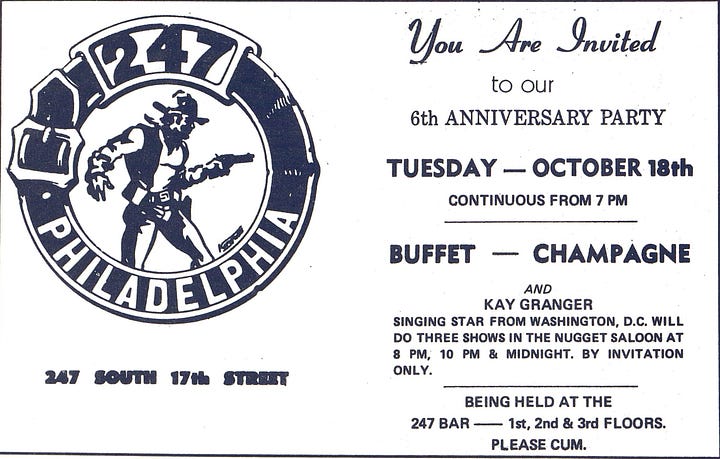
That Inforzato advertised the space as “Phila’s Only Western/Leather Bar” and that the logo showed a gunslinging cowboy encircled by a leather belt.
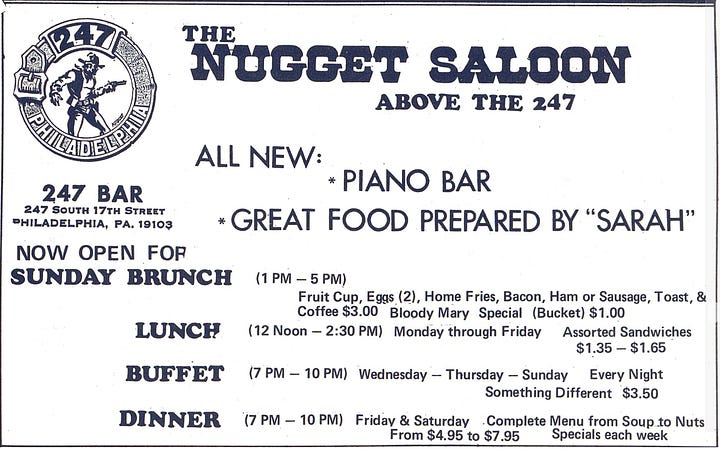
That the 6th Anniversary celebration in October 1977 featured a champagne buffet and singing from D.C. chanteuse Kay Granger, who performed in the space’s Nugget Saloon piano bar, which served a full menu, “from soup to nuts”:
That in 1980 an annex of the nearby Levi & Leather emporium opened on the second floor:
That by 1981 there were three spaces: Main floor (“lots of cruising”), Nugget, and the Corral club room.
That the Bar had a softball team in the City of Brotherly Love league…
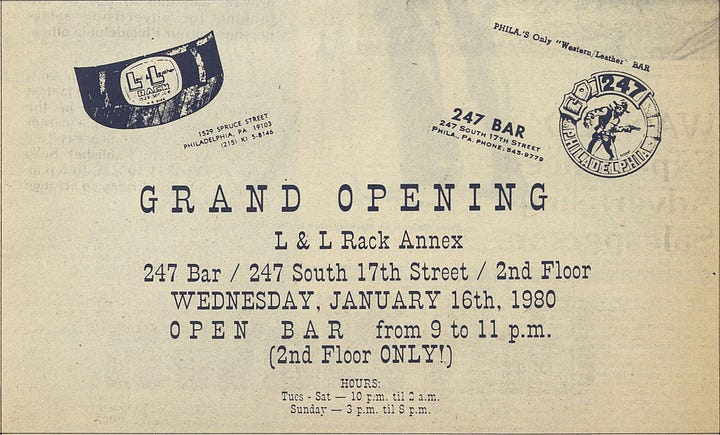
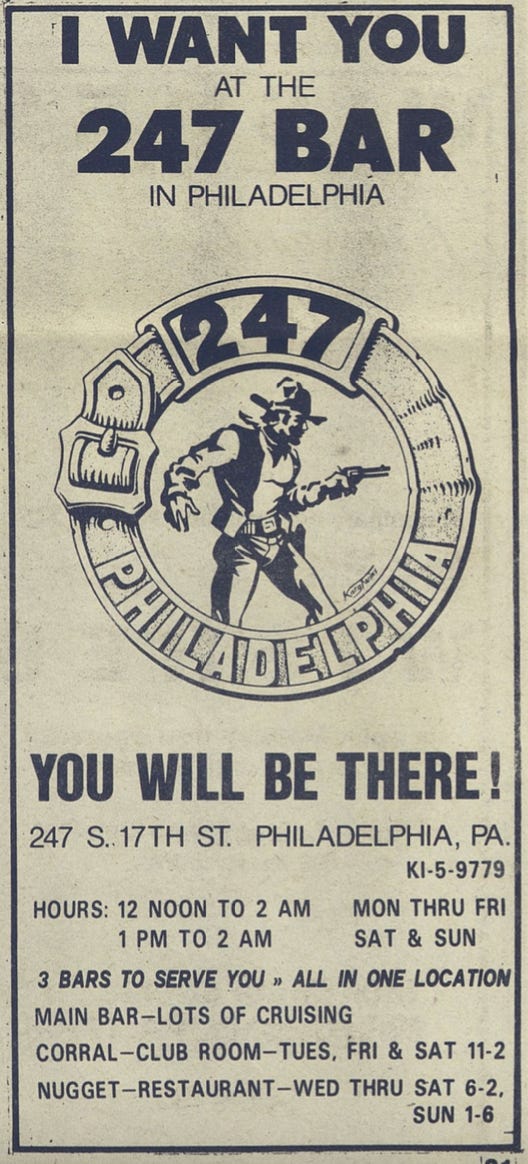
Beyond this, however, many questions remain: When did Inforzato transfer ownership? What was he like? How did 247 Bar deal with discrimination? What were other special/memorable events held there? If you have answers or stories, send them my way!
247 Bar operated until the late 1990s, after which James Stephens, Gene Lefevre, and Matt Kennedy arrived and opened the Black Sheep, even tracking down original Frank Miles Day drawings to help guide their intricate restoration of the Phuilding back to the design vibes of its early days.
Today, Stephens and Gene Lefevre (who is also responsible for the magnificent restoration of the Morris House Hotel) still operate the space, which in its latest incarnation has become a hub for Manchester United soccer fans. These fans have already raised a lot of money to get the Black Sheep back open. You can read much more about the Black Sheep in this 2018 Inquirer profile and this recent rundown on the heartwarming post-fire fundraising efforts.
I’ll grab a pint at the Black Sheep as soon as the old doors are swinging again—and I’ll mull over Frank Miles Day’s architectural brilliance, J. Edward Addicks’ Senatorial obsession, Charlotte Dorrance’s Prohibition rebellion, Big Bill’s blue-eyed bluster, and 247’s innovative Western/Leather mashup…
No posts
Comments
Nothing yet. Say the first thing.
Sign in to join the conversation.