
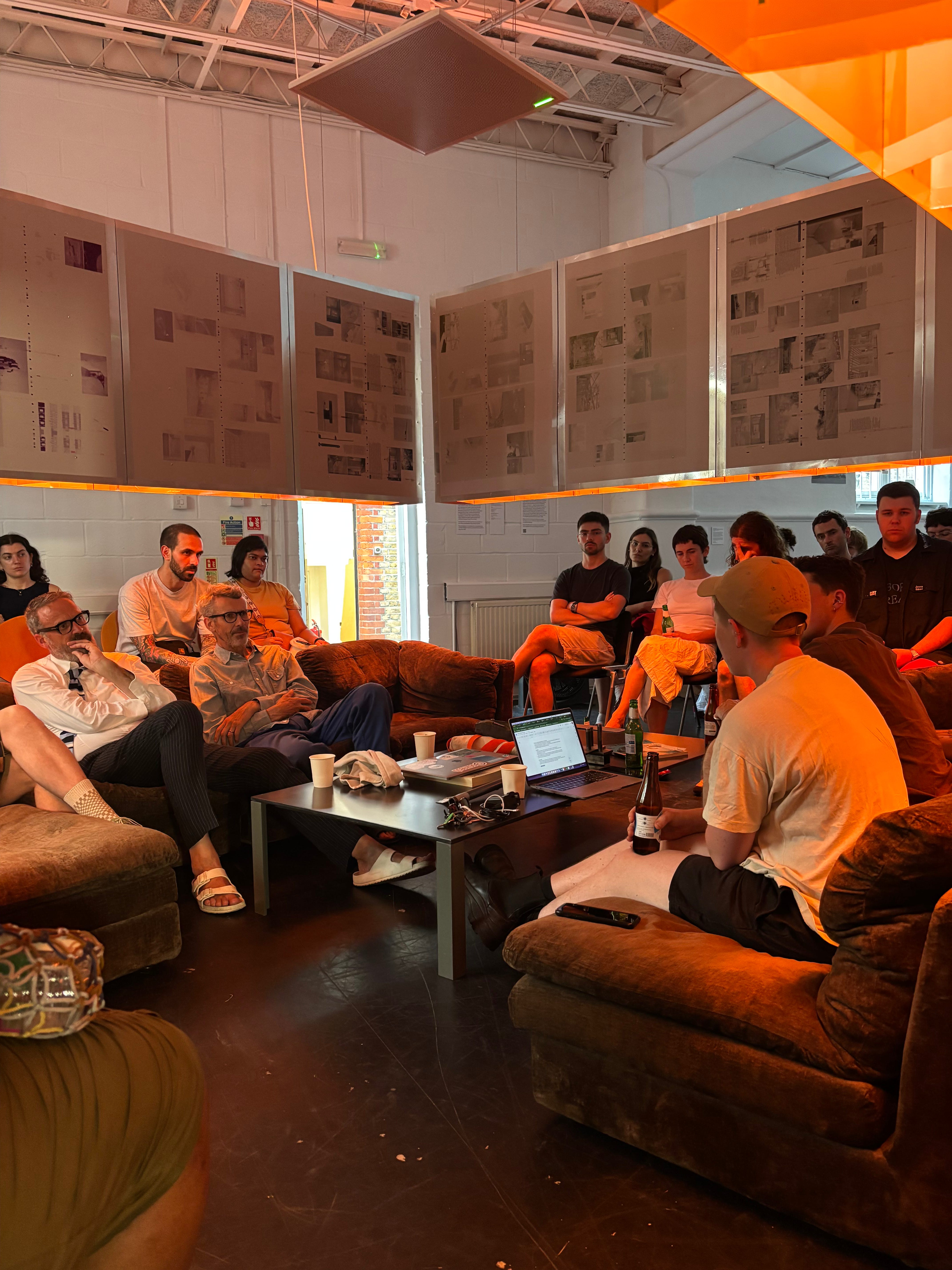
In 1996 Mark Brearley (seated far left with Michael Marriott) established the urban strategy consultancy East. The firm’s early work included the re-landscaping of Borough High Street - a project that developed from the Architecture Foundation’s Future Southwark initiative. He worked for the Mayor of London from 2001; first with Richard Rogers and the Architecture and Urbanism Unit, and then with Design for London where he led the team for the five years until 2013. The role of industry in London has been a longstanding preoccupation, which he has explored first in his capacity as an urbanist and more recently as the director of Kaymet, an aluminium tray manufacturer which operates from the Old Kent Road. Rosa Nussbaum and Jos Myles Geczy of RAFT spoke to Mark at the launch of Jigs, a pop-up exhibition hosted at POST PRESS which featured the work of makers from Blackhorse Studios and other open-access workshops, presented alongside the jigs and tooling that had enabled their production.
I have spent most of my career working in what we used to describe as urbanism: thinking about cities generally, but especially London. Yet I now find myself running a manufacturing business. The designer in me enjoys aspects of it enormously. Kaymet’s products are these classics that emerged from the factory without designers, and there is something really fascinating about that kind of simple vernacular design. But there is also something a little polemical about my having ended up doing this. It relates directly to my interest in the city. There I am in this factory, but I am always thinking about whether this connects to a bigger conversation about London. And I think it does.
Open-access workshops have emerged for many reasons. One of them, certainly, is the experience of eviction. We talked to the people who set up BLOQS, the large open-access workshop in Edmonton, and their motivation came very directly from their own experience of being evicted again and again. The disruption of that is painful for anyone, but especially where there is a community of people sharing spaces, working over the road from one another, helping one another, learning from one another, sharing equipment. When that gets smashed up and everyone has to start again, it is particularly damaging.
The positives of open-access workshops are many but I think the phenomenon has hit a ceiling. They are not proliferating any more. They are a bit like city farms in the 1970s, when there was a sense that the whole city might become a farm, and then it stabilised. Breweries are similar. Everyone was opening a brewery, and then suddenly we had reached peak brewery. I think we have also reached peak open-access workshop, at least for the moment.
London obviously had much more manufacturing once upon a time, but manufacturing remains significant in the city. Nobody seems to know the exact numbers, but there are perhaps four or five thousand businesses, and somewhere between 50,000 and 100,000 jobs. That may be modest in the context of London as a whole, but it is still a lot of people and a lot of activity. It is not simply a residual heritage activity in decline. It still has a major role in the city.
The bigger picture is that London has a problem of welcome. Industry — and, within that, making and manufacturing — is hit particularly hard because its accommodation requirements are quite specific. It needs large spaces, tough spaces, goods access and so on. It is also relatively low down the value hierarchy and it has an image problem. As a result, it has been smashed and smashed for decades.
The scale of the problem is measured in hundreds of hectares but it is not only a question of quantity; it is also a question of geography. The city does not simply lack the right amount of industrial space. It lacks the right kinds of settings, in the right places, at the right scales.
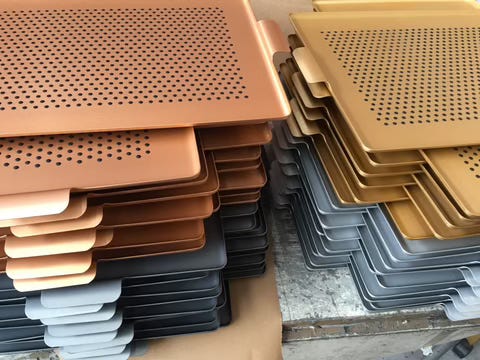
Kaymet trays
London has a problem welcoming housing — that is the big one — but it also has a glaring problem in relation to many non-residential uses. At a crude spatial level, it does not feel welcoming enough. It cannot provide the accommodation, in quantity, type or geography.
If we were to have a conversation about what kind of city we want, I suspect most of us would agree that it should contain different scales and different geographies. That might mean having workshops, small depots and similar activities on every high street. That is how it used to be, but it is also a good vision for the future: at the filigree level, this possibility is everywhere. If you want to start mending bikes or cars, or doing some other classic entry-level form of repair or industrial activity, where do you do it? That is the underlying urban question.
Much of my work in local authorities was an attempt to grapple with that question, though perhaps the honest analysis is that I spent a lot of time failing at it. I was part of, and later ran, what I used to call a troublemaking team. In more contemporary language you might call it a disruptor team. We pushed initiatives, many of them positive, but we were also constantly problematising things, saying: there is a problem here. One of those problems was industry. The planners making the London Plan, and people in the boroughs, were looking at industry statistics and saying, “We can’t afford to lose more than this much industrial land each year.” And we were asking: what are you measuring that against? Where is the map? They would say, “What map?” So we became the people asking why nobody had gone out and found out what was actually there — in Park Royal, for example. We were saying: come on, you need to understand this better.
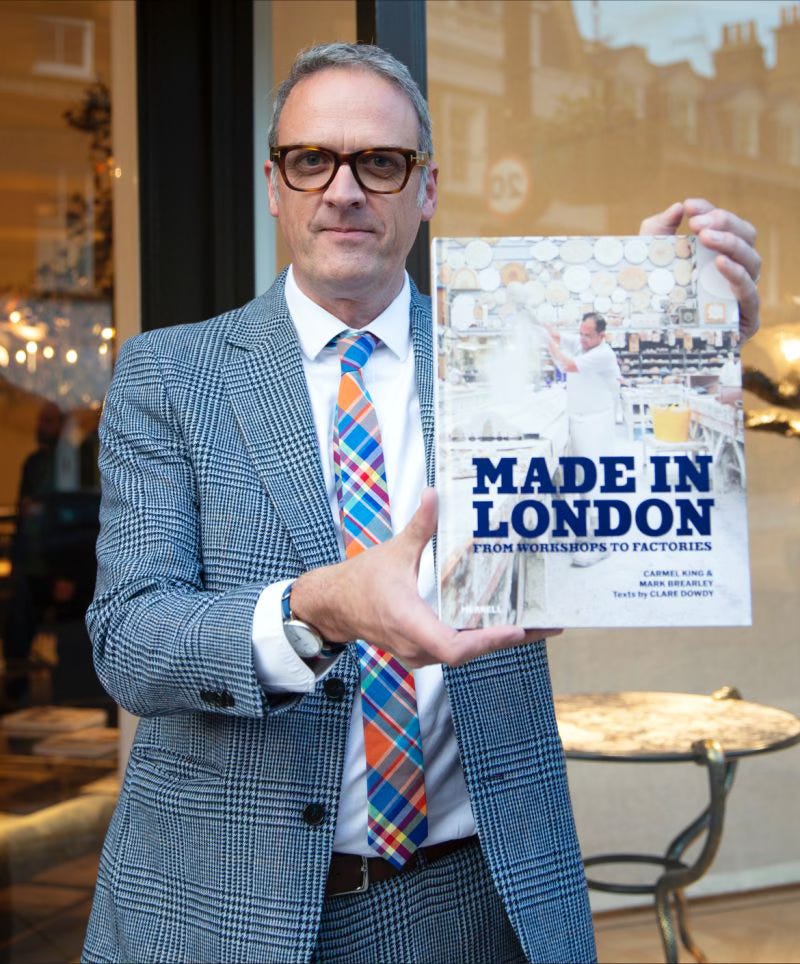
Mark Brearley co-edited Made in London: From Workshops to Factories (2022)
I have spent a lot of energy over the years trying to get that deeper understanding. And that is what accidentally led me to Kaymet. As a subset of all that work, I set myself a personal challenge: I thought, I will find out what manufacturing there is in London, because the place where I work does not know, and that seems really strange. Not only did they not have maps of industry — they do now, but they did not then — but when I probed further and asked what manufacturing existed in London, the answer was: we do not know. Nobody knows.
So I ended up finding out for myself. That led to a book about manufacturing in London. And in the process of visiting places, I came across this business, which then landed in my lap like a hot coal.
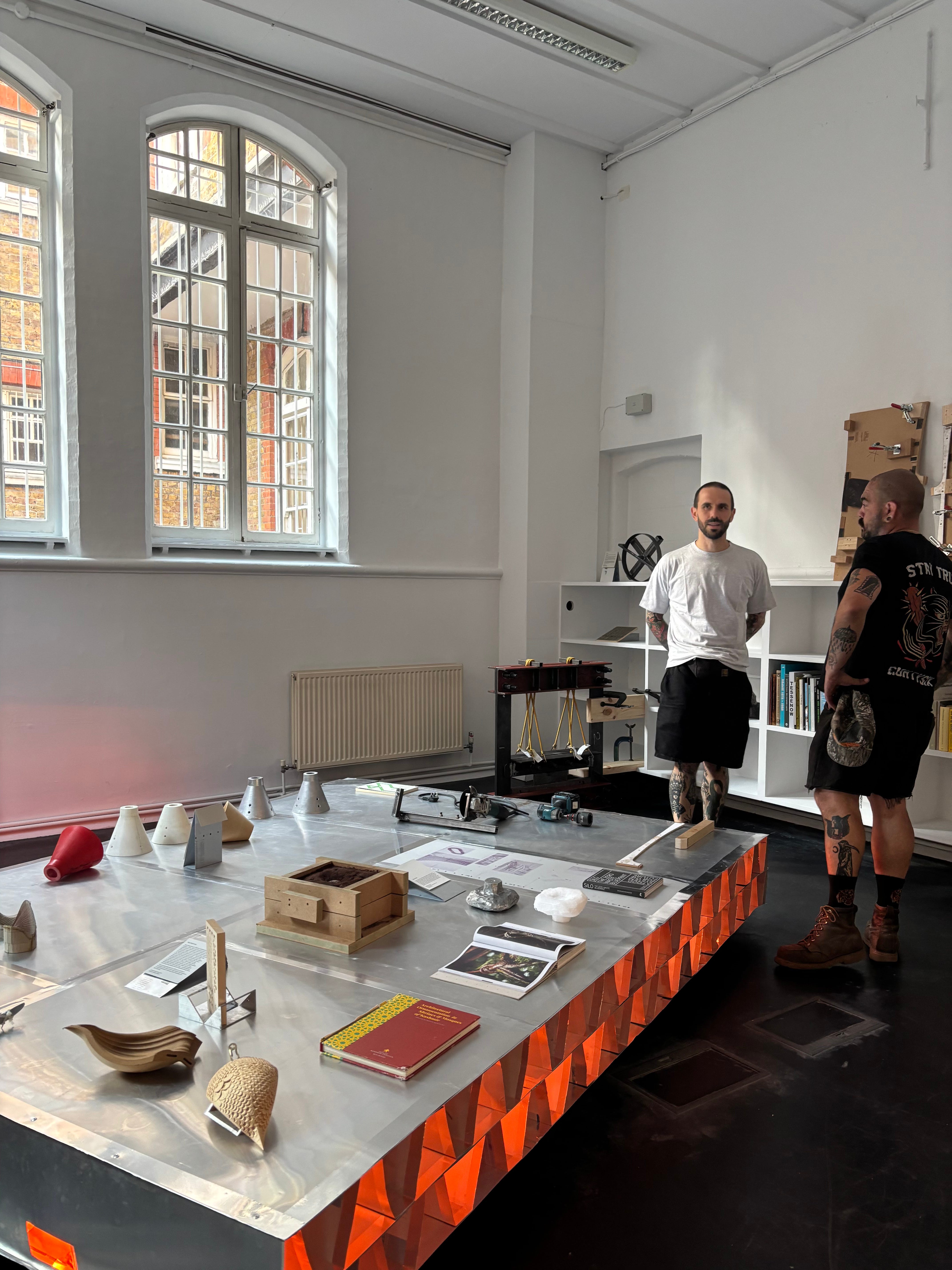
Jigs, an exhibition of the work of makers from Blackhorse Studios and other open-access workshops, curated by RAFT.
No posts
Comments
Nothing yet. Say the first thing.
Sign in to join the conversation.