
This newsletter for the week of April 6 looks at Housing Loops: Opulence, Precarity, Dignity, Prosperity and Fraternity, the latest book from a+t architecture publishers and their a+t research group. The book from the archives is an older a+t book also focused on housing, while the usual headlines and new releases are in between.
Book of the Week
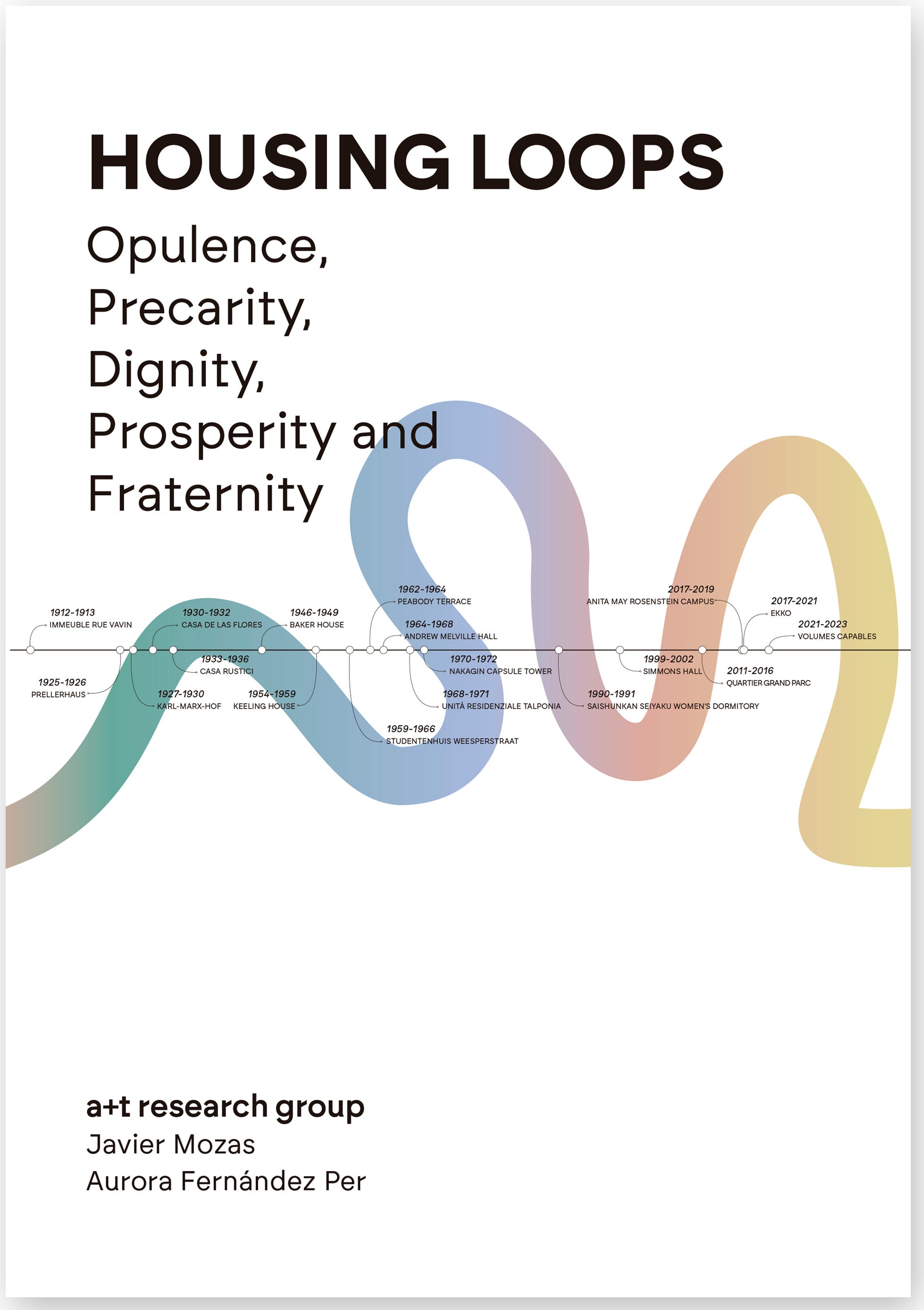
Housing Loops: Opulence, Precarity, Dignity, Prosperity and Fraternity, by the a+t research group (Javier Mozas and Aurora Fernández Per) (Buy from a+t architecture publishers)
When it comes to architectural surveys, what is more important: depth of analysis or selection of projects? The articulation of a theme binding the projects or the quality of presentation? Comparing projects to each other or treating each project as an individual case study? One publisher that has produced a lot of surveys and therefore explored the myriad ways of making them is a+t architectural publishers from Spain. These hypothetical questions are often answered by the number of projects collected in a single book, and books from a+t—many of them created by its corresponding a+t research group—have run the gamut: from ten projects across nearly 500 pages (see the bottom of this newsletter) to a whopping 178 projects over 472 pages, as in their latest book, Housing Loops. It goes without saying that the former has more analytical depth, arising from lots of illustrations and information on each project, while the latter prioritizes the selection of projects, how they relate, and connecting the dots between them.
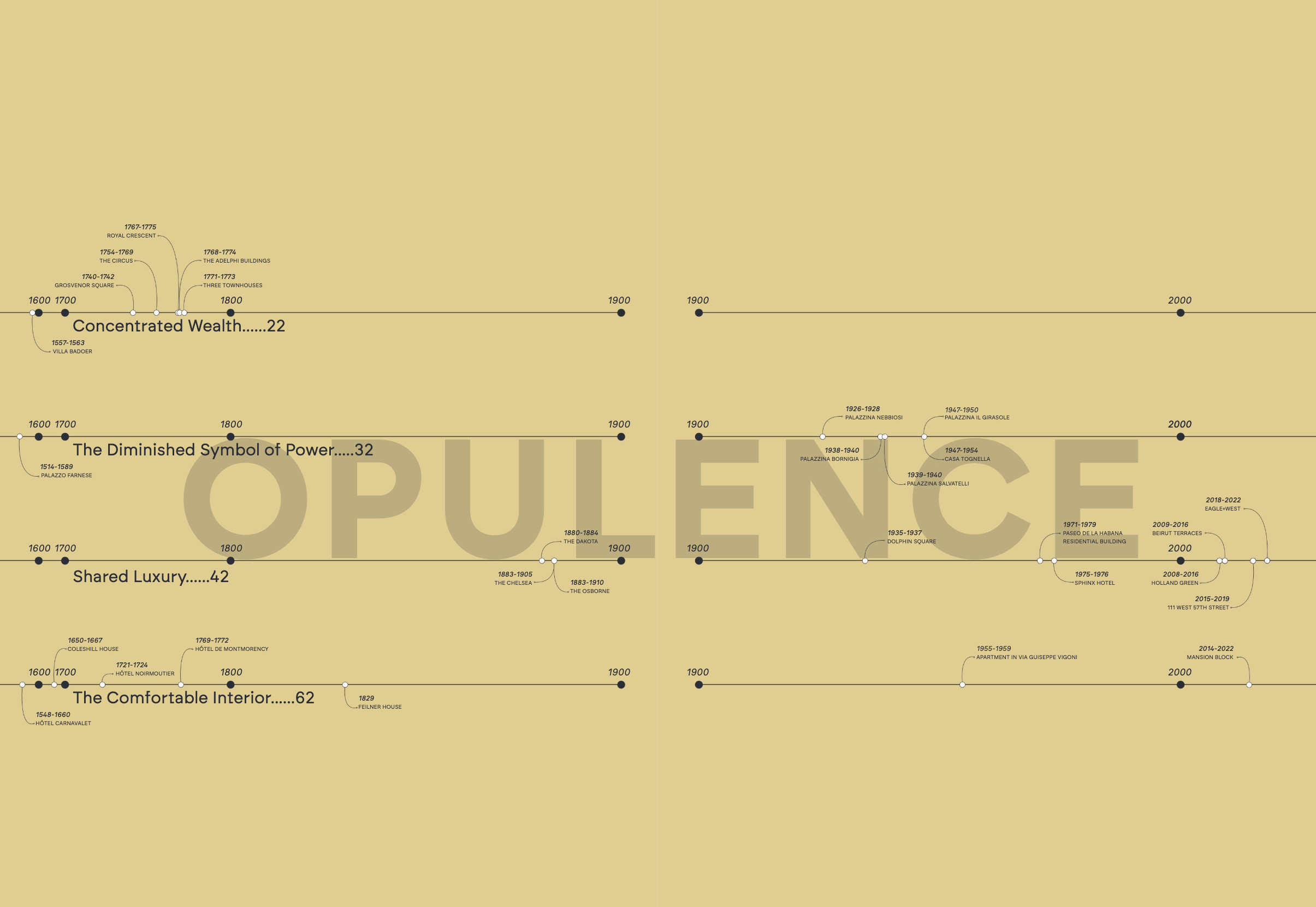
For a+t’s latest book, instead of dots connecting the projects we find loops. Placed upon a timeline and inserted into five thematic chapters—the opulence, precarity, dignity, prosperity, and fraternity of the book’s subtitle—the projects of collective housing spanning from roughly the mid-1700s to the present day exhibit recurring trends that happen over time, at least when considered from social perspectives rather than in terms of style, authorship, or other strictly architectural concerns. Put another way, the precedents relevant to architects designing housing today need not be limited to recent examples; they can be pulled from decades or even centuries earlier, depending on the context that is focused upon. As articulated by Javier Mozas and Aurora Fernández Per, who comprise the a+t research group, “The act of inhabiting is envisioned here as a loop where even the smallest action reflects past patterns and has the potential to trigger unforeseen consequences.”
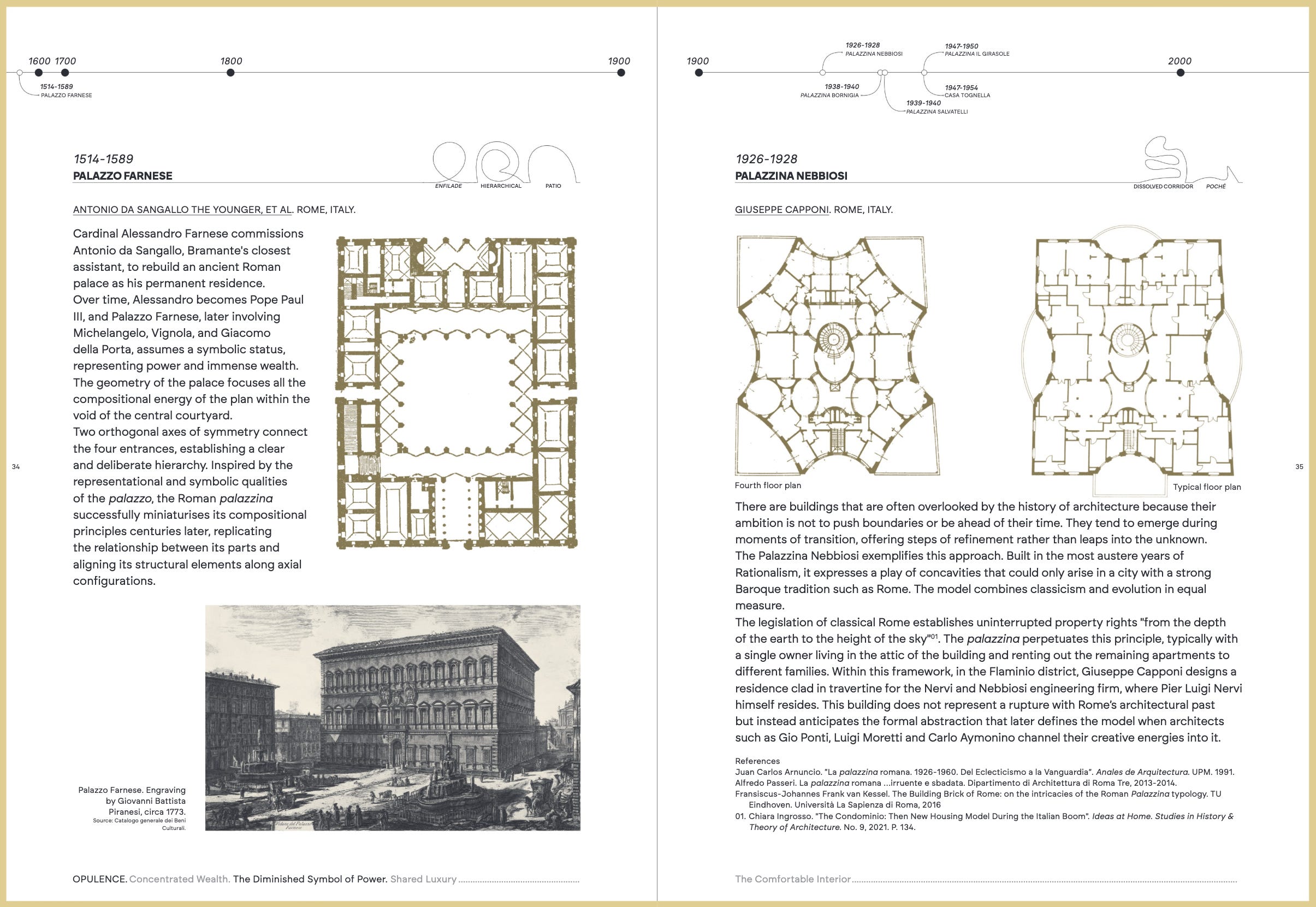
These “past patterns” are brief case studies that range from one to four pages, with photos (or perspective drawings for older projects, as in the spread above) and drawings accompanied by a few short paragraphs of descriptive text. The last, it should be noted, are always written in the present tense, a way of making even past projects seem situated within the present. For a relatively small book compared to other a+t books and magazines (6-3/4 x 9-1/4”), Housing Loops has a lot of images, particularly drawings, though naturally they tend to be small on the page. But with such brief presentations, the information here could hardly be expected to be definitive. Accordingly, sources are provided for each project—sometimes even pointing to previous a+t publications.
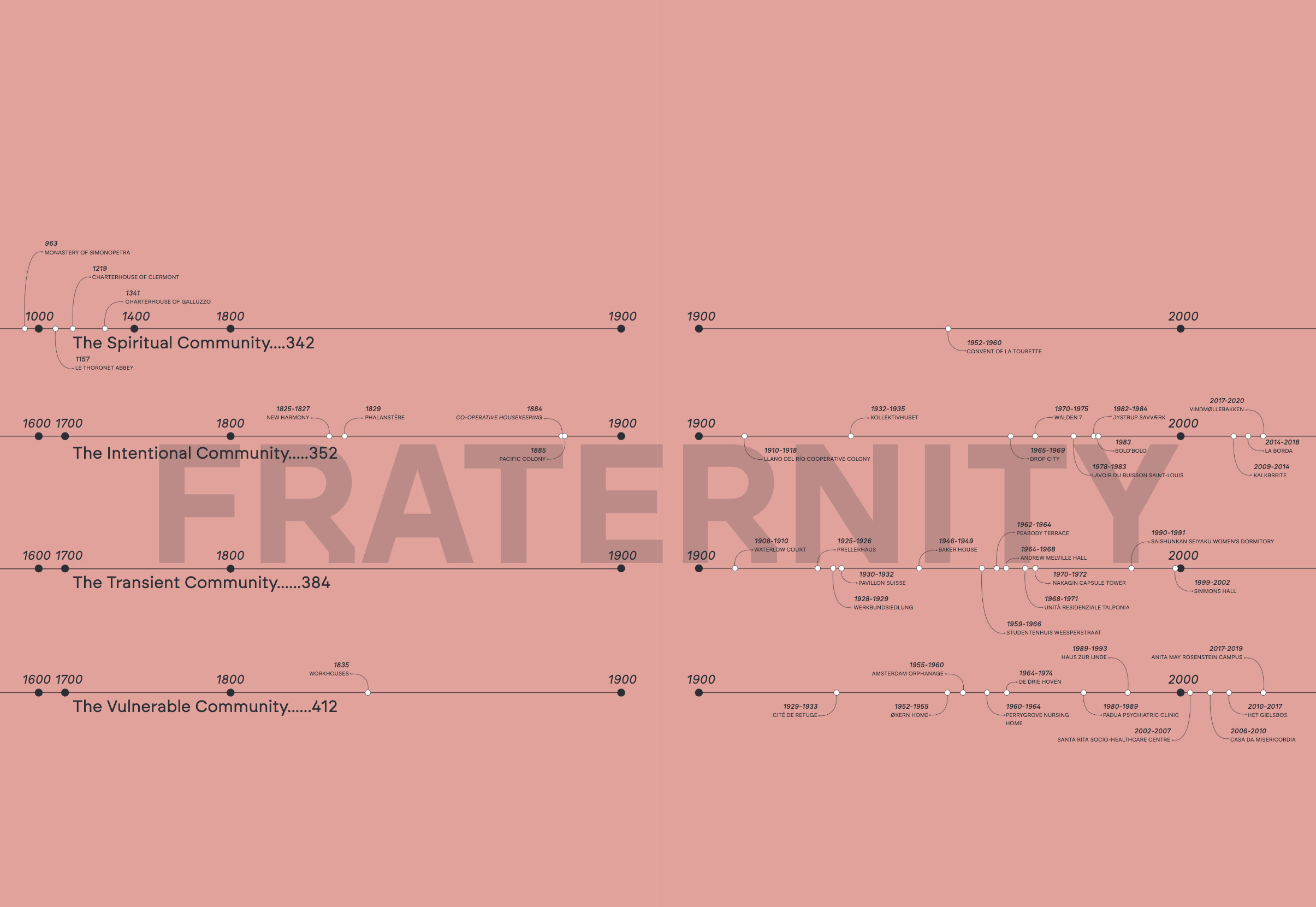
As the spread above indicates, each chapter is further broken down into smaller subchapters that narrow the focus of each social organization. A timeline across the top of each project spread situates the project alongside the others in the subchapter and further foregrounds the book’s theme. Ancillary to the loops, under each project name is a line that morphs into one or more curlicues that are labeled according to various characteristics: urbanscape, mixed-use, dissolved corridor, enfilade, evolutionary, participatory, and so on. These curlicues give each project its own “signature” based on a+t’s analysis and cross-referencing, though unfortunately the reader is not assisted in finding those connections. So, although there is a chronological index and an index of names, there is no thematic index where one can find all urbanscape projects, for instance. As such, the book’s organization elevates the loops that define the five chapters and myriad subchapters, but it relegates the carefully crafted curlicues that even comprise the book’s cover graphics to eye candy on the page.
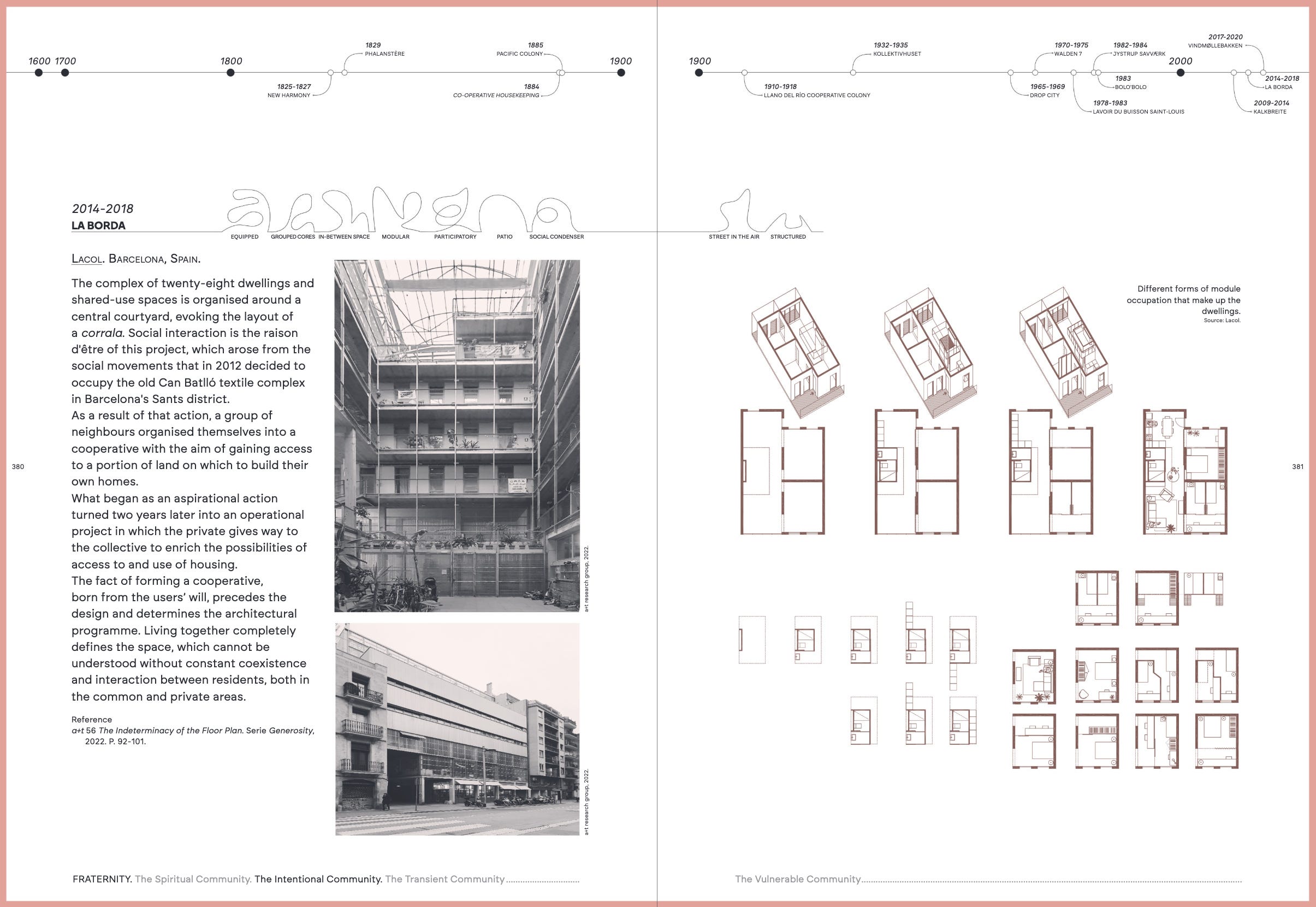
Still, regardless of any missed opportunities, Housing Loops has value. I find it in the selection of projects and their groupings into the thematic loops. Readers looking at each loop will move forward (and sometimes backwards and then forwards again) in time across decades or centuries, seeing projects with shared social characteristics but often varied architectures. Some of the best sections of the book take readers on rides, if you will, that are probably surprising to every architect or architecture student besides the ones most learned in housing and architectural history. With housing shortages being prevalent around the world, architects interested in tackling the problem—and doing it from a socially grounded perspective—should be open to a wide range of applicable precedents. Housing Loops helps architects find them.
Books Released This Week
(In the United States; a partial, curated list)
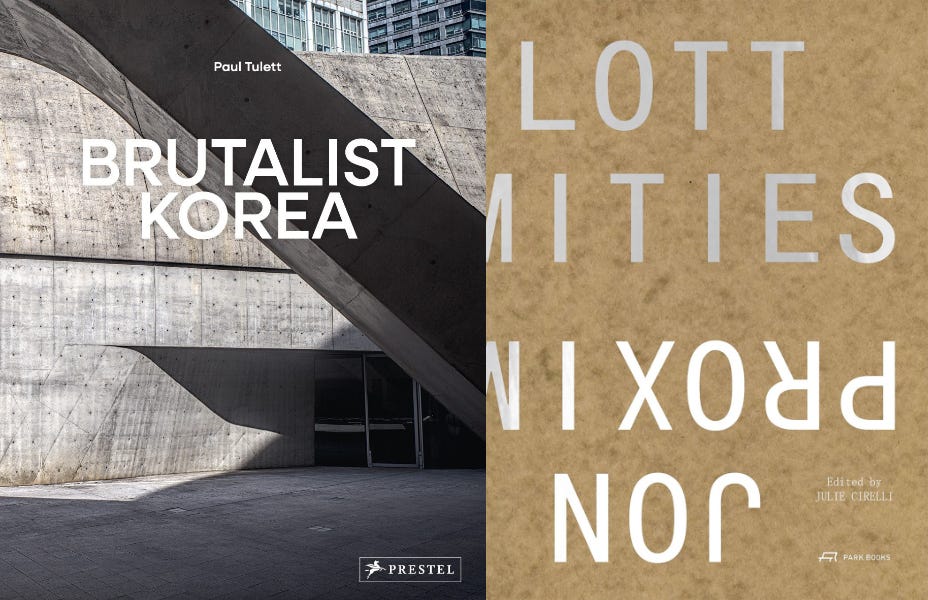
Brutalist Korea: A Photographic Tour of Post-War Korean Architecture, by Paul Tulett (Buy from Prestel / from Amazon / from Bookshop) — “In this elegant follow-up to the bestselling Brutalist Japan, Paul Tulett brings his distinctive eye to South Korea’s post-war architecture, capturing the austere beauty of concrete across cities and decades.”
Proximities: The Architecture of Jon Lott, edited by Julie Cirelli (Buy from University of Chicago Press [US distributor for Park Books] / from Amazon / from Bookshop) — “An exploration into the practice of Para Project, a design firm based in Amenia, NY, and the philosophies of its founder Jon Lott.”
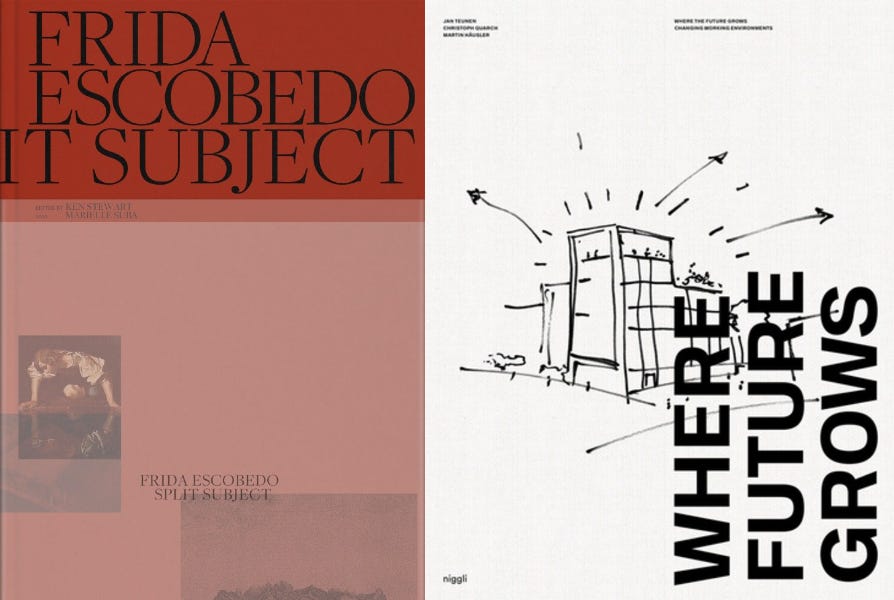
Frida Escobedo: Split Subject, edited by Ken Stewart and Marielle Suba (Buy from Amazon / from Bookshop) — “Split Subject, an early project by architect Frida Escobedo, deconstructs a fraught allegory of national identity and architectural modernism in Mexico.”
Where Future Grows: The Evolution of Work Environments, edited by Jan Teunen,
Christoph Quarch and Martin Häusler (Buy from Amazon / from Bookshop) — “An exploration of the shift towards work environments that foster creativity, well-being and meaningful growth – reimagining the future of work as a place where people really want to be.”
Full disclosure: As an Amazon Associate, AbeBooks Affiliate, and Bookshop.org Affiliate, I earn commissions from qualifying purchases made via any relevant links above and below.
Book News
A double dose of Reinier de Graaf:
Over at The Observer, Rowan Moore reviews Architecture Against Architecture, which was released (and I reviewed) a couple weeks ago.
De Graaf speaks with Dezeen about the book: “This is emphatically a book I wrote for people to either really agree or really disagree with. I think the worst possible reception of this book would be indifference.”
House & Garden publishes the “The HG101 library,” featuring “books from our favorite designers and architects.”
From the Archives
More then a dozen years before Housing Loops, a+t research group put out 10 Stories of Collective Housing: Graphical Analysis of Inspiring Masterpieces. The relationship between the Book of the Week and this 2013 should be obvious. Below is an edited version of my October 2013 review.
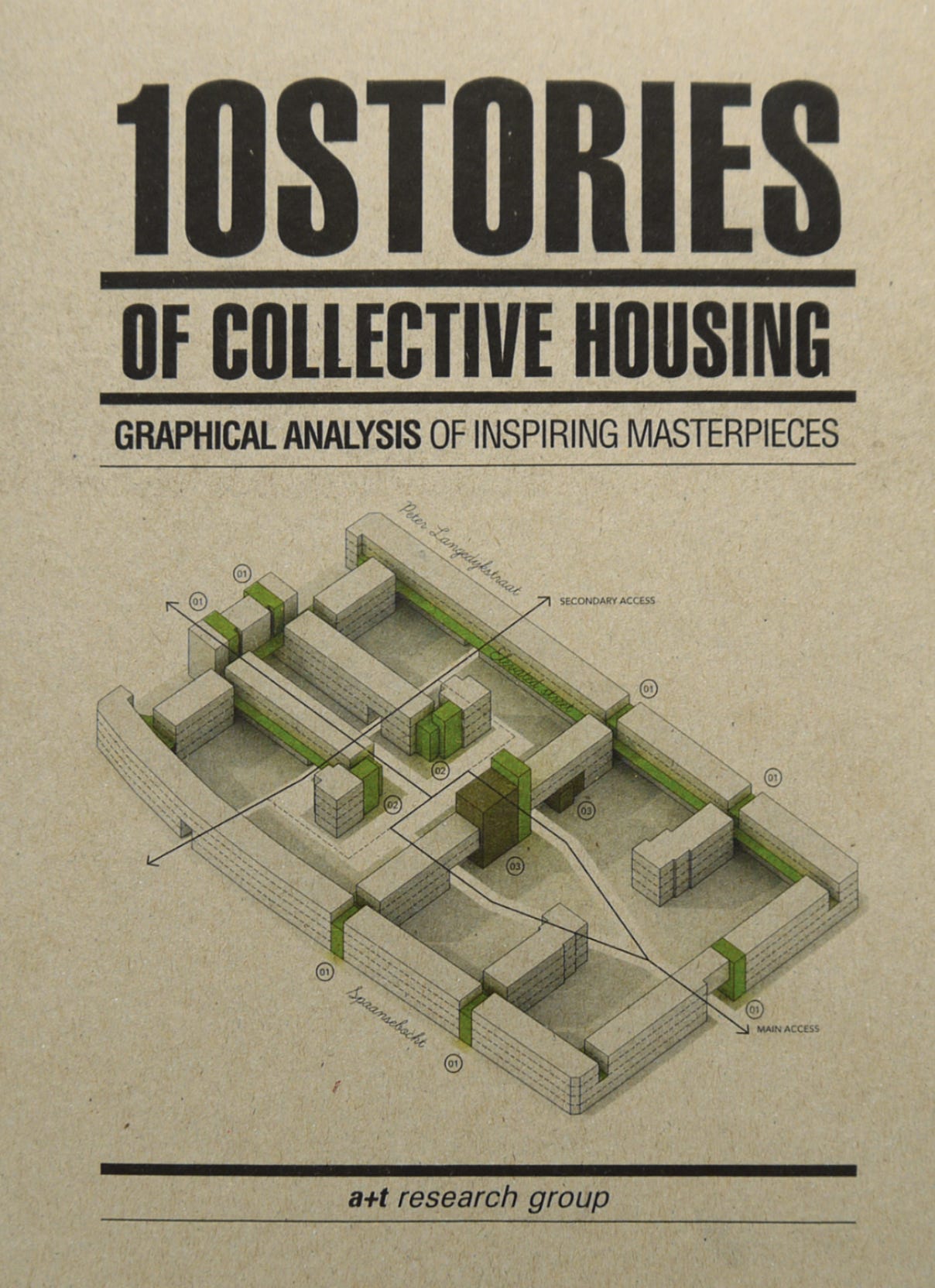
Spain’s a+t separates its output into magazines and books, with titles in each often fitting into series. The last of the books I reviewed was Density Is Home, which documents 37 contemporary housing projects through the usual high-quality presentations that a+t is known for. But where the drawings, photographs, and statistics help readers learn about the projects and compare and contrast them, the 10 or 12 pages per project mean that there is still room for more to be learned about the buildings. Enter 10 Stories of Collective Housing, which steps back some decades (projects span from ca. 1920 to 1980) to give in-depth case studies on “inspiring masterpieces.”
Of course there are photos—both historical and contemporary—but also plenty of plans, axonometrics, diagrams, and other drawings that explain the projects but also how they developed over time. In this case of Fumihiko Maki’s Hillside Terrace in Tokyo, one of the ten “stories,” the three authors of the a+t research group—Aurora Fernandez Per, Javier Mozas, and Alex S. Ollero—included information on Maki’s ideas of collective form to help explain the project’s theoretical basis and how it was designed to change over time over phases. One spread shows three projects/places that inspired Maki’s design, indicative of the many projects—both inspiring and inspired by—included to give a greater context to the architectural solutions of collective housing.
Even though this book delves deeper into buildings than most a+t titles, the graphics, format, and layouts fit in with the publisher’s larger oeuvre, even as the book doesn’t directly resemble other titles. The consistency of these three pieces throughout the book allows the ten projects to be compared with each other, though this aspect is not as valuable here as it is in a+t’s relatively cursory studies of contemporary buildings.
What helps make 10 Stories so good is the selection of projects, which is not nearly as obvious as it could have been. Le Corbusier’s Unite d’Habitation is not included, for example, nor are other projects that are easily masterpieces yet already studied extensively. I didn’t know about most of the projects in these pages and was glad to learn especially about Michiel Brinkman’s Justus Van Effen Complex (Rotterdam, 1919-22), Ignazio Gardella’s Housing for Borsalino Employees (Alessandria, 1948-56), Ralph Erskine’s Byker Regeneration (Newcastle-upon-Tyne, 1969-82), and Jean Renaudie’s Jeanne Hachette Complex (Paris, 1970-75). This book offers something for everybody, with plenty to learn in the thorough case studies that reveal many of the best ideas in housing have already happened.
Thank you for subscribing to A Weekly Dose of Architecture Books. If you have any comments or questions, or if you have your own book that you want to see in this newsletter, please respond to this email, or comment below if you’re reading this online. All content is freely available, but paid subscriptions that enable this newsletter to continue are welcome — thank you!
— John Hill
Comments
Nothing yet. Say the first thing.
Sign in to join the conversation.