
This newsletter for the week of April 27 heads to Chicago for some background on the city’s brick buildings with Will Quam and his Fire and Clay: How Bricks Reveal the Hidden History of Chicago, which was published last week by University of Chicago Press. I pulled a related article by critic Paul Gapp from the archive, and in between are the usual headlines and new releases. Happy reading!
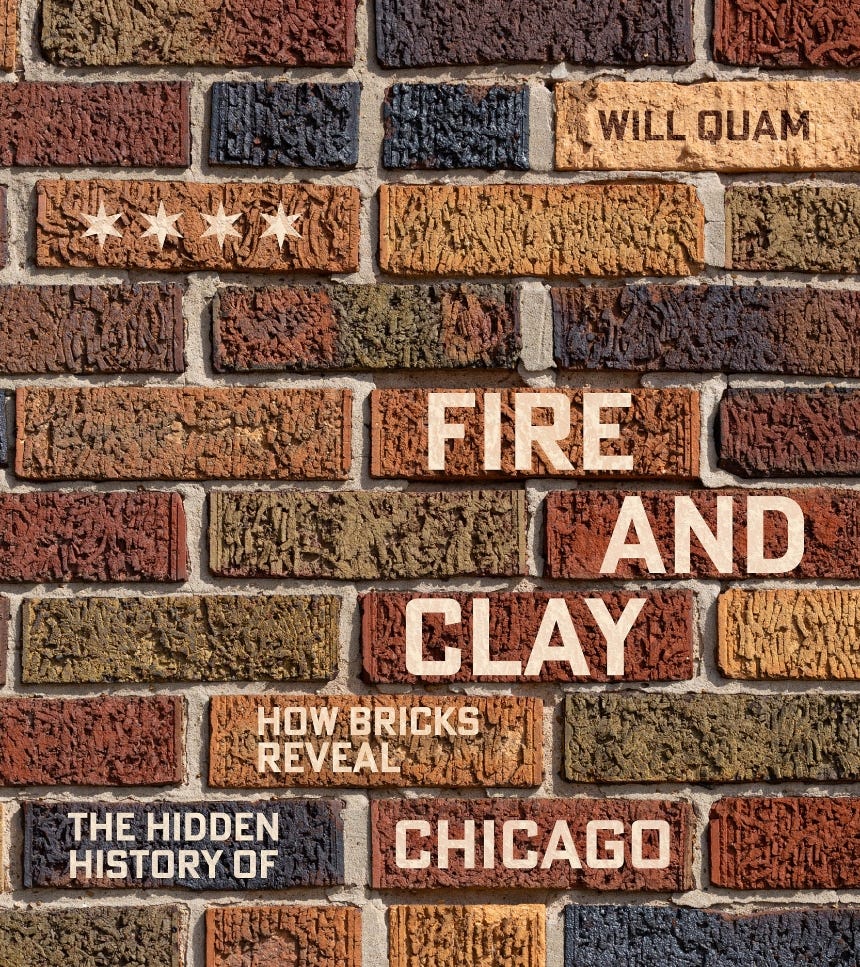
Fire and Clay: How Bricks Reveal the Hidden History of Chicago, by Will Quam (Buy from University of Chicago Press / from Amazon / from Bookshop)
Like many people, for me the hardest part of writing is the beginning: finding the right perspective, idea, sentence, even word with which to start writing an article. For this review of Fire and Clay, that idea hit me on Thursday evening, as I found myself enjoying one of the early chapters in the book right after its release. But as I readied myself to start typing, the usually occasional sound of sirens that comes with living in Queens was different: longer, constant. The last time there was a cavalcade of fire trucks streaming down our busy street, it was a laundromat catching fire at the base of a small apartment building nearly a mile away. But this time it was the First Reformed Church of Astoria, an abandoned 19th-century church just a few blocks away. First seeing the huge plume of dark smoke from the bedroom window, and then walking over to see the rectory on fire and smoke rising from the gaps between the church’s brick walls and roof, I figured the church would be rubble the following day. But returning on Friday morning to see, I was greeted by a gutted but relatively intact church and the charred remains of the rectory:
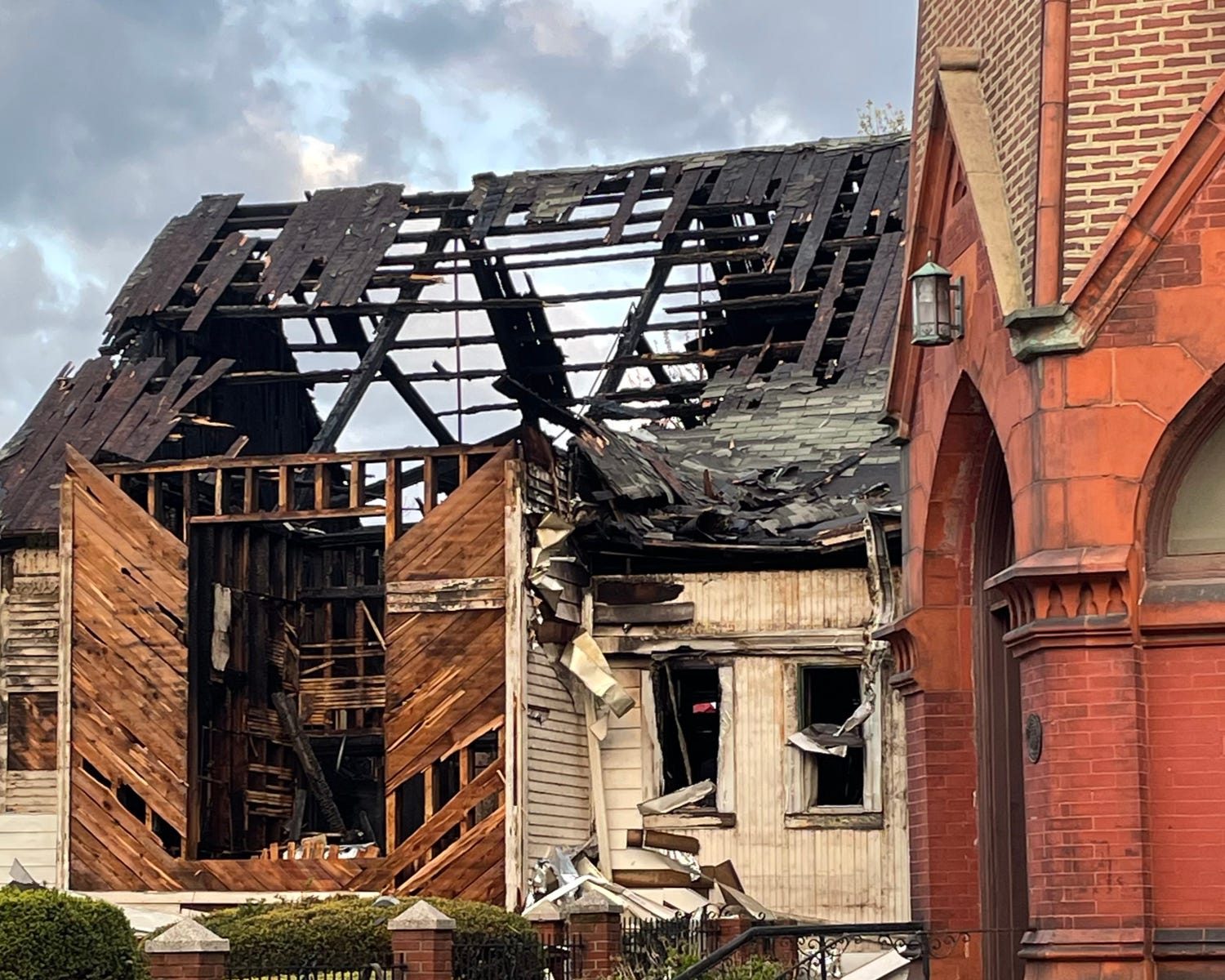
This situation—of a wood structure, where the fire actually started, being incinerated, while most of the adjacent structure’s masonry walls were sooty but standing—should not have surprised me at all, given the images of brick chimneys “rising up like headstones from plots of blackened debris” following the Palisades fire last year that have stuck with me, and the fact wood, brick, and fire are at the heart of photographer and tour guide Will Quam’s aptly titled Fire and Clay. For Quam, the fire is a distant one, the Great Chicago Fire of 1871, which laid waste to more than three square miles of the primarily wood-framed city on Lake Michigan. Whereas historian Donald L. Miller wrote that “Chicago had not burned down before 1871 because it was lucky,” Quam contends that “Chicago was also very luck that it burned down when it did.” This is because the rebuilding that naturally followed the destruction happened to coincide with the industrialization of brick manufacturing—of the city’s ability to make tens of millions (and eventually hundreds of millions) of bricks per year, enough to rebuild the city in a material that is highly fire-resistant. That bricks are also born from fire—baked in kilns—gives the title of Quam’s book a nice double meaning.
Although the subtitle How Bricks Reveal the Hidden History of Chicago hints that Fire and Clay is a historical narrative from the Great Fire of 1871 to the present, this is not just a book about buildings in brick; it is a book about bricks themselves: how they are made, who made them and where, how their use and appearance have changed, and how they have been celebrated and derided over time. The book is full of Quam’s photos of brick buildings that are alternately famous (Monadnock, Robie House) and anonymous (rows of bungalows other hometown vernacular buildings) but also close-ups of brick walls, like the one on the cover, that reveal the immense amount of variation in something just nominally 8 inches wide and 2-1/4 inches tall.
The main distinction he makes is between common brick and face brick. As described in the book’s glossary, the common brick made in Chicago is “a notoriously varied-looking brick full of pebbles and stones and with a huge amount of color and tones.” It is cheap and therefore “used for the backing and structure of buildings.” Face brick, on the other hand, is “used to cover the front facades of buildings” and is therefore “made with greater care and careful selection than common brick.” As such, buildings built after 1871 tended to have fronts with bricks imported from other parts of the US but visible side walls and hidden structural walls of common brick made in and around Chicago. Yet Quam reveals how views toward common bricks shifted over time, from “badly made” and “ugly” in the 1890s to “natural” in 1940, when it was used at Crow Island School in suburban Winnetka, and “symbolic of Chicago,” as in Tadao Ando’s Wrightwood 659 gallery in Lincoln Park.
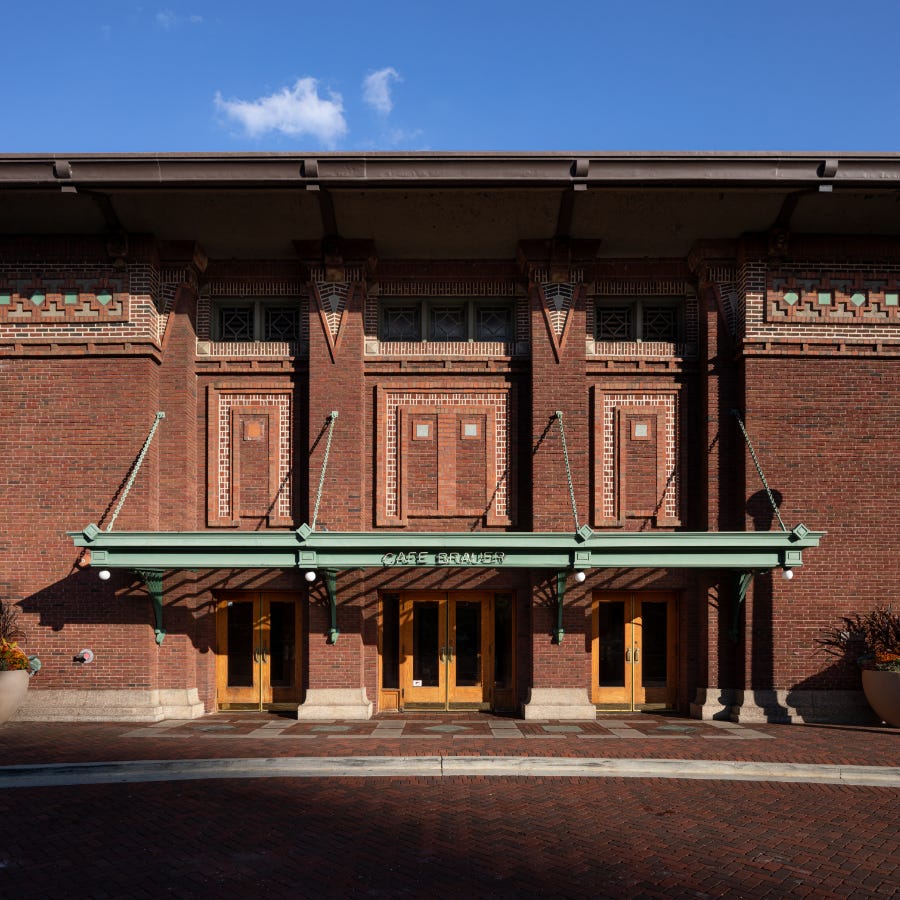
The twelve chapters that comprise Fire and Clay are thematic and roughly chronological, moving through different trends in architecture as well as accompanying trends and innovations in the manufacturing of brick and terra-cotta. The relationship between bricks and buildings is obvious on the surface, but in Quam’s telling it takes on many interesting shades. There is corruption, as in 27th Ward alderman Spencer S. Kimball’s pushing of red brick made by the Hydraulic-Press Brick Company of St. Louis, which he happed to run; and there is monopolization, with R. C. Penfield’s invention of a machine for moving and setting bricks that “allowed Penfield to essentially put himself in charge of brickmaking in Chicago between 1909 and 1933.” Given these and myriad other stories illustrating how the making of bricks influenced the design of buildings, it’s not surprising to see as many references in the pages of Fire and Clay to Brick, Brick and Clay Record, The Brickbuilder, Clay Record, The Clay Journal, and other technical/trade journals as there are Architectural Forum, Architectural Record, and other architecture magazines. (Fun fact: The Brickbuilder, the “monthly magazine devoted to brick architecture” that started in Boston in 1892, changed its name to The Architectural Forum in 1917.)
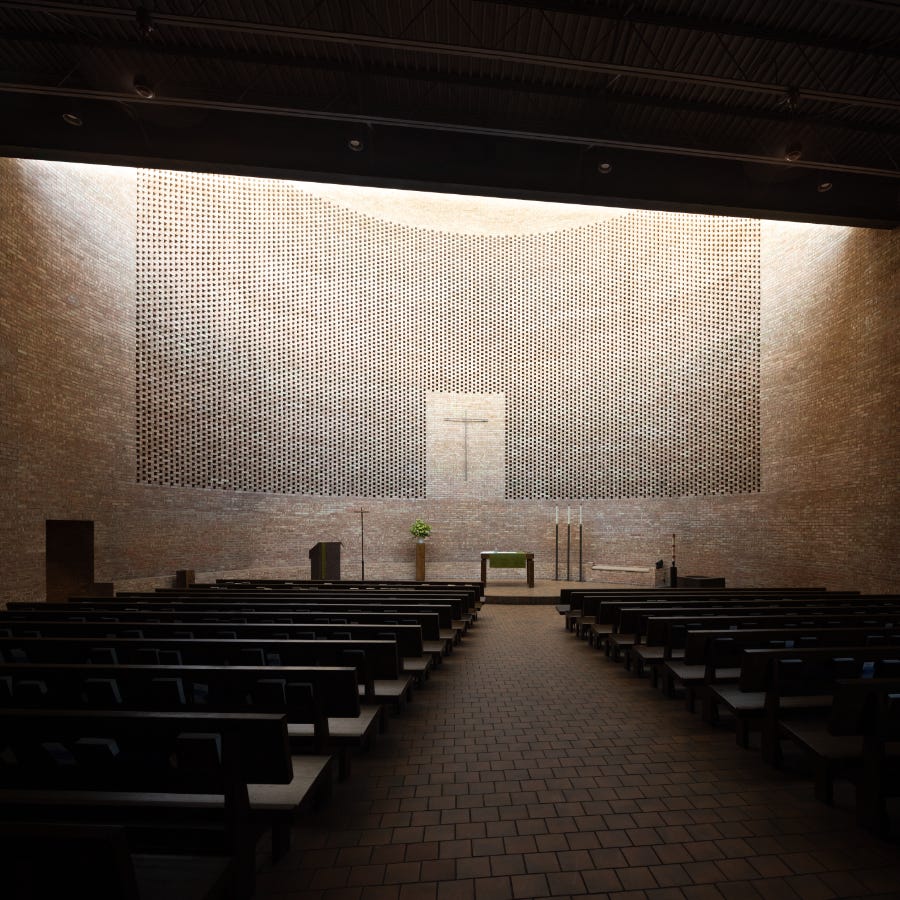
The “hidden history of Chicago” is revealed throughout the book in subtle but unexpected ways. I lived in the city’s Lincoln Square neighborhood for close to ten years a couple decades ago, just steps away from Louis Sullivan’s last project, the Krause Music Store. I loved walking by (and occasionally inside, when it was a shop called the Museum of Decorative Arts) and admiring the terra-cotta facade, but did I have the same admiration for the facade of Merz Apothecary just a couple blocks up the street? I can’t say I ever paid attention to the building beyond the wares in the storefront windows. But Quam reveals in his book that the terra-cotta medallions set into the brick facade above the second-floor windows are off-the-shelf pieces made by Midland Terra Cotta. Put another way, a century ago architects could come up with exuberant designs rendered in terra-cotta, or they could incorporate standard decorative shapes, in turn unifying parts of the city through masonry flourishes.
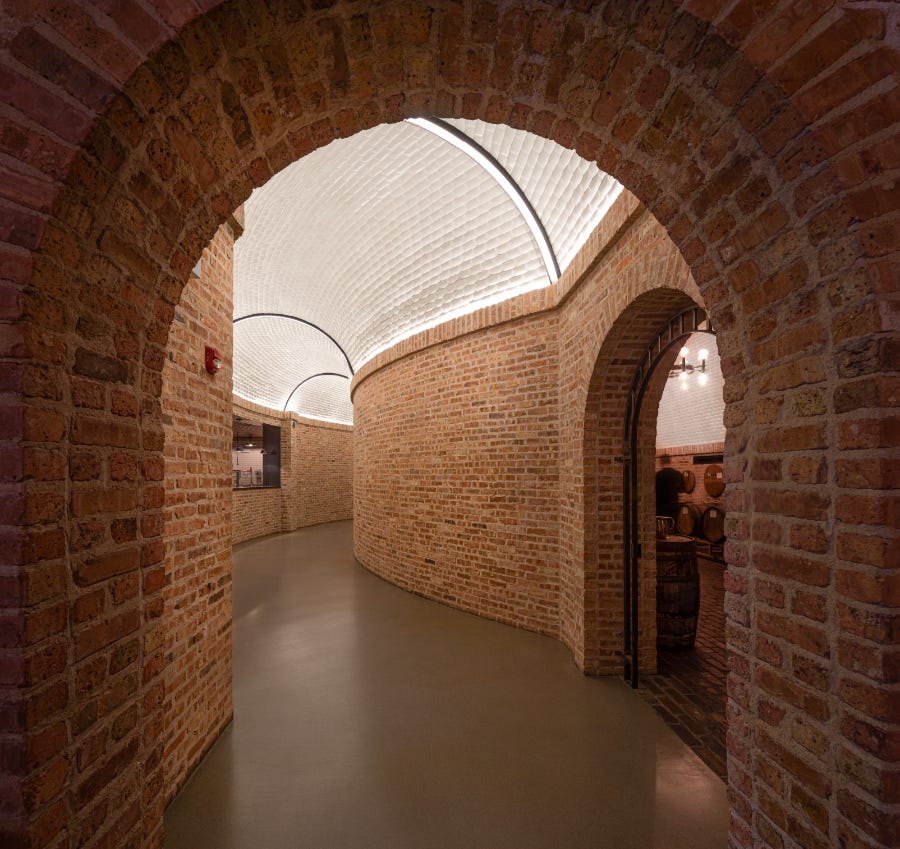
To take but one more Lincoln Square example, I had no idea that nearby Horner Park, on the edge of the North Branch of the Chicago River south of Montrose, was built on the site of a garbage dump that filled in the hole left by the Bach Brick plant when it closed in 1935. That Depression-era closure was due to a logical slowdown in brick production in Chicago, but many more plants closed in the ensuing decades as other materials were used instead of bricks on facades (concrete, glass curtain walls, aluminum), further reducing demand for brick, and environmental concerns led to the passing of the Clean Air Act, which effectively ended the production of common brick in Illinois and other states. As such, some of the contemporary examples in common brick highlighted by Quam, including the Goose Island Barrel House by SPACE Architects + Planners, use reclaimed bricks.

The eleventh, penultimate chapter of Fire and Clay features numerous recent buildings, such as the nine-year-old Goose Island Barrel House, that find architects building with brick once again and often doing it expressively. But with his focus on material and production, Quam is more than happy discussing a fairly lackluster replacement McDonald’s in Lincoln Square—”a flat-roofed brick box with dark metal accents and a few strips of warm wood trim”—on one page and highlighting two standouts of contemporary brick architecture (UrbanLab’s Mohawk Residence in Old Town and Studio Gang’s Brick Weave House in West Town) on the next. Here and throughout the book, Quam describes more buildings than he has room to accompany with photographs, which is unfortunate, but he takes readers across the whole of Chicago and some of its suburbs, and that is refreshing. Similarly, his walking tours run the gamut, from Rogers Park and Uptown in the north to Bronzeville and Beverly in the south. While Fire and Clay will harness an appreciation of brick as a building material, it might also spark readers to want to see some of the brick buildings in the book up close, hearing about them straight from the author’s mouth.
(In the United States; a partial, curated list)
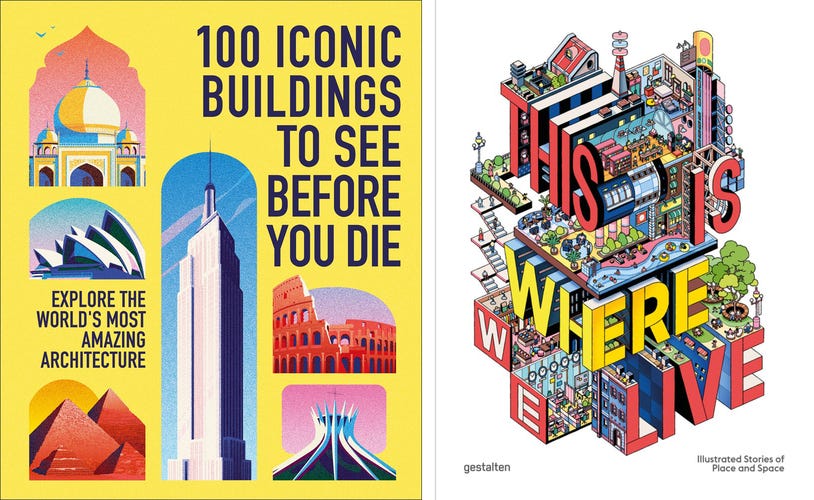
100 Iconic Buildings to See Before You Die: Explore the World’s Most Amazing Architecture (Buy from Penguin/DK Travel / from Amazon / from Bookshop) — “Organized by continent, the book takes you on a global tour of must-see sights, from ancient temples and Art Deco hotels to Modernist marvels and mega-tall megastructures.”
This Is Where We Live: Illustrated Stories of Place and Space, edited by Antonis Antoniou (Buy from gestalten / from Amazon / from Bookshop) — “A curated visual journey through the minds of today’s most imaginative illustrators--artists who use cutaways and spatial drawing to explore how we live, move, build, and dream.”
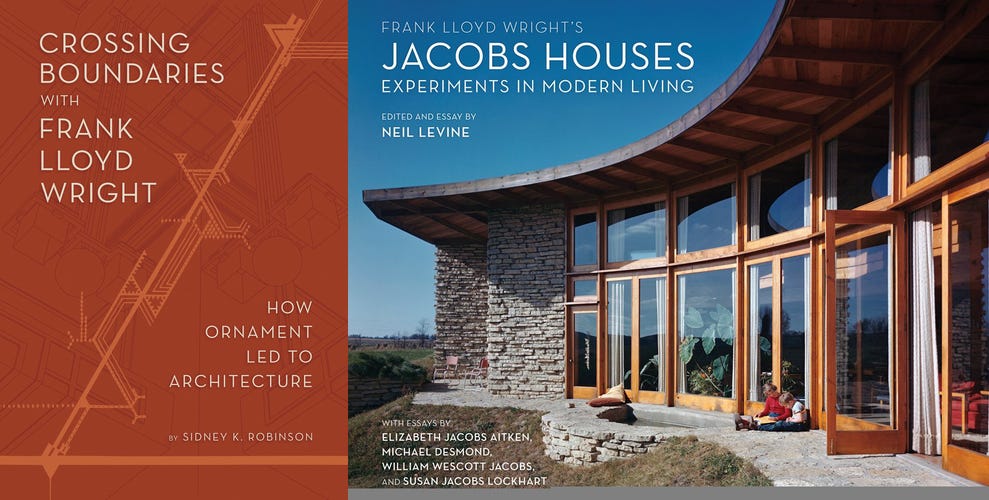
Crossing Boundaries with Frank Lloyd Wright: How Ornament Led to Architecture, by Sidney K Robinson (Buy from Organic Architecture + Design / from Amazon / from Bookshop) — “Crossing Boundaries with Frank Lloyd Wright traces how Wright extrapolated the principles that structured Sullivan’s ornament to the design of a whole building.”
Frank Lloyd Wright’s Jacobs Houses: Experiments in Modern Living, edited by Neil Levine (Buy from Organic Architecture + Design / from Amazon / from Bookshop) — “[Featuring essays and] scores of never-before-published photographs and drawings of both Jacobs Houses, it’s the most definitive publication on the history and experience of living in these icons of American architecture.”
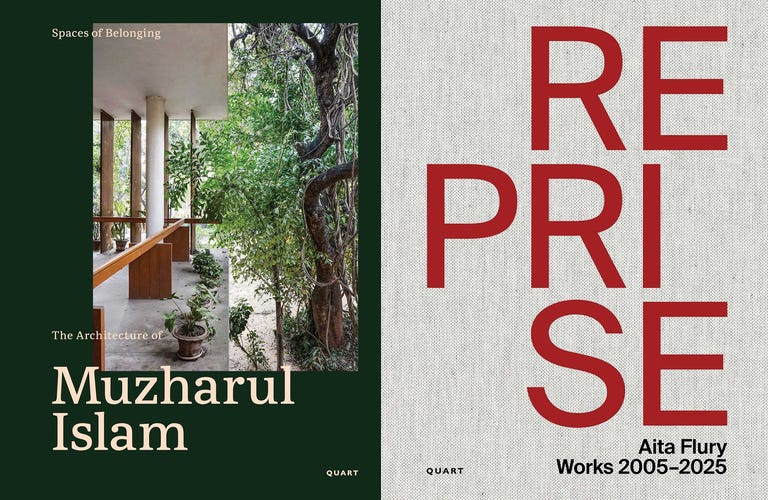
Spaces of Belonging – The Architecture of Muzharul Islam, edited by Niklaus Graber (Buy from Quart Publishers / from Amazon / from Bookshop) — “Muzharul Islam (1923–2012) has left behind an outstanding architectural legacy in Bangladesh. Yet until now, his work has remained relatively unknown despite its relevance and singularity.”
Reprise – Aita Flury, Works 2005–2025, by Aita Flury (Buy from Quart Publishers / from Amazon / from Bookshop) — “A personal architectural autobiography covering 20 years of the Swiss female architect’s practice.”
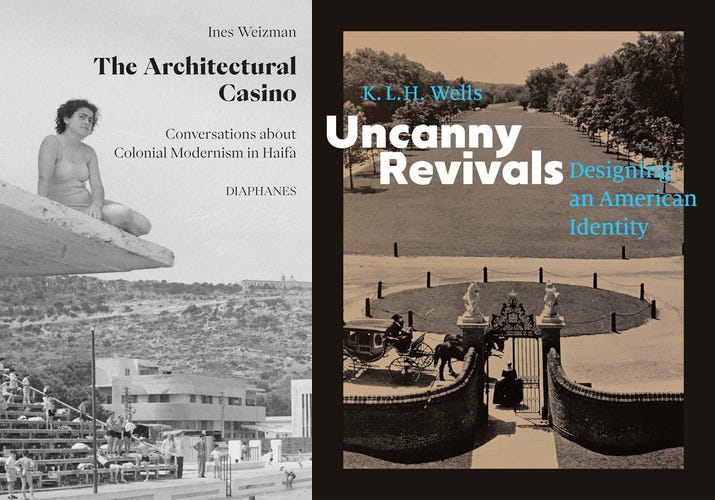
The Architectural Casino: Conversations about Modernism in Haifa, by Ines Weizman (Buy from University of Chicago Press [US distributor for Diaphanes] / from Amazon / from Bookshop) — “The edition offers a new approach to what Weizman names ‘documentary architecture,’ meaning that to write about the history of a building is also to map the world in which it is located.”
Uncanny Revivals: Designing an American Identity, by K. L. H. Wells (Buy from Yale University Press / from Amazon / from Bookshop) — “An examination of how immersive colonial revival projects contributed to the formation of a White nationalist identity by inviting viewers to step into the past.”
Full disclosure: As an Amazon Associate, AbeBooks Affiliate, and Bookshop.org Affiliate, I earn commissions from qualifying purchases made via any relevant links above and below.
Jose Pedro Sousa’s new eponymous Substack “on architecture, technology and digital culture” looks at Reinier de Graaf’s Architecture Against Architecture: A Manifesto. (Jose Pedro Sousa)
My Earth Day write-up of Julia Watson’s Lo—TEK Water: A Field Guide for TEKnology. (World-Architects)
“With notes and creative scribbles, Francis Kéré: Building Stories is a fascinating insight into the creative work of one of the world’s leading architects.” (Wallpaper*)
At the Monocle Design Awards 2026, Lisbon’s monade—whose books I reviewed a few times on my old blog—was named best design imprint. (monade)
Reinier de Graaf’s Architecture Against Architecture lays out the architect’s perspective on the profession as it stands (The Architect’s Newspaper)
A review of Brutal Scotland, “a book and exhibition by photographer Simon Phipps documenting 160 buildings across the country.” (Building Design)
Randy Deutsch needs help because his forthcoming book is “priced too high,” a lament many authors of books with academic publishers face, I reckon. (Who We Need To Be)
In 1979, Paul Gapp from the Chicago Tribune became the second architecture critic (following Ada Louise Huxtable) to receive the Pulitzer Prize for distinguished criticism. To celebrate his victory, the Trib put out Paul Gapp’s Chicago the following year. The slim publication features a selection of Gapp’s critiques and other articles spanning a five-year period—or starting in 1974, when he became the paper’s architecture critic, a post he would have until his death in 1992 at the age of 64.
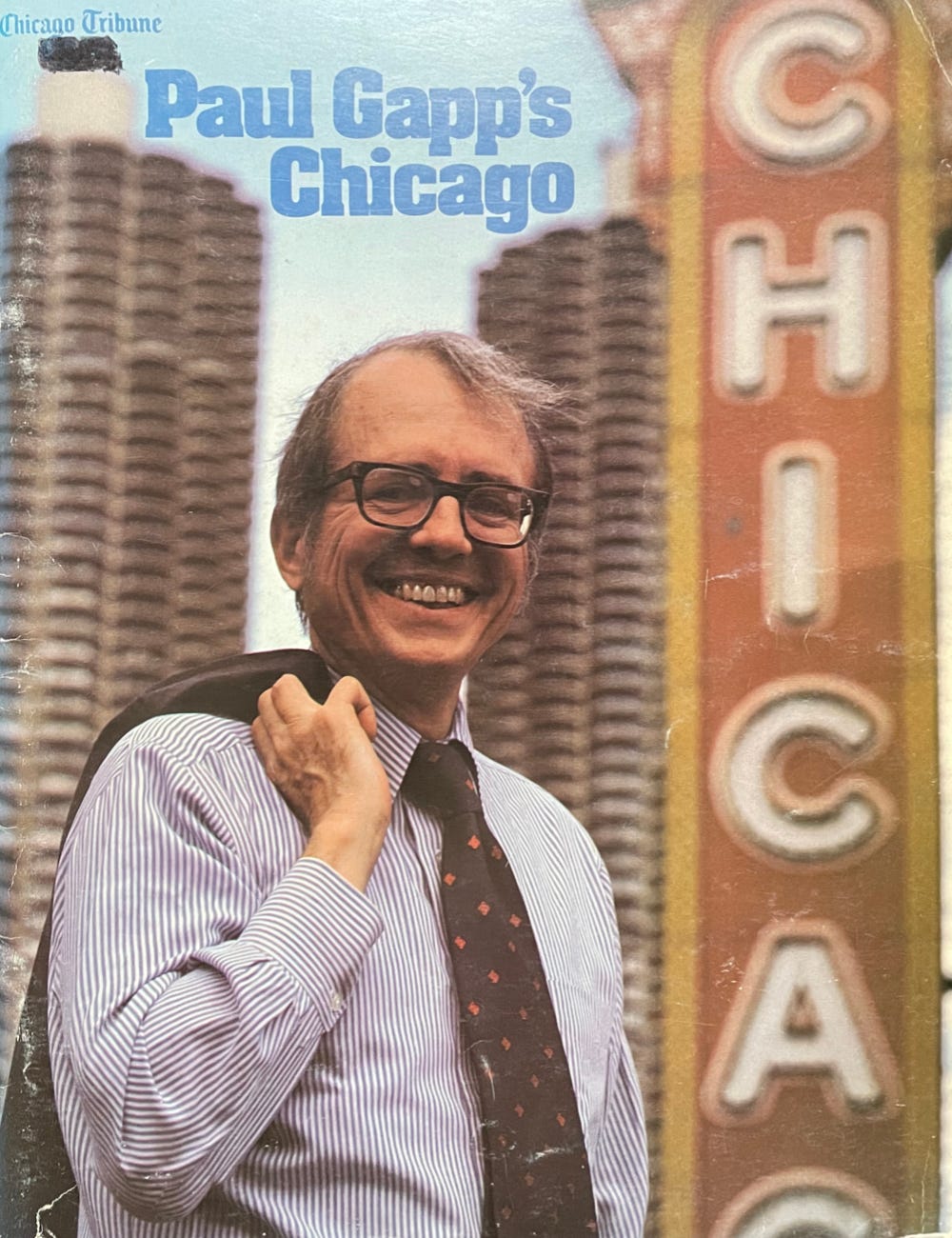
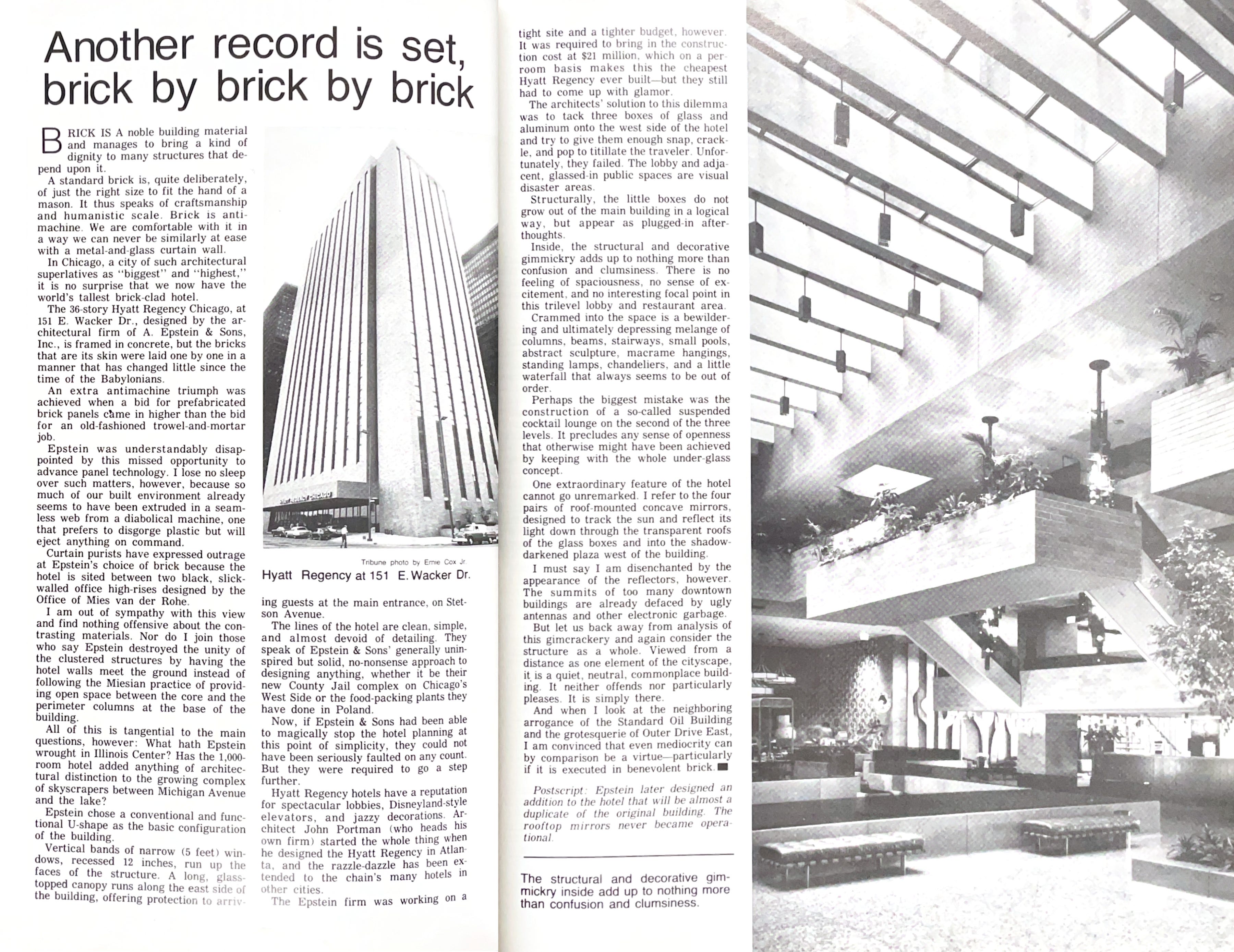
One of the ten critiques in Paul Gapp’s Chicago happens to be his review of Hyatt Regency Chicago, the hotel at 151 East Wacker Drive that was designed by Epstein & Sons and completed in 1974 (an expansion was completed in 1980, in time for a postscript in the Pulitzer publication). Gapp focused on the tower’s brick facade in his review, and accordingly Will Quam mentions the review in Fire and Clay; hence I’m including a scan of the review here (click the image to read it bigger on the screen):
Thank you for subscribing to A Weekly Dose of Architecture Books. If you have any comments or questions, or if you have your own book that you want to see in this newsletter, please respond to this email, or comment below if you’re reading this online. All content is freely available, but paid subscriptions that enable this newsletter to continue are welcome — thank you!
— John Hill
No posts
Comments
Nothing yet. Say the first thing.
Sign in to join the conversation.