
This newsletter for the week of April 20 looks at Gilardi House: Barragan’s Last Witness, a book-length case study of Luis Barragán’s last built work, completed in 1977. The insightful book features an interview with one of the clients, numerous photographs, archival drawings, critical essays, and impressions of the house by contemporary architects. The book from the archive features another case study of a Barragán project, while in between are the usual new releases and headlines. Happy reading!
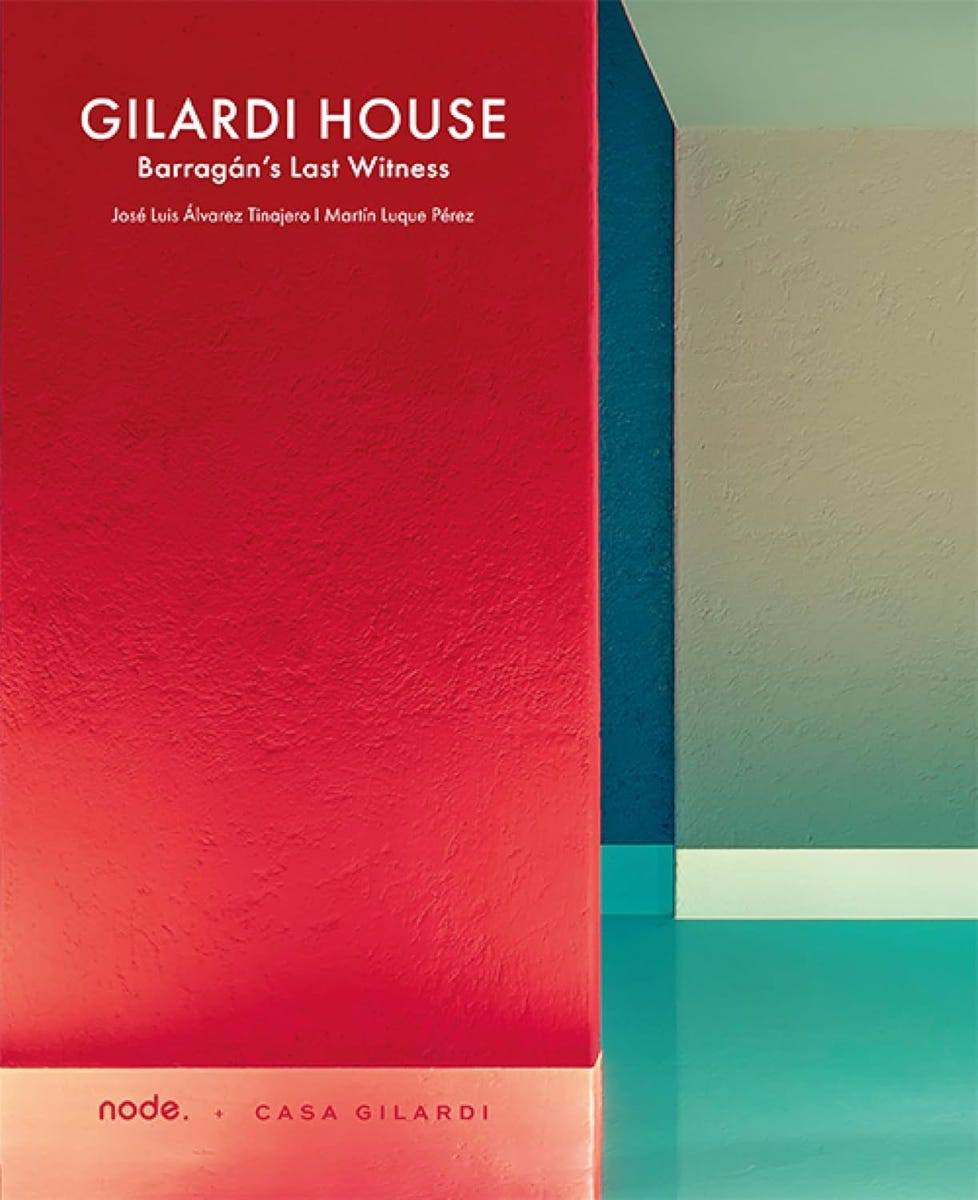
Gilardi House: Barragan’s Last Witness, by José Luis Alvarez Tinajero and Martín Luque Pérez (Buy from Actar / from Amazon / from Bookshop)
Tucked at the bottom of page 123 of The Architecture of Luis Barragan, the 128-page companion to the 1976 MoMA exhibition of the same name, is a small black-and-white sketch of the “House for Mr. Gilardi.” The project, whose construction was set to start that spring, comes last in the book’s 12-page list of Barragán’s works, which span from 1927 to the year of the exhibition. The catalog, which was written by Emilio Ambasz and can be downloaded via the MoMA website, does not mention the Gilardi House anywhere else besides a caption to the sketch, in which the standout feature of the “residence for a small family on a plot of land 30 feet wide and 100 feet deep” is “a covered pool which, in addition to serving as a swimming pool, will have alongside it an area for lounging which can also be used for dining.” The photo below, one of many in Gilardi House: Barragan’s Last Witness, reveals how the house was built just as Mexican architect Luis Barragán intended.
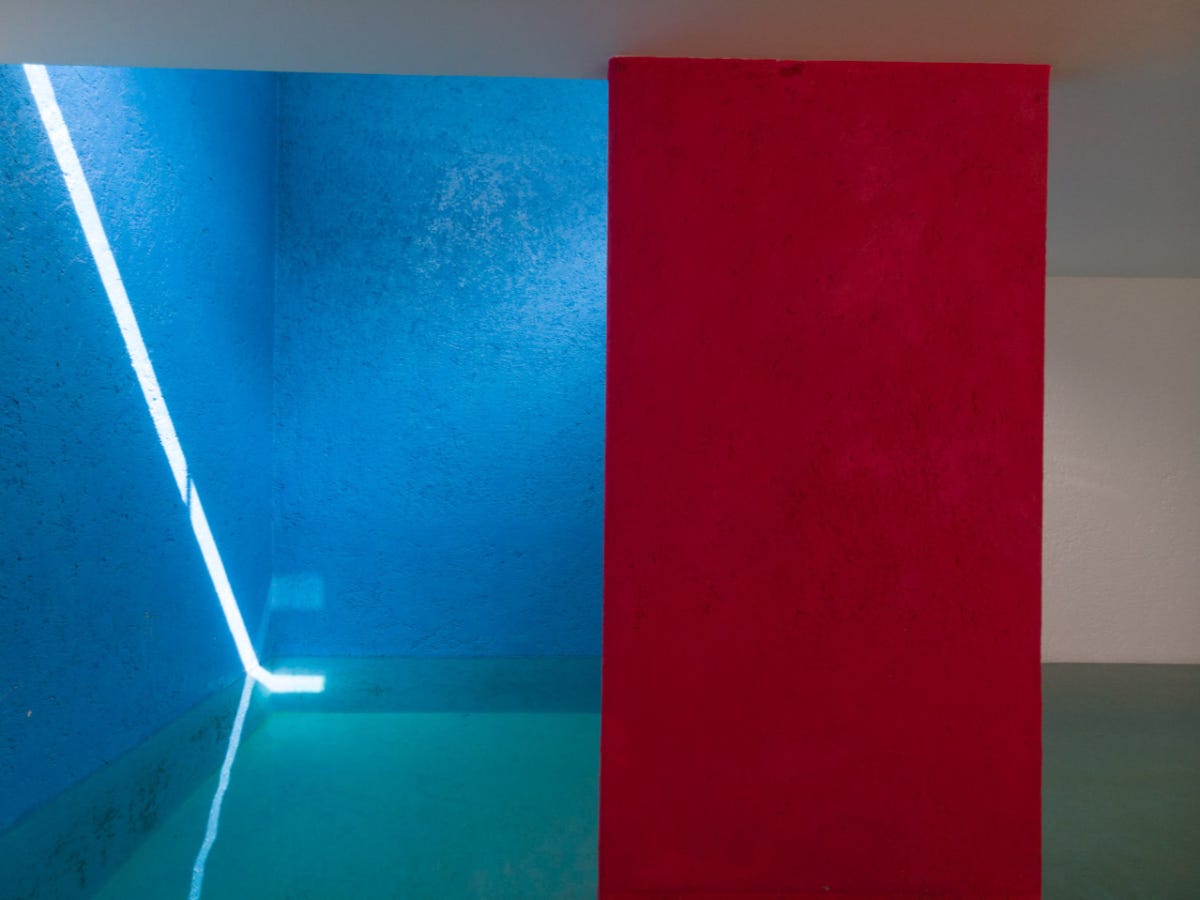
Early in Barragán’s Last Witness, we learn about the relationship between the Gilardi House and Ambasz’s exhibition/catalog via an interview between Martín Luque Pérez and his father, Martín Luque Valle, who was the partner of Pancho Gilardi and therefore one of Barragán’s clients on the project. In 1976, the advertising agency of Gilardi and Luque was booming, and after obtaining a piece of land “without any particular idea in mind” they approached Barragán, then in his mid-70s, asking if he would design a house for them. He declined, saying, “I’m sorry, but I’ve been retired for 10 years. So, no. I can’t design your house.” But three months later Barragán surprised them by calling and asking to see the property. Unbeknownst to Gilardi and Luque, the architect showed up with Ambasz, who had come to Mexico to work on the monograph—the first one on Barragán—but had one condition from MoMA: include a new, previously unpublished design. Without any current work due to his retirement, Barragán said yes to Gilardi and Luque, quickly generating a sketch for Ambasz and eventually shaping the building that would be his last.
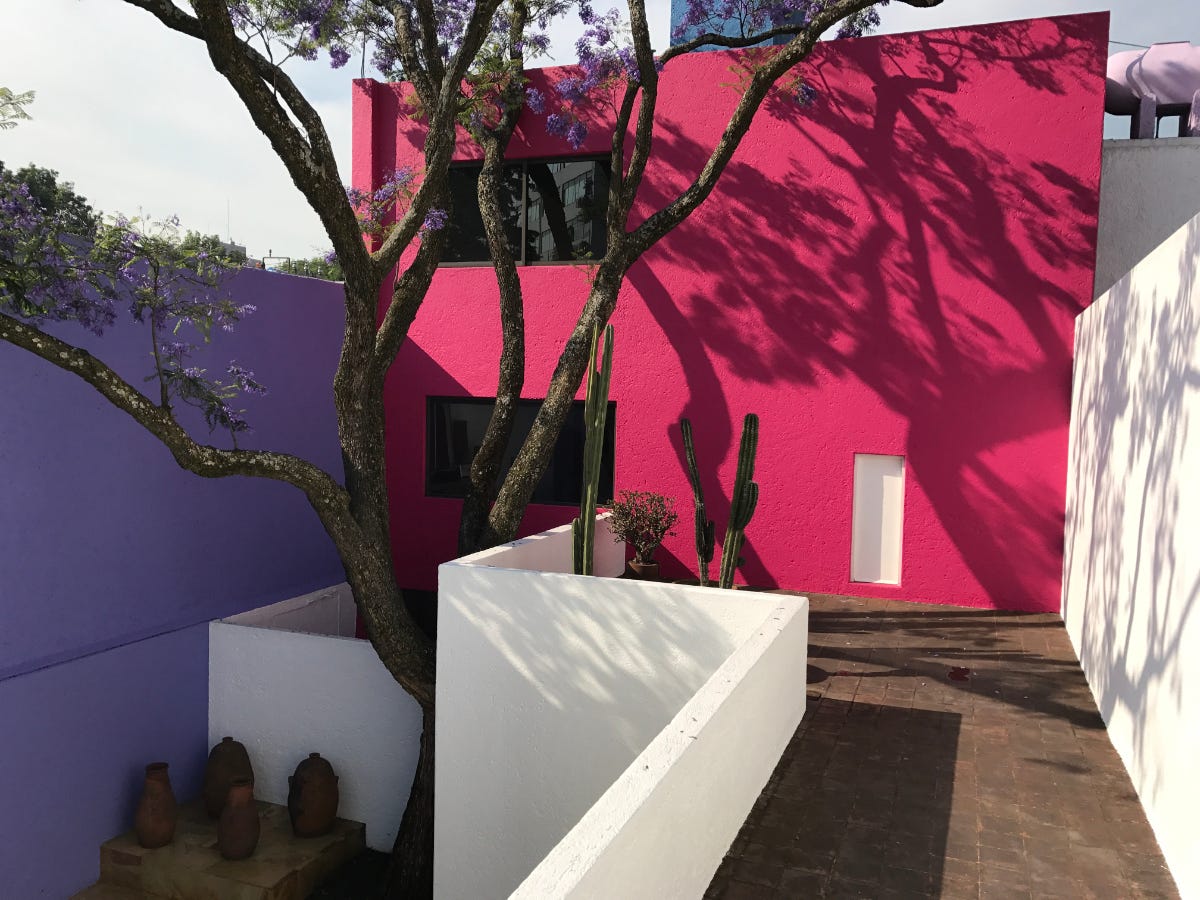
While the insights gleaned from the father-son interview are valuable, especially the jaw-dropping reveal of how fortuitous the commission was, it comprises just 10 pages in this 208-page monograph on Gilardi House. The interview is followed by 80 pages of color photographs (by César Béjar and Eduardo Luque), archival drawings, testimonials from architects who have visited the house and been influenced by it, a trio of critical essays (by Jorge Vázques del Mercado, Julio Jiménez Sarabia and Ricardo Devesa), and a short bibliography. The order makes sense, given that photography is how most architects know the architecture of Luis Barragán; here they see many photos that have not been previously published. Béjar’s photographs do a great job of putting the Giraldi House in context and then following the promenade architecturale from the street to the courtyard designed around an existing tree to the pool, while Luque’s photographs are more abstract, honing in on the overlapping planes of color. The reproductions of Barragán’s drawing that follow are important to include, but they are severely incomplete, given both a lack of captions and the fact Barragán directed the construction on site—in other words, his drawings, by their nature, convey just part of the completed picture.
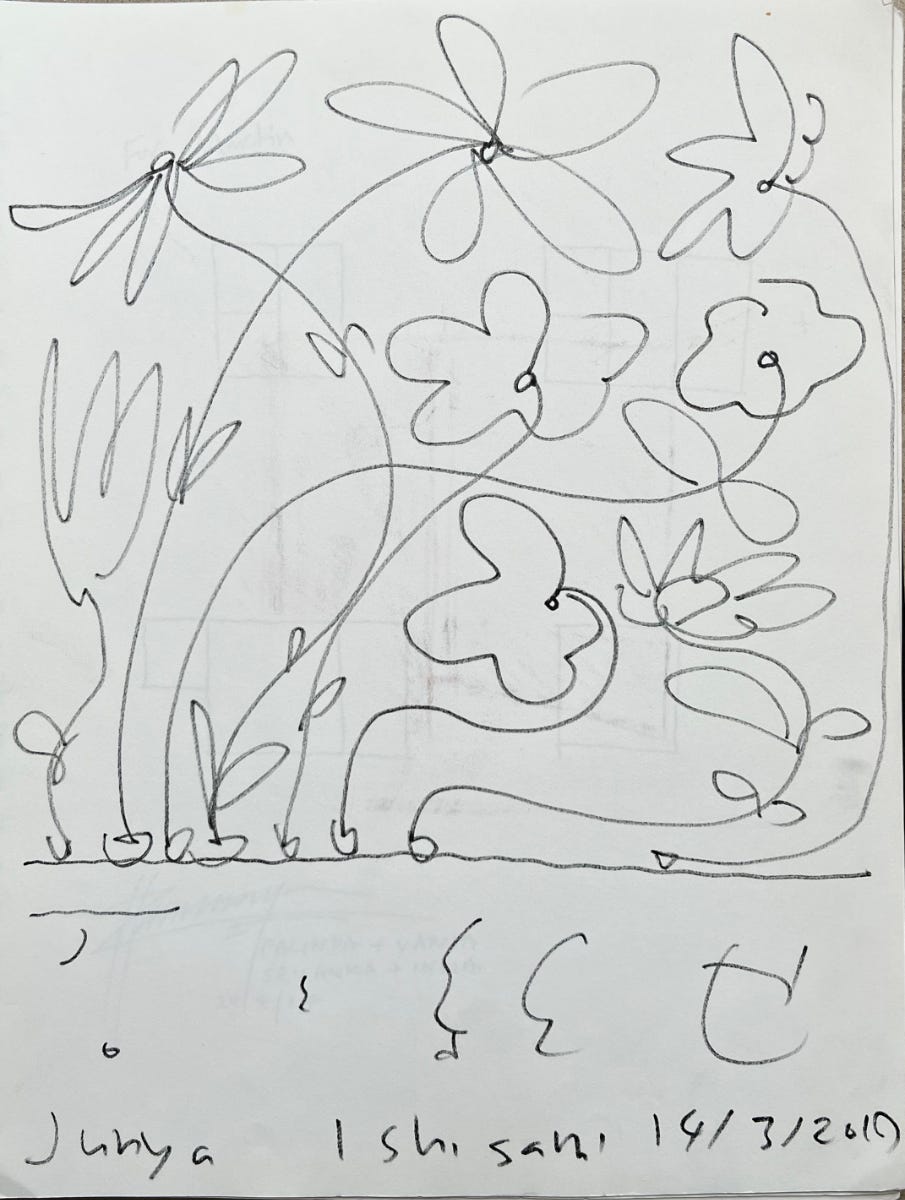
After digesting photos and drawings, readers then discover sketches and texts by architects who have experienced Gilardi House in person: Toyo Ito, Junya Ishigami, Neil Denari, Charles Renfro, Paul Lewis, Kengo Kuma … all are fans. The sketches drawn while visiting the house veer to the playful, while the texts range from the scholarly to the poetic and personal. The three critical essays that wrap up the book examine how Gilardi House can offer lessons for architects working today, how the project is infused with joy, and how building and garden relate to each other. Ultimately, the book’s value is found not in individual pieces, texts or images, but in the whole—in the fact a whole book is devoted to the project, much like earlier titles on Casa Barragan and Las Torres de Ciudad Satélite, the latter of which is discussed at the bottom of this newsletter.
(In the United States; a partial, curated list)
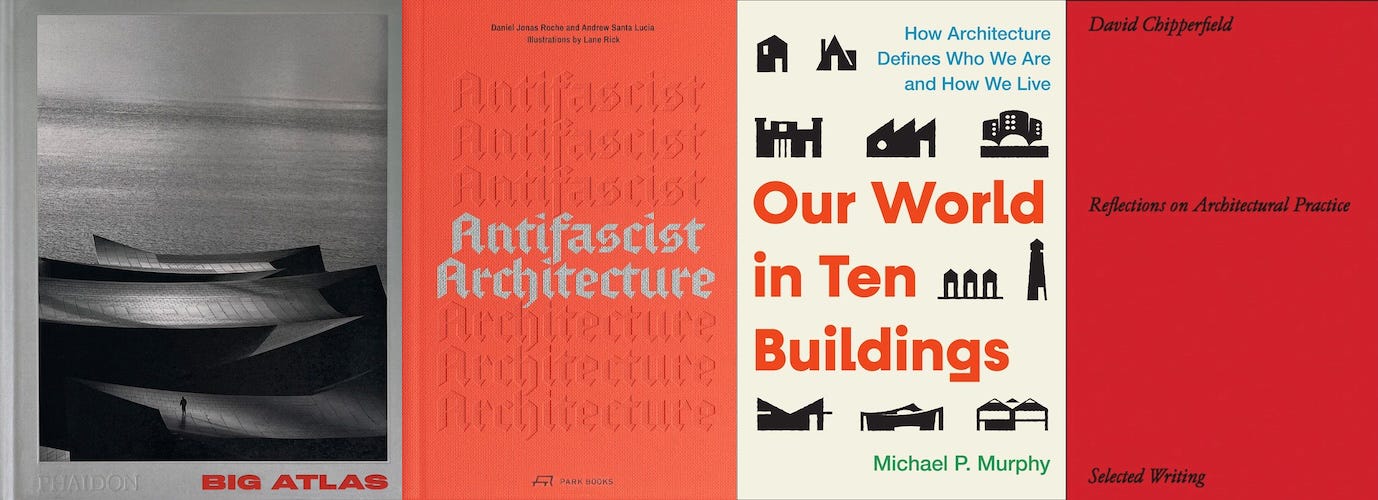
BIG Atlas, by Bjarke Ingels Group (Buy from Phaidon / from Amazon / from Bookshop) — “The first comprehensive monograph focusing on the built work of BIG-Bjarke Ingels Group, one of the most innovative and creative architecture practices working today.”
Antifascist Architecture: A Genealogy of Antifascist Architects, Buildings, History, and Theory, by Andrew Santa Lucia and Daniel Jonas Roche, illustrations by Lane Rick (Buy from University of Chicago Press [US distributor for Park Books] / from Amazon / from Bookshop) — “Architects, historians, and theorists have been obsessed with fascist architecture since postmodernism. But who are the antifascist architects? What does antifascist architecture look like? This book is the first attempt at creating a working definition.”
Our World in Ten Buildings: How Architecture Defines Who We Are and How We Live, by Michael Murphy (Buy from Simon & Schuster / from Amazon / from Bookshop) — “Author and architectural designer Michael Murphy takes us through ten milestone projects in his career he lays bare the physical, political, and intellectual labor at work shaping the world we live in.”
David Chipperfield: Reflections on Architectural Practice, by David Chipperfield, edited by Sarah Handelman (Buy from Artbook/DAP [US distributor for Walther König] / from Amazon / from Bookshop) — “A small but mighty compilation of Chipperfield’s manifold writings on architectural theory and praxis.”
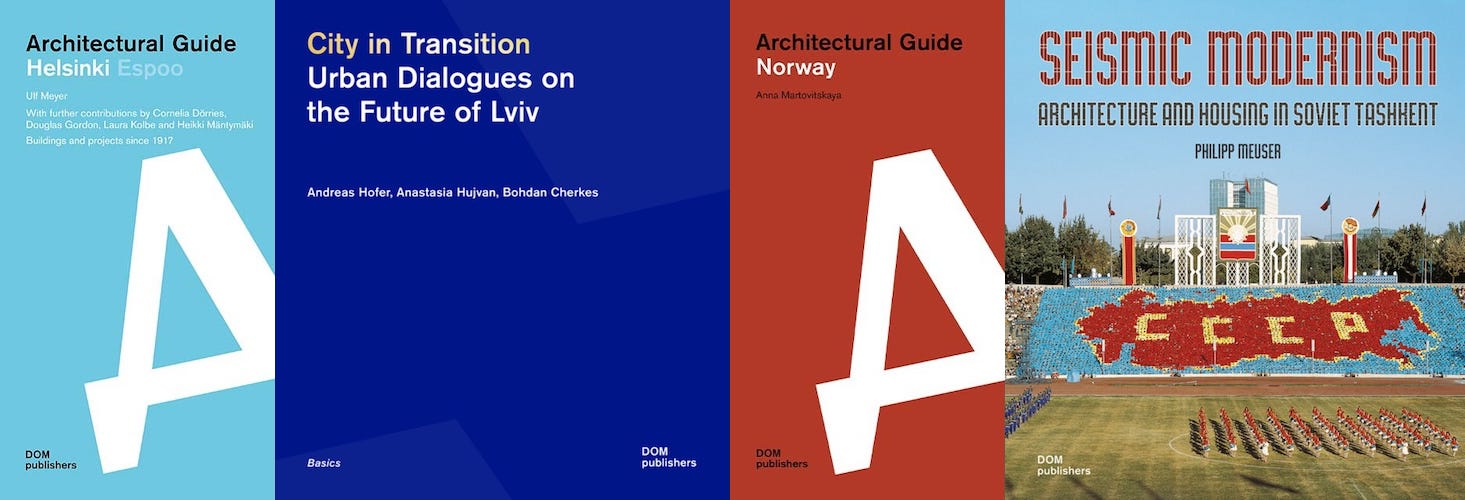
Architectural Guide Helsinki: Buildings and projects from 1917 to the Present Day, by Ulf Meyer (Buy from DOM Publishers / from Amazon / from Bookshop) — “As well as works by modern classics such as Eliel Saarinen and Alvar Aalto, [this book’s third edition] presents buildings by important contemporary architects such as Juhani Pallasmaa and Pekka Helin, as well as the latest projects by innovative firms including Anttinen Oiva, JKMM and Verstas Architects.”
City in Transition: Urban Dialogues on the Future of Lviv, by Andreas Hofer, Anastasia Hujvan and Bohdan Cherkes (Buy from DOM Publishers / from Amazon / from Bookshop) — “This book discusses practical and academic proposals for the urban transformation of Lviv, particularly during the ongoing crisis. It thereby offers valuable insights for urbanists, architects, city managers, policy makers, entrepreneurs, and the general public.”
Norway: Architectural Guide, by Anna Martovitskaya (Buy from DOM Publishers / from Amazon / from Bookshop) — “This architectural guide showcases 270 buildings, primarily from the twentieth and early twenty-first centuries. These buildings are located not only in the largest and most visited cities, such as Oslo, Stavanger, Bergen, and Trondheim, but also in the northern regions of Bodø, Tromsø, and Svalbard.”
Seismic Modernism, by Philipp Meuser (Buy from DOM Publishers / from Amazon / from Bookshop) — “The rebuilding of Tashkent provides a perfect example of Soviet ideas about urban planning – in which technical standardization and social requirements were no more of a contradiction than the design of experimental living concepts and the simultaneous search for an expression of national identity in building.”
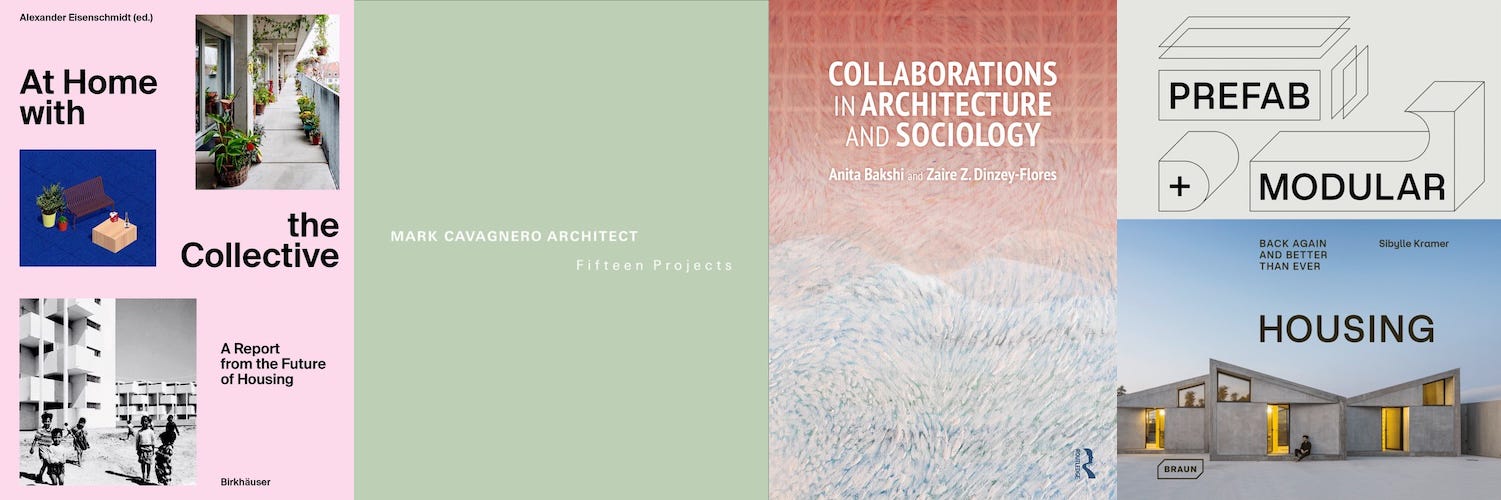
At Home with the Collective: A Report from the Future of Housing, by Alexander Eisenschmidt (Buy from Birkhäuser / from Amazon / from Bookshop) — “The housing shortage is a global problem that cannot be resolved through market-driven models of home ownership. This book, therefore, postulates a radical shift from house to housing and from the individual to the collective.”
Mark Cavagnero Architect (Buy from ORO Editions / from Amazon / from Bookshop) — “Born of the Modernist tradition of clean lines, abundant natural light, and functional, flowing open space plans, the [San Francisco] firm’s work expands on these values, encompassing a deep understanding of the city and Bay Area.”
Collaborations in Architecture and Sociology, by Anita Bakshi and Zaire Dinzey-Flores (Buy from Routledge / from Amazon / from Bookshop) — “This book, by an architect and a sociologist, addresses the disconnect between the design of the built environment and social life and lays out a pathway for interdisciplinary engagement.”
Prefab & Modular Housing: back again - and better than ever, by Sibylle Kramer (Buy from Braun / from Amazon / from Bookshop) — “Discovering how prefab and modular innovation are redefining the way we build and live.”
Full disclosure: As an Amazon Associate, AbeBooks Affiliate, and Bookshop.org Affiliate, I earn commissions from qualifying purchases made via any relevant links above and below.
Listen to the latest Design Emergency podcast, in which Alice Rawsthorn speaks with book designer Irma Boom, best known to architects for Countryside, Project Japan, and other books done with Rem Koolhaas. (Spotify)
Zach Mortice reviews Antifascist Architecture, the new book by Andrew Santa Lucia and Daniel Jonas Roche that “proposes new modes of practice for a collective political future.” (The Architect’s Newspaper)
“The Case for the Non-Reading Architect”: Among other things, Randy Deutsch, in his new Substack newsletter on AI and architecture, makes “the case for a book-free future” in architecture schools. Ironically, the piece ends with recommendations for fiction and non-fiction books to read. (Who We Need To Be)
Get to know South Korean architect Byoung Cho in the new “richly-illustrated” monograph Earth Works: Houses by Byoung Cho. (Wallpaper*)
Read a review of Impossible Toronto—On the Courtyard, by Studio VAARO (Aleris Rodgers and Francesco Valente-Gorjup) and Gabriel Fain Architects, published by the Neptis Foundation. (Canadian Architect)
Architecture critic Paulina Minet has started Der Architektur-Lesezirkel (The Architecture Reading Circle), a book club where participants read and discuss architecture books [in German]. The kickoff event, taking place at Hochparterre in Zurich, will feature Stefan Kurath’s Baukultur mit Bestand. (Swiss-Architects)
The 2026 SAH Publication Awards have been announced. Among them, the Alice David Hitchcock Book Award has been awarded to Anooradha Iyer Siddiqi’s Architecture of Migration: The Dadaab Refugee Camps and Humanitarian Settlement and Richard Wittman’s Rebuilding St. Paul’s Outside the Walls. (Society of Architectural Historians)
Read Natalie Tweedie’s review of Simon Phipps’s Brutal Scotland, which, instead of giving us a visual taste of some of Phipps’s photographic survey, is accompanied by Tweedie’s own architectural illustrations, for some reason. (BellaCaledonia)
In 2022, four years after the release of Jill Magid’s The Proposal and my review of Las Torres de Ciudad Satélite (2015) by Fernando González Gortázar, the Barragan Foundation opened an archive on the Vitra Campus in Weil am Rhein, Germany. While the inclusion of the Barragán Gallery inside Vitra Schaudepot would seem to signal a shift from away from the difficulties in accessing the archive since Federica Zanco took it over in 1996, it seems the foundation’s strict gatekeeping prevails. I discussed some of this in my 2018 review of Gortázar’s book, which is copy-pasted below.

I picked up this book in June 2016 after coming across it in a bookstore, but I didn't actually read it until this week. The reason I pulled it off the bookshelf was a screening of Jill Magid's The Proposal, a documentary film focused on the Brooklyn artist's obsessions with Mexican architect Luis Barragán, the holding of his professional archive in Switzerland, and Magid's attempt (the proposal of the film's title) to get the archive returned to Mexico. I have other books on Barragán, but I read this one before and after seeing the film since Federica Zanco, the wife of Vitra chairman Rolf Fehlbaum and the caretaker of the archive, wrote the lengthy foreword to the book, a historical case study of one of Barragán's most unique and exceptional projects: the Torres de Satélite, entry markers to a large development north of Mexico City.
Magid's biggest bone of contention with Zanco, who prizes the Barragán archive but refuses to share it with anyone else (she claims a comprehensive catalog of his works is ongoing), is how the Barragan Foundation also "owns complete rights to the oeuvre of Luis Barragán." Therefore any publication with Barragán's work requires the Foundation's written consent—and a payment. The frustration that Magid and other artists or architects or researchers encounter when attempting to access the archive and research the architect's work is undeniable. In fact, Fernando González Gortázar, who contributed the main essay for this book and spends a good deal of it trying to reconcile the proper dates and attribution of the Torres de Satélite, puts his frustration into words:
It is essential, for this and a thousand other reasons, that the Luis Barragan Foundation in Switzerland opens up to researchers, so that we can clarify so many doubts about the chronology of the work of this towering figure. For example, in the constantly cited book by Ambasz, and those based on it, several dates seem to be slightly too early.
Gortázar’s essay is based on a 2007 lecture at the Casa Barragán, given to celebrate the 50th anniversary of the Torres de Satélite. But this anniversary was based on the commonly held belief of their 1957 completion, a date that Gortázar contests as too early—something he argues only up to a point, given the lack of access to the archive. Zanco, who wrote her contribution in 2014, illuminates her own difficulties in navigating and making sense of Barragán’s huge archive, saying at one point:
[One] of the problems related to the analysis of Barragán’s work ... lies in the imprecise references to sources and credits, as well as the lack of a nomenclature and of an organically definitive chronology. This partly justifies the slow process of study and organization of the original material and of the previous and ongoing research in general.
Indeed the “ongoing research” has been going on since about 1997, not long after Fehlbaum purchased the entire archive for Zanco as a $2.5 million engagement gift. The comprehensive catalog has always been a few years off, but twenty years later it’s hard to see any end in sight.
But does a reader of this book need to know the back story of the archive to appreciate the project or learn from the materials on display? I’d say no, since the relevant comments, such as those above, are the rarity, and because the text contributions are balanced by many illustrations of the Torres de Satélite: drawings and models by Barragán; the same by artist Mathias Goeritz, whose involvement is one area of confusion; photographs of the towers under construction and completed, many in color to reveal the various ways the five concrete towers have been painted over time, and some fairly recent photos showing how the towers are unfortunately penned in by taller buildings, huge billboards, and pedestrian bridges (since removed, apparently); photos of the towers in pop culture; and what appears to be full-scale photos of the tower’s concrete surfaces, with one color per page at the back of the book. The layout of the book’s visual elements, including heavyweight glossy pages near the back of the book, combines with the texts to create a beautiful object that is insightful yet still—at a time when Barragán’s archive remains closed—incomplete.
Thank you for subscribing to A Weekly Dose of Architecture Books. If you have any comments or questions, or if you have your own book that you want to see in this newsletter, please respond to this email, or comment below if you’re reading this online. All content is freely available, but paid subscriptions that enable this newsletter to continue are welcome — thank you!
— John Hill
No posts
Comments
Nothing yet. Say the first thing.
Sign in to join the conversation.