

Shame & secrecy may be the biggest safety threats in women’s Health Stack
What you’ll learn in this post:
Why women have become the largest unsupervised polypharmacy population in the country — and why shame is keeping their Health Stack invisible
Where the evidence is stacking up versus where the marketing outpaces the science
Which drug interactions carry the clearest clinical risk, and which are credible concerns without definitive evidence
Why GLP-1s, psilocybin, and ketamine are all modulating the same reward circuitry — and what that means when they run concurrently
Why the hormonal context of perimenopause changes how every single one of these compounds is metabolized and felt
Women are not waiting for permission.
They’re using cannabis to sleep, microdosing psilocybin to feel connected, taking a GLP-1 to manage cravings, a peptide for joint pain, a prescribed stimulant for ADHD – undiagnosed for nearly four decades, an SSRI because life, and ketamine-assisted therapy to finally move through depression that no single medication ever fully touched–and, also, perhaps it’ll help titrate off an SSRI?
GLP-1s are modulating reward circuitry, psilocybin is modulating serotonin, and ketamine is modulating glutamate and dopamine — all in the same nervous system, all on top of a hormonal landscape shifting across perimenopause. Nobody is studying the combination of women’s polypharmacy and psychedelics. Some women are working with their providers to make sense of what is emerging. Most are managing it alone, secretly.
Women taking their health into their own hands is not new, but the complexity of what they are holding continues to rise. Almost nobody knows the full picture of a woman’s “stack,” including her provider(s). At its most basic, a stack is a medicine protocol developed to support a specific outcome. Where it becomes complicated is when stacks are layered, also described as “stacking.”
Collectively, the medicines we take for our body and brain can be thought of as our Health Stack, which cannot be cleanly defined as functional medicine because recreational drugs are compounds that need to be included in the stack. This is Adult Use Medicine, assembled in private, disclosed in fragments, and defended against the anticipated judgment of the people who are supposed to be helping.
As compared to when I began working in cannabis in 2015, women’s stacks have become supersized. From OTC to Black Market gray-zone meds, a woman’s stack is like an iceberg: what’s hidden is the danger. And why don’t women fully disclose the contents of their personal stack? stigma.shame.society in denial of change. I’ve been here before, and transparency is at the heart of harm reduction.
The shame that keeps the stack hidden is also what keeps women from getting accurate information about how these compounds interact. Every woman who stays silent to avoid judgment is also withdrawing her experience from the collective record, and, as Stephanie Karzon Abrams explained in last week’s podcast episode, citizen science provides foundational self-reported data to identify areas for further clinical investigation. Furthermore, women sharing the truth of their stack helps other women in ways related to belonging and safety.
The Health Stack at a Glance
Women are layering these substances because each addresses a distinct women’s health need:
Cannabis (THC/CBD/CBN) — Self-directed sleep aid, stress reduction, and management of perimenopausal vasomotor symptoms. Often the first thing added, and rarely disclosed to prescribers.
Microdosing Psilocybin — Sub-perceptual doses for neuroplasticity, emotional connectivity, and daily anxiety or burnout. Federally Schedule I. The compound women are most likely to conceal, with the most material reasons to do so.
GLP-1 Agonists (Semaglutide, Tirzepatide) — Prescribed for metabolic health; increasingly sought for quieting “food noise” and compulsive cravings. As of 2026, an estimated 30 million Americans are on GLP-1s. Women use them at roughly twice the rate of men.
Peptides (Collagen Hydrolysates, BPC-157, TB-500, GHK-Cu) — Deployed outside insurance models for tissue repair, joint inflammation, and physical decline. Evidence varies significantly by compound, and the regulatory landscape shifted materially in 2026.
ADHD Stimulants (Adderall, Vyvanse) — Driven by a wave of adult diagnoses in women whose symptoms were historically misread as anxiety or depression. Often the piece of the stack women feel most conflicted about — a diagnosis that arrived decades late, for a condition they were implicitly told they were too organized, too functional, or too female to have.
SSRIs/SNRIs — Emotional baseline maintenance during intense hormonal fluctuation and perimenopausal mood instability. The most normalized piece of the stack, which also means the one most likely to interact silently with everything else.
Ketamine-Assisted Therapy — Intensive intervention for treatment-resistant depression and trauma loops when daily medications are ineffective. Women who reach ketamine have usually failed multiple prior treatments, and there is shame in that failure narrative, even when the failure belongs to the medications, not the patient.
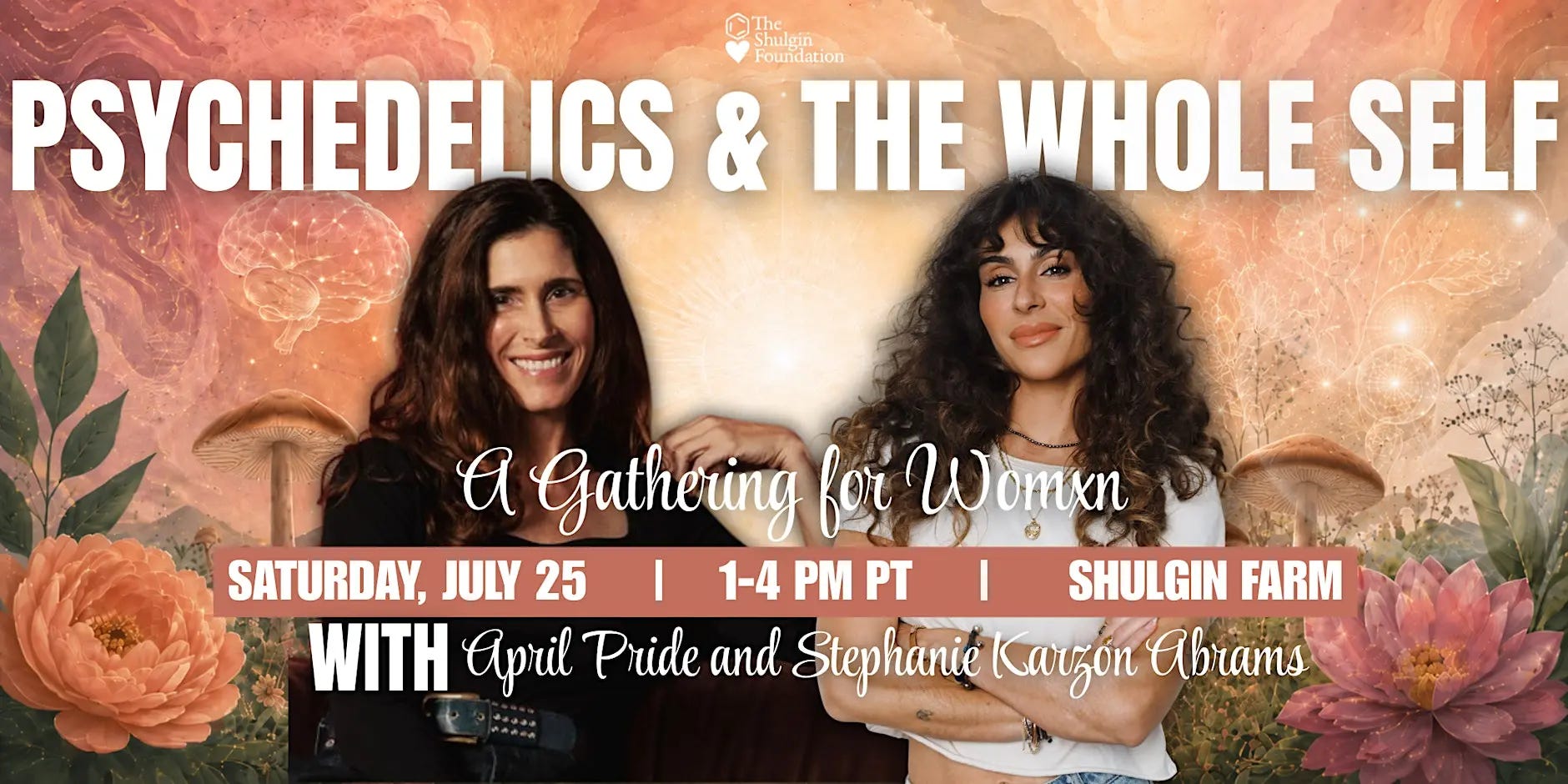
Join me and Stephanie Karzon Abrams for Psychedelics & The Whole Self: A Gathering for Womxn in the Bay Area on July 25th! Space is limited to 50 people, so reserve your spot here. In the meantime, listen to our recent episode for more insight into Stephanie’s work.
🎙️ Listen to this episode featuring Stephanie Karzon Abrams
What is cannabis actually doing — and why women need to tell their doctors if they’re on an SSRI?
Sleep is consistently cited as one of the primary reasons women add cannabis to their stack, yet although one in three adults reported sleeping better when using marijuana, women are less likely to report benefit. Chronic use is associated with tolerance, withdrawal-related sleep disruption, and worse objective sleep quality over time. The net result for many women is diminishing returns because their sleep architecture hasn’t meaningfully changed.
Women using cannabis for sleep are among the least likely to disclose it to a prescriber. They expect to be told to stop. to be judged. or lose access to something else in their stack, but without disclosure, a significant drug interaction in a Health Stack can go unmanaged.
CBD and, to some extent, THC inhibit an enzyme involved in metabolizing several SSRIs, including sertraline and escitalopram. That inhibition raises SSRI exposure in the blood. Case reports of serotonin-related adverse events involving cannabis products plus serotonergic medications exist.
CBD also inhibits the same enzyme pathways that make grapefruit dangerous alongside blood pressure medications, statins, and dozens of other common drugs. If a medication carries a grapefruit warning, CBD carries a similar caution through the same mechanism. Most women taking both have likely never been told this.
The psilocybin-SSRI combination carries its own caution in the same serotonergic territory: receptor overlap is real, and the combination is understudied, not cleared. What is overstated is treating SSRI plus stimulant as equivalent in risk — routine SSRI-stimulant prescribing is common, and the evidence for serious serotonin syndrome risk from that combination alone does not match the cannabis-SSRI interaction in strength.
What do we actually know about psilocybin microdosing — and what are women risking by not disclosing it?
There are no large, definitive randomized controlled trials that settle the question. no consensus dosing standards. no long-term safety data. What we have are phase 2 trials underway and a growing body of self-reported data that are not proof of efficacy, and expectancy (placebo) effects are substantial.
Psilocybin is federally Schedule I and prohibited in all but two states. That legal status is what makes microdosing the most concealed piece of a Health Stack, and the concealment has consequences: women who are microdosing while on SSRIs are combining serotonin-active compounds without clinical oversight. The clinical evidence is still thin, but the best available data point in one main direction: SSRIs/SNRIs usually blunt psilocybin’s effects rather than create a dramatic toxicity signal. Without fully titrating off of this class of pharmaceutical drugs, more psilocybin will be necessary to achieve the same effect.
What are GLP-1s actually doing — and why does shame persist once cravings subside?
For a fuller picture of where GLP-1s and women stand right now, check out this post on GLP-1s, psilocybin, and cannabis.
There is a shame dimension that some women who started GLP-1s are repeatedly reporting. Once the food noise went quiet, they could hear a different story about their relationship with food, and it wasn’t centered on constantly failing. This reframe shifted how they see themselves, their efforts, and just how strong they’ve been all along. What follows is relief.grief.anger about what the shame cost in the years before silence settled in. Still, many women do not self-report their GLP use because of the perceived judgment that they cannot lose the weight on their own.
Women jobseekers on GLP-1s are 27% more likely to land a job within 18 months of their weight loss compared to those who aren’t taking weight loss drugs, according to a new study out of Harvard. By contrast, the positive effects of GLP-1 use on a man’s job search were much smaller. More on Business Insider.
What evidence exists for peptides — and what is gray-zone medicine?
This is where the word “peptide” does real damage, because it lumps compounds with very different clinical evidence under a single moniker. Understanding the difference is a working definition of gray-zone medicine: a category where something is legal to obtain, actively used, and either minimally regulated or entirely outside clinical validation.
Popular peptides BPC-157, TB-500, and GHK-Cu sit in a messy gray zone. In 2026, the FDA removed at least some of them from Category 2, but that did not make them FDA-approved, and the broader legal landscape is still evolving. What exists is mostly preclinical: animal studies, in vitro work, anecdotes, and misleading wellness claims not substantiated by randomized-trial evidence. And for many women using these compounds outside standard care, there’s a second layer of uncertainty: not just whether the peptide works, but whether the vial contains what it says it does.
As GLP-1s come off patent in India and China over the next year, when cheaper and often counterfeit goods are likely to end up in the stack of women in the US and beyond, at a rate at least double that of men. Although we cannot predict the pressure that GLPs’ proven high demand will have on safe supply, we can presume that more women will bear the consequences of this grand experiment.
Three peptides likely in a woman’s Health Stack
BPC-157 has been shown in rodents to accelerate healing of tendons, ligaments, and gut tissue and appears to influence dopamine and serotonin pathways. Women are using it for joint pain, gut issues, and increasingly for mood support.
TB-500 promotes tissue repair and reduces inflammation, primarily in muscle and tendon. Most evidence is preclinical. Women are using it for muscle recovery and, increasingly, for cardiac and neurological support.
GHK-Cu is a naturally occurring copper-binding peptide that declines with age, and it has solid dermatological research supporting its roles in collagen synthesis, wound healing, and antioxidant effects. Although the evidence is real, it’s being extended to claims of systemic anti-aging, cognitive support, and tissue repair that haven’t been tested in humans at the systemic level. Women using it for skin and hair are on the safer side, but for everything else, they’re in the gray zone.
Is ketamine-assisted therapy safe to combine with everything else — and why do women hide what they are already taking from their clinic?
Ketamine has been used in hospitals for decades, which means we have more human safety data than exists for most psychedelics. It does not mean that stacking it with SSRIs, stimulants, cannabis, or pain medications is fully mapped.
Ketamine is commonly used in patients already taking antidepressants, including SSRIs, but the evidence base is indirect, and clinical practice varies widely. With stimulants, the concern is cardiovascular: ketamine can raise blood pressure and heart rate, as can ADHD stimulant medications. With cannabis, plausible intensification of dissociation or blood pressure fluctuation during sessions is a concern without quantified women-specific risk data. With psilocybin, the concurrent serotonin activity is a flag that most ketamine clinics are not equipped to evaluate if this part of the stack is kept secret.
What is nobody studying — and what is shame costing us?
Both gaps need attention: the hormonal landscape underneath the entire stack, and the communication failure between patients and providers.
Cannabis plus SSRI plus stimulant plus ketamine creates overlapping serotonergic and cardiovascular considerations that nobody has tested together. GLP-1s plus stimulants layer appetite suppression on top of appetite suppression, with possible nutrient deficits that nobody is tracking. Peptides plus microdosing: no data exists. And all of it sits atop a hormonal landscape — estrogen, progesterone, testosterone — that shifts across the menstrual cycle, perimenopause, and postpartum, altering how each of these compounds is metabolized and experienced.
My intention with this post is to underscore the risk to women’s safety if any part of a Health Stack is kept secret, encourage women to share what’s working for them or not with one another and/or trusted providers, and paint a picture of what may be below the surface in women’s polypharmacy and psychedelics for many women navigating this alone.
Take care,
April
Frequently asked questions
What is a woman’s secret stack? A woman’s secret stack refers to the combination of substances — prescribed, off-label, and unregulated — that midlife women are increasingly using concurrently to address intersecting health needs, while keeping the full picture concealed from prescribers, partners, and sometimes themselves. The secrecy is driven by shame, anticipated judgment, legal risk, and a healthcare system structured around single-condition, single-provider care that has no framework for the complexity women are actually managing.
Is it safe to combine psilocybin and SSRIs? The drug interactions between psilocybin and SSRIs are understudied and not proven safe. Both act on serotonin pathways, raising concerns about receptor competition or cumulative serotonergic effects. No clinical trials have tested this combination. Women using both should disclose this to any practitioner managing their care. The silence that shame produces around psilocybin specifically makes this one of the least-managed interactions in the stack.
Can a GLP-1 like Ozempic affect how my other medications work? Yes. GLP-1 agonists significantly slow gastric emptying, which alters the timing of oral medication absorption. ADHD stimulants, SSRIs, and orally ingested psilocybin may all have delayed or unpredictable onset when gastric motility is reduced. If medications feel less consistent since starting a GLP-1, absorption changes are a likely factor worth raising with your prescriber, which requires disclosing all of what you are taking.
Does cannabis interact with antidepressants, blood pressure medications, or statins? Yes, in ways most prescribers do not ask about, and most women do not volunteer. CBD and THC inhibit CYP2C19, CYP3A4, and CYP2D6 — the enzyme pathways responsible for clearing SSRIs, many blood pressure medications, statins, and other common drugs. If a medication carries a grapefruit warning, CBD carries a similar caution. The interaction goes unmanaged when women do not disclose cannabis use, which most do not.
Why do women keep their medication and supplement stacks secret? For several reasons that compound each other: anticipated judgment from prescribers, legal risk around Schedule I substances like psilocybin, fear of losing access to one part of the stack by disclosing another, professional and custody-related exposure, and decades of having their health decisions questioned or dismissed. The silence is rational in the short term. It is dangerous in the stack.
What is gray-zone medicine, and how does it apply to peptides? Gray-zone medicine refers to substances that are legal to obtain, actively used, and either minimally regulated or entirely outside clinical validation. In peptides, the distinction lies between collagen hydrolysates — which have randomized-trial support for osteoarthritis — and compounds like BPC-157, TB-500, and GHK-Cu, which have limited human evidence and, as of 2026, sit on the FDA’s Category 2 list, barring legal compounding. Women sourcing gray-zone compounds are among the least likely to disclose them to a clinician, which compounds the risk.
Is there any research on how perimenopause affects medication or psychedelic response? Almost none. Estrogen, progesterone, and testosterone directly influence serotonin signaling, dopamine regulation, and drug metabolism. A perimenopausal woman is not on a stable hormonal baseline — she is in active fluctuation that changes the pharmacological landscape of everything she takes. No large clinical trials have been designed to account for this variable alongside polypharmacy. The data that would close this gap lives, in part, in the stacks women are currently keeping secret.
Comments
Nothing yet. Say the first thing.
Sign in to join the conversation.