
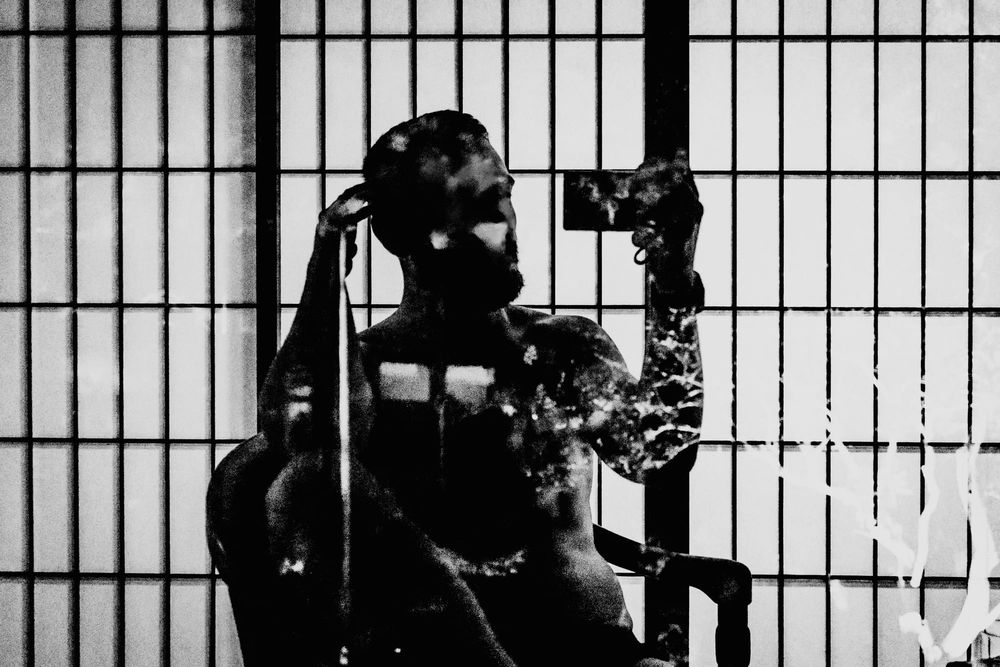
I have spent most of my life learning how to hold a stranger's attention. Some of what I learned I would hand back if I could.
My name is Simone Salis. Italian, twenty-eight years of it before Chicago. And before I was any of the things the rest of this page describes, I was a technical kid. I wrote code before I wrote jokes: people spent years telling me to pick a lane, creative or technical, as if humans shipped with only one hand. I never picked.
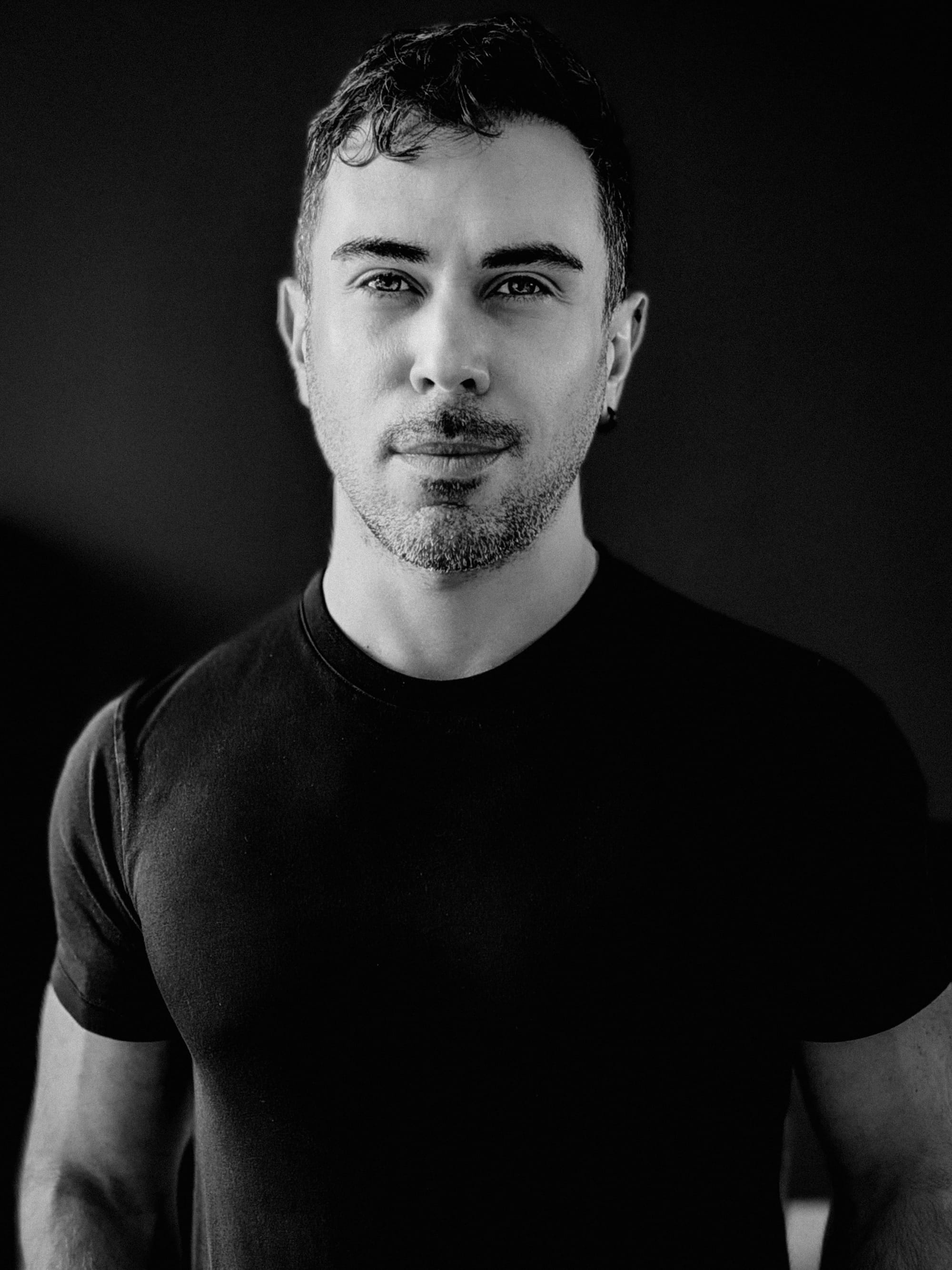
For most of a decade I made Italians think on the radio. At Rai Radio 2 I wrote and hosted through the 2010s. I solo-anchored Radio2 Week and Radio2 Weekend, the first Rai shows broadcast live between Rome and Chicago, and I was the daily voice of TG Lercio inside programs run by Serena Dandini, Luca Barbarossa, and Claudio Sabelli Fioretti.
Lercio is the Italian answer to The Onion. I anchored its newscast in front of a few hundred thousand people at the Concerto del Primo Maggio in Rome, the same year the collective won the Premio Satira Politica di Forte dei Marmi, the oldest satire prize in the country. On Comedy Central, then part of Viacom, I reported for CCN beside Saverio Raimondo, including Trumplandia, a run of dispatches from an America that was about to stop being a joke. I produced for Discovery and hosted a show of my own on La7. I spoke about all of it from a stage at the Festival Internazionale del Giornalismo in Perugia.
Before any of it paid, there was print. I wrote for l'Unità under Concita De Gregorio and for Emme, the satirical paper Sergio Staino built inside it. At Luca Telese's Pubblico I ran the digital side, back when digital was still the part the grown-ups handed to the youngest person in the room. I voiced anime for Italian audiences, Neon Genesis Evangelion and Code Geass, under Fabrizio Mazzotta. I carried Chicago long-form improv back to Italy and taught it after training at the iO Theater and Second City and studying at Columbia College. The rooms filled with friends and people I admired, among them ZeroCalcare, Edoardo Ferrario, Francesco De Carlo, and Michela Giraud. Later I started a podcast, 2343, once called The Hoomanist, and let the conversations run an hour past where a green room would cut them off. Pixar animators, Saturday Night Live writers, engineers out of Google and Apple, and an adult-film performer or two. US public radio carried it through PRX.
The Attention Business
Look at the through line, and it is always the same trade. Attention. How you earn it and what you owe once you have it. I got good enough at that trade to be a little ashamed of how good I was.
I write to think in public, and the most read thing I have ever published is an essay arguing we should make advertising illegal. It hit the front page of Hacker News with close to two thousand votes, topping Trump's tariffs—a small joke about attention at my expense. The other piece people keep finding asks how to stare at your phone without losing your soul. I am not a neutral witness on either count. I build machines. I know what they are for.
A few to start with:
- What If We Made Advertising Illegal?
- How to Stare at Your Phone Without Losing Your Soul
- Consumerism: The First Universal Religion
What I build now
These days I build different machines. Through Agensum, I design the pipelines that take repetitive machine work off a company's best people, then I hand the system over and walk away. No retainer. You run it for the cost of the calls.
The part I never outsource is the building. I write my systems the way I have always written everything because you cannot automate what you do not understand, and you cannot understand a thing you have never built by hand. I leave as much behind in the terminal as I do on the page. They are the same muscle. A clean function and a clean sentence are the same act: structure that does exactly what it says and nothing it doesn't.
Ten years in American tech, much of it at GoHealth, taught me where a company's time actually dies, and the answer is never that the people should work harder. I went through Y Combinator along the way. The point of Agensum is small and stubborn. Give people back the hours the machine was always meant to take, and let them spend those hours on the part only a person can do.
Visual Engineering (Photography)
I shoot street, almost always on a Ricoh GR, which named me one of three photographers worldwide for its Official Select. The Commuter series took the Tokyo International Foto Awards in 2023. It is the same hunt as the comedy and the code. The decisive moment in the Magnum tradition and the quiet friction between people and the places they build to live in.
Recent Photographic Recognition
- Ricoh GR Official Select: One of three photographers selected globally by Ricoh (the creators of the GR camera series).
“The colors of the ground and the geometric patterns of the steel frame... The bold black frame heightens the thrill of peering down below.” — GR Official Select
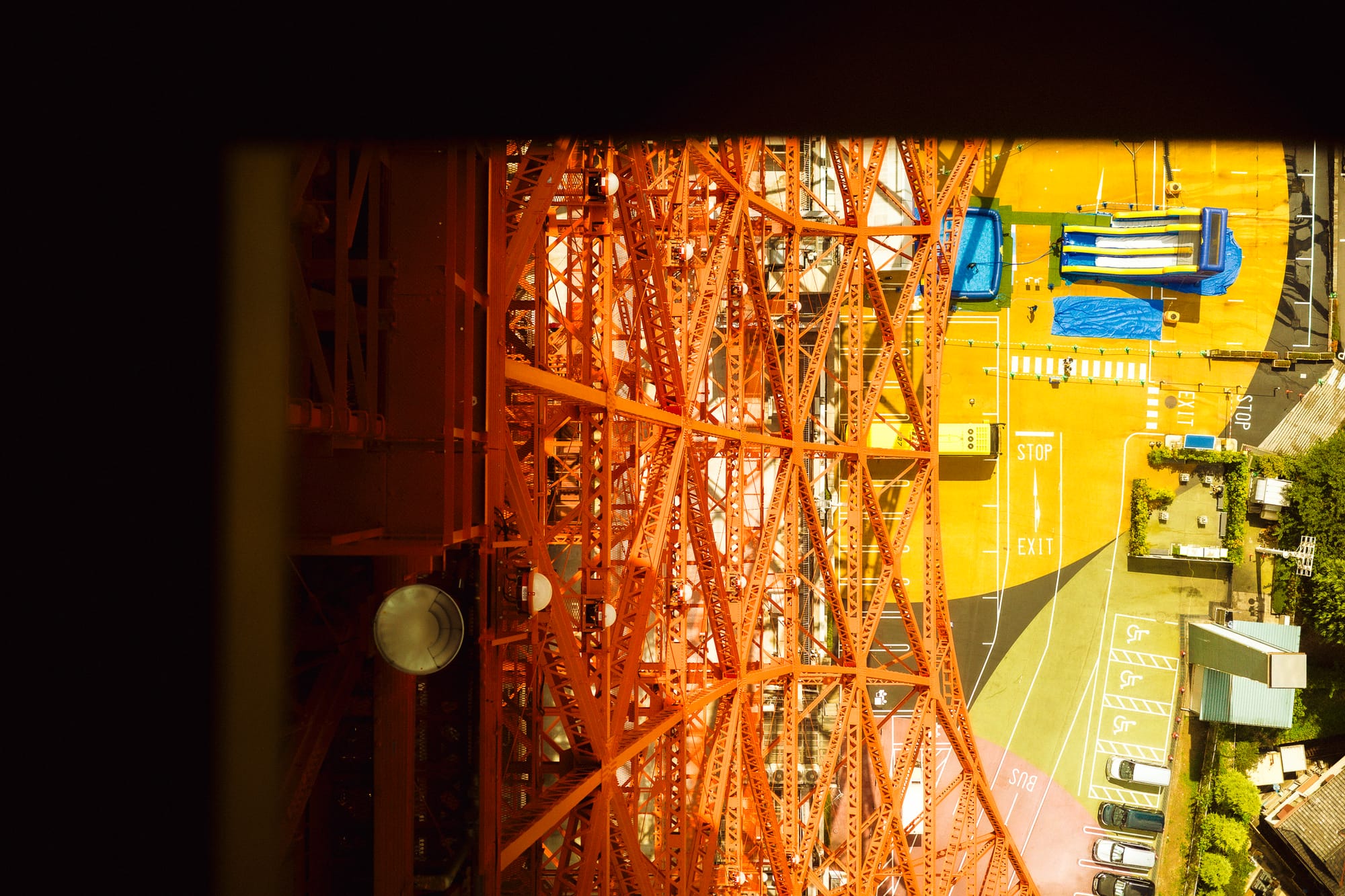
- Tokyo International Foto Awards: Awarded for the “Commuter” series (2023).

What the Body Knows
I train, consistently and on purpose. I build work under the iron, the slow, brutal arithmetic of improving while staying lean, work that does not care how articulate you are. As an amateur, I respect combat sports for what they teach that the gym cannot. Competitive confrontation, the honest kind, governed by respect and fairness, two people meeting at full effort and shaking hands after. Not aggression. Readiness. I believe that, as much as possible for each of us, we must be able to face anyone at every level, body included. For the moment the heavier weapons of intellect and compassion have failed, and there is nothing left to meet the world with but yourself.
The philosophy underneath that is not a phase I bought. Stoicism did not reach me as a bust of Marcus Aurelius on the back cover of a Ryan Holiday book, sold with a promise to optimize my mornings. As a Roman-born American, I grew up inside it. Sunday walks through the Roman Forum with my uncle, the stones still standing, the arguments still running. It came to me as inheritance and as culture, lived first and named later. I did not discover Stoicism. I discovered myself through it, which is the opposite move.
Practice
And I sit. My Sōtō Zen name is Kōdō Shimon, 光道志門, in the line that runs back through Shunryū Suzuki. The practice is the upkeep the rest of it demands. Spend your days engineering attention for other people, and you had better keep something in your life pulling hard the other way.
For thirty years the double life was a liability. Pick a lane, they said. Then the lane closed. The work that matters now needs one person to imagine the thing and build it, to write the brief and write the code that runs it, and that person turns out to be rare.
I did not change. The moment did.
I have been getting ready for this since I was a kid who would rather open the machine than play with it.
Get in Touch
You can hit reply on any newsletter issue, just use the form below, or email me at this address:
gro.enomis@silas