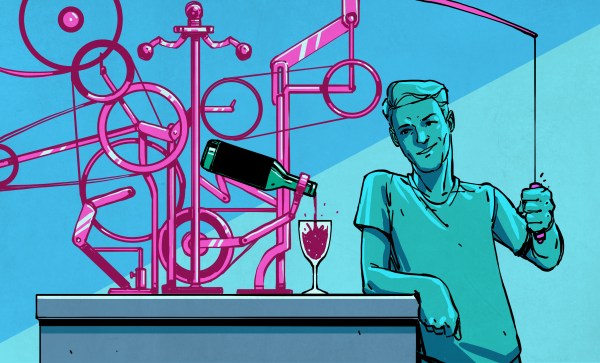
You Gotta Want It

On Hackaday last week, and on the podcast, we were talking about one of the educational toys of yesteryear that launched a thousand careers, at least if the comment section is to be believed: the Radio Shack 200-in-1 electronics kit. The “toy” itself was basically a bunch of components with spring terminals, but the secret sauce was in in the instruction book, and maybe the marketing.

Tom had one of these when he was a kid, and told a great story about wanting it desperately based on the ads he had seen with kids Morse coding to each other. When he got the kit, and found out that “it was just a bunch of wires” he was fully pissed off. But he worked through the examples, learned some basic electronics, and the rest is history.

What I really love about this story is the siren’s call of a good project. Tom was pulled in, and maybe even fooled, by the advertising, but it probably changed his life. It’s funny how many of our folks can remember the first project that got them hooked as well. With me it was some simple audio effects pedals and then maybe later some simple BEAM robots, and for younger hackers maybe it was a 3D printer or Arduino project.

Digital or analog, the common ground here is that we all thought that some project was cool enough to warrant the sweat of learning enough to do it. Good instructions are helpful of course, and having the parts on hand never hurts. But it’s the promise of making something that you really want that I think underlies all good first projects. (And heck, every subsequent project as well.)

So while Tom, and a bunch of our readers, were looking back with nostalgia at the 200-in-1, I’m thinking about how many more than 200 projects I’ve seen made by our community, and even featured here on Hackaday, that are out there to provide the motivation to get someone started. Keep on hacking!


Announcing The 2026 Hackaday Retrocomputing Challenge

What is it about retrocomputing? For some people, it’s nostalgia. For others, it’s the appeal of simplicity. For still others, it’s the chance to save old machines from the graveyard. Whatever your motivation, there’s no denying that we’ve seen a metric ton of retrocomputer projects here at Hackaday. And we’d like to see more!

We’re happy to announce the 2026 Hackaday Retrocomputing Challenge!

Now’s the chance to put your retrocomputer project up for all to see. Open up a Hackaday.io project that features your retrocomputer project, and we’ll pick our three favorites for a $150 gift certificate courtesy of this contest’s sponsor, DigiKey. You have until Tuesday, October 27th. So get hacking!

Continue reading “Announcing The 2026 Hackaday Retrocomputing Challenge”

Fully Characterized Systems

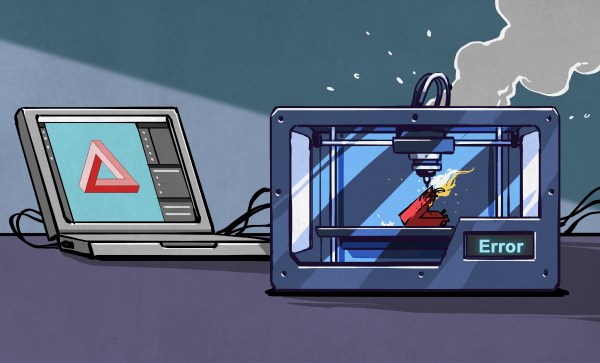
A friend from my old hackerspace was in grad school for electrical engineering. He had a professor who would ask, when something went wrong with a student project, “Have you fully characterized the system?” It’s a good, if lofty, goal, but it also became an inside joke around the hackerspace because YOLO was our MO about 95% of the time. Head crashes on the 3D printer – “not fully characterized”. Forgot to take out the trash last weekend? Was the system fully characterized?

It’s maybe also the difference between theory and practice: In theory, there’s no difference between theory and practice, and all systems can be fully characterized. But in practice, it’s hard to fully characterize a system that you don’t yet fully understand.

Case in point: we have nine small saplings growing in our front yard, and I have to water them. It’s boring moving the hose from tree to tree, so I thought I’d take a length of hose, stopper it at one end, and drill enough holes in it so that it could irrigate all of the trees at once. I kinda characterized the system: I figured out how much water flows per minute through our hose, and divided that up into a reasonable outflow in my mind, and drilled holes that ended up being way too large.

Why? Because a length of hose has a resistance to flow, and the water came pouring out of the first few holes, while the last few were dry. It wasn’t a constant pressure system like I thought it would be. I hadn’t even thought that the drag in the hose would matter, so there was no way I would have tried to measure it. But how would I characterize this resistance anyway? You could make a hose with too-large holes and measure the falloff. (Oops, that’s exactly what I did.)

In retrospect, professional drip irrigation systems always have holes that are tiny relative to the pipe diameter, which avoids this pressure-drop phenomenon, which means that they don’t have to worry about characterizing the hose resistance. So that’s what I ended up doing. I cut the hole size in half, and later widened up some of the downstream holes until it looked about right. Not even close to fully characterized, but it works.

So now, in addition to the engineer’s “have you fully characterized the system?”, I have the hacker’s “can you avoid characterizing parts of the system?” in my mind. And a holey chunk of hose in the trashcan.

Supercon News

Just briefly, in case you missed it: Tickets are on sale now for Supercon Ten, and we’ve extended the call for participation by another two weeks. If you’re a Hackaday fan, you owe it to yourself to join us at our annual gathering.

Supercon Ten Tickets On Sale Now

Hackers, start your engines! We’re opening up ticket sales for our tenth, the 2026 Hackaday Supercon, to take place Nov 6-8 in Pasadena, CA. As always, because we haven’t announced the full slate of talks yet, we’d like to give the Hackaday True Believers out there a bonus: early bird tickets for $150 instead of the regular price of $296 (plus fees). If you know you want to attend (and you know that you want to attend) do not delay and order your tickets now!

As we mentioned before, there are a few exciting changes coming to this year’s Supercon. First off, we are moving to a larger venue on Saturday and Sunday: a few blocks south at the ArtCenter South Campus. We’re looking forward to two larger stages, more room for attendees, and more space to spread out and hack. No longer crammed into a cozy alley, we’ll sprawl out in a luxurious courtyard.

We have more tickets available than ever this year, which is great because Supercons past have all sold out. But we’re not expanding so much that we’ll lose the killer signal-to-noise ratio and friendly hacker atmosphere that makes Supercon our favorite con.

But do get your tickets soon! Whether you get in at the True Believer rate or not, Supercon is a bargain. Two and a half days of fully catered hacking and entertainment, plus the great talks, make it a bargain. Then we throw in sweet hackable badge over the top. But it’s truly the assembled crowd that makes it a priceless experience.

If you’re a Hackaday Supercon regular, we look forward to seeing you again soon! If you’ve always wanted to attend, but never pulled the trigger, the nice round number of Supercon Ten is a great excuse.

Of course, the best way to attend any convention is as a presenter, and our call for proposals just got extended for another two weeks. If you have something you’d like to say: let us know soon!

Procrastineers Rejoice! 2026 Supercon Call For Participation Extended

A few weeks ago, we put out the call for participation for this year’s 2026 Hackaday Supercon, taking place in Pasadena, CA this November. Today was going to be the deadline, but like you, we often let things pile up and put things off, so we’re extending another two weeks until August 26th.

Which is not to say that we haven’t heard from a ton of you! We’re psyched to see so many familiar Supercon regulars on the list, but we also love to see first-timers give talks. We try to make sure that new folks get their time to shine, so if you’ve never given a Supercon talk before, or if it’s been a few years, take this as your cue to present in front of the friendliest audience of like-minded hackers around.

This year is Hackaday’s tenth in-person Superconference, and to celebrate we’ve gotten a larger venue, so more folks can watch the talks live. We’ll be running two tracks as always, and you have your choice of a 20-minute or 40-minute slot. Presenters get in free, and we’ll get you an early-bird ticket rate the submission, so don’t delay and register for your slot today! Or at least before August 26th, because we won’t extend the deadline twice.

Oh, and if you’re interested in tickets, swing by Hackaday about this time tomorrow — we’ll have some news for you.

Congratulations To The Frikkin Laser Winners!

Apparently you all love lasers just as much as we do. We put out a challenge to use, build, or otherwise abuse our favorite coherent light sources, and you responded. Some of the projects had been in the works for quite a while and were ridiculously polished, some were whipped together on the fly just for the contest, and we truly enjoyed both.

We only have three $150 DigiKey gift certificates to give out, though, so without further ado, we present to you…

Continue reading “Congratulations To The Frikkin Laser Winners!”

Commercialization And Innovation

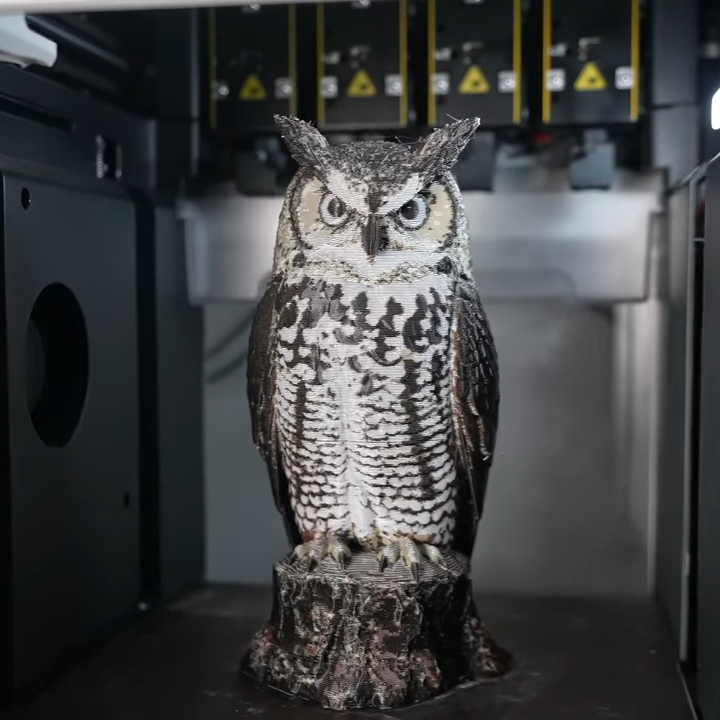
The last year or two has seen relatively affordable multi-material printers hit the market, and the question that [Tom Nardi] and I were kicking around when he was writing up the 2025 year-in-review article was what it was going to mean for our folks. I don’t think he got it wrong per se, but his heading for that section “Grandma is 3D-Printing in Color” only tells half the story.

He did get that part right, though. We’ve certainly seen a flourishing of multi-material designs out there that take advantage of the availability of (usually) four colors. The ability to print in color has given life to the purely decorative models, of course. Think full-color Pokemon desktop toys, for instance. But even functional prints have benefited from contrasting color labels printed right into the box, not to even mention the multi-material supports that pull off easier and cleaner than ever before.

Since most of these multi-filament machines are pretty much locked down as far as hardware tinkering goes, our sights were firmly locked on what the end-user would do with the new capability. But we overlooked the third axis of 3D printering: the software hackers. And it’s precisely in this area of slicer and path-planning that we’ve seen some of the coolest developments this year. Why? Because people have the hardware in their hands that they need to test out the algorithms.

FullSpectrum and the more recent ImageMap are two techniques to get the missing in-between colors out of a four-filament printer, and in particular ImageMap tries to get the job done faster, and with fewer purges. We are amazed to see two different approaches to color blending popping up in just a few months of each other, and we have no doubt that work on this is going to continue.

At the end of the day, this really is just “put new tools in the hands of creative hackers, and they’ll find new ways to use them”, so we shouldn’t have been surprised at all. But if this is what comes out of the commercialization of the multi-material printer, what’s going to come when some of the more esoteric machine designs go mainstream? We can’t wait to find out!