
Good morning! As this hits your inbox, I am probably just about waking up or putting on my bathing suit or having a little breakfast before we head to the beach, as we’re spending the weekend on Rockaway as a little vacation for our second anniversary. While I relax and unwind and tan,1 I’ve presented a nice little post about one of the more argued about novels in the English language.
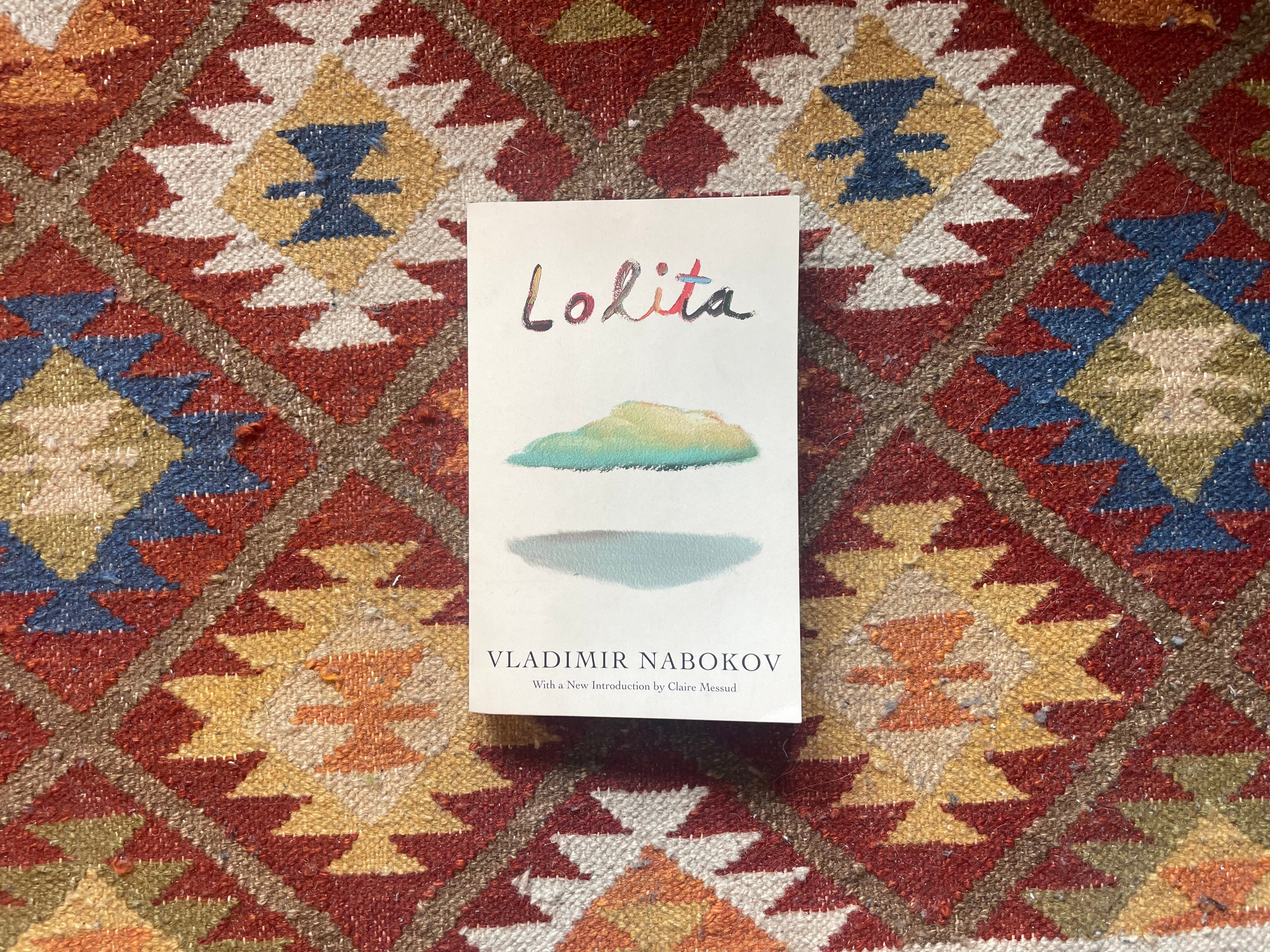
Everyone calm down. Take a few deep breaths. Yes, I read Lolita. We’ll get through it together.
I read this as a part of a reading group at The Center for Fiction where we discussed Lolita, Pale Fire, and Speak, Memory. I’d read Lolita once before on my own and I’m so glad that I reread it and had the opportunity to discuss it this time around with a group of people because I definitely understood it much more this time.
Ultimately, this novel is patient zero for the tension between depiction versus endorsement. The way that Lolita has been sensationalized in the culture shows us that misreading and misinterpretation is RAMPANT.
Do I have to explain to you what Lolita is about? I’ll go through it quickly, in case you’ve lived under a rock. In the 50’s, a French pedophile develops an obsession with a 12 year old girl named Dolores. While she’s away at summer camp, he marries her mother, who conveniently dies. He picks her up from camp and molests her for the next two years.
The text of Lolita is structured like the classic “found text” conceit that a lot of classic literature adopts. The main character, while waiting in a jail cell, has written his story as a plea to the jury. He dubs himself for this confession, “Humbert Humbert,” although he is constantly and subtly changing the way he refers to himself, which draws attention to the fact that he is not only an unreliable narrator, but is actively changing the facts of the story.
However, the novel actually starts with a note from the “editor” who was passed the prisoner’s manuscript and is deciding to publish it. I’d like to draw your attention to a spot in the editor’s foreword, where he points out that the writer has given himself a new name in “Humbert Humbert.”
Its author’s bizarre cognomen is his own invention; and, of course, this mask—through which two hypnotic eyes seem to glow— had to remain unlighted in accordance with hits wearer’s wish.
What he’s essentially saying here is: this man is going to spin you a tale. Don’t trust him!
But even before that, the editor says this:
I have no intention to glorify “H.H.” No doubt he is horrible, he is abject, he is a shining example of moral leprosy, a mixture of ferocity and jocularity that betrays supreme misery perhaps, but is conducive to attractiveness. He is ponderously capricious. Many of his casual opinions on the people and scenery of this country are ludicrous. A desperate honesty that throbs through his confession does not absolve him from sins of diabolical cunning. He is abnormal. He is not a gentleman. But how magically his singing violin can conjure up a tendresse, a compassion for Lolita that makes us entranced with the book while abhorring its author!
I found this particularly interesting, especially since current complaints of contemporary writing (especially movies and tv shows) has oscillated between depictions of bad behaviors meaning endorsement, and writing that over-explains and simplifies the themes or message the art is trying to get across. (See “You’re the real monster!” as dialogue from del Toro’s recent Frankenstein adaptation. Painful. Reader, I laughed out loud at my television. Like truly guffawed.)
And yet, even with this prologue where Nabokov is essentially saying “This is a fucked up and horrible character I’ve just created, don’t trust him,” culture romanticized him and his “love.”
Nabokov loves to play with perspective, and I’m so down with that. The title character, Lolita, does not really exist. There is no girl who answers to Lolita in the text. There is, however, a Dolores, and the narrator, Humbert Humbert, has a vile sexual obsession with her, resulting in passionate delusion and him creating a fictitious alter ego for Dolores whom he calls “Lolita.” This highlights the depths of his delusion, that he has created this character to the point where she has a distinct name from the actual girl who is being affected by it.
To me, this book explores the power of narrative, how easy it is to get someone on your side when you are a pretty speaker and are the one telling the tale. We hear very little from Dolores in this novel, but as things wear on the cracks in Humbert’s story begin to grow bigger.
There is a lot of key narrative details that are only mentioned in passing, or alluded to, so we have to put the parts together ourselves. In one sense, this makes it a difficult book to get through, or to understand fully. Maybe it’s no surprise that it is so completely misread and under-analyzed. Does that mean the blame should be placed on the novel itself? I don’t really believe so, I think if we shy away from complexity and nuance for the sake of clear morals we will only narrow our worldview, further inhibiting our ability to read into the truth of novels like Lolita and encouraging more misinterpretations. These things need to be discussed more, not less.
Even in my reading group, some guy was trying to ask the question of “do you think Humbert Humbert really loves Lolita?” And it’s like, that is so not the point, my guy. He is an old man and she is a child. No it’s not love you absolute weirdo. And not even that, but every time that Dolores shows interest in anything (age appropriate) or has a semblance of a personality HH is like, “ugh, she’s being so annoying. why is she acting like a child???” So no, I don’t think he has any sort of emotional or spiritual connection with this literal preteen, he is just a pedophile. And he is an ELOQUENT pedophile, which is really dangerous, because you really do find yourself almost on his side, or at least being swept up in what he’s saying because he’s saying it well. It’s a really good reminder that this doesn’t mean he’s right or trustworthy! He is literally just French.
This is definitely not a lighthearted beach read2, but neither is it particularly graphic. The sensationalism here is completely derived from the subject matter, and rightly so. It is meant to make you uncomfortable, and then lulled into a state of enjoyment due to the beauty of the prose, and then horrified when you remember what you’re reading. Interrogating the reader’s complicity is (a part of) the point.
There’s so much more to dissect and analyze here but honestly I feel a bit silly rehashing things when I’m writing about really famous books, so if you’re really interested you can find all the other stuff that people write about this book, because it’s probably one of the most discussed books out there. One thing the moderator of my reading group pointed to was The Lolita Podcast, which I’ve been listening to and finding really interesting.
One final thing is this: there were parts in the second half when I really started to get bored. Okay Vlad, I thought to myself, you could have edited this down a touch. Then I read Nabokov’s note (in the end of my edition so I wouldn’t call it a foreword) and he has this to say:
Publisher X, whose advisors got so bored with Humbert that they didn’t read past page 188, had the naiveté to advise me that part two is too long.
I agree with them, buddy! Sorry :(
Until next time xoxo
lets be honest, I mean burn
by now I am probably laying out my towel on the sand, anchoring down opposite corners with my sandals to guard against the wind.
No posts
Comments
Nothing yet. Say the first thing.
Sign in to join the conversation.