
Mumbai wears its history like well-worn, loose-fitting garments—ever ready to cast one aside and slip into another, revealing yet another layer of its complex identity. It doesn’t disown its past, not even the troublesome colonial years. Instead, it seems to indulge history much as a mother might a difficult child: occasionally exasperated, but ultimately accepting.
Perhaps nowhere is this indulgence more apparent than in Ballard Estate, one of those corners of Mumbai that draws me back like a magnet ever so often.
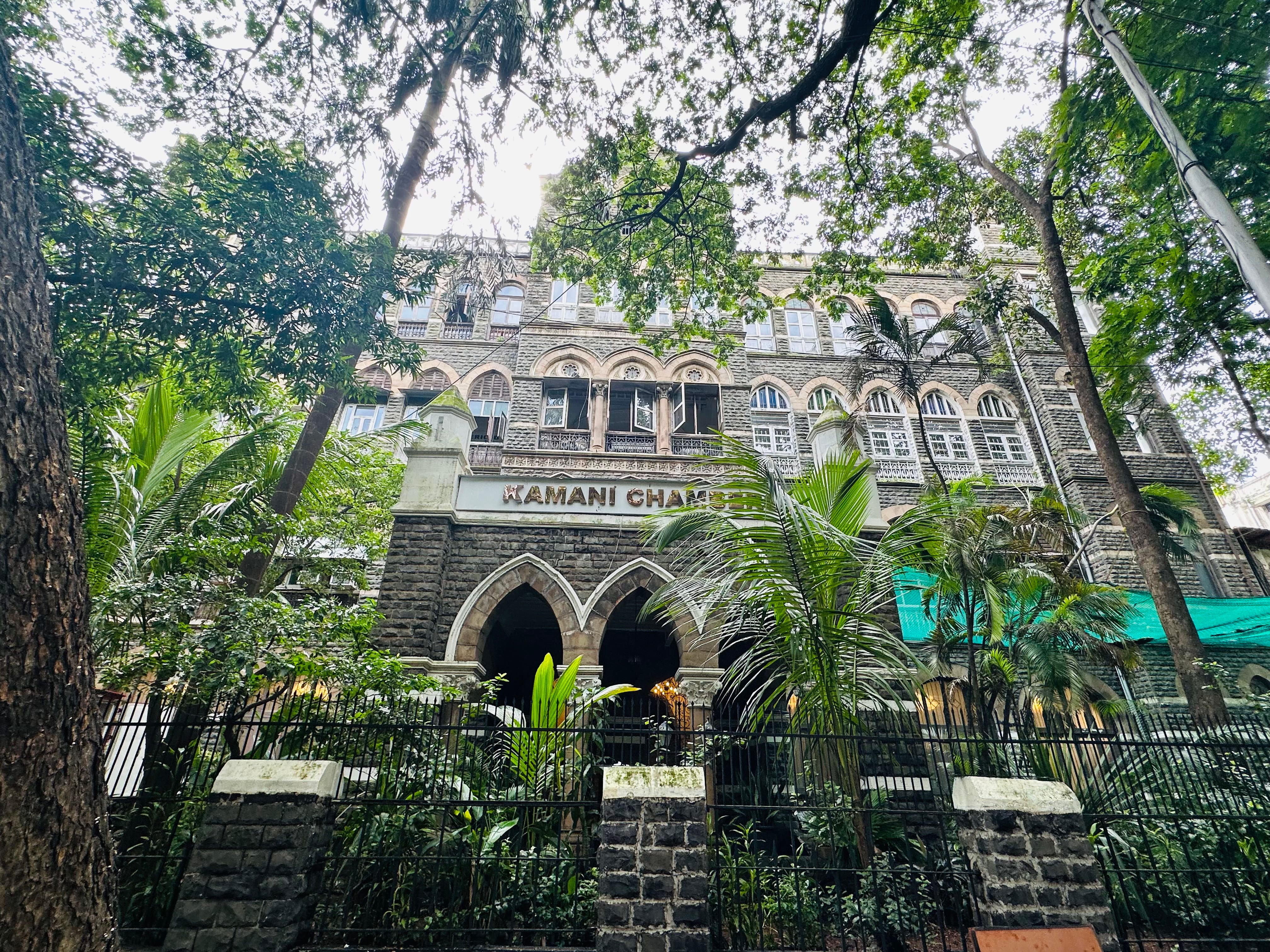
Built as Mumbai’s first planned business district and named after Colonel J. A. Ballard of the Bombay Port Trust, the area was conceived largely by architect George Wittet, who gave it its remarkably harmonious streetscape of imposing stone buildings in Edwardian-style architecture, uniform façades, and classical European flourishes.
But it isn’t the history that draws me here.
It is what remains of it.
Walking through Ballard Estate yesterday, I was struck again by the strange mixture of grandeur and neglect. Many of its beautiful old buildings are tired now, their elegance fading beneath decades of grime, improvisation, and disrepair. And yet, there is still a whiff of past grace about the place. You can almost imagine what these streets must once have looked like.
Will anyone ever restore her to her former glory?
Perhaps. Perhaps not.
The Royal Bombay Seamen’s Society, for one, seems determined to keep Ballard Estate married to its maritime past.
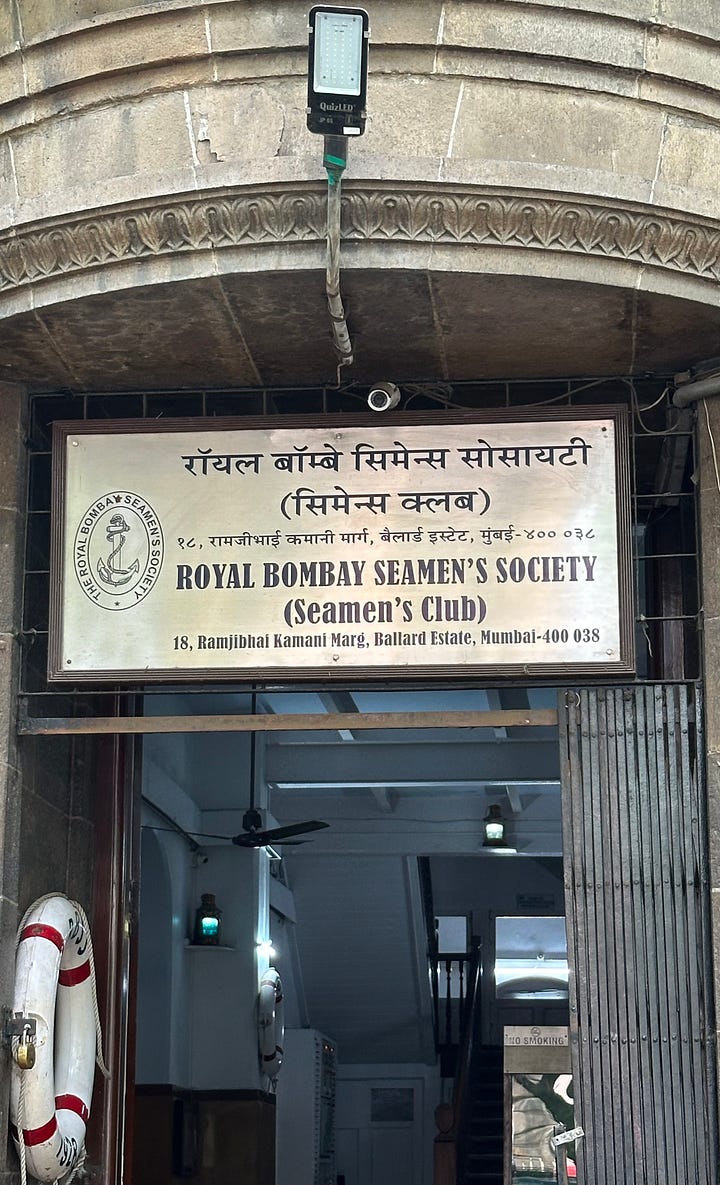
Curious about what went on inside, I wandered over and asked the guard on duty in Marathi: “Hé building kona sathi ahé?
“Seamen sathi, Madam,” he answered. “It’s for anyone coming from the sea,” he explained matter-of-factly, even as I wondered who exactly wanders off the Arabian Sea and walks up to the Seamen’s Club.
“Anyone?”
“Yes. As long as you came on a ship, this place is open to you. You can stay here, and you can even study here.”
Ahoy!
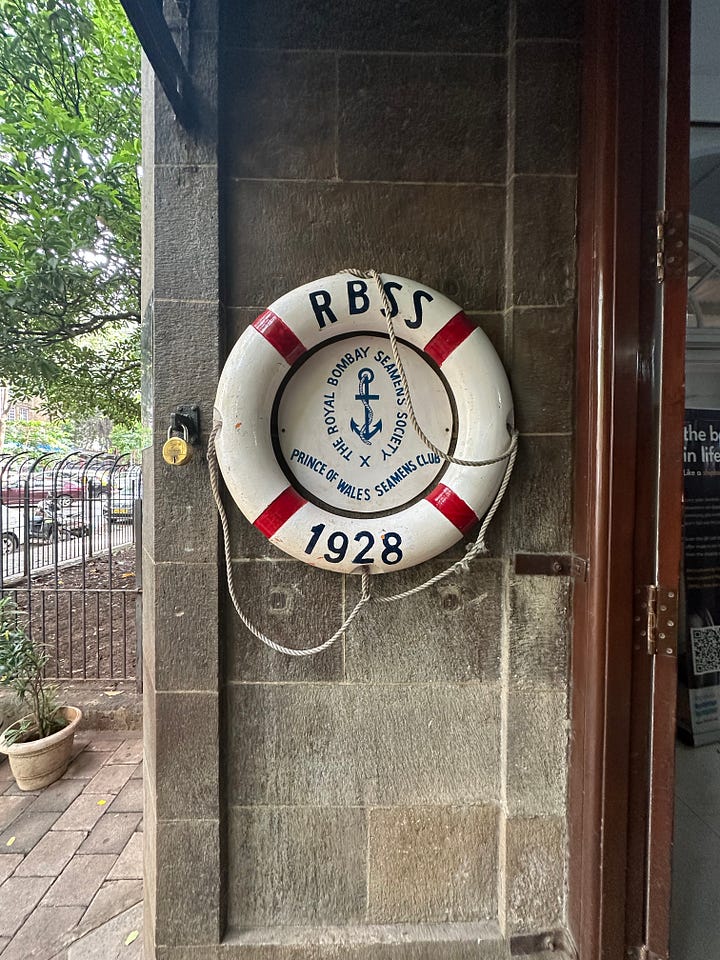
There was something wonderfully Mumbai about the whole exchange. Here, amid the fading grandeur of an old colonial business district, Royal Bombay still adorns a building in Mumbai, a life buoy from 1928 hangs by the door, and seafarers still come and go.
“Entry for Seafarers Only,” says the sign outside.
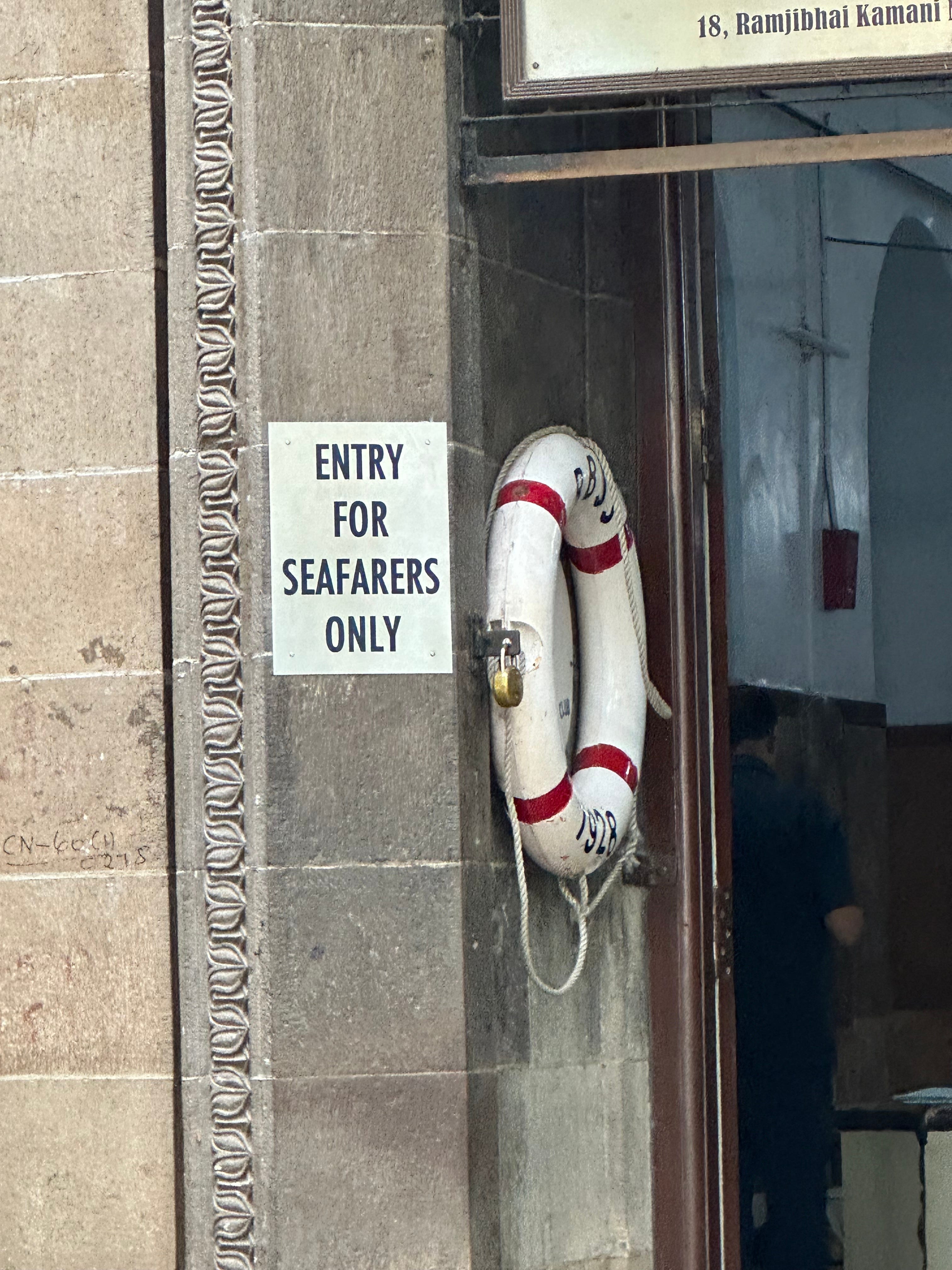
Ballard Estate hadn’t discarded its past after all. It had simply found a way to keep living inside it.
Will anyone ever restore her to her former glory?
Perhaps. Perhaps not.
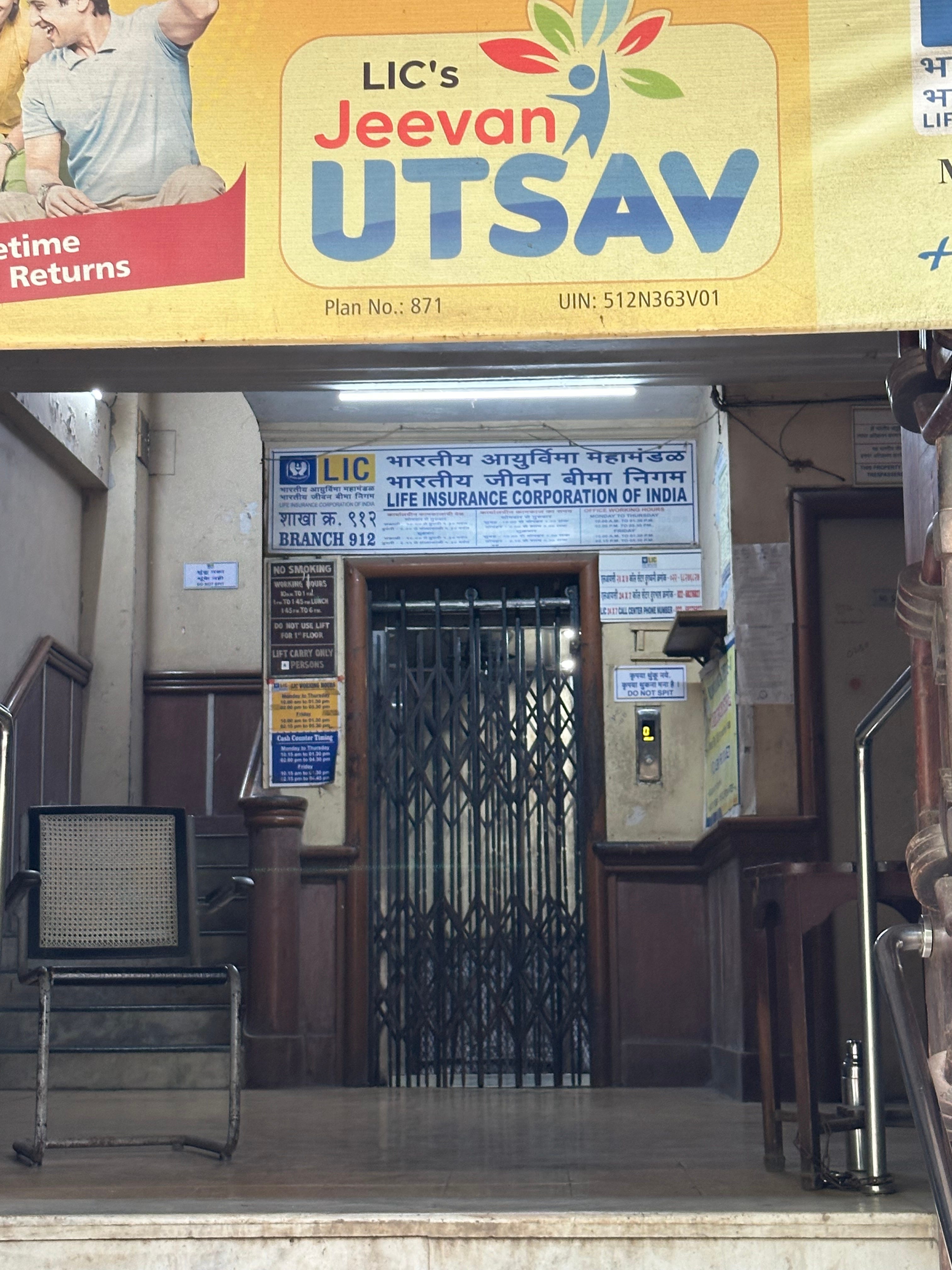
The greatest irony stood a little farther down the road: a crumbling old building still housing offices of the giant Life Insurance Corporation of India.
The building that insures lives looked decidedly unsure of its own, as though it might collapse into a pile of stones at any moment.
Its windows were boarded up or broken, its once-elegant façade worn and neglected. Pigeons seemed to have claimed more of the upper floors than people.
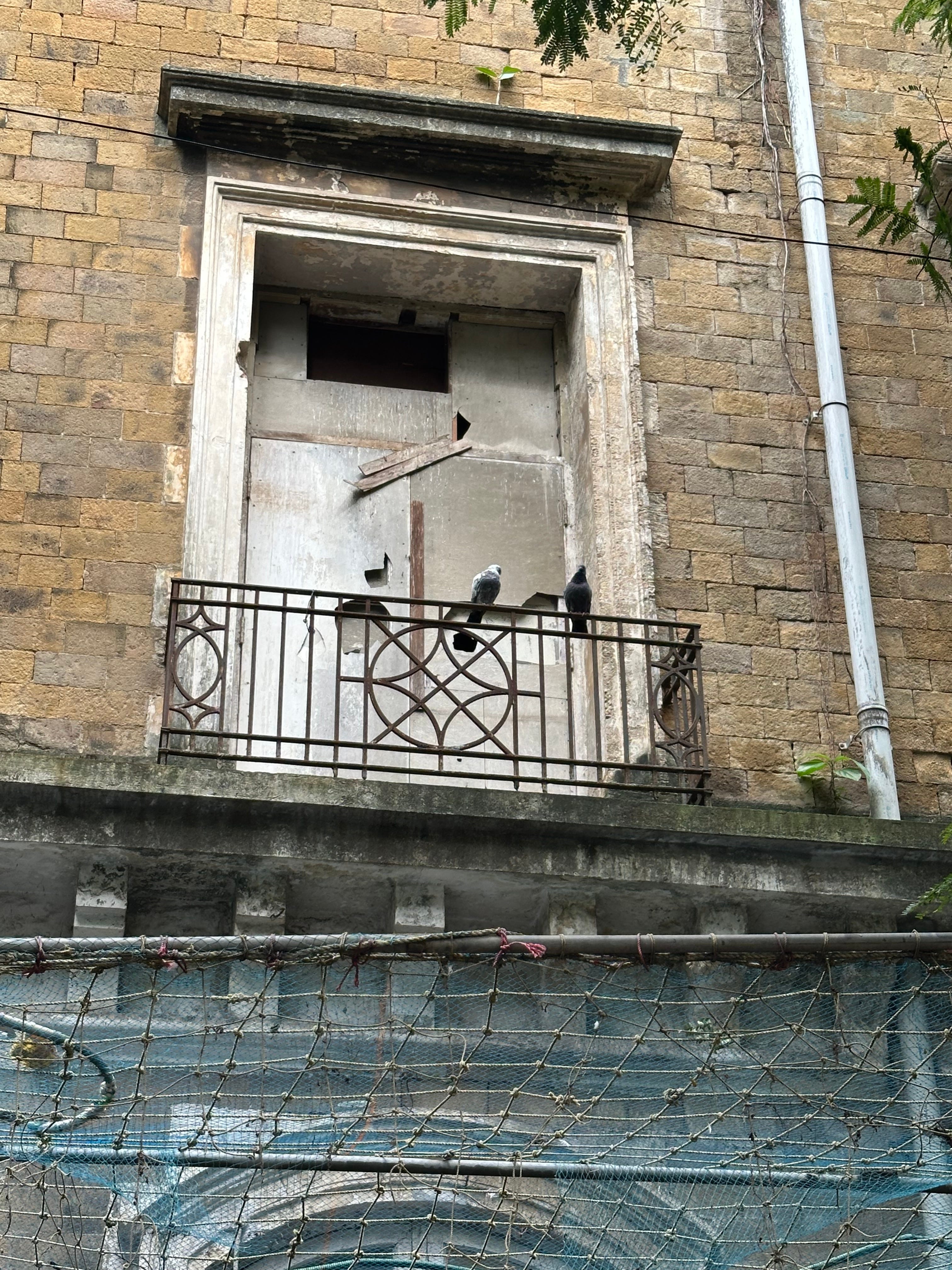
I stopped, of course, to ask the guard at the entrance whether LIC actually still operated from there.
“Yes,” he assured me. “Second floor.”
He agreed that Ballard Estate no longer had the hustle and bustle it once did, but LIC was very much still there.
As if on cue, pigeon droppings fell from somewhere above onto the street below.
Life, apparently, carries on.
If you enjoy wandering the world with me—through its stories, surprises, and contradictions—subscribe for free to come along.
As it did with the paanwallah, huddled beneath the shadowy recesses of a bright blue truck adorned with intricate motifs, which provided his minuscule operation with both a practical roof and a touch of idealistic flair.
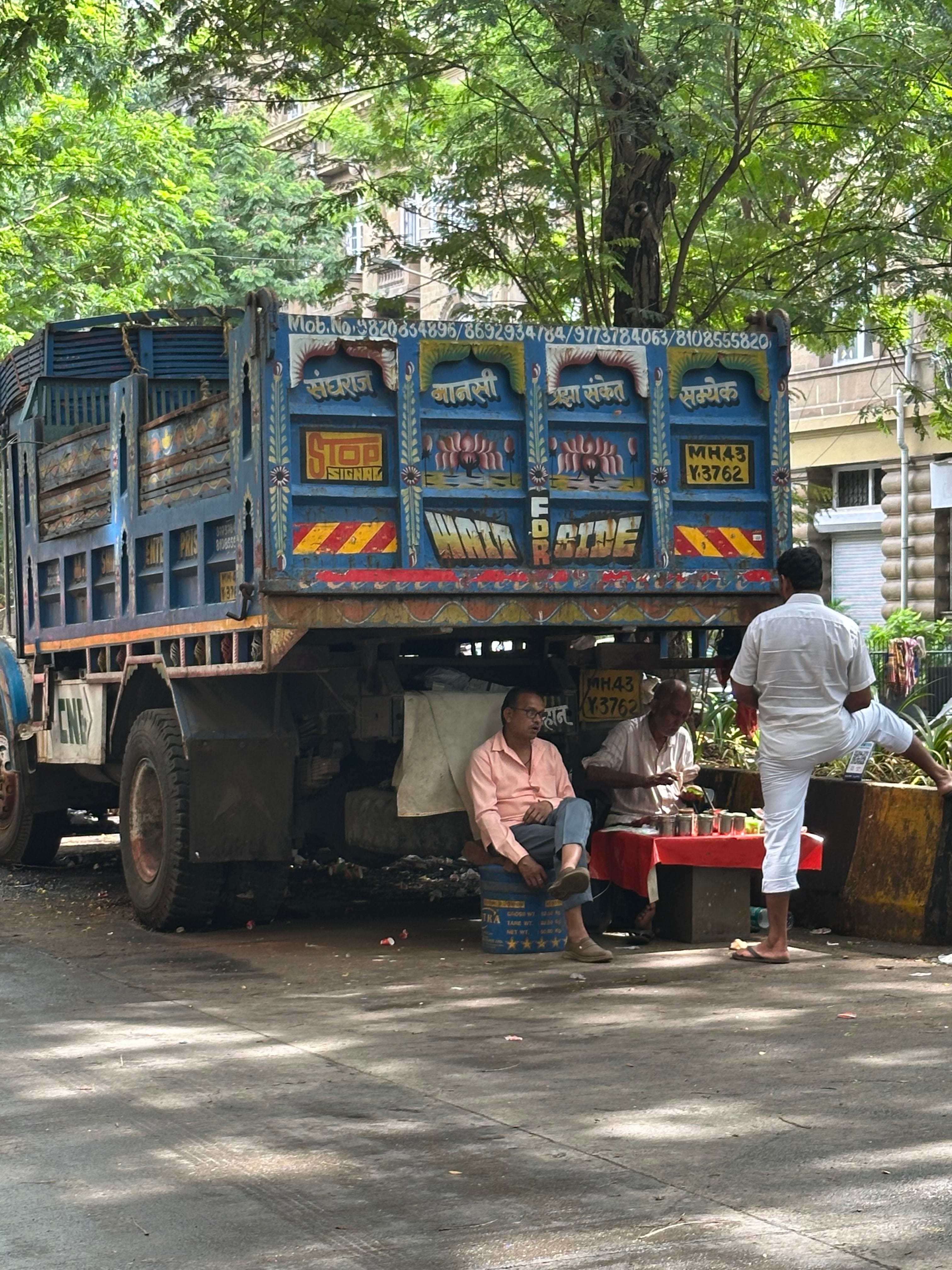
His was only one of several tiny food operations sprinkled around Ballard Estate. In what was once conceived as Mumbai’s premier business district, there seemed to be considerably more preoccupation with food than with carrying on business. Chaiwallahs and sandwich vendors drew ready crowds. Men stood around eating, drinking, talking. A truck became a roof. A patch of pavement became a café.
Perhaps this, too, was Mumbai wearing its history lightly. George Wittet may have given Ballard Estate its grand façades and classical flourishes, but Mumbai had long since moved in and made itself comfortable.
And naturally, it was hungry.
Not just for food, but also, apparently, for luxury.
A little farther along, I stumbled upon another curious Ballard Estate tableau: Audis, Mercedes, and other expensive cars parked in varying states of abandonment, some caked in grime, others tucked beneath enormous covers, awaiting a little TLC from the nearby refurbishing dealership.
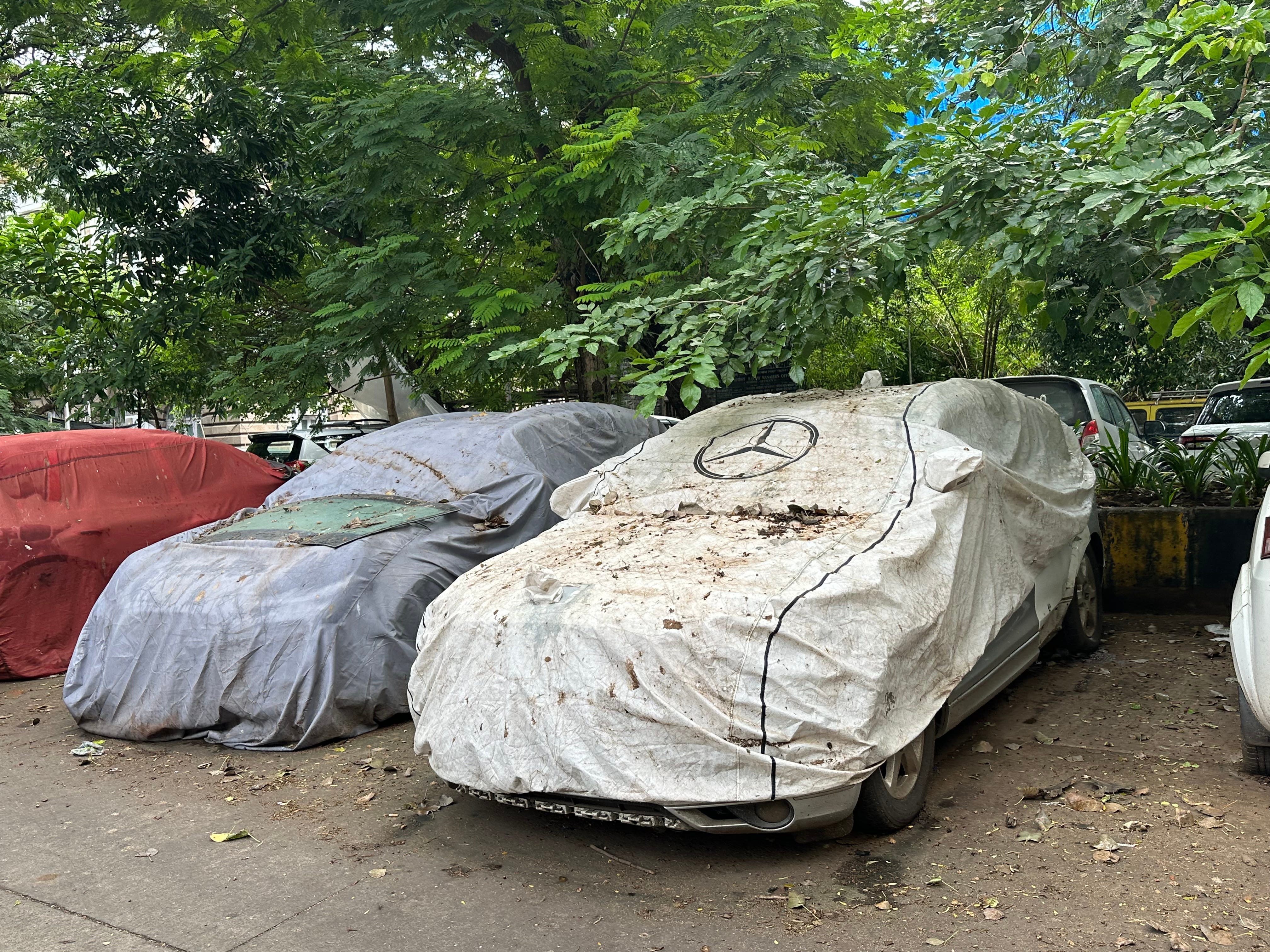
Mumbai’s appetite for the good life, it seemed, remained reassuringly intact. Even if the good life occasionally needed servicing.
Nearby, lest there be any doubt about our aspirations, a gleaming van announced itself as “Zubin’s Royal Fleet.”
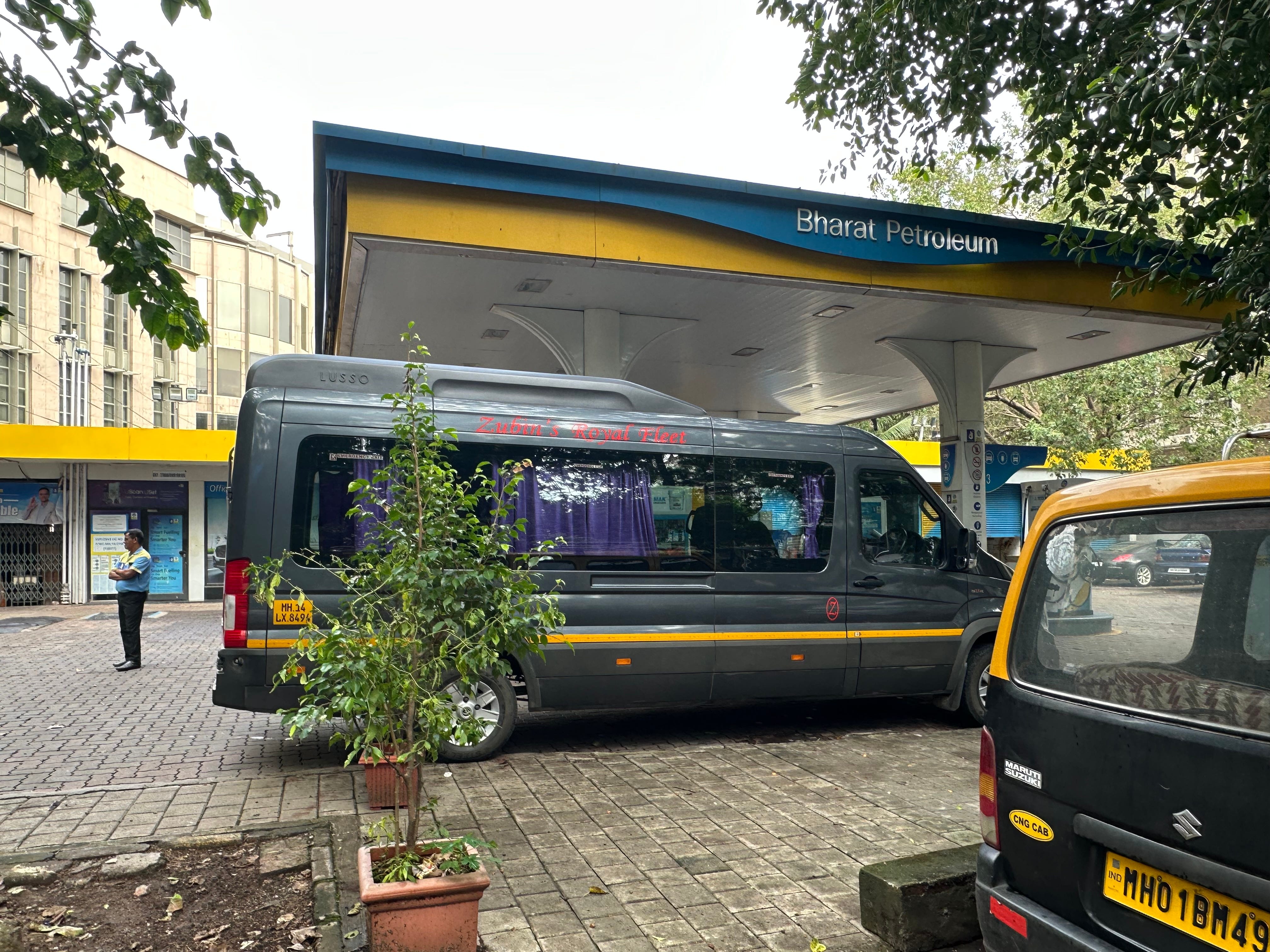
Royal Bombay may have disappeared. Royal ambitions, apparently, had not.
And there was Mumbai again—old garments, new layers, unmistakably itself.
Meaningfully yours,
Anu Prabhala
Know someone who loves finding stories in unexpected places? Pass this along.
If you enjoy wandering the world with me—through its stories, surprises, and contradictions—subscribe to come along.
No posts
Comments
Nothing yet. Say the first thing.
Sign in to join the conversation.