
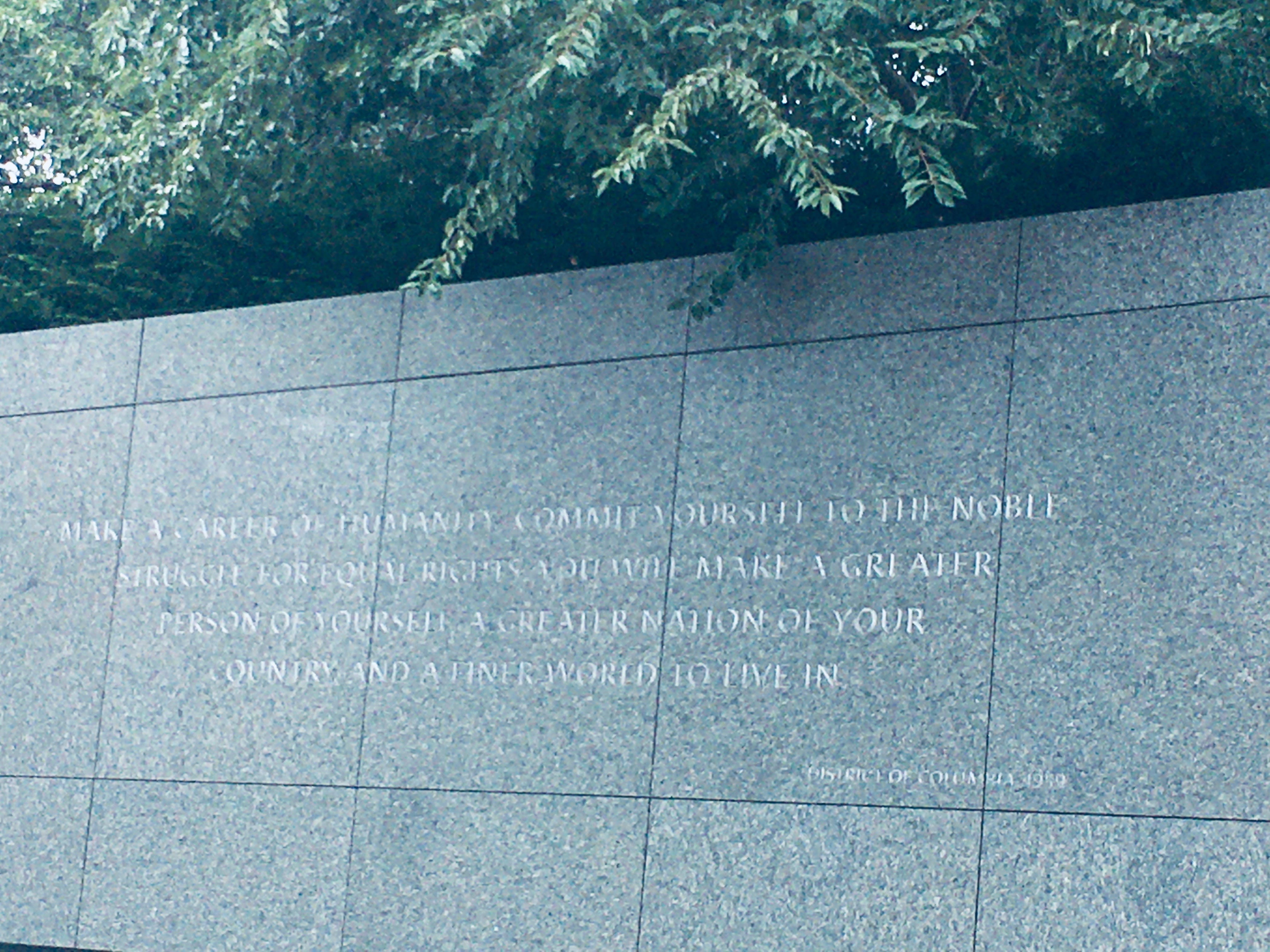
Make a career of humanity.
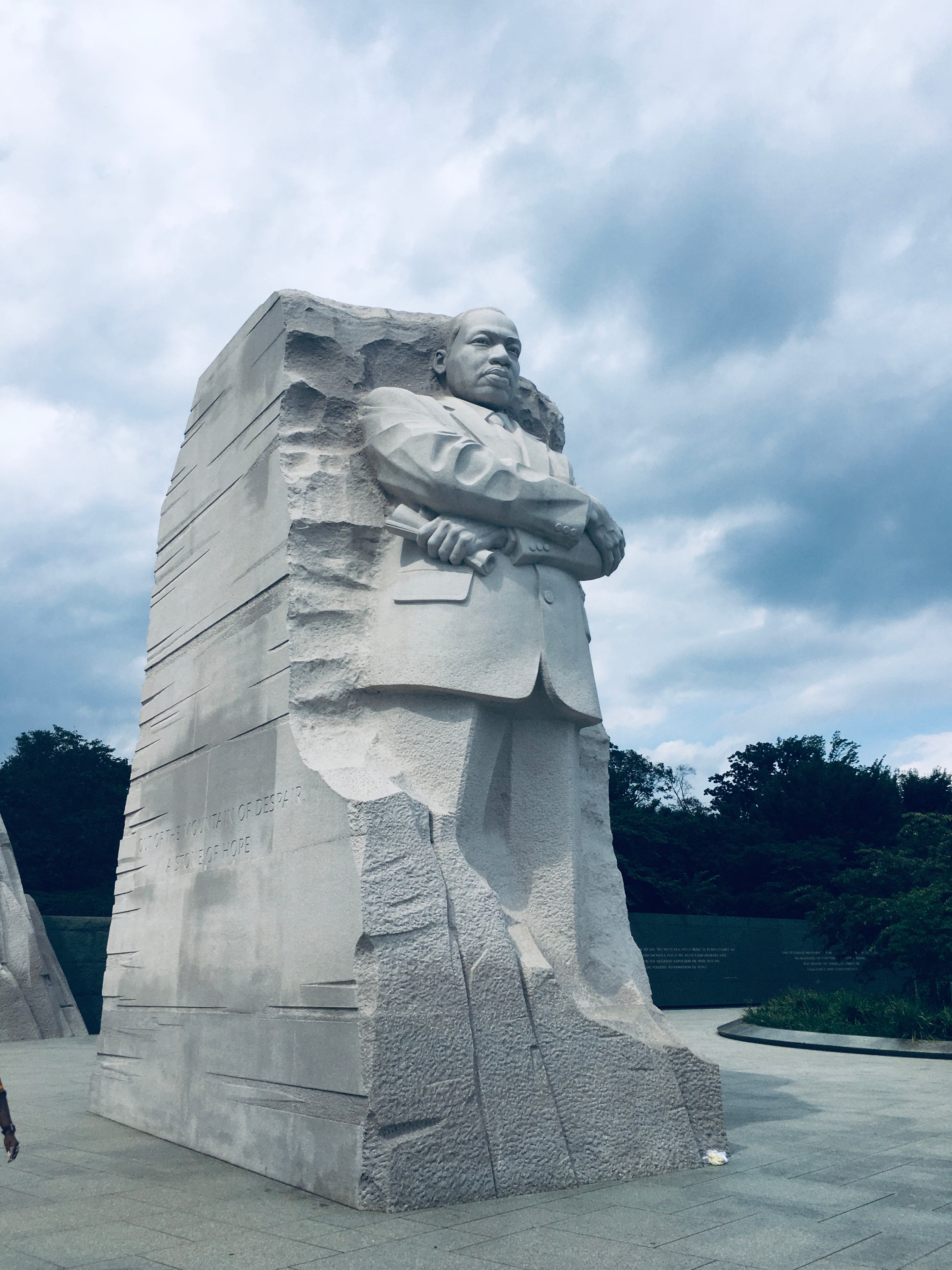
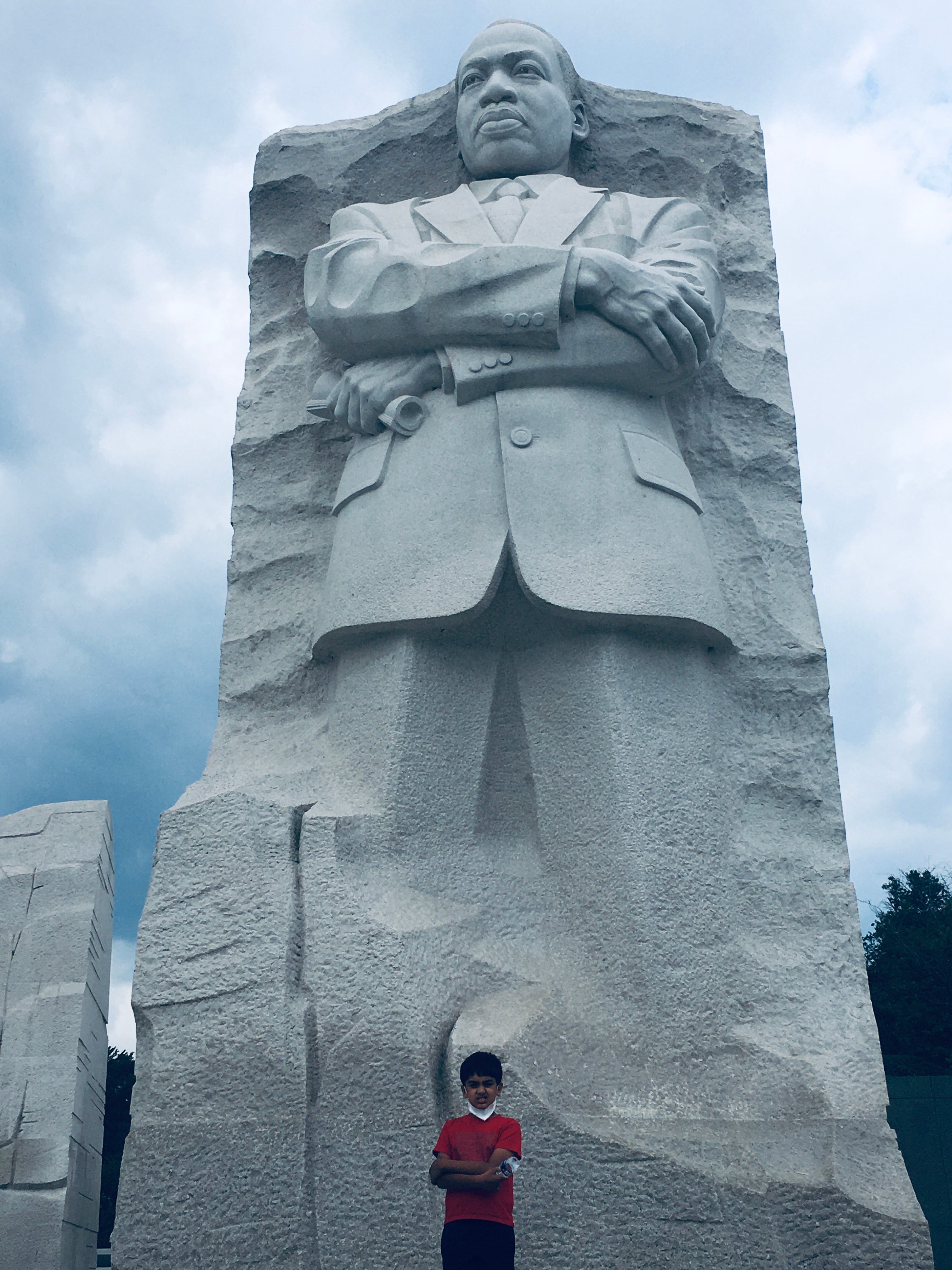
These words are etched into the granite of the Martin Luther King Jr. Memorial in Washington, DC, one of my favorite monuments in a city that often feels like it contains the whole world within it.
The first time I saw them back in 2020, they stopped me in my tracks.
The words struck me with unusual force because, without ever articulating it quite so elegantly, I realized that ideal had quietly guided much of my own life.
My mind drifted back to a fork in the road I encountered shortly after graduating with a Master’s degree in communications. I had just completed an internship at a public relations agency and quickly realized the corporate world was not for me. More than that, I remember wondering how I would find time to do meaningful public service work after spending an entire day pursuing profits.
So I chose a different path.
In a city overflowing with nonprofits, foundations, advocacy groups, and international organizations, I found my way into the public service sector. Whether teaching, writing, or working in international development, I was drawn less by titles than by the opportunity to contribute, however modestly, to something larger than myself.
Make a career out of humanity.
The simplicity of Dr. King’s message felt almost disarming.
Text within this block will maintain its original spacing when published
What if we genuinely treated others as extensions of ourselves? How much division, suspicion, and suffering might simply dissolve?
Even the memorial itself embodies a kind of global interconnectedness: sculpted by an artist in China, transported through to the port of Baltimore in bits and parts, and assembled beside the Tidal Basin in honor of an African-American civil rights leader whose message now belongs to the world.
At the time, I did not know that Dr. King’s words would return to me in an unexpected way through my son.
This week, Sahil spent a day on Capitol Hill as one of seven Youth Fellows with the Global Campaign for Education–US, advocating for international education funding.
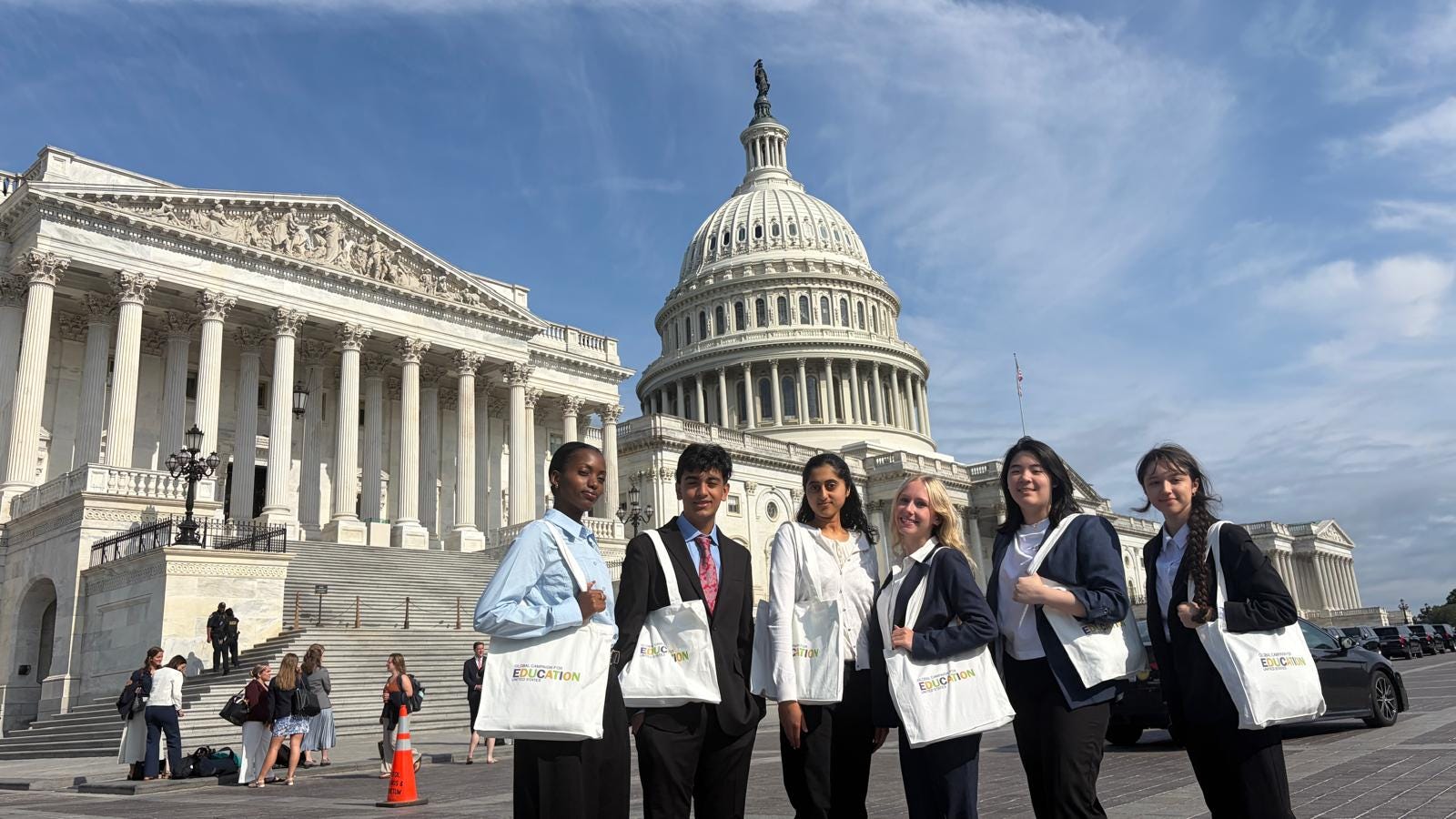
Like many parents, I expected him to come home talking about famous politicians.
And he certainly had stories.
He received a challenge coin from Representative Rob Menendez. He visited the Senate floor. He got a wave from Senator Bernie Sanders and Vice President JD Vance.
But those were not the stories that stayed with him.
Instead, when I picked him up, he said:
“Mamma, everyone on the Hill was so nice, even when they didn’t agree with our position. It was a breath of fresh air and a fantastic day.”
Later, in a note to his school principal, he elaborated:
“I was surprised at how friendly all the office staff of the different senators and representatives were, despite their vastly differing political opinions. They all sat down to talk to me, even if they disagreed with my advocacy platform.”
I found that observation unexpectedly moving.
What Sahil encountered was not agreement.
It was respect.
People listened. People engaged. People disagreed without dismissing.
And in the process, a teenager walked away with a far more hopeful view of public life than many adults possess.
By the end of the day, he had reached a conclusion of his own:
“Overall, my impression was that Capitol Hill is not only a physically beautiful place, but it is also a place filled with nice and caring people.”
When he said that, I found myself smiling. What a refreshing perspective amid the endless headlines about polarization, conflict, and ideological battles.
There’s good everywhere. We have to learn to look for it.
Later that evening, after a characteristically slow journey home through Washington traffic and dinner around the table, my thoughts drifted back to the words carved into the granite at the Martin Luther King Jr. Memorial:
Make a career of humanity.
For years, I thought Dr. King’s words referred primarily to vocation.
This week, I began to wonder whether they refer just as much to conduct.
Not because they inspired my career—I had already spent more than two decades working in education, nonprofits, associations, and international development by the time I first stood before the memorial—but because they gave language to something I had been trying to do all along.
In fact, when I first visited the memorial in 2020, I wrote in a Facebook post that the words resonated because they captured an ideal I had long tried to live by—albeit imperfectly. I suspect that is true for most of us.
Humanity is less a destination than a daily practice.
Looking back, they explained why a young communications graduate felt drawn away from the corporate world and toward work centered on people. They explained why I spent much of my career telling stories about education, disability, health, poverty, and human potential. They explained why I was repeatedly drawn toward institutions whose mission extended beyond the bottom line.
They may also explain why the book I am writing is, at its heart, a search for the good in the world.
Yet sitting there that evening, reflecting on Sahil’s experience, I realized Dr. King’s words were asking something larger.
A career of humanity is not simply a career.
It is a way of moving through the world.
It is choosing curiosity over suspicion. Conversation over dismissal.
Text within this block will maintain its original spacing when published
A career of humanity begins by remembering that the person across from us is always more than a political affiliation, a job title, a nationality, or an opinion.
For one afternoon on Capitol Hill, that was exactly what my son encountered.
People listened. People disagreed. People treated one another with dignity.
And in doing so, they reminded a teenager—and perhaps his mother as well—that beneath the noise of modern life, humanity is still quietly at work.
Dr. King’s words no longer felt like an aspiration etched in stone.
They felt like a truth I had been pursuing for years without fully naming it—and one that my son had unexpectedly discovered for himself on Capitol Hill.
It reminds me that beneath our politics, professions, nationalities, and opinions lies something more fundamental: our shared humanity.
We are not as divided as we sometimes think. Humanity survives beneath ideology. The world contains more goodwill than the headlines suggest. Disagreement and respect can coexist.
And every now and then, whether at a memorial beside the Tidal Basin or in the halls of Congress, we are reminded of it.
Meaningfully yours,
Anu Prabhala
Thank you for reading Imperfectly Perfect. If you'd like to receive future reflections on travel, perspective, humanity, and the search for meaning, I'd be honored to have you subscribe.
No posts
Comments
Nothing yet. Say the first thing.
Sign in to join the conversation.