
“Who’s a leader you look up to?”
This was the subject of a recent conversation with a friend visiting from India.
Surprisingly, I couldn’t name anyone more recent than Swami Vivekananda.
It wasn't that I couldn't think of contemporary leaders I admired. There are several.
Text within this block will maintain its original spacing when published
But admiration, I realized, wasn't quite the same as looking up to someone—someone who sees the world through a humanist lens and embraces a plurality of thought.
I have always admired Swami Vivekananda’s visionary leadership—his embrace of plurality in religion as much as his fascination with science and its intersections with Vedanta. Who can forget his famous address at the 1893 Parliament of the World’s Religions in Chicago, where an until-then little-known monk from Calcutta rose before an international audience and spoke of religious tolerance and universal acceptance?
There seem to be so few people today who genuinely embrace pluralism—not merely tolerating different ways of thinking, but considering them a benefit to humankind. We talk a great deal about diversity and inclusion, but sometimes the dialogue itself can feel strangely forced.
My friend named Elon Musk—a visionary of a very different kind, someone who has pushed technological possibility into realms that once belonged to science fiction.
But I realized that wasn’t quite what I was searching for.
As my friend and I kept talking about extraordinary leaders, my mind wandered away from famous names altogether.
Plurality of thought was certainly part of it. But perhaps what I was really searching for was something larger: people whose way of being in the world offered something worth emulating. And once I thought of it that way, my mind began to wander away from famous names altogether.
To Ranganayaki Aunty, whom we met here in Clarksville, Maryland.
She had been my late father-in-law’s classmate in Mysore. Orphaned young and raised in financially difficult circumstances, she became the only girl at the National Institute of Engineering in Mysore, cycling more than six kilometers to class every day. She graduated in 1965 as the first woman engineer of Mysore University, after ranking first in her class year after year.
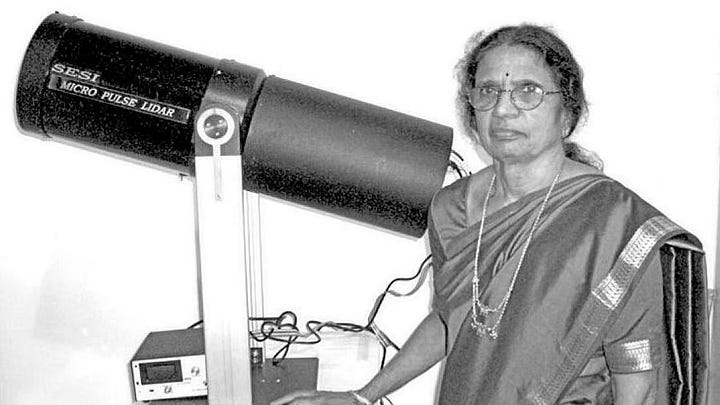
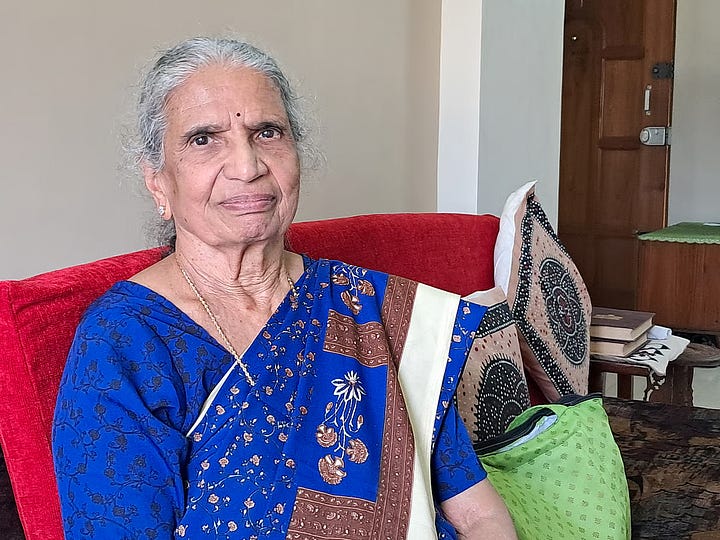
That might have been an accomplishment enough for one lifetime. It wasn’t. She went on to work on India’s early unmanned aerial vehicles, moved to the United States, and eventually led technical work on NASA research programs. She continued working until nearly eighty.
Yet the Ranganayaki Aunty we knew carried none of this visibly upon her. There she was in Clarksville, always in a simple sari, warm and unassuming, carrying an extraordinary life as though there were nothing particularly extraordinary about it.
When I sent her this essay, her reaction seemed entirely in character: she was touched, but felt I had made “way too much” of her achievements.
Text within this block will maintain its original spacing when published
Some people make ordinary lives look extraordinary. Others make extraordinary lives look perfectly ordinary.
Perhaps there is something especially powerful about finding the extraordinary close to home. Great figures can inspire us from afar, but ordinary people make courage, perseverance, ingenuity, and grace feel less like rare gifts and more like possibilities available to all of us.
Perhaps that’s why, as I grow older, I find it more comforting—and somehow more fulfilling—to look for the extraordinary closer to the ground.
Rather than always shooting for the stars, why not look for the sparkling gems scattered around us in daily life?
My birth city of Mumbai abounds in them.
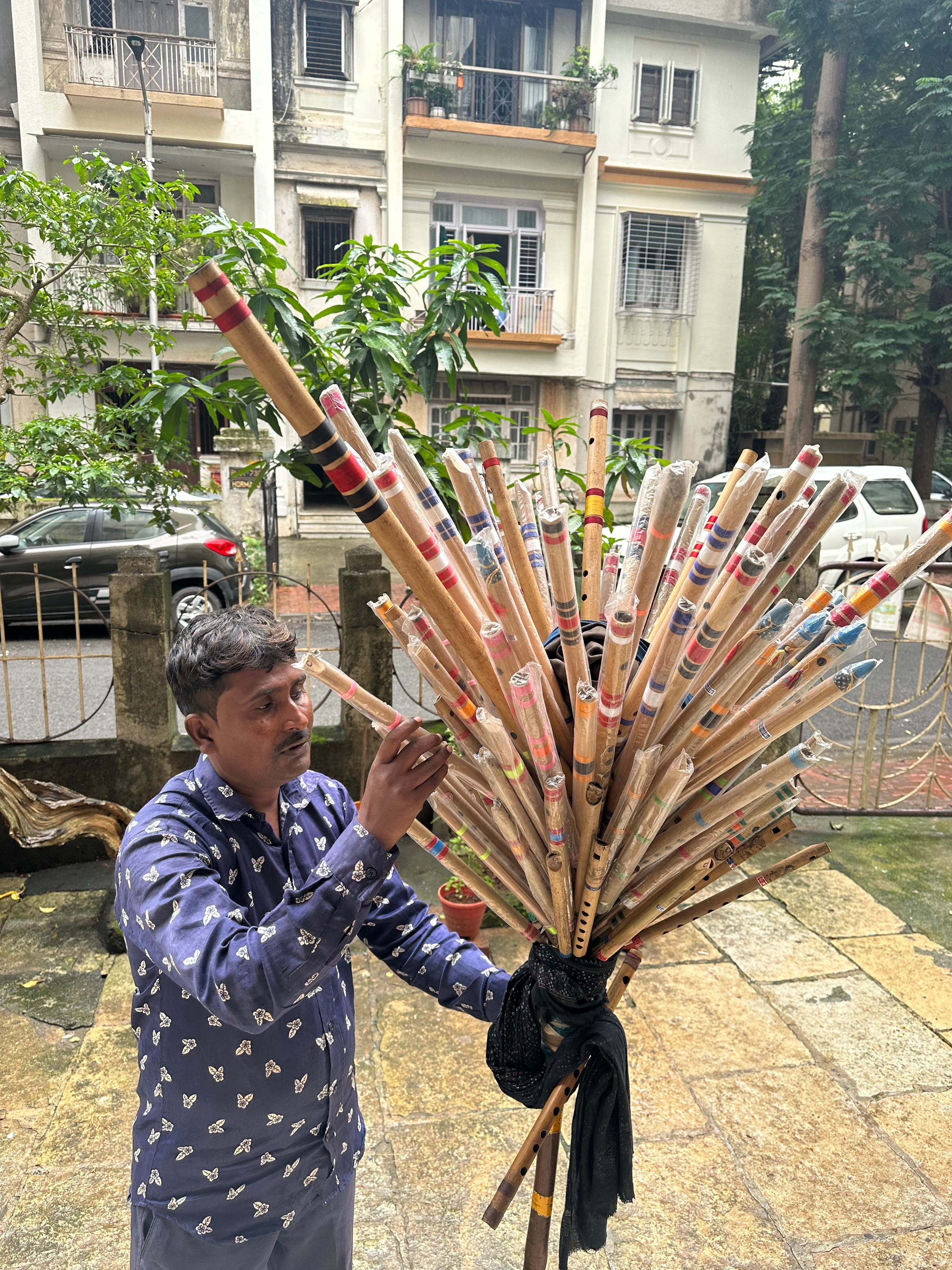
There is the flute seller, Mr. Shakil, who I have watched walking the streets armed with flutes of every size, selling them for around $1.50-$3.00 a piece. Barefoot. Even during the monsoons. He learned to play it “because he was forced to—it was the only way he’d entice customers to buy them.” These days, he has added little wooden drums to his repertoire, somehow balancing the entire improbable musical shop on his back as he walks.
There is the mochi huddled under a tree on the hottest of Mumbai days, sweating as he bends over a sneaker whose sole has come apart, patiently gluing it back together with his fix-it-all gum.

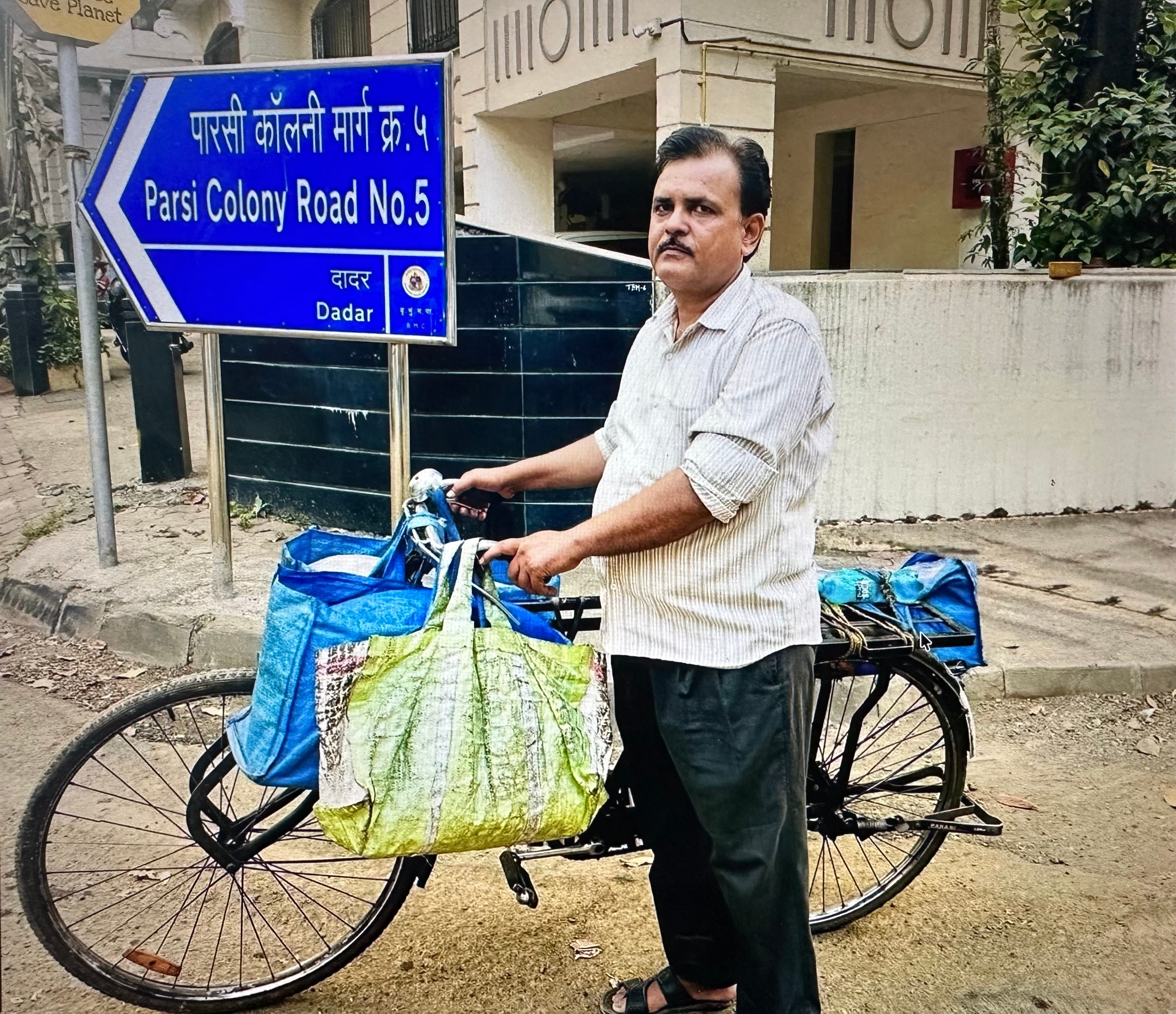
And there is my pavwallah, Siraj ji.
His day begins at 3:30 in the morning. He bikes for more than half an hour to deliver fresh bread to Parsi Colony, takes a brief shower, switches to delivering eggs, and eventually makes the long journey home—a commute that can take two hours.
A sixteen-hour day.
Then he wakes up and does it all over again.
No newspaper will write about him. No biography will chronicle the flute seller’s journey through the monsoon. The mochi beneath the tree will probably never be invited to speak about perseverance.
And yet, what is perseverance if not this?
Perhaps leadership doesn’t always require followers.
Text within this block will maintain its original spacing when published
Perhaps the gift is not merely to search for extraordinary people to look up to, but to train ourselves to recognize the extraordinary in the ordinary—the discipline, ingenuity, courage, dignity, and grace quietly being practiced around us every day.
For more stories about travel, people, and learning to see the world a little differently, join me here.
And perhaps that is why I have always loved the world of author R. K. Narayan.
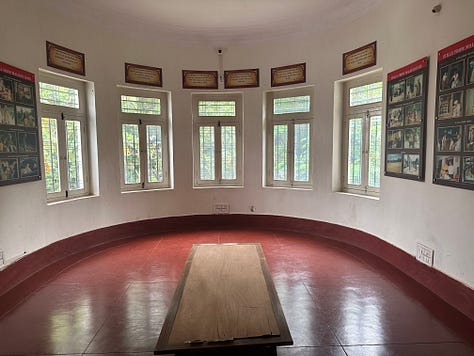
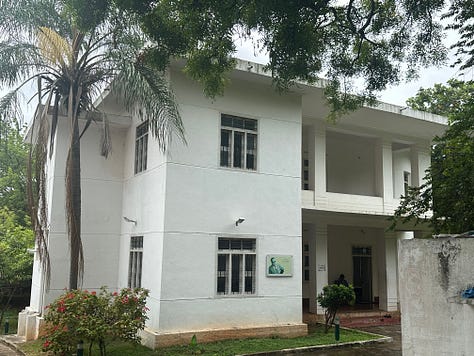
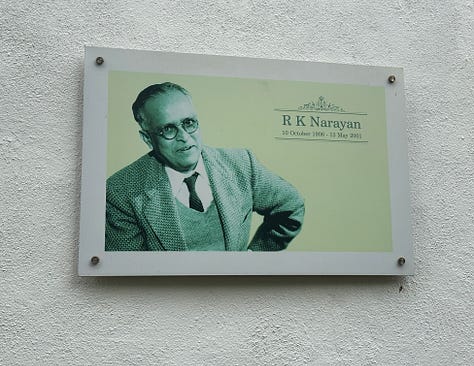
Narayan possessed that rare gift of attention. He didn’t need kings, conquerors, or celebrities to make life interesting. A grandmother could contain a universe. So could a schoolboy named Swami. In the fictional town of Malgudi, ordinary people going about ordinary lives revealed themselves as extraordinary because someone had looked at them closely enough.
Maybe that is the greater lesson.
Text within this block will maintain its original spacing when published
We spend so much of our lives looking upward for people to inspire us that we forget to look sideways.
At the woman scientist in the simple sari.
At the man beneath the tree repairing a shoe.
At the bread seller beginning his day while the rest of the city sleeps.
At the barefoot flutist walking through the Mumbai monsoon with an entire orchestra balanced on his back.
Perhaps the extraordinary has been around us all along.
We simply have to learn how to see it.
Meaningfully yours,
Anu Prabhala
P.S. If Ranganayaki Aunty’s remarkable story intrigued you, Deccan Herald published a wonderful profile of her journey—from being the only woman in her engineering college to her pioneering work in aerospace and NASA research. You can read it here.
Know someone who finds the extraordinary in ordinary life? Share this with them.
No posts
Comments
Nothing yet. Say the first thing.
Sign in to join the conversation.