

OK so here I am really asking you to stretch the limits of your imagination and suspend judgement for a while. And the title is in need of some serious qualification.
But before I get to that, this post can be seen as a twin to my previous post – it is looking at the same structural change, but from a different perspective – the politician’s.
And unlike that post, which was a bit abstract (I think a lot of people thought I was just talking about climate action but really I was talking about our economic system), in this post I am going to be a lot more specific.
Longer time readers will have read my various posts about how the ideological adherence to small government and low debt levels has prevented successive governments from delivering on public good – whether it be public health, social housing or climate action. (See for example, Government is like a household and the excellent guest post Deconstructing Nicola).
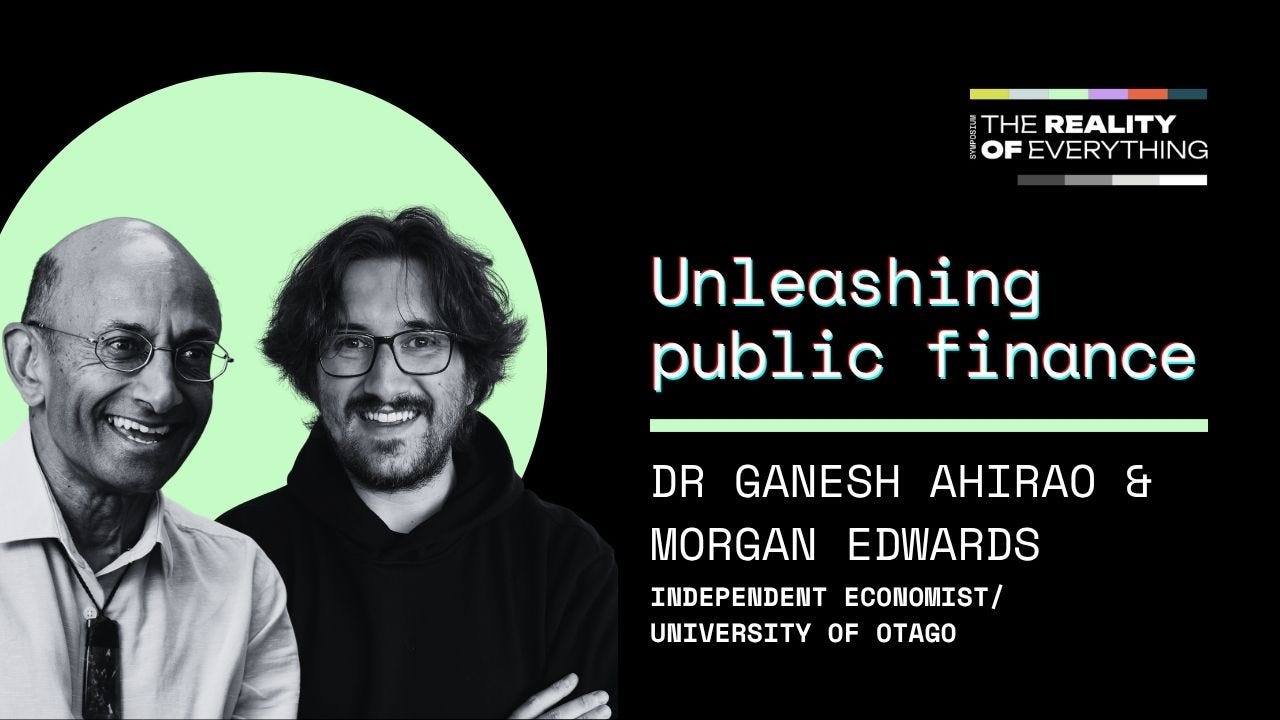
And now too we have Ganesh R Ahirao and Morgan Edward’s address to the Reality of Everything Symposium on the topic.
This is something that Bernard Hickey refers to the 30/30 rule: that is, the unwritten but religiously adhered to rule that government debt should be kept to around 30% of Gross Domestic Product and the size of government must be kept within 30% of GDP. While the percentage has floated around a bit, this adherence to a low debt-to-GDP ratio was a product of the Public Finance Act 1989, which required government to be “fiscally responsible” and reduce it debt to “prudent levels”.
Bernard Hickey has been talking about this for years, and has long criticised both National-led and Labour-led governments for their blind adherence to this “rule”. More recently on the Kākā, he lamented that despite Labour leader Chris Hipkin’s “performative promises” about increasing spending on health, public transport and the like, a Labour government’s refusal to veer from a 30/30 rule would prevent it from doing any of the major investment in public services and climate action so desperately required.
“[These rules] effectively prevent Labour from doing significant state house building or significant public transport building. So that’s the concern here, that Labour’s promises are effectively redundant and hollow unless it decides to abandon the 30-30 rule, which is the core of the neoliberal set of tools which have been in place since 1989.”
I am sure he is right.
But what I am about to say may raise some eyebrows. Because I surmise that Chris Hipkins, and if not him then other senior members of the Labour caucus1 believe that what Bernard Hickey, Ganesh Ahirao and others have been saying is right and they desperately want to throw off the shackles of this arbitrary and damaging rule and its broader ideology. But - and here is the clincher - they also know that to do so would be political suicide. They would be mercilessly pilloried by the opposition and banished forever to non-governing purgatory by the electorate.

In other words, even if they believe this rule must be abandoned and a more responsible approach to government adopted, they need the mandate to do this. And of course, no electorate is going to give them the mandate because we have also been indoctrinated by the “government is like a household” maxim and assume all debt is bad.
But that is where the previous post comes in. Neoliberalism, of which the small government ideology is a key tenet, was not introduced as a result of an overwhelming wave of electoral support. It was the result of persistent advocacy of a small but determined and highly strategic group of (admittedly very well-resourced) adherents who persuaded key politicians (especially Margaret Thatcher and Ronald Regan) that neoliberalism would be the salve to the fiscal woes of governments the world over (the testing ground was Chile under the dictator Augusto Pinochet).
Thanks for reading An Uncommon Land! This post is public so feel free to share it.
A mandate could stem from a well-organised campaign to persuade enough people (but not necessarily a majority) that continued adherence to this rule is not only undermining Aotearoa New Zealand’s societal and economic wellbeing now, it is going to seriously degrade Aotearoa’s resilience into the future. I believe (and no doubt there will be many naysayers) this could be done. It would take a bit of organising and it would take a bit of resourcing. But it could be done.
But there is one other aspect that needs to be addressed. Many people have legitimate concerns about debt, and therefore are uncomfortable about any prospect of government “debt” being increased. They know that as systems scientist Nate Hagens puts it when describing our financial system, “debt is a claim against energy and materials” (and therefore nature).
This is a valid point. But there is a big difference between private sector debt, raised to maximise private profit at the expense of society and the biosphere, and government spending (because of course as we know this is not funded by taxes or borrowing). And as both Ganesh Ahirao and Morgan Edwards state in their address to the Reality of Everything Symposium, government spending into the economy must ensure that there are adequate resources, including skilled people, and environmental capacity for that investment.
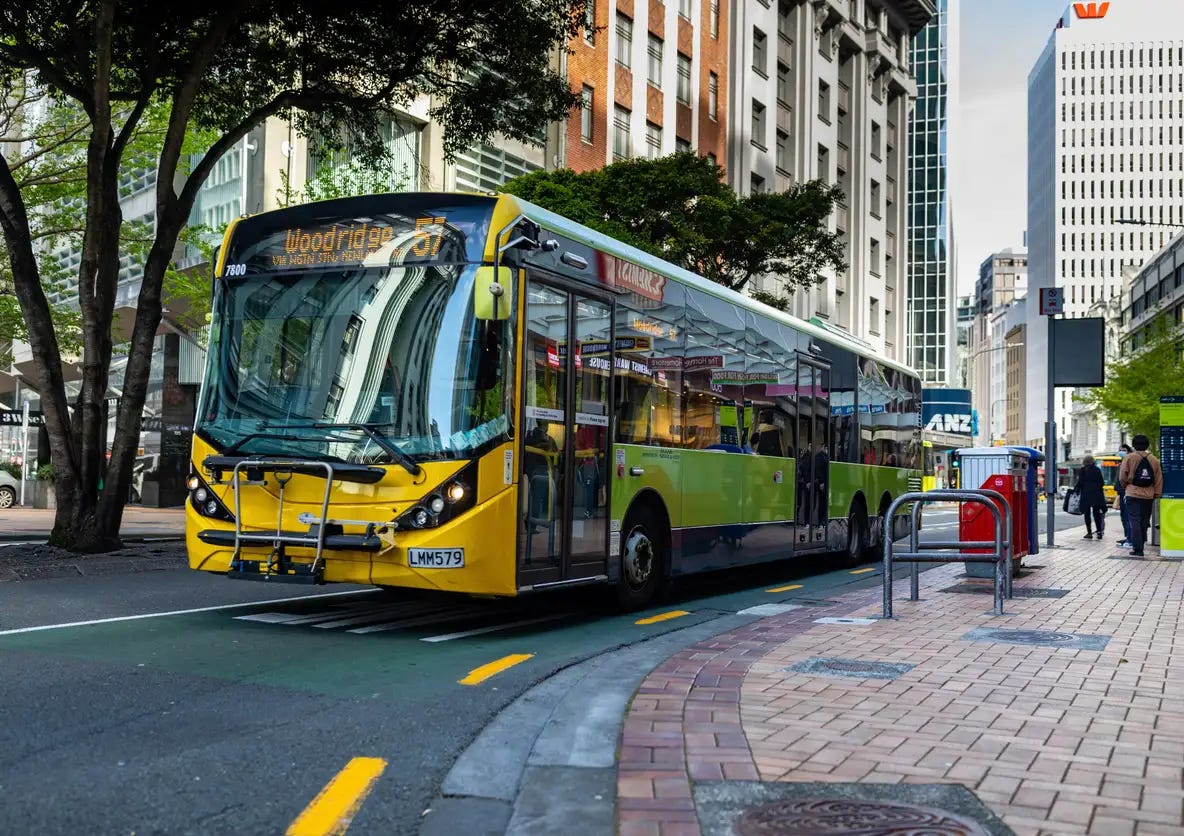
But as we also know from the research of Dr Julia Steinberger and her team (see Public services are the linchpin for living well within limits), government investment in public goods and services is a much more energy-, carbon-, resource-efficient way to deliver on core human needs than private consumption. For instance, an affordable, efficient and reliable public transport system in our cities and towns (whether trains, trackless trams, or buses) would greatly reduce the need for people to own and run cars, drastically reducing the need to spend public money on roads building and maintenance, treat disease caused by air pollution, mitigate and respond to deaths and injuries from car crashes and so on. In short, investment in public goods to meet core societal needs is much better for the planet than each of us trying to maximise our own wellbeing through private consumption.
In summary, structural change is not just about political awareness; I believe that at least some key politicians are aware and would like to see a shift to more responsible economic governance.
It is about mandate. And only we, as citizens, can provide that mandate. That is our superpower. Imagine if we unleashed it.
We are led to believe that it takes a majority to precipitate social change
·
Jul 10

The notion that it takes a decent chunk of society to want change before it happens has made many of us feel hopeless and disillusioned. If we can’t get our own family, friends or close colleagues to care, how do we make the rest of society to?Thanks for reading An Uncommon Land! This post is public so feel free to share it.
Record numbers of children are hungry and families homeless
·
May 29
There has been a lot of media coverage of the Budget over the last 24 hours. But I have not heard one bit of commentary (bar the inimitable Bernard Hickey of course) question the assumption that there is some immutable fiscal threshold within which the government must operate. And that breaching that threshold will rain indescribable calamity upon us all.
‘The government is like a household’
·
Mar 7

One of the expert briefings I am really looking forward to at the upcoming Reality of Everything Symposium is entitled ‘Unleashing public finance’. In it, leading economist Dr Ganesh Ahirao and doctoral researcher Morgan Edwards will tell us about the reality of public finance, debunking the mythology we have been inculcated with since neoliberalism bec…
This is where the qualification of the heading comes in - this is definitely “some politicians” not all or even many (yet!).
No posts
Comments
Nothing yet. Say the first thing.
Sign in to join the conversation.