

The notion that it takes a decent chunk of society to want change before it happens has made many of us feel hopeless and disillusioned. If we can’t get our own family, friends or close colleagues to care, how do we make the rest of society to?
Thanks for reading An Uncommon Land! This post is public so feel free to share it.
This idea has been reinforced by industry-led campaigns (most notoriously the BP carbon footprint calculator) to transfer responsibility for environmental degradation to the individual and encourage us to adopt “green behaviours”, behaviours that will “cascade” on to those around us, creating societal shifts - or so we are told.
Economists and marketers have embraced this as “nudge theory” and “nudging techniques”; I remember this being the thing when I worked at the now abolished Ministry for the Environment. Perish the thought of actually using regulation or pricing to change the system! Let’s encourage people to make the “right” choices by “nudging” them through subtle changes in their environment, such as product labelling.
So, according to this line of thinking, we have to satisfy ourselves with making changes in our own lives (eg recycling, eating less meat, riding our push-bike more) and hoping that others will too.1 And then at some indeterminate point in the future, these actions may aggregate with those of others’ and make some kind of difference.

This keeps us in our boxes - in our innocuous roles as consumers - and encourages us to relinquish our much more powerful role as citizens. Keeping us in our “individualised, consumer box” is good for both government (especially the neoliberal kind that believes government should be kept small and not interfere with people trying to make money) and the business and industrial world, which does not like being told what to do.
It therefore leads us to a state of paralysis. It strips us of agency. We turn away from any hope of structural, system change, and instead focus on what we can do at home, or in our own communities, where we feel some level of agency.
But of course, the notion that we need a majority demanding action to get structural change before change happens is a myth. It is an “convenient untruth”.
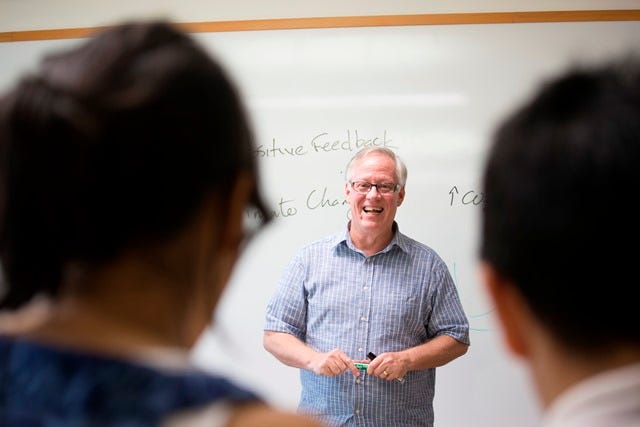
As Professor of Social Science spells out in his illuminating book “The Living-Green Myth”, the social science tells us that it is persistent strategic minorities of 10-15 percent of the population that typically drive social change. And he offers concrete historical examples:
“Abolition, women’s suffrage, Gandhi’s challenge to British rule, economic liberalism, gay marriage, the US civil rights movement, the banning of ozone-destroying CFCs, right-wing populism: in each of these instances (and in others like them) determined and strategic minorities made change happen. Mass acceptance came later - if at all.”
Collective action based on a collective awareness of the interconnected crises that are shaping our lives and our future was central to the recent Reality of Everything Symposium.
But the 26 June was just the awareness part of the equation. (Watch videos of the expert talks on the Reality of Everything website.) Next must come the action. And here, the magic number is 15% - the percentage of the population that needs to be engaged in persistent and strategic impetus for change.
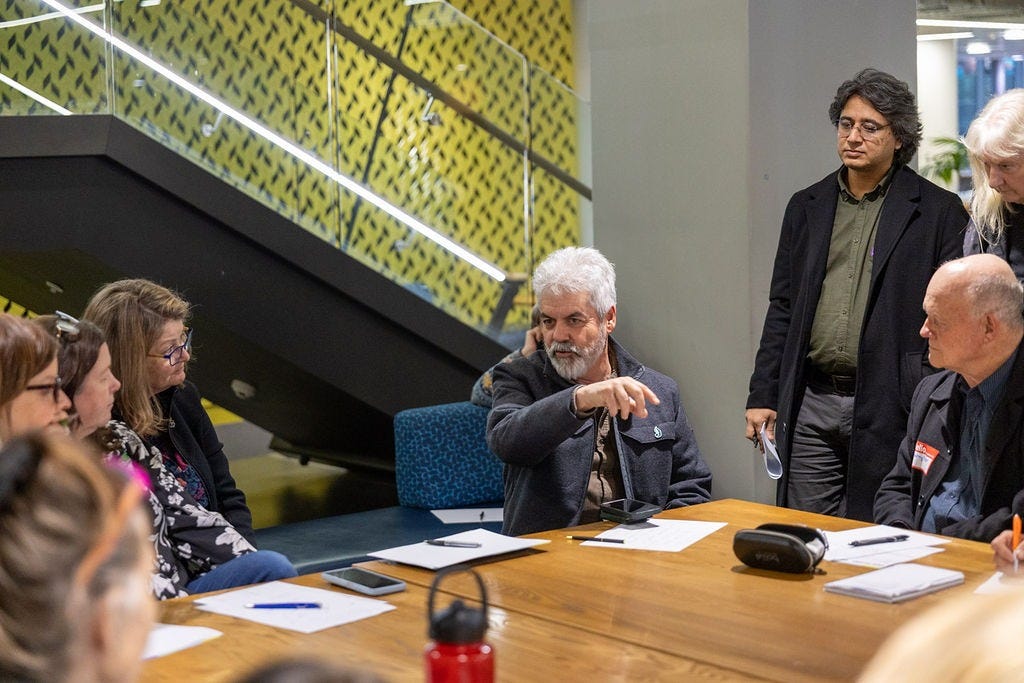
The structural change people talked about at the symposium was in the spheres of economy, governance, infrastructural and social resilience, public health and food systems. So not much then! But of course, just like the polycrisis itself, all these spheres of action are interconnected - meaning that actions in one sphere can act on others, creating positive feedback loops.
So the number is 15. And the time is now.
Thanks for reading An Uncommon Land! Subscribe for free to receive new posts and support my work.
Related posts
I feel compelled to reiterate, as outlined in the previous article on the topic It’s the maze, not the mouse, I am not suggesting for a moment that taking measures to reduce your environmental impact in your own life or own community is anything but a good thing. However, we also need to be under no illusions. In high-income nations like New Zealand even people who take every measure to be sustainable in their lives have an outsized environmental footprint that contributes to overshoot. It is wealth that is the most critical determinant of environmental impact, not values. Like patients on an intravenous drip, we are rigged up to a system predicated on unsustainable resource extraction and ecological destruction. It is the system that must change - whether by design or by a process of collapse is our choice.
Comments
Nothing yet. Say the first thing.
Sign in to join the conversation.