
Hello Antonis here!
We continue on the Data Career Compass post-series and today is the 4th one for the role of Head of Data Analytics/Business Intelligence. In the previous podcast episode for Analytics Engineer role I mentioned that it was the 4th episode. The truth is that Analytics Engineer was planned to be after this one, so this is the actual 4th blog post & podcast episode.
Today, we shift our focus to a higher level, the role of the Head of BI/Data. What does it really mean to lead a BI function at scale and how do you drive strategy, structure and decision-making across an organization? While I haven’t personally held a Head of BI position with BI Leads reporting to me, that’s exactly why I’m excited about this conversation because our guest brings that experience to the table.
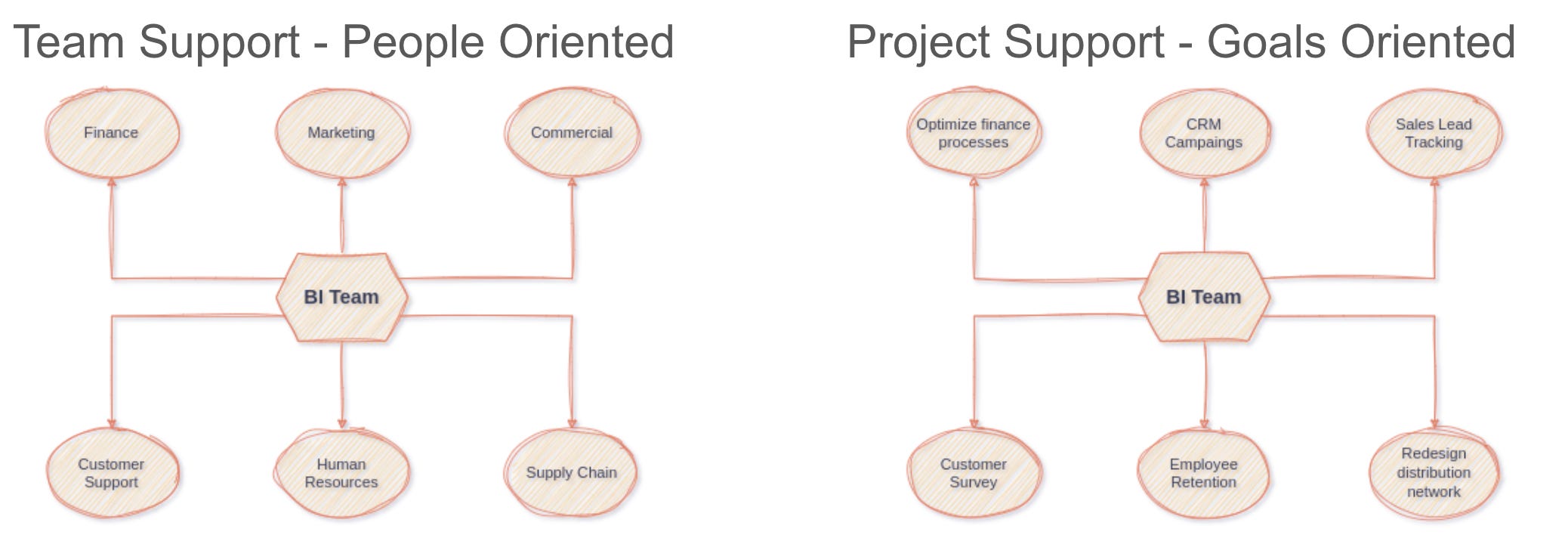
I’m truly happy to reconnect with one of my former line managers, Christos Lontos -Head of BI at Skroutz (❤️). Christos has been a major influence, not just professionally but personally too (…and this makes me happier) and I’m thrilled to share his insights with you. That’s where I was inspired to write about Increasing the reputation of Business Intelligence teams within an organization. This where I’ve learned for the below ways of working for BI Teams.
In this episode of DataConscious – A Mindful Approach to Analytics, we sit down with Christos Lontos, Head of BI at Skroutz, to explore what it truly means to lead a modern BI function.
🎙 What does a Head of BI/Data really do? We explore how this role goes beyond reporting shaping data strategy, enabling decision-making and empowering teams across the organization.
🎙 His journey into the role: From software engineering to big-data projects and eventually leading the BI function at Skroutz, Christos shares how each step shaped his leadership style.
🎙 A day in the life: From strategic alignment and cross-functional partnerships to balancing fire drills and long term roadmaps, you’ll hear how he keeps his team focused and impactful.
🎙 Leading with intention: Christos shares how he builds relationships, earns trust across departments and fosters a team culture rooted in ownership and curiosity.
🎙 Hiring mindset: Thinker-doers over resume flash. He explains what makes a candidate stand out and how he builds a resilient, value driven BI team. ( I can confirm that ✅)
🎙 Honest leadership truths: Why mastering the fundamentals matters and why you should be ready to let go of them when the mission calls for it.
🎙 Advice for future Heads of BI: Grounded reflections on what he wishes he knew earlier and how to lead with empathy, adaptability, and purpose.
🎙 The next decade of AI: Predicting where we’ll be in 2035
🎙 What qualities does he look for when hiring data professionals?
🎙 How AI will affect the hiring of BI roles?
Christos highlighted that BI alignment is not about serving internal customers or responding to whoever requests something first. The Head of BI anchors the team on strategic initiatives often through OKRs to ensure BI resources create real business leverage.
The Head of BI sits at the crossroads of business strategy and data execution. It’s not a role about chasing dashboards or cleaning up everyone else’s mess. It’s about seeing the bigger picture, then building the systems, teams, and culture to bring it to life.
Yes, the job involves data. But not in the ‘just run this query’ way. Instead, the Head of Data defines how an entire organization uses data to think, act, and grow. In a startup, this might mean getting your hands dirty writing SQL, building dashboards, optimizing pipelines. In a more mature environment, like a large ecommerce company, the role starts to resemble a Chief Data Officer, shaping long-term architecture, driving governance, and coaching multiple data leaders across BI, engineering, and analytics.
Take Zalando for example. One of their engineering managers shared how the data team overhauled legacy systems using AWS standards and as a result, cut operational costs while delivering more, faster. It’s not about buzzwords it’s about real outcomes. Less friction. More speed. Smarter decisions. That’s the impact a good Head of Data can have. They’re not the smartest SQL writer in the room. They’re the person who connects the dots and clears the way.
Whether you’re growing into a leadership role or already leading a team, this episode offers a clear and thoughtful look at what it means to head a BI function that truly drives value.
🎧 Listen now & subscribe for more insights on mindful data practices!
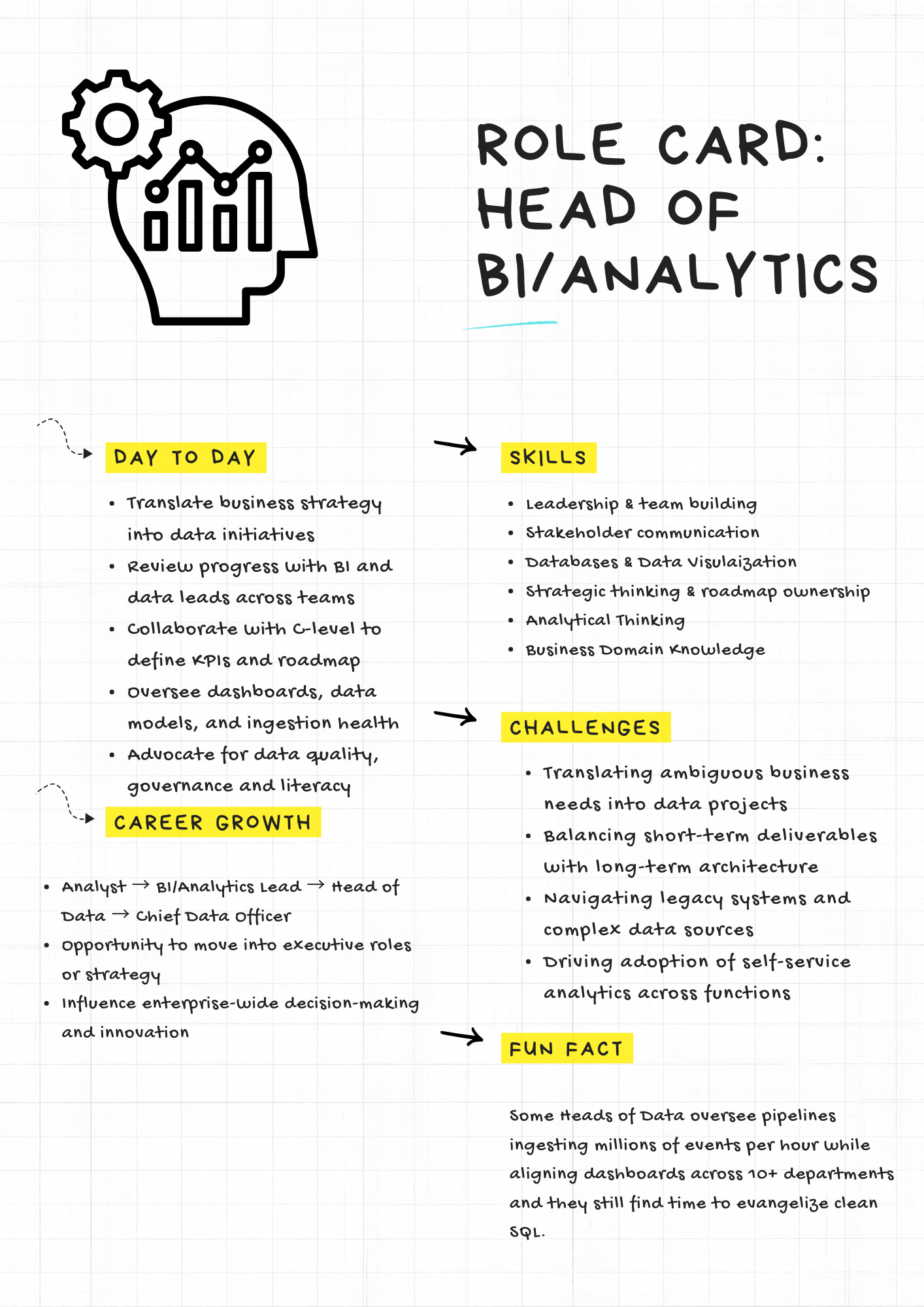
At its core, the Head of Data role is about strategy and leadership. You’re responsible for defining the data roadmap and ensuring it serves business objectives. This often involves:
Data Strategy & Culture: Establishing a data driven culture across the organization. The Head of Data partners with C-level and business leaders to understand key goals and uses data to measure and drive them. They may introduce data governance, set data quality standards and evangelize self service analytics so teams can make informed decisions. At Skroutz, for instance, the leadership chose Amazon Redshift to ‘promote data democratization, empowering teams across the organization with seamless access to data, enabling faster insights’. A Head of Data would be the one championing that democratization, ensuring the data platform is accessible and transparent to marketing, product, finance and more.
Christos described one of the toughest aspects of the role: delivering daily value while simultaneously building the systems, structures, and team needed for next year’s scale. This duality is unavoidable and mastering it defines senior data leadership. Build the car while riding the horse
Building & Mentoring Teams: Unlike an analytics manager who might oversee a small reporting team, the Head of Data should supervise multiple leads (Analytics Engineers, Data Engineers, BI Managers, Data Scientists, etc.). They recruit and mentor these leads, helping them grow into strong specialists. In other words, the Head of Data is a people leader, ensuring each team has the right skills (cloud experts, SQL gurus, machine learning engineers) to execute on strategy.
Avoid the technical trap (don’t jump in and code).
Your team is your output (success is collective).
Expect to be misunderstood when driving change (friction means progress).
These can be a separate section:
Cross-functional Collaboration: Heads of Data work across departments marketing, product, IT, operations to align data projects with business needs. They translate technical capabilities into business value (for example, turning raw clickstream data into a revenue forecast model for the retail team). Collaboration is key: an effective Head of Data partners with CTOs, product owners and business stakeholders to integrate data solutions smoothly. This might include rolling out a company wide BI dashboard, modernizing the data warehouse, or enabling new AI/ML products that directly impact revenue.
Technology & Architecture Direction: A strategic Head of Data stays on top of the technology stack. They decide on architectures (data lakes, warehouses, real-time streams) and platforms (AWS, GCP, Azure) that will best serve the company’s scale and goals. In fact, companies leverage data infrastructures to combine transactional (e.g. SAP) and analytical data into near-real-time reports. The Head of Data would oversee such migrations or implementations, balancing performance, cost, and accessibility.
In practice, this means setting up a vision document or roadmap and then working backwards to pick initiatives. Will we migrate from on-premise SQL Server to Snowflake? Do we build a Kafka streaming layer for real-time user events? A Head of BI makes those calls along with engineering leaders and architects. They also measure the success of these projects in business terms (e.g. faster decision cycles, reduced storage cost, new revenue channels).
On any given day, a Head of Data may:
Meet with executives to review data driven KPIs (sales trends, churn rates, server usage) and adjust strategy.
Oversee data team leads, reviewing progress on projects: Has the Snowflake migration reduced query times? Are dashboard refreshes failing? They solve people/process issues rather than writing the SQL themselves.
Prioritize new initiatives: maybe the supply chain team needs a new predictive model, or marketing needs a campaign attribution dashboard. The Head of Data evaluates ROI and resource needs.
As Christos notes, the Head of BI must balance responsiveness with discipline embracing ad-hoc queries to discover hidden needs while preventing them from disrupting long-term impact. The solution is pattern recognition and building self-service capabilities that absorb repetitive requests.
Liaise with IT/security/governance: ensure compliance (GDPR data handling, access controls) and data quality audits are in place.
Champion tools adoption: They might demo a new BI tool to stakeholders or agree on budgets for cloud services (e.g. migrate from Snowflake to AWS Redshift).
Represent data at the executive table, translating technical progress into business terms and vice versa.
Importantly, while they understand the technologies (cloud, databases, machine learning) and might have written code earlier in their career, the Head of Data’s daily tasks are management and decision making. They delegate technical tasks to specialists.
For instance, a Data Lead might handle schema changes or build dashboards, but the Head of Data would say why those are needed, when and measure if they are delivering value (faster insights, increased revenue, cost savings).
Think of it this way: if a Data Engineer designs a pipeline, the Head of Data ensures that pipeline matches the company’s five year growth plan. If a Data Analyst delivers a report, the Head of Data asks how those insights will influence marketing or product strategy.
The journey to Head of Data usually goes through roles like Data Analyst, Data Engineer, BI Manager or Data Science lead. Along the way, you build up expertise in data tools and grow soft skills. Here are some actionable steps and competencies for aspiring Heads of Data:
Broaden Your Expertise: Master the full data stack, from ingestion (Kafka, APIs) to storage (Redshift, Snowflake, BigQuery) to transformation (dbt, SQL, Spark) to BI (Tableau, Looker). Understanding these tools helps you make informed choices and speak the language of your engineers.
Develop Business Acumen: Learn how different departments use data. Can you read a finance report? Do you understand customer acquisition metrics? The best Heads of Data connect data projects to revenue, margins or customer experience.
Build Leadership Experience: Lead small teams or projects to practice decision making. Mentor junior analysts/engineers.
Communicate Clearly: Hone your ability to explain technical ideas to non-technical people. The Head of Data often pitches projects to executives or trains business teams on data tools.
Stay Curious about Strategy: Always ask “why”. Why do we need this dashboard? How will this data product move the needle for the business? Heads of Data think in strategic terms, not just technical specs.
Embrace Agile & Lean Principles: Modern data teams move quickly. Heads of Data often adopt agile methodologies, iterative delivery and OKRs/KPIs to measure success.
Finally, network with industry peers. Podcasts or communities like DataConscious often feature interviews with Heads of Data. For example, collaborating with colleagues (even if not named here) at Skroutz or other firms can reveal insights about balancing ecommerce metrics with data initiatives.
Learn from their experiences: how did they manage schema changes without slowing dev teams (as Skroutz did with Debezium/Kafka)? How did they guide major cloud migrations (as Zalando did with AWS services)? These stories can inform your own approach.
Remember, at the end of day you’ll probably end using Excel for one more (last) time.

Christos emphasized that AI literacy is rapidly becoming as essential for BI professionals as SQL literacy has been for the past decade. The shift underway is not merely technological but deeply cultural. Programming and analytical work, once dominated by traditionally trained engineers, are becoming accessible to broader groups of people with diverse backgrounds, mindsets, and values. This ‘destandardization’ of technology where historians, nurses, designers and domain experts can create software and intelligent agents through natural language will reshape how data products are built and how organizations operate.
According to Christos, BI leaders must be ready for a world where debugging resembles adjusting the behaviors or ‘personalities’ of AI agents rather than fixing code. In this landscape, structured thinking, clarity of communication, and the ability to collaborate with AI systems will matter even more than today. The Head of BI must prepare teams for this transformation, ensuring they can leverage AI as a performance multiplier while maintaining strong fundamentals in analytical reasoning, problem decomposition, and stakeholder communication.
The Head of Data is a mindful mix of strategist, technologist and leader. They ensure that data flows smoothly, decisions are evidence-based, and teams are empowered. In e-commerce and marketplaces like Amazon, Zalando and Skroutz, this role can dramatically influence growth: from enabling real-time analytics to cutting data costs and creating new data products (recommendations, forecasts, etc.)
If you’re aiming for this role, focus on both “big picture” thinking and the hands-on knowledge to back it up. Align data projects with business impact, build strong teams explore the the data stack. As companies scale, they need visionaries who can turn raw data into strategic advantage. A successful Head of Data lights the path from data to insight to action.
In a nutshell…
Konstantinos Siaterlis demonstrates how to deploy a Minecraft server using AWS ECS Fargate and Terraform. The project involves setting up a Virtual Private Cloud (VPC) with public and private subnets, configuring a Network Load Balancer and integrating Elastic File System (EFS) for persistent storage. The tutorial emphasizes Infrastructure as Code (IaC) practices and provides a practical example of deploying containerized applications on AWS. The full code is available in the accompanying GitHub repository.
‘Built, Not Invited: The Story Behind LeadDev Athens’ is a reflection on how real communities and initiatives are earned not handed. Christos Chatzis explains that what began modestly as a blog called git push -f leadership evolved through steady effort, shared belief, and active participation into LeadDev Athens. What matters, the post argues, isn’t being formally invited or given permission but rolling up sleeves, contributing with consistency and building momentum together.
Value from Data & AI — ‘You’re Not Supposed to Be ‘The Boss’ argues that leading data or AI efforts successfully isn’t about asserting authority it’s about enabling influence, collaboration and delivering measurable value. Nick Zervoudis warns against the ‘that’s-not-my-job’ attitude, urging data leaders to avoid siloed thinking and instead take ownership of both results and accountability. It calls out common pitfalls like building dashboards or analytics tools without connecting them to real business outcomes, practices that often leave data projects disconnected from actual value creation.
Great engineering starts with great awareness. Be mindful, be DataConscious.
❤️ Liked this article? Make sure to push the button
💬 Community needs your voice, do you have something to add? Feel free to
🔁 Know someone that would find this helpful? Feel free to share
No posts
Comments
Nothing yet. Say the first thing.
Sign in to join the conversation.