
Hello again, Antonis here!
Welcome back! I hope you found the previous deep dive into SQL optimization both informative and inspiring. Now, as we continue our journey into the world of SQL mastery, this second part of the series will take us even further. 🚀
Remember, optimizing your SQL queries isn’t just about making them run faster, it's about empowering you and your team to work more effectively together. Consistency in your coding style can foster collaboration and streamline the review process, which is why we can’t overlook the importance of following best practices.
Join me as we delve into specific strategies with practical examples and insights that will elevate your SQL skills to pro levels. Let’s supercharge your sql code management and make your code work for you, not against you!
Like I mentioned in the previous post:
By following these tips you will make your code reviewer life MUCH easier.
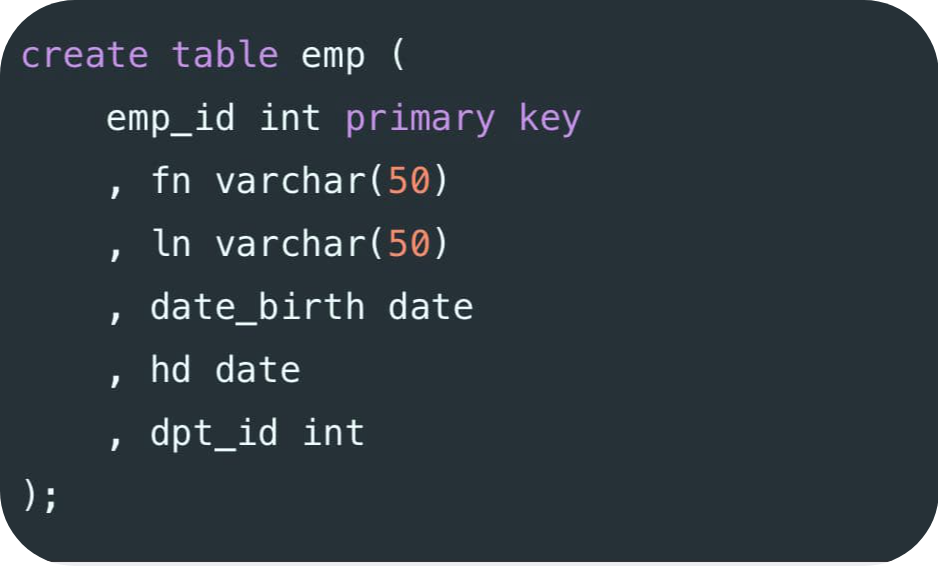
Overall, it is important to use a consistent naming convention and to choose names that are descriptive, clear, and easy to understand. This makes it easier for users to work with the database and ensures that queries and joins are accurate and efficient.
Instead of this
Do this
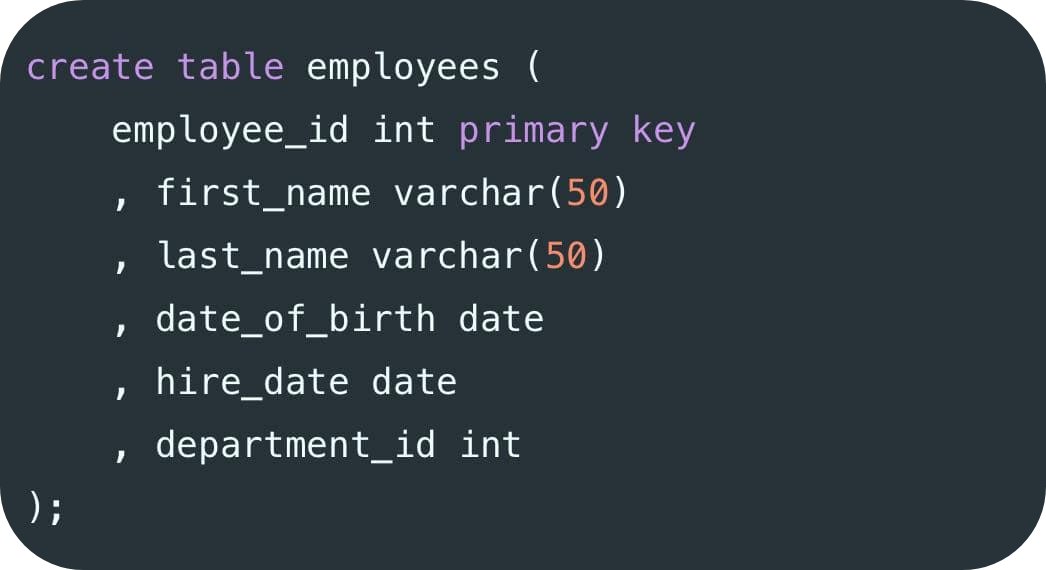
Notice how the table and column names are all abbreviated and use a non-standard naming convention. The table name is in singular form, which could be confusing if there are multiple entities in the table. The column names use abbreviations, which may not be immediately clear to users who are not familiar with the system. This can make it difficult to understand the relationships between tables and can lead to confusion and errors in querying the database.
Please stop doing that. Reduce the number of columns returned in the select statement to only those that are necessary for the query. This is a good practice for several reasons, especially in a columnar database. In a columnar database, each column is stored separately from the other columns, which means that retrieving data from a large number of columns can be slower than retrieving data from a smaller number of columns. by selecting * we increase the amount of data that needs to be transferred across the network and processed by the application. This can result in higher memory usage and longer processing times, which can negatively impact query performance. Furthermore, we reduce the clutter in the select statement and make it easier to see what the query is doing.
Instead of this

Do this

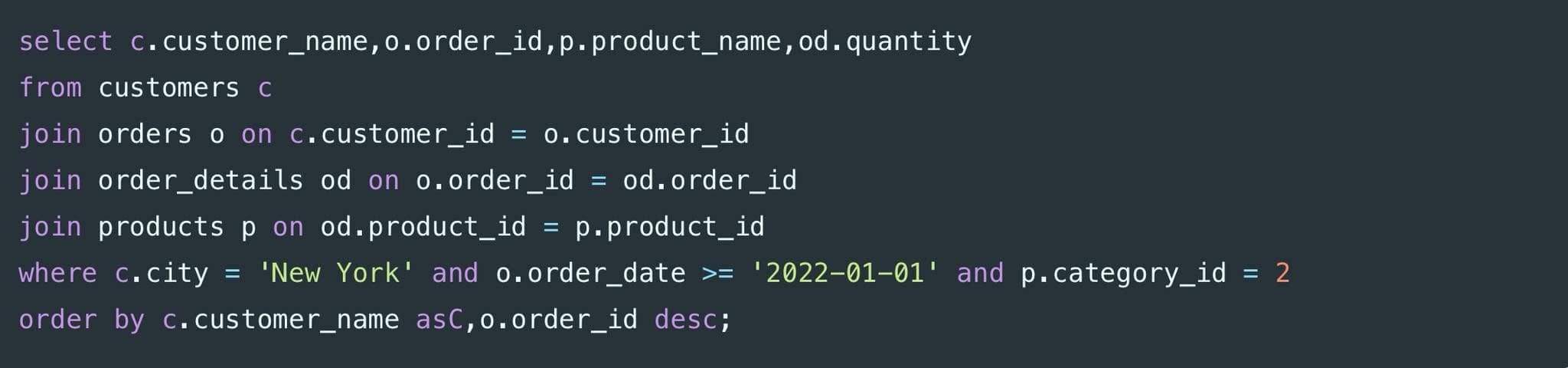
Using proper indentation and spacing can help to make SQL code more readable and easier to maintain. It’s important to follow best practices and to keep the code well-organized to prevent errors and improve efficiency.
Instead of this
Do this
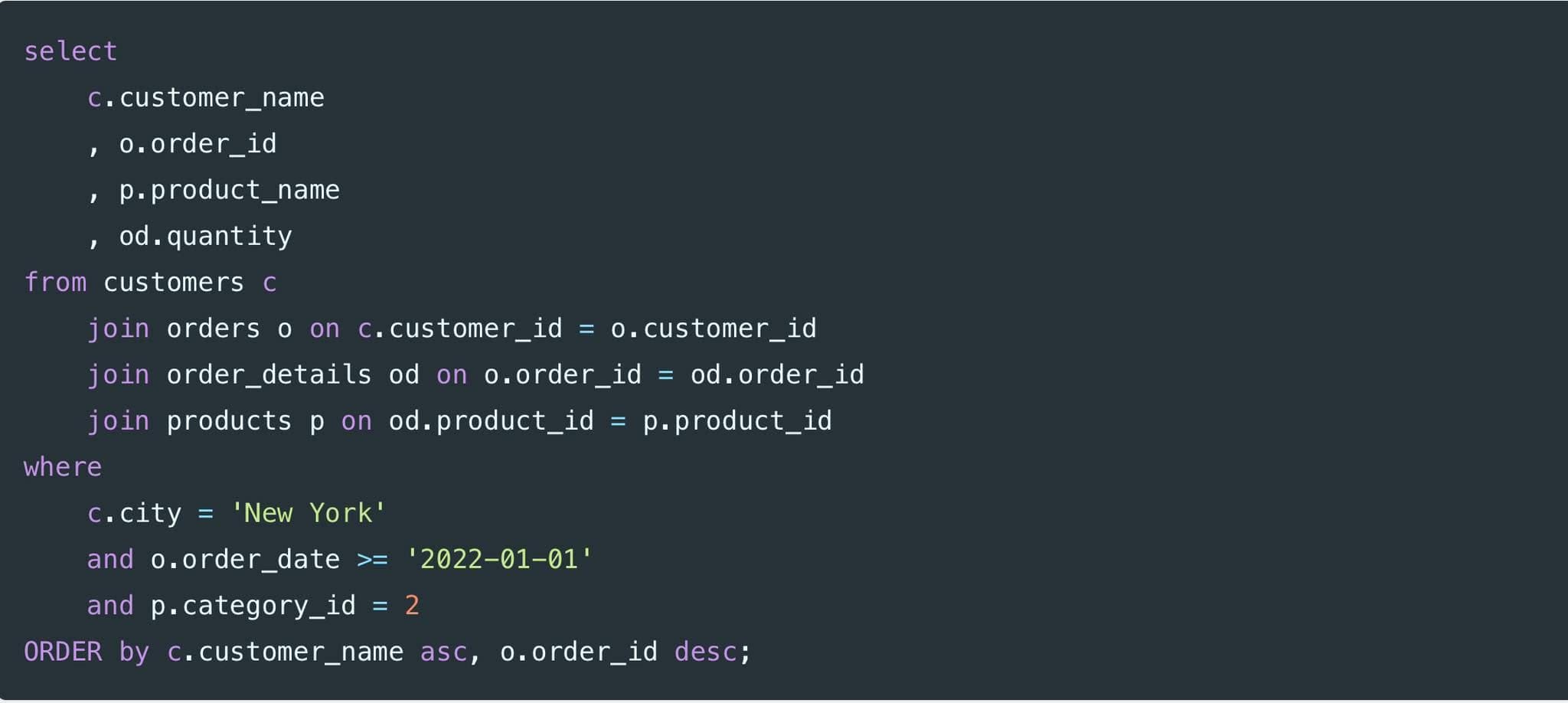
The ORDER clause is uppercase on purpose to remind you, how ugly it is to code in uppercase :P
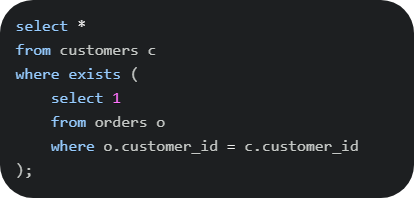
The primary advantage of using exists over in lies in the way each construct processes the query. With exists, the SQL engine evaluates the subquery and stops as soon as it finds the first record that matches the criteria. This characteristic makes exists particularly valuable when dealing with larger datasets, as it can significantly reduce processing time.
In contrast, the in clause compiles a list of values from the subquery results before it even begins to evaluate the outer query. This means that if the subquery returns a large set of values, the database must first gather all these values before starting the comparison. The combination of these steps can make in less efficient, especially as the size of the dataset increases.
In simple terms, you can think of exists like a librarian searching for a specific book on a shelf. As soon as they find the book they're looking for, they stop searching and confirm its presence. On the other hand, using in is like having the librarian first pull out all the books on that shelf, regardless of any particular title they might be looking for, resulting in extra work and potential delays.
Instead of this

Do this
As we wrap up this two-part series on optimizing SQL queries, I hope you've gained valuable insights that will elevate your skills and streamline your SQL coding practices. The journey to mastering SQL is not just about writing efficient queries. It’s also about clarity, consistency and collaboration within your team.
By implementing the strategies we've discussed, you'll find that your SQL code becomes not only more efficient but also significantly more readable and maintainable. This will not only make your own work easier but also simplify the review process for your colleagues.
Remember, great analysis begins with mindful coding practices. Keep these tips in your toolkit, and you'll be well on your way to writing SQL like a pro.
Thank you for being part of the DataConscious community!
Great analysis starts with great awareness. Be mindful, be DataConscious.
❤️ Liked this article? Make sure to push the button
💬 Community needs your voice, do you have something to add? Feel free to
🔁 Know someone that would find this helpful? Feel free to share
Thanks for reading DataConscious – A mindful approach to analytics! Subscribe for free to receive new posts and support this effort
No posts
Comments
Nothing yet. Say the first thing.
Sign in to join the conversation.