
I’ve recently watched this exceptional video from Sahn Lam, ACID Properties in Databases With Examples and decided to create a post about this super important concept.
When you’re working with databases, keeping data accurate, reliable, and consistent is non negotiable. That’s where ACID transactions come in. ACID stands for Atomicity, Consistency, Isolation, and Durability, 4 key principles that ensure databases handle transactions correctly and keep your data safe from chaos. Let’s break them down with some real world examples and explore what happens when ACID principles aren’t followed.
Think of atomicity as the "no half-measures" rule. A transaction is either fully completed or not done at all, no in between states allowed.
Imagine you're shopping online, and you’ve added a few items to your cart. When you check out, multiple things happen in the background:
Your credit card is charged
The store updates its inventory
An order confirmation is sent to you.
Now, what if the payment goes through but the order isn’t recorded? Nightmare. Atomicity prevents this by ensuring that if one step fails, the whole transaction is rolled back, so you don’t end up charged for an order that never existed.
Consistency ensures that data follows all the rules and stays valid before and after a transaction. No weird anomalies or broken constraints.
Imagine Bob has $100 in her bank account and tries to withdraw $200. The banking system enforces a rule that an account cannot have a negative balance.
Here's what should happen:
The system checks Bob’s account balance.
Since Bob has only $100, the transaction violates the consistency rule (an account cannot go negative).
The transaction is canceled, and Bob's balance remains unchanged.
If the system did not enforce consistency, it might allow Bob to withdraw more money than she has, leading to data corruption, financial mismatches, or even bank failures.
Consistency ensures that databases operate within predefined rules, preventing logical errors and maintaining trust in the system.
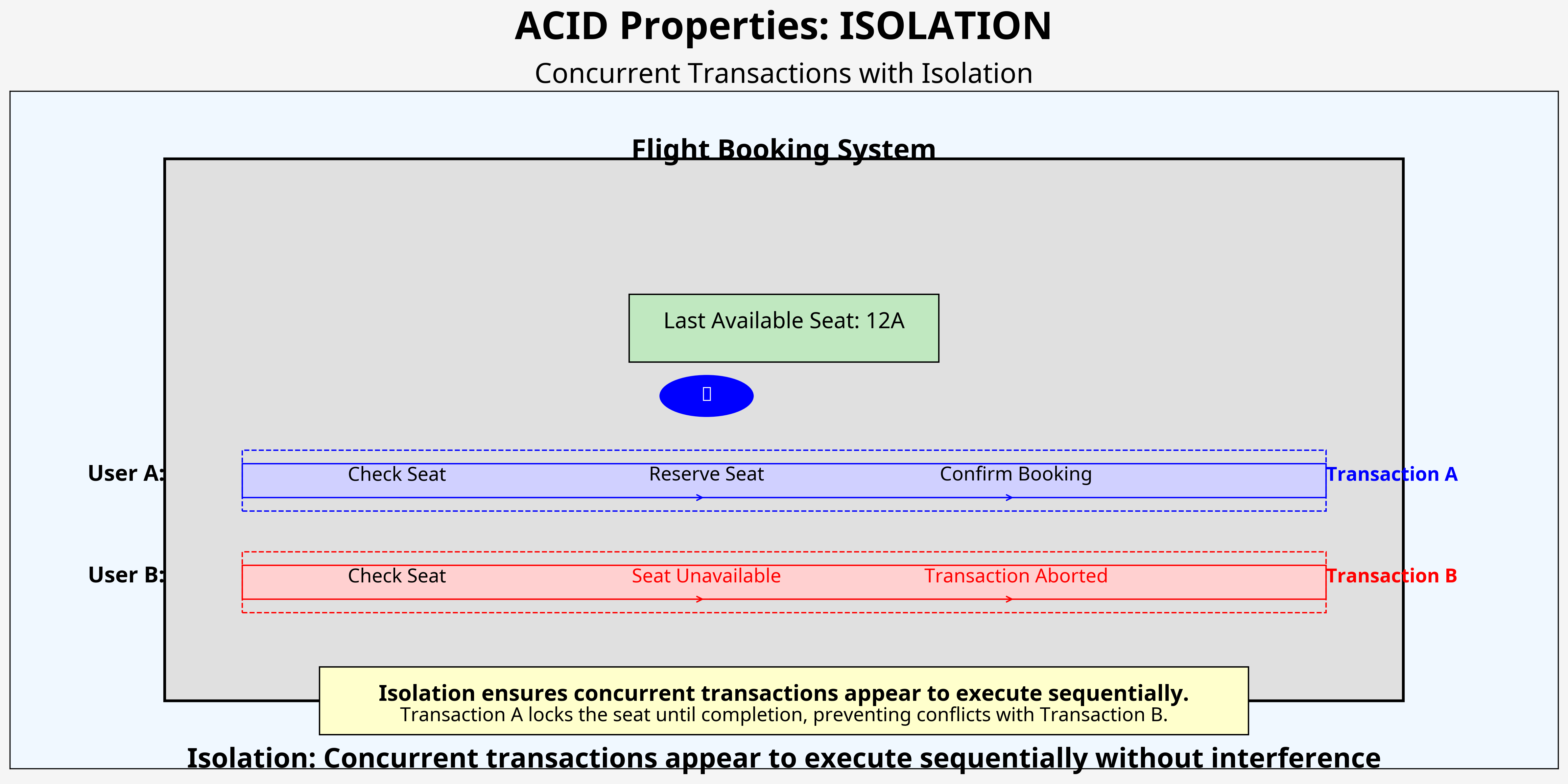
Isolation makes sure that multiple transactions don’t get in each other’s way.
Without it, you could get scenarios like double bookings or incorrect balances.
Picture this: two people are trying to book the last available seat on a flight at the exact same moment. If the system doesn’t handle transactions properly, both might end up thinking they got the seat, leading to an overbooking mess. Isolation ensures that only one of those transactions goes through first, avoiding conflicts.
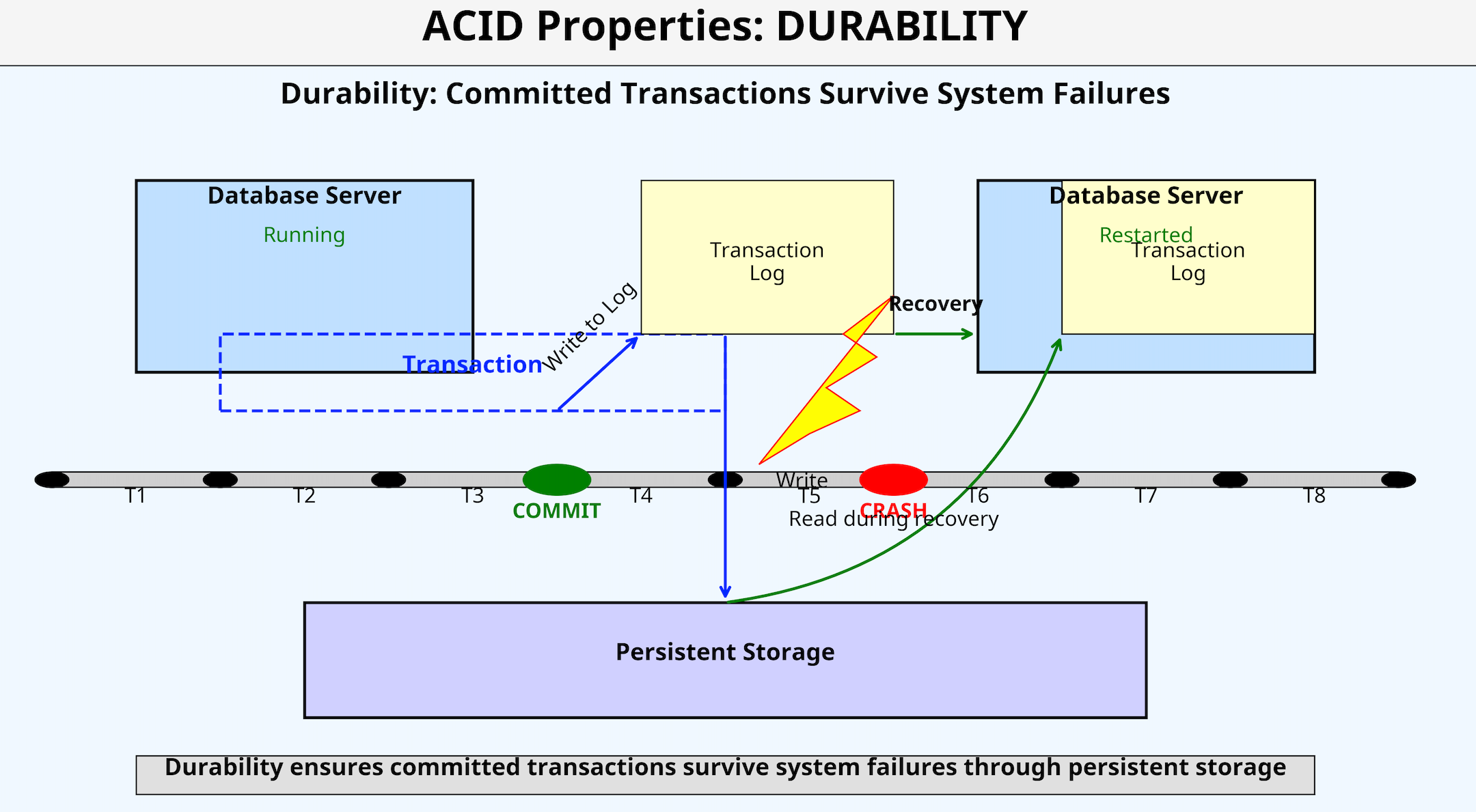
Once a transaction is completed, its changes must be permanent, even if the system crashes right after.
You’ve placed an order, got a confirmation email, and now you’re waiting for your package. But what if a system crash happens right after your order was processed? If durability wasn’t enforced, you might lose your order in the void. Thankfully, databases commit transactions to permanent storage, ensuring that once your order is placed, it’s there for good.
Not following ACID principles can lead to disastrous consequences and Knight Capital’s $440 million meltdown in 2012 is a serious example.
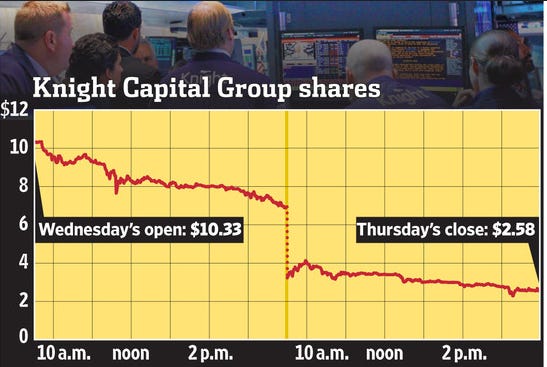
A faulty software update caused the system to execute a bunch of unintended stock trades at lightning speed. Because ACID principles weren’t properly enforced:
Atomicity failed: Partial trades went through without rollbacks.
Consistency failed: The system allowed invalid transactions to be executed.
Isolation failed: Transactions clashed with each other, causing pricing chaos.
Knight Capital lost $440 million in just 45 minutes, forcing them into bankruptcy. One tiny ACID failure, and boom. Game over.
ACID transactions might sound technical, but they’re absolutely critical in keeping databases safe and reliable. Whether it’s banking, e-commerce, or real-time systems, following these principles ensures that data remains accurate, consistent, and trustworthy.
Have you ever run into messy database issues at work? Share your experience in the comments!
📌 Enjoyed this post? Subscribe to DataConscious for more deep dives into database design, data analytics, and mindful approaches to data integrity.
Great analysis starts with great awareness. Be mindful, be DataConscious.
❤️ Liked this article? Make sure to push the button
💬 Community needs your voice, do you have something to add? Feel free to
🔁 Know someone that would find this helpful? Feel free to share
Thanks for reading DataConscious – A mindful approach to analytics! Subscribe for free to receive new posts and support this effort
No posts
Comments
Nothing yet. Say the first thing.
Sign in to join the conversation.