
The Petapan Treaty is a landmark modern treaty1[1] under negotiation for over 40 years between three Innu communities in Quebec (Mashteuiatsh, Essipit, and Nutashkuan) represented by the Regroupement Petapan2[2], and the governments of Quebec and Canada. The Treaty aims to recognize Innu self-determination, land rights, and self-government, potentially replacing the Indian Act for these communities.
Modern Treaties for many are a preferred approach to litigation recognizing that the reconciliation of the constitutional rights of the aboriginal peoples with the Crown belongs to the political realm rather than the judicial realm. Negotiations can be difficult due to the complexity of the issues and the need for cultural sensitivity. Certain care must be maintained in order to ensure the Treaty mechanisms affirm aboriginal rights while also releasing the parties from the burdens of the Indian Act. The Treaty mechanism must ensure the recognition, confirmation and continuation of the aboriginal rights including aboriginal title, and not their extinguishment.
Self-government, is an inherent right recognized by Canada as part of the obligation to follow the principles of the UN Declaration of the Rights of Indigenous Peoples (UNDRIP). The purpose of the Petapan Treaty is to settle General and Specific Land claims and provide for the basis of self-government for the Innu. The latter objective includes providing for protection and promotion measures for the Innu culture and their language, Innu Aimun.
Core cultural pillars include:
Nitassinan (The Land): Their worldview centers on being one part of a “well-structured universe” where humans, animals, plants, and even the wind are interconnected.
Caribou Hunting (The Identity: Culture, Wellness, Heritage): Historically, the caribou provided for every need—food, clothing, and tools. It remains a central symbol of cultural identity.
Innu-aimun (The Language): A member of the Cree language group, it is a vital part of their identity. Many communities are actively working to ensure its survival through education and dual-language signage.
Spirituality (The Identity: Culture, Wellness, Heritage: Traditional beliefs involve animism and the power of dreams. The “shaking tent” ceremony and drum dances are significant spiritual practices used to communicate with the animal world and other “worlds”
Once finalized, the Treaty is expected to be a major, historic treaty in Quebec, comparable in scope to the James Bay and Northern Quebec Agreement, bringing significant economic development and autonomy to the Innu. The negotiations aim to move away from the Indian Act and towards a new relationship. The process has been complex and currently faces tension regarding the finalization of the deal. While the federal government was able to reach an agreement in principle with Regroupement Petapan in 2023, the province of Quebec has not. The province inexplicitly missed an agreed upon settlement date in March 2023 and little progress has been made since. The province, refusing to “negotiate in public” has only said the matters are complex and require more time.
The negotiations began as the comprehensive land claims of the Atikamekw and Montagnais (Innu) which were accepted by Canada in 1979 and by Quebec in 1980. After the dissolution of the Atikamekw-Montagnais Council, the various Aboriginal groups negotiated of their claims separately. However, on March 31, 2004, Canada, Quebec and the Mamuitun mak Nutashkuan Tribal Council signed an Agreement-in-Principle of a General Nature to negotiate the land claims and other matters. Back then, the Mamuitun mak Nutashkuan Tribal Council represented the communities of Mashteuiatsh, Essipit, Nutashkuan and Pessamit. The community of Pessamit stopped negotiating in 2005, opting instead for the judicial way.
In December 2014, the Federal Court ordered Canada “to engage without delay in serious and thorough discussions with the plaintiff to reconcile as far as possible and in a manner consistent with the honor of the Crown the differences between the Huron-Wendat Nation and the Mashteuiatsh First Nations and the Essipit Innu as to the territory to be covered by the Agreement-in-Principle of General Nature”. Discussions as part of this process initiated in January 2015, are ongoing. In the fall of 2022, the Innu chiefs, the Premier of Quebec and the Minister of Crown-Indigenous Relations committed to doing everything possible to conclude the negotiation of a draft Treaty no later than March 31, 2023.
The draft Treaty struck between the federal government and Regroupement Petapan includes provisions for the following:
Settlement of land claims for the territory of Nitassinan (including Anticosti Island) and the Territory of Innu Assi;
Respect for Fee Simple rights (or equitable compensation) and the treatment of other privately or publicly held lands (including municipalities);
The Establishment of Parks and Wildlife Sanctuaries;
The right to the practice of Innu Aitun (the Innu culture/ way of life including their language, hunting activities, ceremonies, etc.) and the promotion of Innu Aitun in the context of sustainable development of resources;
· Provisions for self-government and the harmonization of laws (between Innu, the federal government and the province of Quebec);
The Administration of Justice;
Financial considerations (including taxation, resource allocation, royalties, etc.).
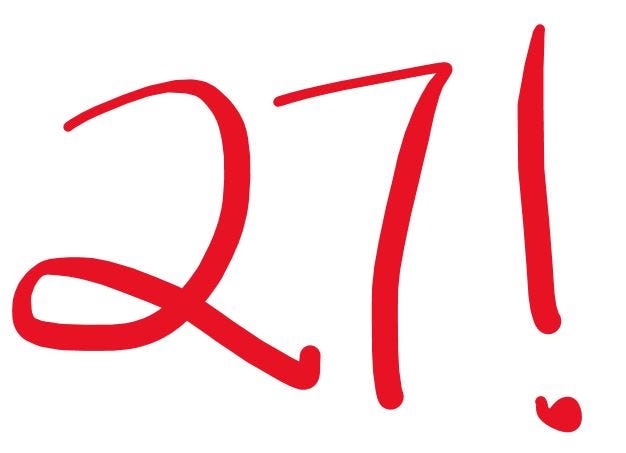
There is no doubt that negotiating Modern Treaties is a complex undertaking. It involves the development of arrangements between sovereign entities and an end to the dependent relationship that First Nations people were subjugated to under the Federal Indian Act. Many Modern Treaties have already been agreed to and are in effect. Did you know that Canada has already negotiated 27 modern treaties!
Of these 27 modern treaties:
6 include only a Comprehensive Land Claim Settlement Agreement;
1 includes only self-government provisions and is unrelated to any land claim;
20 address both a Comprehensive Land Claim and self-government in some way.
Here is a list of those 27 agreements (in chronological order):
The James Bay and Northern Quebec Agreement: signed 1975, effective 1977
The Northeastern Quebec Agreement: signed 1978, effective 1978
The Inuvialuit Final Agreement: signed 1984, effective 1984
Gwich’in Comprehensive Land Claim Agreement: signed 1992, effective 1992
The Nunavut Agreement: signed 1993, effective 1993
Sahtu Dene and Metis Comprehensive Land Claim Agreement: signed 1994, effective 1994
Champagne and Aishihik First Nations Final Agreement: signed 1993, effective 1995
First Nation of Nacho Nyak Dun Final Agreement: signed 1993, effective 1995
Teslin Tlingit Council Final Agreement: signed 1993, effective 1995
Vuntut Gwitchin First Nation Final Agreement: signed 1993, effective 1995
Little Salmon/Carmacks First Nation Final Agreement: signed 1997, effective 1997
Selkirk First Nation Final Agreement: signed 1997, effective 1997
The Tr’ondëk Hwëch’in Final Agreement: signed 1998, effective 1998
Nisga’a Final Agreement: signed 1999, effective 2000
The Ta’an Kwäch’än Council Final Agreement: signed 2002, effective 2002
Kluane First Nation Final Agreement: signed 2004, effective 2004
The Kwanlin Dun First Nation Final Agreement: signed 2005, effective 2005
Tłı̨chǫ Land Claims and Self-Government Agreement: signed 2005, effective 2005
Labrador Inuit Land Claims Agreement: signed 2005, effective 2005
The Carcross/Tagish First Nation Final Agreement: signed 2005, effective 2006
Nunavik Inuit Land Claims Agreement: signed 2006, effective 2008
Tsawwassen First Nation Final Agreement: signed 2007, effective 2009
Maa-nulth First Nations Final Agreement: signed 2008, effective 2011
Eeyou Marine Regional Land Claims Agreement: signed 2010, effective 2012
Tla’amin Final Agreement: signed 2014, effective 2016
Délįnę Got’įnę Final Self-Government Agreement: signed 2015, effective 2016
A Self-Government Treaty Recognizing the Whitecap Dakota Nation: signed 2023, effective 2023
Hopefully the parties to the Petapan Treaty, specifically the province of Quebec, can resolve their issues and add that Treaty to this growing list. It takes an inordinate amount of time to negotiate Modern Treaties and the efforts will continue to contribute to a positive and respectful relationship between Canada, the provinces and the sovereign indigenous groups that share this land.
Definition of a modern treaty: Modern treaties in Canada are constitutionally protected, nation-to-nation agreements negotiated between Indigenous peoples, the Crown (federal/provincial/territorial governments) since 1975, designed to redefine relationships, settle land claims, and achieve reconciliation. They are legally binding under the Constitution Act, 1982 Section 35 section 35 rights that affirm land ownership, self-government, and resource management.
Source: https://www.rcaanc-cirnac.gc.ca/eng/1677073191939/1677073214344
Regroupement Petapan, formerly the Mamuitun mak Nutashkuan Tribal Council), represents 9,000-12,000 members. The territory under negotiation is divided between the Saguenay-Lac-St-Jean region, the St. Lawrence North Shore regions and the greater Quebec City area.
Comments
Nothing yet. Say the first thing.
Sign in to join the conversation.