In this post I outline some ways to draw on the abundance of forest gardens for making healing herb infused oils, with recipe suggestions for several methods. There are many health complaints that could benefit from selected infused oils used externally on the body, ranging from dry or damaged skin to sore muscles and arthritic joints. I discuss choice of carrier oils and ways to improve keeping qualities. And I describe some trees and shrubs that could be considered including alder, birch, eucalyptus, juniper, myrtle, rosemary, pine, sweet bay and willow.
NOTE I am celebrating more than doubling the list of followers in the last 12 months of writing as Medicinal Tree Woman. So, this post on infusing herb oils in my paid subscriber series MAKING RECIPES# is free to everyone!! The MAKING RECIPES # series for paid subscribers aims to give my inside story as a herbal practitioner based on growing, harvesting and making healing remedies and body care products from the medicinal forest garden. Paid subscriptions also help support me in maintaining the Medicinal Forest Garden Trust to promote sustainable cultivation of trees and shrubs.
Forest garden abundance
Forest gardens are ideal sources of many aromatic plants, and their bark, buds, leaves, flowers can all be readily infused in carrier oils. Here I am writing about infused oils that can be made fresh each year. These oils can be used externally not only help to keep skin soft and supple but may also be antiseptic, antifungal and anti-inflammatory. Note we should distinguish infused carrier oils from from essential oils. Vegetable carrier oils are produced by pressing fruits, nuts or seeds and are widely used as emollients for moisturising skin or massage. Essential oils are produced by steam distillation and are very concentrated extracts and generally not suitable for direct use on the skin unless highly diluted. Using infused carrier oils offers a gentler way to gain the benefits of plants. Forest gardens or food forests can offer plant materials on an ongoing sustainable basis. And through coppicing and pollarding we can produce young stems with bark and foliage suitable for infusing in oils.
Why herb-infused oils?
Infused oils are especially beneficial for improving the skin, they moisturise and provide a better skin barrier, hold water in, and can provide nutrients to help skin repair. In addition, using oils on the the body enables absorption of constituents through the skin, so oil applications can be beneficial in further ways. Recent research has shown the potential for enrichment of phenolic content in herb-infused oils (Yfanti et al., 2024).
Making small quantities of herb-infused oils is an effective way of dealing with a limited harvest. Buds are often harvested in quite small amounts and drying may not be needed if they are highly resinous. Bark and twigs can also be rich in resins, especially in aromatic species. Leaves can be rich in essential oils and high in anti-inflammatory and antiseptic compounds, notably in conifers such as juniper and pine. Some key constituents of bark, such as betulin in birch bark, do not dissolve well in water but can be extracted in oil and are noted for wound healing properties (Scheffler, 2019). Once made, the herb infused oil can be a base for further products for external use including hair oil, skin moisturiser, lip balm, ointment and hand cream.
Infusing oil methods
Extracting plant constituents in a carrier oil is helped by increased heat and light, length of time and surface area. You can do a lot with a little equipment to make herb infused oils. Use of pans and a stove for some simple heat are helpful. Muslin or cloth tea towels will be useful for pressing and straining oil. Dark glass bottles and jars are ideal to store the finished oil and protect from light and retard oxidation. You can increase the extraction of useful constituents by breaking up the plant material by bruising and chopping, effectively smaller pieces provide a larger surface area. Recipes for infusion tend to either provide a slow method of standing plant material in oil for a number of weeks or a speedier method involving gentle heating over an hour or two.
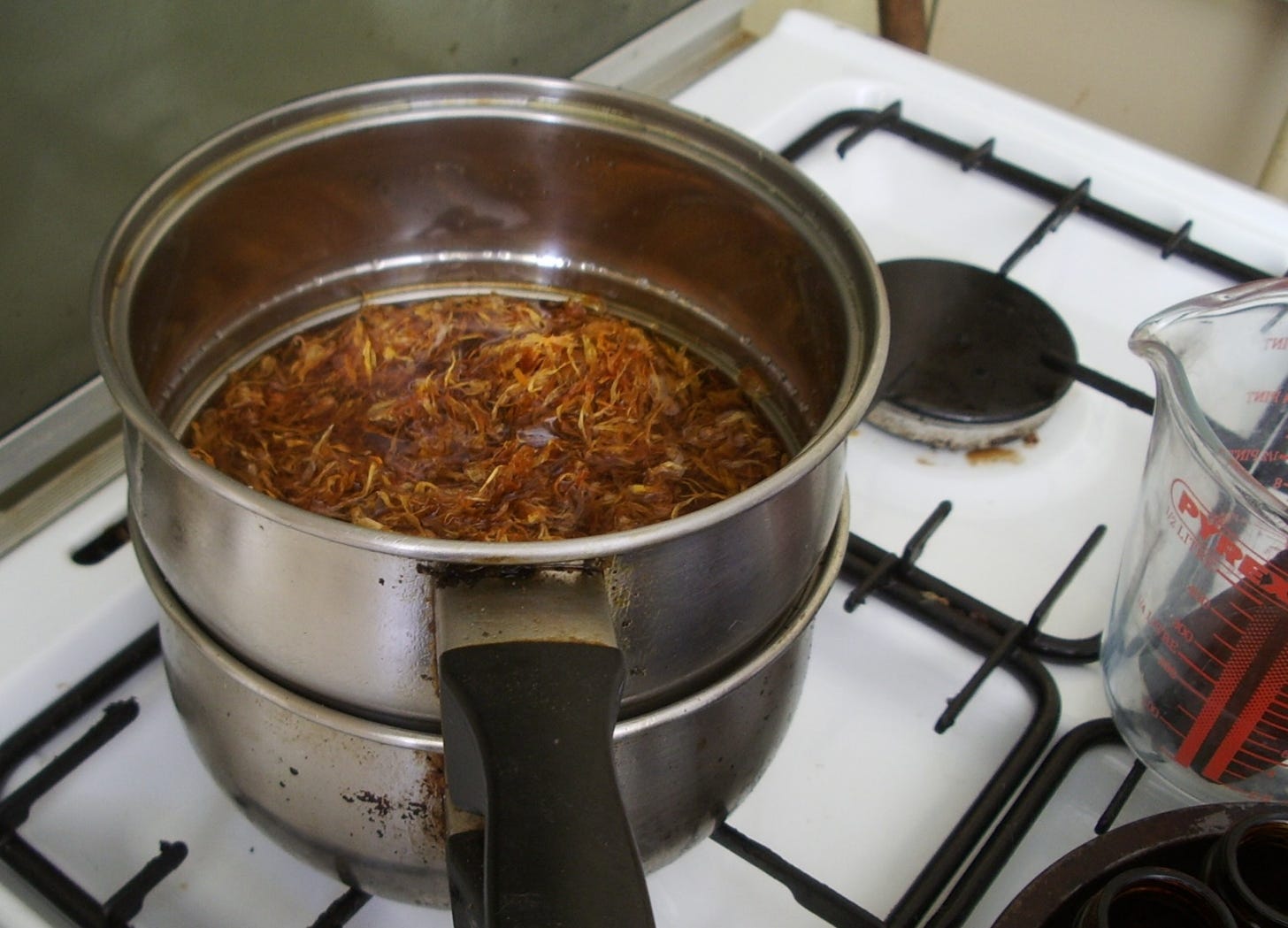
A bain-marie with marigold petals infusing in oil
One item of equipment is very useful for infusions involving heat and is a bain-marie. It works by heating a pan with steam keeping an even and not burning temperature – essentially this is a pan that sits on another pan – important to have a good fit so the bottom pan can contain water which is heated and does not boil away too quickly. The plant material is put in the top part with the oil. Water is added to the bottom part. The pan is heated until the water boils and then the heat is reduced so that the water simmers. Essentially the increased warmth breaks down the cells in the plant material so that constituents can seep into the carrier oil more readily. There is another way to infuse the oil using a crockpot provided the temperature can be controlled at a low level, say 40-60 degrees Centigrade (100-140 degrees Fahrenheit).
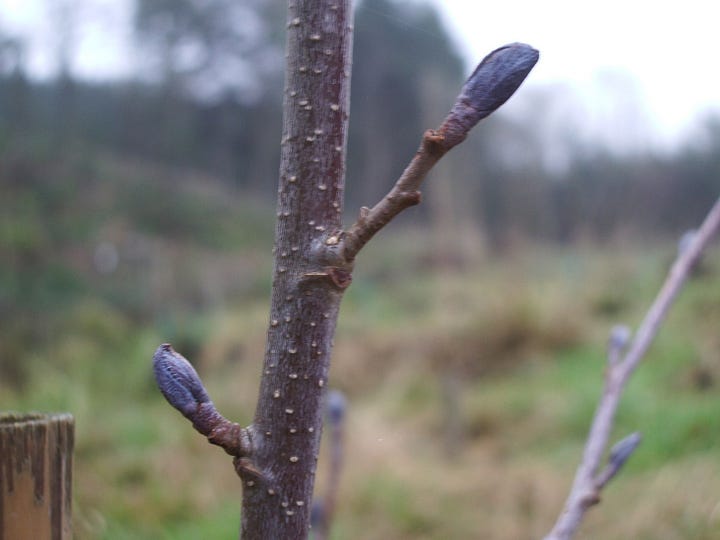
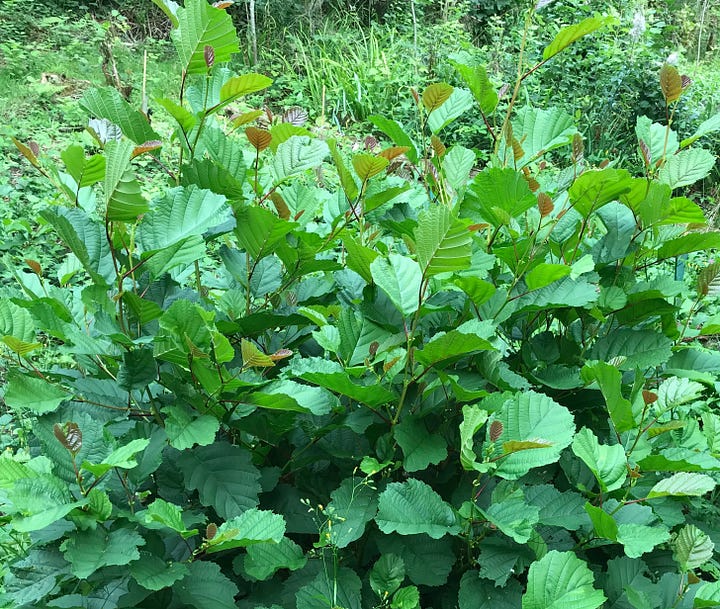
(a) Alder buds (b) alder coppice
Alder is a somewhat neglected plant for its healing qualities. The bark and buds offer help in tissue repair.
Recipe for slow infused fresh alder bud and twig oil
Young alder (Alnus glutinosa) twigs with buds
Sunflower oil
Clean jam jar and lid
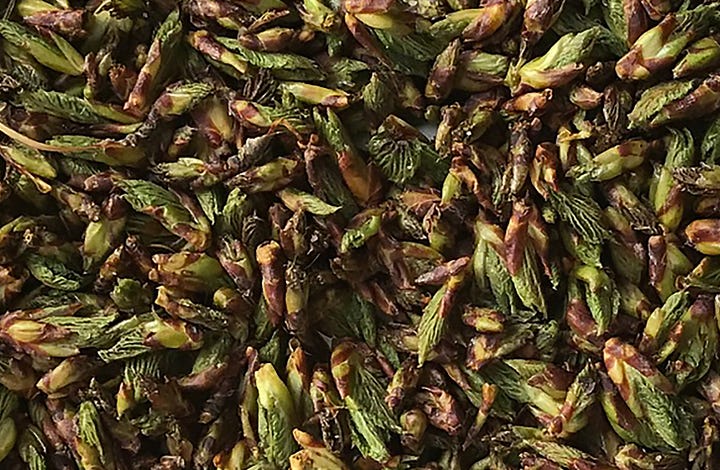
Collect young alder twigs in early spring and cut them up and place them in a jar. When you have half-filled the jar then cover with sunflower oil. Make sure the twig pieces remain submerged by using a weight or smaller jar to press them down, otherwise they tend to blacken and spoil. Cover the jar with muslin or kitchen towel held in place by an elastic band. The aim is to let light and warmth slowly act on the plant material and allow any moisture to evaporate. Leave on a sunny windowsill for 3-4 weeks, occasionally shaking. Then strain off the oil leaving any thin watery layer behind, bottle and label. Alder bud and twig oil can reduce inflammation and swelling, provides a natural antiseptic effect to help prevent infection.
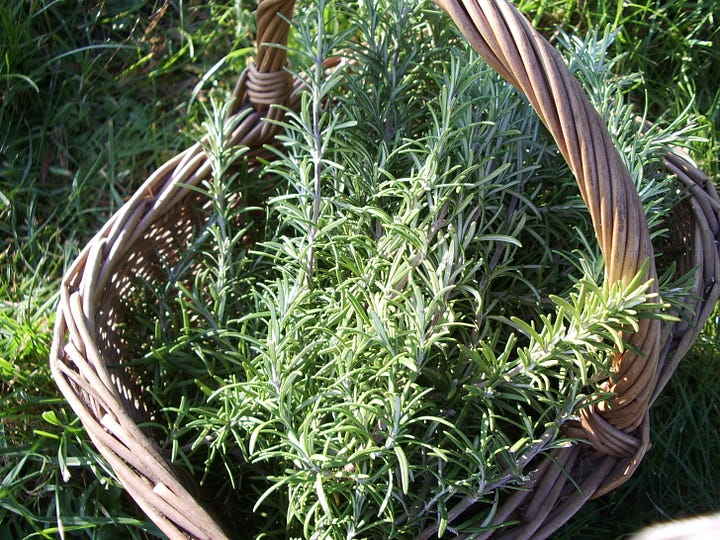
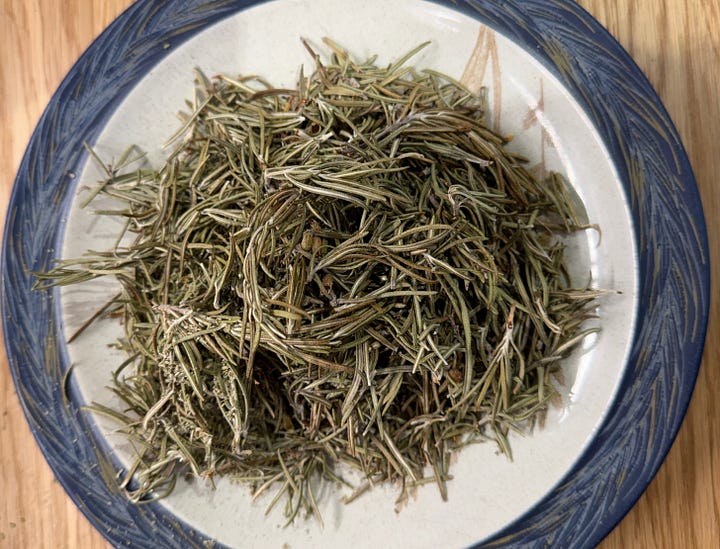
(a) Harvesting rosemary (b) dried rosemary leaves
Rosemary readily grows in a sunny spot and can be pruned in most seasons. The whole plant has a resinous smell and it is rich in volatile oils.
Recipe for warm-infused dried rosemary leaf oil
Dried rosemary (Salvia rosmarinus) leaves
Olive oil
Bain-marie
Water
Jar, muslin, elastic band
Collect rosemary branches and strip the needle-like leaves onto a tray and allow to dry for 6-10 days in an airy spot. Once dried then place the leaves in the upper pan of a bain-marie and cover with oil. Add water to the lower pan of the bain-marie and heat. Simmer for about 1 hour, checking that the water is topped up in the lower pan. Then strain off the infused oil, allow to cool and bottle and label. Use this aromatic oil for pain relief, hair moisturiser, massage oil for sore muscles, backaches, and soothe arthritis pain. It is also delicious in cooking. Rosemary offers stimulating tonic effects often appreciated for the circulation. It is anti-inflammatory too so can be used in many complaints. Perhaps a better known use is to make hair grow – apply to the scalp – probably due to stimulation of the blood near the skin surface!
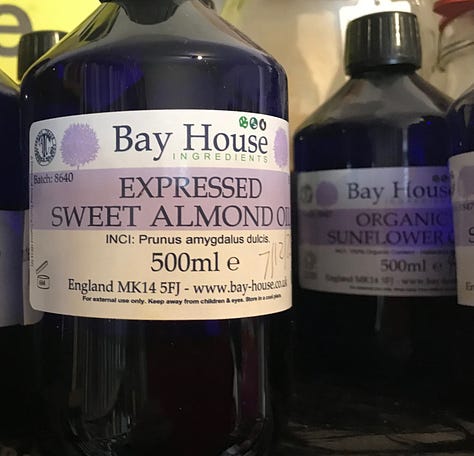
Purpose is important when choosing carrier oils to infuse with plant material, thinner oils for massage, nourishing oils for skin repair and so on. Grapeseed oil is fine and light – useful for massage – whereas heavier oils such as olive or hazelnut may be more moisturising and repairing for damaged skin. Some seed oils such as rosehip, borage or evening primrose are rich in nutrients that can help skin regenerate and reduce scar tissue, and are perhaps best used by adding in small quantities to infused oils. Ideal for most external uses are sunflower, sweet almond and olive oils, these are good all-rounders with reliable keeping qualities. Buying organic is best for the planet but note that such oils may deteriorate quickly so only purchase enough for more immediate needs. You can source a range of good quality carrier oils from aromatherapy suppliers and they will often offer both organic and non-organic alternatives.
What about keeping quality?
Shelf life for herb infused oils depends somewhat on the kind of oil and herb, but generally is safe for up to 6 months, sometimes as long as 12 months. You can reduce the extent of change by keeping bottles in the dark, in a cool place or in the refrigerator. Oils will oxidise over time, eventually giving a rancid smell and if kept in plastic containers the sides may be noticeably pulled inwards. Organic oils likely to oxidise more speedily compared to supermarket oils which are more highly processed. Oils are best kept in glass bottles in dark and cool location, avoiding heat and light and oxygen. It is also advisable to fill containers as full as possible. Note that preservatives are needed to reduce oxidation if you are selling oil-based products. There are natural antioxidants such as vitamin E. Oils will also deteriorate if there is any moisture in the mix. This is why infusing oils is better with dried plant material to avoid any retained moisture that can also attract pathogens. Since oil floats on water then if fresh plants are used there will likely be a small amount of water appearing below the oil so always ensure that you discard the remaining watery drops from an infusion.
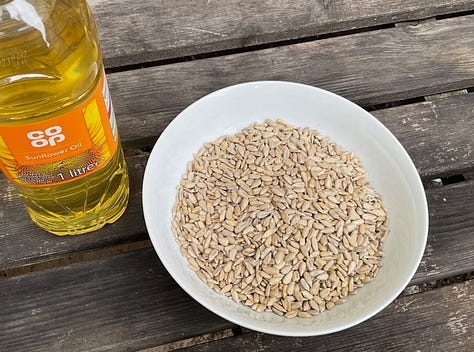
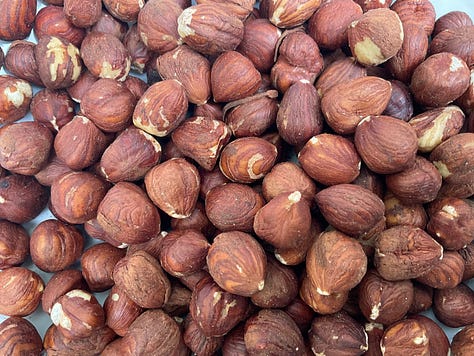
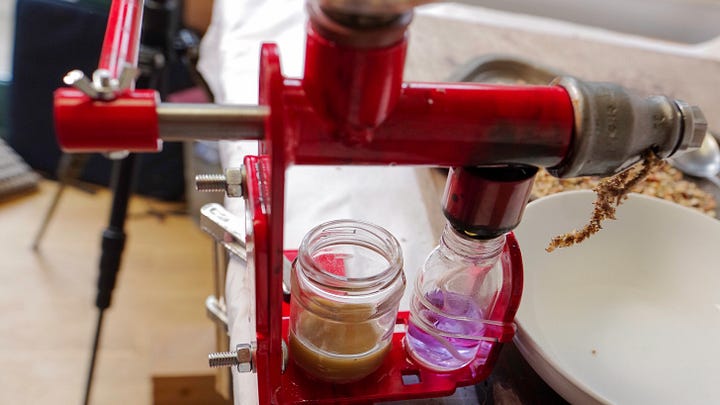
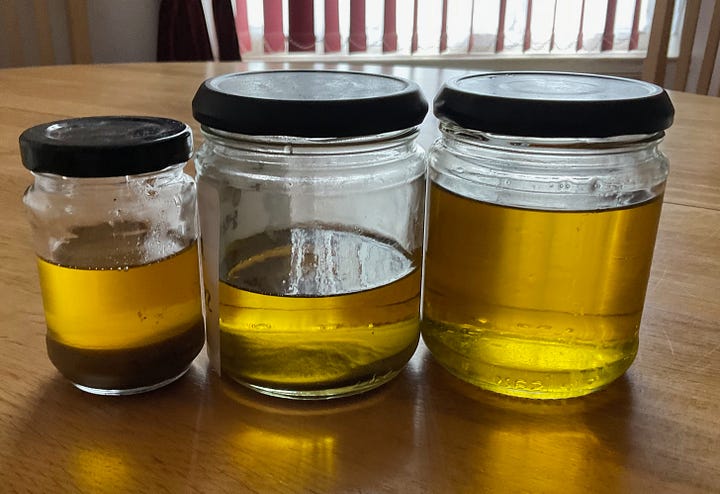
Home production of oil is possible, especially if you can readily obtain quantities of seeds or nuts. The Piteba oil press can be used to extract oil, usually from around 25-40% by weight. It is handcranked though can also be mechanised. The crank handle turns a metal screw in the shaft, while seeds or nuts are fed into a top opening and pressure forces the material through a warmed area and oil and waste separate. The oil drips out below the feeder and the waste exits though small hole at the end of the shaft. There are more details online, it takes a bit of practice to make sure there is a steady flow and not to get blockages. Sunflower seeds are ideal, containing 25% or more oil. Walnuts are said to give as much as 60% oil. Hazelnuts grow so well in UK and I would love to see more home production for oil – this is an oil thought to be especially good for hair and beards! Of course, home oil production may not be economic at present as the nuts need to be not only grown but also picked and shelled. Freshly made oil offers antioxidant activity, omega fatty acids and valuable nutrients - in the image shown both the walnut and sunflower oils were made with the Piteba press. But since fresh oils contain reactive components you can expect some deterioration, delicate seed oils lasting around 3 months, more if refrigerated.
More plant species to consider for infusing oils
Note - there is a safety caution against using oils on open wounds as dirt and bacteria may be trapped, take advice if treating more than minor complaints!
Birch (Betula pendula) provides leaves and bark that offer antiseptic constituents among others. Can be used in treating cellulitis or can be massaged onto sore joints and muscles and used against skin conditions such as eczema. The betulin content contributes wound-healing properties (Scheffler, 2019).
Douglas fir (Pseudotsuga menziesii) is antiseptic and anti-inflammatory, and young shoots and resinous blistered bark can be infused in oil. Shred the bark and bruise the needles well to encourage the extraction of aromatic components. Use the infused oil as a chest rub for coughs, or add a spoonful to a bath for sore and aching muscles.
Eucalyptus (Eucalyptus globulus and other species) tree bark and leaf offers effective antiseptic actions. Strip the bark and leaves from branches and crush or chop as much as possible as they are tough. Add 4 cups oil per cupful of plant material in a crockpot and warm on the lowest setting for 4-6 hours. Then strain off the oil and bottle and label. Can be used as a massage for sore muscles and as a chest rub for coughs and colds. Can also be made into an insect deterrent ointment.
Juniper (Juniperus communis) is a very aromatic plant and all parts can be infused including berries and needles. The infuse oil is applied externally to stimulate circulation and relieve the pain of muscle and joint aches whether caused by arthritis, exercise or injury.
Lavender (Lavandula angustifolia) makes an infused oil which is anti-inflammatory and soothing to skin, using the flowering stems chopped into pieces. Plants like this need sunny spaces, and well-drained soils.
Myrtle (Myrtus communis) is aromatic and does well in sheltered locations. You can use the leaves direct in an infused oil. it is antiseptic, anti-inflammatory, and has been successfully used in an ointment for haemorrhoids.
Sweet bay (Laurus nobilis) is strongly aromatic and the leaves can be infused fresh or dried. The infused oil offers pain relief for arthritic joints and sore muscles.
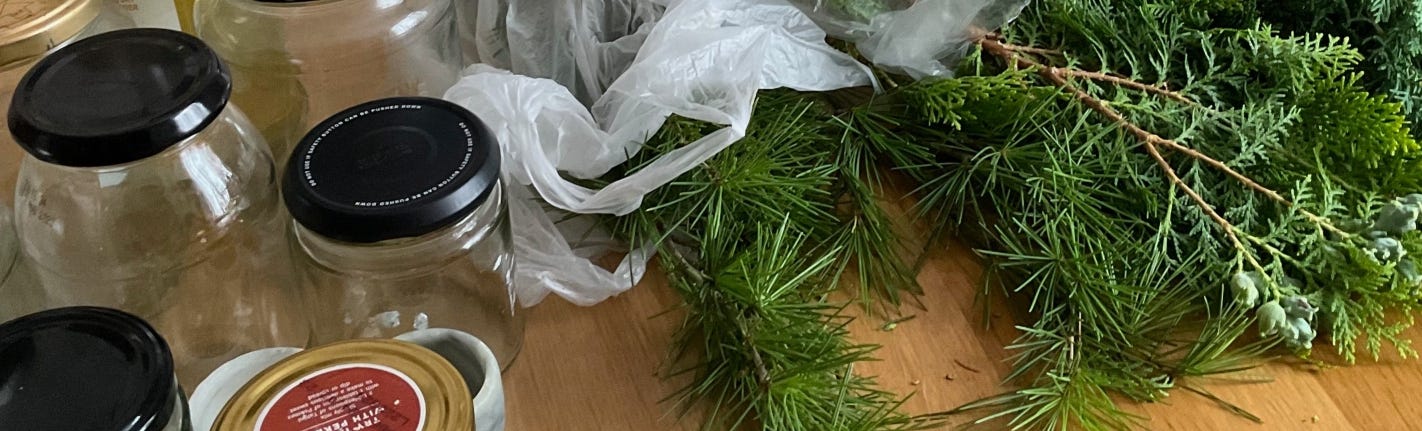
Scot’s pine (Pinus sylvestris) or almost any other conifer can be used makes an antiseptic infused oil. Look out for fallen branches after windy weather. Strip the leaves and bruise or cut the stems into small pieces and pack into a jar, cover with oil and check regularly that the needles do not stick out and deteriorate. After 4 weeks or so strain through a sieve, discard leaf matter to compost, label and store in a cool dark place for up to 12 months. You can add other items when infusing the pine oil such as warming spicy herbs including cloves or pieces of cinnamon bark. The oil can be used on feet, chest, neck and shoulders.
Thyme (Thymus vulgaris) has powerful antiseptic constituents, and can be harvested by cutting back to just above the lowest green leaves. The infused oil contains thymol, a highly effective antiseptic.
Willow (Salix species) bark can be readily peeled off younger branches in spring as the sap rises when coming into leaf. Chop up the bark into small pieces and cover with olive oil in a bain-marie. Heat for 1-2 hours and then strain. Can be used directly on sore muscles and joints or for making herbal salves. Salicylic acid is oil-soluble so that the infused oil carries it into the skin and pores. This has a dual exfoliating and anti-inflammatory action, giving help with with clogged pores, acne and blackheads (Măgerușan et al., 2023).
Making products such as balms
Once you have an infused herb oil then it can be the basis for making a more solid balm that can be applied to the skin. This is done by adding butters and waxes and warming to mix all together. Here is a recipe for Birch Bud and Sweet Bay Leaf Balm (taken from The Medicinal Forest Garden Handbook).
Recipe for Birch Bud and Sweet Bay Leaf Balm
(a) Birch buds and (b) bay leaves
20 g dried birch buds
20 g dried sweet bay leaves crumbled
200 ml sunflower oil
80 g shea butter
20 g beeswax
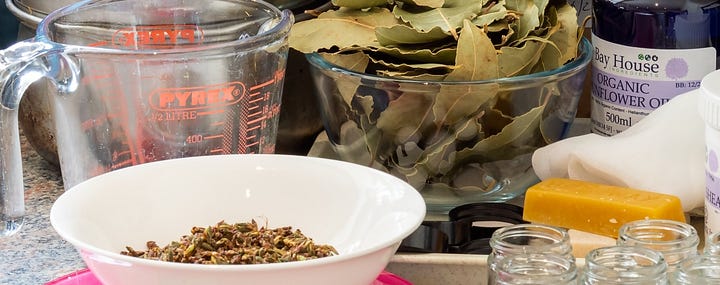
You need a bain marie or double saucepan, muslin, 8-10 small jars for storage. Place the buds and leaves in the oil in the top of a bain marie, or in a pan over another pan of water, and gently warm for 60 minutes. Add the shea butter, stirring to dissolve as it melts. Grate the beeswax and stir into the oil mixture. Remove from the heat and strain the oil through a muslin cloth into a warmed jug, discard the used buds and leaves to compost. Pour the oil into small jars, cover and allow to cool, then label. Keeps for 1-2 months and is good on dry skin and as a lip balm.
Infusing oils to benefit people and planet
I hope you are inspired to make some jars of infused oils this year. You can start harvesting some of these plants right away! These oils for external use should last right through to the following year, and provide a range of benefits for skin and other complaints. One suggestion from experience is to make sure that you keep a notebook of dates and quantities used so that you can amend or replicate recipes in future years. To conclude I would like to argue that herb infused oils are not only good for people but good for the planet. These herb infused oils provide moisture and protection for skin, their aromatic properties can uplift, they promote skin healing, can help hair, beards, and many other body parts, plus can relieve sore joints and muscles. Making your own herb-infused oils is good for the planet too if it reduces commercial use of preservatives, while giving support to more biodiverse plantings of trees and shrubs. I hope we can pass on the learning, help others to appreciate the bodycare possibilities and self help, support smallscale makers, help producers in lower income countries, increase community projects with facilities for making self-help remedies.
Thanks for reading Medicinal Tree Woman! This post is public so feel free to share it.
Măgerușan ȘE, Hancu G, and Rusu A. 2023. A comprehensive bibliographic review concerning the efficacy of organic acids for chemical peels treating acne vulgaris. Molecules 28. doi: 10.3390/molecules28207219.
Scheffler A. 2019. The wound healing properties of betulin from birch bark from bench to bedside. Planta Med 85: 524–527. doi: 10.1055/a-0850-0224.
Yfanti P, Lazaridou P, Boti V, et al. 2024. Enrichment of olive oils with natural bioactive compounds from aromatic and medicinal herbs: Phytochemical analysis and antioxidant potential. Molecules 29 doi: 10.3390/molecules29051141.

Comments
Nothing yet. Say the first thing.
Sign in to join the conversation.