
There is always an edge beyond which one cannot go. But we seek.
Plunked down somewhere in the middle of nature, we observe and interact with our surroundings; eventually we travel as far as individual circumstances allow. The planet naturally imposes a distinct limitation, and here we are for the duration. In the creative work of a visual artist there are also small boundaries to consider nudging. I’m going to graze across this landscape.
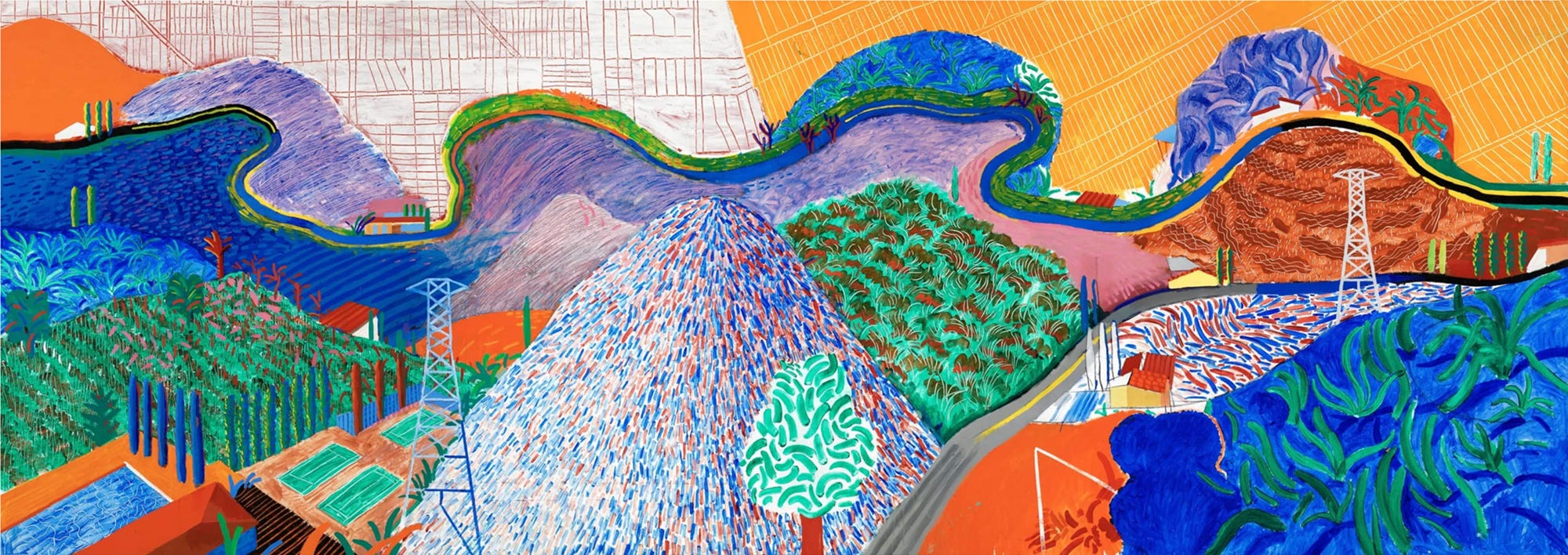
The desire to make our own art leads us to the materials, the surface on which to settle, our house and lot. We choose paper or canvas, stone or wood, clay or film. We choose the media we feel comfortable using, that is also effective for our purpose. Often we grow up around materials and concepts that become part of our later visual expression.
Every surface has an edge, a place where its dimension ends. In a traditional painting, the artist paints up to the edge and over, or leaves a margin, or perhaps floats a vignette image centered in the picture plane. The shape of the surface always offers its limitations, and over time we may want to break free of a perceived edge. In addition to working with color, light and dark, composition, materials, and countless subtleties to create something new, we identify a plan and make something real.
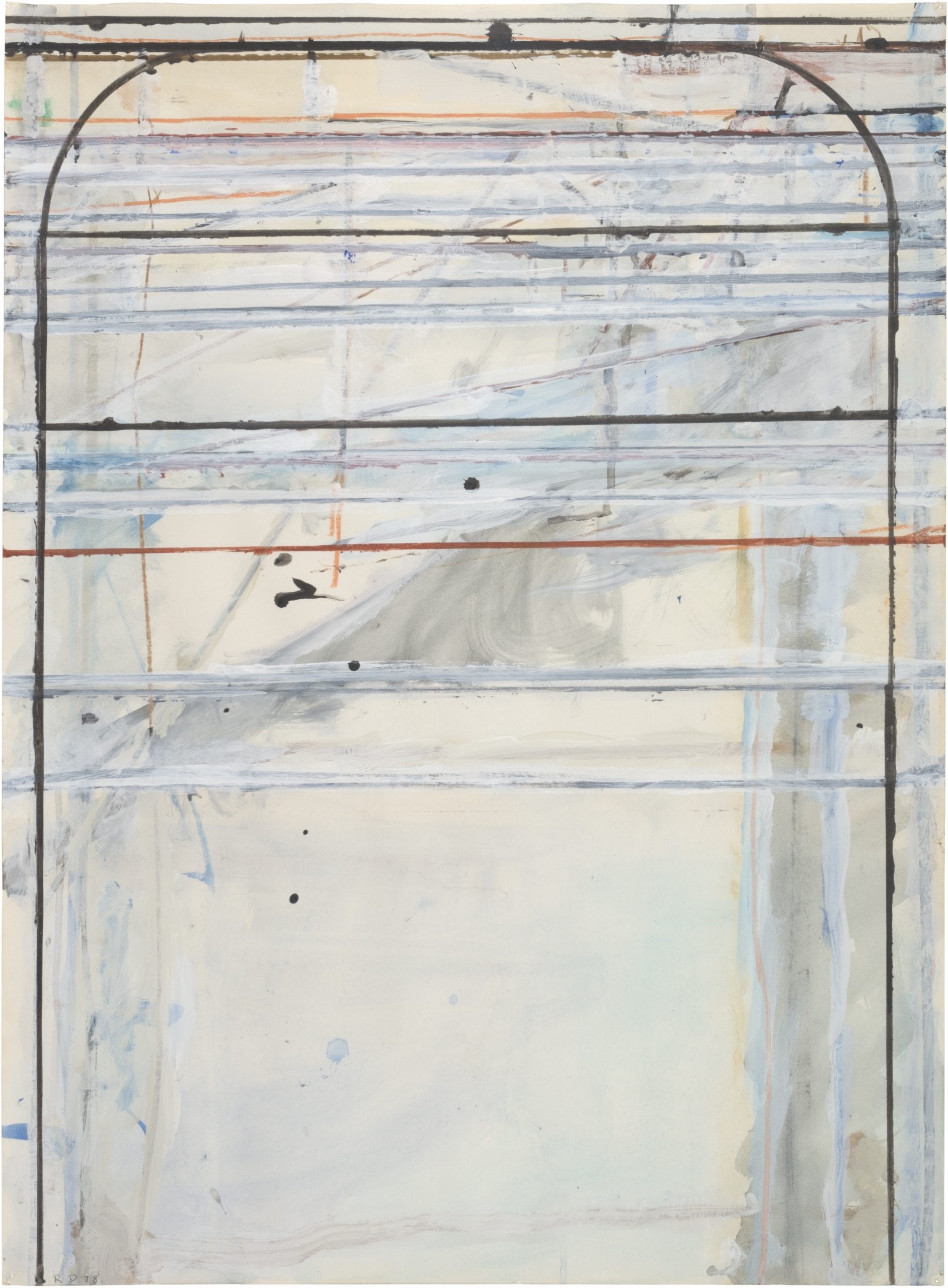
Expanding the format. Take a look at the work of Richard Diebenkorn, who used joined or pasted paper to enlarge a developing piece. In this example, a paper strip was joined to extend the dimensions well after the composition was under way, in order to improve the composition. Diebenkorn’s sense of perspective is naturally intriguing, in the rubbed areas, layered strokes, whited out areas, and smudges.
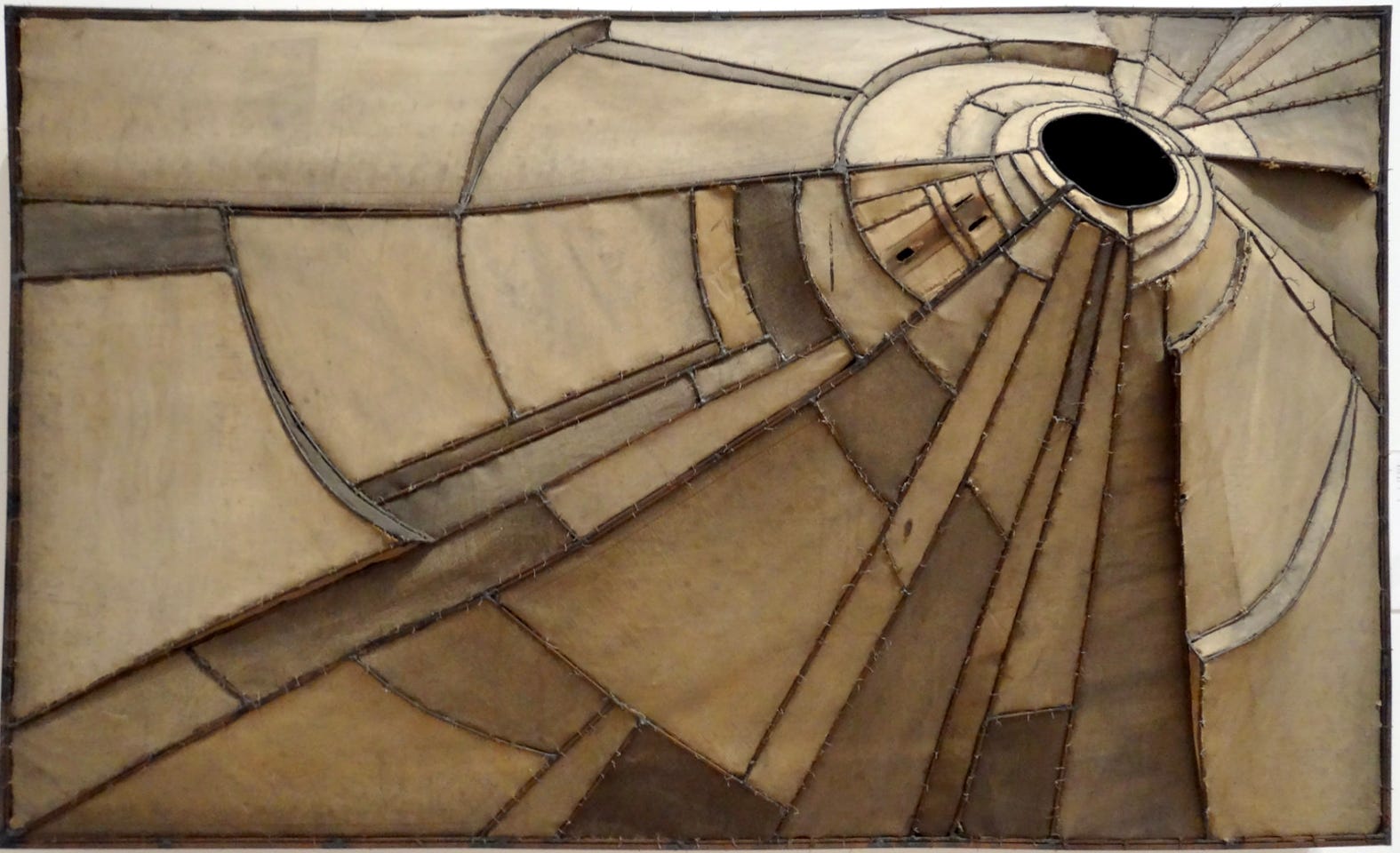
Groundbreaking work by artist Lee Bontecou ignores the limitation of the flat canvas, building out toward the viewer with a massive third dimension realization of space anchored to a traditional 2-D canvas. Her vision was both sculptural and painterly. Using a structure of welded steel, recycled canvas was formed and stitched to the frame with copper wire.
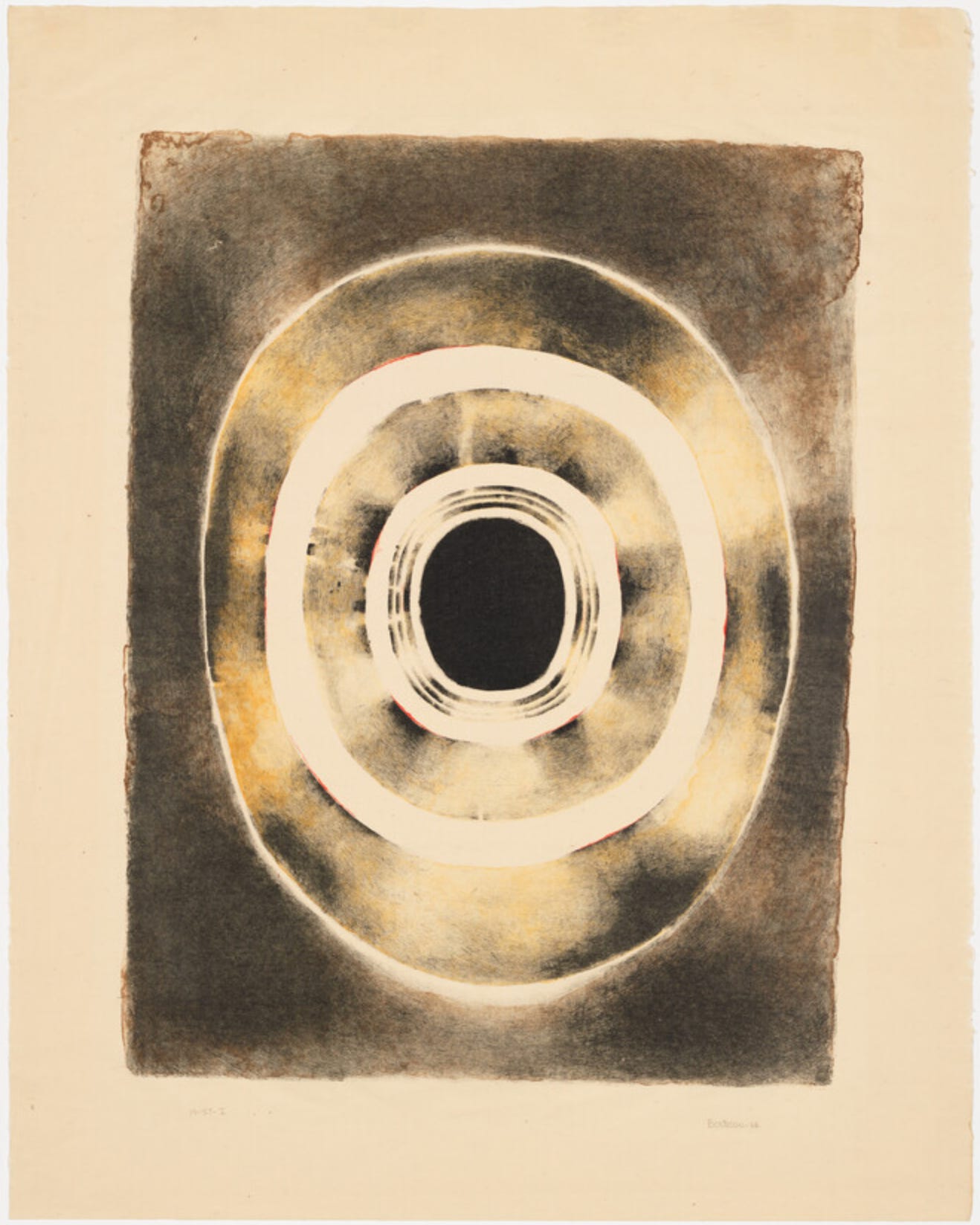
Another way of escaping the edge is to focus on luminosity. This lithograph by Bontecou focuses our attention on the central image, its radiating light mesmerizing.
Artists have ways of breaking the limitation of the edge, by utilizing luminosity, or gravity, by adding found objects to a painting, or by making the edge the focal point and integral cause of the work.
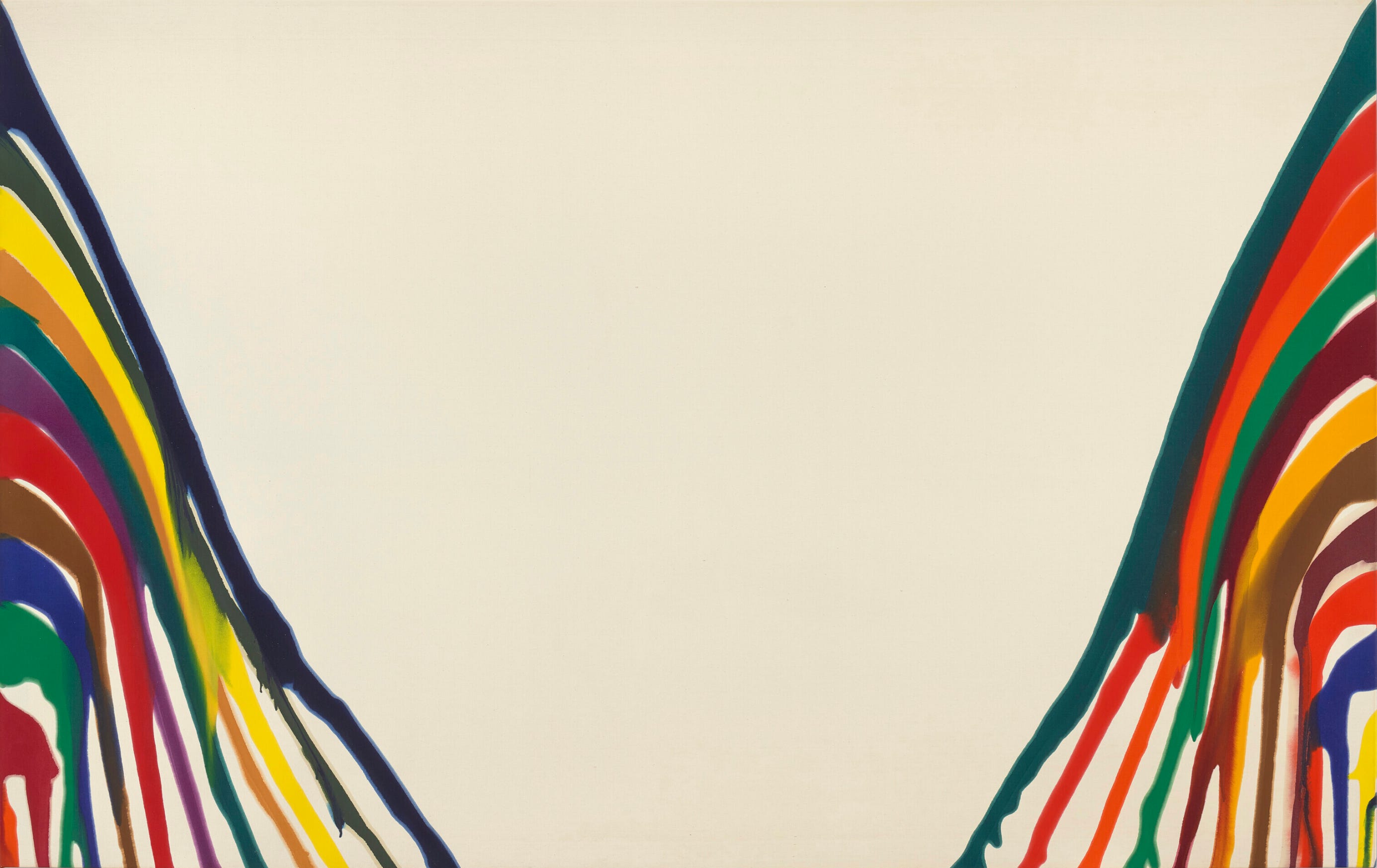
Morris Louis - Known for his “drip” paintings, he used gravity and flow to create work that showed no trace of hand-delivered stroke. He used Magna acrylic resin in controlled flow by tilting the canvas. Intense color arrangements are defined by the edges.
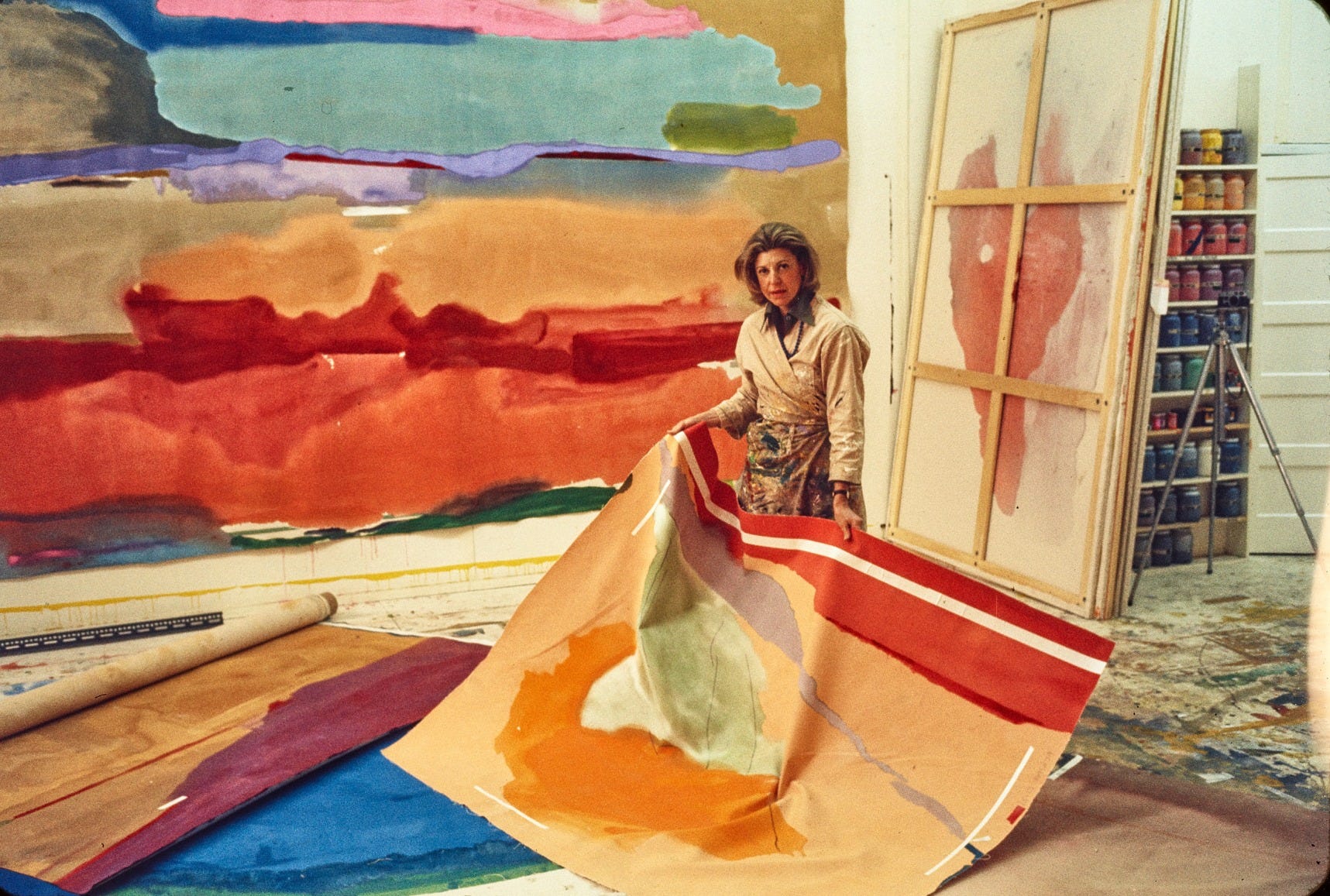
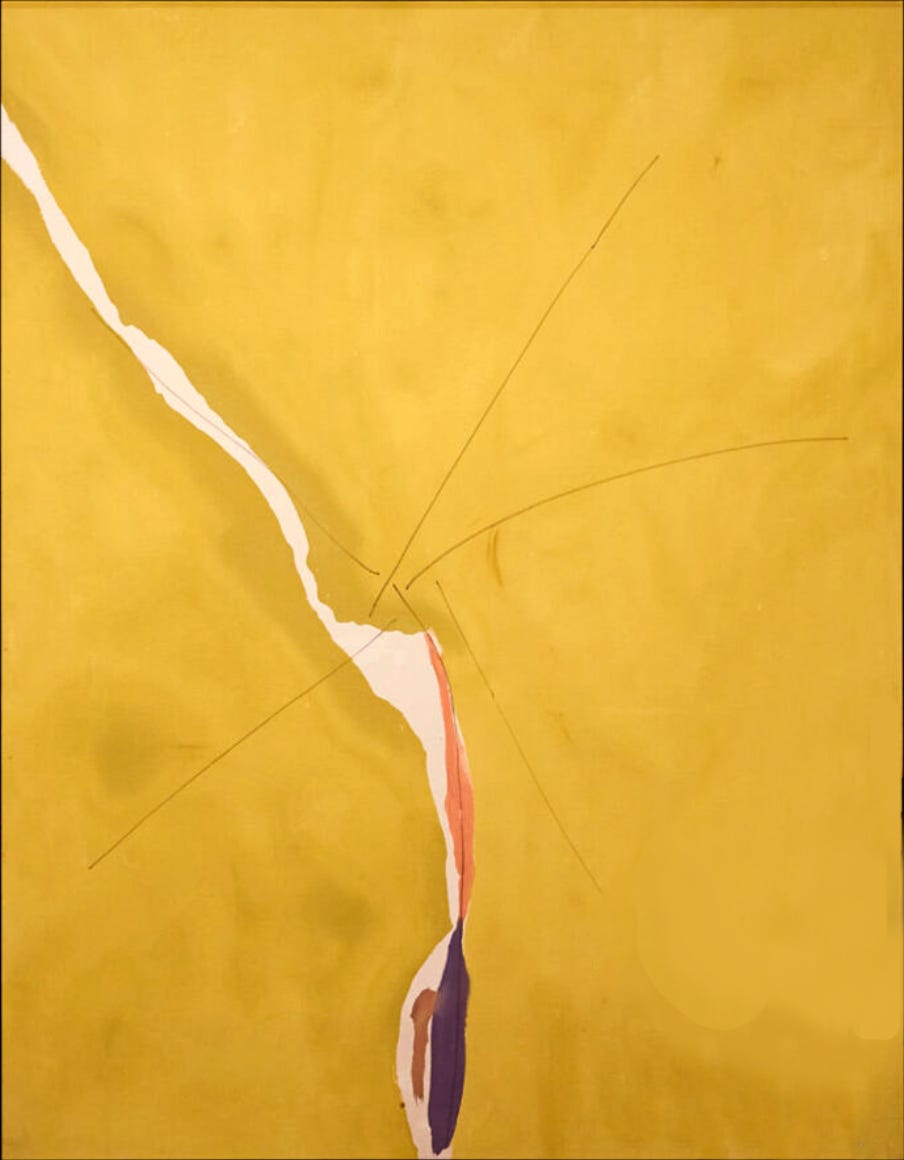
Helen Frankenthaler is known for her personal style of abstract, expressive paintings embodying the full spectrum of color and working with raw canvas by the bold, on the floor of her large studio. The pieces were mounted only when ready for display. Pieces of white tape may indicate where the final edges of the work were located.
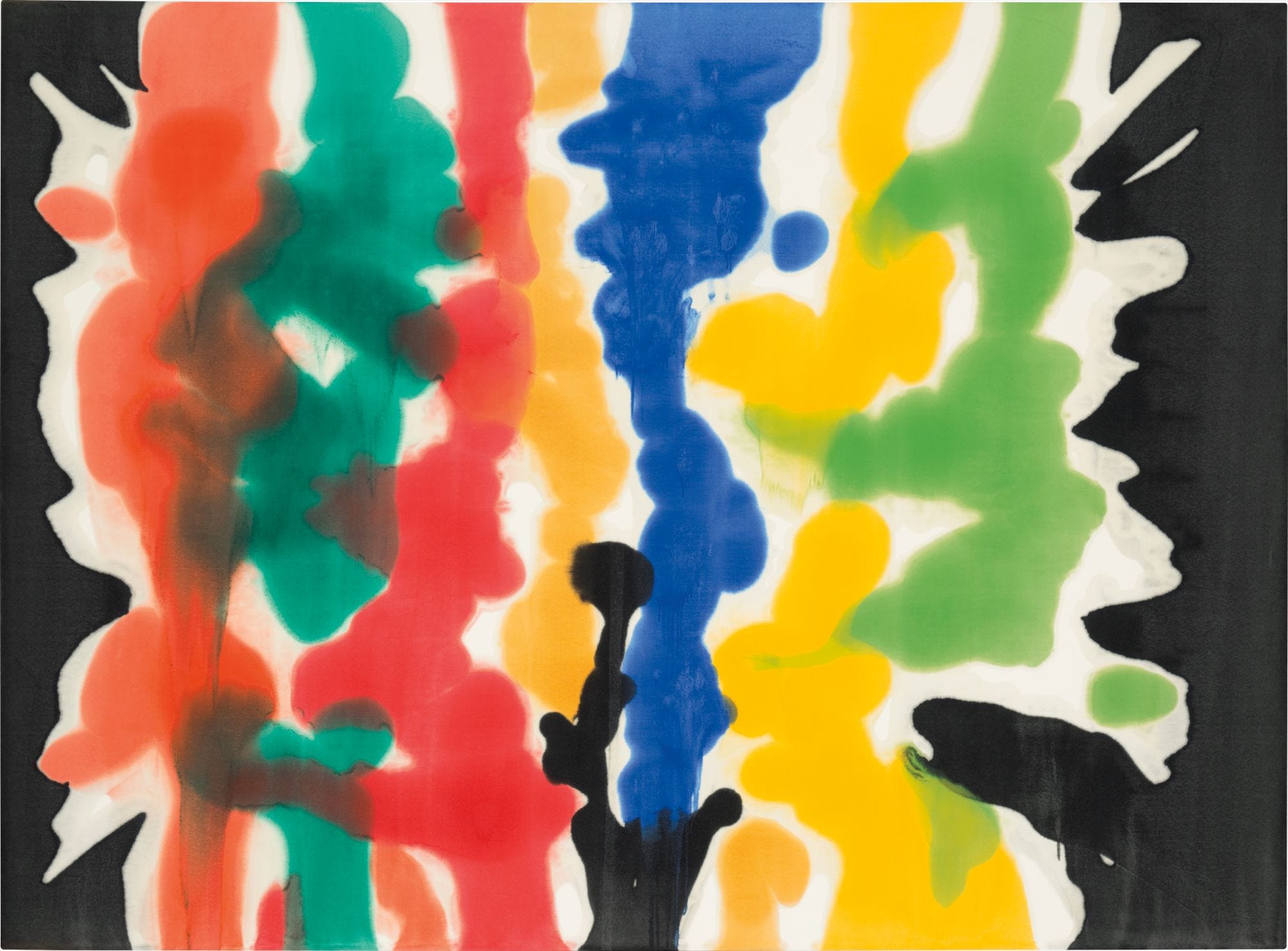
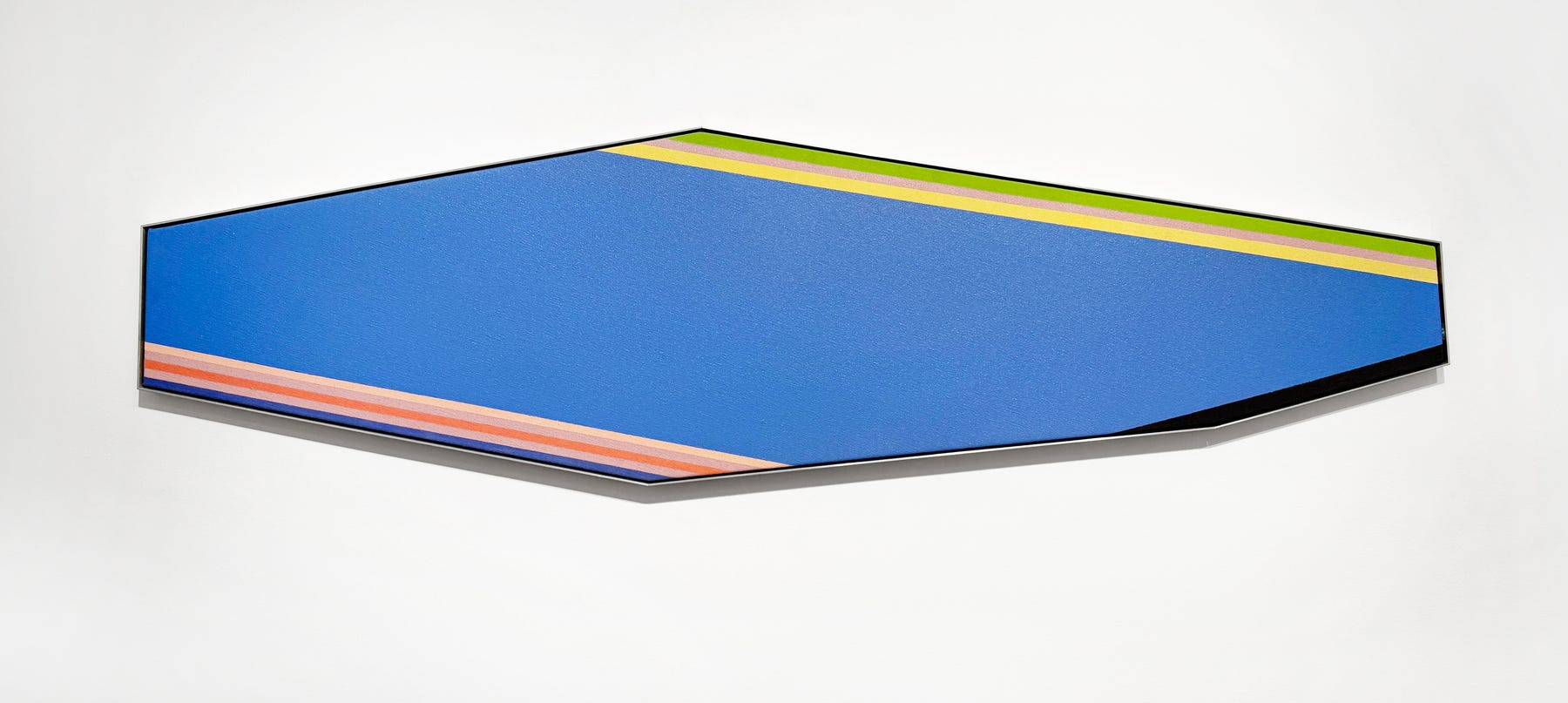
Kenneth Noland - Introduced to Frankenthaler’s soak-stain method of working on unprimed canvas, Noland pioneered the Color Field concept in painting, taking the artist out of the picture and focusing on the color and shape of the work itself, without the personal intervention of stroke, texture, and emotional expression. His work with edges is notable, as they function as an element of the artwork design rather than as a limitation or boundary.
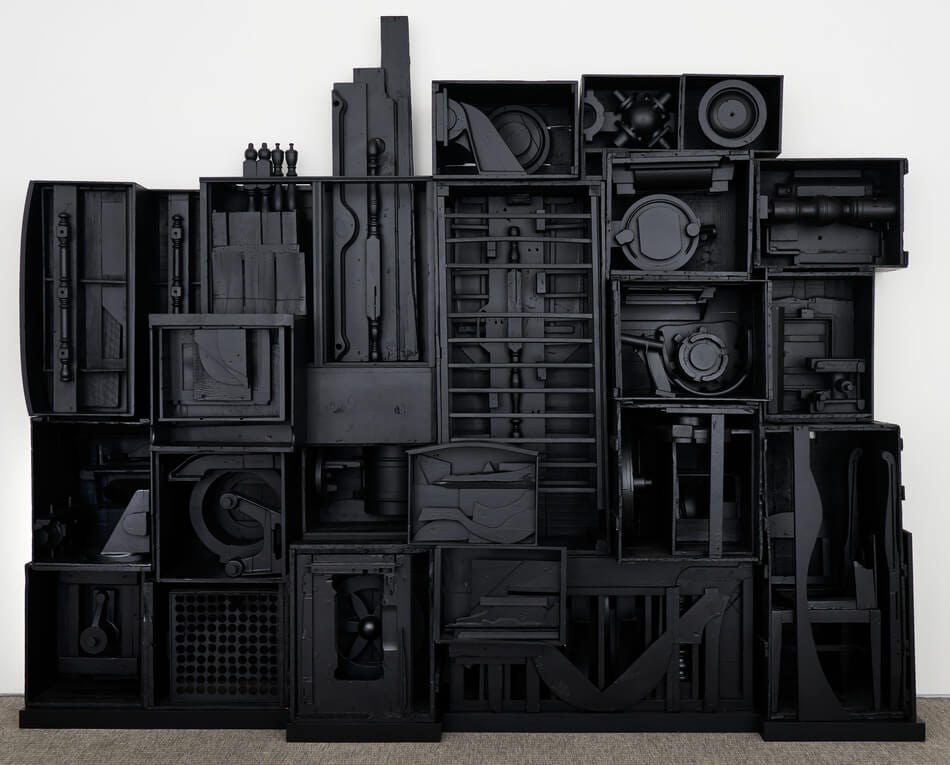
Louise Nevelson - Playing with materials in creating a meditative environment. Bits of wood in all shapes, assembled into walls and rooms. Her father was in the lumber business and wood was cheap and plentiful, providing entertainment from an early age. It determined the shape of her career.
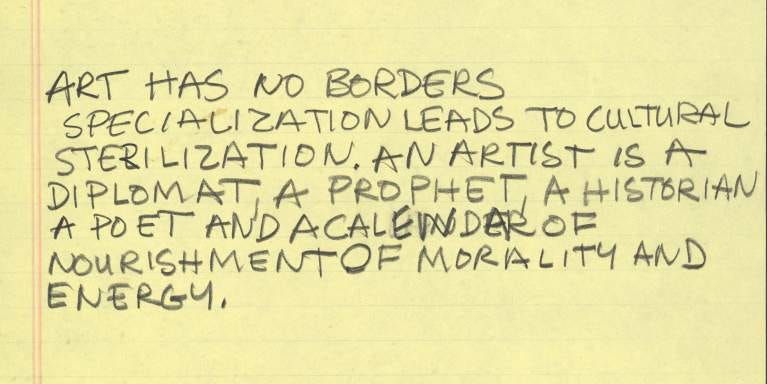
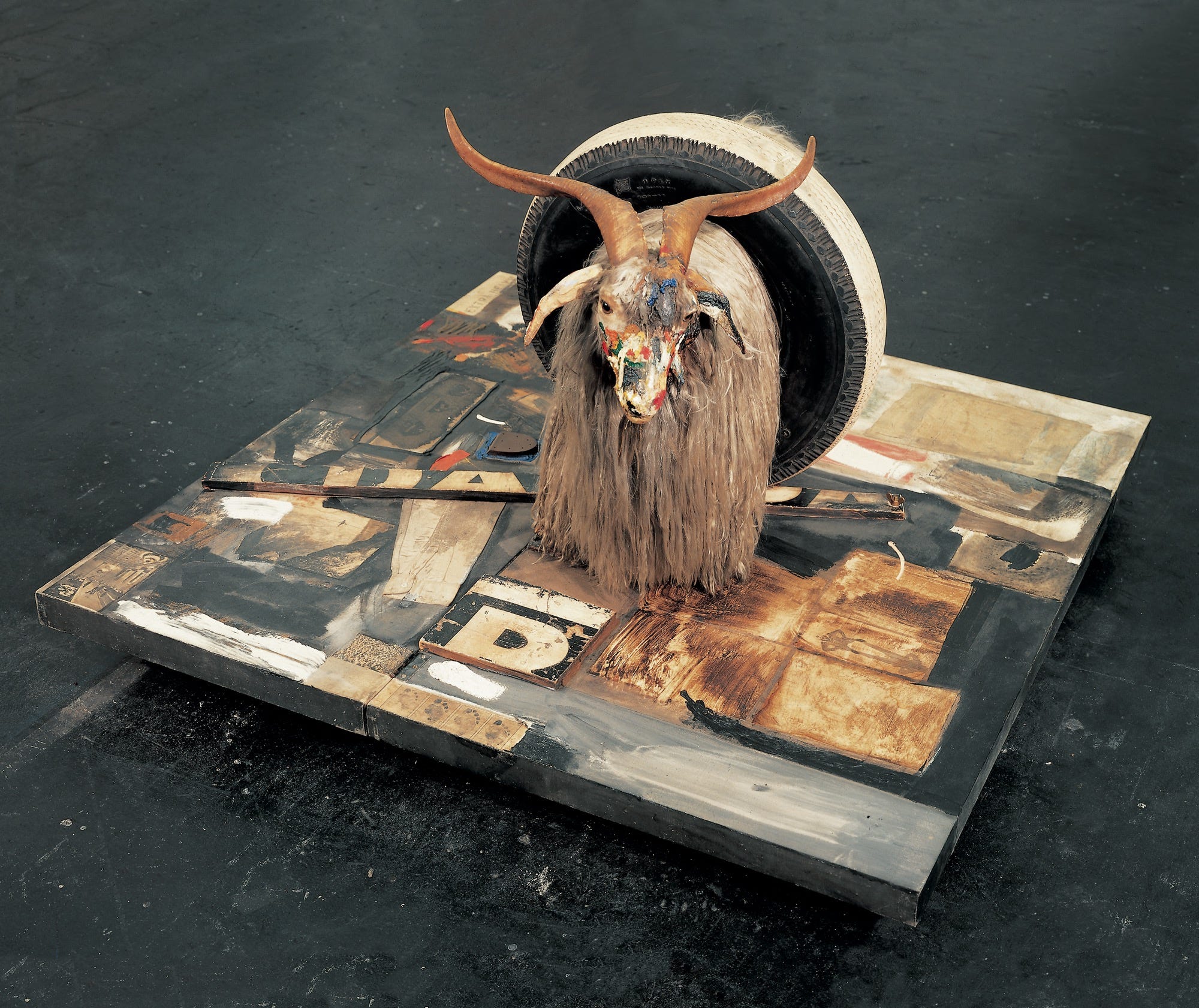
Robert Rauschenberg - Art has no borders. Not one for tidiness or regimented process, Rauschenberg is well known for his assemblages and played an important part in breaking through the boundaries of expectation. He was one of the artists at Black Mountain College.
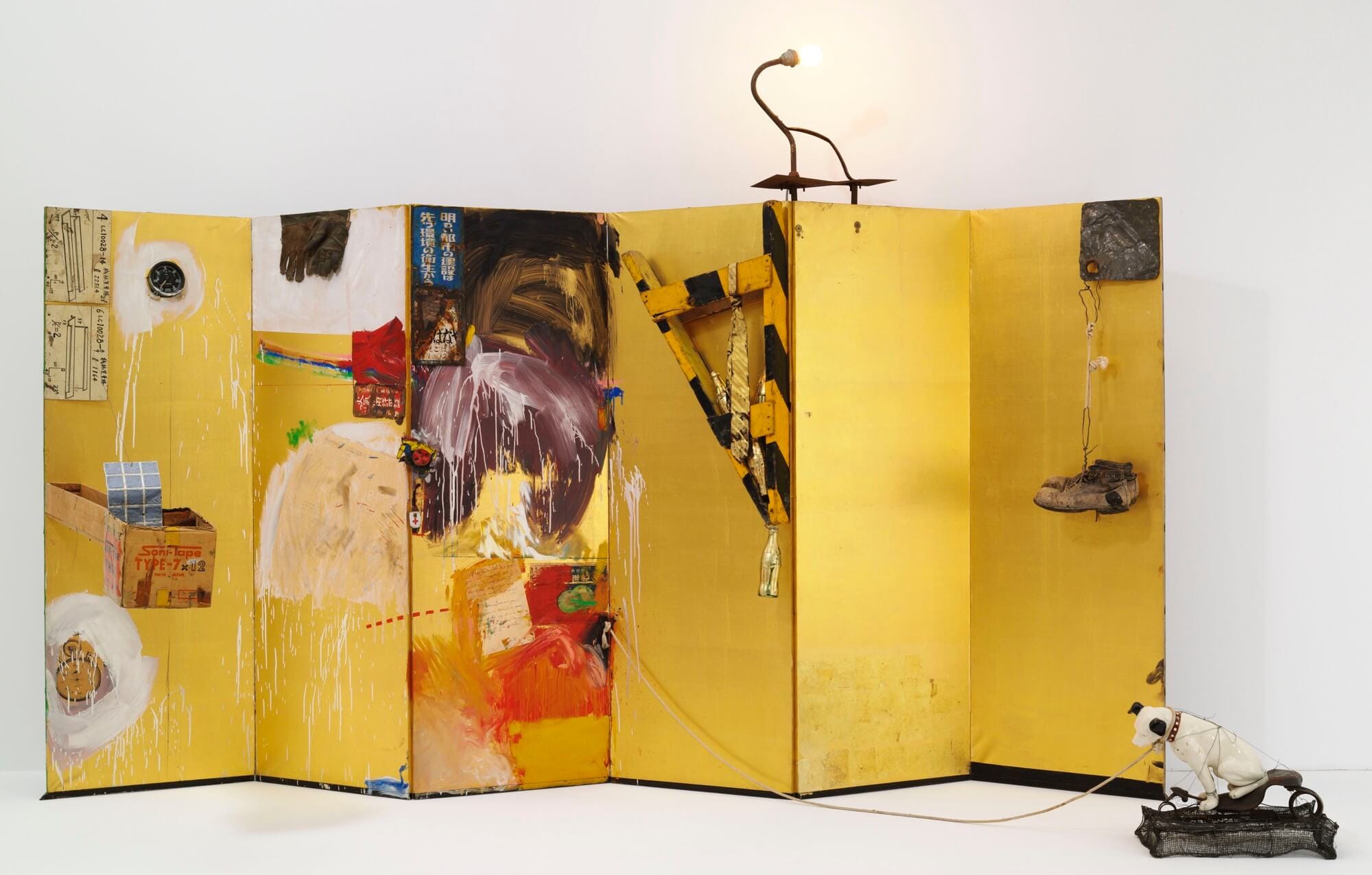
We choose where to make our marks. Paper, canvas, or wall, the edge is always begging for new insight, forms, and inventions.
Note: Many of the great artists of the 20th century met and studied at Black Mountain College in North Carolina where they learned from teachers like Josef and Annie Albers and John Cage. Please check out the link…it’s more important than you can perhaps imagine!
As artists we funnel our awareness of the infinite into the specific, creating the visual form of art. We contribute our finite expression as part of a complete cycle or endless spiral. In Nichiren Buddhism, the concept of “So” and “Betsu” deal with how we distinguish between these two types of reality. So is undifferentiated truth and has no edge. Betsu is the distinct and individual phenomenon that possesses an edge.
So (総) refers to the overall, universal principle, or the “whole.
Betsu (別) refers to the individual, specific, or distinct aspect.
I leave you with questions I hope!
Thank you all for reading and enjoying my posts. It’s great to be here with you.
ART 232: The Design of Light and Dark: Text Art and Notan begins on Thursday, July 16 from 6:00-7:50pm. This 6-week class will cover optics, figure/ground theories and compositional methods in studio art, design, and letterform. It is not listed in the catalog as yet, but I’ll let you know when it’s available for registration. I’m looking forward intensely working with you in a new, highly interactive format.
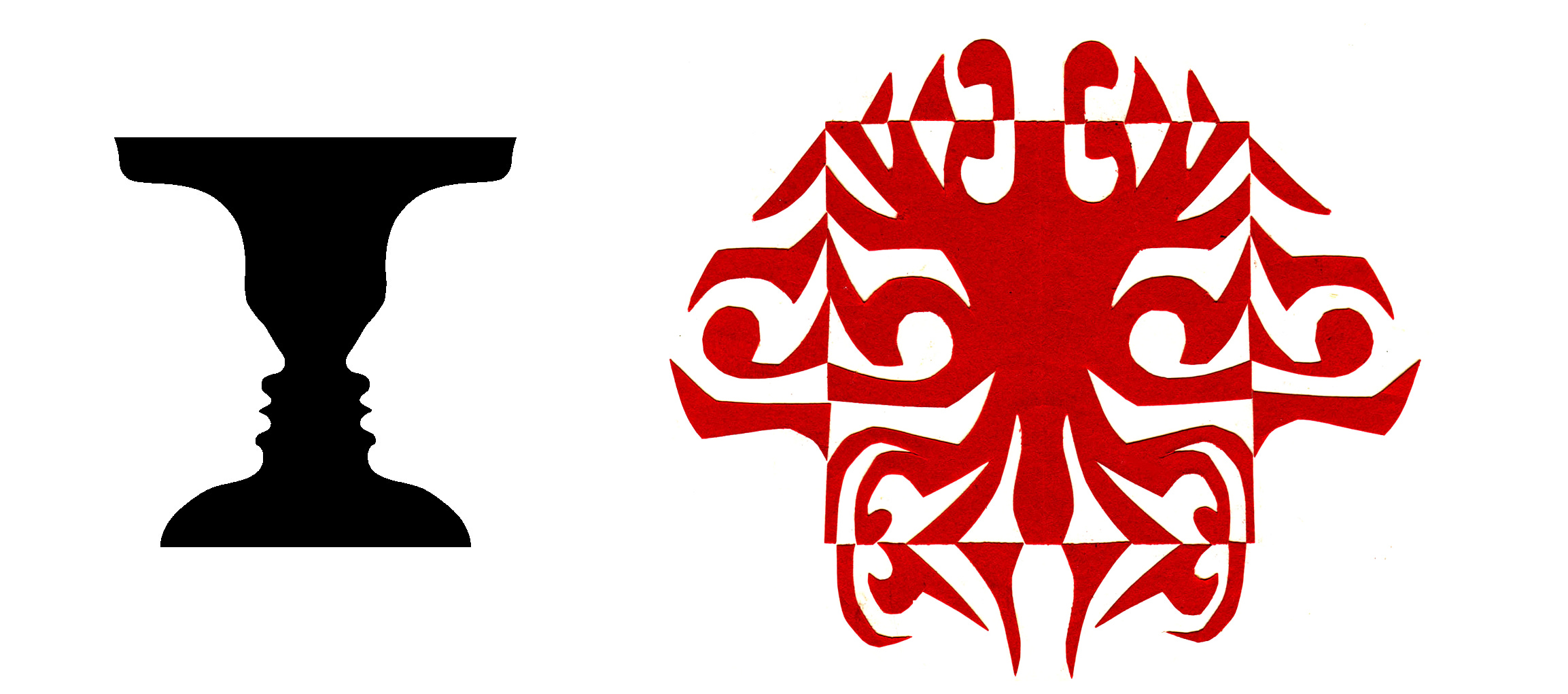
In my shop there are many gift items (mouse pads, mugs, pillows, scarves, jigsaw puzzles, and more). Order online or email me for custom pieces.
This blogpost on Substack will always be available free. The “paid” area is more interactive, with exercises and activities, discussion, and individual one-on-one conversation and critiques. Your contribution helps keep my writing coming your way.
PAID SUBSCRIBERS: All paid subscriptions are now $75 annually or $7.50 monthly. I am eager to devote time to interactive projects and individual discussions on this basis. Invest in improving your graphic skills, design perception, and performance in the visual arts, handwriting, letterformation, and calligraphy.
EDUCATIONAL DISCOUNT: I offer a 50% discount on the annual paid subscription for art instructors and those in the art education field.
A paid subscription gives you access to ongoing conversations on my chat feed, permanent access to all archives, and access to exercises and how-tos. Let’s continue to talk about art and keep it fed, nourished, and productive.
Comments
Nothing yet. Say the first thing.
Sign in to join the conversation.