
This is going to be a short post, because making the budget is still a bit of a mystery to me. I worked on it together with my department’s administrative director, who created a spreadsheet for my project based on the template they use for such grants. The first step, however, was mine: I sent her the list of “what I would need,” listing people and fieldwork expenses.
There were some non-negotiables for me: I knew there had to be fieldwork, which included travel and some participant compensation, and there had to be people who would collect and analyze the data with me. The distribution of tasks between myself and the team, and among team members, eventually changed, but it was clear that I needed at least two other people to pull off the project. Three, if I wanted to make it comfortable. Personnel costs, as they’re called in the ERC budget template, ended up being the main category in the budget, taking up most of it. Added to the non-negotiables were a couple of standard expenses, like auditing costs and open-access costs, for which I just included the sums recommended by the administrative director.
A big chunk of the budget that more or less calculated itself in the template I received was the overhead going to the host institution — so keep in mind that not all of the €1.5 million is actually available for you to spend.
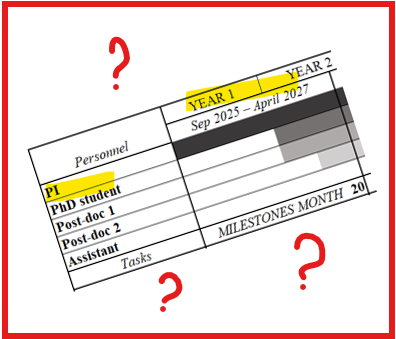
These non-negotiables led to negotiating other costs and things I could include, which in turn meant reconfiguring the project design a bit. The budget file went through at least eight versions, as things changed throughout the course of my work on the proposal: the number of people I intended to hire, their experience levels, my own involvement and compensation, and the countries I wanted to include in the proposal. One country where I initially planned to do fieldwork had to be removed because it was becoming too expensive.
It seems like the ERC Starting Grant is a lot of money — but depending on where you are and where you plan to conduct your research, things can become pretty tight. For example, in the Netherlands, where I am, academic salaries are very decent and negotiated in a centralized way, and labor regulations are quite strict (which is good, as it ensures necessary protections for people). For me, this meant there were limits on how many people I could hire; thus, I had to be flexible with my other expenses. In other countries, however, salaries may be different, and one could afford more with the same grant.
What did not change, however, were the things I initially categorized as non-negotiables. The key elements of my research design — methods, timelines, types of data — stayed the same. So, to me, it seems important to start with those non-negotiables and work from there with the rest of your budget.
Comments
Nothing yet. Say the first thing.
Sign in to join the conversation.