
The last day of the Supreme Court’s term was today which means the most controversial court opinions were announced - the fate of transgender athletes being one of them.
The court ultimately held that “Title IX allows schools to provide separate women’s and men’s sports teams defined by biological sex, and West Virginia has permissibly maintained female sports for biological females consistent with Title IX.”
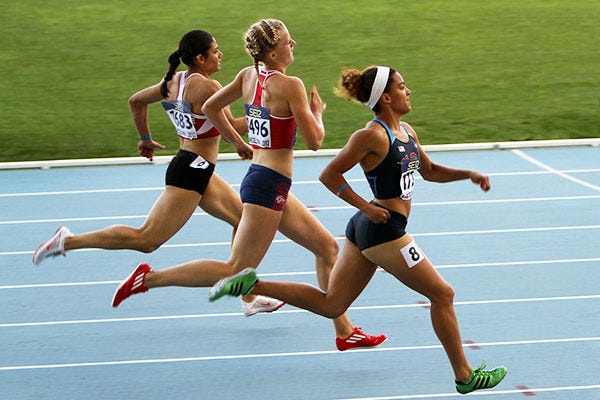
Quick Background:
27 states have enacted laws prohibiting biological men and boys in women and girls sports. Specifically, West Virginia enacted the Save Women’s Sports Act in 2021. B. P. J., a transgender athlete, sued West Virginia for violations of Title IX and The Equal Protection Clause of the Fourteenth Amendment.
What is Title IX?
Title IX was signed into law in 1972 and states, “No person in the United States shall, on the basis of sex, be excluded from participation in, be denied the benefits of, or be subjected to discrimination under any education program or activity receiving Federal financial assistance[.]”
Schools who violate Title IX risk the loss of receiving federal funds.
To have equal opportunity, Title IX allowed for the separation of men and women in sports. B.P.J. argued that biological males who take puberty blockers or hormones are an exception and should be allowed in female sports.
The Court disagreed.
What is The Equal Protection Clause of the Fourteenth Amendment?
The Fourteenth Amendment provides that, “No State shall make or enforce any law which shall abridge the privileges or immunities of citizens of the United States…nor deny to any person within its jurisdiction the equal protection of the laws.
This clause was intended to prevent discrimination against African Americans. Would it then be reasonable to assume this clause protects transgender athletes from gender discrimination? The court does not think so.
“The States argue—and the Court agrees—that the interests of safety and competitive fairness are important interests for purposes of equal protection analysis. And the States’ sex-based classification—limiting women’s and girls’ sports to biological females—is substantially related to those interests. See Ibid. Schools may determine eligibility for women’s and girls’ sports based on biological sex.”
What Happens Now?
This ruling allows states to ban biological men from women’s sports, but it does not force states to. That means states can still determine if they want to allow biological men in women’s sports or not. Currently 27 states have enacted bans which can remain in place.
Comments
Nothing yet. Say the first thing.
Sign in to join the conversation.