
Today, the Supreme Court issued a major ruling in NRSC v. FEC, overturning campaign restriction previously held by the same court in 2001.
Notably, Vice President JD Vance was a plaintiff in this case.
The case centers on the longstanding distinction between candidate campaign committees and political action committees (PACs). It is important to understand that candidates themselves can only collect a certain amount from contributors for their campaign. Political action committees (PACs) on the other hand, can receive an unlimited amount of funds. This is due to the Citizen’s United ruling in 2010 that allowed unlimited corporate contributions to PACs since the court considered it free speech.
Although unlimited funds can be contributed to PAC’s, it has always been against the law for PACs and candidates to coordinate spending efforts…until now.
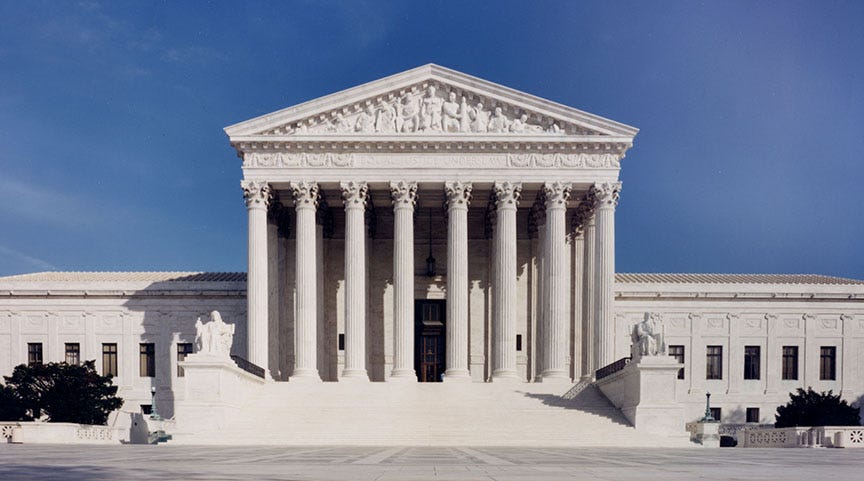
In a 6-3 court opinion, with all conservatives justices in favor of the ruling and all liberal justices dissenting, the court held that limiting coordination between PACs and candidate committees violates free speech. Specifically the court said, “FECA’s political-party coordinated-expenditure limits violate the First Amendment.” Justice Kavanaugh further explains in the majority opinion:
“Because ‘virtually every means of communicating ideas in today’s mass society requires the expenditure of money,’ a ‘restriction on the amount of money a person or group can spend on political communication during a campaign necessarily reduces the quantity of expression by restricting the number of issues discussed, the depth of their exploration, and the size of the audience reached.’”
FECA stands for The Federal Election Campaign Act which is the law that restricted “a political party’s spending on campaign activities in coordination with candidates.” The ruling opens the door for candidates and PACs to closely strategize, blurring lines between these separate entities.
The court addresses the concerns surrounding campaign corruption.
“Given the meaningful prophylactic measures available to combat quid pro quo corruption or its appearance, the Court concludes that the political-party coordinated-expenditure limits at issue here are ‘disproportionate’ and are not ‘necessary’ and ‘narrowly tailored’ for the circumvention interest.”
Justice Kagan wrote the dissenting opinion. In part she said:
“The majority invalidates Congress’s restriction of coordinated expenditures, thus enabling a party to serve as an alternative checking account for a campaign. As a result, a donor will be able to give a party as much as half a million dollars (as compared to the $7,000 he can give directly to the candidate) to cover the candidate’s bills. And the candidate can seek just such a donation. So the Court ushers back in the same opportunities for quid pro quo corruption that the contribution limits were meant to check.”
This decision is hardly surprising as it echoes the 2010 Citizens United decision. In that case, the court allowed corporations to spend freely on elections. Now, with coordination permitted, the next legal challenge will likely target contribution limits to candidates themselves. If overturned, we may see elections shaped even more by a handful of wealthy donors and further tipping the balance away from everyday voices.
No posts
Comments
Nothing yet. Say the first thing.
Sign in to join the conversation.