
At question in this case is whether the Fourteenth Amendment guarantees citizenship to children born from unlawfully or temporarily present parents, also known as birthright citizenship. The Fourteenth Amendment states, “All persons born or naturalized in the United States, and subject to the jurisdiction thereof, are citizens of the United States and of the State wherein they reside.”
The Trump administration argued that children of unlawfully present parents are not “subject to the jurisdiction thereof” and cannot be granted automatic citizenship.
The court disagreed.
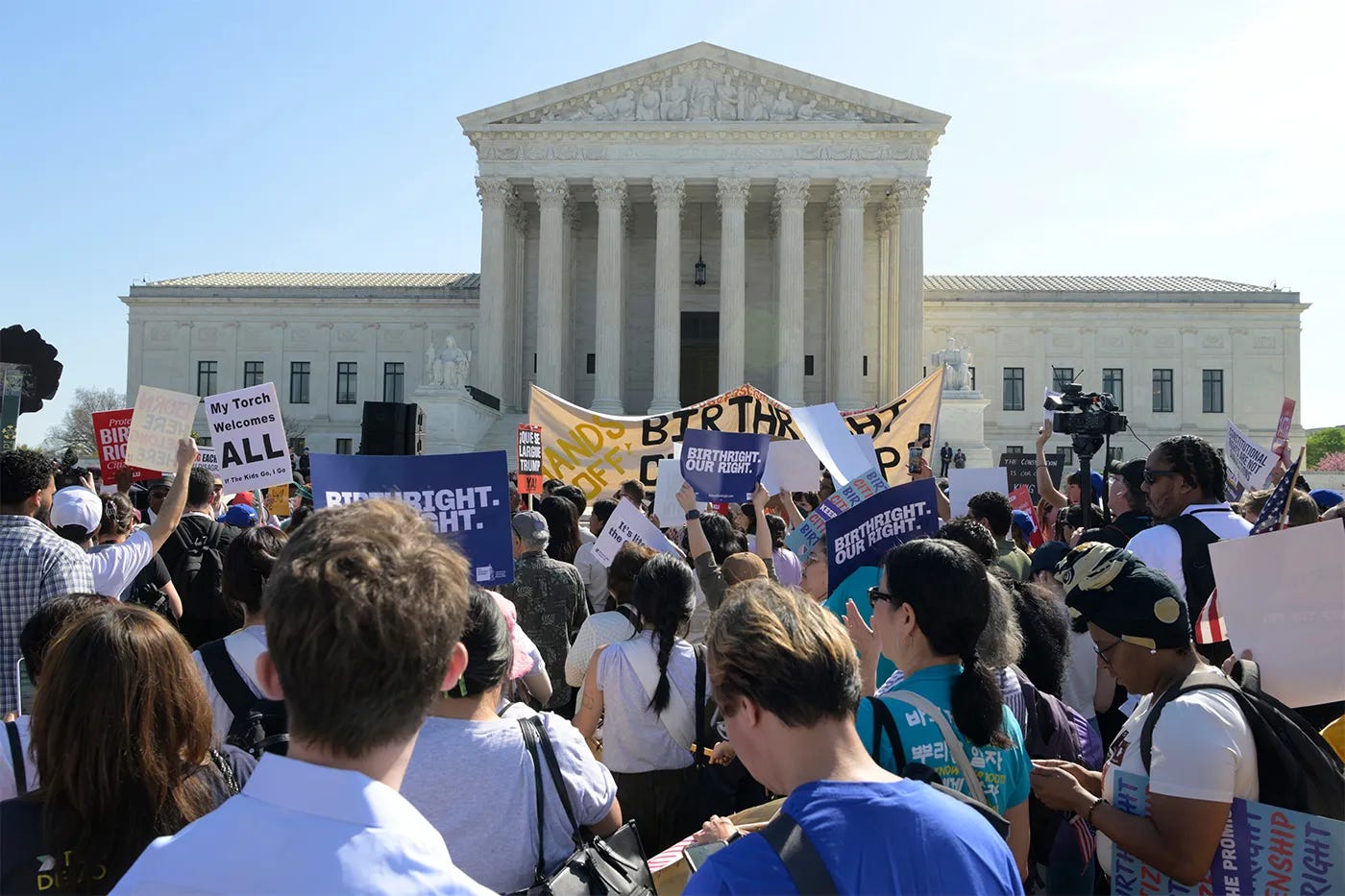
For generations, the United States has granted citizenship to anyone born within the country. This included foreigners who came into the country unlawfully or temporarily to have a baby and leave back to their home country. With the influx of immigrants under the Biden Administration, many people started to question the constitutionality of this practice.
On January 20th, 2025, President Trump signed an Executive Order titled “Protecting the Meaning and Value of American Citizenship.” The order instructed his departments to stop issuing citizenship documents to children if their parents were in the country unlawfully or temporarily.
This sparked several lawsuits from parents of affected children.
In a 5-4 opinion, the majority held that, “Children born in the United States to parents unlawfully or temporarily present are ‘subject to the jurisdiction’ of the United States and are citizens at birth under the Fourteenth Amendment’s Citizenship Clause.”
Justice Roberts and Justice Barrett joined all liberal justices in the majority with the remaining conservative justices dissenting.
The majority refers back to English common law for how subjects were treated. “Under the English common law, children ‘born within the [sovereign’s] dominions’ owed a natural ‘allegiance’ to the sovereign who protected them at birth.”
The court further confirms that children born from aliens are subject to the jurisdiction.
“…aliens who traveled to the United States for ‘business or pleasure’ received no ‘exemption from the jurisdiction of the country.’ To the contrary, they were subject to that jurisdiction for as long as they remained here—and any children born to them were American citizens under the Fourteenth Amendment.”
Justice Gorsuch joined Justice Thomas in his dissenting opinion.
They mainly criticize the majority for not considering where parents were domiciled at the time. Your domicile, in short, is where you establish residency. Justice Thomas explains, “When a child was ‘born’ in the United States to parents ‘domiciled’ abroad, he was ‘not, therefore, under the statute and the Constitution a citizen of the United States by birth.’”
Justice Alito further took issue with the majority’s citing of English Common Law:
“According to the Court, the Fourteenth Amendment’s Citizenship Clause codified the British rule of birthright subjecthood with only one new exception, which was needed to accommodate the unique status of American Indians. That is a curious claim, and it is ironic that the Court should embrace it only days before we celebrate the 250th anniversary of our Declaration of Independence, which emphatically renounced the foundation on which the British rule rested.”
Since the court ruled that the Fourteenth Amendment grants birth right citizenship, only a change to the constitution can alter or abolish birthright citizenship. This would take a two-thirds vote by both the House and Senate. This is highly unlikely to happen. The last constitutional amendment was in 1992.
No posts
Comments
Nothing yet. Say the first thing.
Sign in to join the conversation.