
Hello dear readers,
I’m writing from my kitchen table in Gouda, dusted with flour, hands smelling of ginger and sesame oil. In front of me: dumplings lined up on a baking sheet. Some beautifully pleated, some... rustic. My three-year-old made five of them, mostly filling with a desperate scrap of dough holding on for dear life.
I’ve just returned from Chile, where I spent weeks with family eating my weight in empanadas, humitas, and pastel de choclo, and the occasional pisco sour. There’s something about being surrounded by comfort food, by picoteo shared around a table, that reminds you what togetherness is... I won’t be going into the universal truth/cliche there, but you get it. And right now, that feels unbearably important.
Because in the USA, ICE is killing protesters and picking people off the streets just for looking the way they do. In Iran, thousands are dead or missing for protesting their regime. Worldwide, Black and brown lives continue to be valued as less-than, and have been for an unbearable amount of time. It’s bleak: In my home country I have voted with my conscience, written to my insurance company for investing in illegal settlements in Palestine and supporting a genocide, and protested the climate crisis (it’s a social justice crisis) and the hateful parties that seem to take more and more of a hold on my country. I am raging against the machine but the machine does not GAF.
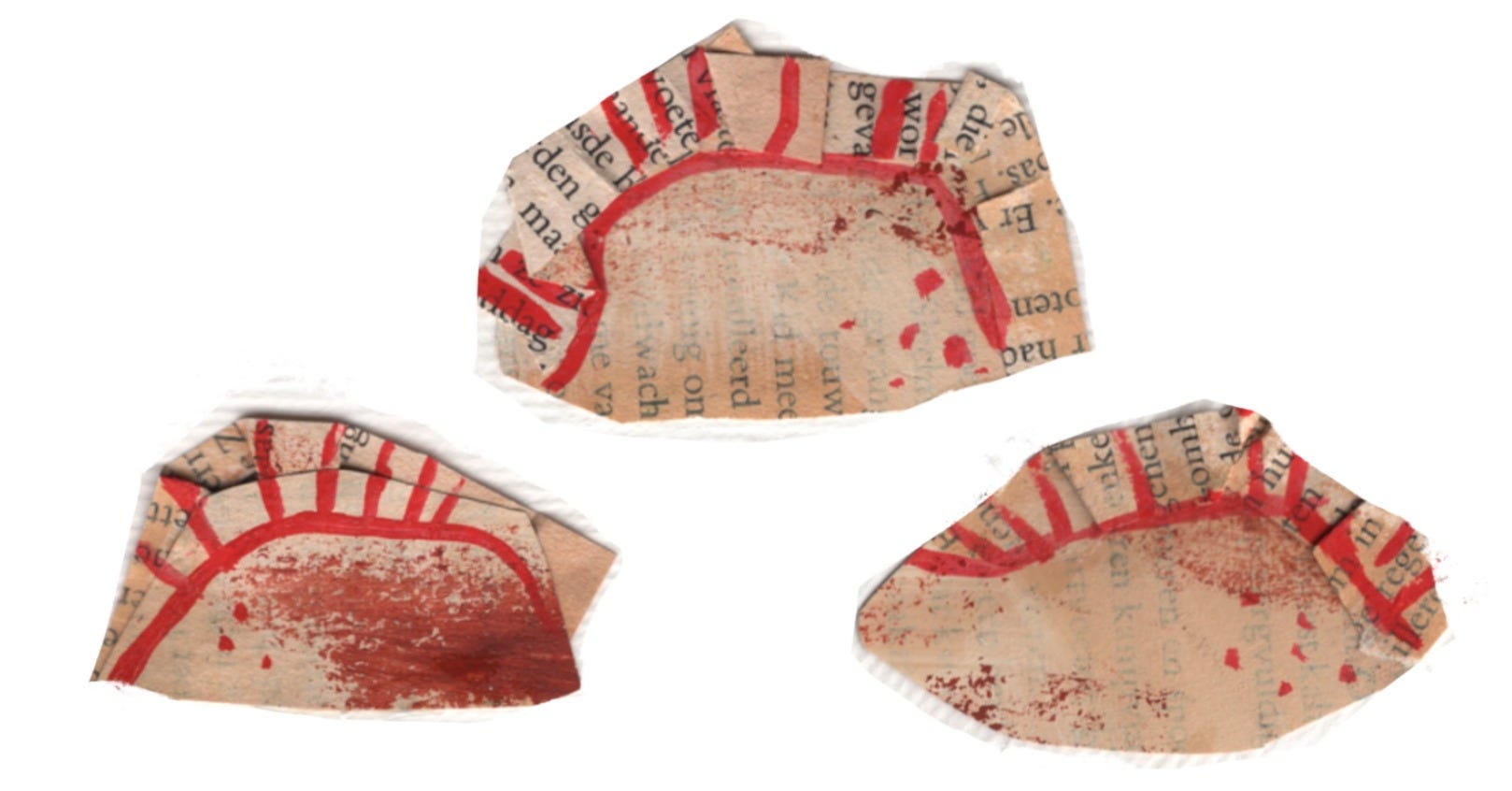
But here I am, making dumplings and illustrating food. It’s how I make a living: writing books, illustrating them, and this illustrated recipe substack feels pretty silly in a time like this, honestly. Except a platform is a platform and how you use it says EVERYTHING. Food is what happens when people migrate, when cultures collide, when someone says “this is mine” even as everything else tries to erase them. And dumplings are resistance wrapped in dough.
This month, I’ve been painting every single ingredient for these dumplings and creating a step-by-step pleating guide that I’m genuinely excited about. But more than that, I’ve been thinking about what dumplings teach us about migration, about belonging, about who gets to be “American” (or Dutch, or British, or anything else). About how the same people who benefit from immigrant labor are the ones screaming that immigrants are “taking our jobs.”
A quick announcement before we dive into this week's recipe... I've added something new for paid subscribers! Starting now, every recipe comes with a downloadable illustrated recipe card. These are high-resolution, printable PDFs designed to be collected, displayed, or referenced while you cook.
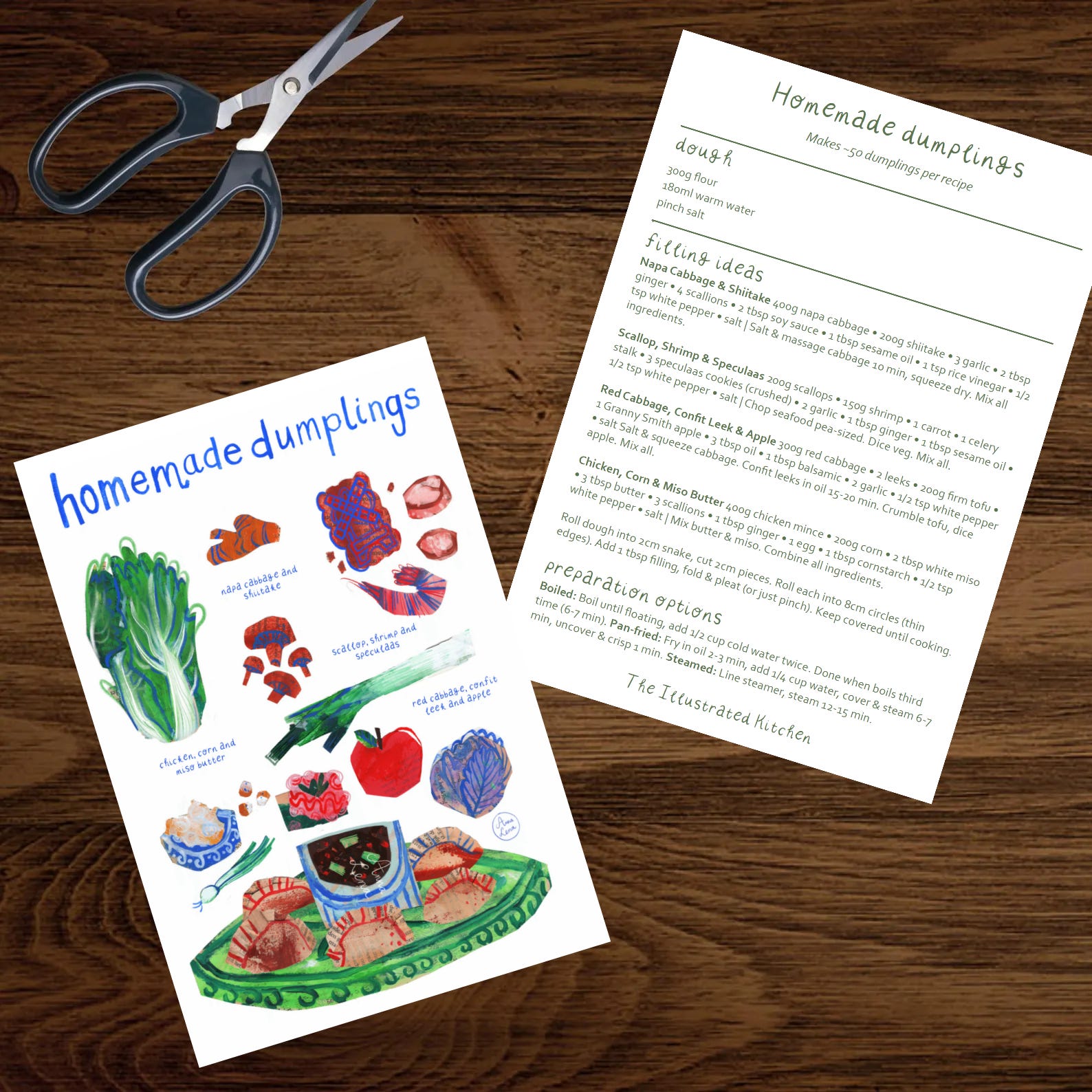
Here's how it works:
FREE subscribers (that's you!): You still get the complete recipe, the food history, and the illustrations in every newsletter. Nothing changes. Everything you need to cook stays accessible.
PAID subscribers: You now get printable recipe card PDFs for every recipe, plus monthly illustrated kitchen guides, behind-the-scenes studio content, and early access to new recipes. Think of it as a kitchen art membership that includes recipes, not a recipe subscription that includes art.
If you've been thinking about upgrading, now's a great time: paid subscribers get immediate access to all the recipe cards I've already created, to the full newsletters that I’ve written so far (food history!) and illustrated bonus food guides, such as a world map of rice dishes or a guide to using spices in the right ratio. Yum.
Either way, I'm glad you're here. Now let's talk about dumplings...
On dumplings
Here’s what I’ve learned about dumplings after making lots of them over the years: they don’t care about perfection. Your first dumpling will look like a drunk potato tried origami for prom. Your fiftieth will look like something your grandmother might approve of, but would never tell you… But the taste is equally good! Which is the whole point, really. Dumplings aren’t precious. They’re peasant food, festival food, everyday food, celebration food. They’re what you make when you have scraps and need to stretch them. And here’s what fascinates me: they’re everywhere. Humans across the planet, completely independently, figured out that wrapping filling in dough and cooking it was delicious.
China has jiaozi (boiled or pan-fried), zheng jiao (steamed), and wontons. Japan has gyoza. Korea has mandu. Tibet and Nepal have momo. Poland has pierogi. Italy has ravioli and tortellini. Russia has pelmeni. Turkey has manti. Spain and Latin America have empanadas. India has samosas and modak. Jewish communities have kreplach. Germany has maultaschen. The Netherlands has bitterballen (yes, I’m counting them).
We could talk about what dumpling came first, who influenced whom, what’s “authentic.” But honestly? Who cares. Food doesn’t stay pure (gagging at saying this, even if it’s denying the statement). It travels, changes, adapts. This is a good thing. Food isn’t a museum piece. It’s a living tradition that changes hands, crosses borders, and adapts to what’s available.
So let’s make some dumplings!
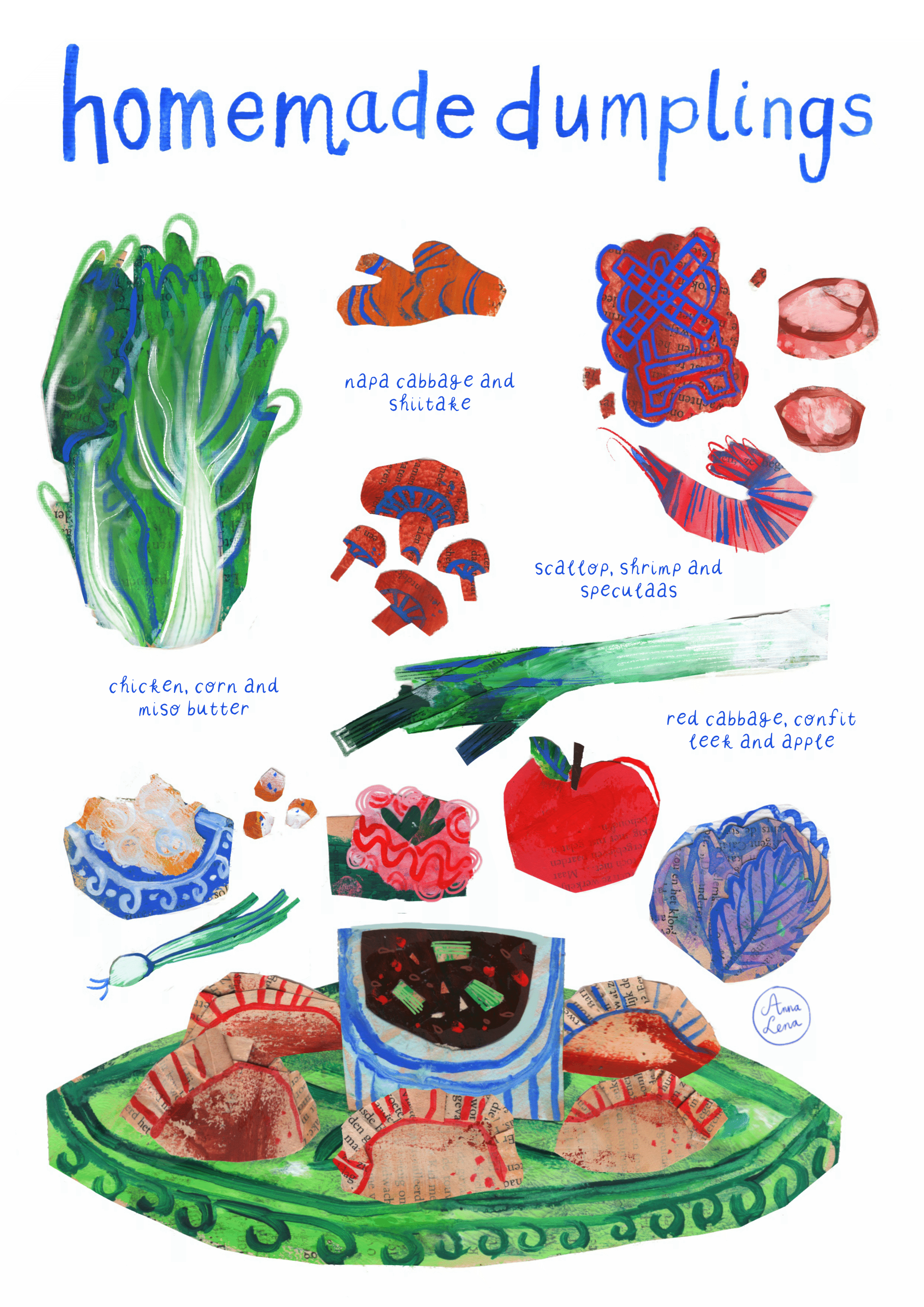
Dumplings (Four Ways)
Makes about 50 dumplings per recipe
This recipe teaches you one base technique and four fillings. The dough is the same for all of them! The pleating can be the same, too. (Or: see the pleating guide in the bonus part of this newsletter!) What changes is what you wrap inside.
The dough
300g all-purpose flour
180ml warm water (not hot, just warm)
Pinch of salt
Mix flour and salt in a large bowl. Add warm water gradually while stirring with chopsticks or a fork. When it starts coming together, use your hands to knead it into a ball. It’ll feel shaggy and rough at first: That’s fine. Knead for about 8-10 minutes until the dough is smooth and elastic. If it’s too dry, wet your hands and keep kneading. If it’s too sticky, dust with more flour. The dough should feel soft, like play-dough, not tough or crumbly. Cover with a damp towel and let it rest for at least 30 minutes. This is not optional. The dough needs to relax or your dumplings will shrink and be tough. Go make your filling.
Napa Cabbage & Shiitake
400g napa cabbage
200g shiitake mushrooms
3 cloves of garlic
2 tbsp fresh ginger
4 scallions
2 tbsp soy sauce
1 tbsp sesame oil
1 tsp rice vinegar
1/2 tsp white pepper
Salt
Finely chop your napa cabbage and put it in a large bowl. Sprinkle with about 1 tsp salt and massage it with your hands for a minute. Let it sit for 10 minutes. The salt will draw out water from the cabbage.
After 10 minutes, squeeze the cabbage in handfuls over the sink to remove as much water as possible. This is crucial. Wet filling makes soggy dumplings that fall apart. Squeeze hard. Get that water out!
In a large bowl, combine the squeezed cabbage, finely chopped mushrooms, minced garlic, minced ginger, and chopped scallions. Add soy sauce, sesame oil, rice vinegar, white pepper, and a pinch of salt. Mix everything together with your hands or a spoon. Taste it. Adjust seasoning. It should taste slightly over-seasoned because the wrapper will dilute it.
Scallop, Shrimp & Speculaas
200g fresh scallops
150g shrimp (peeled, deveined)
1 medium carrot
1 stalk celery
3 speculaas cookies
2 cloves garlic
1 tbsp fresh ginger
1 tbsp sesame oil
1/2 tsp white pepper
Salt
Chop scallops and shrimp into small pieces (about pea-sized). Don’t mince them completely- you want some texture.
Finely dice carrot and celery. Crush the speculaas cookies into fine crumbs (use a food processor or put them in a bag and smash with a rolling pin).
Combine seafood, vegetables, cookie crumbs, minced garlic, minced ginger, sesame oil, white pepper, and salt. Mix gently. The sweet spice from the cookies against the seafood is genius- it works like Chinese five-spice but warmer.
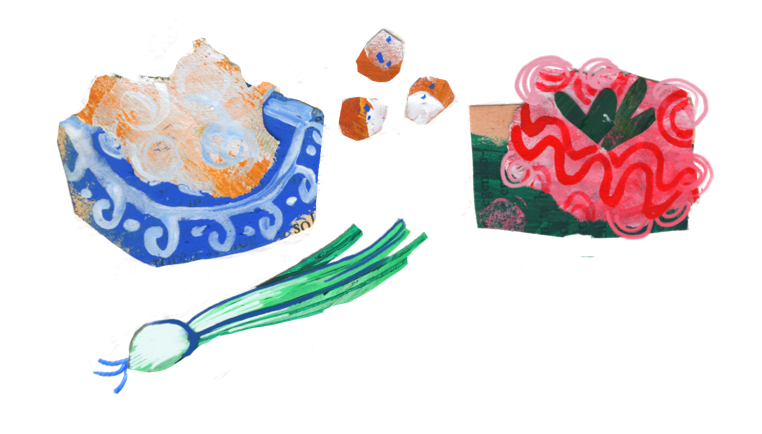
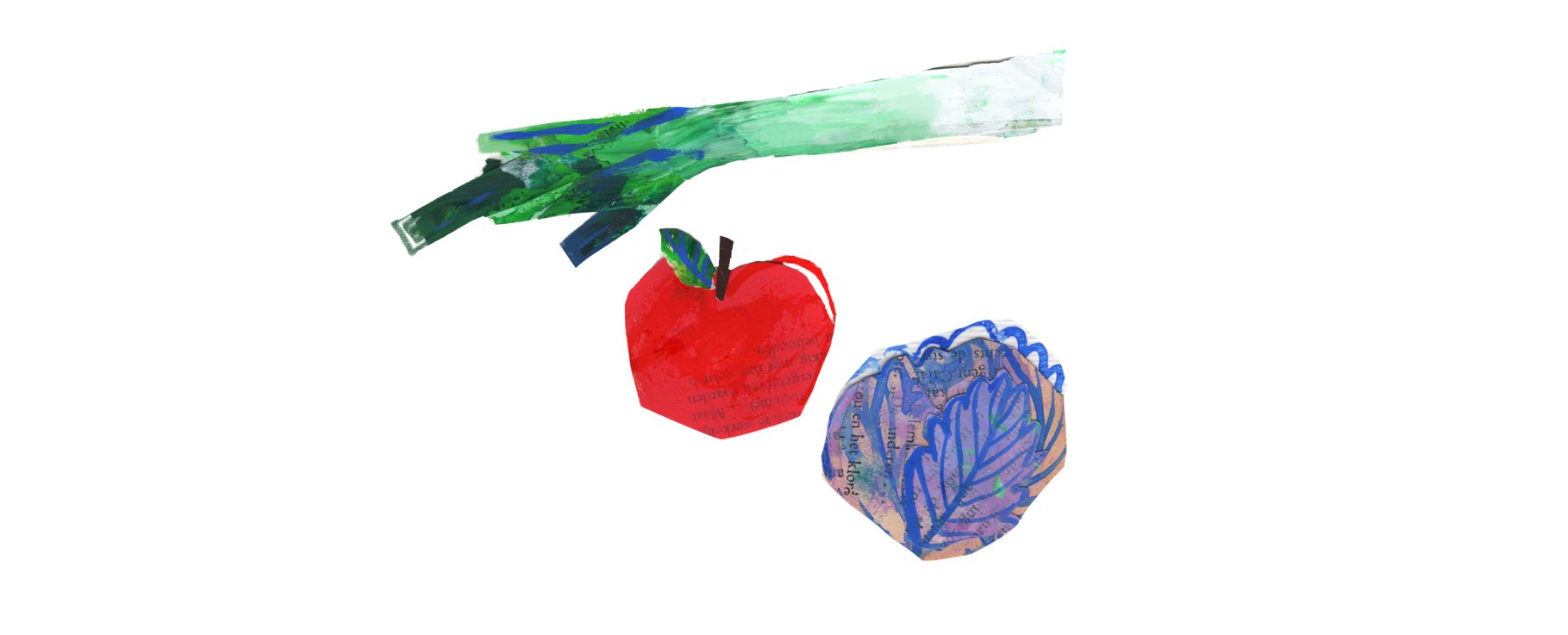
Red cabbage, confit leek & apple
300g red cabbage
2 medium leeks (white and light green parts only)
200g firm tofu
1 Granny Smith apple
3 tbsp neutral oil (for confit)
1 tbsp balsamic vinegar
2 cloves garlic
1/2 tsp white pepper
Salt
Finely chop red cabbage. Massage with 1 tsp salt for 10 minutes, then squeeze out all the water (same as with napa cabbage, get it dry). Slice leeks thinly. Heat 3 tbsp oil in a pan over low heat. Add leeks and cook slowly for 15-20 minutes until completely soft, sweet, and slightly golden. This is your confit! Let cool.
Crumble firm tofu. Dice apple into very small pieces (leave the skin on for texture).
Combine squeezed cabbage, confit leek (with its oil), crumbled tofu, diced apple, minced garlic, balsamic vinegar, white pepper, and salt. Mix well. The apple cuts through the richness and the balsamic ties it all together. Taste and adjust.
Chicken, corn and miso butter
400g mixed chicken mince
200g corn kernels (fresh, frozen, or canned)
2 tbsp white miso paste
3 tbsp butter (softened)
3 scallions
1 tbsp fresh ginger
1 egg
1 tbsp cornstarch
1/2 tsp white pepper
Salt
If using frozen corn, thaw and pat dry. If using canned, drain well.
In a small bowl, mix softened butter with white miso paste until smooth and combined.
In a large bowl, combine chicken mince, corn kernels, miso butter, chopped scallions, minced ginger, egg, cornstarch, white pepper, and a pinch of salt. Mix thoroughly with your hands- the cornstarch helps bind and tenderize. The miso butter makes it rich and slightly funky in the best way. Taste and adjust.
Roll and pleat
Cut your rested dough into two pieces. Keep one covered while you work with the other.
Roll the dough into a long snake, about 2cm thick. Cut into pieces about 2cm wide. You should get about 25 pieces per half.
Take one piece, flatten it slightly with your palm, then use a rolling pin to roll it into a circle about 8cm across. The edges should be thinner than the center. This takes practice. Your first ones will be wonky. That’s fine.
Hold the wrapper in your non-dominant hand. Put about 1 tablespoon of filling in the center. Don’t overfill. I know it’s tempting. Don’t.
Fold the wrapper in half to make a half-moon shape. Pinch the top center to seal it. Now here’s where the pleating happens, and I’m going to be real with you: this is hard to describe in words.
The basic idea: use your thumb to push the front edge of the wrapper into small pleats while your other hand holds the back edge flat. Pinch each pleat to seal it. Work your way from center to one side, then center to the other side. You should get 3-4 pleats on each side.
Or, honestly, just pinch the edges together in a half-moon and call it good. They’ll taste exactly the same.
Place finished dumplings on a lightly floured baking sheet, not touching each other.
Cooking methods 🥟
Boiled (the classic):
Bring a large pot of water to a boil. Drop in dumplings (don’t overcrowd). When they float, add 1/2 cup cold water. When they boil again, add another 1/2 cup cold water. When they boil a third time, they’re done. This takes about 6-7 minutes total.
Pan-fried (guotie/potstickers):
Heat 2 tbsp oil in a non-stick pan over medium-high heat. Place dumplings flat-side down, not touching. Fry for 2-3 minutes until bottoms are golden. Add 1/4 cup water, cover immediately, and steam for 6-7 minutes. Remove lid, let remaining water evaporate, and fry for another minute to re-crisp the bottoms.
Steamed:
Line a bamboo steamer with parchment paper or cabbage leaves. Place dumplings inside, not touching. Steam over boiling water for 12-15 minutes.

More than ‘just’ food
Here’s something wild: dumplings might be more American than hamburgers. Chinese food has been in the United States since the California Gold Rush, that’s 20-30 years before hot dogs and burgers became a thing. And yet, we still treat dumplings like they’re “foreign food.” Wonder why. Why do some foods get to be “American” (or “Dutch,” or “British,” or whatever) while others remain forever “ethnic”? And that’s exactly what I want to explore in the paid section of this newsletter.

Behind the paywall, I’m diving deep into:
How dumplings traveled from Central Asia to every corner of the globe, following trade routes, conquests, and migrations
The Chinese Exclusion Act and how racism shaped which foods were accepted (and which were not)
Why pierogi sustained Polish coal miners and became church fundraiser staples, and the legend of St. Hyacinth and the pierogi miracle
What cultural appropriation vs. appreciation actually means with food
Plus: an illustrated guide to pleating dumplings from different cultures, behind-the-scenes collage videos, and a downloadable recipe card you can print and keep!
Paid subscriptions mean I can spend less time on client work and more time researching agricultural justice, food sovereignty, and drawing water cooperatives. Free subscribers are just as valued, but if you can swing it, your support means the world.
Want more illustrated food history?
📖 My mini cookbook This Better Pan Out collects my favorite illustrated recipes in one printable booklet → Get it here!
🎨 Recipe prints, food art, and kitchen goods at my Etsy shop → annalenamakes.etsy.com
🌸 Learn my collage illustration techniques with the Floral Collage Course → Start creating
📚 Kids’ nonfiction books about food lore and history → Browse books
I’m making these dumplings this week to celebrate coming home from our trip. Maybe you’ll make them too. Maybe we’ll both be standing at our kitchen counters, hands busy, minds quiet, connecting to something older and bigger than ourselves.
x,
Anna Lena
P.S. Want to learn my collage illustration techniques? Check out my Floral Collage Course — same process I use for food art, just with flowers!
Comments
Nothing yet. Say the first thing.
Sign in to join the conversation.