
Hello gorgeous humans,
A bit of an in-between newsletter today, making space and giving attention to a very special project I’ve had the honor of being a part of recently. But don’t worry, an illustrated recipe newsletter is coming soon, hitting your Substack app or inbox by December first!
Remember how I mentioned I’ve been drawing cabbages for a community project? Well, it’s time to tell you that story, and it’s honestly one of the most fascinating projects I’ve been part of this year. From November 27 through December 21, 2025, kunstcentrum De Firma in Gouda is hosting an exhibition called “Project Rode Kool – Rode kool als gids door Goudse grond” (Red Cabbage as a Guide Through Gouda’s Ground). I had the privilege of creating an illustrated map for this project, and I want to share with you why this vegetable is actually a brilliant scientific indicator and an unexpected storyteller to boot.
Red cabbage has been a staple on Dutch tables for centuries, thriving in the cool, damp climate of the Low Countries. In the medieval cookbook “Een notabel boecxken van cokeryen” (A Notable Little Book of Cookery), published around 1510 in Brussels, you’ll find recipes for “Rode kool met appelen” (red cabbage with apples) which is a combination that remains beloved in Dutch cuisine today, though the medieval version included expensive spices like ginger and cloves that marked it as a dish for special occasions. The cabbage’s ability to be preserved through winter made it really valuable and useful in the pre-refrigeration era, often pickled or stored in root cellars.
Today, red cabbage appears in everything from traditional stamppot variations, to raw salads with vinegar and caraway seeds. If you’re inspired to grow your own (and after seeing Project Rode Kool, who wouldn’t be?), red cabbage is surprisingly suitable for urban environments, it tolerates containers well, needs about 6 hours of sunlight, and actually benefits from cooler temperatures. Plant seedlings in early spring or late summer, give them rich, slightly acidic soil, and keep them consistently watered.
The challenge of growing food in built environments, like limited space, contaminated soil, and more, is exactly what makes projects like this so important: they help us understand what our urban soil can support and remind us that food production doesn’t require a farm, just curiosity and care. This intersection of food history, urban ecology, and community engagement is something I explored in my kids’ book “Tasty Tales,” and it’s why I’m drawn to illustrated food projects that connect past and present, showing how vegetables on our plates carry centuries of stories and, as this cabbage project proves, vital information about the ground we stand on!
Here’s something we don’t think about enough: Modern agriculture has dramatically reduced crop diversity. Even within a single species, the variations in color, shape, and taste have largely disappeared from our supermarket shelves: Vegetables and fruits are grown under controlled conditions to achieve desired characteristics, then strictly selected for uniformity and appearance so only the “best” specimens make it to store shelves.
The result? Our food system has become increasingly disconnected from soil properties, even though soil plays a crucial role in the growth, taste, and composition of our crops. We’ve optimized for consistency at the expense of understanding the ground beneath our feet.

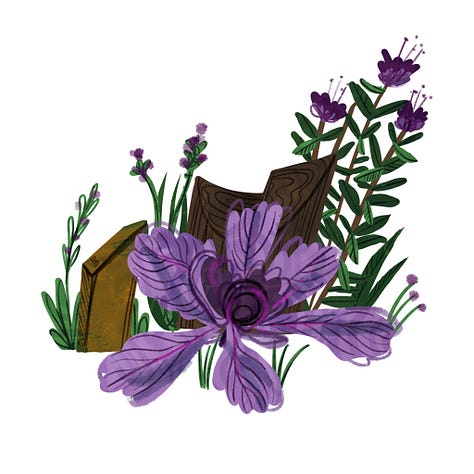
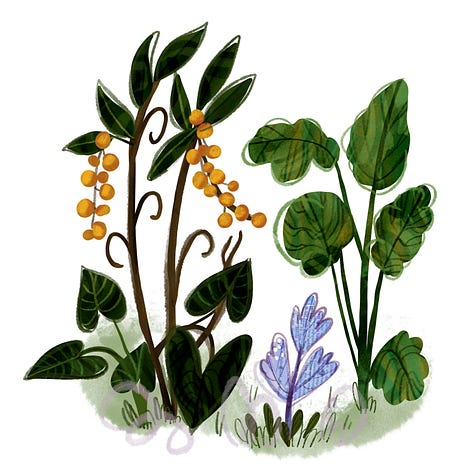
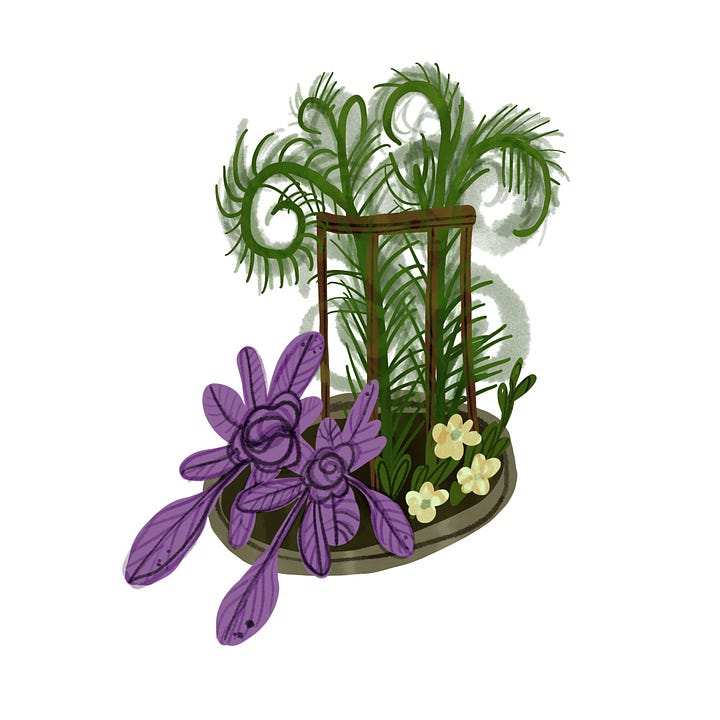
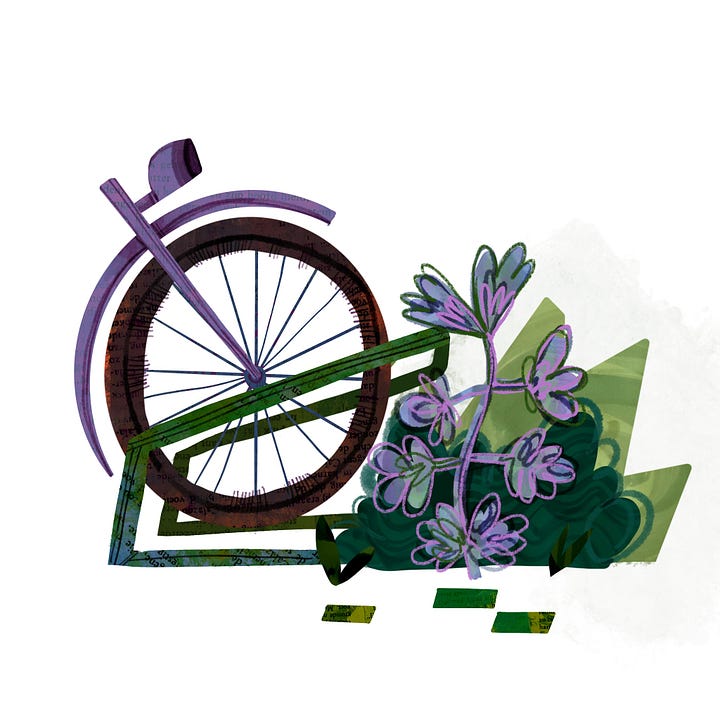
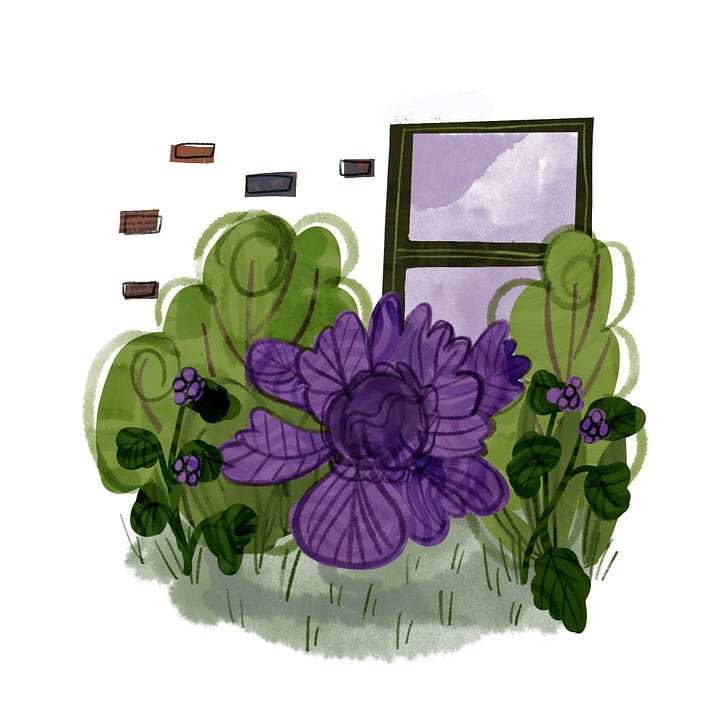
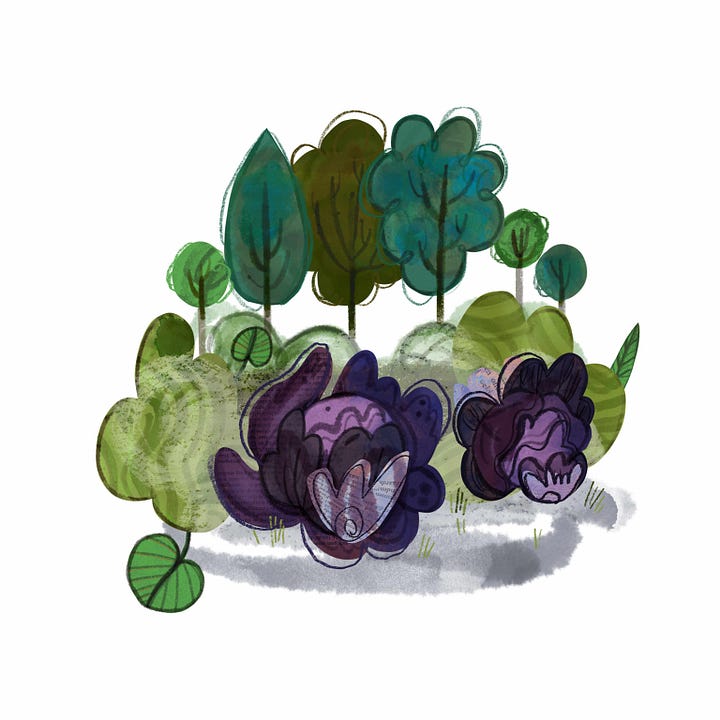
In May 2025, Johanna Weggelaar (Stichting Pollen) and Kristof Vrancken (KU Leuven) launched something brilliant: they recruited twenty-three residents of Gouda to plant lots of red cabbage plants across different locations throughout the city. In September, they harvested them. The results? Fascinating variations in size, shape, and color, all depending on where each plant grew.
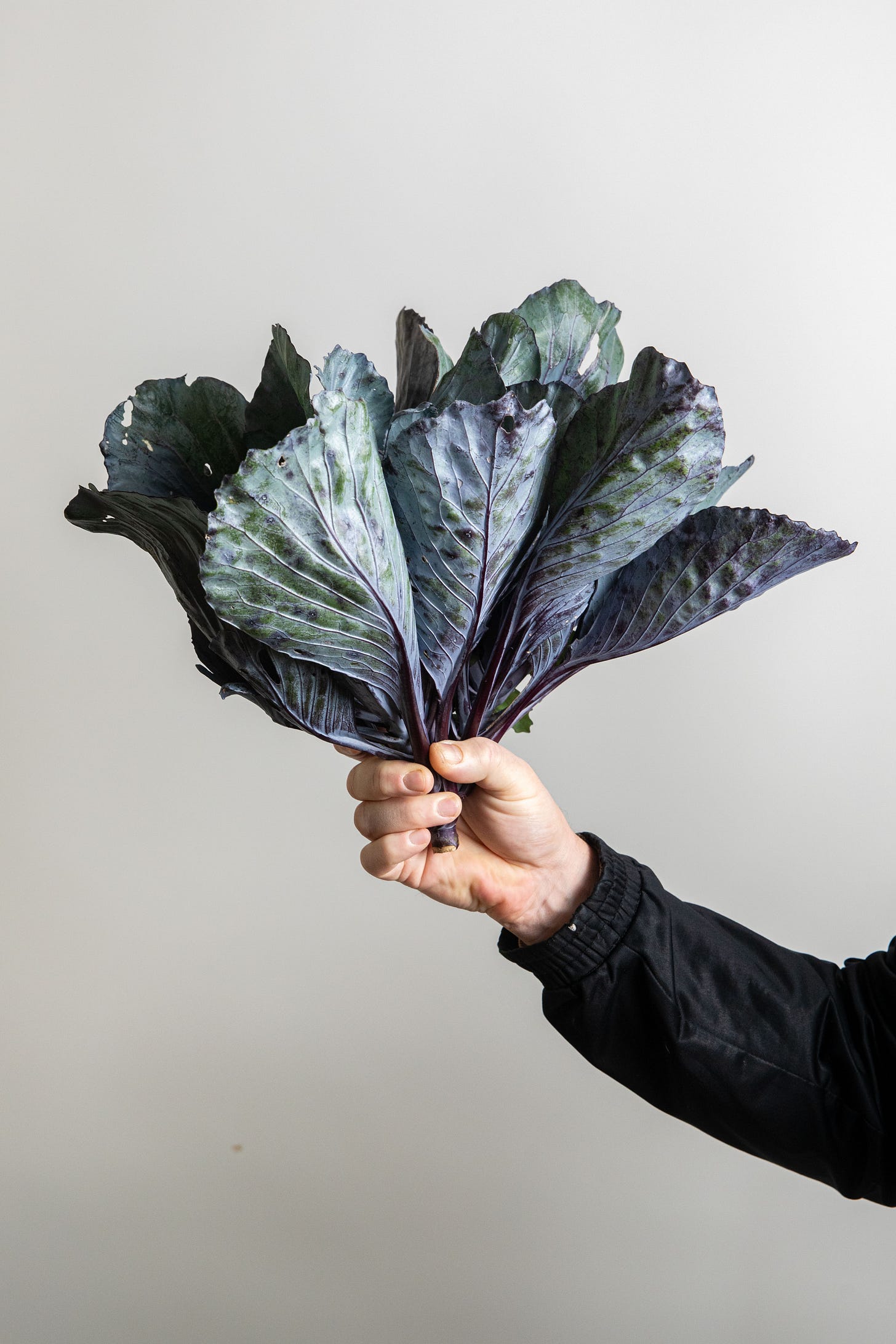
But here’s where it gets really clever: Red cabbage acts as a bio-indicator. Its pigment reacts to the acidity (pH) of the soil and changes color accordingly. What the project creators did was use this natural property to create a visual translation of the city’s soil characteristics. Essentially, they turned vegetables into scientific instruments.
This matters especially in Gouda, which deals with soil subsidence: a process that’s strictly measured and monitored, but also means new soil is constantly being brought into the city. The idea of an “original soil” is barely relevant in Gouda, which makes the question even more urgent: How is our soil doing? And could we still grow food on it?
One of the most poetic aspects of this project is the series of anthotypes created from the harvested cabbages. If you’re not familiar with anthotypes (I wasn’t before!), they’re photographic prints made using plant-based pigments, one of the oldest photographic methods, developed in the mid-19th century and largely forgotten with the advent of “modern” photographic techniques. The process is entirely natural, using no chemical products. The creators extracted pigment from the red cabbages and used it to coat paper, then exposed portraits of participants and photos of where their plants grew to sunlight. Slowly, the images formed.
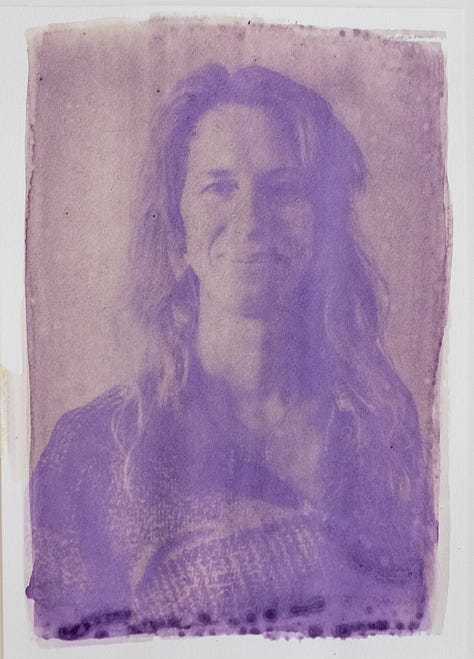
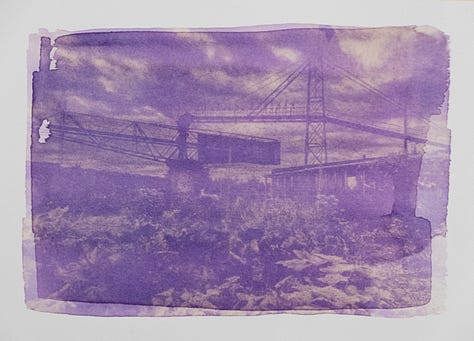
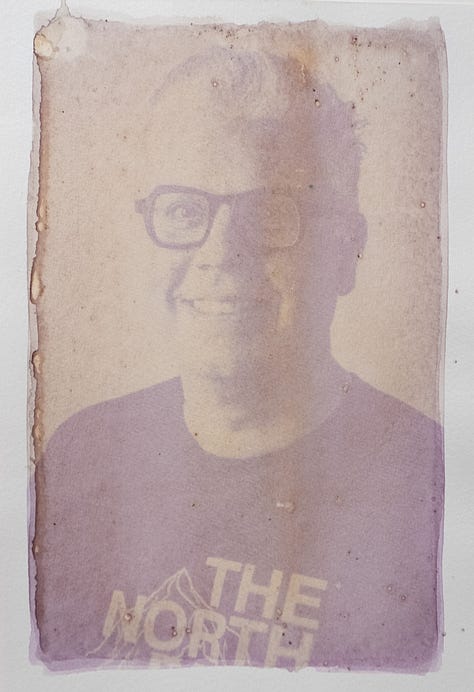
The pigment was used to create several elements of the exhibition, among which an illustrated map of the city of Gouda! I created this illustrated map showing the locations and color variations of all these cabbages across Gouda, turning the project’s data into something visually accessible and visually pleasing. It also shows how high relativelyw the cabbage was planted, using the NAP as an indicator.
What strikes me most about this project is how it brought people together. Through a series of workshops and joint activities, a close-knit community formed around knowledge sharing, observation, and care. Twenty-three Gouwenaars dedicated months to growing these plants, learning about their soil, and contributing to this collective portrait of their city. It’s participatory art and citizen science rolled into one, giving residents creative tools to learn more about their own piece of Gouda and opening up conversations about the relationship between people, soil, and food to a broader audience.
Projects like this remind us that food doesn’t come from supermarkets—it comes from soil, and that soil is different everywhere. The variations in those cabbages aren’t imperfections; they’re information. They’re stories about water tables and pH levels and urban development and the ground beneath our feet that we rarely stop to consider. In our pursuit of perfect, uniform produce, we’ve lost touch with the fact that vegetables are supposed to be different depending on where they grow. That’s not a bug: it’s a feature.
The exhibition “Project Rode Kool – Rode kool als gids door Goudse grond” runs from November 27 through December 21, 2025, at De Firma kunstcentrum in Gouda (Achter de Kerk 13). It’s open Thursday through Sunday from 12:00 to 17:00.
You’ll see photos of the harvested cabbages in all their varied glory, the anthotype portraits, and my illustrated map showing the geographic and chromatic diversity of Gouda’s ground, all told through the lens of a vegetable that turns out to be a rather excellent scientific collaborator.
Creating illustrations for projects like this—where art meets science meets community—is exactly the kind of work that lights me up. If you’re in the Netherlands in November or December, I’d love for you to see the exhibit in person.
Until next time (Soon!), may your vegetables be diverse, your soil be healthy, and your curiosity never wane.
x, Anna Lena
Loved this story? You might like my illustrated recipe newsletters, too! Check out my Etsy shop at annalenamakes.etsy.com for illustrated kitchen goods and recipe prints, or visit annalena.nl to learn more about my work in food illustration and history.
No posts
Comments
Nothing yet. Say the first thing.
Sign in to join the conversation.