
I’ve noticed you are more likely to nurture seedlings undercover for longer than necessary than make the opposite mistake of planting out too soon.
Have you spotted any of the following?
Are your plants growing long and thin, leaning towards the light?
Plants leaves a pale green ever yellow?
Drying out quickly in the day?
Trying to flower before in the ground?
Well I got you. If you have been sowing seeds since late February/ March, I reckon your plants are well ready to be planted into their final position. But many are worried about planting them out into the wild open soil for fear it is too soon.
Here is what I consider to decide whether my seedling is ready -
Has the plant made a nice root ball?
Do they need pinching out?
Is the plant hardy (or half hardy)?
Have you hardened off?
If it’s a yes and you follow through, you are ready to go.
If your answer is no, then hold back.
If it’s ‘I don’t know’. Then come with me -
A Goldilocks moment, a sweet spot when a plant is just ready to move up in the world. Get it too early, the plant concentrate resources on rooting, at the expense of stem or leaf growth. It might die off. Too late, a plant can be pot bound; waiting too long, the plant doesn’t achieve potential, never being able to get away since it waited too long to be moved on.
Initially, when you see the second set of leaves, or the ‘true leaves’, that is the first signal to prick out a seedling and move into richer, multipurpose compost. It is unlike the roots have developed much, but you might be surprised how deeply they run already in comparison to their top growth.
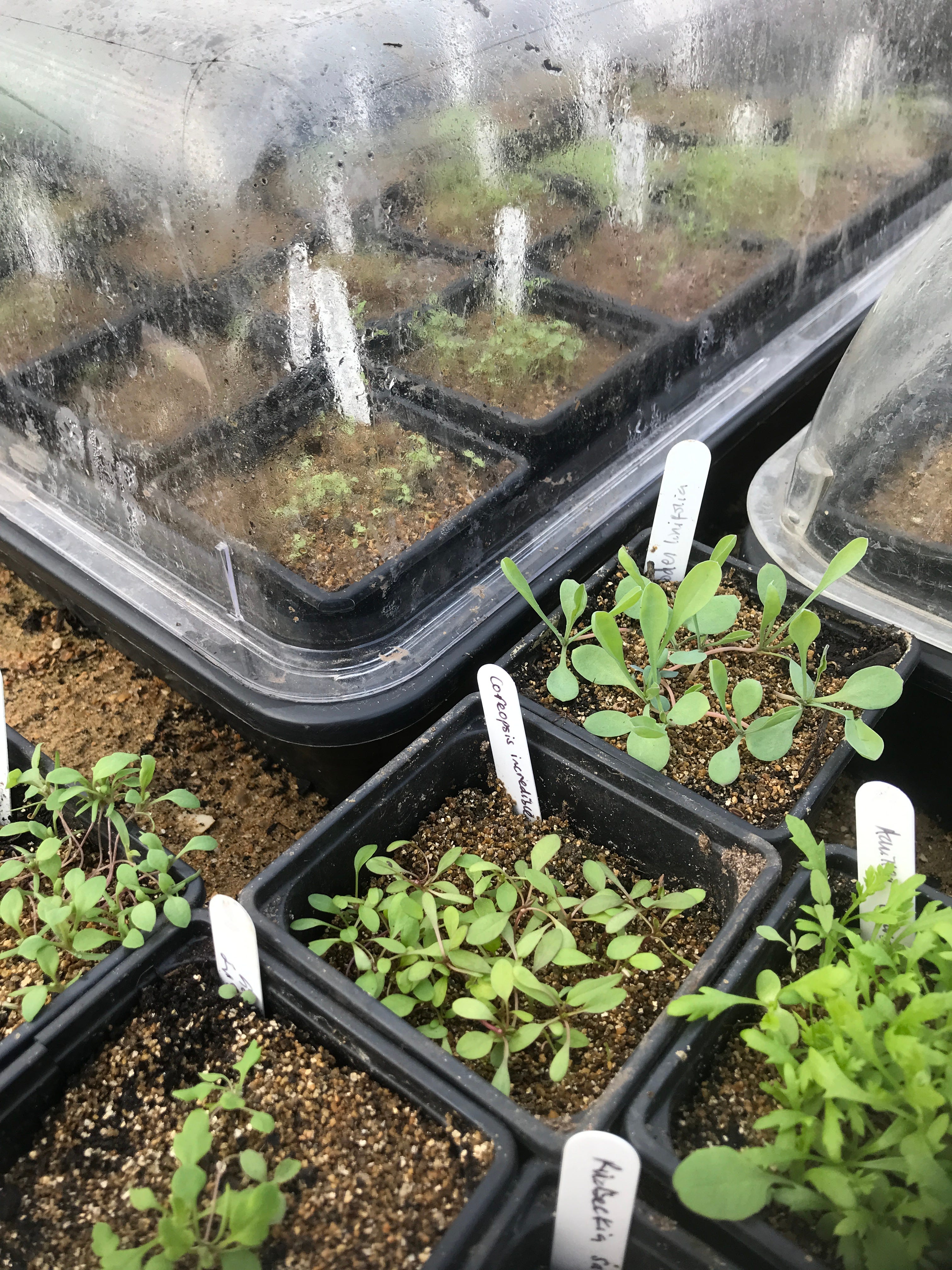
Move seedlings, or indeed any plant, into a module or pot that is only slightly bigger than which it’s came from.
When the seedling has filled the module, or plant pot (depending on the size of seedling), you will see little white roots peeping through the hole at the bottom. At that point it is worth a gentle tug of the plants (I turn the pot over, cradle the plant between my fingers and hold the soil) and gently pull the pot away from the root ball. If the roots have run to the sides, holding the soil all together, you are good to move on. If the soil is loose and there are only a few roots just exploring the edges of the pots, leave it alone for a little longer. Experience will make this easier and easier.
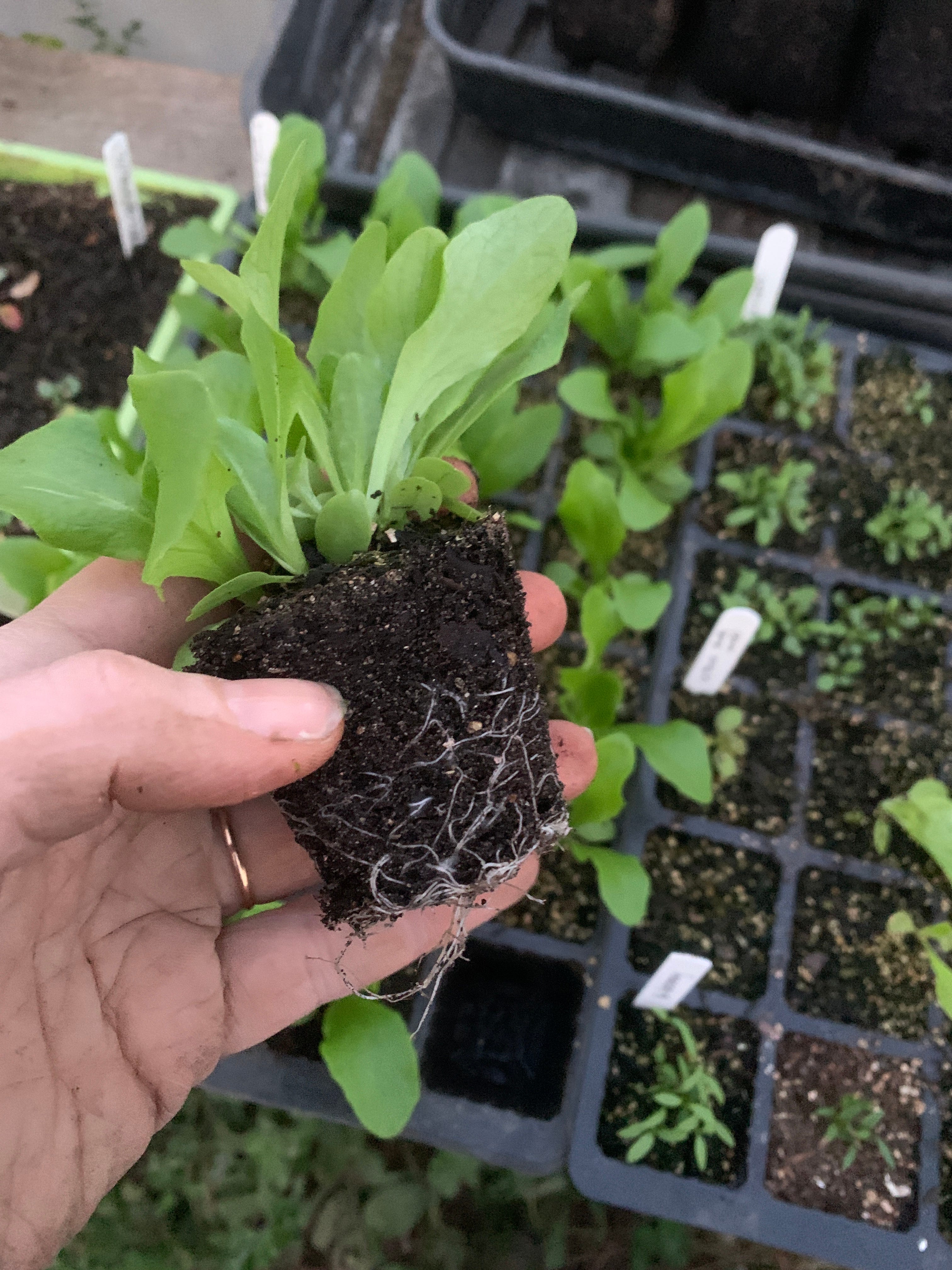
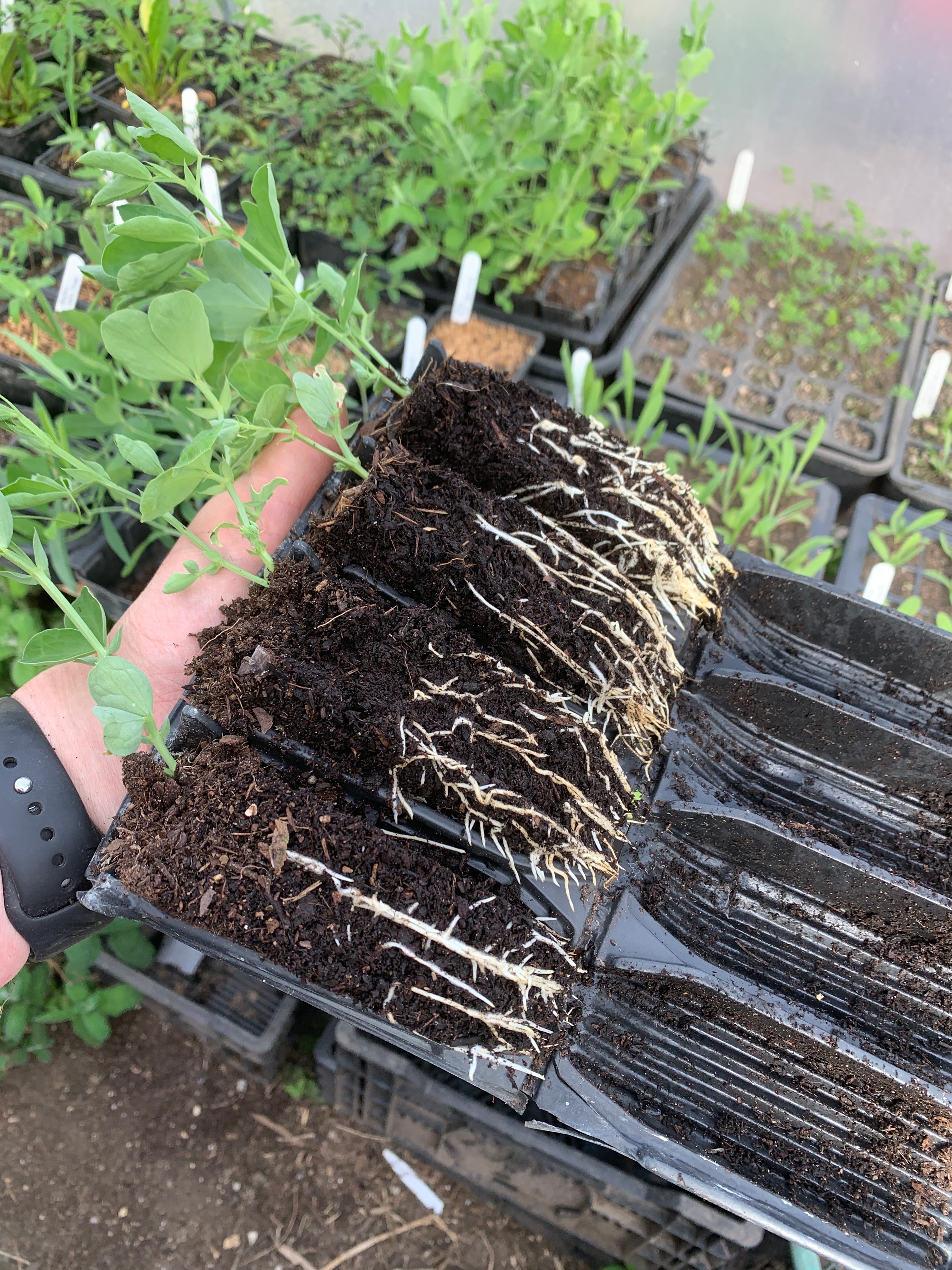
What is going on above the soil might not represent what is going on below. Some plants like sweet peas might not look like much growth has occurred but created wonderful multiple long roots. Leave those in the pot too long and they’ll yellow and die off.
You might notice, that plants grow to the sides of a pot, then break new roots, developing fast to create a strong root ball. If the pot is significantly bigger, say more than about a quarter the volume of the previous, the plant will take far longer to root, and therefore be ready to plant on. Rooting stabilises the plant, and you want that to be done quickly.
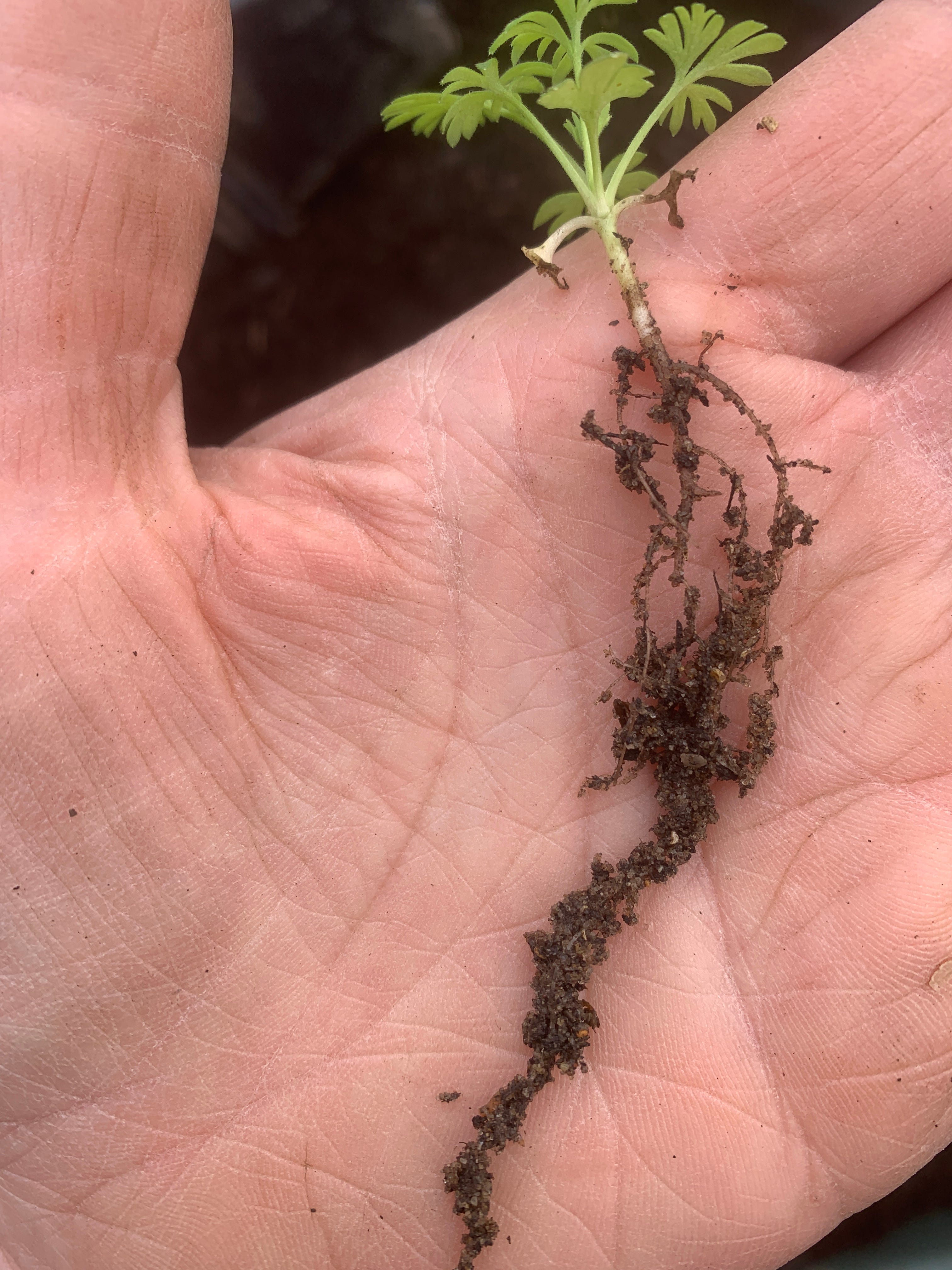
But the usual mistake is not potting on to too large pots, but that over protective propagators leave their plants under cover and pot bound for longer than necessary.
Plants have gotten used to their environment, worse, stressed, and that’s when you’ll see them trying to flower. Often, a quick pinch down and swift moving on will solve this.
If a plant is very root bound (the roots can be seen filling the pot, swirling round the bottom several times, or even little soil left to be seen), ripping a quarter to third of the root from the plant can be really helpful.
This seems to really shock people when they see me do it. But, alike pinching out or pruning encourages growth, ripping the roots does the same. Plants are stimulated to produce more root and search for nutrient, minerals and water.
Time it right, and the roots will grow away, anchoring the plant well and reaching deep for ground water, connecting with soil fungi.
Quick check here against the pinching out list. But broadly, if in doubt, pinch it out! You do not want tall thin stems, especially for flowers. Instead you want multiple stout stems. Stressed plants will send long stems up to flower quickly and run to seed to save future offspring. Pinch it out!
In late April, there is still plenty of time in the south east for there to be a frost. I reckon we have passed that date in the south west. Anywhere north is likely to still have a decent frost. Therefore, knowing whether the plant is hardy to frost or not (half hardy) is essential. For a lot of plants, if they are a decent size in root, a frost won’t kill them but will burn off the leaves and knock it back. Instead, keep your seedlings inside, under cover or in a plastic box until your usual local last frost date is passed (check here).
The seed packet will tell you if it’s a hardy or half hardy annual.
If it is hardy, then it will be fine. But. have you hardened off?
Sunday, in glorious sunshine, before a huge, somewhat surprising deep frost1, I saw loads of videos and images across different platforms of gardeners planting out tender plants, tomatoes, half hardy annuals and seedlings that frankly did not look prepared for low temperatures.
Plants need to be acclimatised to the open air, higher fluctuations of temperatures, heavy rain or wind. And last years baddy, the slug.
Yes, hardening off will prepare your precious plants for growing in the big wide world. It takes, ideally a fortnight and I am hearing less and less people talk about it, and more taking the risk. (And it can protect your plants from slug damage.)
Comments
Nothing yet. Say the first thing.
Sign in to join the conversation.