
Seed sowing, transplanting, planting out, making compost and staking
This is a busy month of hopeful and optimistic growing for a summer of joy! Pick and choose what to do and permission to enjoy it rather than feel overwhelmed by the long list!
Planting out hardy annuals and perennials
The main job this month. Anything hardy to the frosts can be planted now. If they’ve been growing nice and cosy in a tunnel or greenhouse, harden them off by bringing the plants out in the day for a week or so, bring in or lower the cold frame lid at night. Then expose to the night cool for a few days before planting out. The plants are only truly hardy once harden to those conditions.

Sowing half hardy annuals
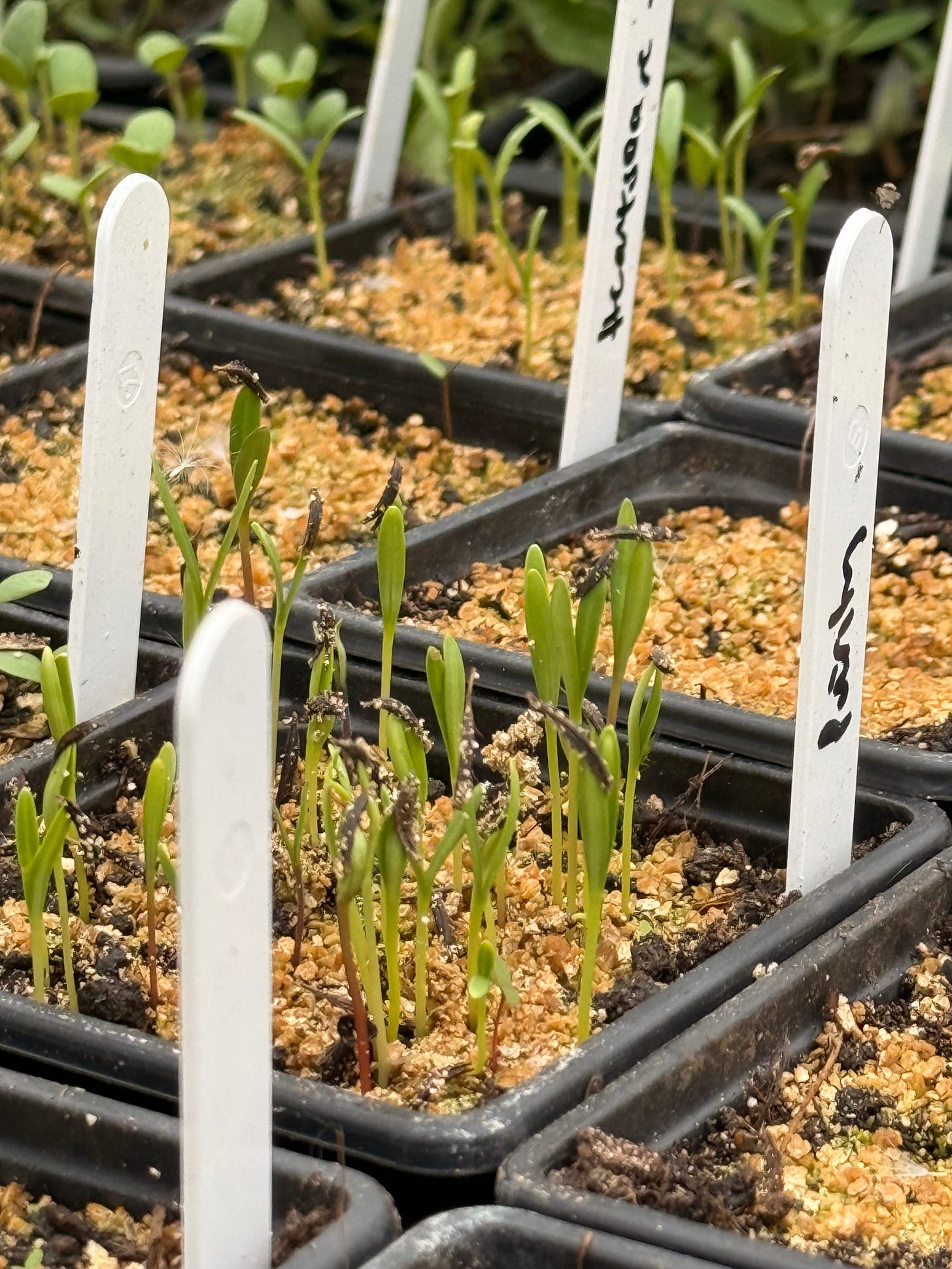
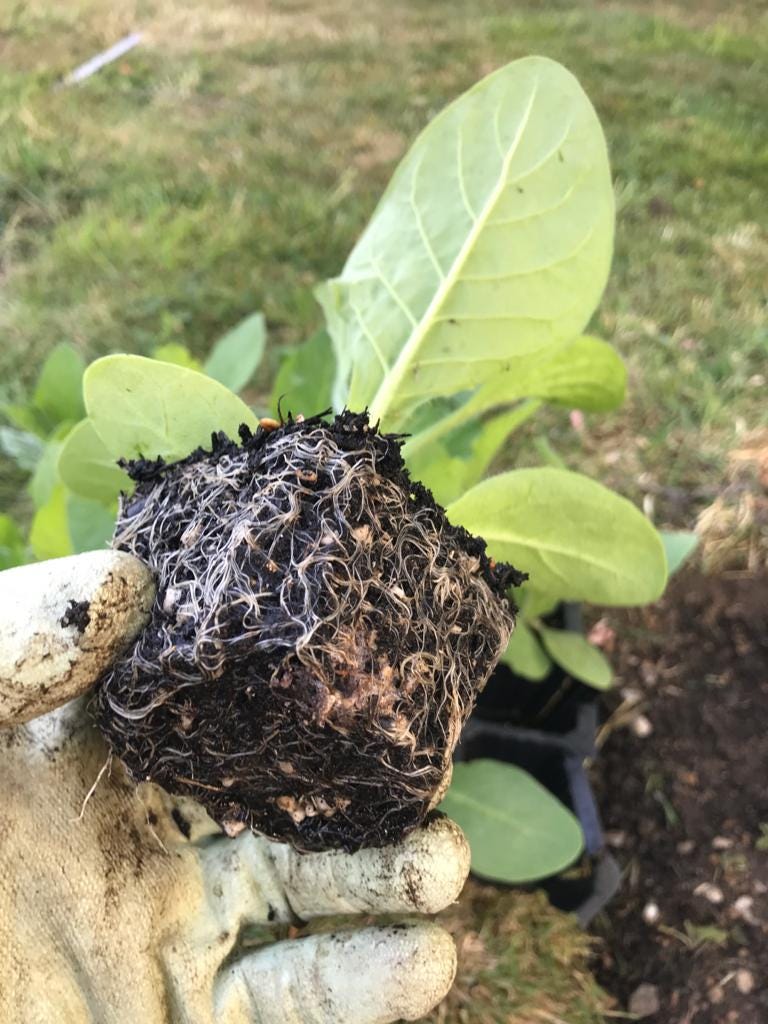
These are not hardy to the cold or frost so I’m still growing undercover early this month in case of more frosts. Need to know how to grow without a greenhouse? Top tips here. Half hardy annuals that I love are nicotiana, cosmos and multi headed sunflowers. I’ll start planting those sown early last month, in sheltered positions in mid May. Those sown now can be planted as soon as they roots fill the module or pot.
Direct sowing seeds
The easiest, most efficient and most sustainable way to sow is directly. No pots, no plastic, maybe a little watering if it doesn’t rain but right now, we are getting a good balance of warmth and rain. If weeds are growing, then your seeds will grow too! Prepare the soil by raking it to a fine tilth, move stones and draw lines for sowing. This way, you can hoe off weeds and know where your seeds are growing. Keep the ground moist until germination.
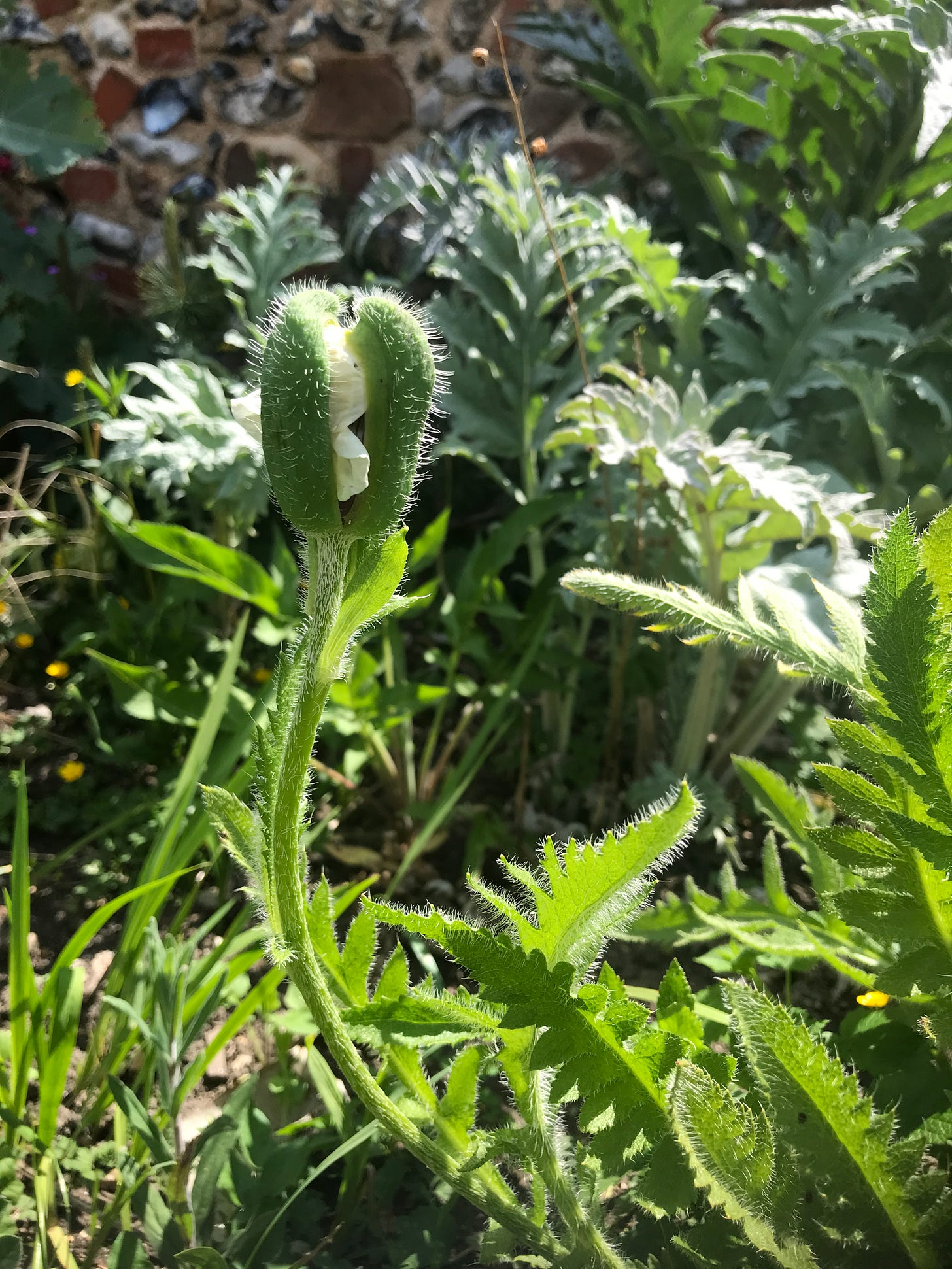
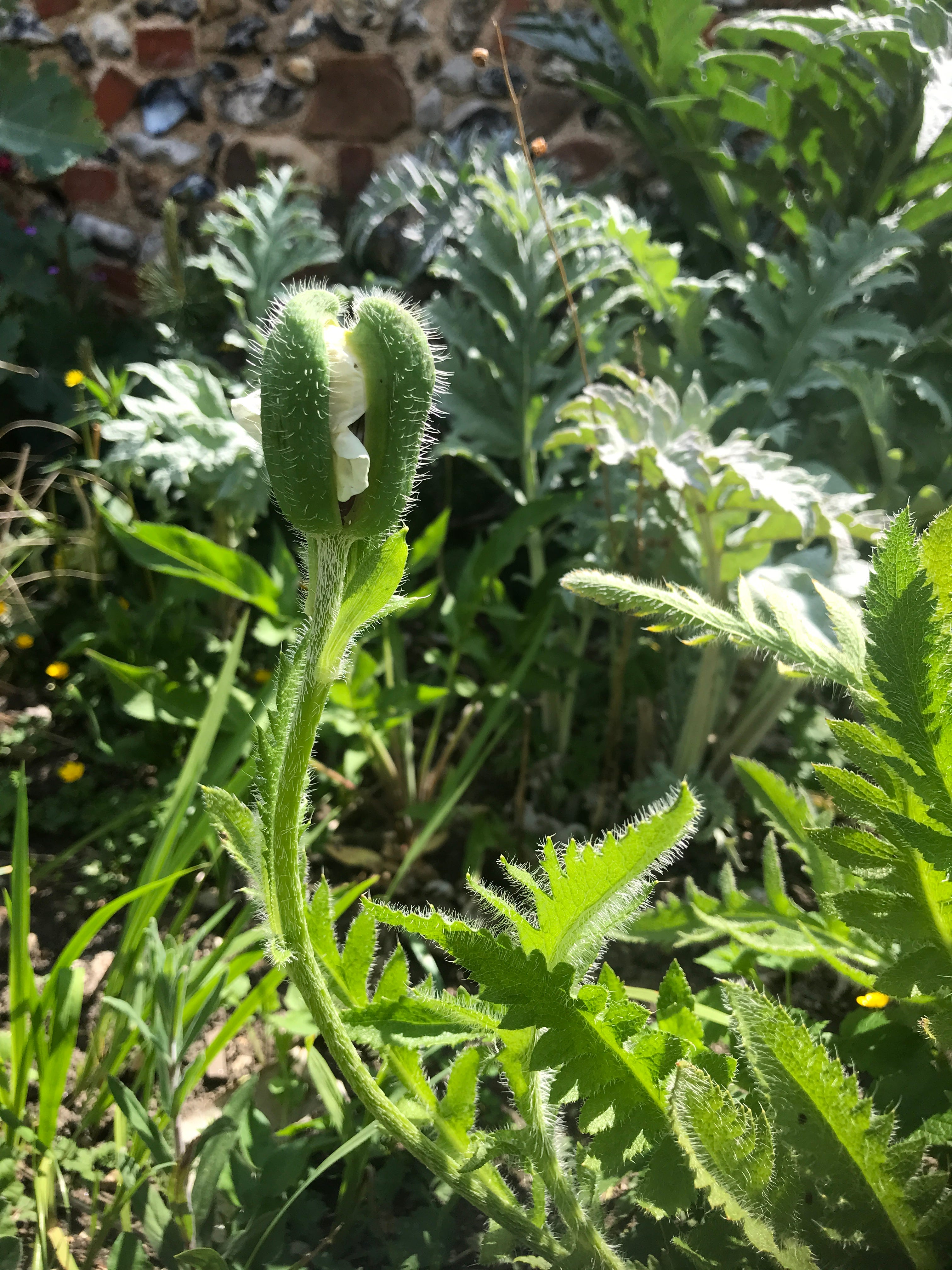
A perennial poppy about to burst with artichokes Potting on
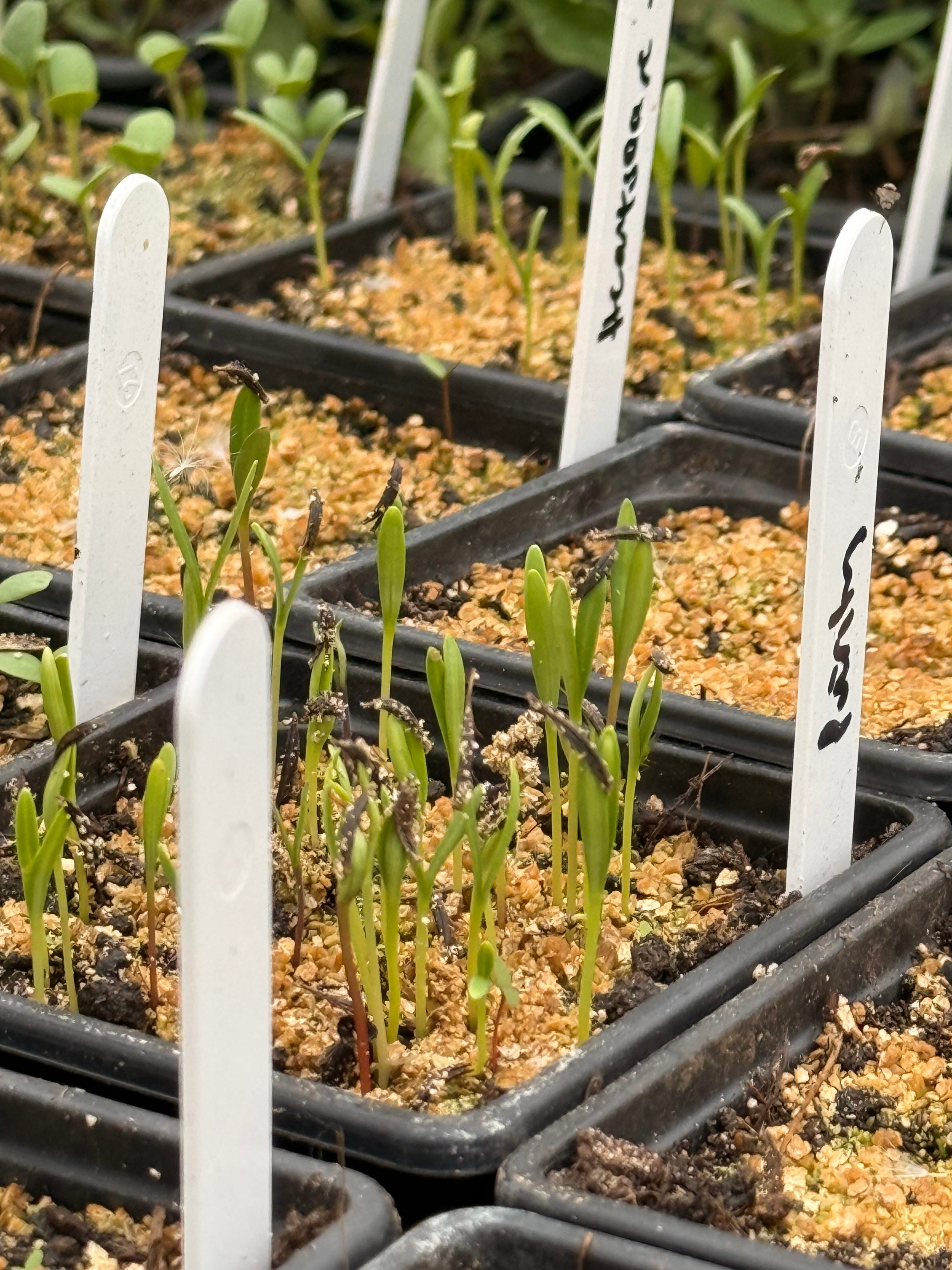
One of my favourite garden tasks; in the greenhouse with a podcast or audio book (spoken word for weeding, novels for planting but house music for flower arranging), repotting seedlings with a couple of leaves into trays of compost. I make my own, a mix of homemade compost and loam (the rotted down lawn edges of grass make great soil).
Plant out Dahlias and tender plants (at the end of the month)
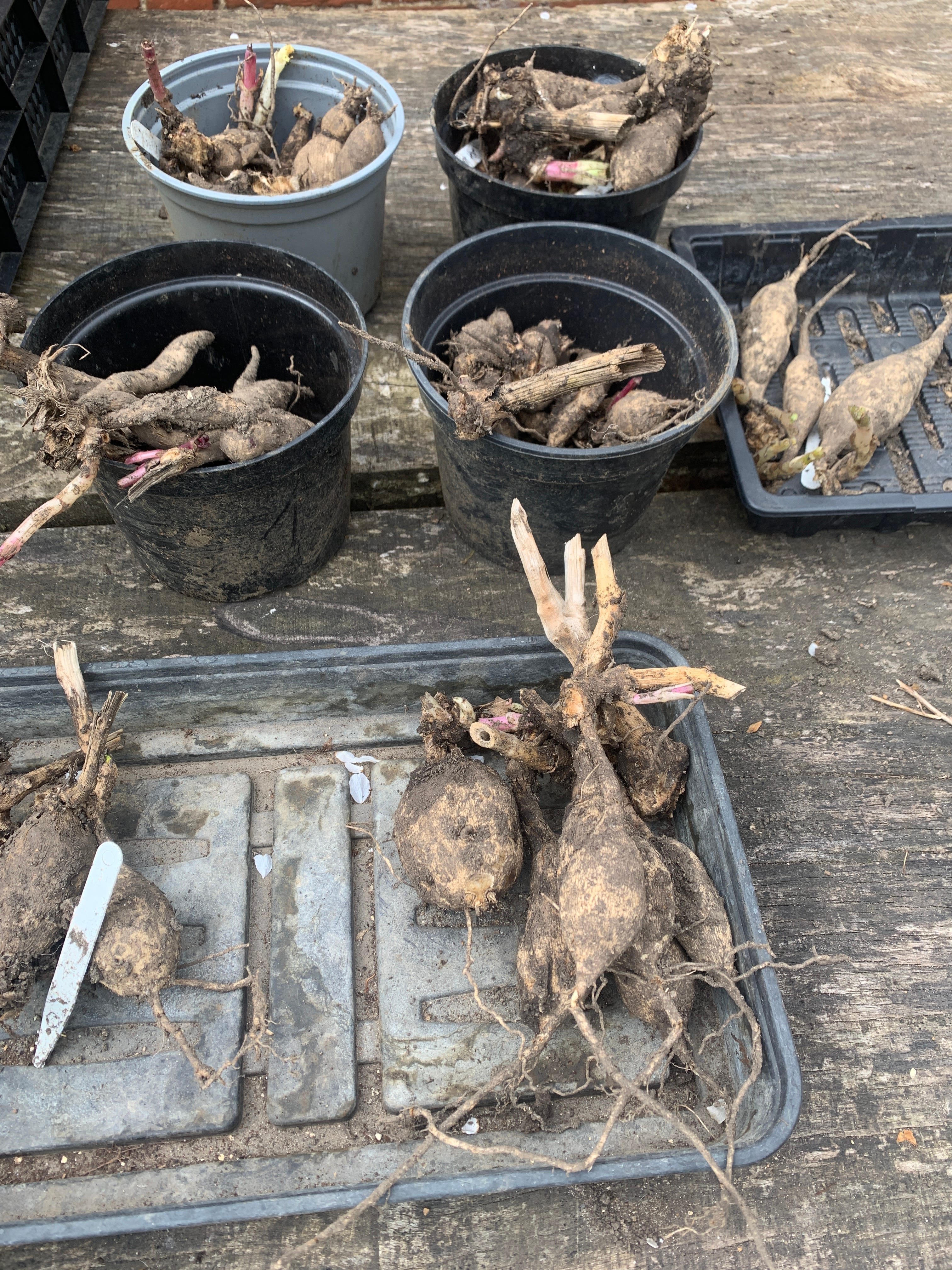
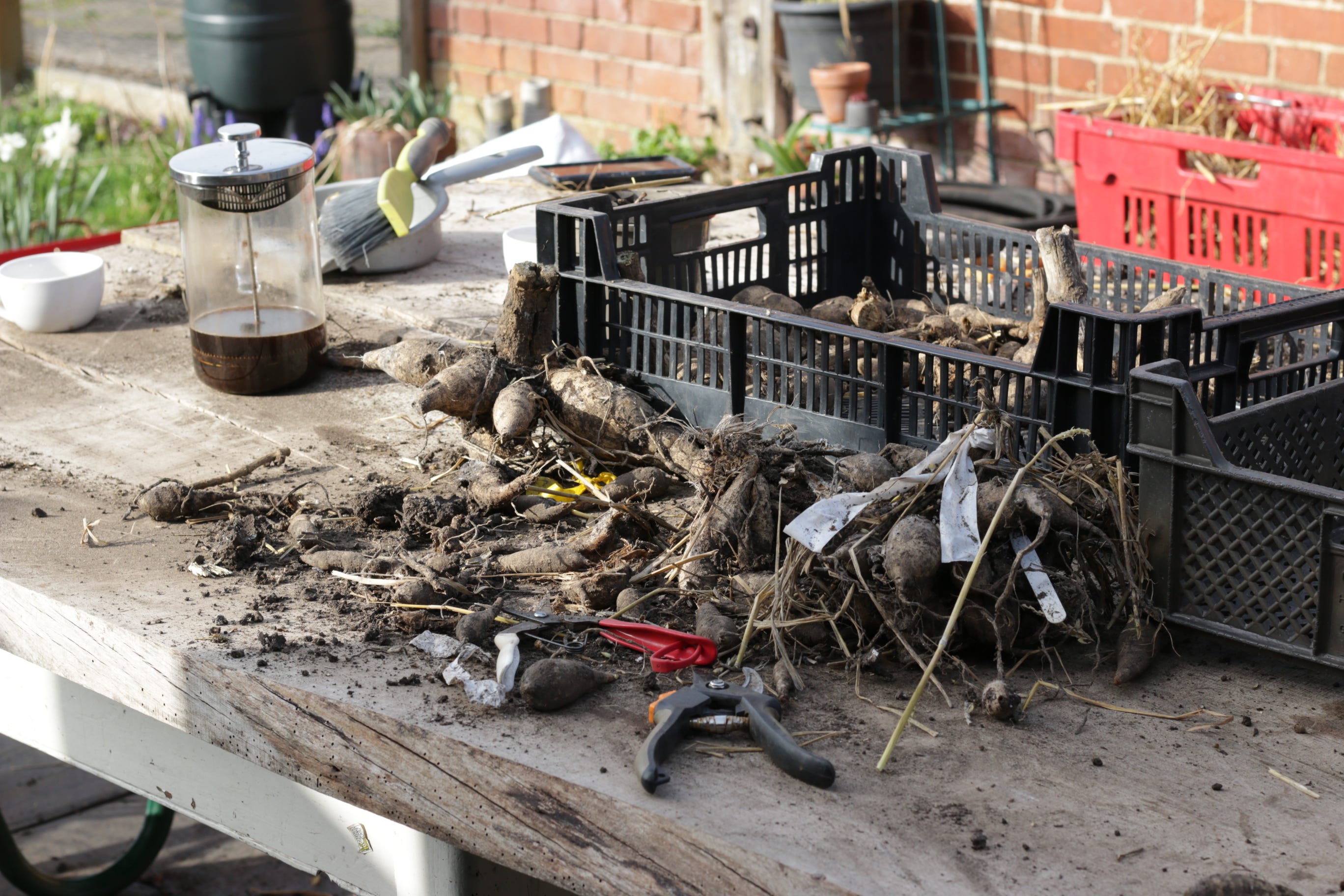
If you have bought new tubers or saved your own last autumn, get them potted up into 2/3L pots of compost to sprout. I water very occasionally to prevent rotting but keeping the pot damp. Check on these if in a hot tunnel or greenhouse. Plant these out into position in mid May or later. (Full 101 on Growing Dahlias and all the hard lessons I’ve learnt here or here on my new method planting straight out)
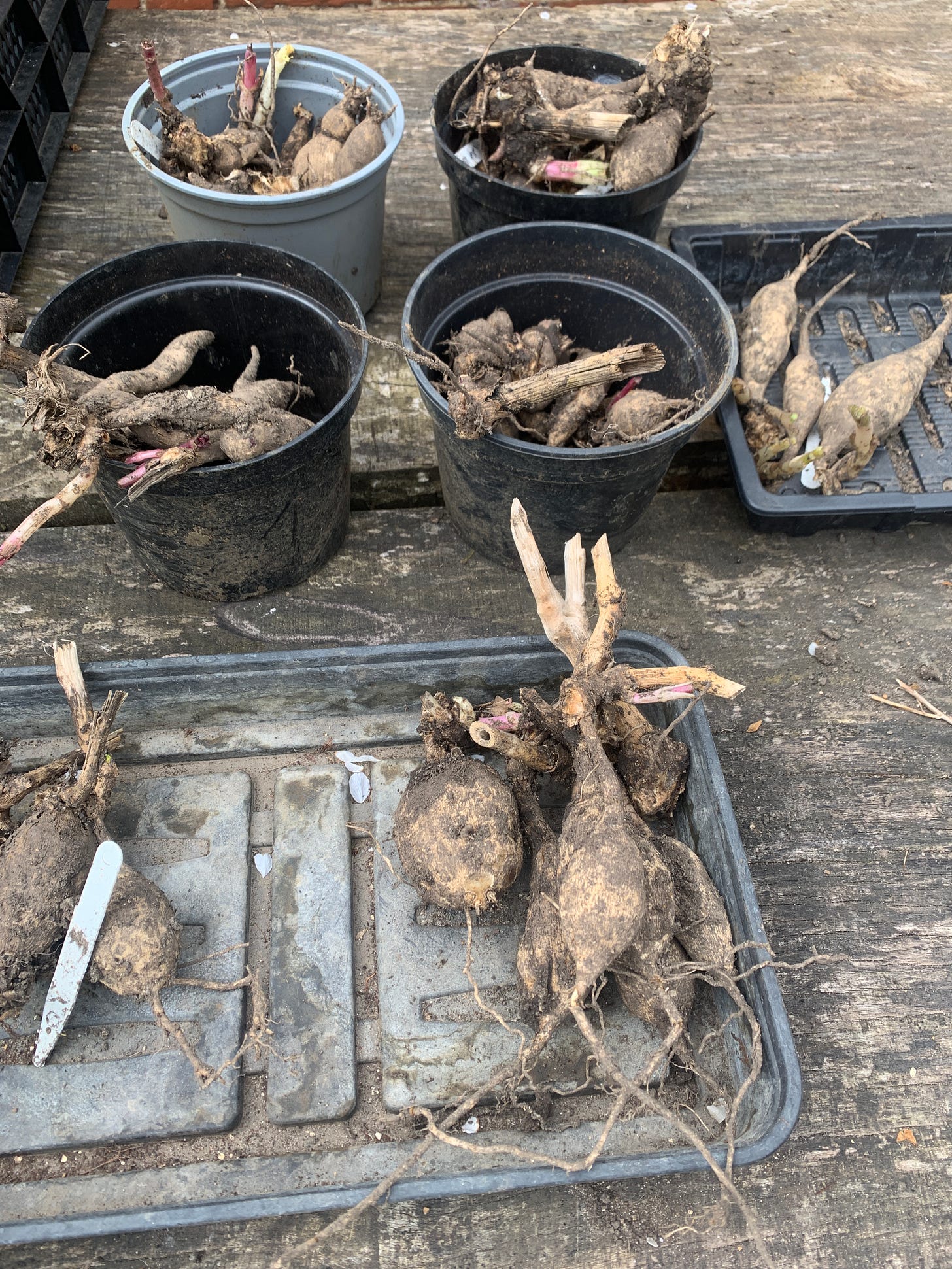
Dividing sprouting dahlias Green Manures
If you’ve cleared ground but don’t have anything to plant out yet, sow some green manures. These are great fast growing plants that bring nutrients up, open up the soil and add organic matter. They also activate the soil biology if the ground has been bare by making food. I cover ground with them, interplant and even cut them for flowers! Want to know more about these?
Feeding with liquid feeds
I feed plants at least once a month, with different feeds according to their development (planting / growing / flowering / dying back). All the recipes to make your own (which is so easy and free!) here.
Staking
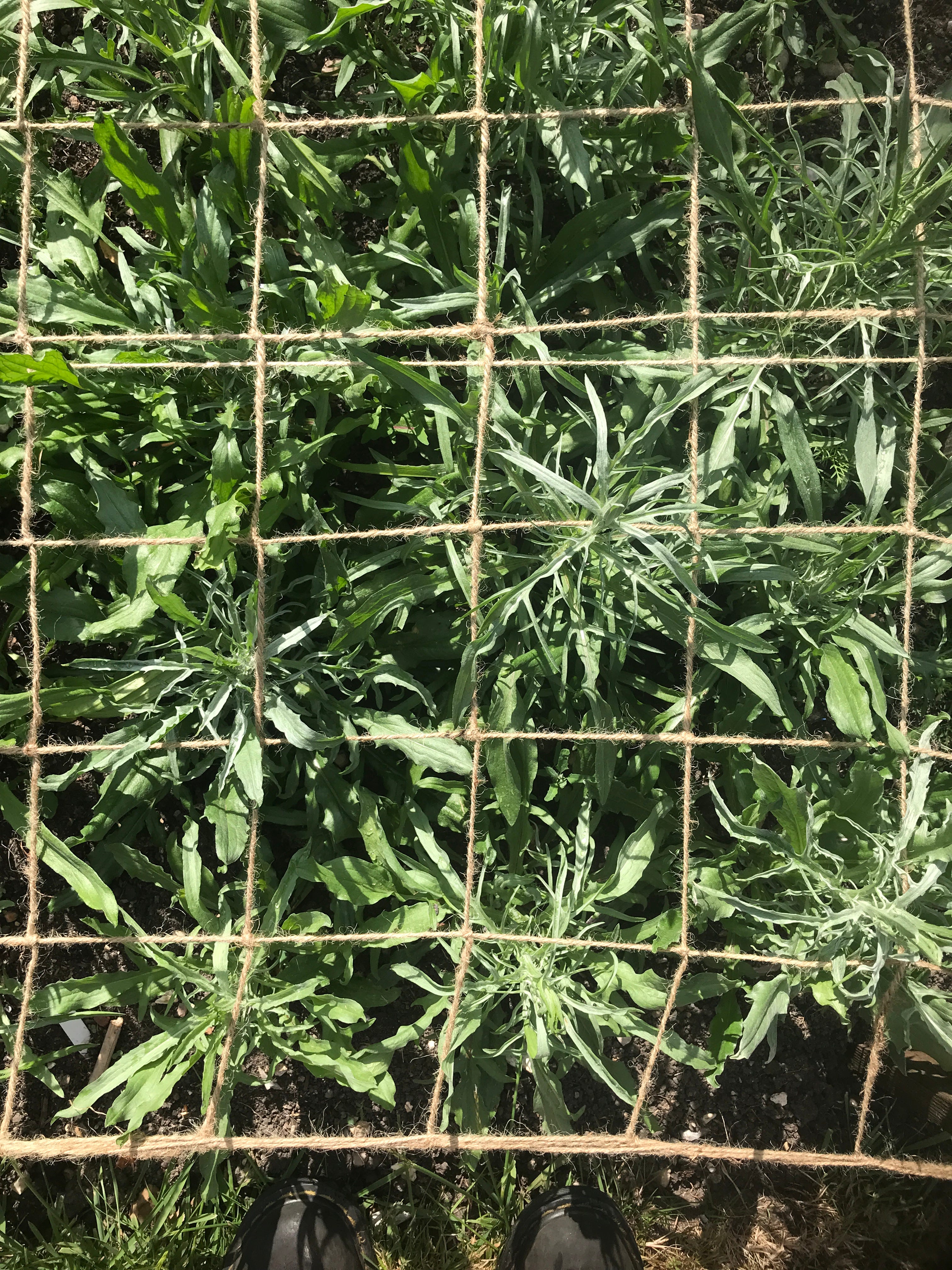
If you take nothing else from this, stake your plants when you plant! Do not wait until they need it. This year the orlaya in the tunnel has risen high and one plant flopped. I didn’t think to stake when I planted these in January! Now it’s too late and the best I can hope for is that it doesn’t flatten. Use canes and string, jute netting or pretty chestnut hurdles. Whatever, just give the plants some support as they grow, including peonies, dahlias, ammi & cosmos.
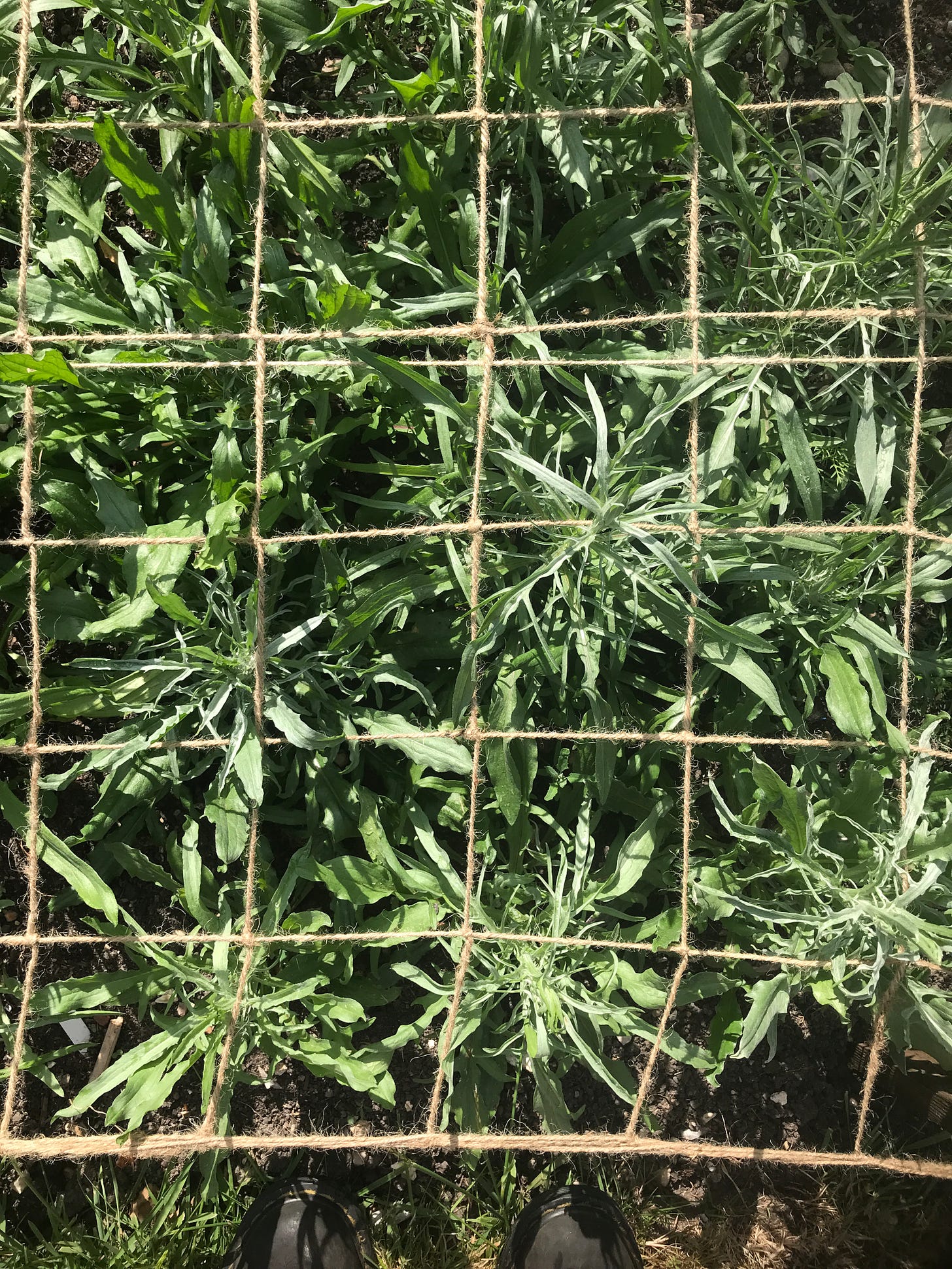
Staking plants with jute netting stretched between rebar or wooden stakes. Chelsea Chop
Leave this until Chelsea week (the last week in May before the Whitsun Bank Holiday) and chop perennials to extend their flowering season. I do this on nepeta, echinops, achillea, aster and echinacea but also so many other late flowering plants. Chop a 1/3rd of the plants stems by 2/3rds, another 1/3rd by 1/3rd and leave the other 1/3rd as it is. This will increase the flowering season with blooms following on as others go over. You can also do this with a larger crop by cutting a 1/3rd of the crop hard, etc to extend flowering.
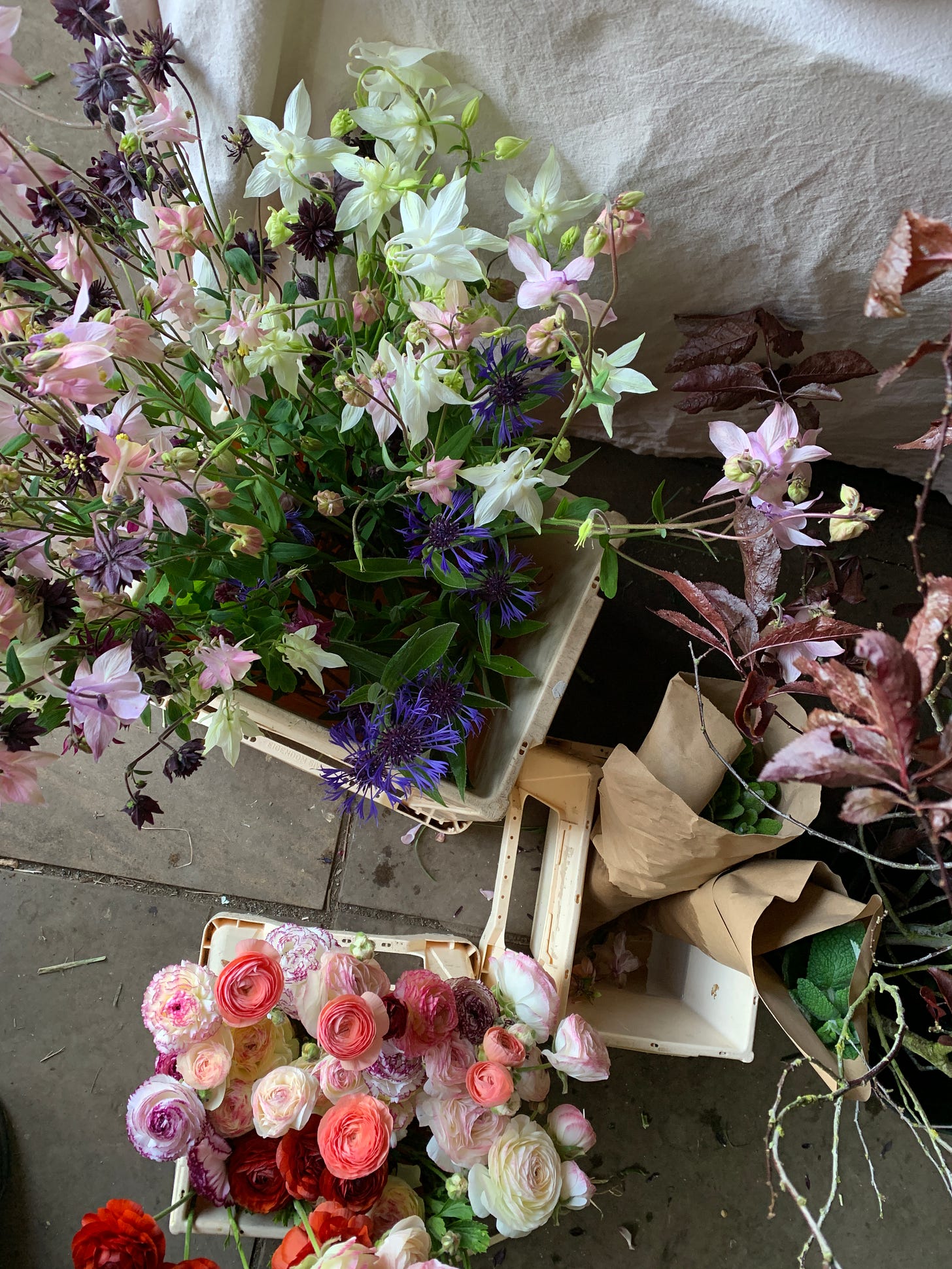
Bounty Sow Biennials
You could start sowing biennials but there is enough going on this month so full permission granted to push this to the top of next month’s list. Order your seeds if you haven’t got them ready!
Spring Bulbs
Stop plants from setting seed by chopping the heads and feeds plants as they die back. Cut stems and leaves about 6 weeks after flowering or when they have yellowed.
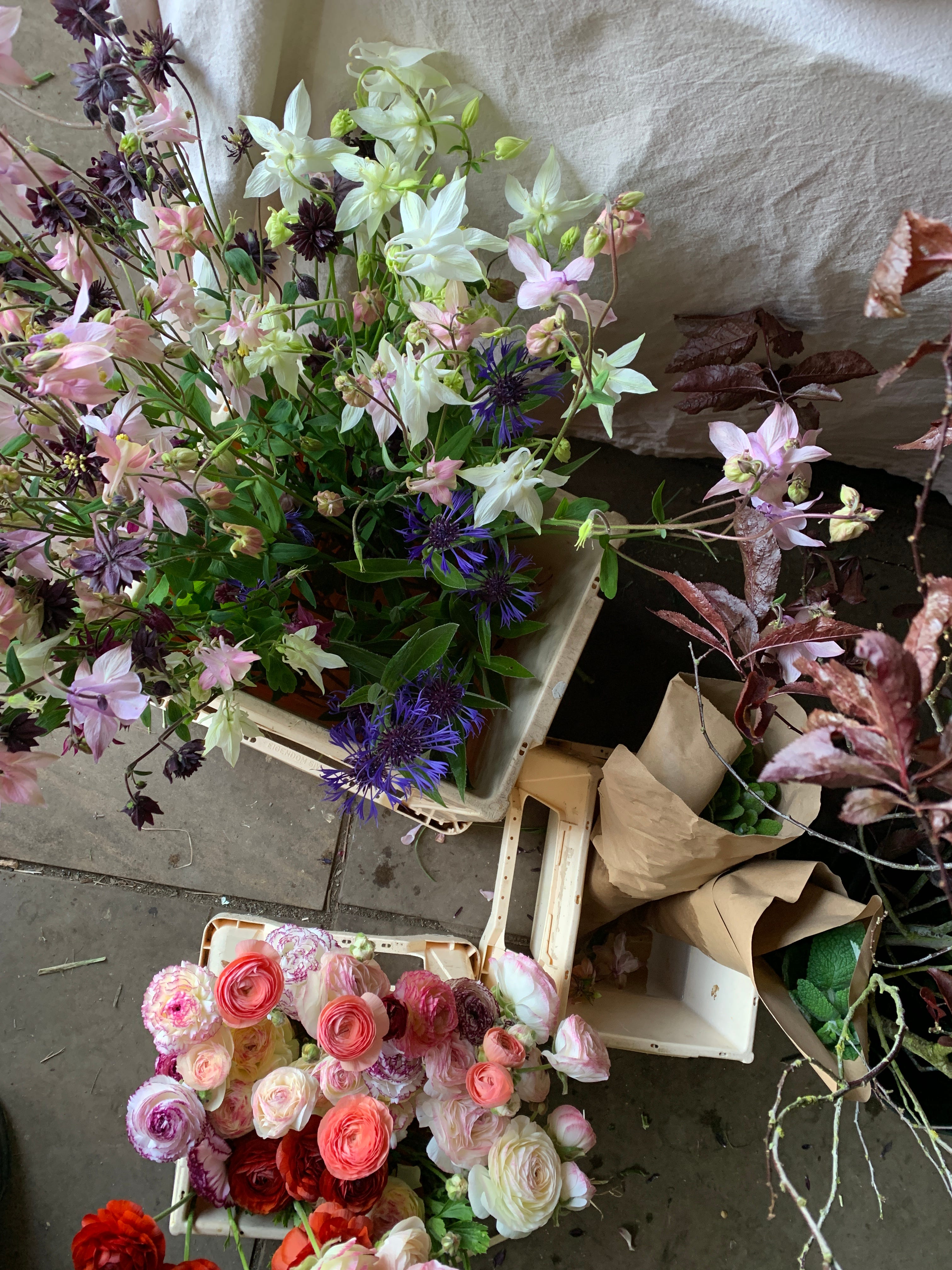

Shrubs, Trees & Climbers - Viburnum opulus, hawthorn, lonicera (honeysuckle), lilac (cut the leaves off)
Perennials - Euphorbia, solomons seal, aquilegia, perennial cornflowers, tiarella, mint & artichoke.
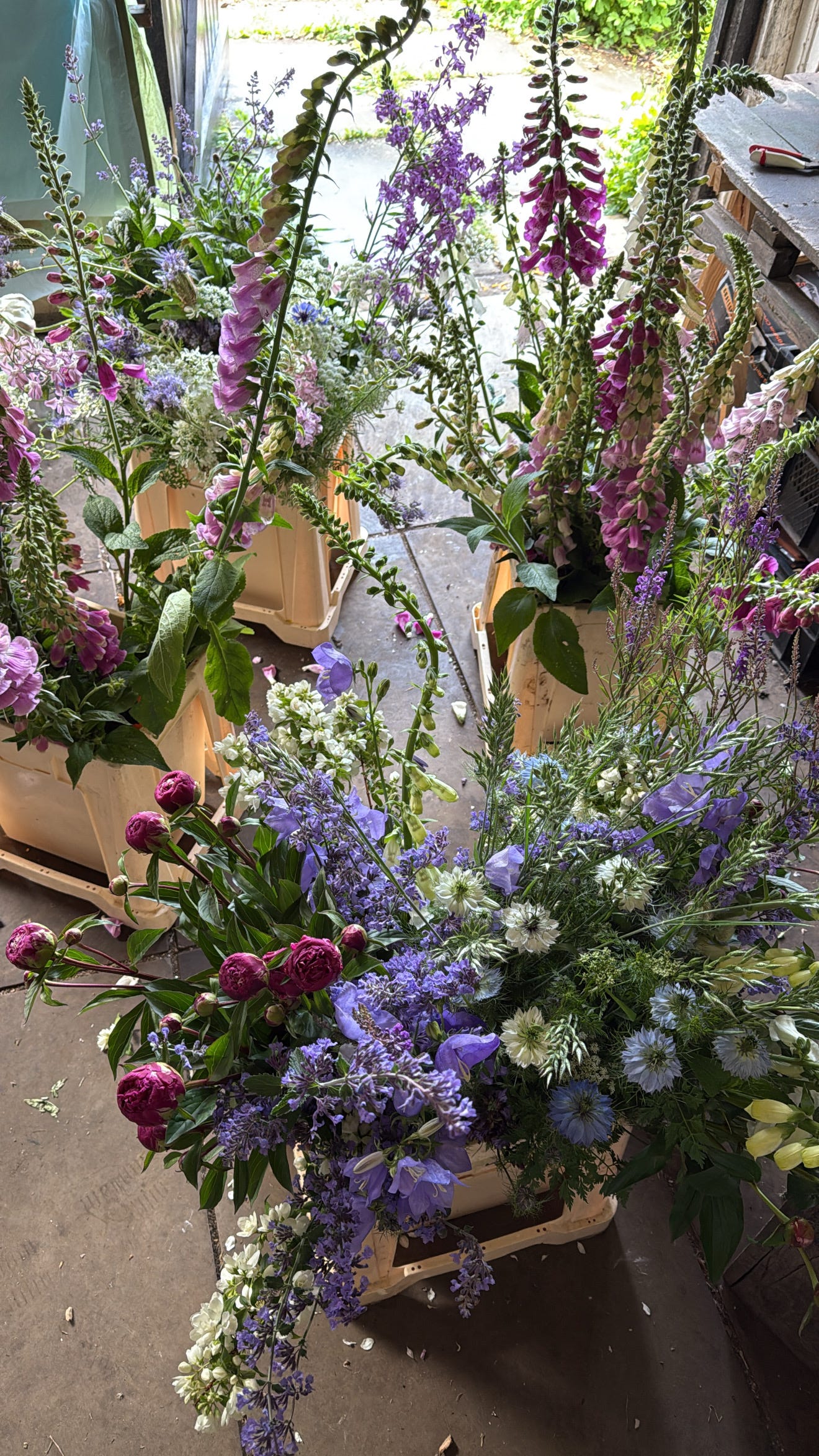
Biennials - Sweet rocket, sweet williams, honesty, wallflowers
Bulbs - Narcissus, tulips, camassia & alliums
Corms - Ranunculus & anemones, bearded iris
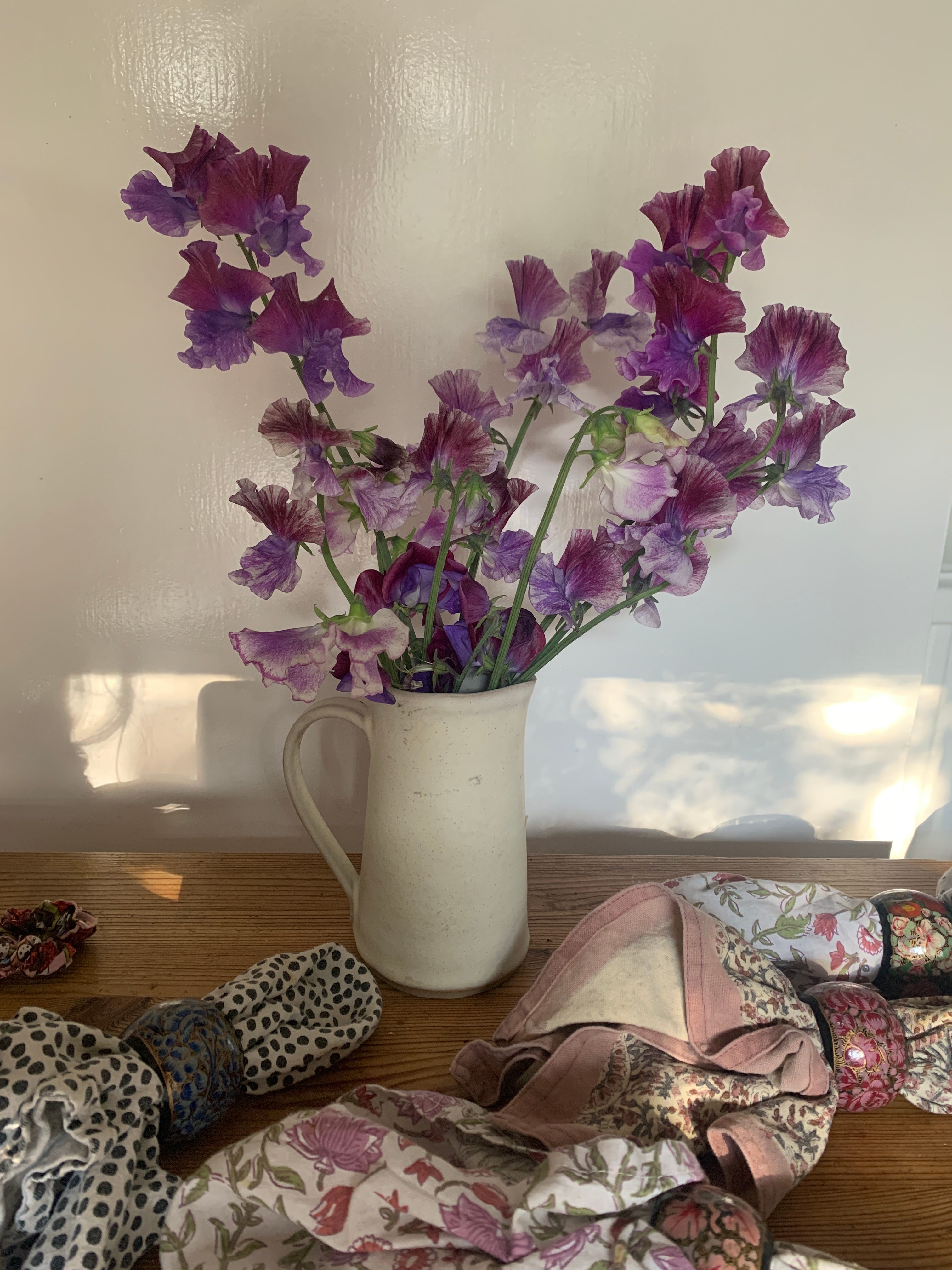
Annuals - Iceland poppies, calendula, autumn sown early crops of cornflowers, orlaya and corncockle. First sweet peas!
Please ❤️ this post and even better hit reply and tell me what you are doing this month in your garden. Please share this newsletter with anyone that might like it.
Go on. Hit the like button. It’s just there…
I write about, teach and design productive and sustainable gardens. For subscriber only posts on all the above and inspirational ideas to go out and do the same in your own space, join me as a paid subscriber.
With love,


Comments
Nothing yet. Say the first thing.
Sign in to join the conversation.