
The next few weeks I am going to run a mini series on soil health and share my research and experiments with being self sufficient in feeds and composts. And why I no longer mulch with delivered materials. This is all to make our growing easier, cheaper and bonus, better!
This week, I have been using my own feeds on plants. They are free, easy to make and plants visibly perk up after using.
I didn’t use to in my home garden, and it was only growing cut flowers, especially dahlias, that I kept reading about feeding my plants. I didn’t know why I needed to feed when I mulched with compost.
You see the whilst additional organic matter on beds can feed plants, it’s something that improves the soil over time. I will come to composting next week. But liquid feeds give immediate nutrients, minerals and trace elements and the difference is evident in the plants the very next day. Perkier, greener, fresher and stronger growth.
Feeds also help boost a plants immunity and strength, helpful when there are pests early in the season or challenging weather conditions. Using your weeds, compost and plants to make feed will always be better than bought since these are going to be the ingredients from your own soils that the plants are both from the same soils and micro climate which the plants are genetically predisposed to growing in.
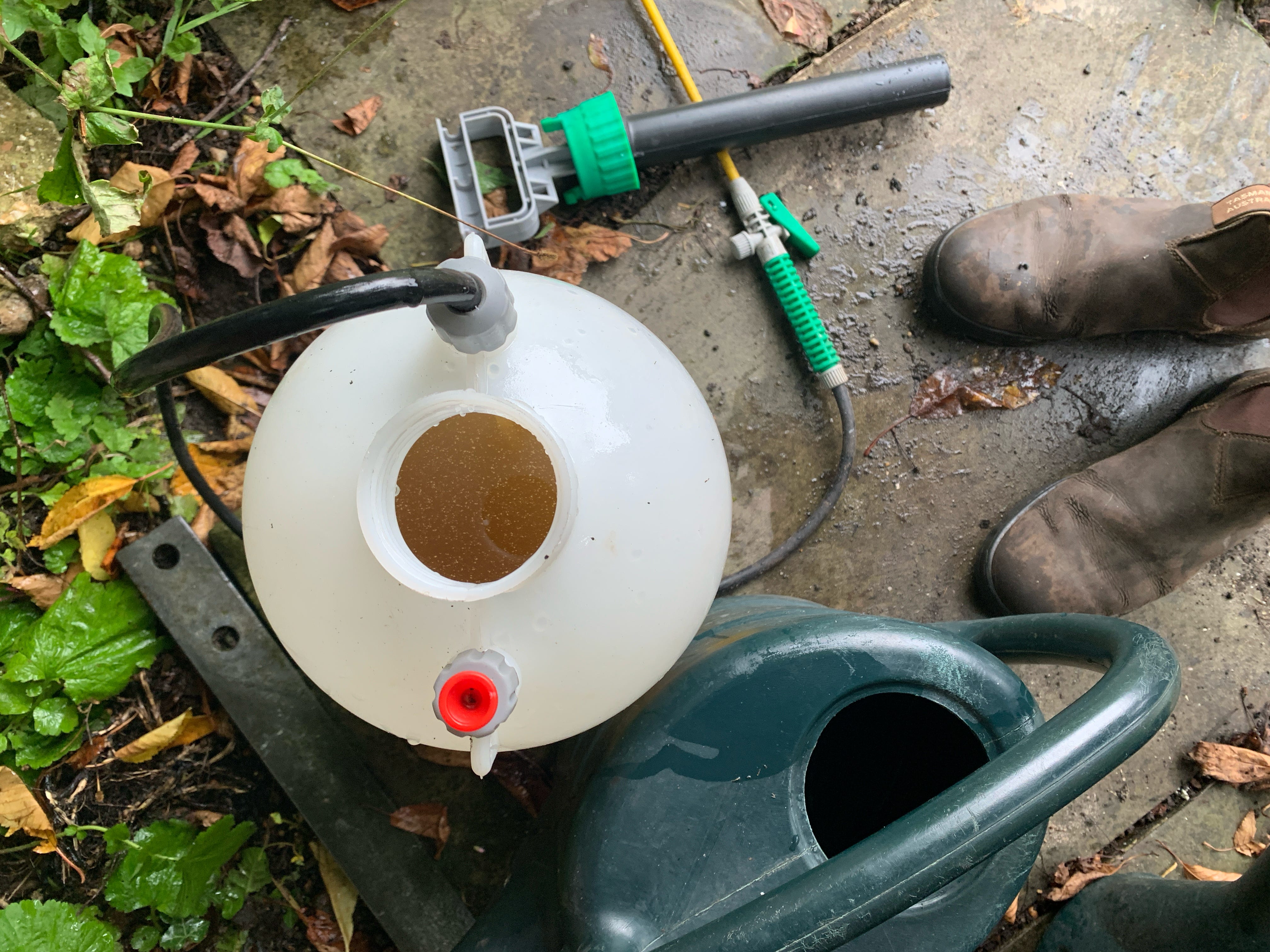
Now I make five different feeds for the garden, that are used at different times of the year. They are very easy and like making potions. You really don’t need to make all of them, if you made just one, I’d say the comfrey which is great for fruiting and flowering. Or failing that, the weed one is really brilliant too. I used to feed weekly, and now found, as with homeopathy and aromatherapy, a little is better. So for several years, I spray just once a month. (you don’t need a big sprayer like I have - a small houseplant one will do a small to medium garden)
Here are the very easy recipes and how I use them -

Ingredients
Any weeds, including any particular pernicious ones like dandelion, bindweed, nettles etc Collect equal parts.
Method
Place in a bucket, drum or water butt.
Add water to cover the ingredients.
Leave for about a fortnight, ideally with a lid on.
How to use
A weed feed, like the compost feed will have all the ingradients already growing in your garden. The difference is with a weed feed, is that you are putting back into the soil, all the particular nutrients and minerals that those pesky weeds took advantage of and grew with. This feed can have an enormous effect on improving growth.
After a fortnight, the plants will have partially rotted so can go onto the compost heap without fear of re-sprouting or the seeds germinating (this is a good way to deal with really pernicious perennial weeds - don’t pull them, just chop off at soil level - they’ll eventually give up without leaves to feed the growth but meanwhile the roots are still holding the soil structure and feeding the microbes.)
Stain the liquid through a muslin so the fibres don’t block your sprayer nozzle and use a cup in a sprayer filled with water.
Top tip if using tap water, leave to stand for a few hours for the water to dechlorinate. Spray directly on leaves of plants avoiding the flowers, ideally on a cloudy evening when the sun is going down. Good to use any time.

Comments
Nothing yet. Say the first thing.
Sign in to join the conversation.